Gemstones of Jiangxi: Yingtan Yellow Wax Stone, Wannian Pearls, and Zhang River Agate | Gems of China Series
In this installment of our “Gemstones of China” series, we continue our journey through the south to explore the diverse Gemstones of Jiangxi.
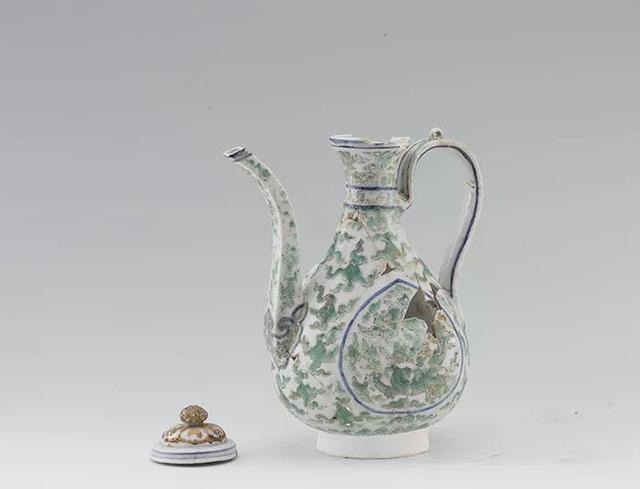
Mention Jiangxi, and most immediately think of Jingdezhen porcelain. Renowned worldwide for its superior quality and delicate forms, this local craft has long been celebrated for being “white as jade, bright as a mirror, thin as paper, and resonant as a chime.”
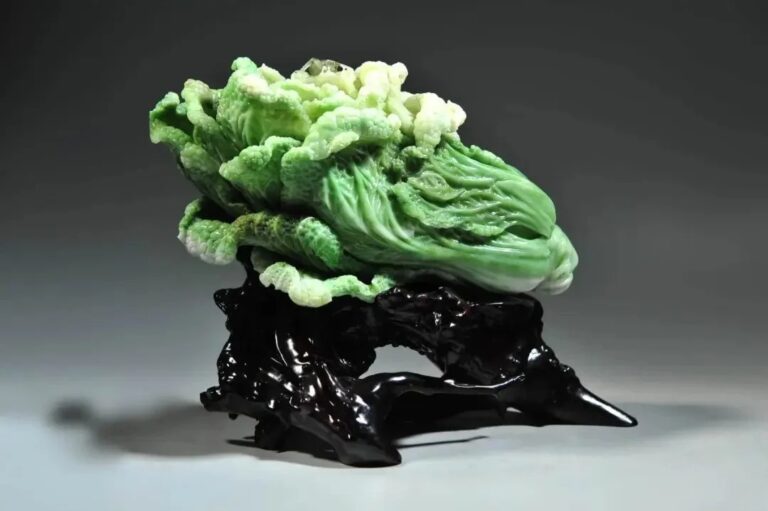
Yet, beyond its legendary ceramics, Jiangxi sits upon a wealth of mineral treasures. The province boasts 193 discovered mineral varieties, with 71 ranking among the top ten in China’s reserves. From the translucent Lushan Jade and Yushan Striped Stone to Tanhe Stone, corundum, garnet, aquamarine, crystal, and fluorite—the list is as vast as it is vibrant.
Today, we dive deeper into the province once known as the “West Jiangnan Circuit” to discover three of its most distinctive regional specialties: Yingtan Yellow Wax Stone, Wannian Pearls, and Zhang River Agate.
Yingtan Yellow Wax Stone: The “Golden Elixir Jade” of Jiangxi
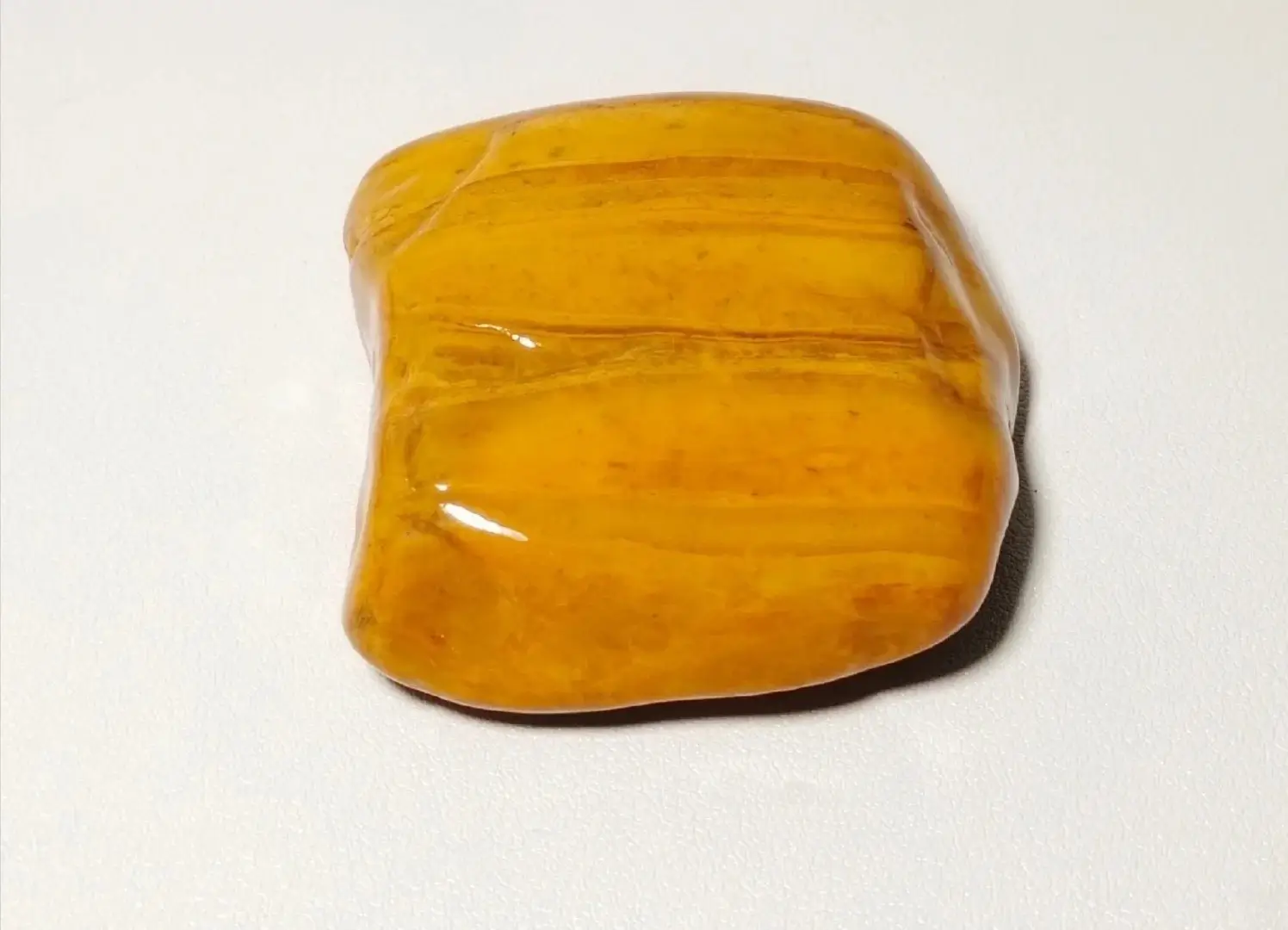
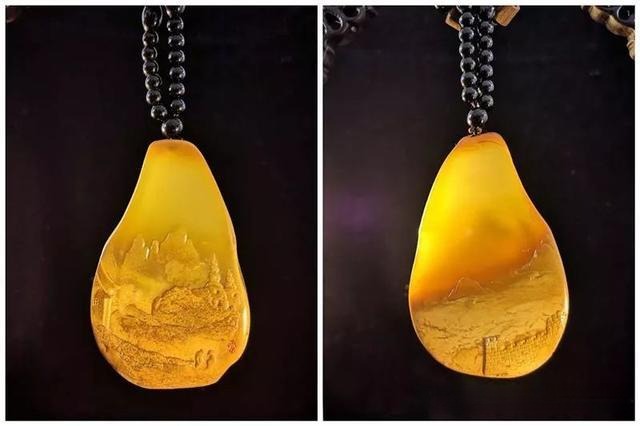
Yellow Wax Stone, a highlight of the Gemstones of Jiangxi, is among China’s most widely distributed ornamental stones. With deposits spanning Guangdong, Zhejiang, Yunnan, and Hainan. However, Jiangxi remains the heart of this mineral’s heritage; its resources are so abundant that deposits appear across all 11 municipalities in the province. Among these, the stones sourced from Yingtan stand out for their striking gold-like hues, earning them the poetic title “Jin Dan Yu” (Golden Elixir Jade).
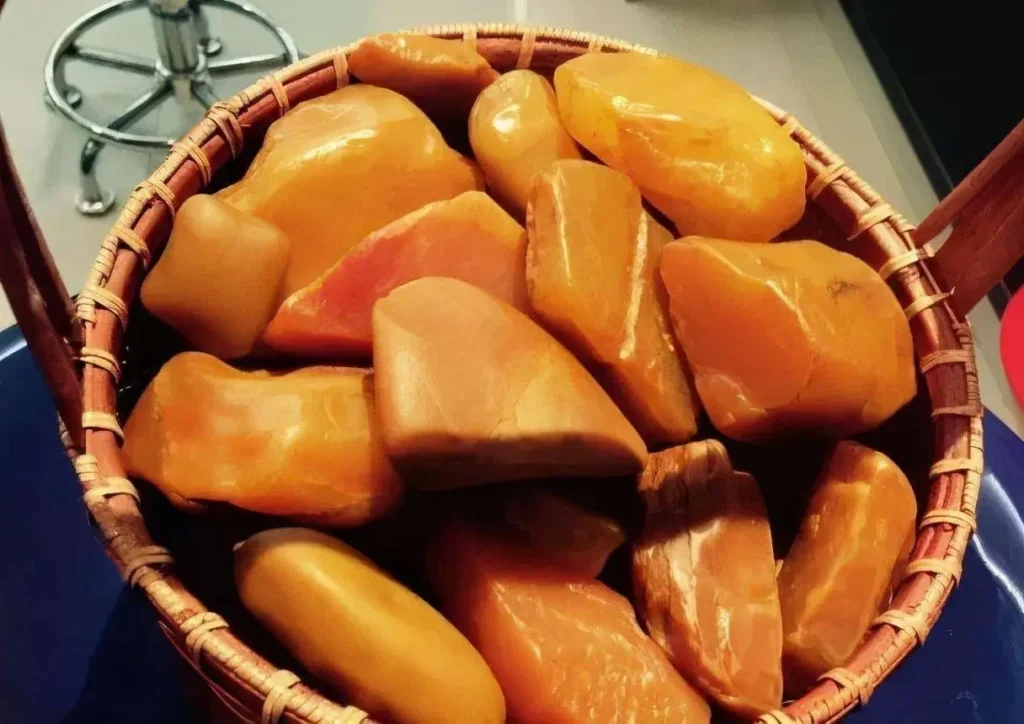
This name carries a storied past. Local legend tells of the Taoist Master Zhang Daoling, who practiced alchemy on Yingtan’s Longhu Mountain. As the story goes, an apprentice accidentally spilled the master’s golden elixir water into the river, staining the waters gold. Over centuries, the riverbed stones absorbed this spiritual essence, transforming into the “Golden Elixir Jade” we see today. While purely mythological, this lore adds a layer of cultural mystique that defines the stone’s identity.
Geological Formation and Mineral Characteristics
From a scientific perspective, Yingtan Yellow Wax Stone is primarily found along the Xin River basin—hence its professional designation as “Xin River Yellow Wax Stone.” In petrological terms, it is a variety of quartzite jade, characterized by its high Mohs hardness and resilient structure.
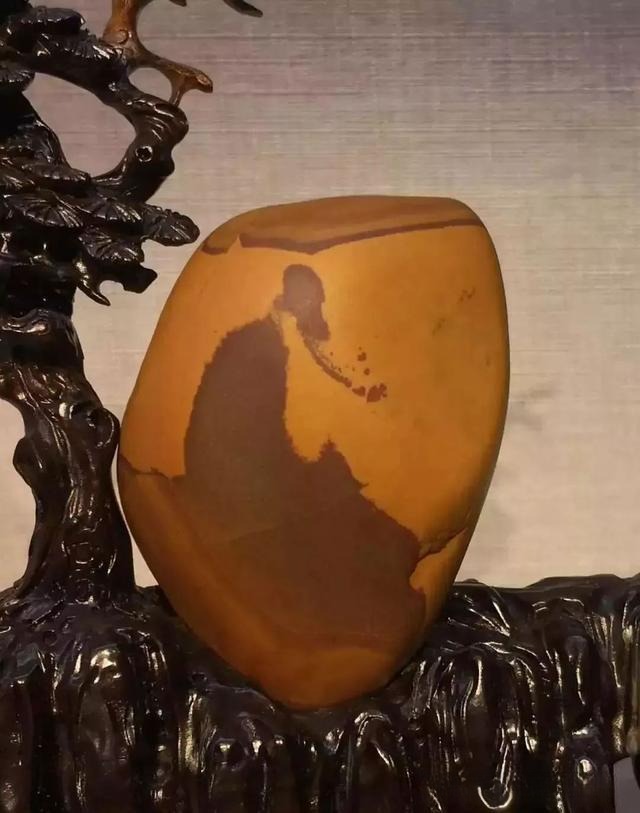
Its unique visual appeal is a masterclass in natural craftsmanship. For eons, these stones have endured constant water erosion and tumbling, coupled with deep staining from ferric iron ions (Fe3+) found in the river. This long-term mineral infiltration and natural polishing result in a buttery, “oily” texture, a vivid color palette, and intricate patterns that make it a premier choice for fine gemstone carving.
Grading the Stone: Color and Texture
In the professional market, the value of a Yellow Wax Stone specimen depends on two critical factors: its color spectrum and its tactile grade.
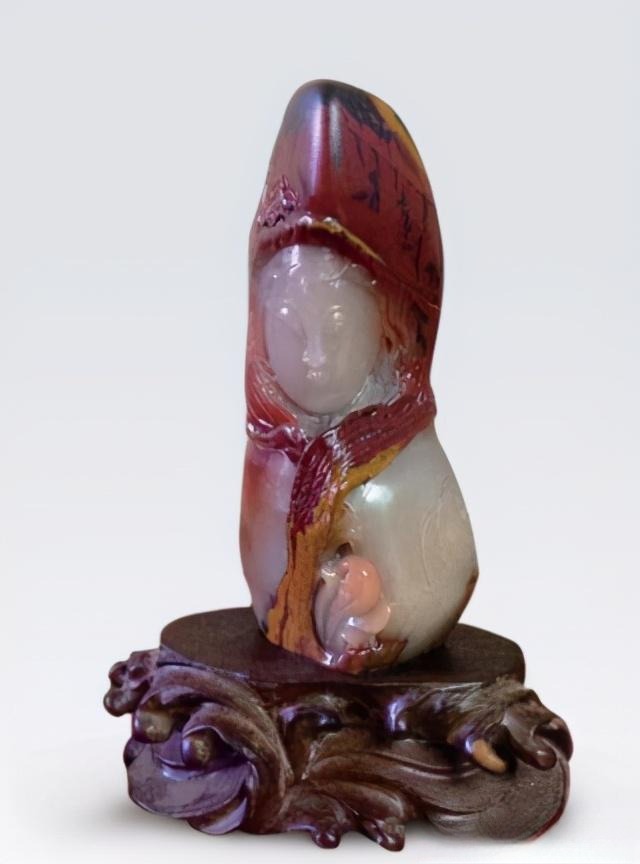
- Color Palette: While golden yellows and rich reds dominate, the stone’s range is surprisingly broad, encompassing mutton-fat white, celadon, black, gray, and even deep greens.
- Texture Classification:
- Frozen Wax (Dong La): The highest grade; it is translucent, ice-like, and possesses a smooth, jade-like luster.
- Gel Wax (Jiao La): Notable for its warm, dense texture and rich, fluid color transitions.
- Fine Wax (Xi La): Characterized by an extremely fine grain and a matte, subtle finish that exudes a more understated elegance.
Artistic Achievement and Industry Recognition
Thanks to its exceptional workability and aesthetic depth, Yingtan Yellow Wax Stone has earned high acclaim in the contemporary stone carving community, consistently winning top honors at prestigious exhibitions:
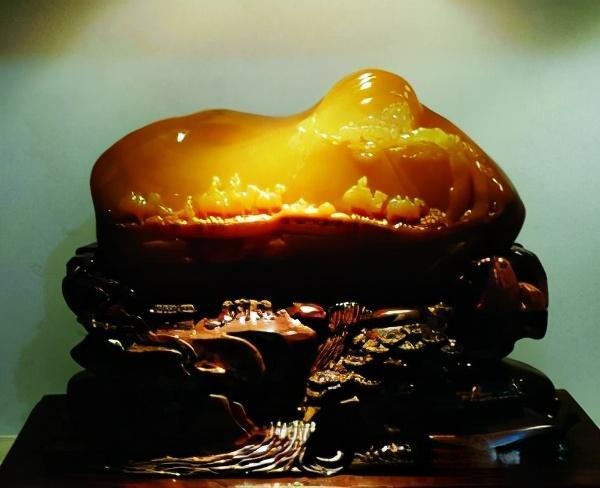
- 2015: Master carver Liu Wanbing’s work, “A Breath of Spring,” took the Gold Medal at the 9th China International Cultural Industries Fair.
- 2019: At the 15th Shenzhen International Cultural Industries Fair, the piece “Misty Rain in Jiangnan” secured a Gold Medal, while “Autumn Longing by the Sunrise” earned a Bronze.
Wannian Pearls: The Pioneer of Chinese Freshwater Cultivation
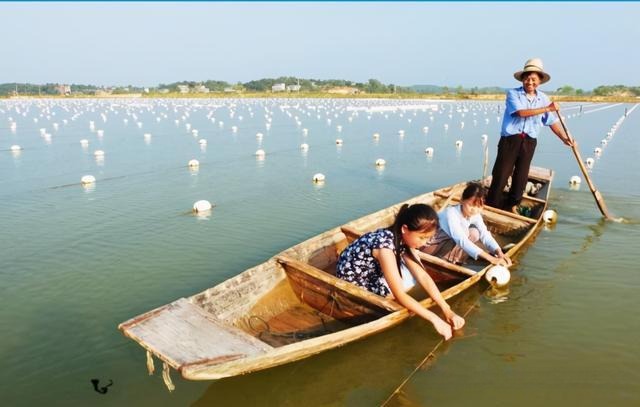
While Zhuji is the most famous name in pearls today, Wannian County in Jiangxi Province holds an equally vital place as a premier “home of freshwater pearls.” Wannian was among the first in the world to successfully cultivate baroque and nucleated pearls. It currently hosts a national-level conservation zone for the Triangle Sail Mussel (Hyriopsis cumingii) and a breeding base for the Ikecho Mussel. These credentials have earned the region its reputation as the “Pearl Kingdom.”
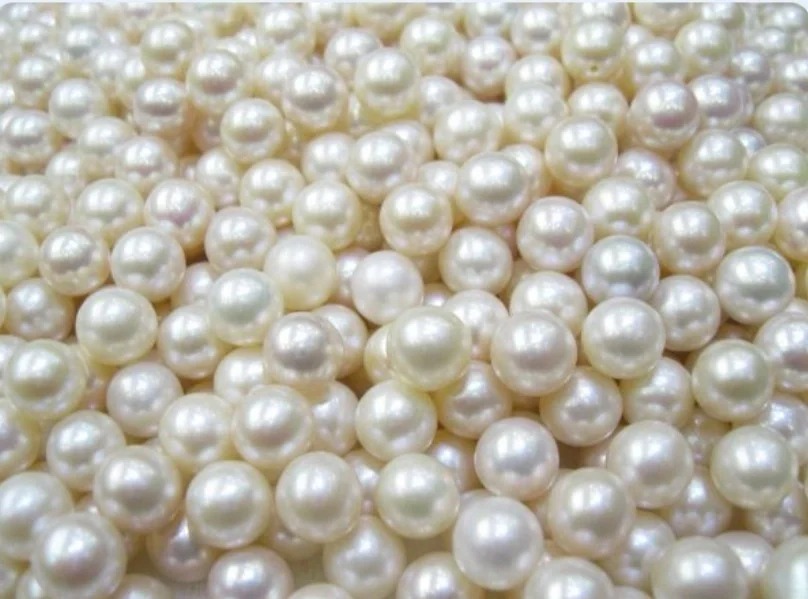
The high quality of Wannian pearls stems from a unique geographic advantage. Situated on the shores of Poyang Lake, the county enjoys vast freshwater territories. The subtropical monsoon climate brings abundant rainfall and pristine water quality. These waters teem with plankton, creating a perfect ecological loop for pearl mussels. This nutrient-rich environment allows Wannian to produce pearls renowned for their large size, perfect roundness, and exceptional luster.
Technical Innovation and the Global Talent Hub
Historically, Wannian County has served as the “technical engine” for China’s pearl industry.
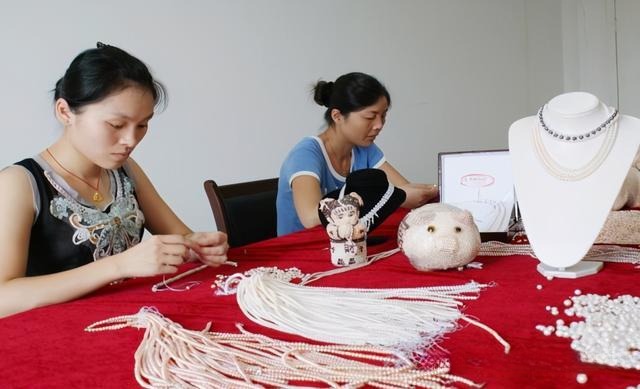
- Scientific Milestones: The region pioneered several breakthrough techniques. These include non-nucleated pearl grafting and integrated land-water recycling systems. It also developed cell-piece cultivation for Triangle Sail Mussels.
- The “Pearl Masters”: Beyond technology, Wannian exported immense talent. Known locally as “Pearl Women” and “Pearl Men,” these technicians traveled across China. At the industry’s peak, they managed grafting for over 80% of the nation’s nucleated pearl farms. They acted as the true backbone of the national industry.
Industry Evolution and Historical Context
- The Golden Age: By 1997, Wannian accounted for 30% of the provincial output, leading all indicators across southern China.
- The Turning Point: In the late 1990s, the industry faced a devastating blow from catastrophic floods and widespread mussel disease. These events, combined with a surge in national production and fluctuating market prices, pushed the local industry into a temporary decline.
- Market Shifts: After 2005, local farming acreage tightened. The industry’s commercial center shifted toward Shanxiahu in Zhuji. Nevertheless, Wannian’s legacy remains an indelible chapter in gemstone history. It was the technical birthplace of Chinese freshwater pearls and preserved critical genetic resources.
Zhang River Agate: Gemstones of Southern Jiangxi
After exploring the pearls of Wannian, we move to Dayu County in Ganzhou. This region is a major hub for the Gemstones of Jiangxi, specifically the vibrant Zhang River Agate. Dayu sits at the upper reaches of the Zhang River. Here, the borders of Jiangxi, Guangdong, and Hunan provinces meet.
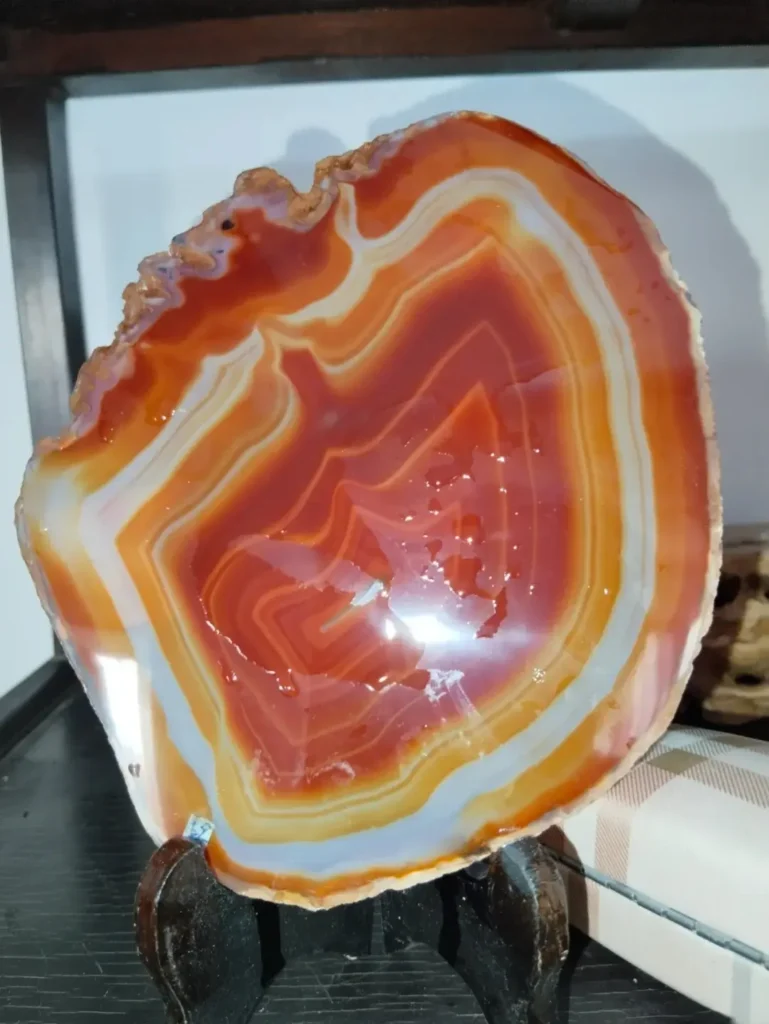
Known as the “Southern Gateway,” Dayu boasts abundant water and a diverse geological profile. The land yields many treasures. These include Yellow-flower stone, Blue-flower stone, and various wax stones. Among them, the most distinctive is the Zhang River Agate.
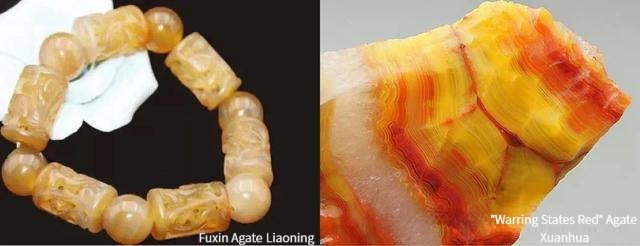
In my previous article, A Guide to Chinese Red Agate Varieties, I explored the famous agates of Fuxin and the “Warring States Red” from Xuanhua. While all are part of the agate family, geographic origin dictates their unique appeal. Zhang River Agate possesses strong regional characteristics. Unlike its northern cousins, this prominent member of the Gemstones of Jiangxi often coexists with wax stones and quartz crystals.
Defining Characteristics: Scale and Color
Compared to agates from other regions, Zhang River Agate stands out for several key reasons:
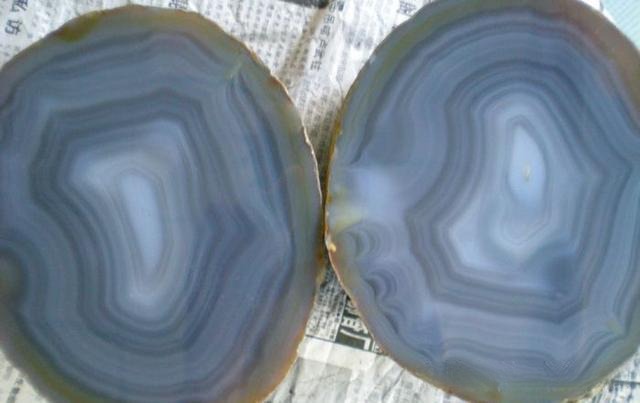
- Impressive Scale: While many agates are found as small pebbles, Zhang River specimens are notably large, with individual stones typically ranging from several hundred grams to several kilograms.
- Complex Palette: The color profile leans heavily toward vibrant yellows, often enriched by intricate bands of red, green, and blue.
- Captivating Patterns: These colors entwine to form rhythmic, silk-like bands and diverse patterns, making each specimen a unique work of natural art.
Explore More in Our Chinese Gems Series
At Jewea, our mission is to uncover the hidden geological wonders across China. Before we dove into the Gemstones of Jiangxi, we explored several other regions famous for their rare and storied treasures.
Take a look back at our previous journeys:
East China
- Shandong: Gemstones of Shandong: Changle Sapphire, Diamond & Taishan Jade | Gems of China Series
- Fujian: Gemstones of Fujian: Sapphire, Zircon, Garnet, and Shoushan Stone | Gems of China Series
- Anhui: Gemstones of Anhui: Huoshan Quartzite Jade, Huangshan Wax Stone & Turquoise | Gems of China Series
- Jiangsu: Gemstones of Jiangsu: Crystal, Yuhua Stone, & Taihu Stone | Gems of China Series
- Taiwan: Gemstones of Taiwan: Red Coral, Blue Chalcedony, Taiwan Nephrite & Seven-Color Jade | Gems of China Series
- Zhejiang: Gemstones of Zhejiang: Changhua Chicken-Blood Stone, Qingtian Stone, & Zhuji Pearls | Gems of China Series