Gemstones of Hainan: Sapphire, Red Zircon, Leigongmo Tektite, and Giant Clam | Gems of China Series
In this installment of our “Gemstones of China” series, we venture to the tropical south to uncover the hidden treasures of Hainan. As China’s second-largest island—and its largest province when factoring in its vast maritime territory—Hainan is famous for its vibrant culinary scene and eternal spring weather. Beyond the palm trees, however, lies a land of immense mineral wealth.
Geological surveys have identified 88 distinct minerals across 487 locations on the island, with 59 of these already fully explored. Hainan currently leads the nation in reserves of critical minerals like zircon sand and ilmenite.
Today, we are diving deep into the Gemstones of Hainan, exploring the island’s most iconic exports: Sapphires, Red Zircons, Leigongmo Tektites, and the legendary Giant Clam shells.
Penglai Sapphires: One of China’s Earliest and Largest Deposits
As one of the “Big Four” precious gemstones, the sapphire remains the undisputed titan of the blue gem world, commanding timeless appeal among collectors and connoisseurs alike.
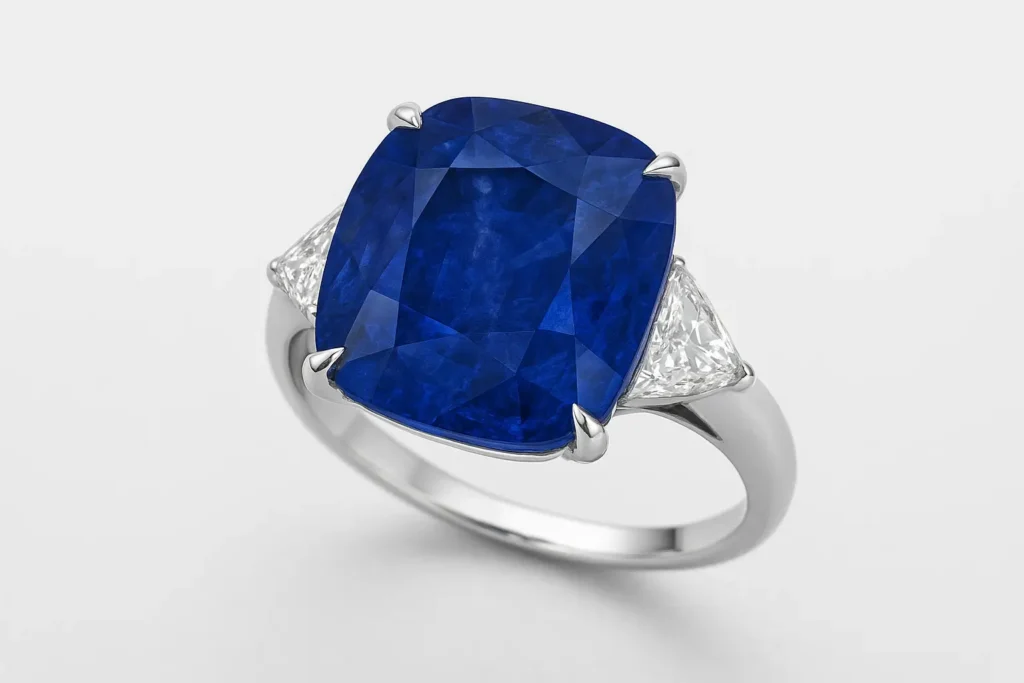
While we previously explored the famous deposits of Shandong, China’s sapphire wealth extends far beyond the north. Significant mines have also been unearthed in Anhui, Fujian, and specifically, the Penglai region of Hainan. In fact, the Penglai sapphire mine stands as one of the earliest discoveries in China, boasting one of the country’s most substantial reserves.
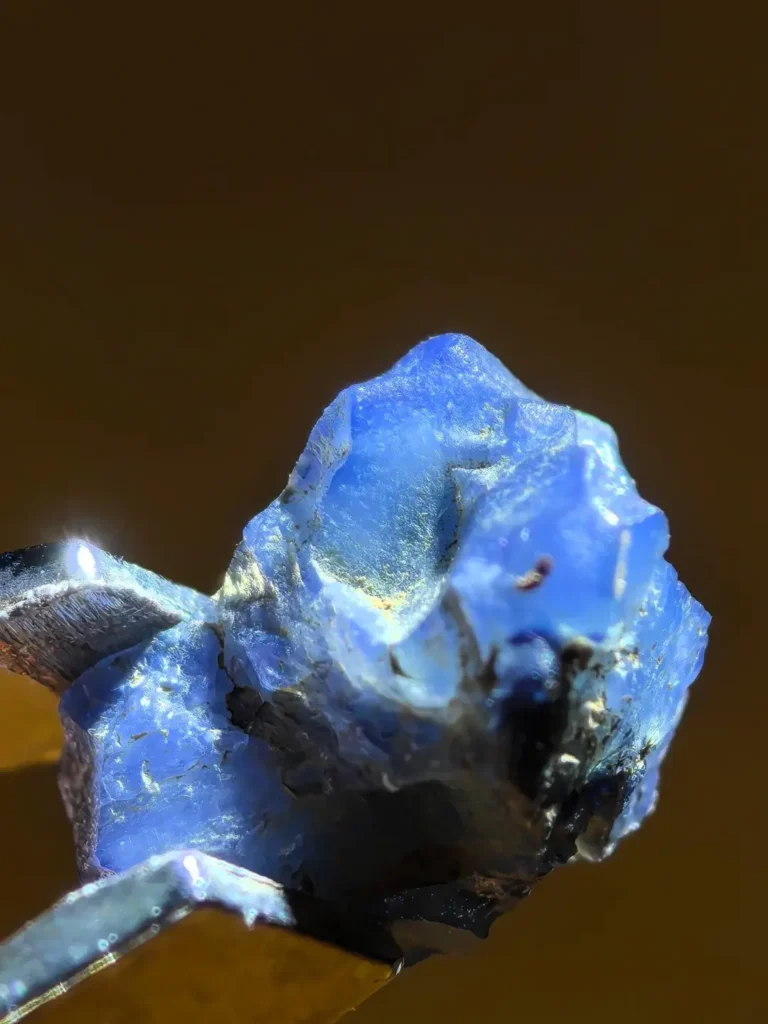
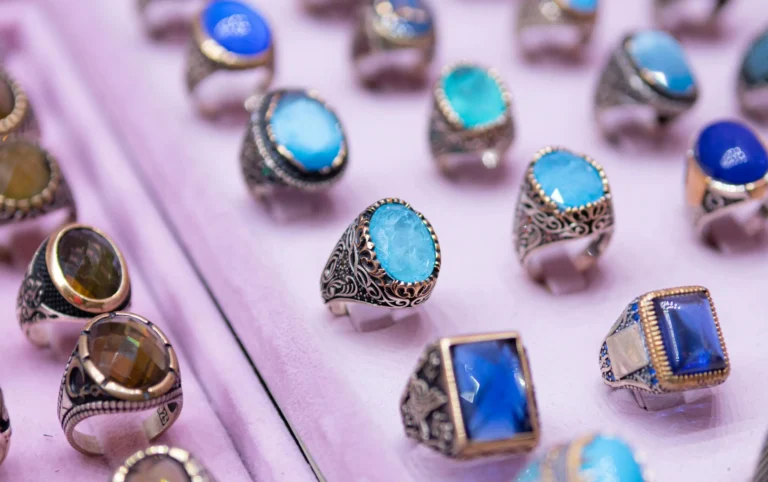
Hainan sapphires are characterized by a striking vitreous luster and exceptional clarity. They typically occur as irregular grains or fragmented shards; finding a complete, well-formed crystal here is an extraordinary rarity.
The island’s unique geological “recipe”—rich in iron, titanium, and various trace elements—produces a sophisticated color palette. While deep navy and airy light blues predominate, the mines also yield mesmerizing shades of teal, grayish-blue, and even warm yellows. Beyond the sapphires themselves, these deposits are a treasure trove of over 30 associated minerals. Most notably, they produce gem-grade rubies and zircons, significantly elevating the mineralogical and commercial value of the region.
Penglai Red Zircon: Distinguished by “High-Type” Characteristics
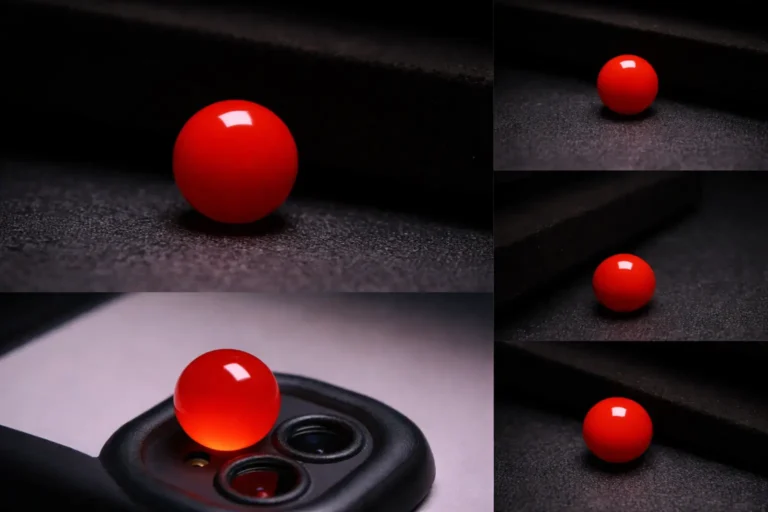
Zircon is another highlight among the gemstones of Hainan. It is one of the oldest minerals on Earth, a true geological time capsule. Often called hyacinth, its chemical composition is zirconium silicate (ZrSiO4) with a dispersion value of 0.038—strikingly close to a diamond’s 0.044. This gives the gem a remarkable “fire.” While it occurs in a spectrum of blues, greens, yellows, and purples, the vibrant red zircon remains the most prized, followed by blue and golden-yellow varieties. You can explore more about whether this ancient mineral is a [Zircon: Is This Ancient Gem a Fake Diamond, or a Valuable Treasure?] in our dedicated deep dive.
In China, zircon deposits are primarily found in Mingxi (Fujian), Muling (Heilongjiang), and Changle (Shandong). However, the zircon sourced from Penglai in Wenchang, Hainan, is unique as an [associated mineral] within sapphire deposits. These stones are predominantly reddish-brown—though rare blue specimens do occasionally surface—and exhibit a powerful vitreous luster. Known for their high density, hardness, and [refractive index], they typically appear as irregular grains and often feature natural internal fractures and inclusions.
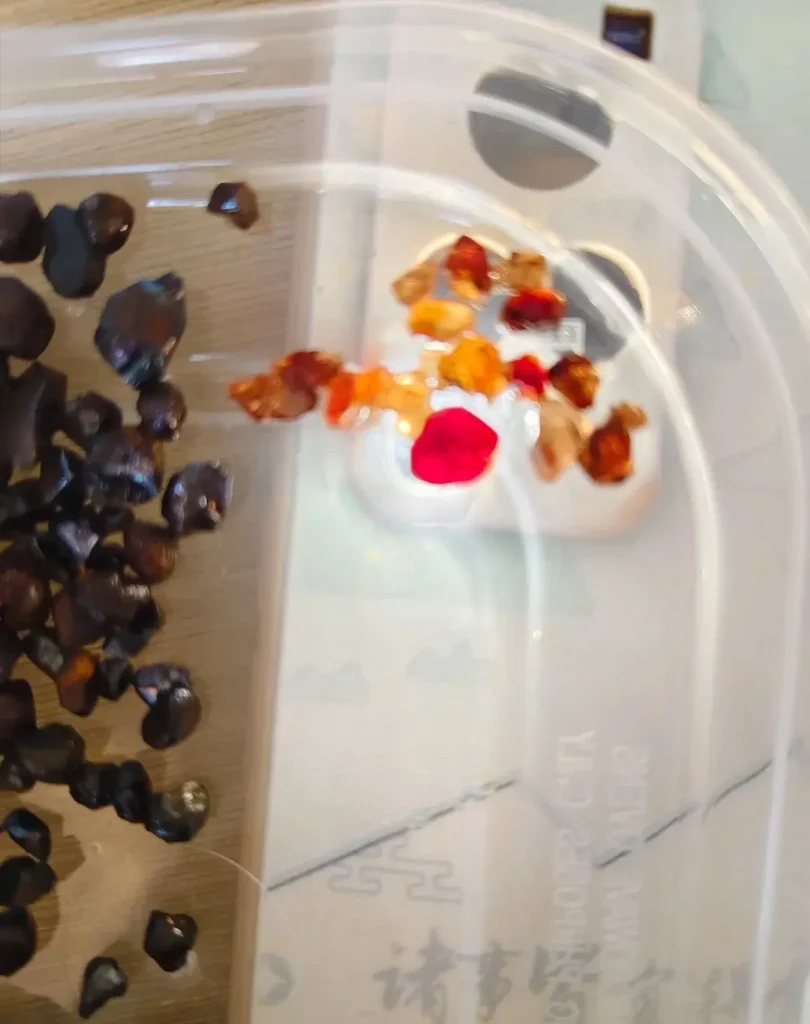
What sets the Penglai deposit apart is its high yield of gem-grade material, specifically characterized as High-Type zircon.
💡 Gemology 101: Why “Type” Matters
The gemstone industry categorizes zircon into three grades based on its degree of crystallinity:
- High-Type: These are the “cream of the crop” in the gemstone world. They possess a well-ordered crystal structure, offering the best brilliance and durability. Naturally, they are rarer and command higher prices.
- Intermediate-Type: These stones sit in the middle of the structural spectrum. Through professional optimization and heat treatment, they can often be upgraded to high-type zircon.
- Low-Type: These zircons have a compromised, nearly amorphous structure due to natural radioactive decay over millions of years. They are typically abundant, less visually appealing, and can even exhibit slight radioactivity—making them unsuitable for fine jewelry.
Hainan Leigongmo: The Versatile Tektites of the South
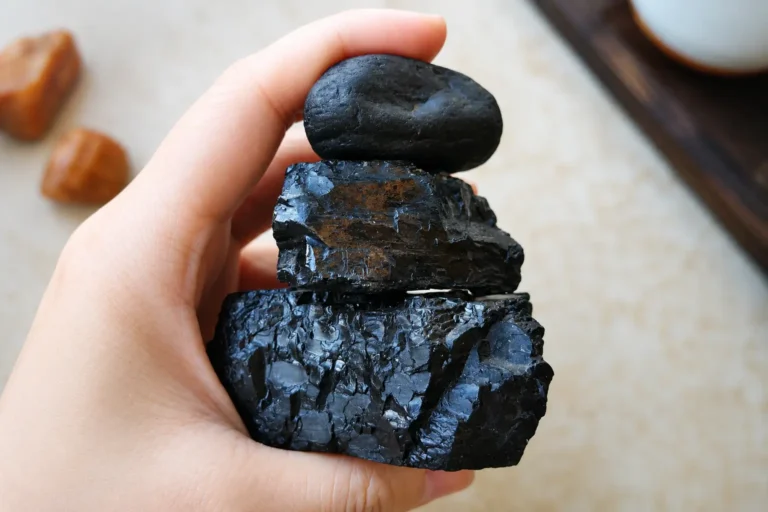
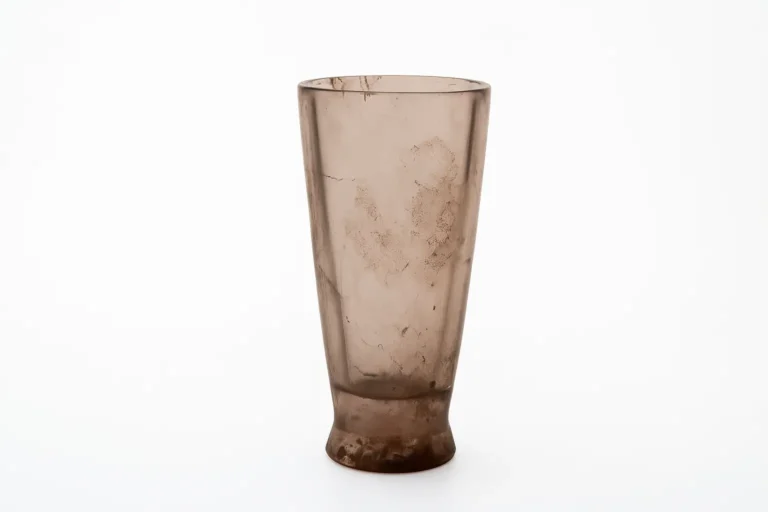
Not all gemstones of Hainan are minerals; some are natural glass. Leigongmo is a variety of tektite—natural glass forged by the intense heat of extraterrestrial impacts. We previously explored the science behind these unique materials in our guide to Natural Tektite. While tektites carry different names globally, such as Moldavite or Libyan Desert Glass, China’s most prominent deposits lie on Hainan Island.
Locally, people call them Leigongmo, or “Ink of the Thunder God.” Ancient folklore claims these dark stones fell from the sky during storms. Today, miners primarily find them in Haikou, Qiongshan, and Sanya. Wenchang and Qionghai counties offer the richest concentrations.
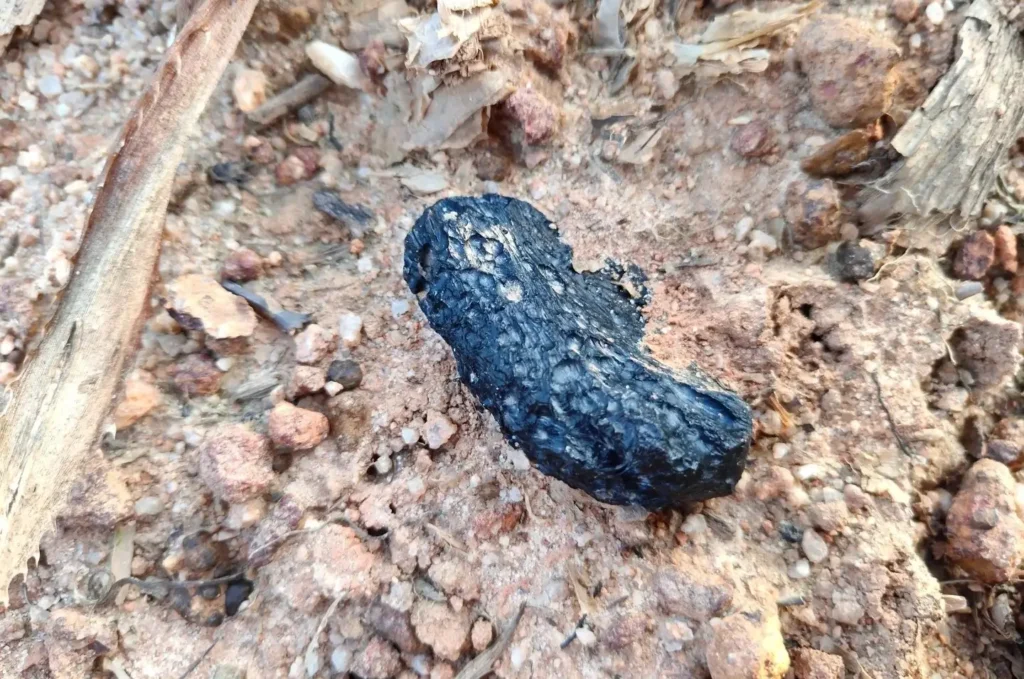
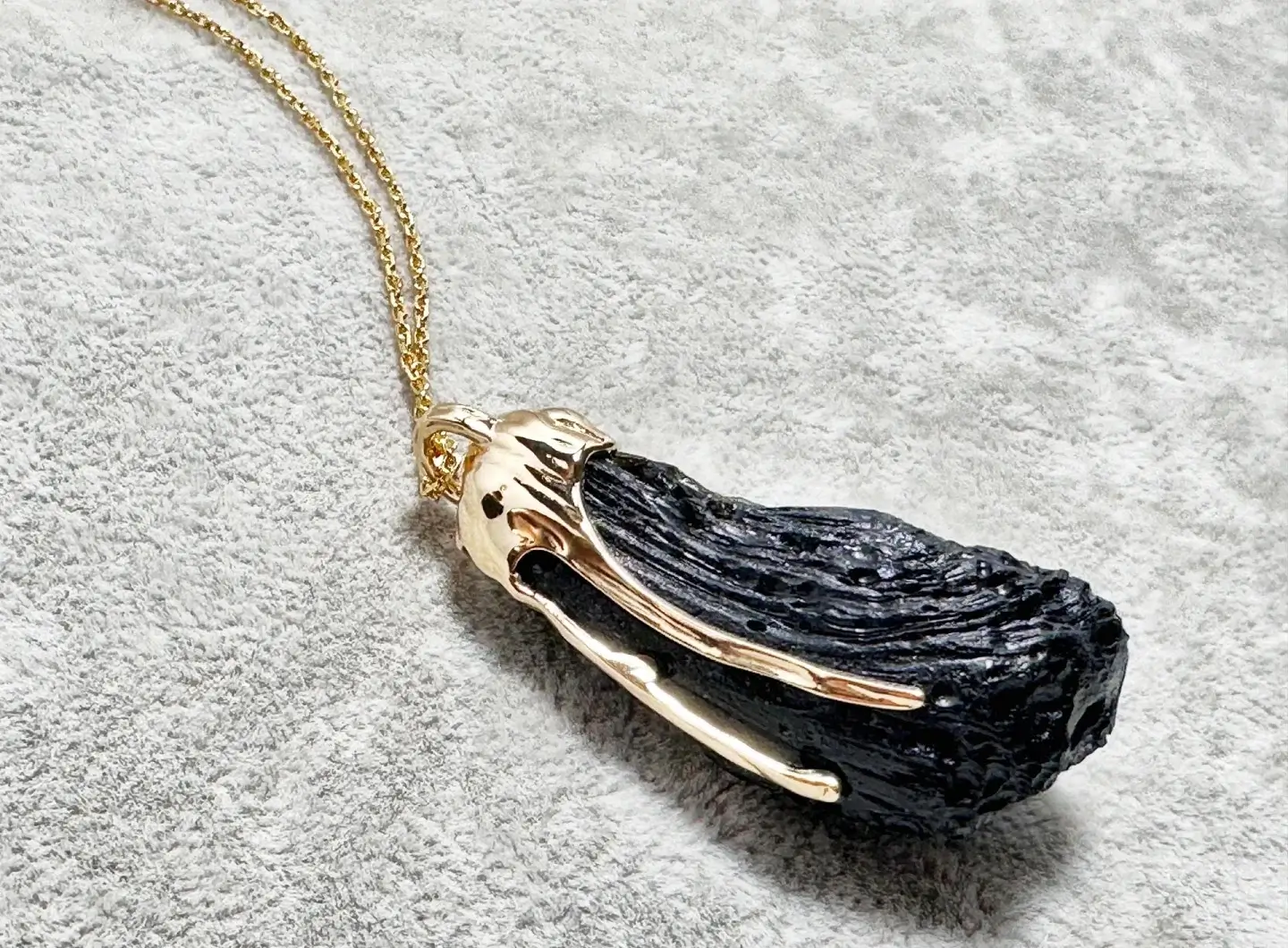
Hainan’s tektites offer diverse shapes and a remarkably fine texture. They feature a sophisticated palette of deep black, olive green, and earthy tan. Their soft, muted luster makes them excellent raw materials for jewelry.
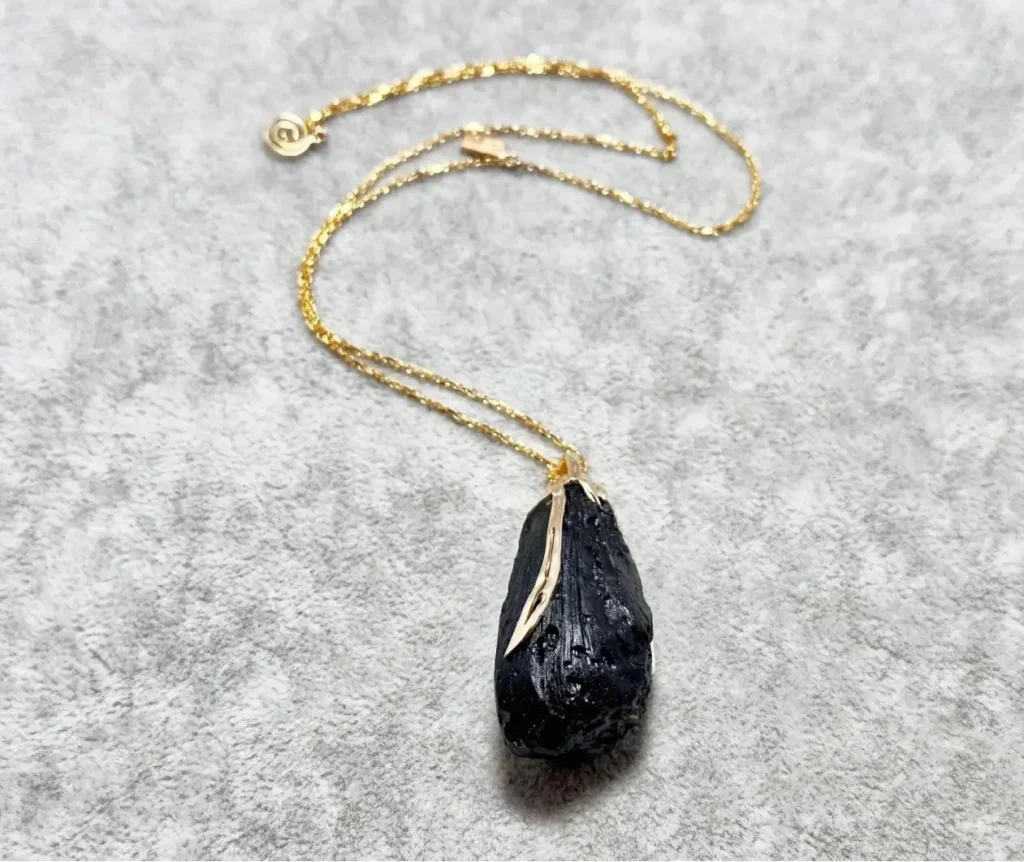
Today, while many collectors prize these as raw mineral specimens, a growing portion of the harvest is being expertly cut into faceted gemstones or intricately carved into decorative art pieces.
Hainan Giant Clams: The “King of Shells”
The Giant Clam (known as Chequ, or 砗磲, in Chinese) is one of the largest living bivalve mollusks in the ocean. Often hailed as the “King of Shells,” it holds a sacred place as one of the Seven Treasures of Buddhism, alongside gold, silver, and amber.
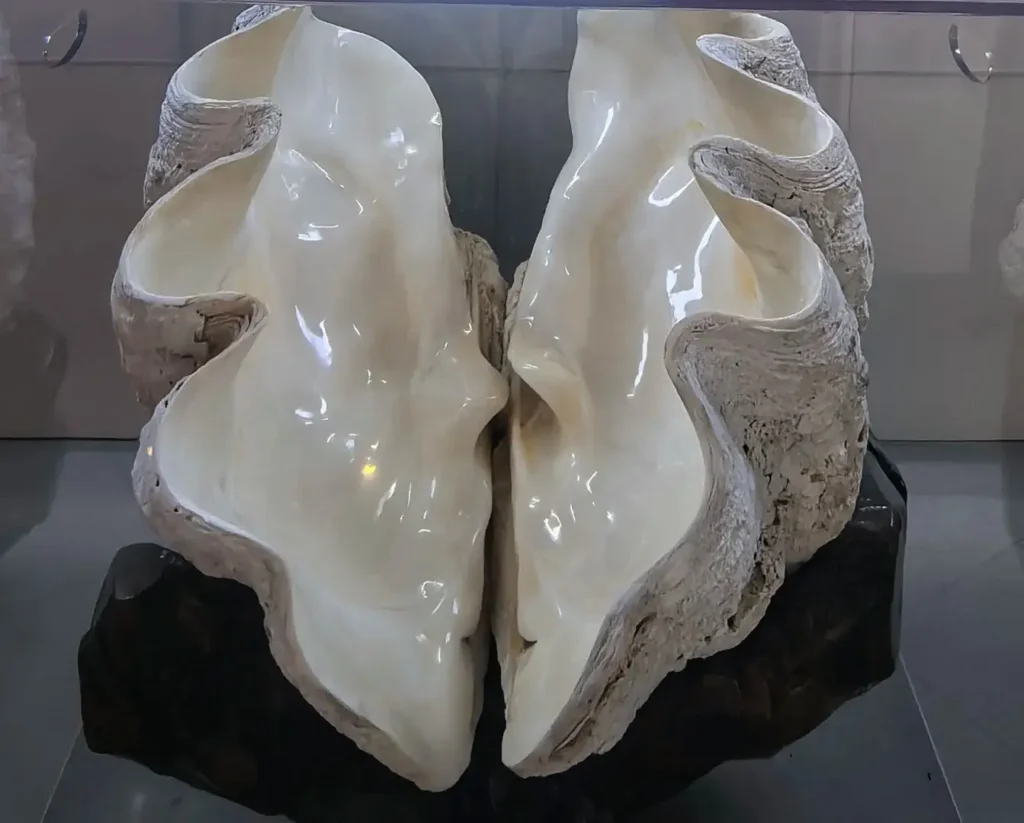
While these majestic creatures inhabit the vast Indian and Pacific Oceans—thriving near Indonesia and the Philippines—they also appear around Hainan and the South China Sea islands. Hainan’s specimens are famous for their massive, thick shells. The inner surface boasts a smooth, snowy-white luster, while the exterior features distinctive, wheel-like radial grooves. For decades, artisans carved this organic material into exquisite prayer beads and ornaments, making them a quintessential souvenir for island travelers.
However, the narrative surrounding the Giant Clam has shifted. Overfishing, shell harvesting, and habitat degradation have placed pressure on wild giant clam populations. In response, China took decisive action to protect these marine giants. In January 2017, Hainan introduced regulations that effectively banned the commercial trade and processing of giant clams in the province.
Outside China, regulations vary by country and region. Giant clams are listed under CITES Appendix II, which regulates their international trade, while some countries also restrict or prohibit the harvesting of wild specimens.
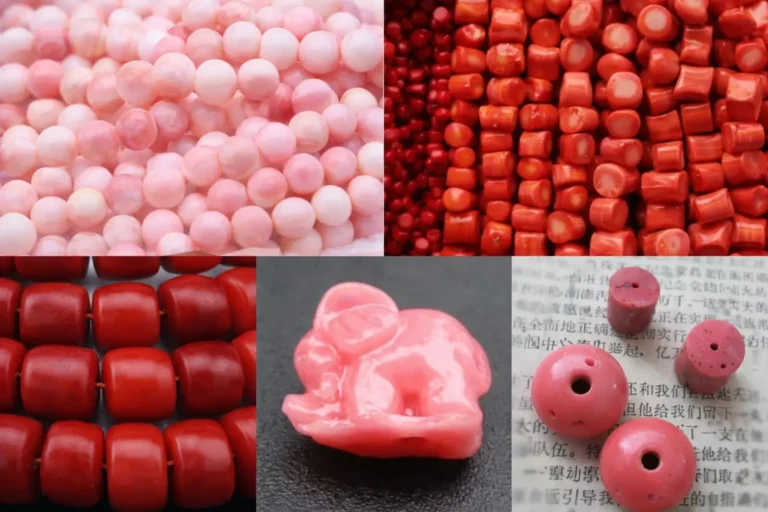
As genuine Tridacna shell has become less readily available, imitation materials can also be found in the jewelry market. If you are interested in Tridacna shell jewelry, see our article Tridacna Shell Jewelry Identification: A Guide to Natural vs. Imitation for a closer look.
Explore More in Our Chinese Gems Series
At Jewea, our mission is to uncover the hidden geological wonders across China. Before we dove into the Gemstones of Hainan, we explored several other regions famous for their rare and storied treasures.
Take a look back at our previous journeys:
South China