Tianqingdong vs. Blue Water Jadeite: 5 Key Differences You Should Know
In this article, we’ll explore the key differences between Tianqingdong vs. Blue Water Jadeite.
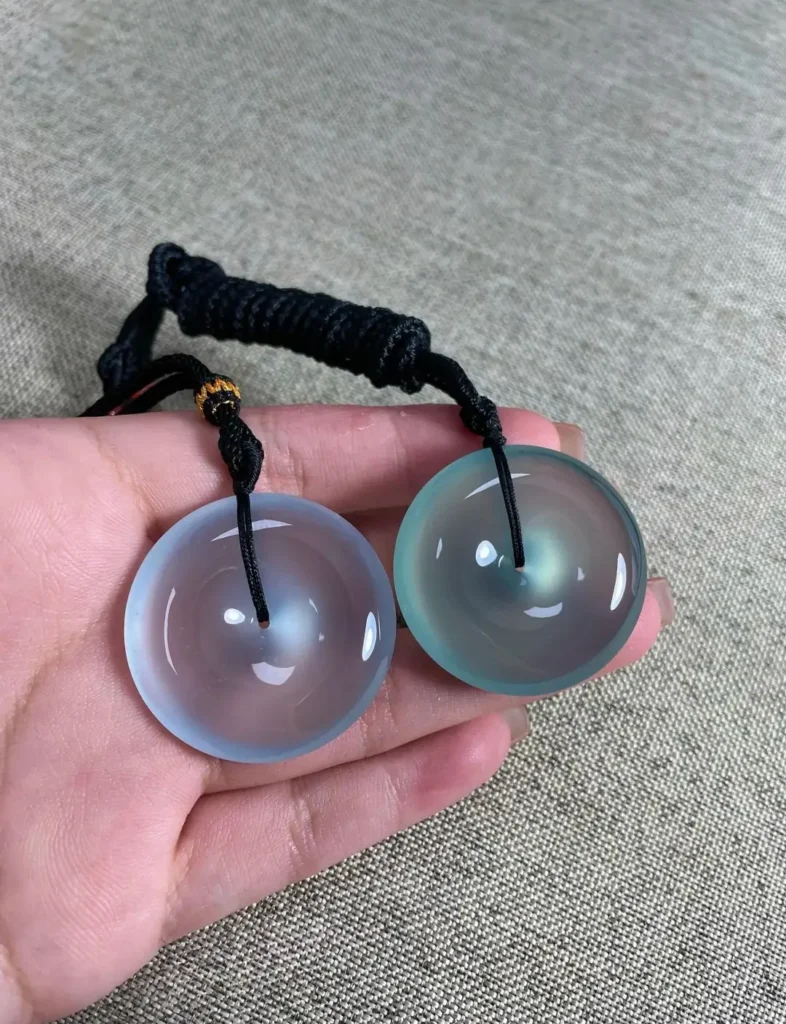
There is a classic saying in the jadeite market: “Novices chase color, but experts hunt for transparency.” In recent years, the market has seen a surge in gemstones that “act” as jadeite simulants—emerging varieties that have gained fame specifically for mimicking the iconic “water head” (translucency) of authentic jadeite.
We’ve previously covered several of these look-alikes, such as Ice Jade Quartzite, Albite, Prehnite, Chalcedony,and common Serpentine, in our guide: Stop the Scam: The Ultimate Guide to Spotting Fake Ice Jadeite.
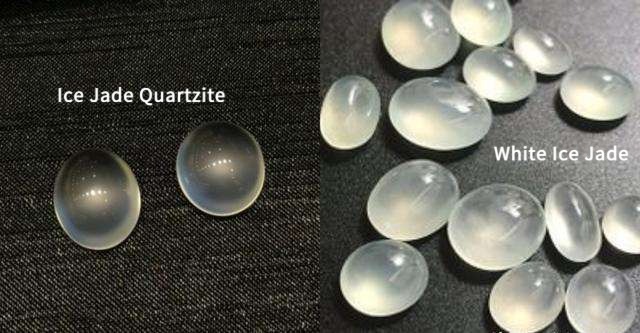
Among all the contenders that can visually pass for jadeite, Tianqingdong—a niche variety of Serpentine—is undoubtedly the most stunning. Today, we’re diving into exactly how this stone manages to mirror the appearance of high-end jadeite so effectively.
Tianqingdong: A Rare Blue Variety of Serpentine Jade?
In our previous feature, Xiu Jade (Xiuyan Jade) Guide: Serpentine, Tremolite, and Why This Ancient Chinese Gem is Underrated, we took a deep dive into Xiuyan Jade, one of China’s four legendary gemstones. From a gemological perspective, Xiuyan Jade belongs to the Serpentine family—hydrous magnesium silicates that occur abundantly across the globe.
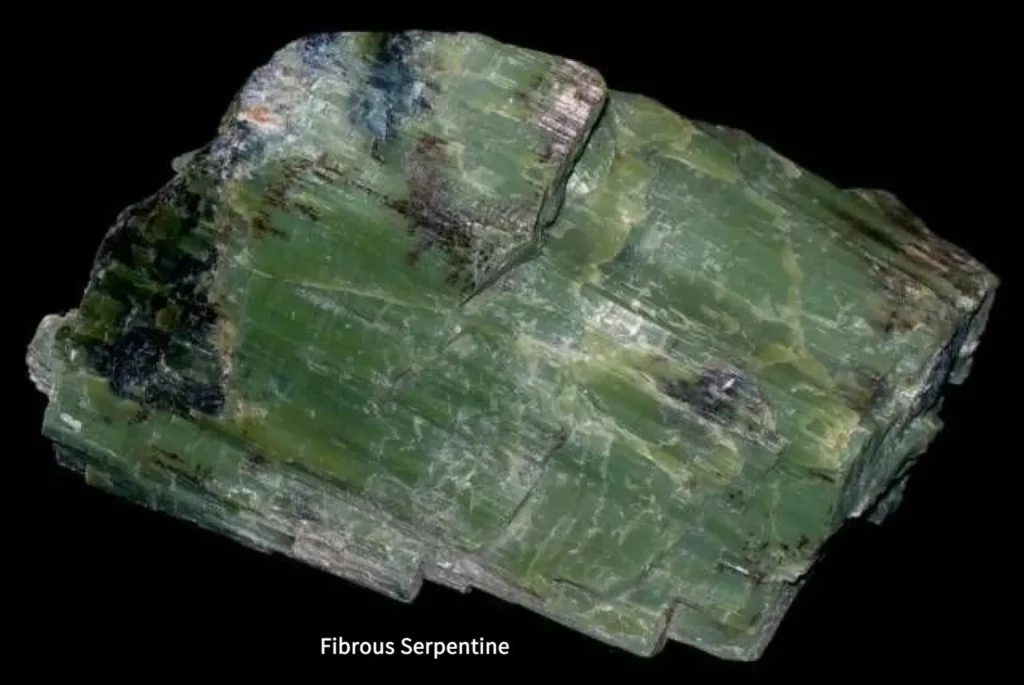
To standardize market terminology, the industry now reserves the term “Xiuyan Jade” specifically for material sourced from Xiuyan County in Liaoning Province. Serpentine minerals from other regions—such as Shandong, Qinghai, and Xinjiang—are officially classified simply as “Serpentine Jade” during authentication.
These stones boast an incredible color spectrum, ranging from deep forest greens to pale yellows. Occasionally, high-quality specimens with lighter tones achieve such remarkable translucency that they become dead ringers for authentic jadeite.
What exactly is Tianqingdong?
Among the vast array of serpentine varieties, “Tianqingdong” has emerged as a true market dark horse and the undisputed “beauty icon” of recent years.
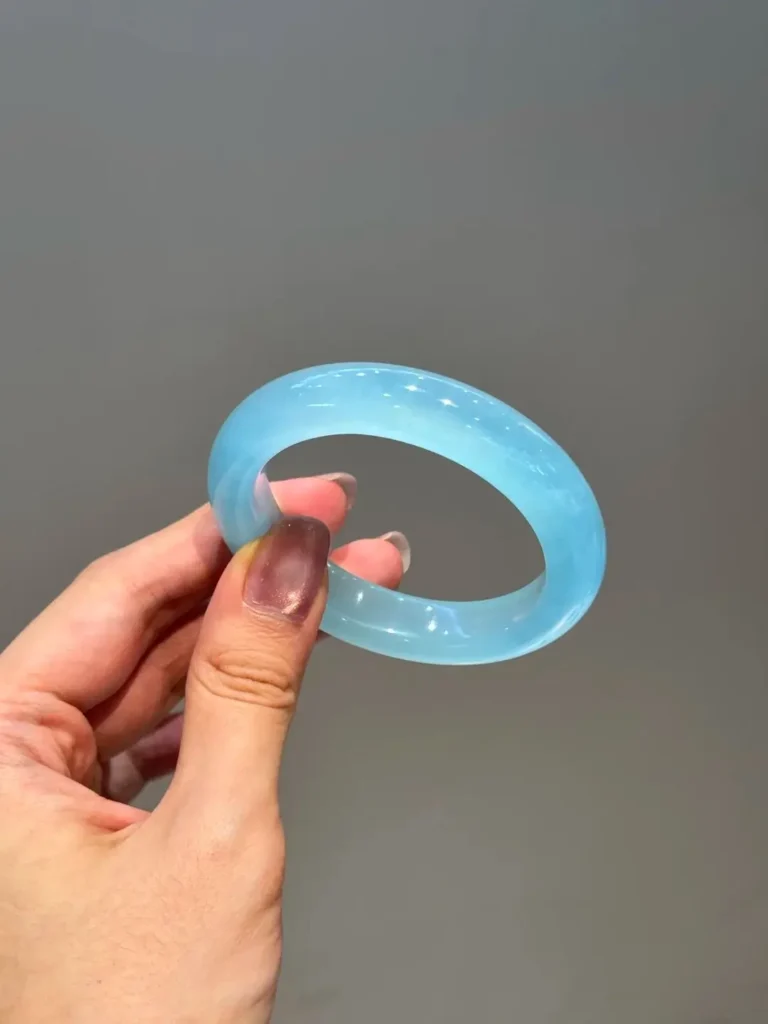
- Origin and Composition: Sourced from Xinjiang, China, this specific variety of serpentine jade is primarily composed of Antigorite.
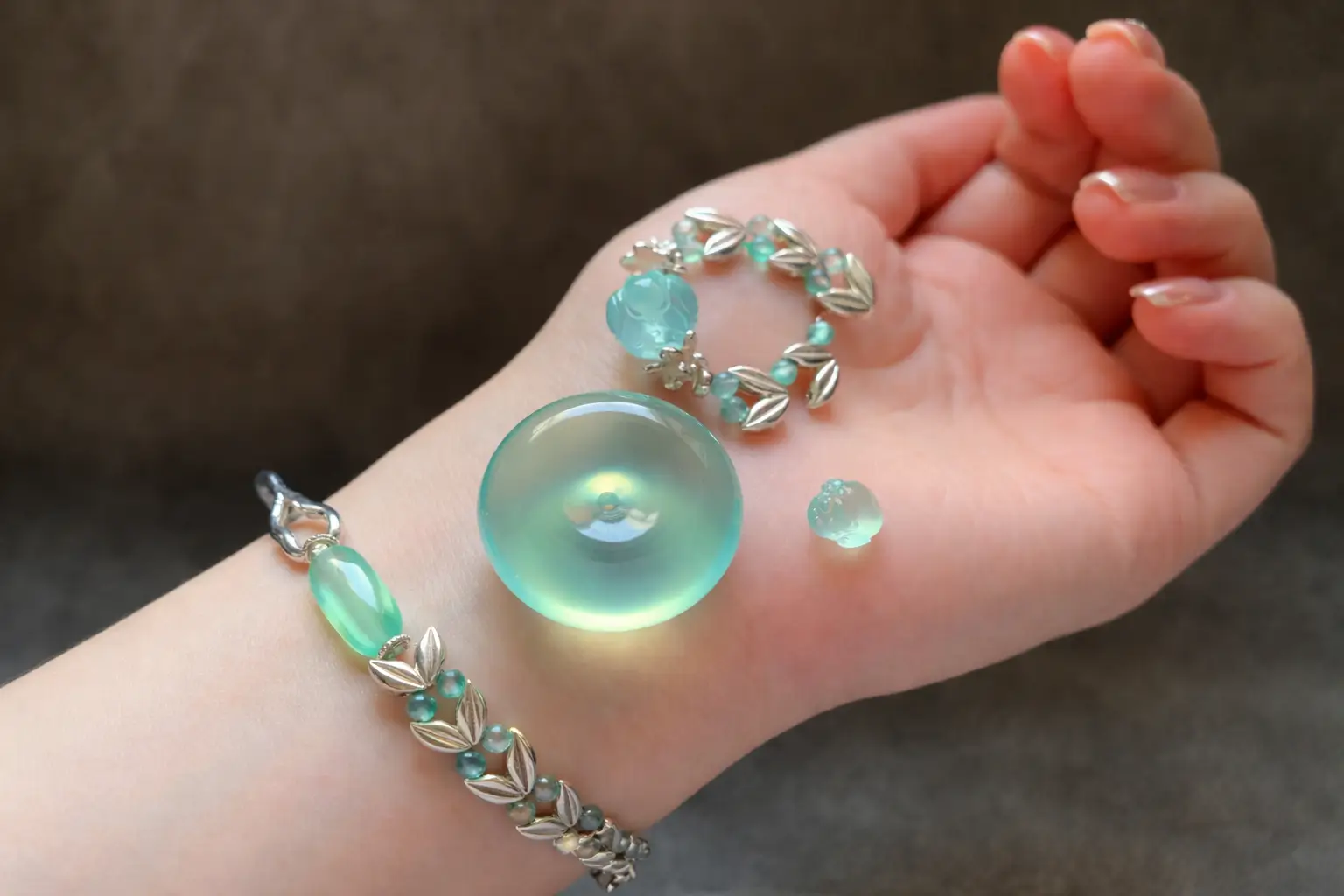
- A Unique Blue Hue: While traditional serpentine typically leans toward green or yellow tones, Tianqingdong breaks the mold with its exceptionally rare “blue-toned” palette. Its appearance ranges from a soft, bluish-green “clearing water” (Qing Shui) effect to a deep, vibrant blue that rivals the prestigious “Blue Water Jadeite.” This scarcity of color has driven its market value far beyond that of the conventional yellow-green serpentine varieties.
Tianqingdong: The Ultimate Double for Blue Water Jadeite
For the average gemstone enthusiast, distinguishing between Tianqingdong, “Qing Shui” Jadeite, and Blue Water Jadeite based solely on photographs is nearly impossible.
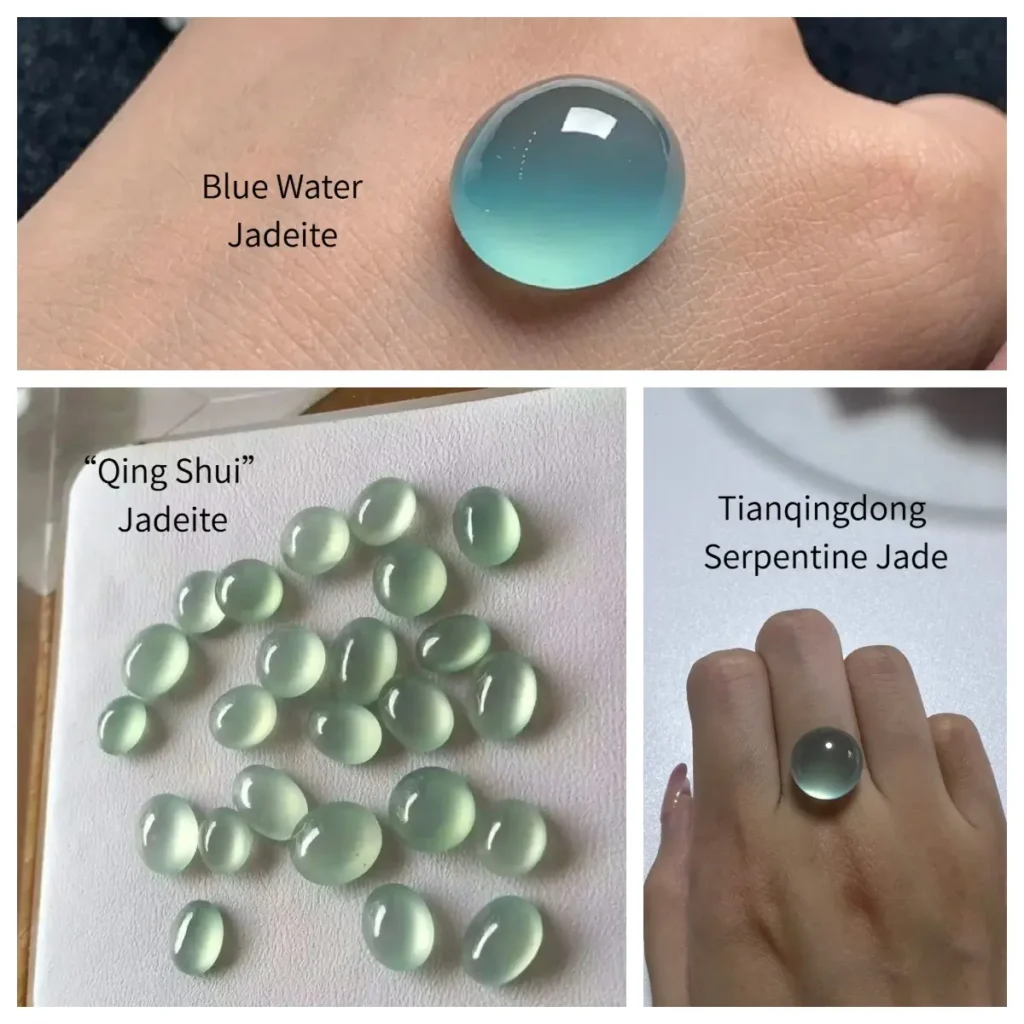
Tianqingdong’s ability to serve as a convincing “stunt double” for jadeite stems from its superior physical texture, which far surpasses that of ordinary decorative stones:
- Vitreous Luster: Unlike the greasy or waxy luster common in lower-end serpentine, high-quality, translucent Tianqingdong exhibits a sharp, vitreous (glassy) luster once polished.
- Icy Translucency: When the stone possesses high clarity and the perfect tonal saturation, it almost flawlessly replicates the visual depth of high-ice Blue Water Jadeite.
- The “Snowflake” Aesthetic: Tianqingdong often features white, patchy, or fleecy inclusions (formed by early-stage antigorite) and white pin-point inclusions (typically calcite or dolomite). This internal scenery bears a striking resemblance to the legendary “Muna Snowflake Cotton” found in premium jadeite.
Tianqingdong vs. Blue Water Jadeite: How to Spot the Difference
No two gemstones in the world are identical; even within the same category of jadeite, variations abound. When comparing across different species, it is important to remember that not every piece of Tianqingdong can rival the quality of premium “Blue Water” jadeite.
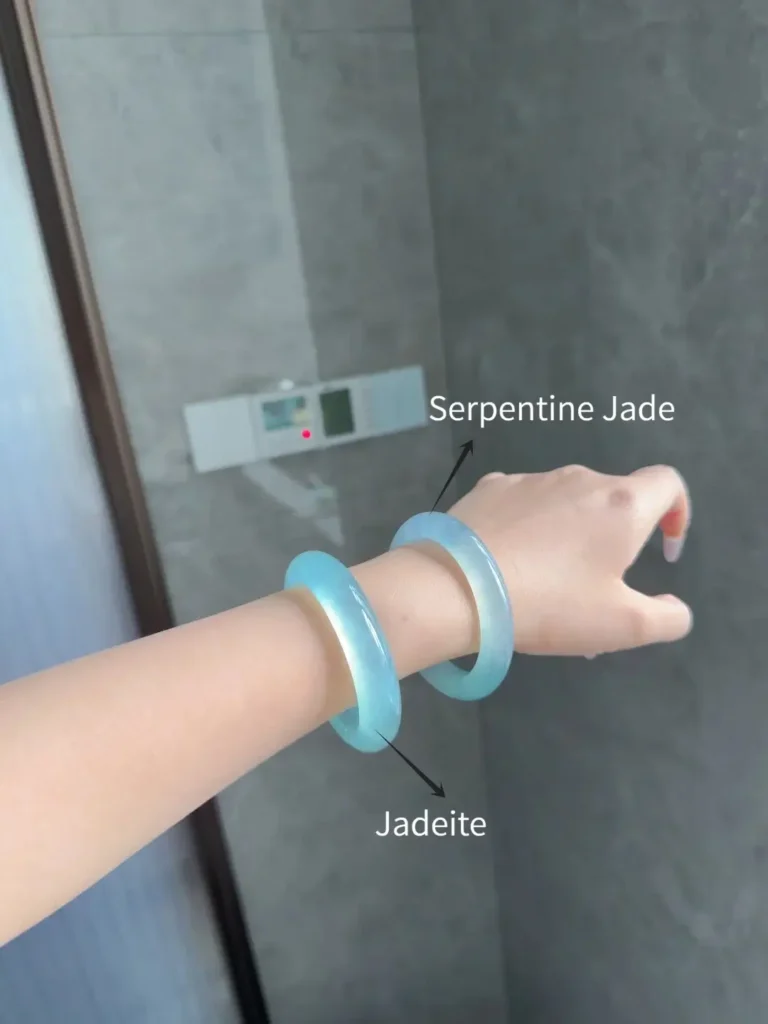
Despite how identical they may appear in photographs, subtle clues always reveal the truth if you know where to look.
1. The “Optical Glow” (Light Interaction)
When polished into small cabochons, Tianqingdong is notoriously difficult to distinguish from jadeite. However, as the volume of the stone increases, seasoned collectors who handle jadeite daily will begin to notice a shift in how the material interacts with light.
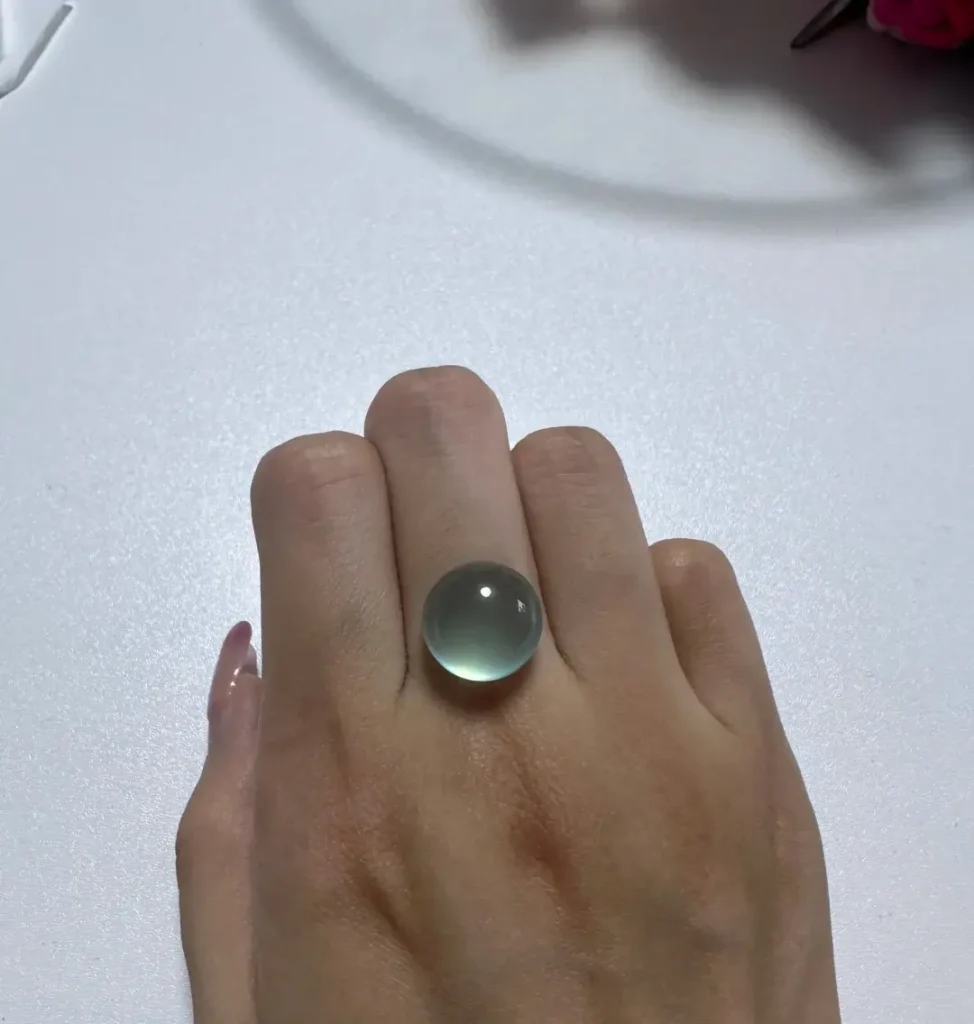
Some collectors describe the glow of Tianqingdong as appearing “superficial” or “unsettled.” This stems from the fact that even the finest Tianqingdong—regardless of its “water head” (translucency)—tends to exhibit a “soft” or “fleshy” optical effect as the material thickens.
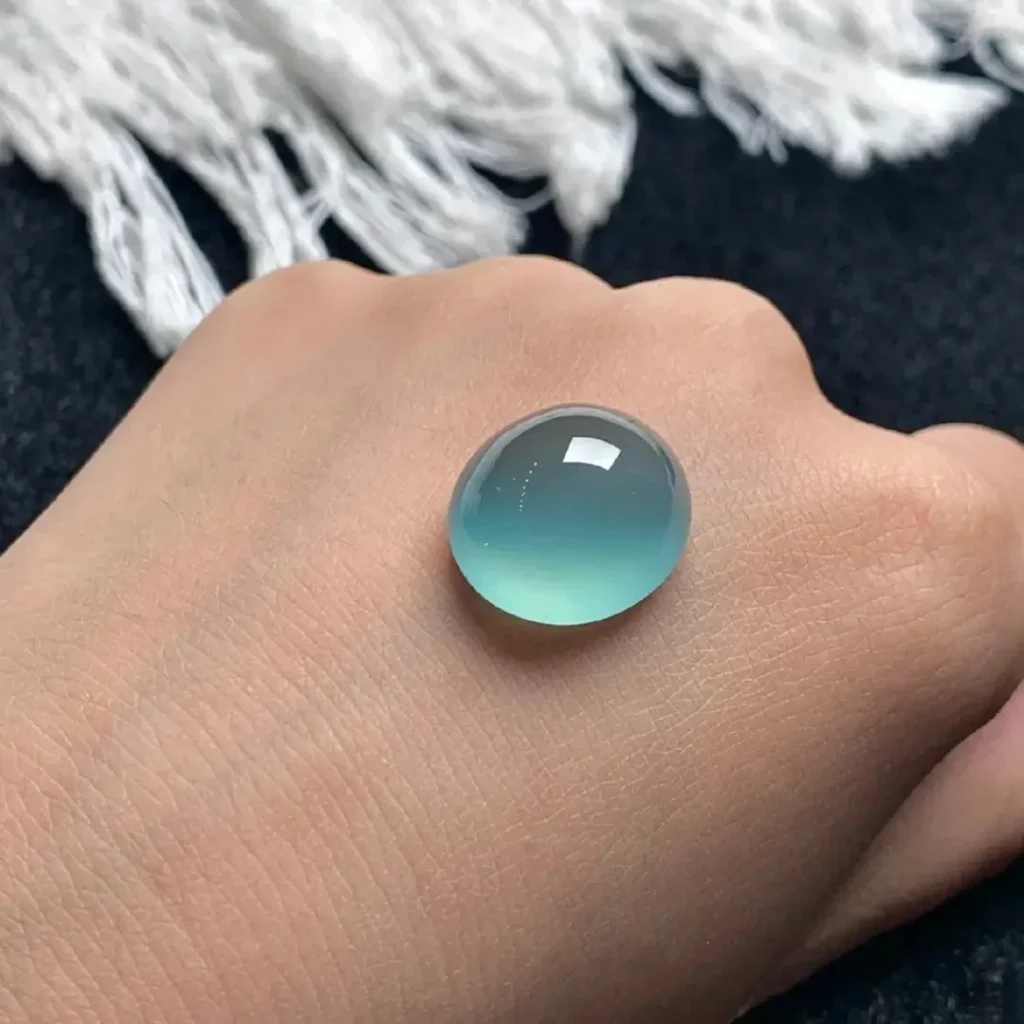
In contrast, high-quality “High-Ice” or “Glass-Grade” Blue Water and Qing Shui jadeite possess an inherent “rigidity” (Gang Xing). This sharp, crystalline strength is something Tianqingdong simply cannot replicate, no matter its quality. This difference is rooted in their distinct internal structures and refractive indices.
That said, when compared to mid-range Blue Water or Qing Shui jadeite, the resemblance is incredibly deceptive. For novice players with limited hands-on experience, distinguishing between the two can be a true “face-blind” challenge.
2. The “Heft” Test (Specific Gravity)
When dealing with larger pieces, veteran jadeite collectors can often sense a subtle “lightness” the moment they pick up a piece of Tianqingdong. This “floaty” feel is due to the lower density of serpentine jade compared to the dense structure of jadeite.
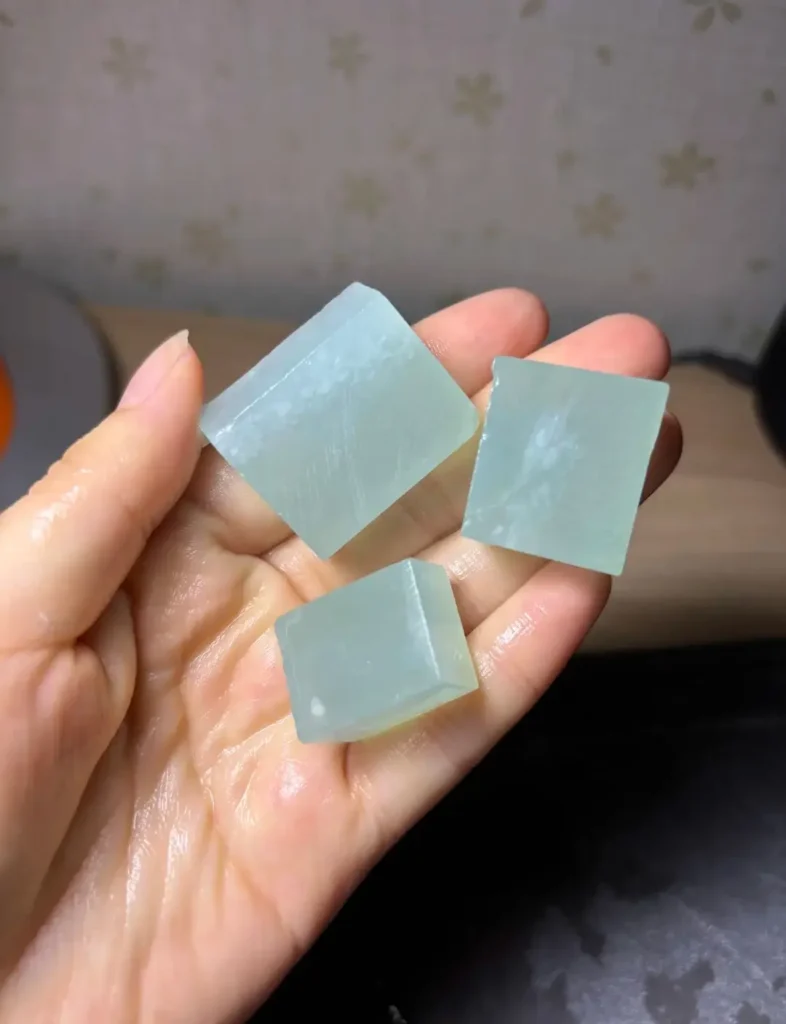
Authentic jadeite has a high specific gravity (3.30–3.33), giving it a characteristic “heft” or substantial feel in the palm. In contrast, Tianqingdong’s density is significantly lower (2.44–2.82), making it feel noticeably lighter. However, keep in mind that this tactile method requires a piece large enough to gauge and, more importantly, a well-trained “muscle memory” developed from handling genuine jadeite over many years.
3. Durability: The Achilles’ Heel
Hardness is the definitive Achilles’ heel of all serpentine varieties. On the Mohs scale, Tianqingdong typically ranges from 2.5 to 6, whereas jadeite sits at a formidable 6.5 to 7. This gap in structural integrity puts jadeite in an entirely different league for daily wear.
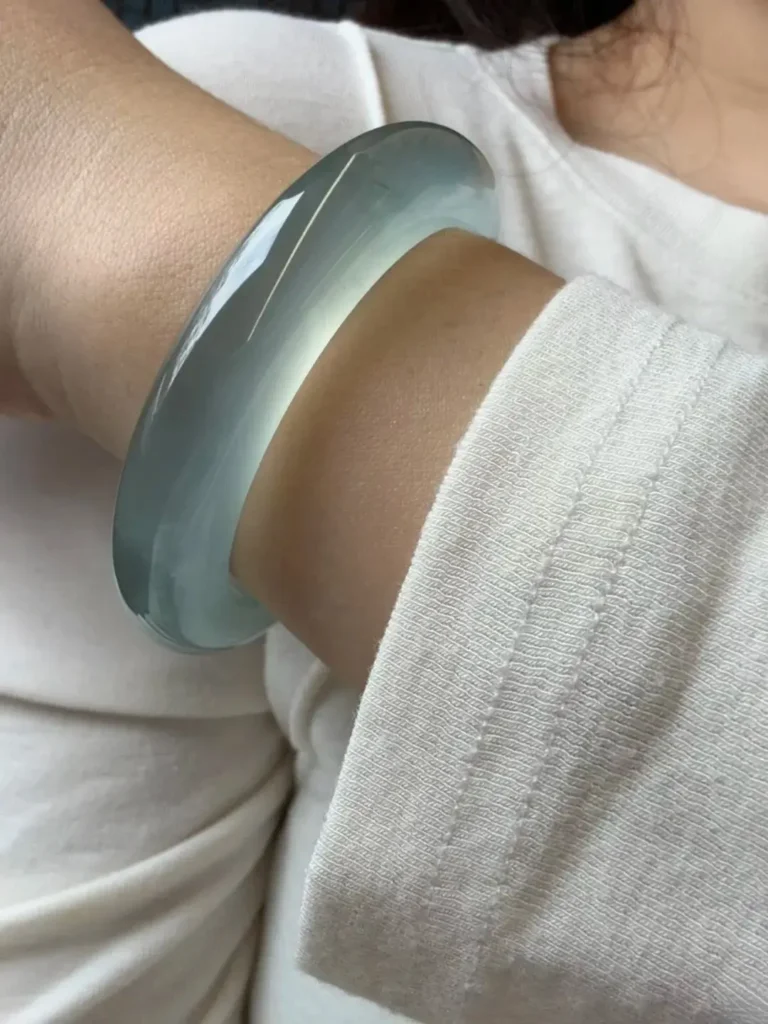
The superior hardness of Blue Water jadeite ensures its vitreous luster remains crisp and scratch-resistant over time. Tianqingdong, however, tells a different story. If you’ve noticed your stone losing its brilliance or picking up mysterious nicks and surface wear, you’re seeing the reality of its lower durability. While it looks stunning initially, the “jadeite illusion” is fragile—once the surface begins to dull, the magic fades.
Interestingly, not all jadeite alternatives are this delicate. Some offer much higher physical resilience, nearly matching jadeite’s toughness. For a deeper look at one such material, see our guide: Unmasking “Golden Jadeite’s” Twin: The Mystery of High-Grade Vesuvianite Jade
4. Gemological Differences: The Scientific Reality
When dealing with small cabochons, visual inspection alone often hits a dead end. In these cases, professional laboratory testing becomes a necessity. While they may look like twins to the naked eye, the Tianqingdong vs. Blue Water Jadeite data reveals two entirely different mineral worlds.
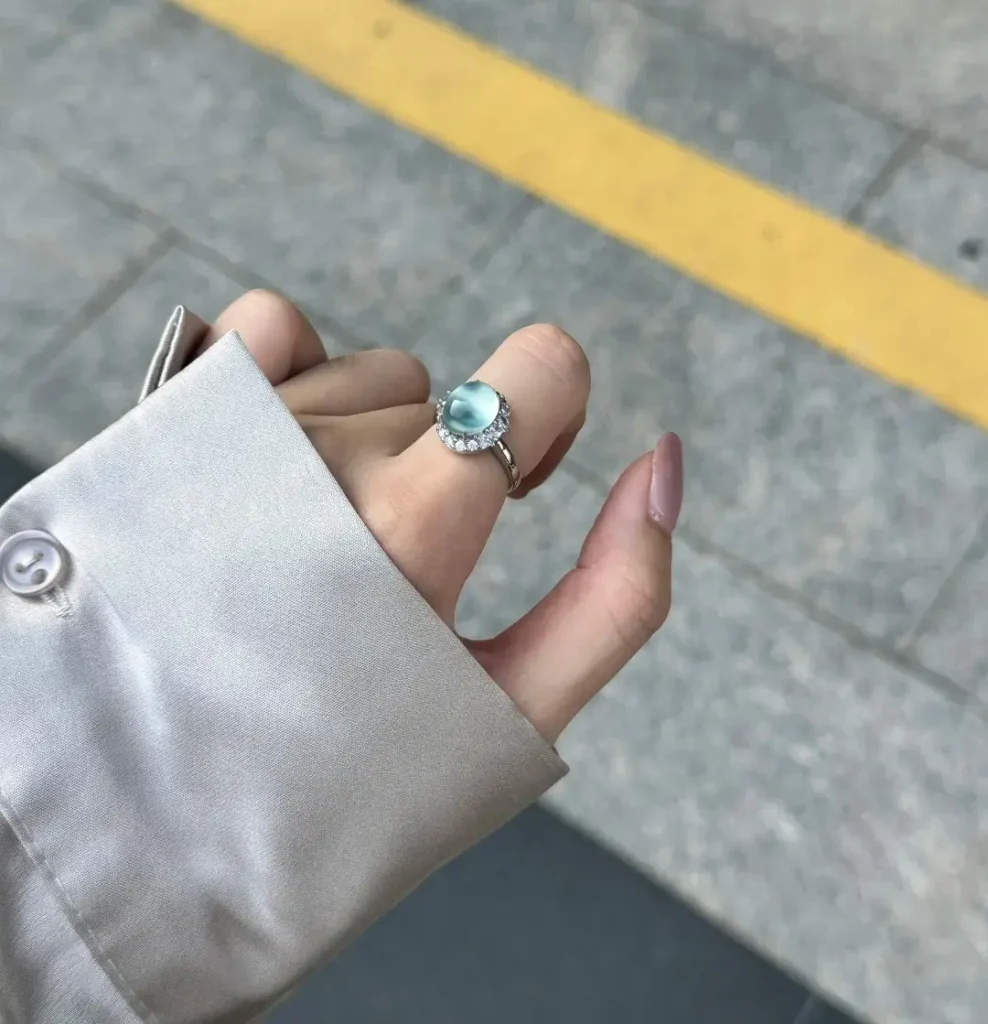
Here is how these two materials compare under scientific scrutiny:
| Property | Serpentine Jade (Tianqingdong) | Authentic Jadeite |
| Mineral Category | Serpentine | Pyroxene |
| Crystal System | Monoclinic | Polycrystalline Aggregate |
| Hardness (Mohs) | 2.5 – 6 | 6.5 – 7 |
| Specific Gravity | 2.57 (+0.23, -0.13) | 3.33 |
| Refractive Index | 1.560 – 1.570 (+0.004, -0.070) | 1.666 – 1.680; Spot test: 1.66 |
| Luster | Greasy to Waxy; Sub-vitreous | Vitreous (Glassy) |
| Magnification | Cryptocrystalline structure; visible white or black mineral inclusions | Fibrous interlaced structure; “Cui Xing” (fly-wing) effect; “Orange peel” effect |
Final Thoughts: Tianqingdong vs. Blue Water Jadeite
At Jewea, we believe that while Tianqingdong may mirror the outward appearance of jadeite, it ultimately lacks its soul. Whether you look at the chemical and physical properties under a microscope, or consider the deep cultural heritage and market prestige, the two are simply leagues apart.
That said, if your goal is purely aesthetic, Tianqingdong remains a fantastic choice for a high-end look at an affordable price point. It is a naturally beautiful, budget-friendly gemstone that holds its own as a fashion accessory.
However, if you are being asked to pay a “premium jadeite price” for what is essentially a “simulant,” you must be extremely cautious. For any consumer, the most effective and authoritative safeguard is simple: Always demand a certificate! Ensure you are buying with the backing of a reputable, third-party gemological report.