Gemstones of Taiwan: Red Coral, Blue Chalcedony, Taiwan Nephrite & Seven-Color Jade | Gems of China Series
In this edition of our “Gemstones of China” series, we set sail for the largest island off the southeastern coast of the Chinese mainland, Taiwan, to uncover the geological treasures hidden within its landscapes.
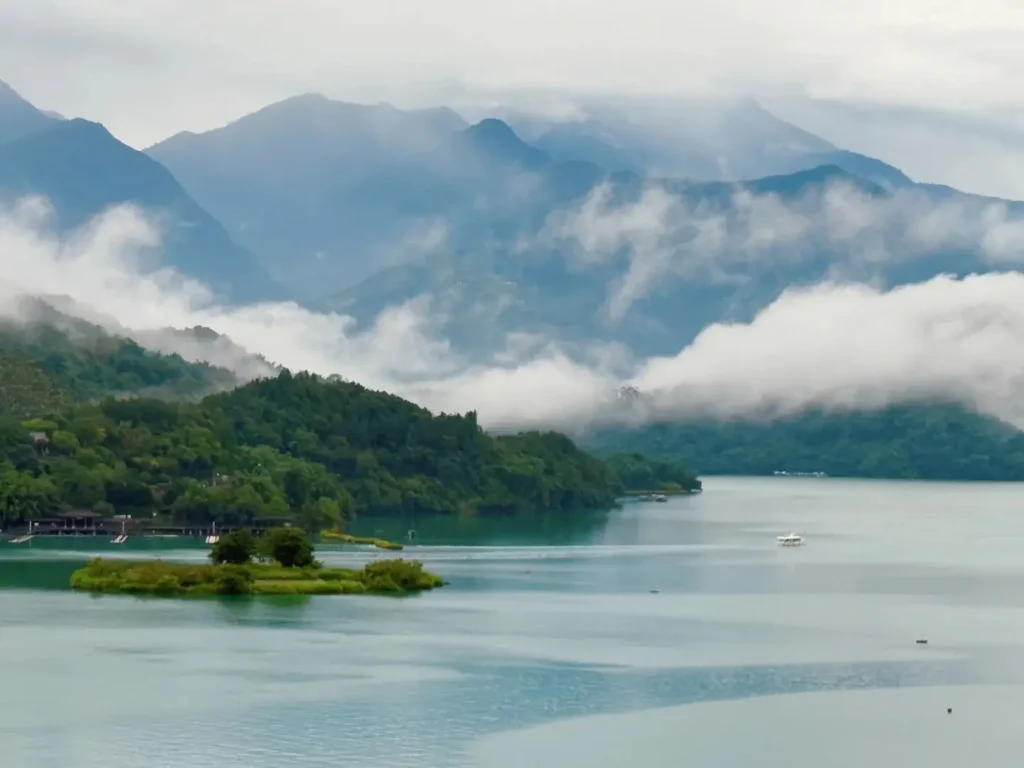
Though compact in size, Taiwan is a powerhouse of natural diversity and ecological richness, matched only by its global reputation for advanced manufacturing and high-tech innovation. It is often affectionately called the “Treasure Island”—but what exactly are the sparkling wonders that earned it this name?
Today, we are diving deep into the Gemstones of Taiwan. From the legendary Red Coral and rare Blue Chalcedony to the historical Taiwan Nephrite (and its captivating Cat’s Eye variety), we’ll explore the island’s authentic mineral wealth—and even pull back the curtain on the “Synthetic Seven-Color Jade” frequently marketed to tourists in local shops.
Taiwan Red Coral: The Heart of the “Coral Kingdom”
An old proverb says, “A thousand years for coral, ten thousand for its red.” Unlike cold minerals, coral is a “living” gem. Alongside pearls and amber, it forms the three great organic gemstones. These treasures grow from the skeletal remains of coral polyps and hold a sacred place as one of the “Seven Treasures” in Eastern Buddhist scriptures.
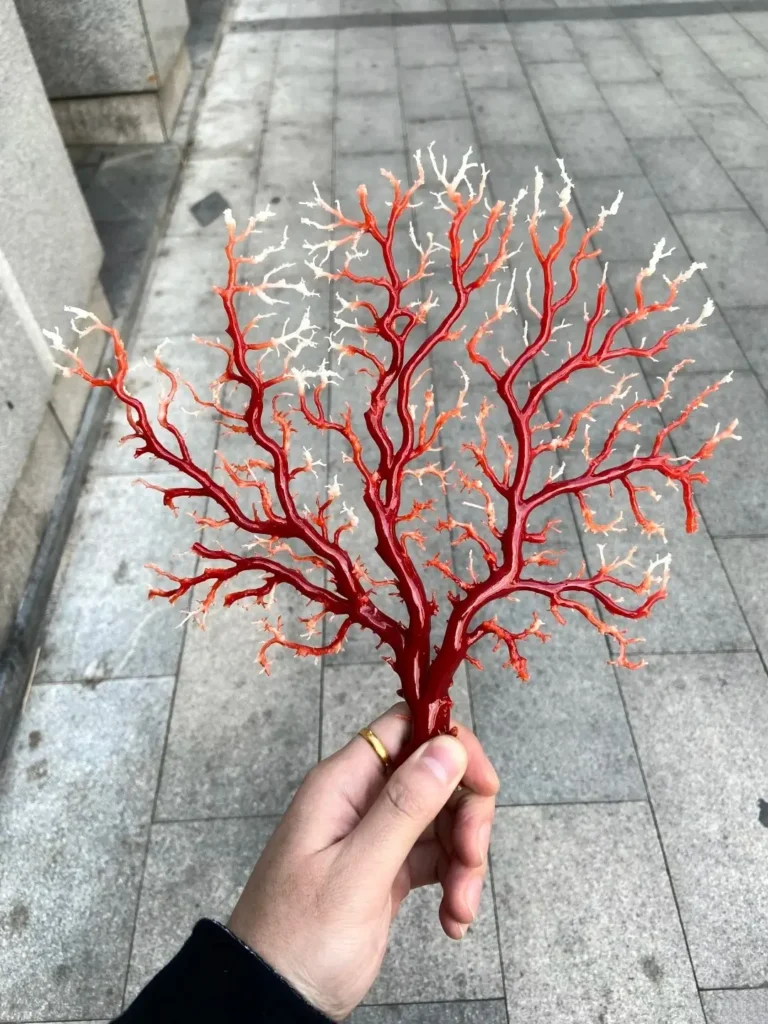
In our previous feature, Deciphering the Big Three: The World of Aka Red Coral, Momo, and Sardinia, we explored the top origins and identification techniques. Red coral demands incredibly specific marine conditions. Because of this, it only thrives in a few select regions: the waters surrounding Taiwan, southern Japan, the Hawaiian Archipelago, Midway Island, and the Mediterranean near the Italian Peninsula.
Among these, Taiwan stands as the global epicenter for red coral. During its peak, the island harvested nearly 300 varieties, supplying roughly 80% of the world’s total production. This exceptional output, paired with superior quality and unique natural forms, earned Taiwan the prestigious title of the “Coral Kingdom.”
From Raw Branches to Global Export: A Brief History
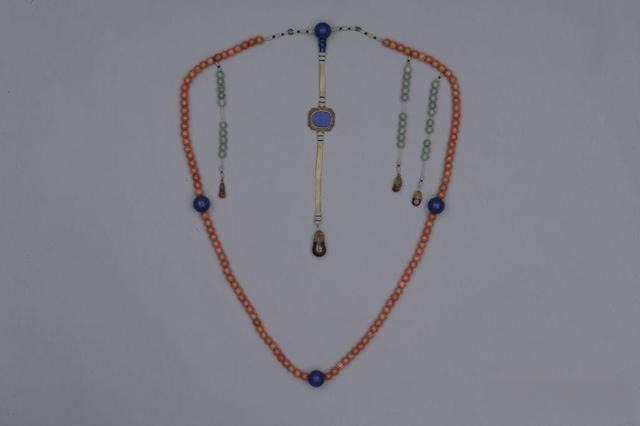
Taiwan produces a massive volume of coral, yet its industry is relatively young, spanning just over sixty years. Before the discovery of Taiwanese deposits, Europe dominated the market. Native Americans revered precious coral as “Mother Earth,” while European royalty wore it to signal status and power. In China, Qing Dynasty officials used red coral to craft the ceremonial court beads worn during imperial audiences.
The industry shifted in 1874 when Japan discovered red coral in its own waters. These specimens featured a deep, saturated color and a dense, jade-like texture. Locals called it Aka (the Japanese word for red). Japan quickly leveraged advanced processing techniques to turn these raw materials into high-end exports.
In 1923, fishermen discovered red coral in the waters around Taiwan. Initially, locals did not realize the value of these “marine treasures.” This lack of awareness allowed Japanese fishing boats to harvest the area aggressively. By the end of WWII, local fishermen finally recognized the value of their resources, but Japan had already extracted a significant portion of the precious material.
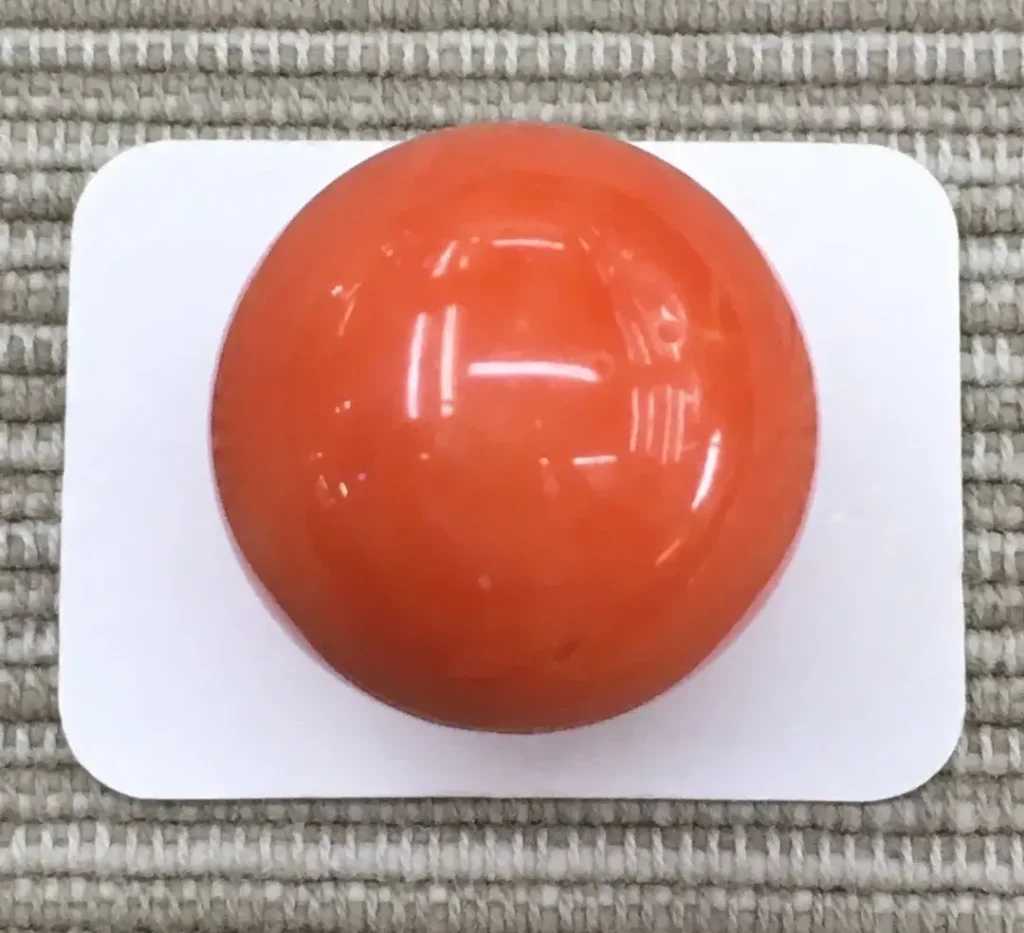
Taiwan officially launched its coral industry in 1964. The region primarily yields two varieties: Momo and Aka. In the early days, a lack of local expertise meant fishermen mostly sold raw, unprocessed branches. These fetched much lower prices than finished jewelry. Over time, Taiwan imported advanced technology to master precision cutting and carving. This shift drastically increased the market value of their coral. Today, Taiwan exports 99% of its red coral products to the global market.
Conservation Efforts and Market Trends
Unchecked exploitation historically damaged the marine ecosystem. To address this, local authorities implemented strict harvesting regulations, dividing the surrounding waters into five designated zones (A through E). Currently, only two zones remain open for seasonal harvesting. Fishing vessels must operate strictly within these boundaries, allowing for rigorous monitoring to limit the annual catch and preserve these deep-sea ecosystems.
Despite these controls, global market demand continues to significantly outpace supply. Prices for authentic Taiwan Red Coral have surged by 40% to 60% in recent years. Yet, this sharp price hike has done little to dampen the enthusiasm of international collectors and discerning travelers.
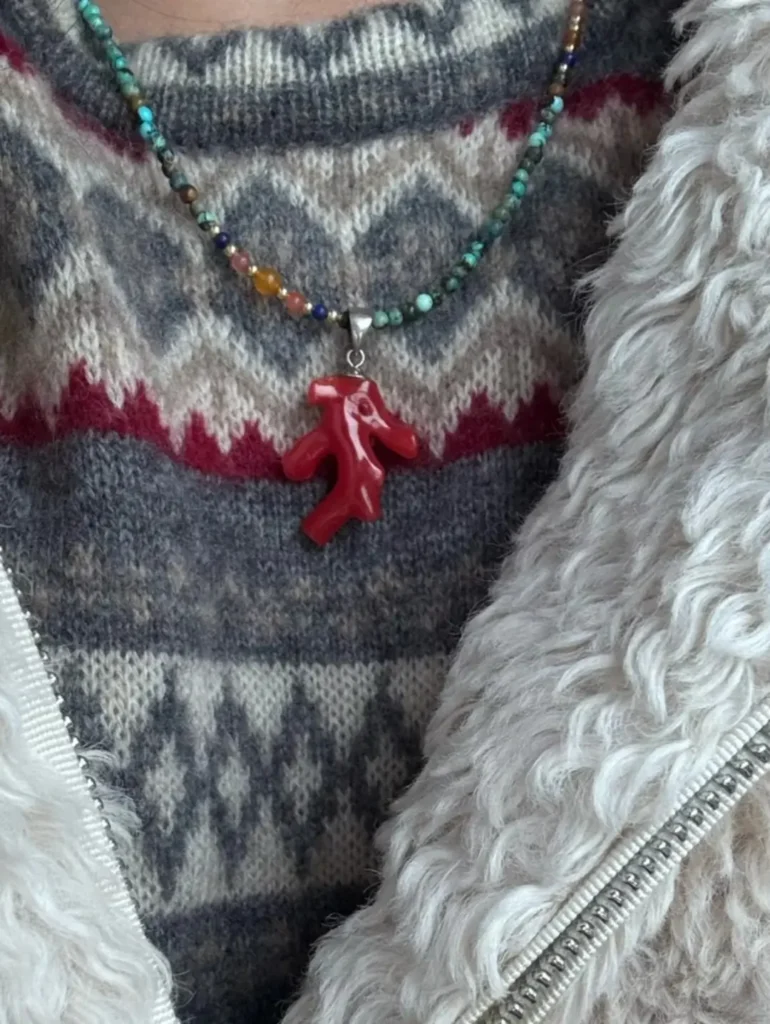
Today, precious red coral stands as a cultural hallmark of the island’s geological heritage, inspiring a growing number of travelers to seek out authentic pieces during their journeys. This organic beauty pairs effortlessly with traditional aesthetics. For instance, a raw red coral branch pendant sourced by a traveler in Taiwan layers flawlessly with Jewea’s Dunhuang-inspired turquoise beaded necklace, demonstrating how these regional gemstones complement one another.
For those looking to immerse themselves deeply in this legacy, the region hosts the world’s only institution dedicated entirely to the gem: the Taiwan Coral Museum, which preserves and showcases some of the most extraordinary specimens ever recovered from the deep.
Taiwan Blue Chalcedony: The Aristocrat of the Quartz Family
When people hear “chalcedony,” they often think of cheap mass-market stones or imitations of high-end jadeite and tourmaline. Unfortunately, the market is flooded with these substitutes, giving chalcedony a bit of an image problem.
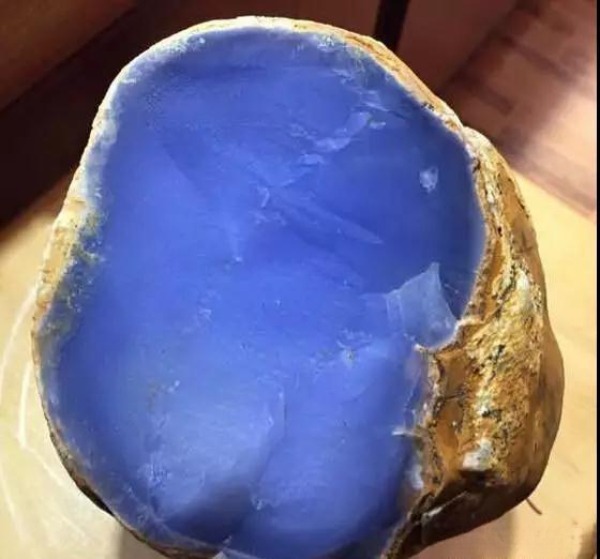
However, a true “aristocrat” exists within this family. Found in Taiwan, this rare variety owes its stunning celestial blue hue to the presence of copper. It perfectly balances the gentle warmth of jade with the brilliant luster of a gemstone. Today, it stands as Taiwan’s most valuable stone after nephrite. While locals often call it “Taiwan Blue Sapphire,” it shares no mineral relation to precious corundum; it is, in fact, a rare and exquisite member of the quartz family.
The Volcanic Origins of Taiwan Blue Chalcedony
Taiwan Blue Chalcedony originates from Mount Dulan in the Coastal Range of Eastern Taiwan. This peak was once an active volcano. Ancient eruptions deposited mineral-rich magma throughout the region, providing the essential chemical foundation for the stone to form.
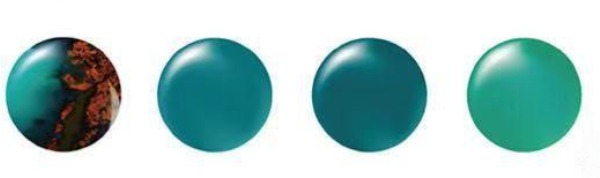
While miners find blue chalcedony in the United States and Chile, Taiwan remains the premier source for high-quality specimens. The island produces twelve distinct varieties. Among these, Sky Blue, Emerald Blue, and Sea Blue stand out for their superior clarity and value. These top-tier grades command premium prices and are often traded by the carat.
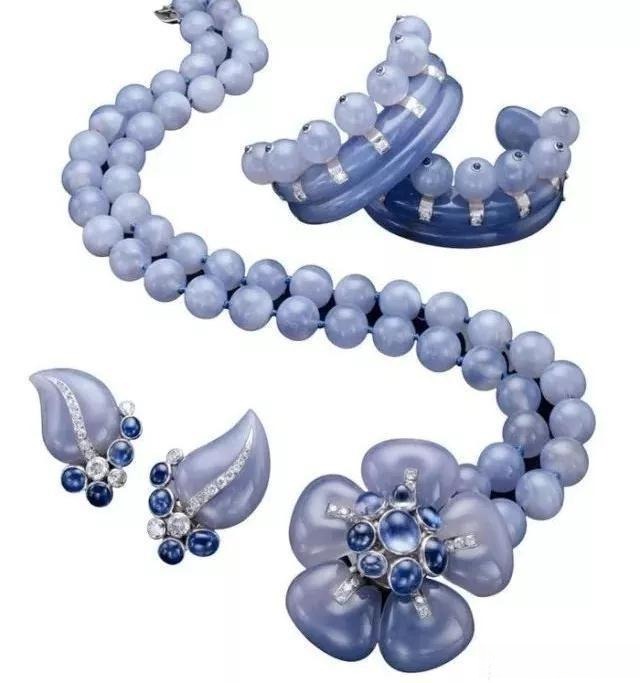
As one of the most prized gems of the Coastal Range, its vivid saturation and vibrant luster have caught the eye of elite international jewelry houses. Historically, even the Duke of Windsor—famous for relinquishing the crown for love—presented his Duchess with a stunning suite of blue chalcedony jewelry.
Market Shifts and the Rise of Global Substitutes
In its early years, Taiwan exported the majority of its blue chalcedony, primarily to collectors in Japan. Recently, however, surging demand has outpaced local production. To fill this gap, some merchants began importing raw material from the United States and Indonesia. While these stones are technically chalcedony, they often lack the unique characteristics of the original Taiwanese deposits, and their lower price points have led to a market saturated with “look-alikes.”
Identifying Authentic Taiwan Blue Chalcedony vs. Common Substitutes
To protect yourself from savvy marketing, you must know the physical properties of authentic “Taiwan Blue” compared to its common rivals:
| Material | Transparency | Color & Visual Features | Chemical/Physical Reaction |
| Authentic Taiwan Blue | Translucent to Semi-transparent | Deep, pure blue or blue-green; richer tone than imports. | No reaction to acid. |
| Chrysocolla | Opaque to Semi-transparent | Green to blue-green; often shows green banding. | Erodes when exposed to acid. |
| Hemimorphite | Opaque to Slightly translucent | Greenish-blue to “water” blue. | Soluble in HCl (without bubbling). |
| Dyed Blue Chalcedony | Translucent to Semi-transparent | Blue-green; color particles appear granular or clustered. | No reaction to acid. |
| Blue Glass | Translucent to Semi-transparent | Aqua blue; refractive index ~1.50. | Shows flow lines and gas bubbles. |
A Note on Wearability and Care
Because the market sees a large volume of “Taiwan Blue” material, most commercial-grade stones do not hold significant investment or collection value. Therefore, if you simply want a beautiful accessory for daily wear, there is no need to overspend on high-priced specimens.
Instead, look for designs that prioritize artistry and craftsmanship. For instance, our Jewea collection offers blue chalcedony and red agate earrings inspired by the Dunhuang murals. These pieces provide a light, ethereal aesthetic that captures the “silent luxury” vibe without the “collector” price tag.
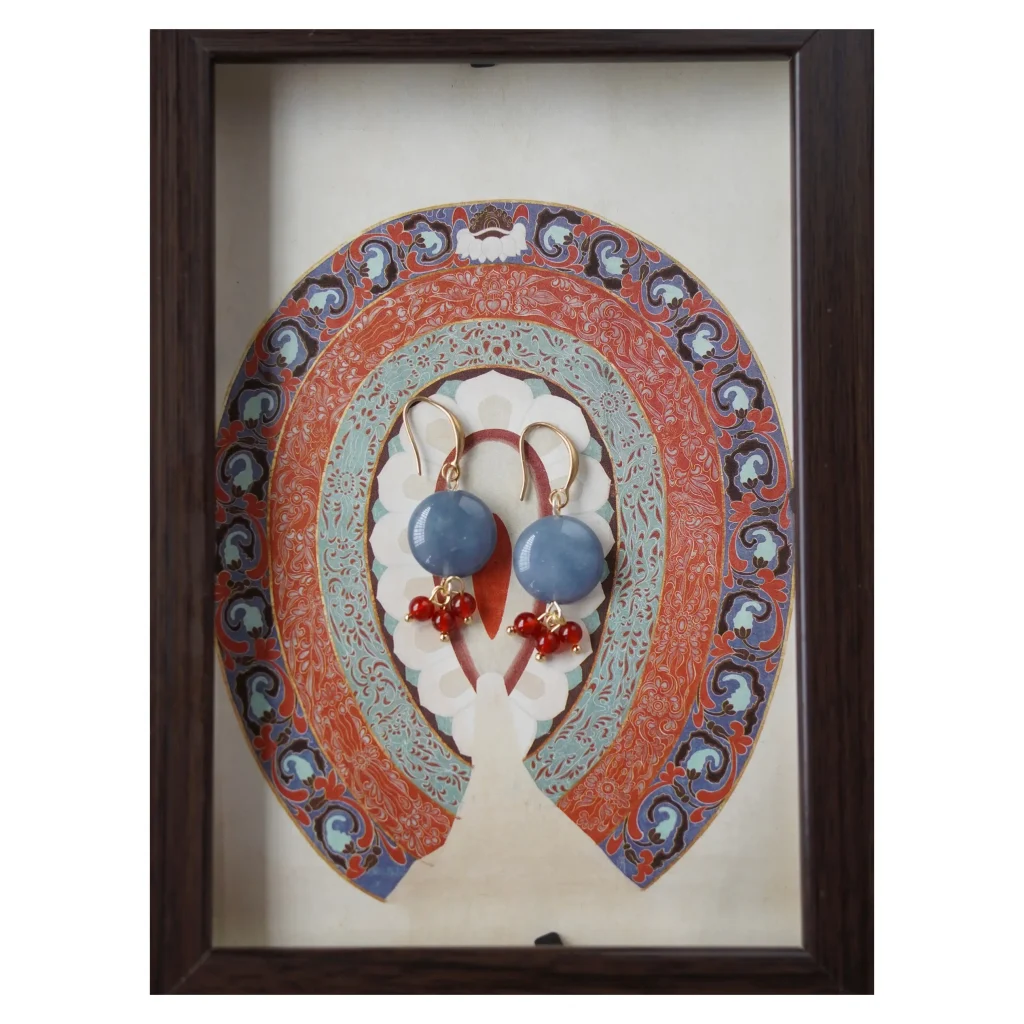
To keep your blue chalcedony vibrant, you must avoid high temperatures. Heat can cause the stone to dehydrate and shift in color. Once this discoloration occurs, it is nearly impossible to restore the original hue, causing the stone to lose its beauty and value. Treat your jewelry like a fine silk: keep it cool and away from harsh heat to preserve its natural glow.
Taiwan Nephrite: The Ancient Soul of the Island
Taiwan Jade, scientifically known as Taiwan Nephrite, primarily consists of tremolite—the same mineral composition found in the world-renowned Hetian Jade. Because it originates in the Fengtian area of Hualien, locals often call it Fengtian Jade. This stone boasts vibrant shades of black, green, and yellow. While semi-transparent, it frequently features distinct internal black spots. It is exceptionally heat-resistant and naturally occurs alongside asbestos deposits.
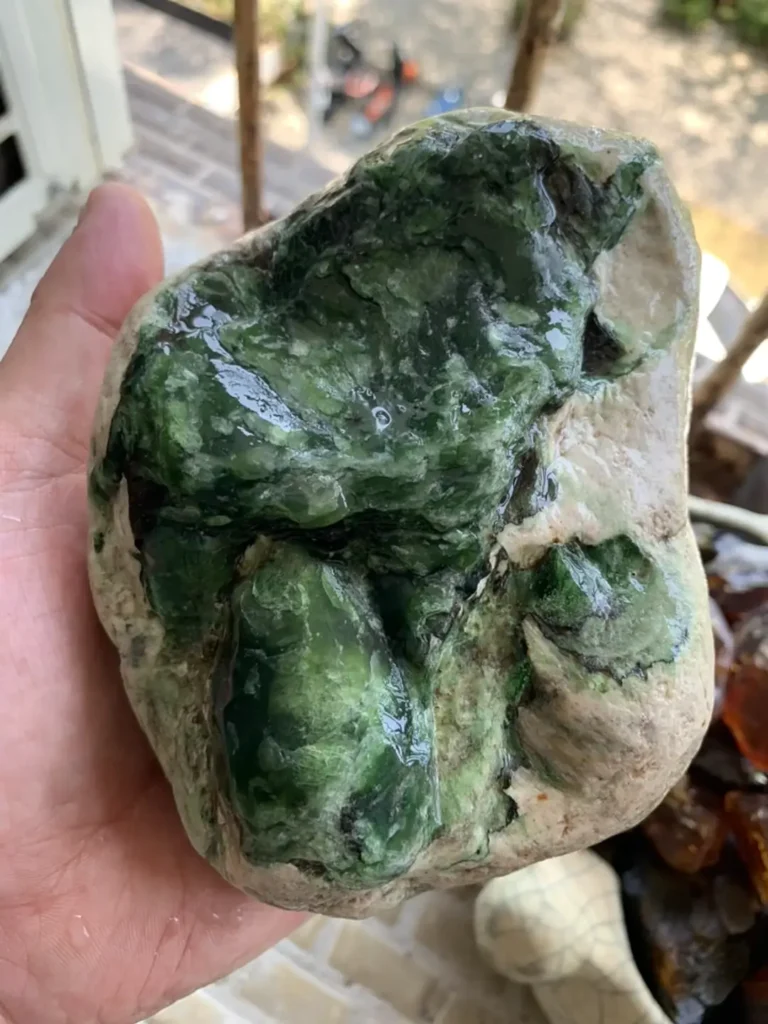
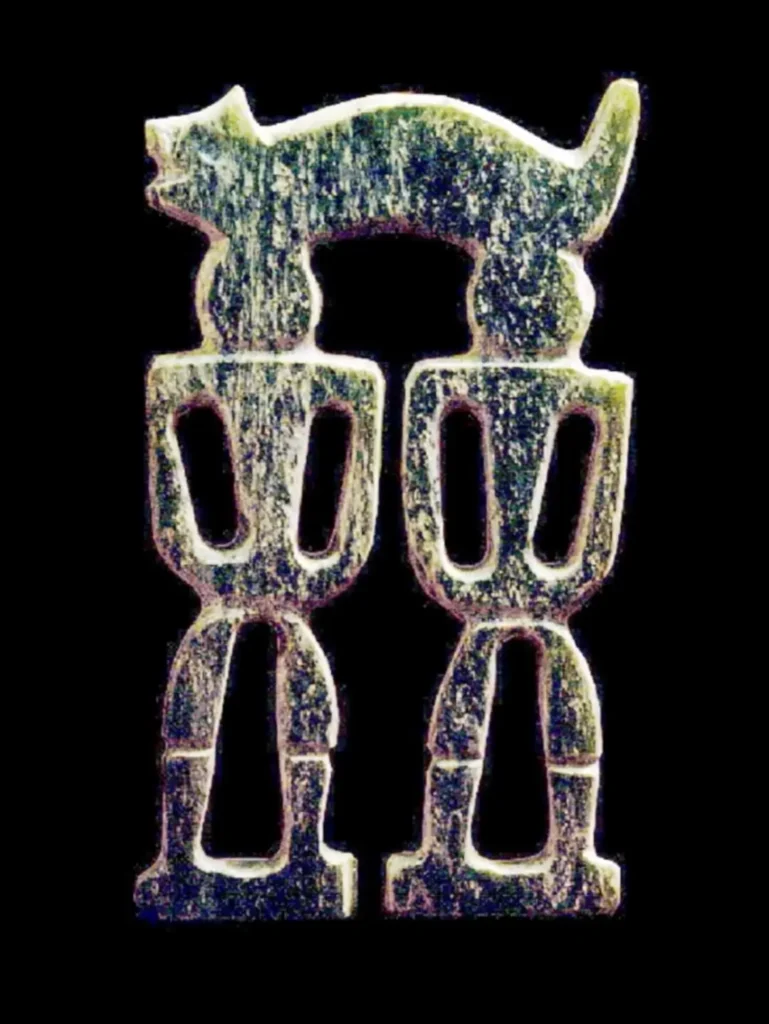
The history of Taiwan Nephrite stretches back over 5,000 years to the Beinan Culture. Centered in Taitung, this site remains the largest and most complete prehistoric settlement ever discovered on the island. By 1982, excavations had unearthed tens of thousands of artifacts. The National Museum of Prehistory once publicly exhibited 701 jade artifacts excavated from the Beinan Site, headlined by four rare national treasures: the zoomorphic human-animal jade earrings (jue), bell-shaped ornaments, trumpet-shaped armrings, and elongated jade tubes. These masterworks underscore both the exceptional craftsmanship and the profound rarity of ancient Taiwanese nephrite.
Despite its ancient roots, the world eventually forgot about the jade deposits in Fengtian. In 1932, Japanese immigrants discovered massive asbestos reserves in the area. At the time, asbestos was a critical strategic material for both commercial and military industries.
Japanese merchants launched large-scale mining operations to ship asbestos back to Japan. During the process, miners frequently tossed aside huge quantities of Taiwan Nephrite, dismissing it as worthless “waste stone.” It wasn’t until a Japanese jeweler recognized the true nature of these “rocks” that the world rediscovered Taiwan Nephrite as a precious gemstone.
Taiwan Cat’s Eye Nephrite: A Rare Phenomenon
Beyond standard nephrite, the Fengtian mines also yield the highly prized Cat’s Eye Nephrite. It is important to distinguish this from the “true” Cat’s Eye mentioned in our previous guide, Chrysoberyl Cat’s Eye: The Only True “Cat’s Eye.” While chrysoberyl remains the gold standard, this variety is a nephrite jade that displays a remarkable chatoyancy (the “cat’s eye” effect).
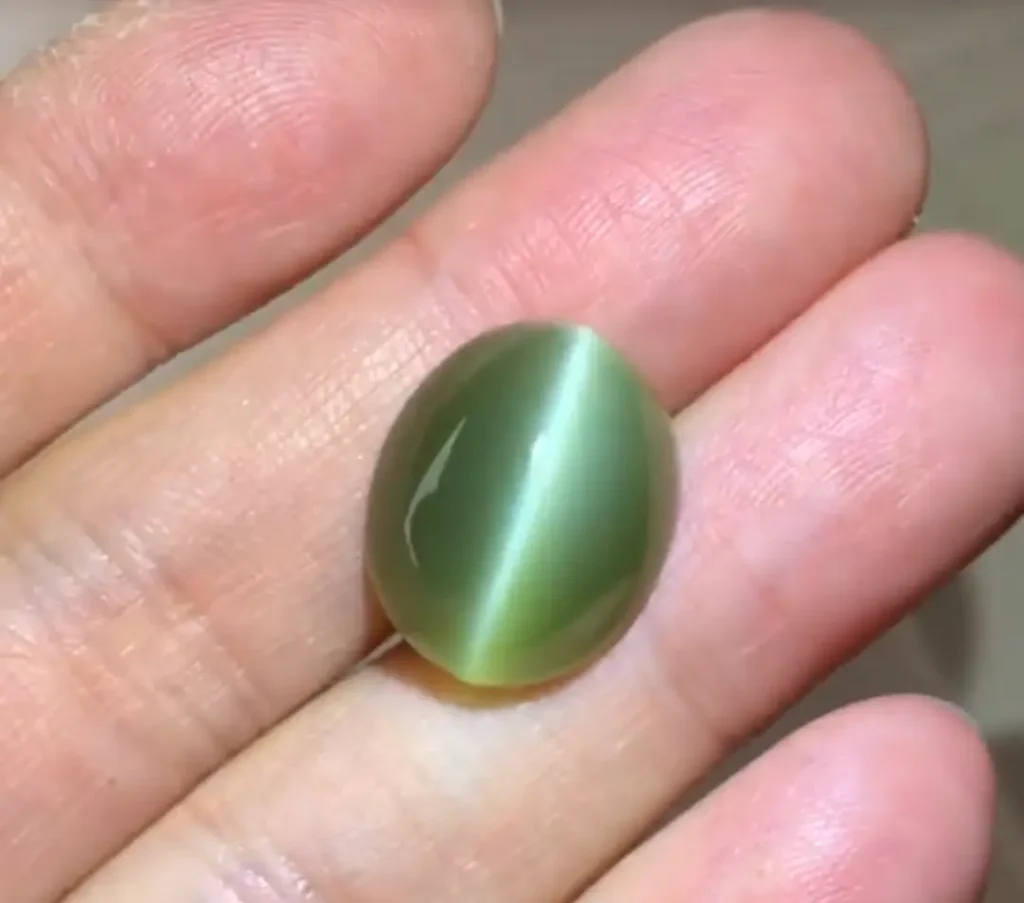
These stones typically appear in shades of forest green, honey, and charcoal black.
In recent years, the market price for Taiwan Jade has climbed steadily. Decades of unregulated mining severely depleted the local veins, and rising extraction costs have further squeezed the supply. However, because Taiwan Nephrite often features characteristic black mineral inclusions and green mottling, it remains significantly more affordable than the prestigious Hetian Jade from Xinjiang, despite its increasing rarity.
The Truth About “Taiwan Seven-Color Jade”
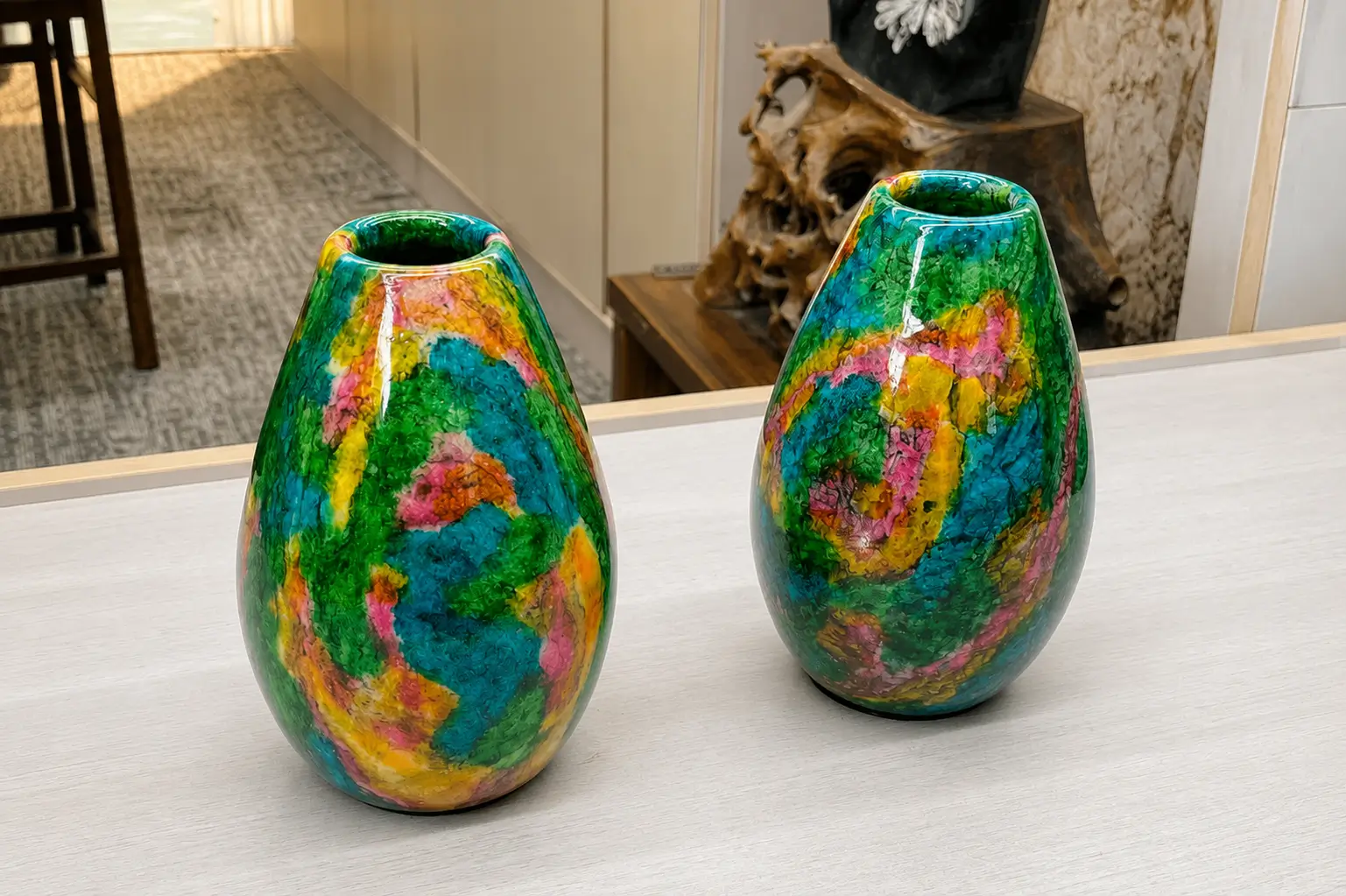
After discussing the historical significance of nephrite, we must address another “jade” you will inevitably encounter while shopping in Taiwan. Many travelers return from their trips with vibrant, multicolored vases or jars, often asking us for an appraisal.
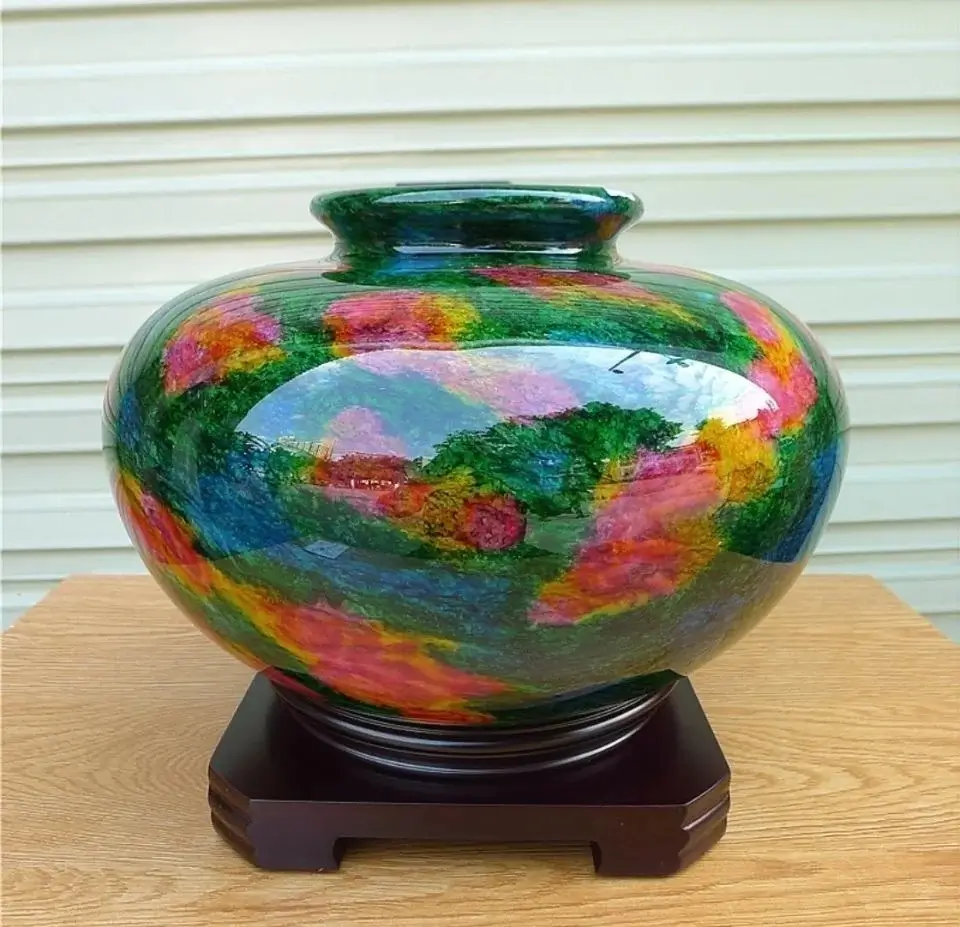
Local vendors frequently market these pieces as the “foremost of Taiwan’s three famous stones.” They claim it is a rare, naturally occurring jade and carve it into decorative gourds, jars, and ornaments. With their kaleidoscope of colors, these pieces are undeniably eye-catching—and they come with a hefty price tag, often reaching into the thousands.
However, I have to be blunt with you: It is a total fake. (And it’s worth saying three times for emphasis.)
Despite the glowing sales pitches, the “Seven-Color Jade” currently flooding the tourist market is neither natural nor jade. Whether you look at the material itself or the vivid colors, the entire product is synthetic.
Behind the Façade: Material and Color
To avoid falling for the marketing trap of “Seven-Color Jade,” you need to understand exactly how these pieces are manufactured. Here is the breakdown of what is actually inside those colorful vases:
- The Material: Reconstituted Scraps While merchants claim this is a “new jade species” born from a rare mineral symbiosis, the reality is far more industrial. Manufacturers take low-grade jade powder and common rock dust, mix them with synthetic resin, and fuse the slurry under high temperature and pressure. Essentially, it is a composite made from worthless stone scraps bonded together into a solid mass.
- The Color: Chemical Dyes These pieces lack the natural, shifting “play-of-color” found in precious opal, yet their vivid rainbow palette successfully lures in many buyers. Since the base material is artificial, the colors are as well. These hues come from industrial dyes, which often contain harmful chemicals. Displaying these items in your home for long periods could even pose health risks due to the off-gassing or leaching of these staining agents.
A Practical Guide for Travelers
f you visit Taiwan during peak tourist season, the sheer density of “Seven-Color Jade” specialty shops and flashy exhibitions can be dizzying. However, do not let the bright colors distract you. These pieces are not natural jade; they are crafted by dipping mineral bases into glaze and firing them in high-temperature kilns. While they carry zero investment potential or collector value, they can serve as beautiful decorative ornaments or flower vases—provided you find the price reasonable for home decor.
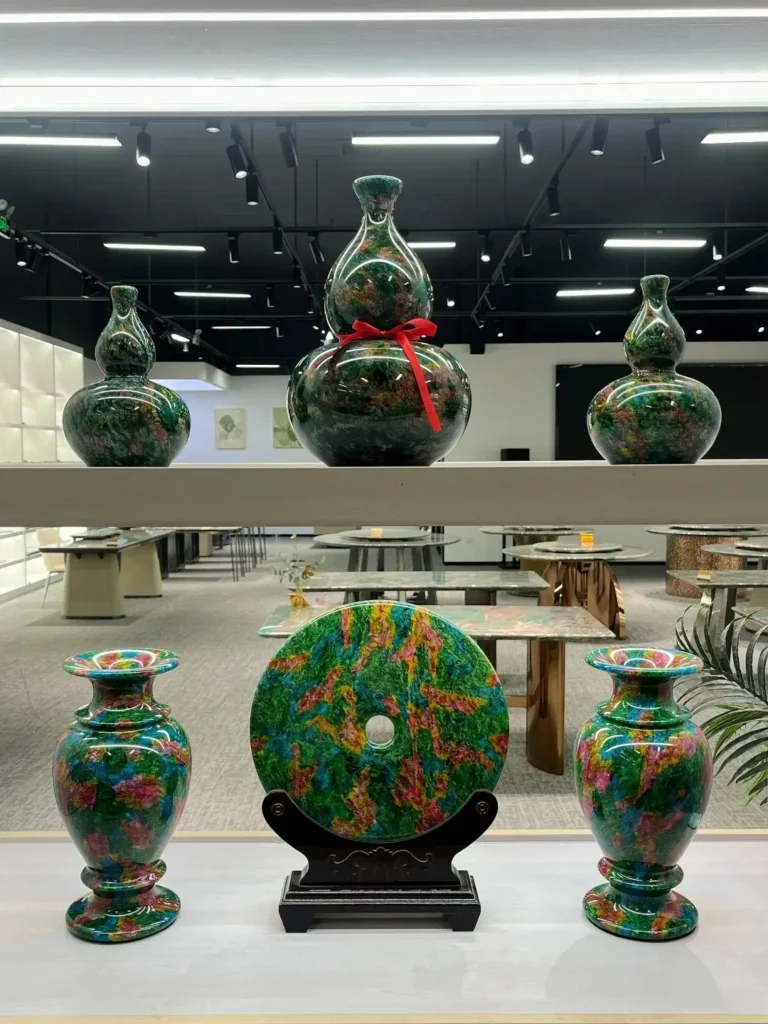
Don’t let smooth-talking vendors convince you otherwise. When building a serious collection of authentic Taiwanese treasures, stick to the island’s true geological heritage: Red Coral, Blue Chalcedony, and genuine Nephrite.
Explore More in Our Chinese Gems Series
At Jewea, our mission is to uncover the hidden geological wonders across China. Before we dove into the Gemstones of Taiwan, we explored several other regions famous for their rare and storied treasures.
Take a look back at our previous journeys:
East China
- Shandong: Gemstones of Shandong: Changle Sapphire, Diamond & Taishan Jade | Gems of China Series
- Fujian: Gemstones of Fujian: Sapphire, Zircon, Garnet, and Shoushan Stone | Gems of China Series
- Anhui: Gemstones of Anhui: Huoshan Quartzite Jade, Huangshan Wax Stone & Turquoise | Gems of China Series
- Jiangxi: Gemstones of Jiangxi: Yingtan Yellow Wax Stone, Wannian Pearls, and Zhang River Agate | Chinese Gems Series
- Jiangsu: Gemstones of Jiangsu: Crystal, Yuhua Stone, & Taihu Stone | Gems of China Series
- Zhejiang: Gemstones of Zhejiang: Changhua Chicken-Blood Stone, Qingtian Stone, & Zhuji Pearls | Gems of China Series