Smoky Purple Nephrite: A Rising Star Among Niche Hetian Jade Varieties
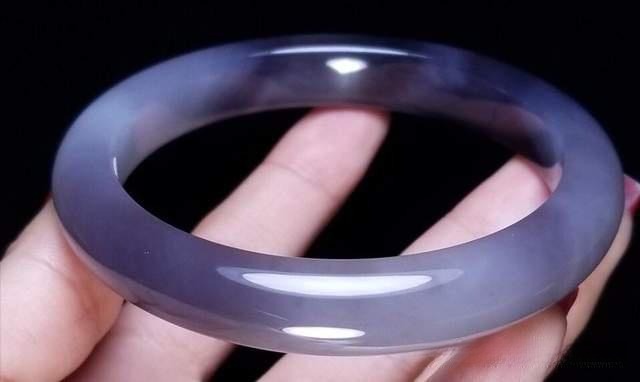
Smoky Purple Nephrite Jade is quickly emerging as one of the most sought-after niche varieties in today’s Hetian jade market. Following our previous introductions to green-white and pink-toned nephrite, this article focuses on this unique Qinghai variety, known for its refined grey-violet hue and understated elegance.
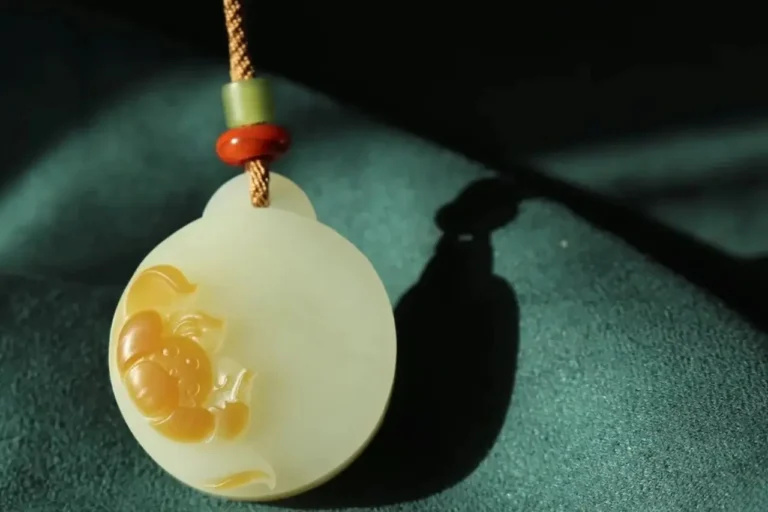
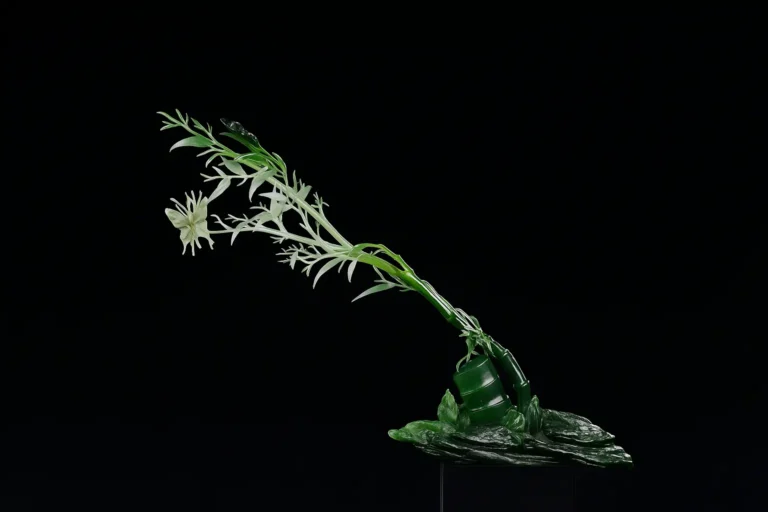
In recent years, consumer taste has shifted noticeably. While traditional favorites like creamy white Nephrite and Spinach Green Nephrite still hold their place, a younger generation of buyers is drawn to softer, more expressive colors. Varieties such as Powder Pink Nephrite (with its gentle blush tones), Bicolor Green-and-White Nephrite (known for its vivid ‘Apple Green’ splashes), and now Smoky Purple are gaining momentum for their individuality and modern appeal.
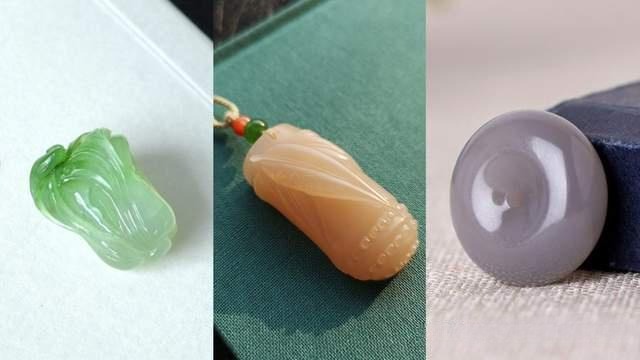
In the sections that follow, we’ll take a closer look at what defines Smoky Purple Nephrite Jade, how it differs from similar materials, and why it’s increasingly seen as a rising star among Qinghai nephrite varieties.
What Is Smoky Purple Nephrite Jade? A Niche Qinghai Variety
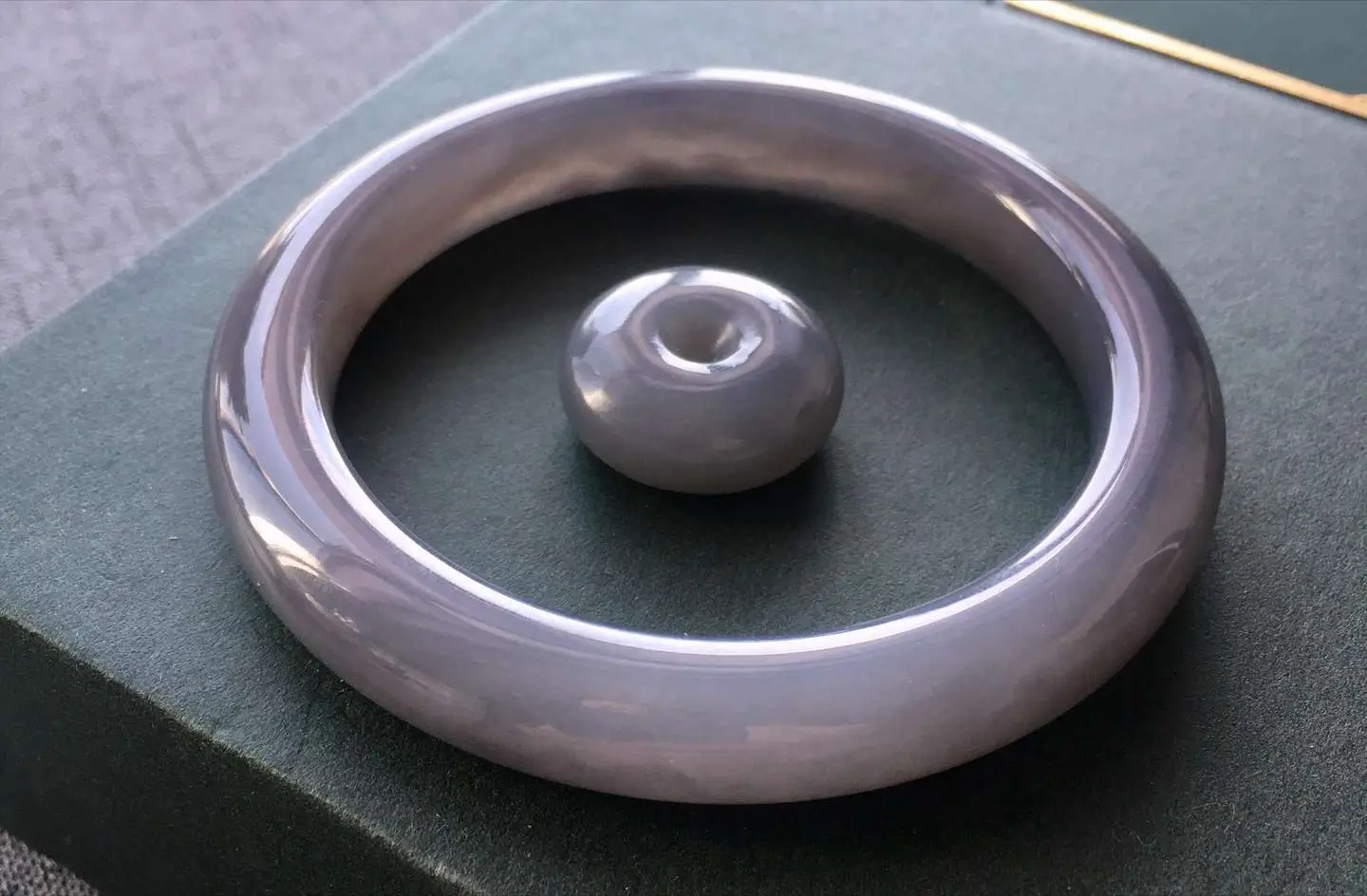
Smoky Purple Nephrite Jade is a lesser-known but distinctive variety of Hetian jade sourced from Qinghai. The term “smoky purple” describes both its appearance and its character—a soft grey base infused with subtle violet undertones. In the traditional market, this material sits outside the classic visual spectrum typically associated with mainstream Hetian jade.
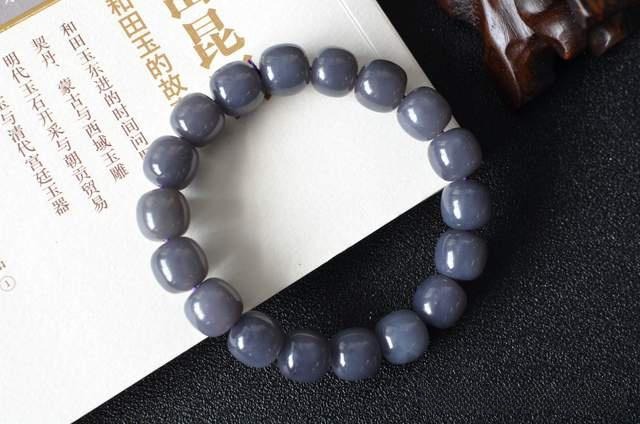
As we introduced in our previous guides on [Green-White Nephrite (Cui Qing Nephrite)] and the delicate [Pink Nephrite Jade], the Qinghai region produces a range of highly recognizable niche materials. Smoky Purple belongs to this same family, offering a sophisticated and moody color expression that is unique to this origin.
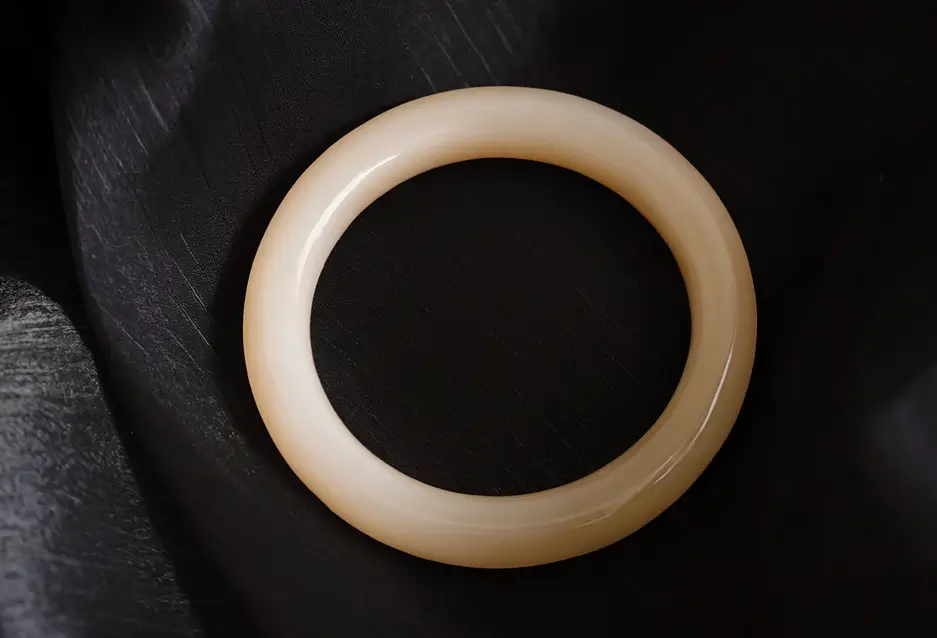
Although the latest GB/T National Standards for Hetian Jade defines eight major categories—in which smoky purple is not explicitly listed—gemologists generally recognize it as a significant color variation within the Qing Jade (Celadon Nephrite) lineage.
Smoky Purple vs. Smoky Qing Nephrite: Understanding the Nuance
To truly appreciate Smoky Purple, we must first look at its lineage: Smoky Qing Nephrite.
According to the DB65 Regional Standards for Hetian Jade, Smoky Qing is officially classified as a sub-branch of the broader Qing Jade (Celadon Nephrite) family.
The Distinction in Hue
The spectrum of this material spans from a flat Smoky Grey to a nuanced Greyish-Violet. While not a formal geological category, it is this distinct violet-rich hue that the market celebrates as true ‘Smoky Purple.’
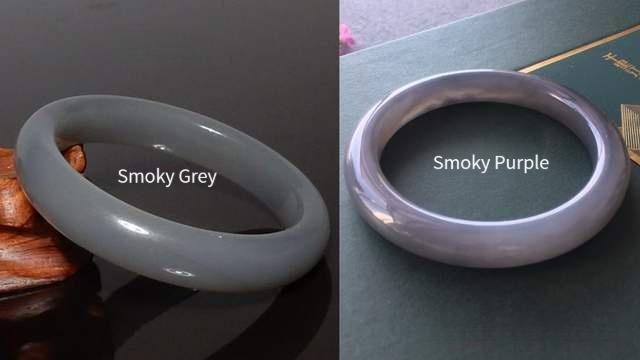
- Smoky Grey: Materials that lack a violet tint and lean purely toward a cyan-grey or ashy tone are simply standard Smoky Grey.
- Smoky Purple: Only specimens exhibiting a distinct, discernible violet undertone rightfully earn this title.
In other words: Every Smoky Purple is a Smoky Qing, but not every Smoky Qing is Smoky Purple. Materials that lack a violet tint and lean purely toward a cyan-grey or ashy tone are simply standard Smoky Grey. For collectors, this distinction is vital. In the market, vendors often mislabel ordinary Smoky Grey as “Smoky Purple” to capitalize on the latter’s popularity—a classic pitfall for novice buyers.
The “Purple Thread” Illusion: A Buyer’s Warning
A common industry tactic to watch out for involves the use of colored stringing, particularly with smaller bead sizes.
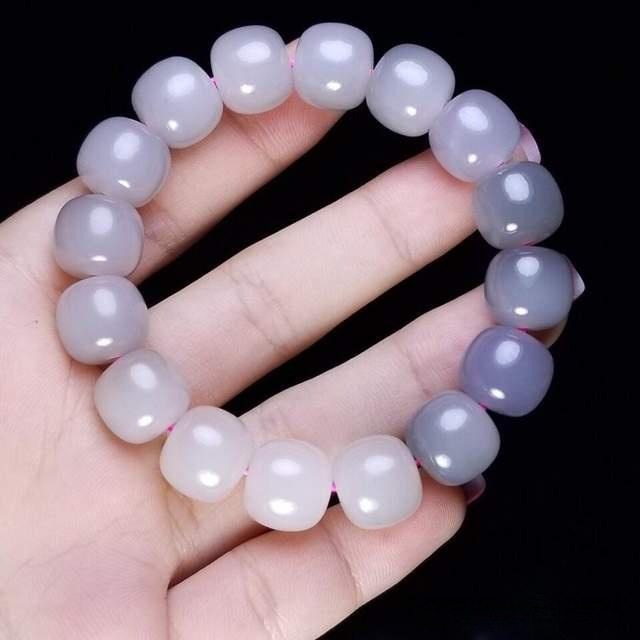
- The Tactic: Vendors often thread Smoky Grey beads onto vibrant purple silk cords.
- The Effect: This creates a subtle visual bleeding effect, making the stone appear more “lavender” than it truly is.
- The Purpose: This method is used to disguise grey tones or to artificially enhance the saturation of pale Smoky Purple specimens.
Expert Advice: When evaluating these pieces, always consider the influence of the cord. Whenever possible, inspect the stones against a neutral, colorless background to reveal their true, unassisted saturation.
Warning: Beyond visual tricks, be wary of dyed nephrite in the market. We have seen “violet” beads later confirmed as artificially colored. To learn how to spot these enhancements, read our report: Does Purple Hetian Jade Truly Exist? Unveiling the Truth Behind “Taro Purple” Nephrite.
Smoky Purple vs. Qinghua Nephrite: Clearing the Confusion
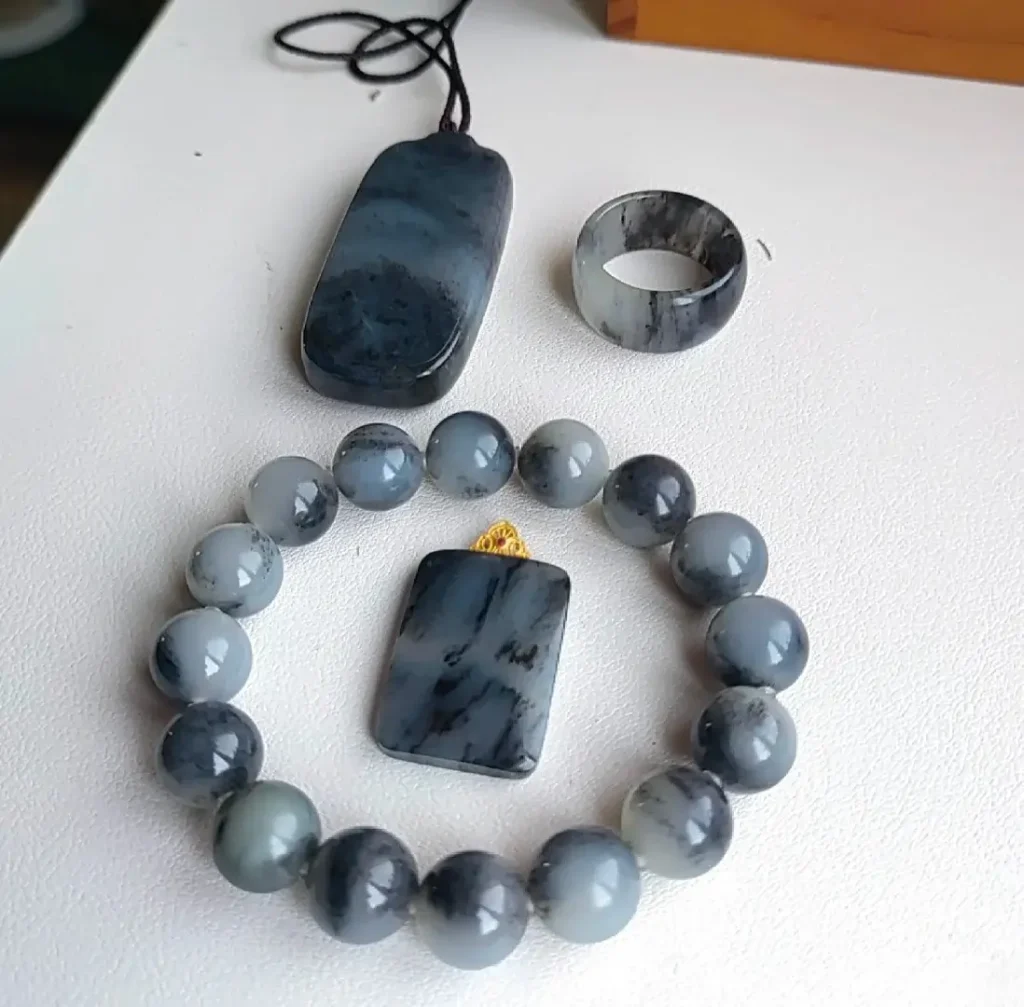
Novice collectors often mistake any greyish Hetian jade for Qinghua (Black and White) material, leading to frequent misidentifications. In reality, Smoky Purple Nephrite and Qinghua Nephrite belong to entirely different mineralogical branches.
- Smoky Purple Nephrite: A sub-branch of the Qing Jade (Celadon Nephrite) lineage, originating specifically from Smoky Qing material.
- Qinghua Nephrite: A relative of Mo Jade (Ink Nephrite), where the dark coloration comes from graphite inclusions.
Color Composition and Internal Structure
The visual differences become clear when you look at how the color integrates with the stone:
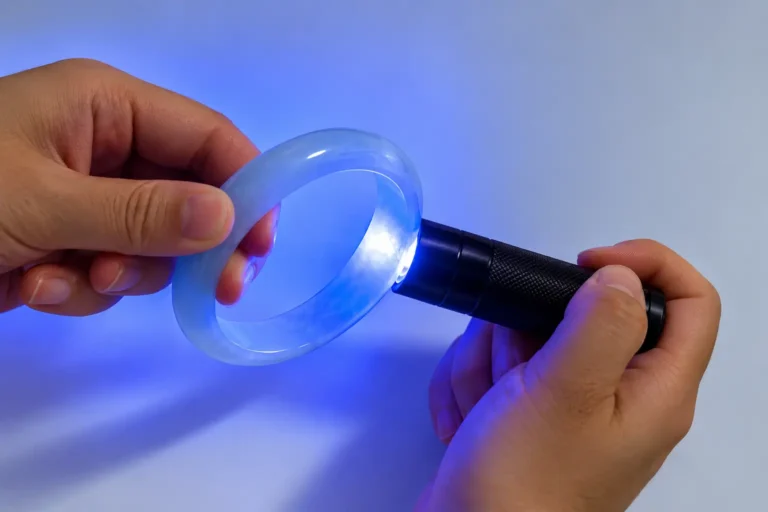
- Smoky Purple Nephrite: Its hue—a blend of celadon-grey and violet—results from elemental transition metals within the crystal lattice. This means the color flows naturally through the jade’s structure. Under a flashlight, the color appears fluid and follows the jade’s internal texture.
- Qinghua Nephrite: Whether sourced from mountain mines or riverbeds (Seed Jade), it remains strictly grey or blackish-grey, never exhibiting a violet tint. Because graphite creates the color, a flashlight will often reveal distinct “ink dots” or micro-specks characteristic of the Ink Jade family.
Evaluating Quality: The Characteristics of Smoky Purple Nephrite
While its sophisticated “ashy-violet” aesthetic is highly sought after, Smoky Purple Nephrite carries the inherent traits of its Qinghai origin. Understanding these features is key to assessing its market value.
Transparency and “Natural Signatures”
Qinghai material is generally more translucent than other origins. When inspecting Smoky Purple Nephrite, you will often encounter:
- Water Lines: Fine, vein-like streaks composed of directionally aligned tremolite crystals.
- White “Cotton” Flecks: Tiny mineral clusters that appear as pale spots within the stone.
In the professional trade, while these “natural signatures” prove the stone’s authenticity, they are often viewed as imperfections. Specimens with high clarity and minimal internal inclusions command a significant premium, whereas those with prominent water lines or cotton flecks typically see a reduction in market price
How Color and Texture Dictate the Value of Smoky Purple Nephrite
As with all colored varieties of Hetian jade, the valuation of Smoky Purple Nephrite hinges on two primary factors: its inherent material texture and, most importantly, the quality of its color.
The Spectrum of Violet Saturation
Not all Smoky Purple specimens are created equal. The palette varies significantly in both depth and intensity. Generally, the more pronounced and saturated the violet tone, the higher the market value. In rare cases where the purple is exceptionally deep and concentrated, it can even reach a striking “dark violet-black” hue.
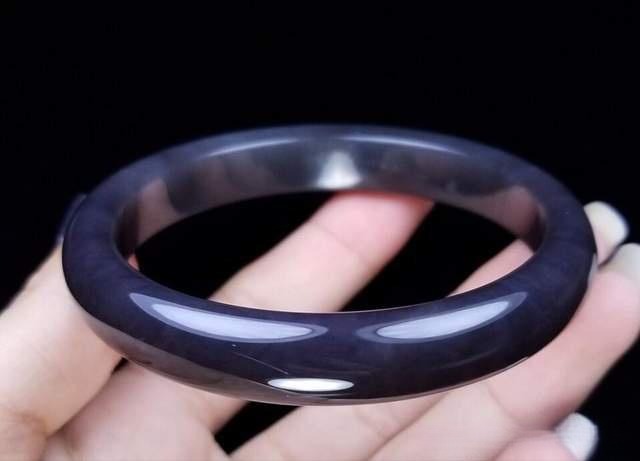
In the trade, specimens exhibiting a vivid, unmistakable purple are often nicknamed “Lavender”. These high-saturation pieces typically command the highest price points in the market.
Texture and Artistic Composition
However, color intensity is not the only path to value. In the world of fine jade, a refined “artistic composition” can be just as prized as solid color:
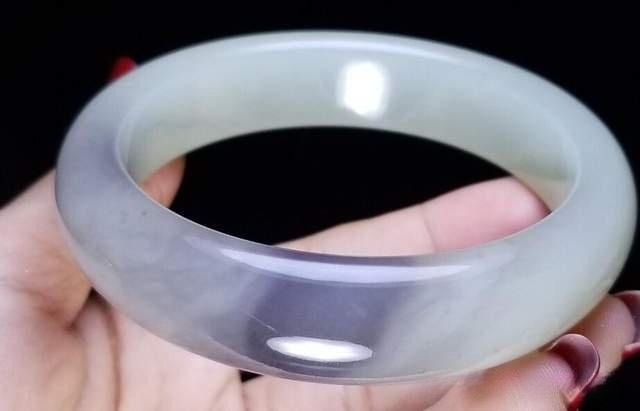
- The Elegance of Contrast: Imagine a Qinghai nephrite bangle with a white, delicate, and structurally uniform base, accented by a single, fluid “drift” of rich greyish-violet. Even if the piece isn’t solid purple, its poetic aesthetic—often described as “artistic conception”—ensures its price remains premium.
- Rare Color Combinations: The value climbs even higher if a piece features a splash of vivid, “pure” green alongside the smoky purple. When these two colors coexist without looking “muddy” or “dirty,” the material becomes a rare collector’s item, fetching significantly higher prices due to its uniqueness.
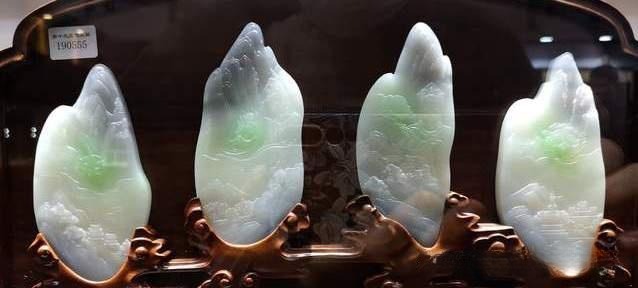
Craftsmanship: “A Fine Horse Deserves a Fine Saddle”
Beyond the raw beauty of the stone, we must consider the human element. As the saying goes, “A fine horse deserves a fine saddle.” The quality of the carving—or Lapidary Artistry—is a decisive factor in the final valuation. Expert craftsmanship can harmonize the natural distribution of color and texture, transforming a raw piece of Smoky Purple Nephrite into a true masterpiece of wearable art.
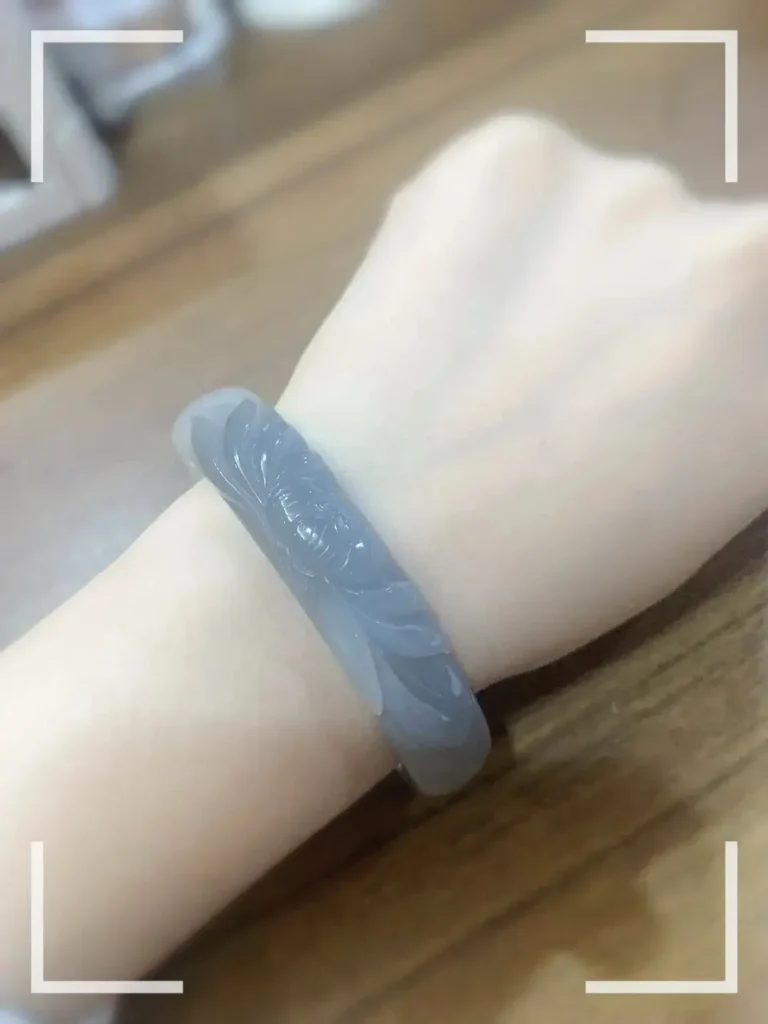
Market Trends and Potential: The Future of Smoky Purple Nephrite
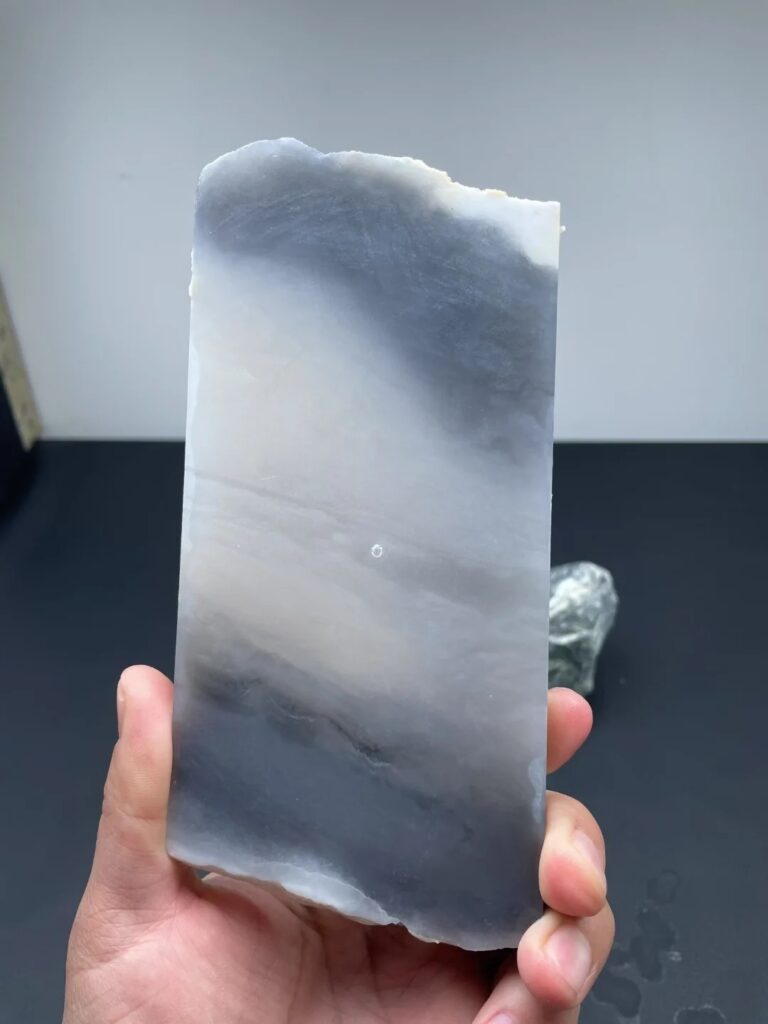
While Smoky Purple Nephrite remains a niche variety compared to the traditional “White, Ink, and Celadon” mainstays, the market trajectory is shifting profoundly.
- A Modern Shift in Aesthetics: The success of Bicolor Green-and-White and Powder Pink Nephrite has paved the way for a new era. Today’s market reflects a clear trend toward younger, expressive tastes. Modern enthusiasts now look beyond traditional origin stories. They prioritize visual allure and high recognizability. This shift creates immense growth potential for vibrant varieties like Smoky Purple Nephrite.
- The Scarcity of High-Grade Material: The raw material market shows a tightening supply-and-demand dynamic. High-quality Smoky Purple rough is exceptionally scarce. These top-tier stones must feature saturated color and a delicate, uniform texture. However, limited deposits and difficult mining conditions make them hard to find. Consequently, these premium stones are becoming increasingly difficult to source.
Given its unique artistic expression, accelerating demand, and the non-renewable nature of these resources, Smoky Purple Nephrite is currently in the early stages of “value discovery.” We anticipate that high-quality specimens will emerge as the next powerful “dark horse” in the Hetian jade market.
Final Thoughts: Will You Be Charmed by Smoky Purple?
With its sophisticated palette and effortless elegance, has Smoky Purple Nephrite captured your heart yet?
At Jewea, we have witnessed the market’s evolution, yet one rule remains: premium jade is a fleeting gift from nature. High-quality specimens are true rarities that rarely linger. If a particular piece speaks to you, we invite you to claim it before it joins a private collection elsewhere.
Among Qinghai’s iconic niche varieties—the vibrant Green-White, the delicate Powder Pink, and the moody Smoky Purple—which one speaks to your soul?