Gemstones of Jiangsu: Crystal, Yuhua Stone, & Taihu Stone | Gems of China Series
In this installment of our “Gemstones of China” series, we journey to East China to uncover the hidden geological treasures of Jiangsu Province.
Among China’s many regions, Jiangsu stands in a league of its own. Geographically, it sits at the heart of the eastern coastline, spanning over 70,000 square kilometers of lush plains. Together with Shanghai, Zhejiang, and Anhui, it forms the Yangtze River Delta—one of the world’s six most influential metropolitan clusters.
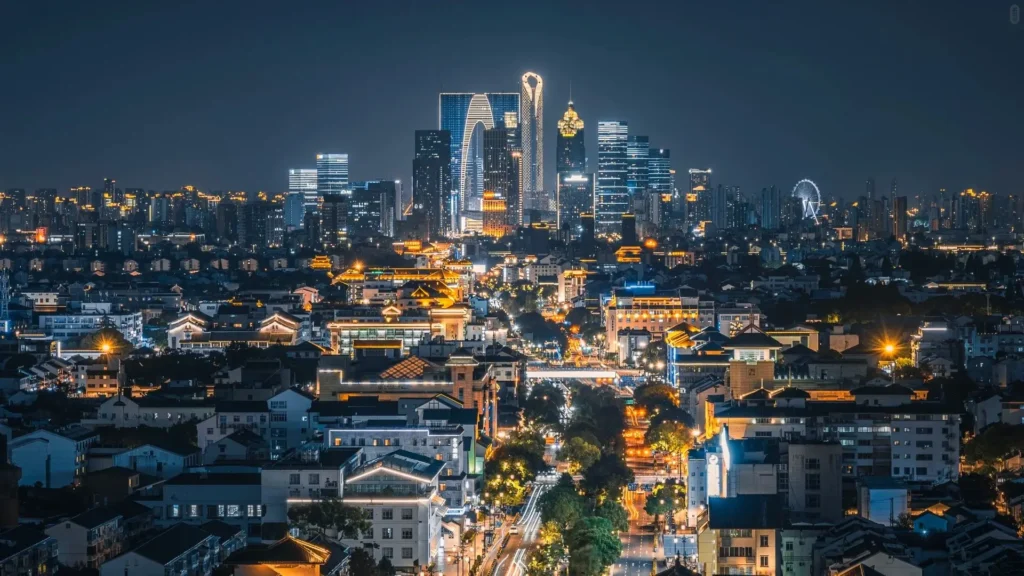
But Jiangsu’s prestige goes beyond its map coordinates:
- An Economic Powerhouse: Jiangsu consistently leads the nation in comprehensive development. It ranks first in per capita GDP, regional competitiveness, and quality of life indices, officially reaching the living standards of a “high-middle income” developed economy.
- A Cultural Hub: With 131 universities and the highest concentration of “211 Project” elite institutions in the country, it is the intellectual heart of China.
Beyond the bustling cities and academic prestige, Jiangsu conceals a wealth of natural mineral resources. To date, geologists have identified over 130 types of minerals here, with many reserves ranking among the highest in China.
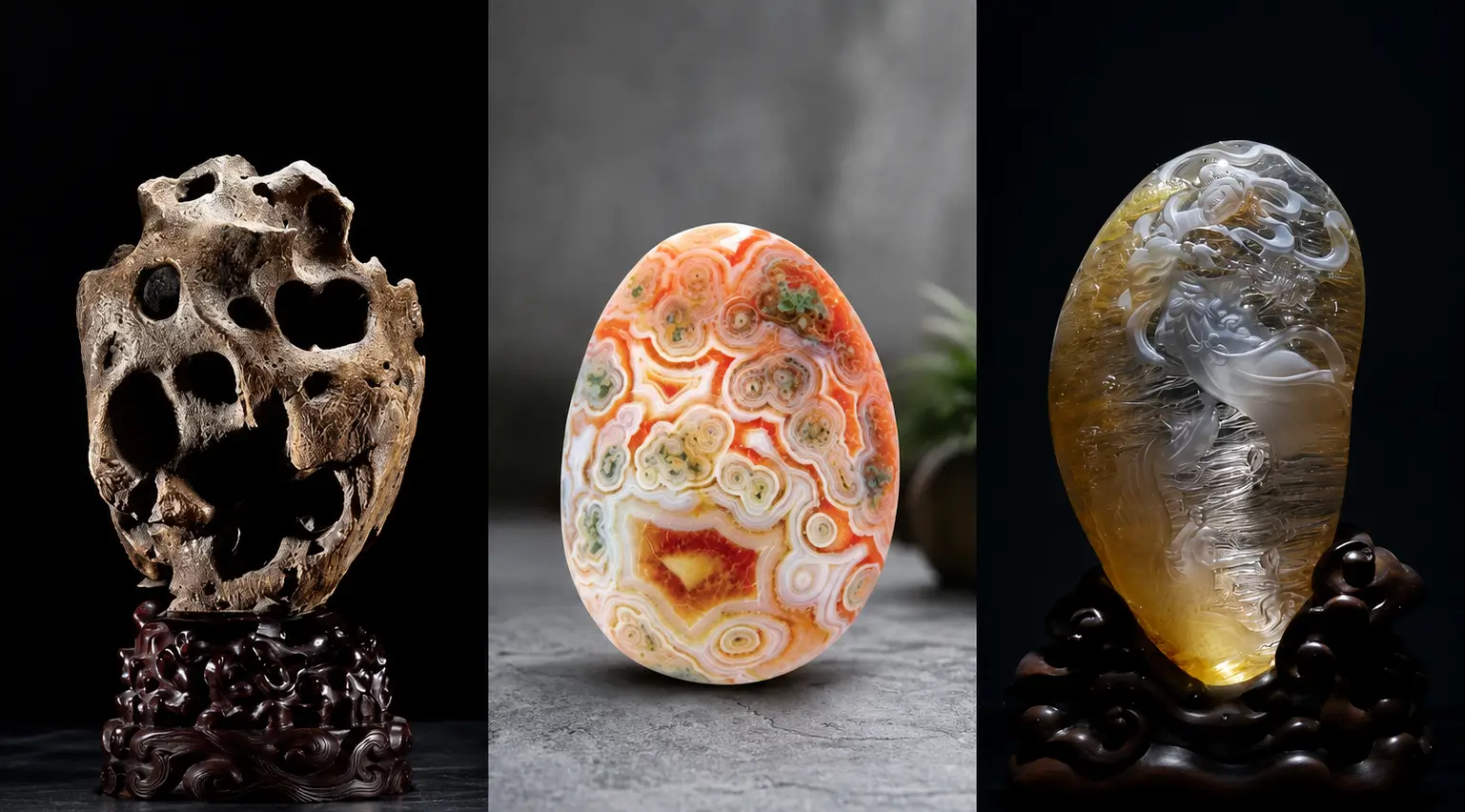
Today, we are diving into the three “crown jewels” of Jiangsu’s stone heritage: the world-renowned Donghai Crystal, the “Queen of Stones” known as Nanjing Yuhua Stone, and the Taihu Stone—one of the four legendary scholar’s rocks of ancient China.
Donghai: The Crystal Capital of the World
There’s a saying that perfectly captures the scale of this region: “The world’s crystals come from China, and China’s best crystals come from Donghai.”
Located in northeastern Jiangsu Province, Donghai County is more than just a local mining site—it is a global powerhouse. As the world’s largest distribution hub for natural quartz, Donghai holds over 70% of China’s total reserves, offering a level of quality that is truly second to none.
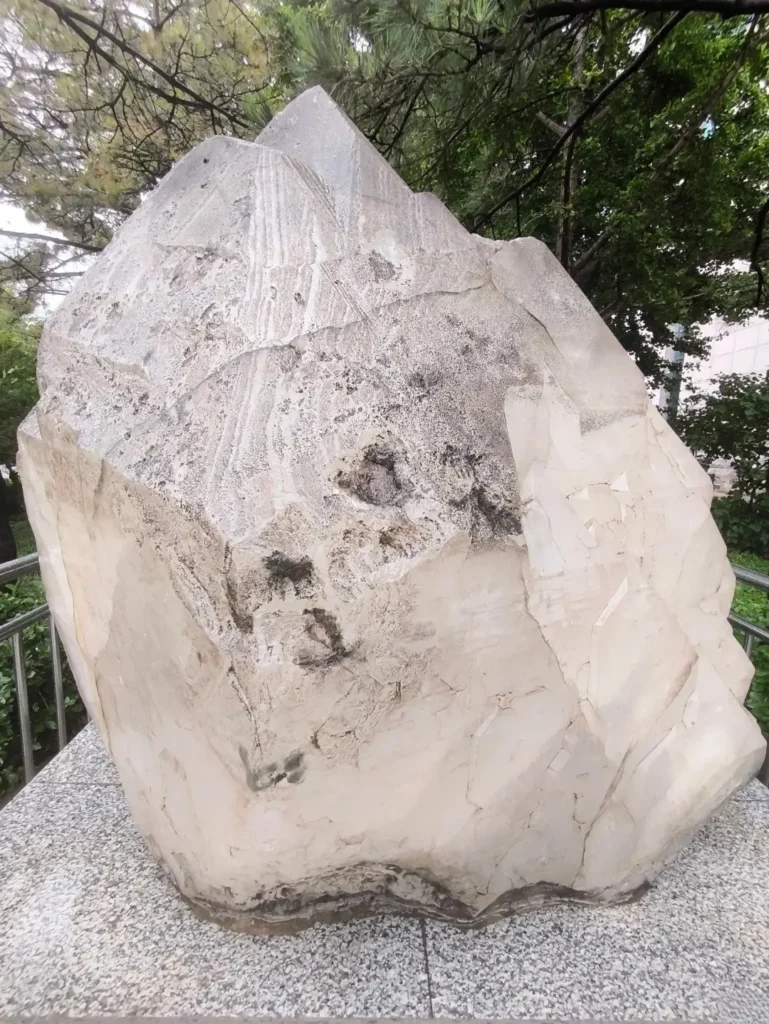
In 2007, Donghai Crystal earned the prestigious National Geographical Indication protection. To see its true scale, you only need to visit the Geological Museum of China. There sits the “King Crystals,” a breathtaking specimen weighing 3.5 tons that was unearthed right here in Donghai.
The Legend of the “Glow Stone”
In ancient times, crystals were called Shui Yu, or “water jade,” for their liquid-like clarity. But in Donghai, they have another name: the “Glow Stone.”
Local legend tells of a young oil peddler walking home at night. He noticed strange, flickering sparks along the roadside. Terrified that they were spirits, he poured out his oil as an offering. When he returned the next morning, he began digging at the spot and discovered brilliant, shimmering crystals. Ever since, the people of Donghai have known these treasures as the stones that catch the light.
A Legacy Spanning Centuries
Donghai stands as one of the historical birthplaces of crystal mining in China. Records from the General Gazette of Jiangnan reveal that locals were already unearthing these gems over 600 years ago.
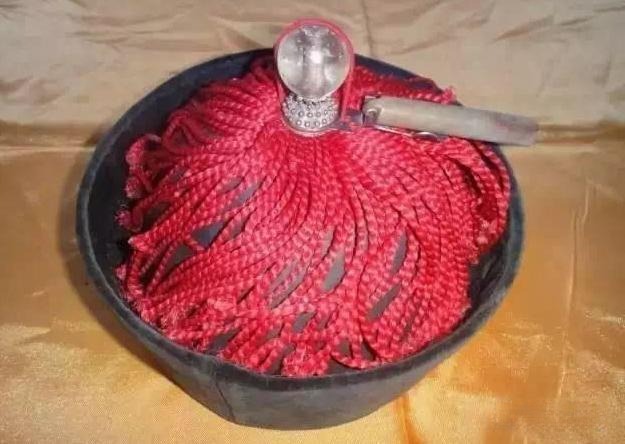
By the 17th and 18th centuries, during the reigns of Emperors Kangxi and Qianlong, crystal became a definitive status symbol. High-ranking officials wore crystal “top beads” on their hats to signal their rank. Beyond official regalia, artisans carved the stone into exquisite curios for the imperial court to admire and collect.
Interestingly, ancient China valued crystal as much for its medicinal properties as its beauty. Traditional texts offer fascinating insights:
- The Compendium of Materia Medica: Renowned physician Li Shizhen described crystal as “cool and non-toxic,” using it to soothe palpitations and “heat in the heart.”
- The Archive of Curiosities: This text noted crystal’s “cooling nature,” which helped relieve eye strain and inflammation.
- Dictionary of Traditional Chinese Medicine: It classifies crystal as a sweet, warming element that interacts with the lung, kidney, and heart meridians.
While crystal was once an unreachable luxury reserved for the elite, modern production has changed the landscape. Today, it has evolved into an accessible gemstone that offers incredible beauty and value without the imperial price tag.
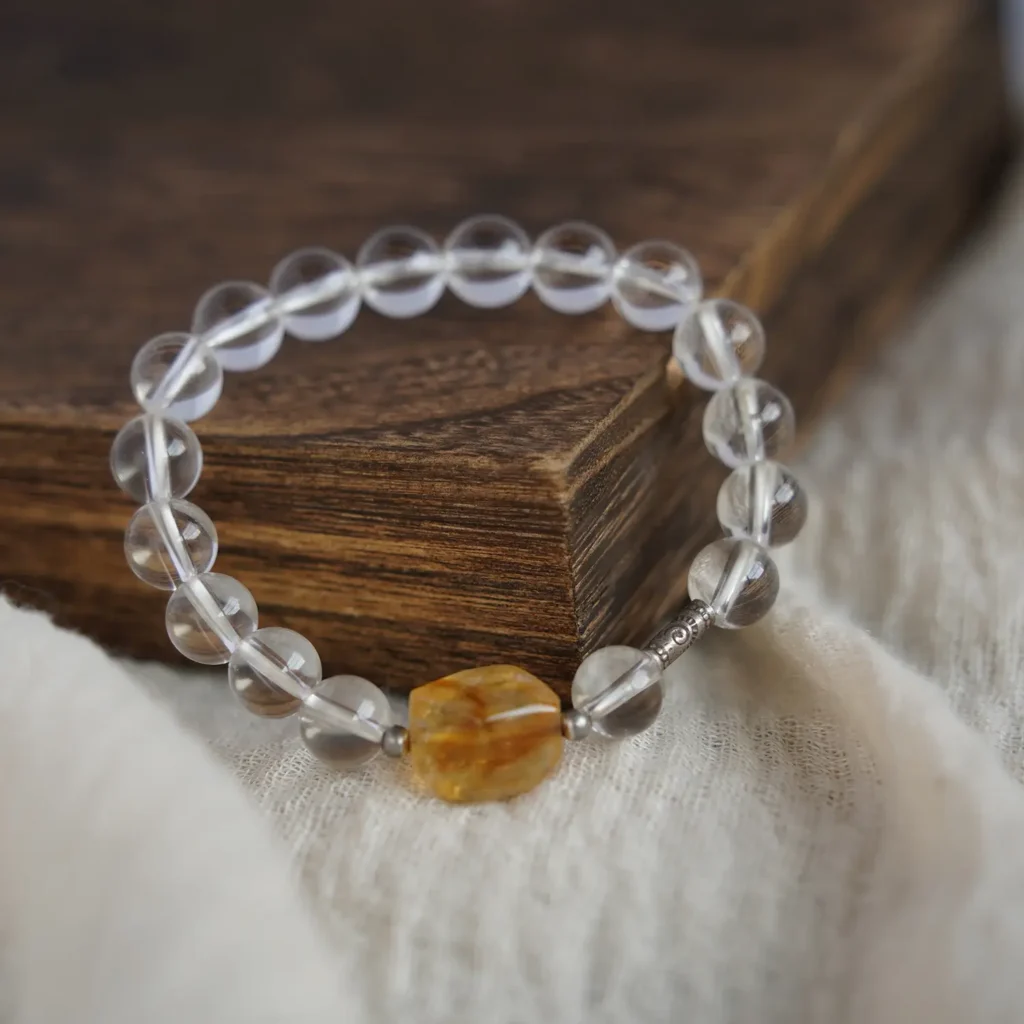
This evolution allows modern designers to bring the stone’s timeless clarity into everyday life through pieces like the Minimalist White Crystal Bracelet. At Jewea, we honor this heritage of traditional craftsmanship by transforming high-quality natural quartz into elegant, small-batch jewelry that balances vintage charm with a “silent luxury” aesthetic.
Turning Stone into Gold: The Spark of Modern Donghai
So, how did the people of Donghai transform raw quartz into a thriving industry? The turning point came in 1991, sparked by a middle school teacher named Zhu Jingqiang.
While browsing a local crystal market, Zhu spotted a unique stone filled with shimmering, golden “hairs.” Intrigued, he bought it for just 12 RMB. He later had it professionally polished, revealing a natural masterpiece that looked exactly like Halley’s Comet.
Zhu began showcasing his “comet” at various exhibitions. The stone caused a sensation. Someone even offered him $10,000 for it—a staggering sum, considering that the same weight in gold was worth only $2,000 at the time.
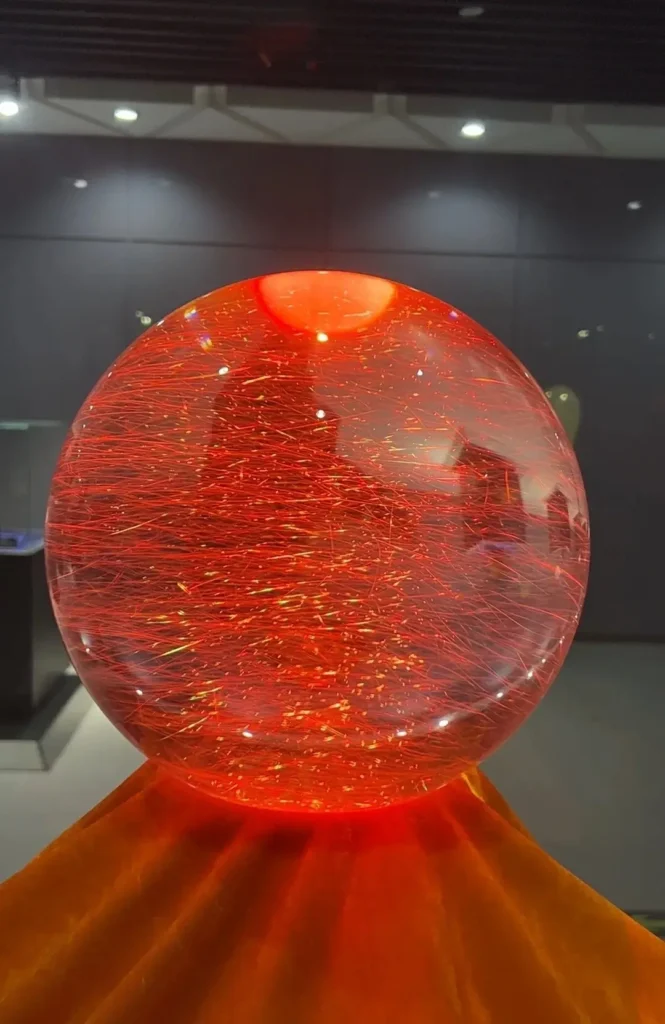
News of this “hidden world” inside the crystal spread like wildfire. Seizing the moment, the people of Donghai realized the immense value of these inclusion crystals. They began focusing on artistic processing and intricate carving, turning every unique, “imperfect” stone into a one-of-a-kind work of art.
From Raw Earth to Fine Art
Master artisans take these translucent stones and breathe life into them through meticulous carving. By transforming raw quartz into diverse, intricate forms, they do more than just enhance its beauty—they significantly increase its value. Today, these pieces have become highly sought-after treasures, perfect as travel keepsakes or meaningful gifts for loved ones.
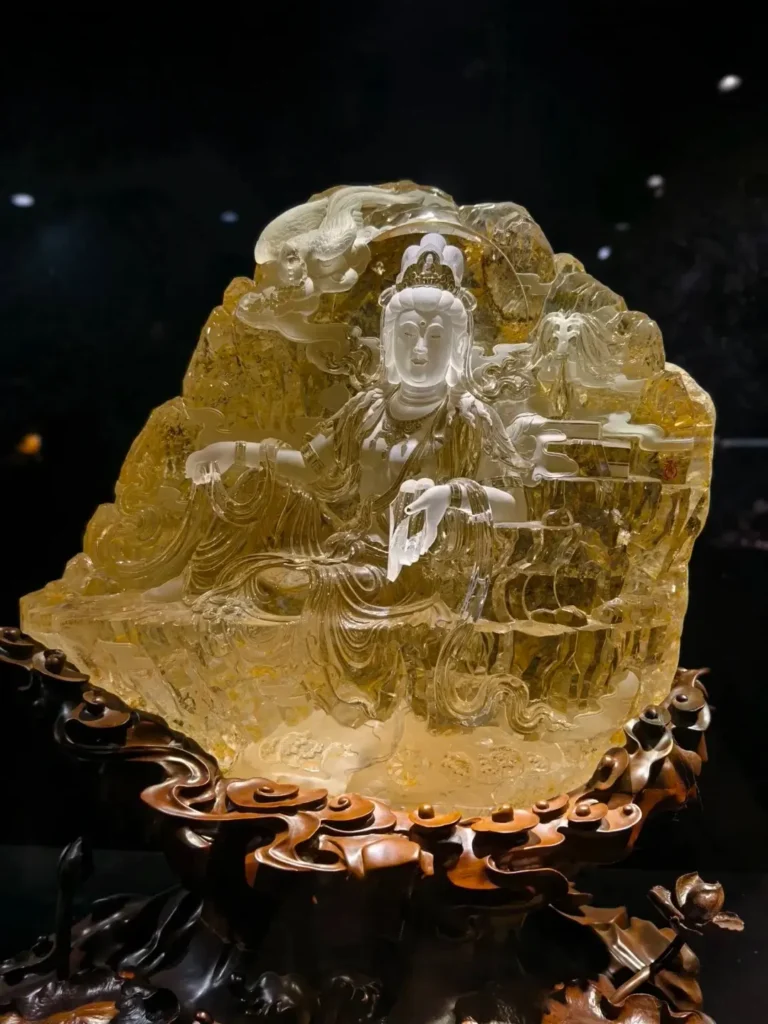
The crystal industry in Donghai has evolved into a massive, sophisticated operation. It now covers the entire supply chain, from initial mining to high-end processing and artistic carving.
To push the industry even further, the region has invested heavily in its infrastructure. Donghai is now home to several landmark institutions, including:
- Donghai Crystal City: The only national-level trading center of its kind in China.
- The China Crystal Museum: A cultural hub dedicated to the history of the craft.
- The Crystal Cultural & Creative Industrial Park: A space where innovation meets tradition.
Through these efforts, crystal has become the backbone of the local economy, cementing Donghai’s reputation as a world-class gemstone destination.
Nanjing Yuhua Stone: The Queen of Stones
If you have ever traveled to Nanjing, you have likely encountered the Yuhua Stone (Rain Flower Pebble). From bustling street corners to quiet scenic spots, these vibrant stones are everywhere, serving as a signature symbol of the city.
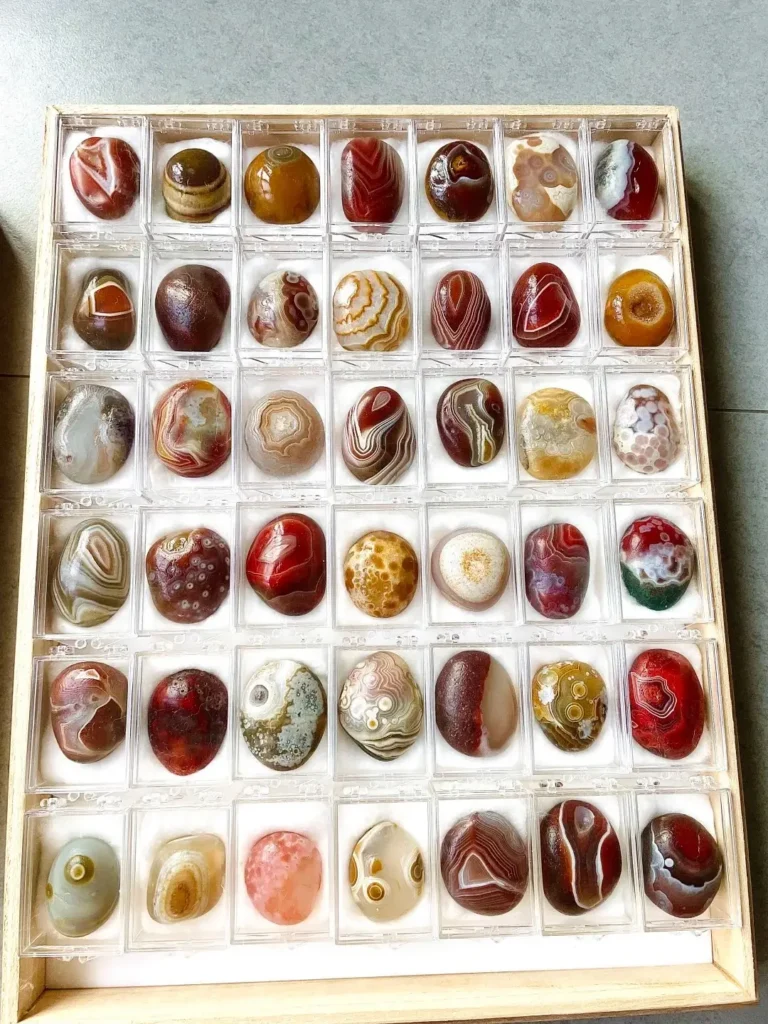
But what exactly are they, and do they hold real value for collectors? Historically, Yuhua Stone is a collective term for various patterned stones, known in ancient times as Wen Shi (patterned stone) or Jin Shi (brocade stone).
The Legend of the Flower Rain
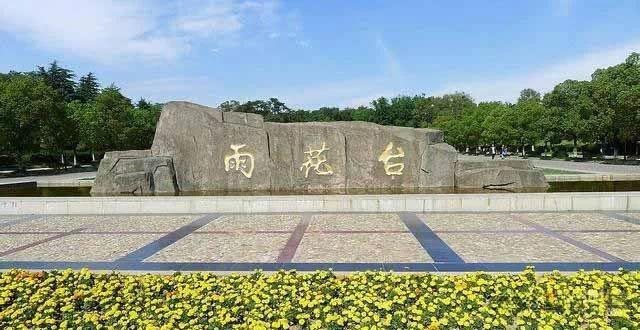
Legend traces the name back to the 6th century, during the reign of Emperor Wu of Liang. Legend has it that a venerable monk named Master Yun Guang preached with such devotion at a hill outside Nanjing that the heavens were moved. Flowers rained down from the sky, and as they touched the ground, they transformed into these exquisite pebbles. By the Song Dynasty, the site was named “Yuhua Terrace” (Rain Flower Terrace), and the beautiful stones found nearby inherited the name.
The Geological Reality
While the myth adds a touch of romance, the scientific origin is equally fascinating. These stones primarily come from Manaojian (Agate Creek) in Nanjing’s Liuhe District. Known as the “Queen of Stones,” they are a source of immense local pride.
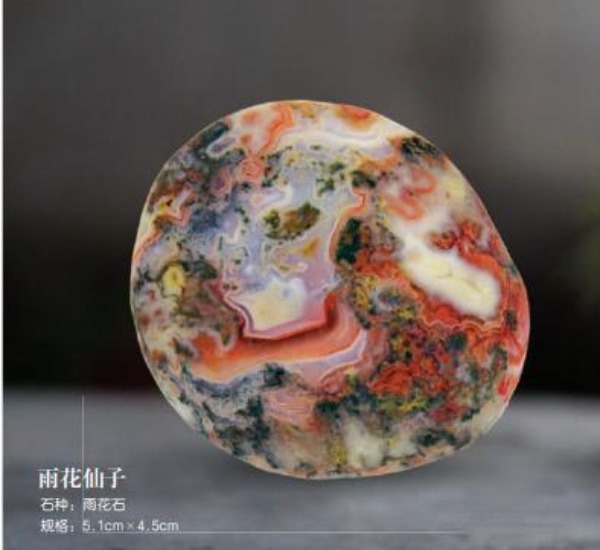
Their story began between 3 and 12 million years ago. As the ancient Yangtze and Qinhuai Rivers flowed through the region, the relentless force of the water eroded nearby rocks, tumbling and polishing them into smooth pebbles within gravel layers. Millions of years of tectonic shifts eventually pushed these treasures to the surface, revealing the kaleidoscopic patterns and colors we admire today.
Colors and Classification of Yuhua Stones
Most Yuhua stones display vibrant shades of red, yellow, and white. Green specimens are rare, while blue is exceptionally hard to find. These stones are typically rounded or oval, offering high translucency that highlights their intricate, shifting patterns. Crucially, Yuhua stones are at their most breathtaking when submerged in water; the moisture brings their hidden colors and “landscape paintings” to life with vivid clarity.
Geologically, Yuhua stones are categorized by their mineral composition:
- Agate: The most prized variety, famous for its “hidden landscapes” and concentric banding.
- Opal & Jasper: Preferred for their rich, opaque colors and waxy, tactile luster.
- Quartz & Crystal: Valued for their structural brilliance and high transparency.
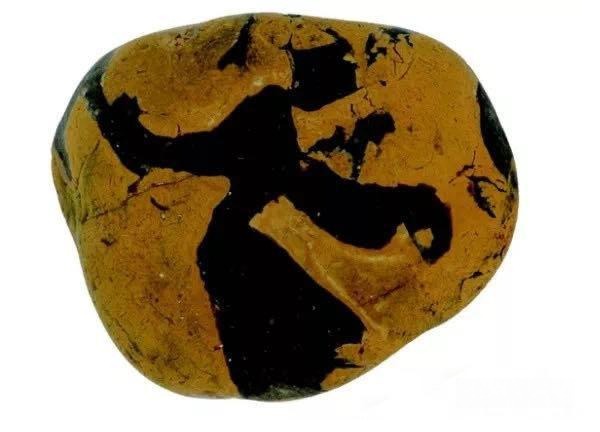
Among these, the Yuhua Agate remains the gold standard. Its delicate texture and “infinitely varied” imagery—such as the famous Dancer of the Han Palace—give it immense collectible value.
From Ancient Rivers to Modern Collections
Although Yuhua stones formed millions of years ago, their journey into human hands began much more recently. Serious mining and appreciation truly took flight about a millennium ago. During the Tang Dynasty, these stones became a sensation among the elite; everyone from court scholars to royal family members fell under the spell of their ever-changing patterns.
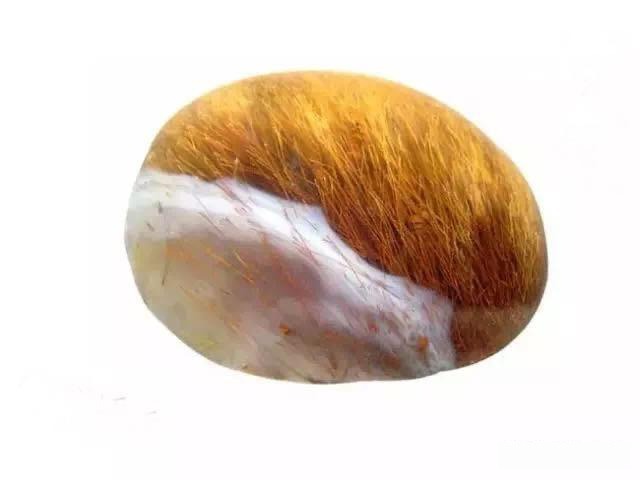
Their cultural influence is even woven into China’s greatest literature. It is widely believed that Cao Xueqin, the author of the masterpiece Dream of the Red Chamber, drew inspiration from the Yuhua stone to create the “Magic Jade” (Tongling Baoyu) worn by the protagonist, Jia Baoyu.
The Modern Market: Authenticity Matters
As the global gemstone market expanded, the Yuhua stone briefly faded from the spotlight. However, recent years have seen a massive resurgence in interest, with collector demand driving prices to new heights. Unfortunately, this popularity has attracted unscrupulous sellers. The market is now flooded with counterfeits made of glass, resin, or even chemically treated common pebbles, making it difficult for the untrained eye to distinguish the real from the fake.
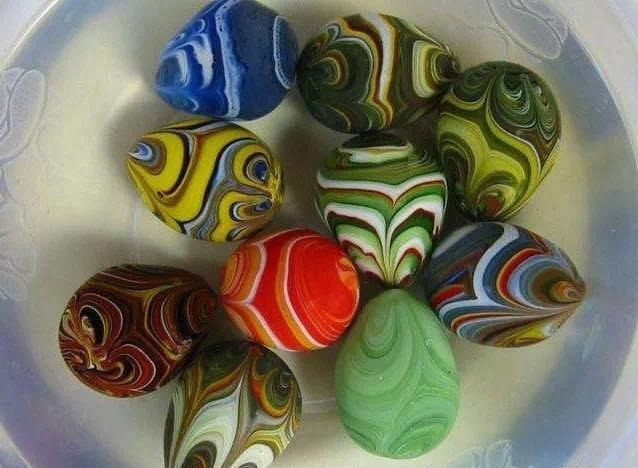
To protect this cultural heritage and regulate the market, the Nanjing Institute of Quality Inspection and the Nanjing Yuhua Stone Museum recently co-drafted the Yuhua Stone Appraisal and Evaluation Standards. If you are looking to add a natural Yuhua stone to your collection, it is essential to stay informed and choose with a discerning eye. Always look for certifications from reputable institutions to ensure your piece is a genuine gift from the ancient Yangtze.
Taihu Stone: The Soul of the Chinese Garden
Known variously as “Holey Stone” or “Rockery Stone,” the Taihu Stone takes its name from Lake Tai, the vast body of water straddling the border of Jiangsu and Zhejiang provinces. Along with the Lingbi Stone from Anhui, the Ying Stone from Guangdong, and the Kun Stone from Jiangsu, it completes the prestigious list of the “Four Famous Scholar’s Rocks” of ancient China.
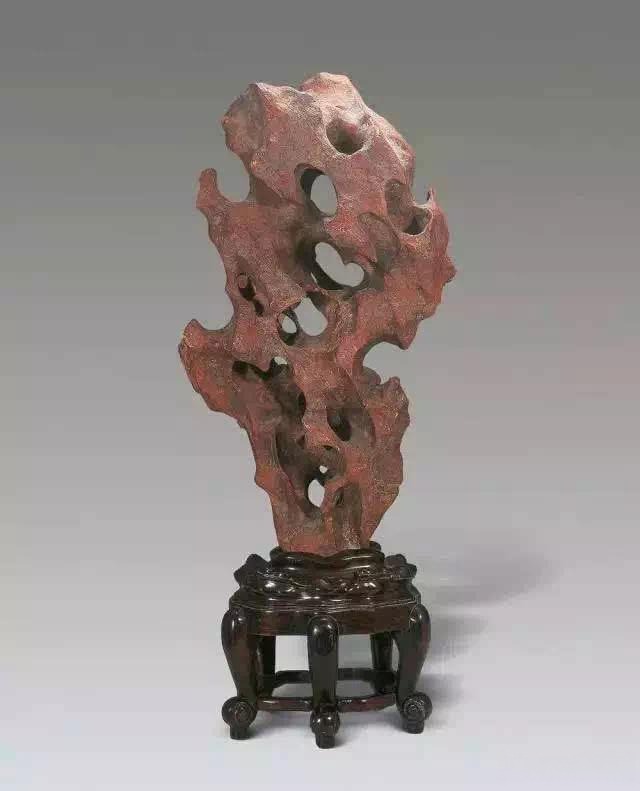
From a mineralogical perspective, Taihu stone is primarily composed of calcite, with a Mohs hardness of approximately 3. Its palette is surprisingly diverse, ranging from deep blacks and stark whites to rare reds and yellows. While most specimens display a classic bluish-grey hue, the elusive red Taihu stone remains the most coveted prize among connoisseurs.
Identification and Grading: The “Four Qualities”
The value of a Taihu stone is determined by its physical morphology rather than internal clarity or color. For collectors and gemologists, the quality of a specimen is assessed through four distinct structural characteristics:
- Shòu (Lean): Refers to the stone’s verticality and slender proportions. A high-quality specimen should feel upward-reaching rather than bulky.
- Zhòu (Wrinkled): Describes the complex surface texture. This refers to the rhythmic ridges and weathered grooves formed by long-term natural erosion.
- Lòu (Leaky): Refers to the presence of functional channels. These are hollows and indentations that allow for the dynamic flow of water or air.
- Tòu (Transparent): The most critical grading factor. It refers to the interconnectedness of the holes, where light or air can pass entirely through the stone’s core.
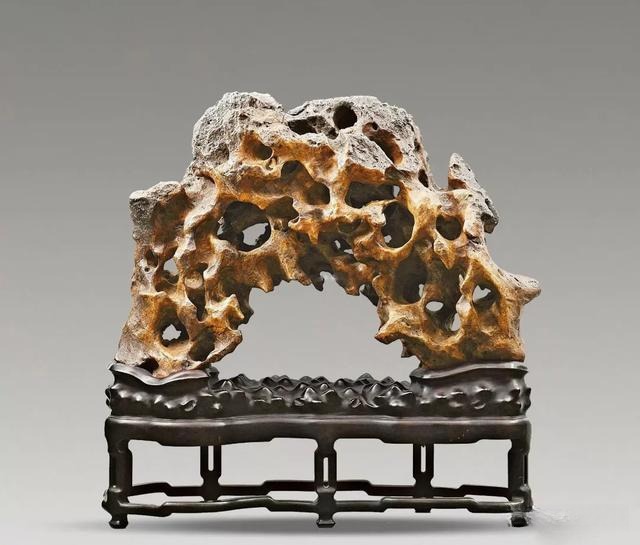
While traditional gemstones are prized for their refractive index or mineral purity, the Taihu stone is valued for its spatial geometry. The “voids” within the limestone are as important as the mineral itself, creating a structural balance between solid mass and negative space. From a professional standpoint, the more intricate and interconnected these apertures are, the higher the stone’s collectible grade.
Geological Origin and Formation of Taihu Stone
How did Taihu stone develop such complex, labyrinthine forms? The answer lies in its aquatic history. Millions of years ago, Lake Tai—then known as Zhenze—was a coastal bay. Over time, sediment from the Yangtze and Qiantang Rivers sealed this bay off from the ocean, transforming it into the inland freshwater lake we see today.
Vast limestone beds sat submerged beneath these waters. Over eons, the constant flow of the lake and the chemical action of carbon dioxide-rich water dissolved the softer minerals. This process left behind only the hardest, skeletal structures of the rock. This natural erosion created the “perforated” and “transparent” textures that collectors prize today.
Because of this unique formation, Taihu stones serve as premier ornamental pieces in various sizes. Large specimens act as solitary focal points or form majestic rockeries (artificial mountains) in gardens. Smaller pieces often appear as miniature penjing (bonsai) or scholar’s rocks for the home. Famous examples, like the “Immortal Peak” in Nanjing’s Zhan Garden and the “Dragon Bone Stone” in Yangzhou’s Ge Garden, demonstrate their high aesthetic value.
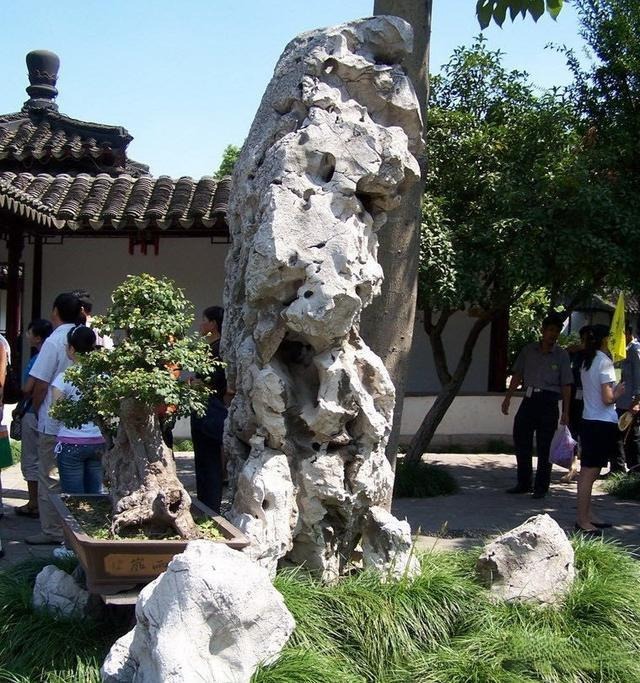
As the Ming Dynasty designer Wen Zhenheng noted in A Treatise on Superfluous Things: “Taihu stones formed underwater are the most precious. Years of wave impact create hollowed, exquisite forms that remain beautiful from every angle.”
History and Cultural Heritage of Taihu Stone
The tradition of appreciating Taihu stone dates back to the Five Dynasties period (907–960 AD). By the Tang Dynasty, these stones were more than just decorative objects; they became a profound source of inspiration for the literati. Taihu stones frequently appeared in classical poetry and paintings of the era. The legendary poet Bai Juyi famously documented their allure in Note on Taihu Stone, describing them as bearing the “traces of ten thousand years of waves.” He marveled at how their hollowed structures allowed air to flow through like mountain caves, seeing them as miniature descendants of China’s great peaks.
The Song Dynasty: An Imperial Obsession
Taihu stone reached its cultural zenith during the Song Dynasty, largely due to the obsession of Emperor Huizong. He established a dedicated bureau in Suzhou to manage the “Flower and Stone Network” (Hua Shi Gang). This massive operation focused on sourcing the rarest stones and plants from southern China to build Genyue, his grand imperial garden in the north.
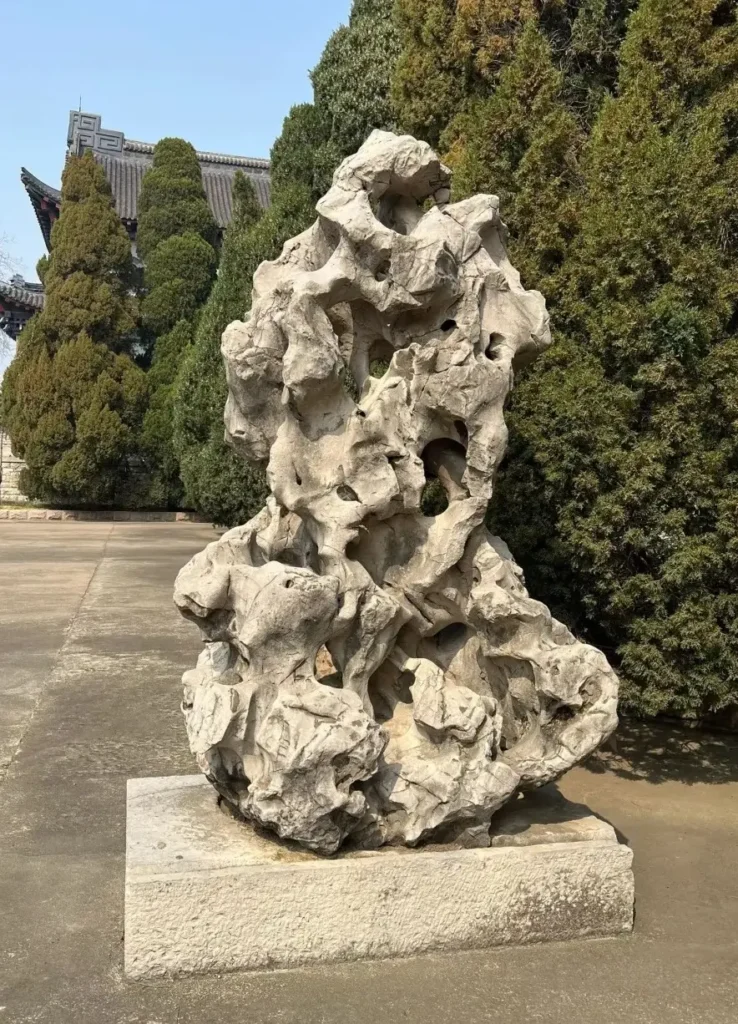
Because the highest-quality stones were found in the south, the Emperor coordinated an immense logistical feat to transport these heavy, delicate treasures to his northern capital. This royal patronage cemented the Taihu stone’s status as a premier luxury item.
Collectibility and Modern Market Value
Today, the Taihu stone remains a highly coveted collector’s item. Due to their unique, non-replicable shapes, natural specimens command premium prices—often reaching hundreds of thousands of dollars. Despite the high cost, their popularity never fades. Every year, enthusiasts and collectors continue to seek out these natural masterpieces, drawn by a history and beauty that only time can carve.
Explore More in Our Chinese Gems Series
At Jewea, our mission is to uncover the hidden geological wonders across China. Before we dove into the Gemstones of Jiangsu, we explored several other regions famous for their rare and storied treasures.
Take a look back at our previous journeys:
East China
- Shandong: Gemstones of Shandong: Changle Sapphire, Diamond & Taishan Jade | Gems of China Series
- Fujian: Gemstones of Fujian: Sapphire, Zircon, Garnet, and Shoushan Stone | Gems of China Series
- Anhui: Gemstones of Anhui: Huoshan Quartzite Jade, Huangshan Wax Stone & Turquoise | Gems of China Series
- Jiangxi: Gemstones of Jiangxi: Yingtan Yellow Wax Stone, Wannian Pearls, and Zhang River Agate | Chinese Gems Series
- Taiwan: Gemstones of Taiwan: Red Coral, Blue Chalcedony, Taiwan Nephrite & Seven-Color Jade | Gems of China Series
- Zhejiang: Gemstones of Zhejiang: Changhua Chicken-Blood Stone, Qingtian Stone, & Zhuji Pearls | Gems of China Series