Iran Gemstones: Discovering Persian Turquoise, Agate, Demantoid Garnet, and More
Welcome to JEWEA’s “Kingdom of Gems” series, where we invite you to explore the gemstones of Iran.
Iran is often associated with its vast oil reserves and natural gas resources. Yet beneath this ancient and storied land lies another hidden treasure — a remarkable wealth of gemstones shaped by nature over millions of years.
Today, Iran is known for its deposits of turquoise, agate, demantoid garnet, and amethyst. Among them, Persian turquoise stands supreme, admired around the world for thousands of years for its captivating color and cultural significance.
Join us as we journey through Iran to uncover the gemstones that time, history, and changing landscapes could never conceal.
Iran Turquoise: The Persian Blue Gemstone with a 7,000-Year Legacy
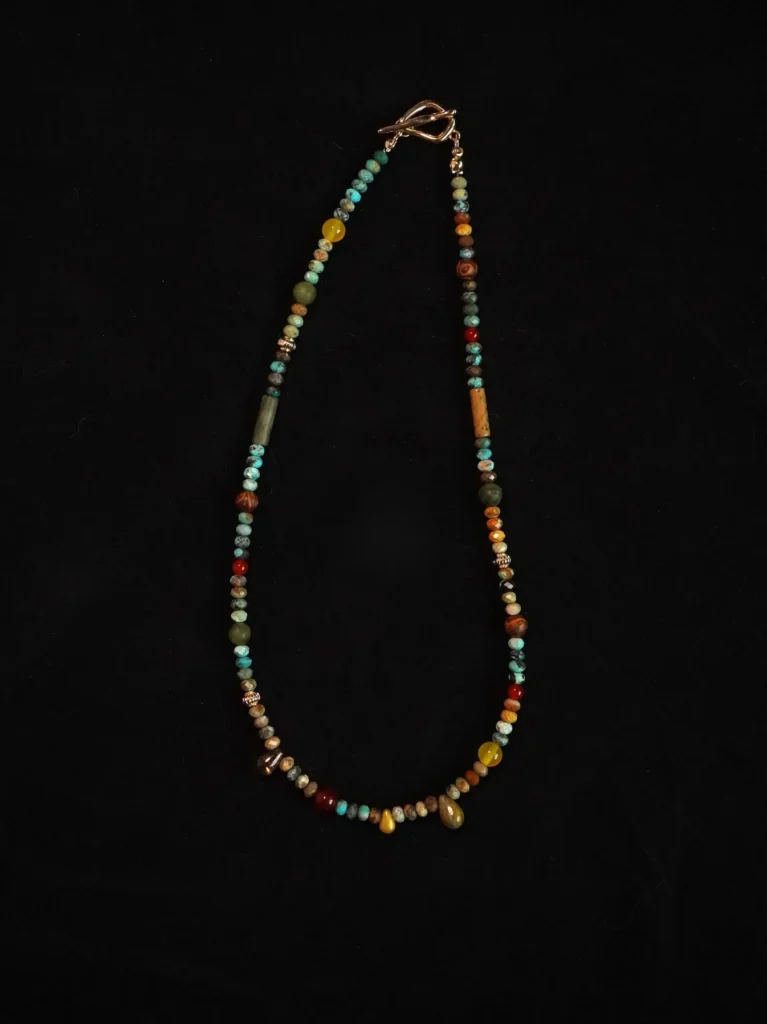
In our previous article, Turquoise: From December Birthstone to High Jewelry Masterpieces, we explored the fascinating history of turquoise, one of the world’s most treasured ancient gemstones. Inspired by its timeless blue-green beauty and cultural heritage, JEWEA presents a turquoise necklace that pairs this iconic gemstone with other natural stones, creating a piece that reflects nature’s unique beauty.
Turquoise is one of the officially recognized December birthstones, admired for its captivating blue-green color and rich cultural significance. Often known as the “Emerald of the East,” this gemstone has been treasured by civilizations around the world for thousands of years. Among its many varieties, Persian Turquoise, from the ancient Persian region (modern-day Iran), stands out for its exceptional quality, distinctive color, and remarkable history.
However, there is an interesting fact about its name: although “Turquoise” is often associated with Turkey, Turkey has never been a source of this gemstone.
The name actually comes from ancient trade routes. High-quality turquoise from Persia traveled through Turkey before reaching European markets. Over time, Europeans began calling this beautiful blue gemstone “Turquoise,” meaning “stone from Turkey.”
Yet, the story of Iranian turquoise goes far beyond its name.
As early as the civilizations of ancient Egypt, Mesoamerica, and Persia, turquoise was treasured as a precious gemstone. People carved it into protective amulets, jewelry, and burial objects. In ancient Europe, fine turquoise jewelry was highly valued by royalty and nobility, becoming a symbol of status, wealth, and prestige.
Today, turquoise is found in many parts of the world, including Egypt, the United States, Mexico, China, and Iran. Among these sources, Iran remains one of the world’s most historically significant origins of high-quality turquoise.
The Mining History of Iranian Turquoise
Iran has a history of mining and using turquoise that spans more than 7,000 years. Before the early 20th century, turquoise played an important role in Iran’s economy, with nearly one hundred turquoise mines operating across the country.
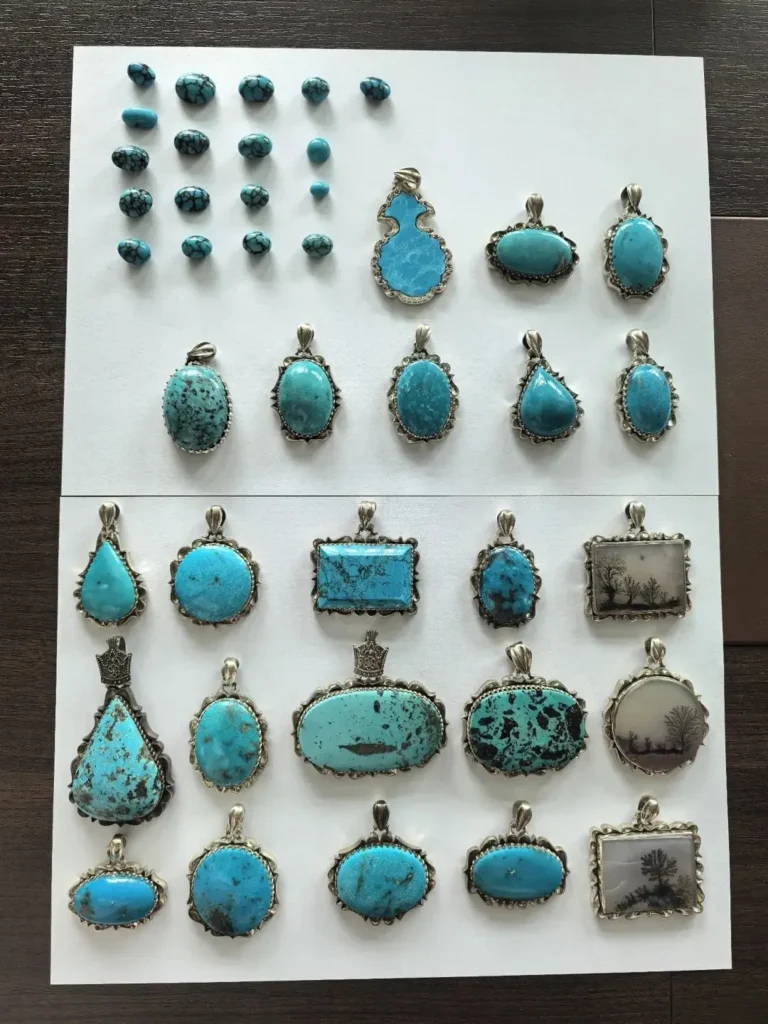
The industry faced challenges during the two World Wars, with production declining and the market experiencing significant changes. After the wars, Iran gradually restored its turquoise mining activities and developed three major turquoise-producing regions:
- Neyshabur Mine
- Baghu Mine
- Shahr-i Babak Mine
Among them, the Neyshabur Mine stands as the most iconic source of Iranian turquoise. With its ancient mining history and exceptional gemstone quality, it remains the most representative origin of Persian Turquoise.
Neyshabur Mine: The Legendary Source of Persian Turquoise
Located in the Ali-Mersai Mountains of Razavi Khorasan Province, Iran, the Neyshabur Mine is the country’s most famous and historic turquoise deposit.
This ancient mine formed its turquoise within volcanic rock environments over millions of years of geological activity. The process created gemstones with distinctive colors and exceptional textures, earning them worldwide recognition as Persian Turquoise.
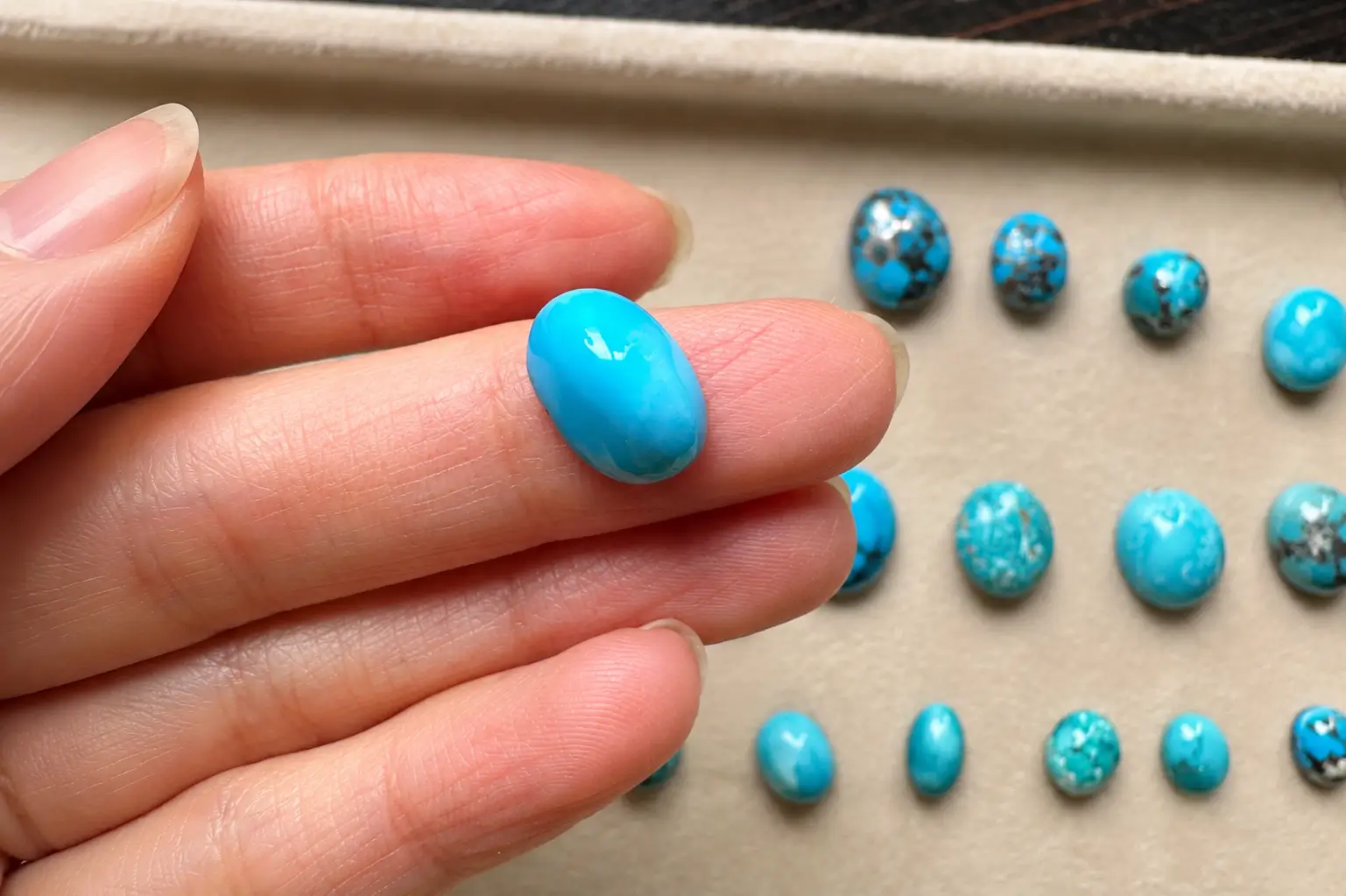
Among all varieties of Iranian turquoise, the most iconic color is known as Persian Blue.
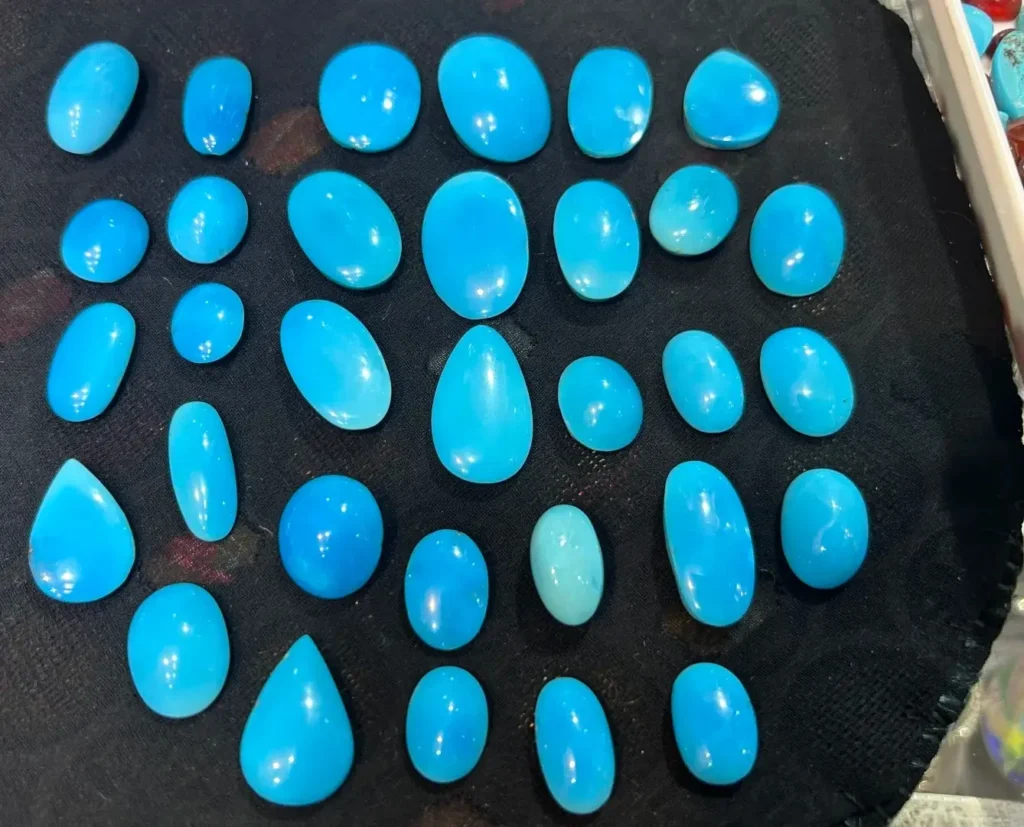
This signature shade displays a pure, even sky-blue tone with little to no visible black or brown matrix. It represents one of the most desirable characteristics of high-quality Persian Turquoise.
Fine untreated Neyshabur turquoise is valued for its:
- Smooth glassy to waxy luster
- Dense and refined texture
- Excellent durability and stability
- Strong resistance to sweat and environmental exposure
Despite its outstanding quality, Neyshabur turquoise faces challenges in today’s international market.
Most commercial turquoise available today undergoes stabilization or other treatments to improve durability and appearance. In contrast, natural high-grade Persian Turquoise remains limited in supply and lacks a universally accepted grading system. As a result, it mainly attracts collectors and enthusiasts who appreciate untreated natural gemstones.
In recent years, Iranian companies have focused more on turquoise processing and market development. By improving treatment methods and creating products across different quality levels, they aim to introduce Iranian turquoise to a broader global audience.
According to a 2020 field study by GIA gemologists, the Neyshabur Mine remained active, with several operating tunnels and ongoing mining activities.
Baghu Mine: An Underexplored Source of Iranian Turquoise
Located in the Kuh-Zar region of Damghan, Semnan Province, Iran, the Baghu Mine represents one of the lesser-known turquoise deposits in the country.
Turquoise from Baghu typically displays:
- Light blue to blue hues
- An opaque appearance
- Waxy to earthy luster
- Massive or layered formations
The turquoise often occurs alongside other minerals, including tourmaline, gypsum, mica, pseudomalachite, and chrysocolla.
Today, mining activities in the Baghu area mainly focus on gold resources, and the region has not yet developed large-scale commercial turquoise production.
However, the quality of Baghu turquoise is comparable to that of the renowned Neyshabur Mine. With further exploration and responsible development, Baghu turquoise may gain greater recognition in the international gemstone market.
Shahr-i Babak Mine: Turquoise with Rich Colors and Distinctive Matrix Patterns
Located in western Kerman Province, Iran, the Shahr-i Babak Mine has a long history connected to turquoise. During the medieval period, Marco Polo documented turquoise resources from this region in The Travels of Marco Polo, making it one of Iran’s earliest turquoise sources recorded in European literature.
Because the mine lies near the large Meiduk copper deposit, miners often discover turquoise as a byproduct of copper mining.
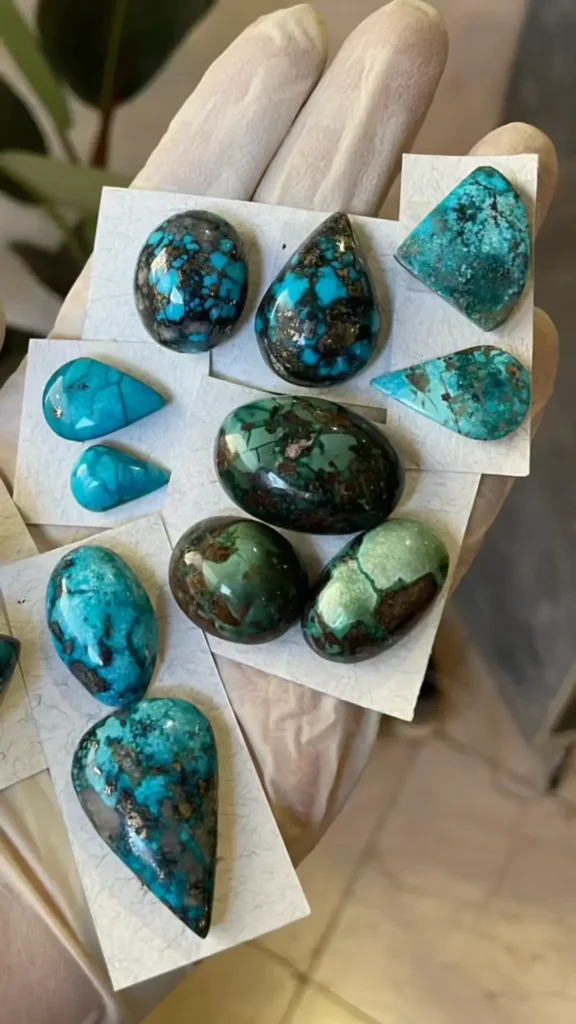
The greatest appeal of Shahr-i Babak turquoise lies in its remarkable color variety, including:
- Deep blue
- Blue-green
- Emerald green
These rich colors create a distinctive visual character. The mine is also known for its unique matrix patterns, especially fine and evenly distributed web-like veins.
This natural matrix has made Shahr-i Babak turquoise highly valued among collectors in Europe and North America. Many enthusiasts appreciate its organic patterns, which reflect the unique geological history of the Persian region.
Shahr-i Babak turquoise also offers excellent physical properties, including:
- Good hardness
- Dense structure
- Excellent polishability
- Stable performance for jewelry use
After polishing, the stone develops a beautiful porcelain-like luster. Its dense structure also provides strong resistance to absorption, helping it maintain its color and appearance during wear.
However, the mine mainly relies on open-pit mining, and production depends on local geological conditions. As a result, Shahr-i Babak turquoise has not yet achieved a consistent large-scale supply.
Iranian Agate: A Gemstone Rooted in Persian Culture
In our previous article, Southern Red Agate: The Complete Guide to Colors, Quality, and Authenticity, we explored China’s renowned variety of agate — Nanhong Agate.
Beyond the world-famous Persian Turquoise, Iran has also been an important source of high-quality agate for centuries. Iranian agates display a remarkable range of colors and natural patterns, while also carrying deep cultural and religious significance from Persian history.
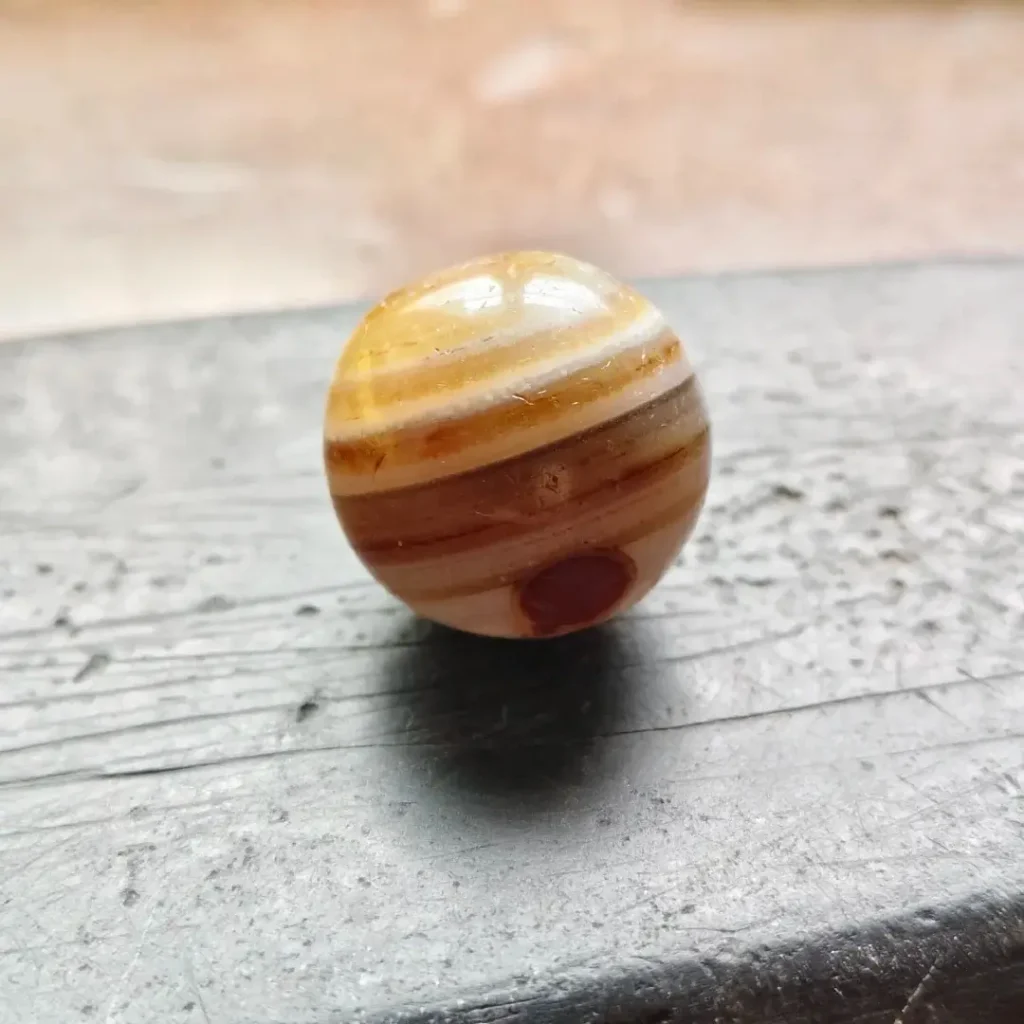
In Persian, agate is known as “Aghigh.” For thousands of years, people have valued agate not only as a material for jewelry and decorative objects but also for its symbolic and cultural meanings.
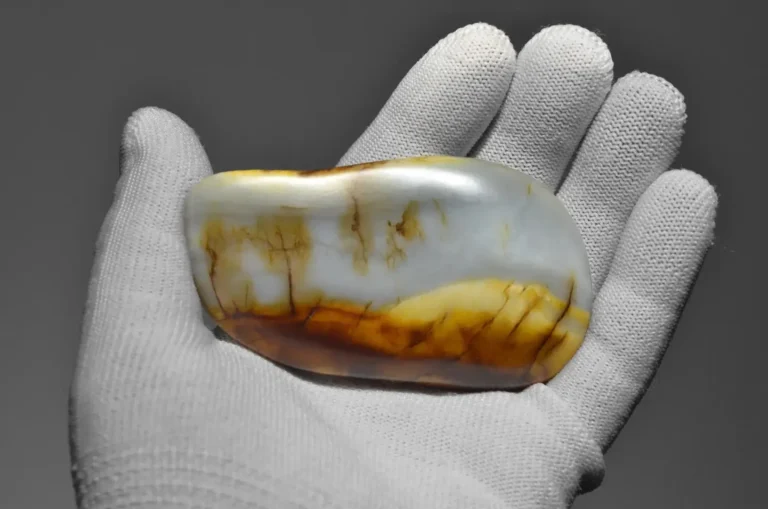
Iran produces many varieties of agate, and one of the most distinctive is Plume Agate. This unique variety gets its name from its feather-like inclusions and smoky cloud-like patterns naturally formed within the stone.
Ferdows Plume Agate Region
Iranian Plume Agate mainly comes from the Ferdows agate region in Khorasan Province, Iran.
This variety displays a remarkable range of natural colors, including:
- Green
- Yellow
- Red
- White
- Orange
Based on their color combinations, local markets often classify Ferdows Plume Agate into different varieties:
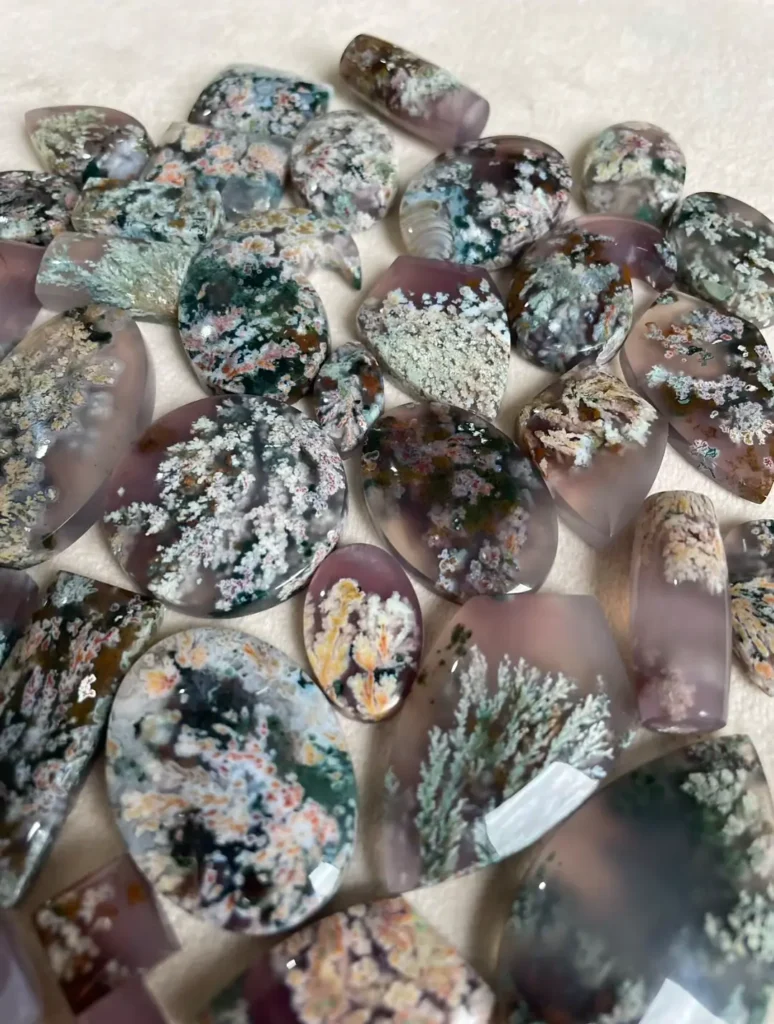
- Plume Agate dominated by green, white, and orange tones is known as “Spring Agate.”
- Plume Agate featuring green, yellow, and red tones is known as “Autumn Agate.”
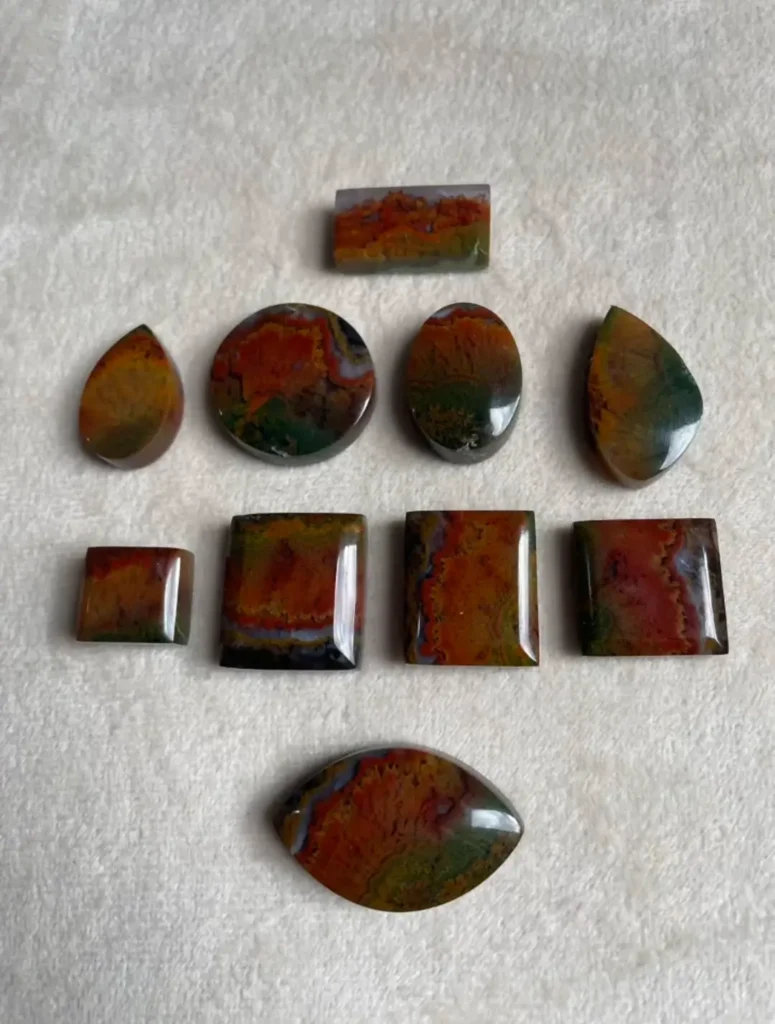
Traditional hand-mining keeps the supply of Ferdows Plume Agate limited, with most trading taking place in Mashhad, the capital of Khorasan Province, and surrounding areas. As a result, this unique gem remains relatively rare in the international market.
Iranian Demantoid Garnet: A Rising Star Among Green Gemstones
In our previous article, The Ultimate Guide to the Garnet Family – Types, Colors, and Buying Tips, we explored the diverse varieties within this remarkable gemstone family.
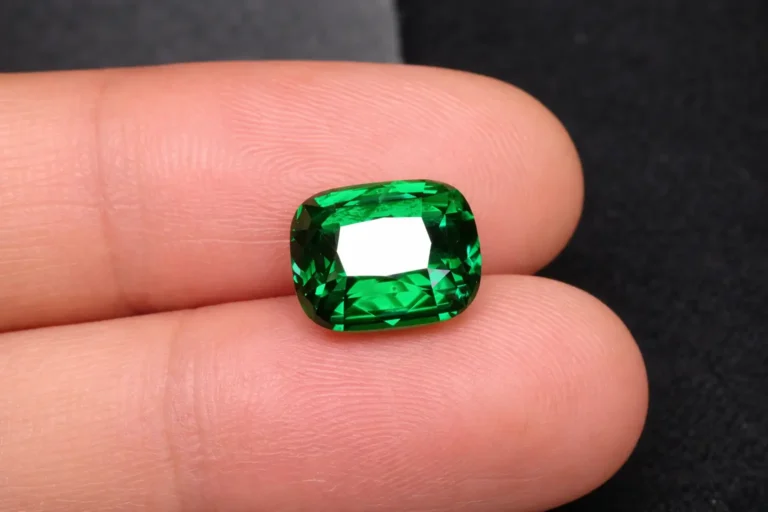
Among them, Demantoid Garnet stands out as one of the rarest and most valuable members. Often regarded as the “king of garnets,” it captivates collectors with its vivid green color and extraordinary fire.
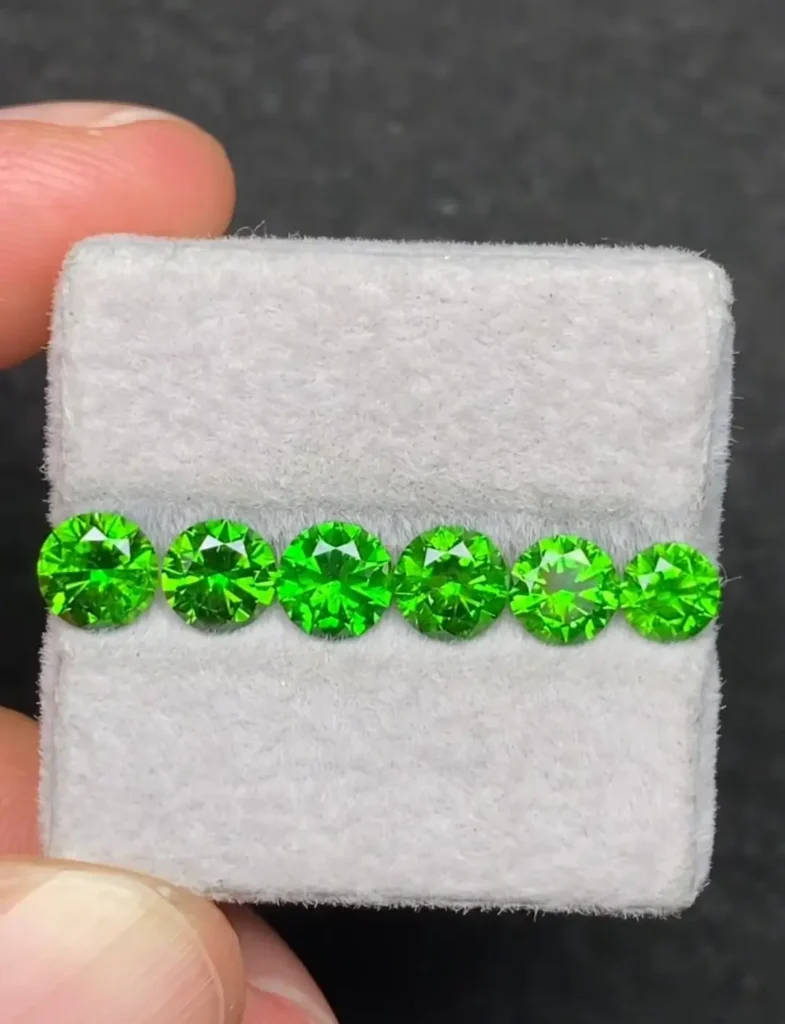
Demantoid Garnet belongs to the andradite garnet variety. Its color palette ranges from:
- Yellowish green
- Apple green
- Vivid green
- Brownish green
Among these colors, stones with bright yellow-green, apple green, or rich emerald-like green tones usually command higher value due to their attractive appearance and rarity.
One of the most remarkable features of Demantoid Garnet is its exceptional dispersion.
With a dispersion value of 0.057, it surpasses diamond’s 0.044. Combined with its excellent refractive properties, Demantoid Garnet produces impressive flashes of color and brilliance, giving it a diamond-like fire that has made it highly valued in the world of fine jewelry.
The Discovery History and Unique Characteristics of Demantoid Garnet
Demantoid Garnet was first discovered in Russia’s Ural Mountains in 1853. Since then, researchers have identified additional deposits in Iran, Madagascar, Italy, and other regions, revealing more sources of this exceptional gemstone.
Iranian Demantoid Garnet was first discovered in October 2001. The deposit lies in Kerman Province, southeastern Iran, at an elevation of approximately 1,500 meters.
To date, miners have recovered around 120 kilograms of rough Demantoid Garnet from this region, with about 5% reaching gem quality. This makes Kerman one of the few important sources of gem-quality Demantoid Garnet in the world.
Iranian Demantoid Garnet displays a wide range of green tones, from yellowish green and vivid green to deep green. The crystals are typically transparent to translucent. Although the region occasionally produces larger crystals weighing several carats, most specimens remain relatively small.
One of the most distinctive features of Iranian Demantoid Garnet is its characteristic “horsetail inclusions.” These inclusions serve as an important identification feature for Demantoid Garnet.
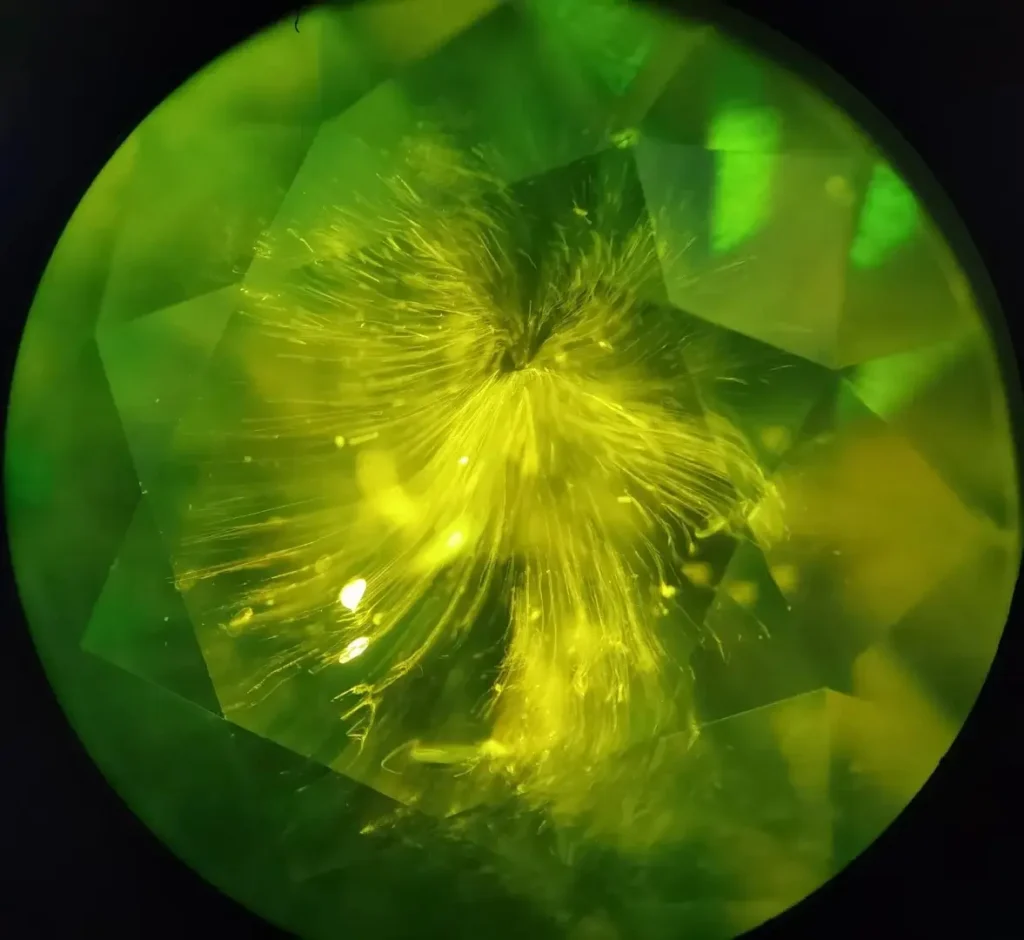
In recent years, Demantoid Garnet from the Kerman region has shown outstanding transparency and color saturation, demonstrating the potential to rival the finest material from Russia’s legendary Ural Mountains.
Iranian Amethyst: A Purple Gemstone from Persian Lands
In our previous article, Amethyst—The Aristocratic Beauty in Everyday Life, we explored the beauty and appeal of amethyst, one of the world’s most beloved purple gemstones.
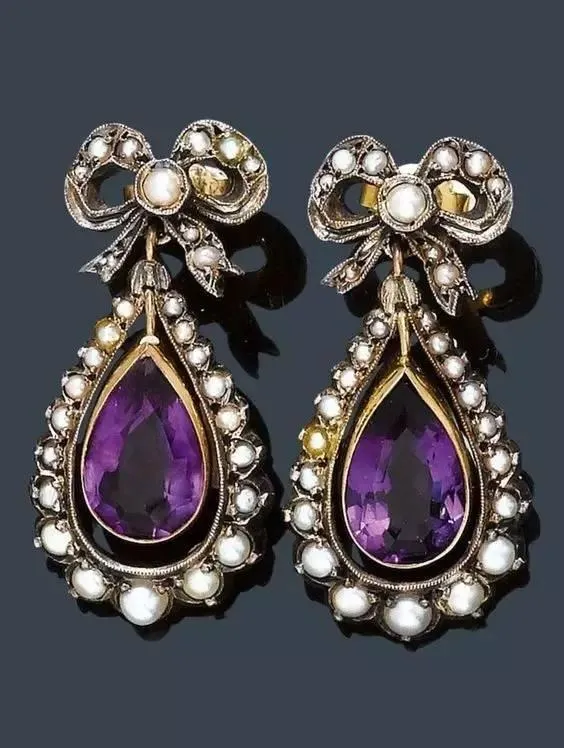
Amethyst is a transparent to translucent variety of quartz and one of the most valuable gem varieties within the quartz family. Throughout history, people have regarded amethyst as a precious gemstone, and royalty once used it in crowns and fine jewelry.
However, as large deposits were discovered and commercial mining expanded, amethyst became more widely available, causing its market value to decline.
Despite this change, amethyst remains one of the most popular colored gemstones today. Its captivating purple hues, excellent durability, and accessible price point continue to make it a favorite choice for both fine jewelry and designer creations.
Amethyst Deposits in Iran
In our previous articles on Brazilian Gemstones, Zambian Gemstones, and Madagascar Gemstones, we explored amethyst from some of the world’s most renowned sources.
Beyond these famous regions, Iran also holds significant amethyst resources. Iranian amethyst deposits are mainly found in:
- Khorasan Province
- Southern Semnan Province
- Sistan and Baluchestan Province
- Isfahan Province
Among these regions, Semnan Province is one of Iran’s most notable amethyst sources, especially the Toroud area.
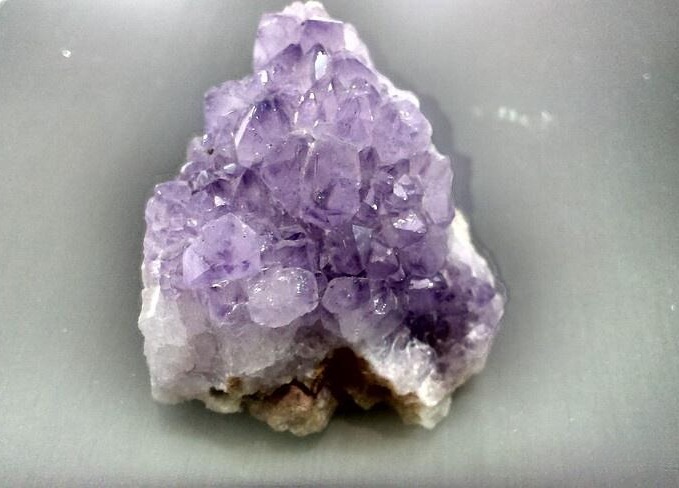
Toroud is well known for producing amethyst geodes with beautifully preserved agate outer shells. This unique combination of amethyst crystals growing within agate formations has become one of the most distinctive characteristics of Iranian amethyst.
Characteristics of Iranian Amethyst
Iranian amethyst displays a wide range of colors, from delicate light purple to rich, deep purple tones.
Its color mainly results from the amount of iron present within the crystal and the effects of natural radiation during formation. Among them, amethyst with intense purple hues and higher color saturation generally commands greater value.
High-quality Iranian amethyst typically features:
- Clear and transparent crystals
- Fewer internal inclusions
- Diverse and attractive crystal formations
- Excellent cutting performance
After precise cutting and polishing, fine Iranian amethyst reveals beautiful luster and vivid brilliance, adding a unique charm to jewelry designs.
Explore More Gemstone Origins Around the World
At JEWEA, our mission is to uncover the hidden gemstone treasures around the world. Before exploring Iran Gemstones, we have previously introduced several other regions known for their unique and remarkable gems.
- Thailand: Thailand Gemstones: From Rubies and Sapphires to the Rising Star of Spinel
- Russia: Russian Gemstones: 9 Extraordinary Treasures from the Urals to Siberia
- India: Indian Specialty Gemstones: A Guide to Historic Diamonds, Kashmir Sapphires, and Investment Treasures
- Australia: The Ultimate Guide to Australia Gemstones: Nature’s Wonders from Down Under
- Tanzania: Discover Tanzania’s Top 8 Gemstones: The Dark Horse of Africa’s Mineral Wealth
- Sri Lanka: Exploring Sri Lankan Gemstones: What Lies Beyond Rubies and Sapphires?
- Pakistan: Pakistan Gemstones: Swat Emerald, Hunza Ruby, Peridot, and More
- Myanmar: Burmese Gemstones: Beyond Ruby and Jadeite, Exploring Myanmar’s Rare Natural Treasures
- China: The Ultimate Map of Gemstones of China: Discover 300+ Varieties Across 600 Localities
- Colombia: Colombian Gemstones: Emeralds, Mining Regions, and Investment Value
- Afghanistan: Afghanistan’s Hidden Gemstones: From Panjshir Emeralds to Sar-e-Sang Lapis Lazuli
Every country has its own unique gemstone stories shaped by geology, history, and culture. At JEWEA, we will continue uncovering more fascinating gemstone origins around the world.