Is Guatemalan Jadeite Worth Buying? The Truth About a Burmese Alternative
In our previous article, “Does Russian Jadeite Qualify for Certification? The Truth About Jadeite Certification and Origins,” we explored how mineral composition plays a role in identifying and certifying jadeite from different sources.
If you have recently followed online jewelry markets, livestream sales, or e-commerce platforms, you may have noticed the growing presence of colorful and more affordable jadeite. While Burmese jadeite remains the benchmark for high-end and investment-grade jadeite, one question is becoming increasingly common among buyers and collectors: Is Guatemalan jadeite worth buying?
From emerging color varieties and common appearance-enhancing techniques to the reality of high-quality Guatemalan jadeite, this article examines what this material truly offers and what buyers should know before making a decision.
The Expanding Color Range of Guatemalan Jadeite
For many years, people believed Guatemalan jadeite was limited to green and bluish-green varieties. However, as mining has progressed into deeper deposits, the variety of Guatemalan jadeite available on the market has expanded significantly.
Beyond the traditional bluish-gray and dark green types, today’s Guatemalan jadeite also includes vivid green, white jadeite with floating green patterns, purple jadeite, black jadeite, and yellow jadeite varieties. Its color range now includes many of the hues traditionally associated with Burmese jadeite.
1. Green Floating Patterns
White-based Guatemalan jadeite with floating green patterns has emerged as one of the most popular varieties in online markets. This variety has challenged the previous dominance of dark green and blue-green Guatemalan jadeite.
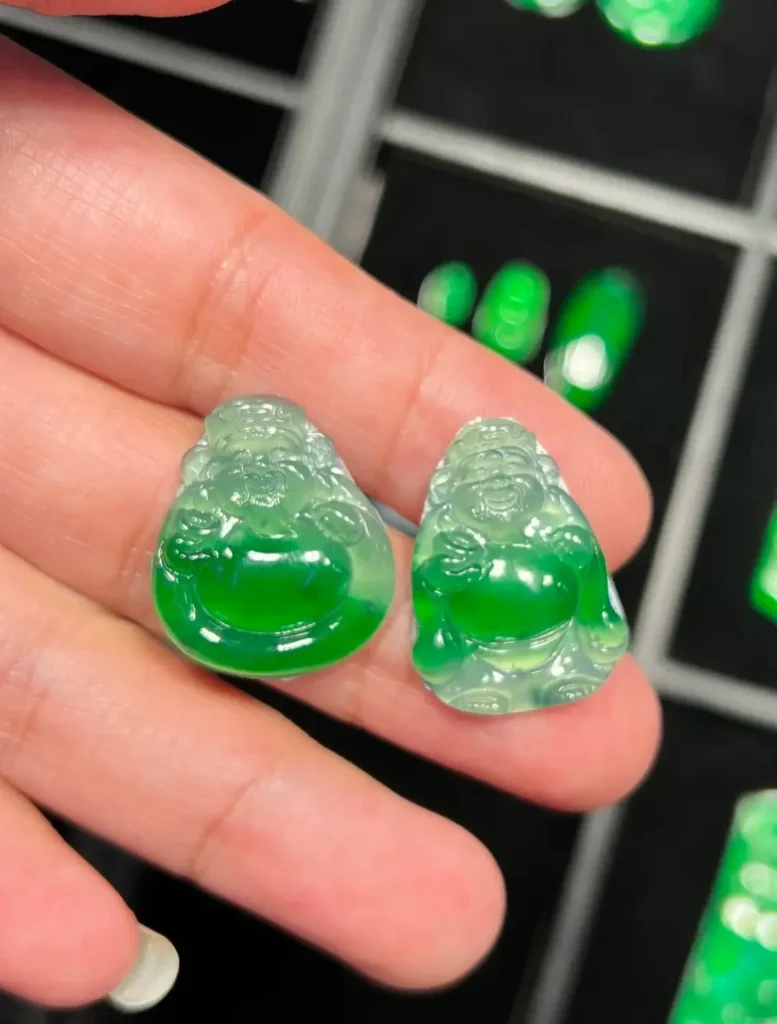
Quality varies widely within this category:
- Commercial quality: The green patterns appear darker, with noticeable banding and visible dark inclusions.
- High quality: The green patterns showcase vibrant hues, although the white base may still carry a faint gray undertone. Once mounted in closed-back settings, these stones can appear significantly brighter, creating a strong visual impact.
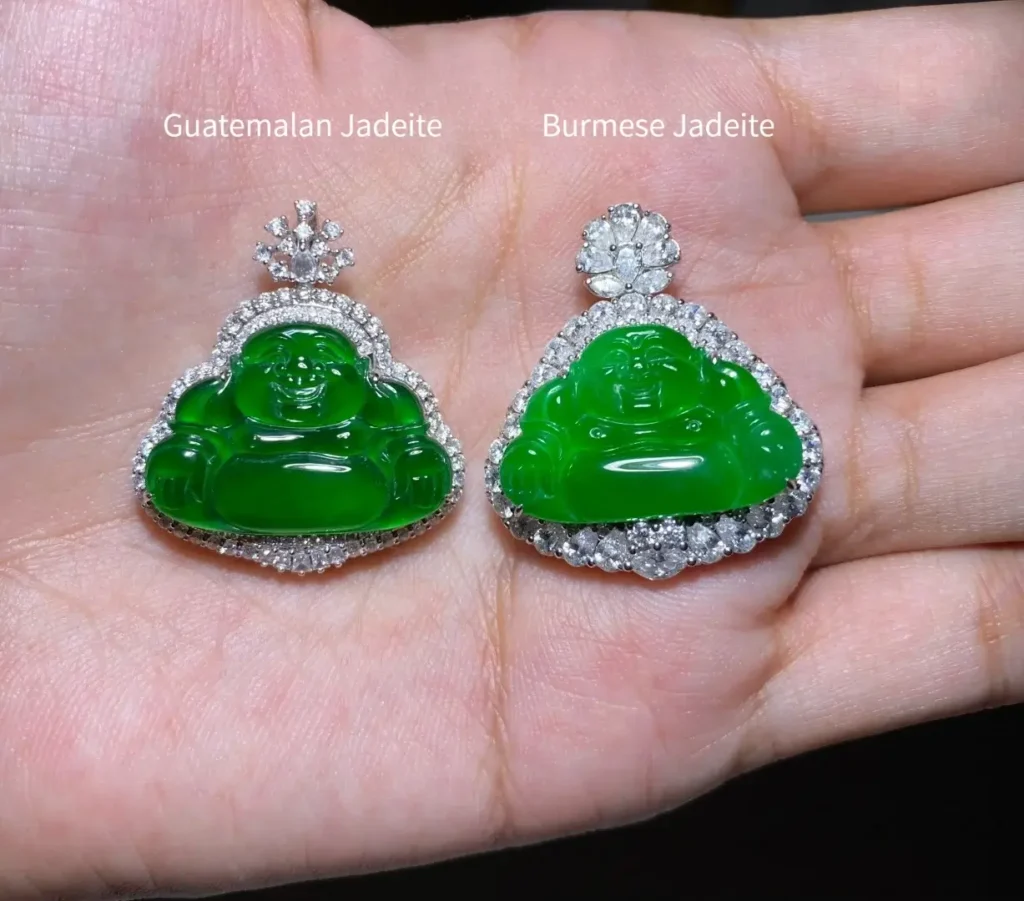
Unmounted loose stones are generally easier to evaluate. However, once set in closed-back jewelry, distinguishing Guatemalan jadeite from Burmese jadeite becomes much more difficult.
- One noticeable difference is that carved Guatemalan jadeite pieces are often made with a thinner profile. The green patterns tend to appear more concentrated and orderly, giving the finished piece a more structured and rigid appearance. In contrast, Burmese jadeite floating patterns often display a more natural and flowing quality, with delicate, thread-like movement.
When purchasing closed-back jadeite jewelry, buyers should pay attention to whether the material is accurately represented, as some Guatemalan jadeite pieces may be presented as Burmese jadeite.
2. Purple Jadeite
In the past, many buyers viewed purple Guatemalan jadeite as pale in color and coarse in texture. However, the quality of purple Guatemalan jadeite has improved significantly in recent years.
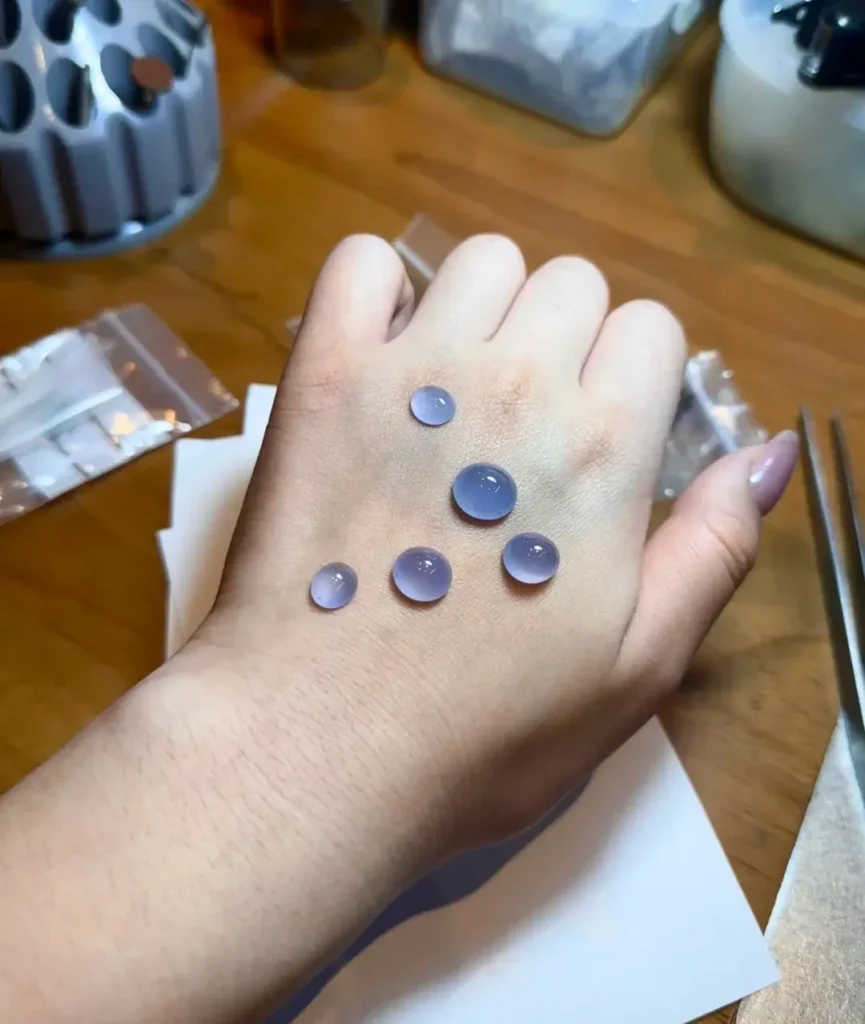
Some high-quality material can show an icy, translucent texture with a fine and smooth appearance. Although the overall color is often lighter and the base tone may carry a slight gray hue, its visual quality has improved dramatically.
Meanwhile, translucent waxy varieties of purple Guatemalan jadeite have also become increasingly common in the market.
3. Blue-Green (Blue-Water) Jadeite
Blue-water jadeite, a blue-green variety with good translucency and a clean appearance, has long been one of the more valued varieties of Guatemalan jadeite. However, quality varies widely within this category, and higher-quality examples are also becoming easier to find.
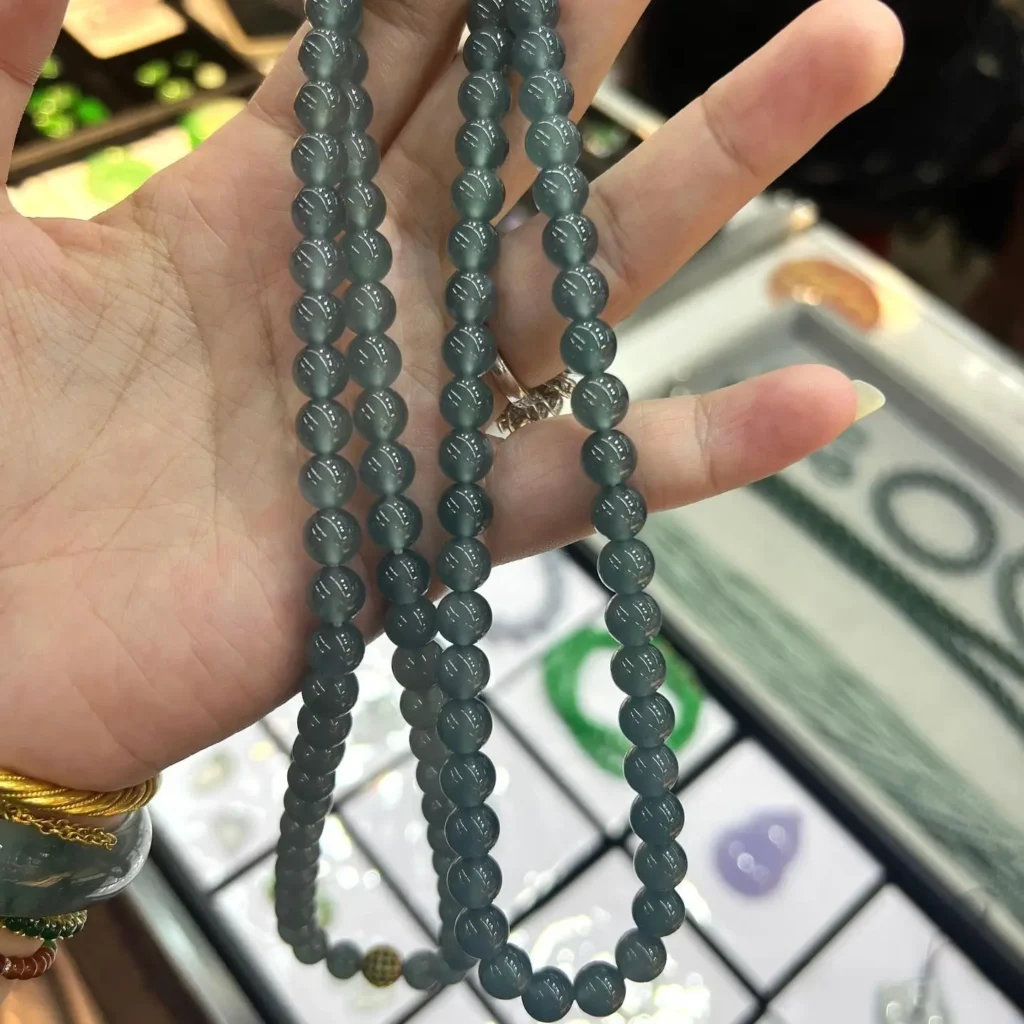
These higher-quality examples often show brighter tones, stronger luster, and fewer visible inclusions. They command significantly higher prices than traditional varieties with darker and duller appearances. Today, larger bead necklaces made with higher-quality blue-green Guatemalan jadeite are also appearing more frequently on the market.
However, blue-water Guatemalan jadeite bangles are a different story. During my visits to major jade markets, I found high-quality blue-water Guatemalan jadeite bangles to be extremely rare.
Many bangles only appear clean and bright under strong lighting or camera filters. In person, their colors often look darker and heavier.
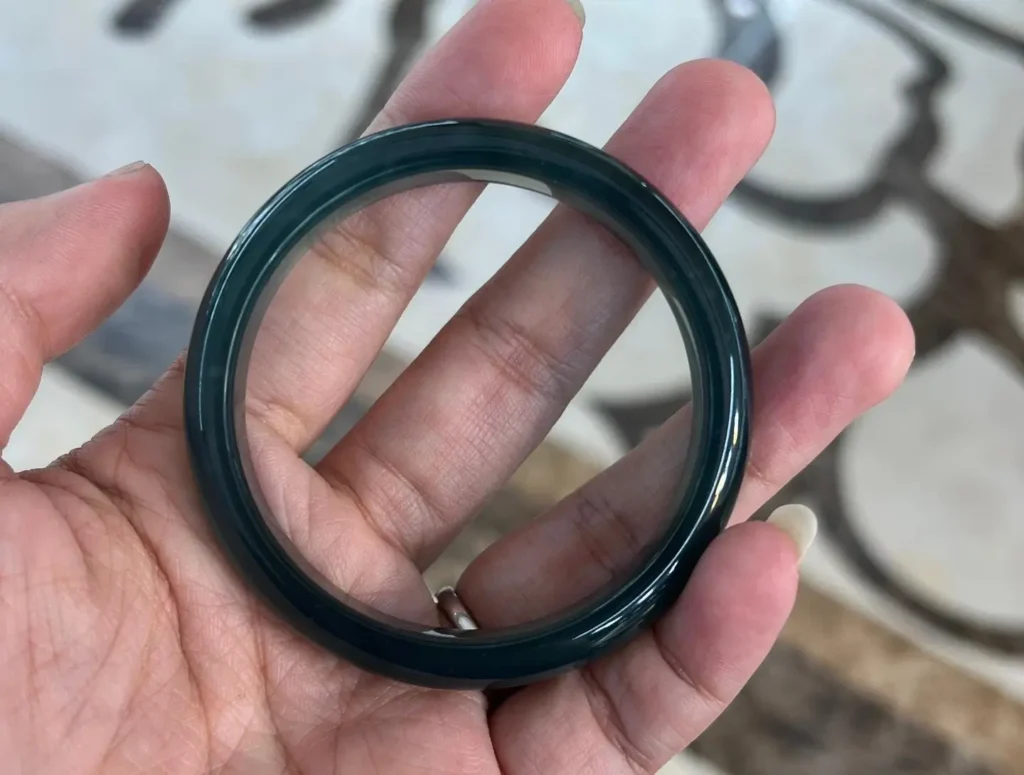
A customer once contacted me after seeing an online image of a blue-water Guatemalan jadeite bangle with a clear and elegant appearance. They asked me to help find a similar piece. Despite visiting major jade markets several times that year, I was unable to find a bangle with comparable quality.
This is a good reminder that jadeite can look very different online than it does in person. Buyers should remain cautious when selecting jadeite.
4. Yellow Jadeite
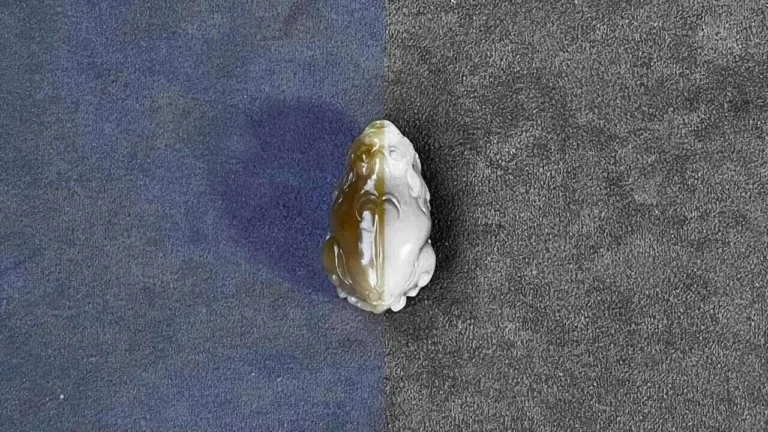
Yellow Guatemalan jadeite is relatively uncommon and is sometimes mistaken for heat-treated material. In fact, the yellow color in Guatemalan jadeite mainly comes from the outer weathered layer or skin of the rough stone.
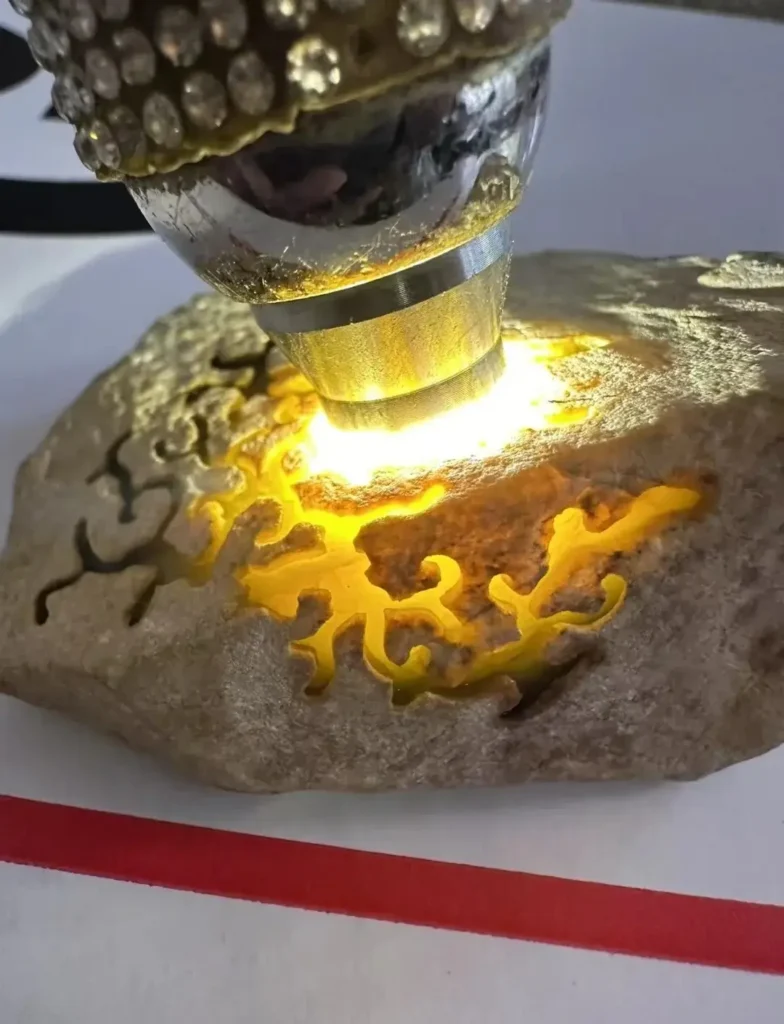
When the yellow weathered layer is thick enough, the finished material can show a similar appearance to waxy-textured yellow jadeite from Myanmar.
5. Wuji and Mocui Varieties
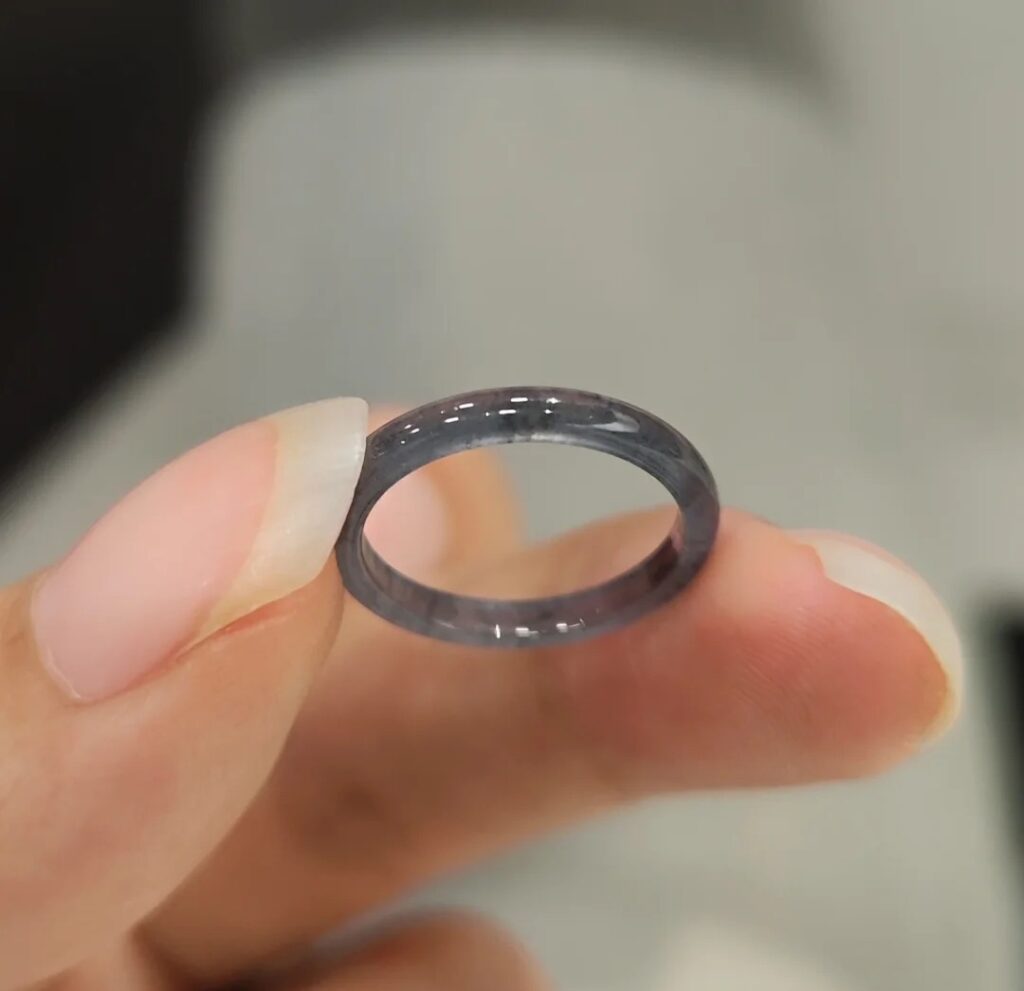
Beyond the common varieties, some Wuji jadeite (black-gray jadeite) from Guatemala can reach an ice-type quality level. However, finished pieces are usually smaller. This is a common characteristic of Guatemalan jadeite, as thicker cuts can limit light penetration and make the color appear darker.
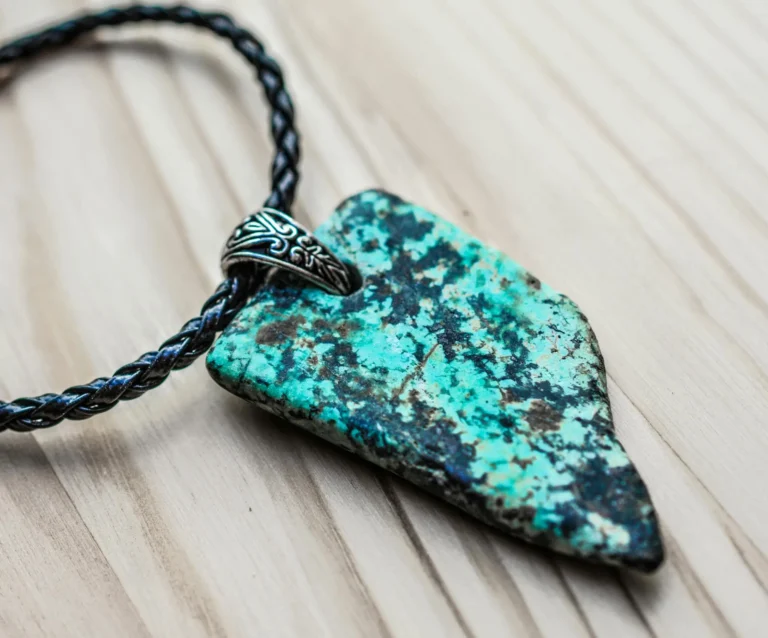
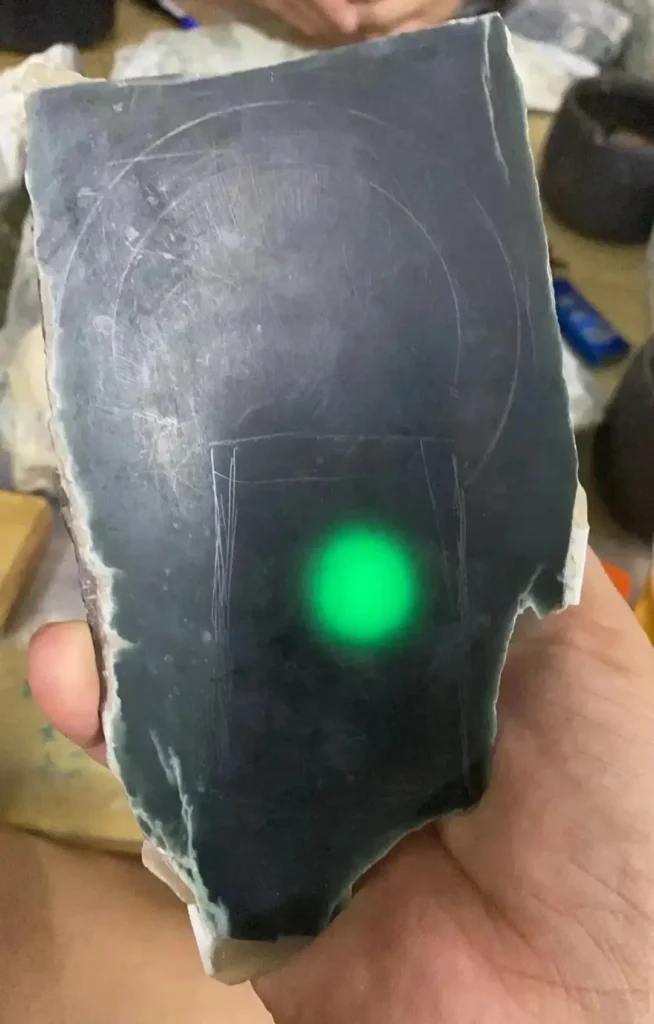
Mocui jadeite (black jadeite that appears green under transmitted light) from Guatemala can look very similar to Burmese Mocui jadeite under normal lighting conditions. However, under transmitted light, Guatemalan Mocui jadeite often shows a gray-green tone, creating an appearance similar to diluted ink.
Common Appearance Enhancement Practices in Commercial Guatemalan Jadeite
Highly saturated bright green remains one of the most sought-after colors among jadeite buyers. As high-quality Burmese jadeite becomes increasingly expensive and difficult to source, more affordable Guatemalan jadeite has naturally become an alternative choice for many enthusiasts.
However, buyers hoping to find a budget-friendly option with the vivid color of premium jadeite often experience a significant gap between expectation and reality. A piece that appears bright and striking under showcase lighting or livestream conditions may look much darker and more muted under natural daylight.
This dramatic difference in appearance is one reason some buyers assume that Guatemalan jadeite is naturally grayish or lower in quality. Some new buyers even become concerned after purchase and turn to online communities asking: “Is this Guatemalan jadeite?”
Does Guatemalan jadeite automatically mean poor quality? The answer is no. High-grade Guatemalan jadeite with quality comparable to fine Burmese jadeite does exist in today’s market.
The real issue lies in how some sellers present commercial-grade material. Through heavily edited images and exaggerated descriptions, they create unrealistic expectations and turn jewelry sales into quick, one-time transactions.
1. Artificial Lighting and Color Shift
Commercial-grade Guatemalan jadeite is often highly sensitive to lighting conditions. Due to its relatively higher iron content and naturally grayish body tone, it is commonly cut into thinner sections during processing.
Under strong showcase lighting or livestream setups, light can pass through the stone and reflect off the metal backing, making the jadeite appear much brighter and more saturated green. Once removed from these controlled lighting conditions, the material often returns to its original darker tone.
Bright green, high-quality jadeite can also take on a bluish cast under intense lighting. Photos taken under these conditions may not show its true color accurately. Therefore, when purchasing jadeite online, buyers should request photos or videos taken under natural daylight and different lighting conditions. When viewing jadeite in person, it is best to move away from display lights and examine the piece under natural light, such as in an open area or outdoors.
2. Reflective Foil Backing: Simulating a Closed-Back Setting
Green Guatemalan jadeite loose stones are often sold with reflective foil backing, which enhances their appearance by simulating the effect of a closed-back setting.
The same stone can show a significant difference in appearance and perceived value before and after this treatment.
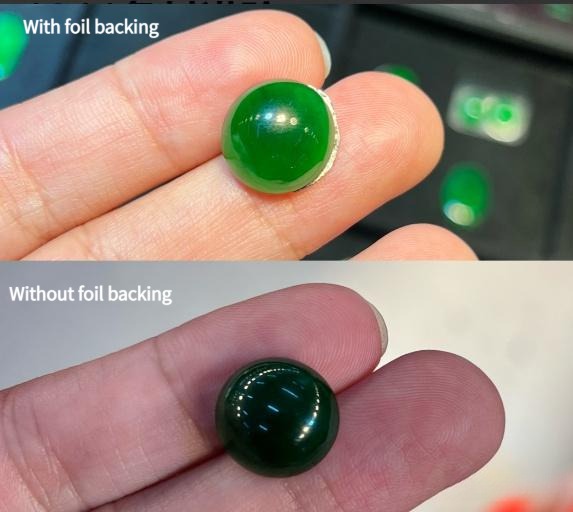
Using setting designs to enhance the appearance of gemstones is a common practice in the jewelry industry, such as the use of colored backings in colored diamonds and gemstones. However, with Burmese jadeite, a closed-back setting usually serves as a finishing touch that enhances the existing color. For Guatemalan jadeite with a darker body tone, the same technique can create a much more dramatic brightening effect.
This is one reason why some Guatemalan jadeite pieces that appear vivid green can still be priced significantly lower than Burmese jadeite with similar colors.
3. Extreme Hollowing: The “Eggshell” Carving Technique
As Guatemalan jadeite becomes thicker, its light transmission decreases significantly. As a result, some makers have pushed the traditional jadeite technique known as “water adjustment” to an extreme level.
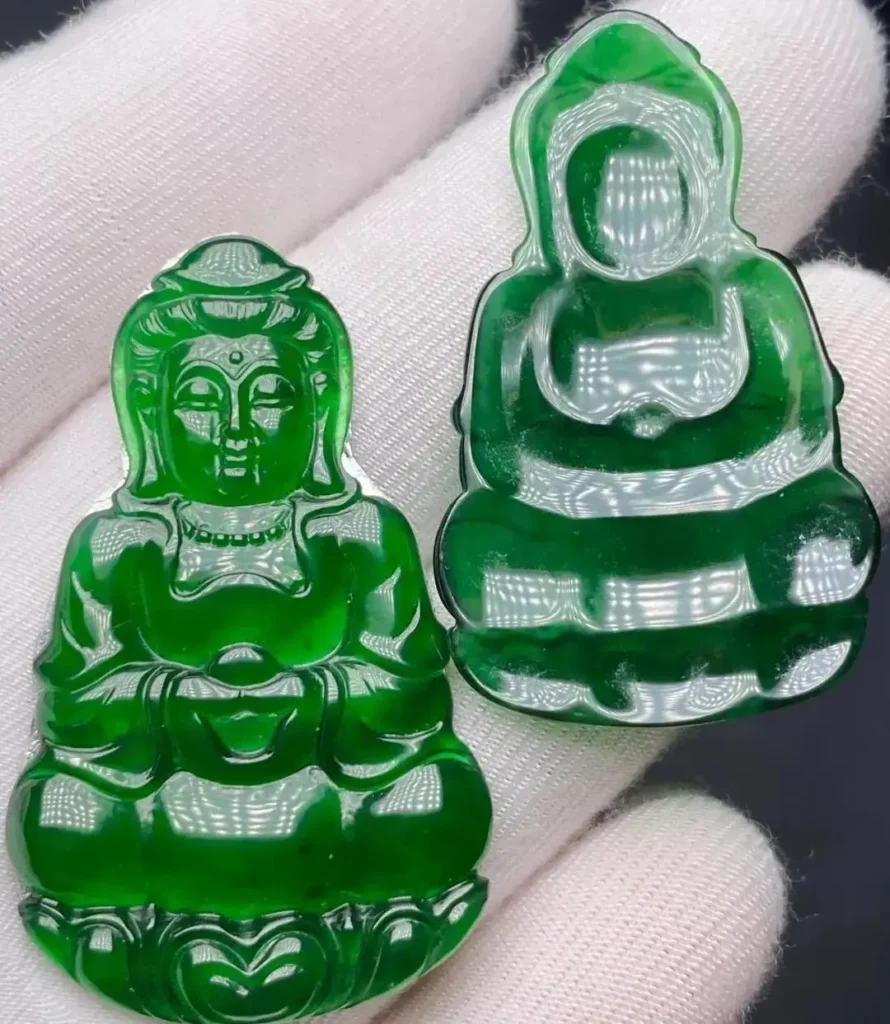
In traditional jadeite carving, water adjustment refers to selectively thinning areas on the back of a carved piece, such as a Guanyin or Buddha carving, to improve translucency, enhance the outline, and increase light reflection.
However, conventional water adjustment is often insufficient to overcome the darker body tone of Guatemalan jadeite. This has led to the appearance of extremely thin “eggshell” pieces on the market.
Some vendors market extremely thin carved plaques and pendants that have been hollowed out to a fragile profile. For cabochons, they may remove the inner material to create a thin shell and use closed-back settings to enhance the appearance of size and color.
Does High-Quality Guatemalan Jadeite Really Exist?
Using thoughtful carving and setting techniques to enhance darker jadeite is not inherently problematic. Done properly, these techniques can make attractive jewelry more accessible to buyers.
However, commercial-grade Guatemalan jadeite—enhanced through strong lighting, extreme thinning, and foil-backed settings—is sometimes promoted under top-tier labels such as “Imperial Green” or “Longshi” jadeite. These exaggerated claims create unrealistic expectations and reinforce the misconception that all Guatemalan jadeite is inherently low quality.
In reality, green Guatemalan jadeite spans a clear quality spectrum:
- Commercial Grade: The material often shows a darker, grayish body tone when unmounted. Once set, it may appear vivid only under intense lighting, while looking dull and gray under normal indoor conditions. Most mass-market Guatemalan jadeite sold online falls into this category.
- Medium Grade: The material may show a slight gray undertone when loose, but after closed-back mounting, it can maintain a bright green appearance under normal indoor lighting. Offering excellent value, this quality range is widely used in fine silver jewelry and contemporary jewelry designs.
- High Grade: Extremely rare in the market. High-quality Guatemalan jadeite should have a well-rounded form with sufficient thickness, typically featuring a double-convex profile. Even without foil backing or a closed-back setting, it should display a bright green hue with crisp luster under natural daylight, while showing no obvious gray or black inclusions when viewed from the side.
Why High-Quality Guatemalan Jadeite Remains Rare
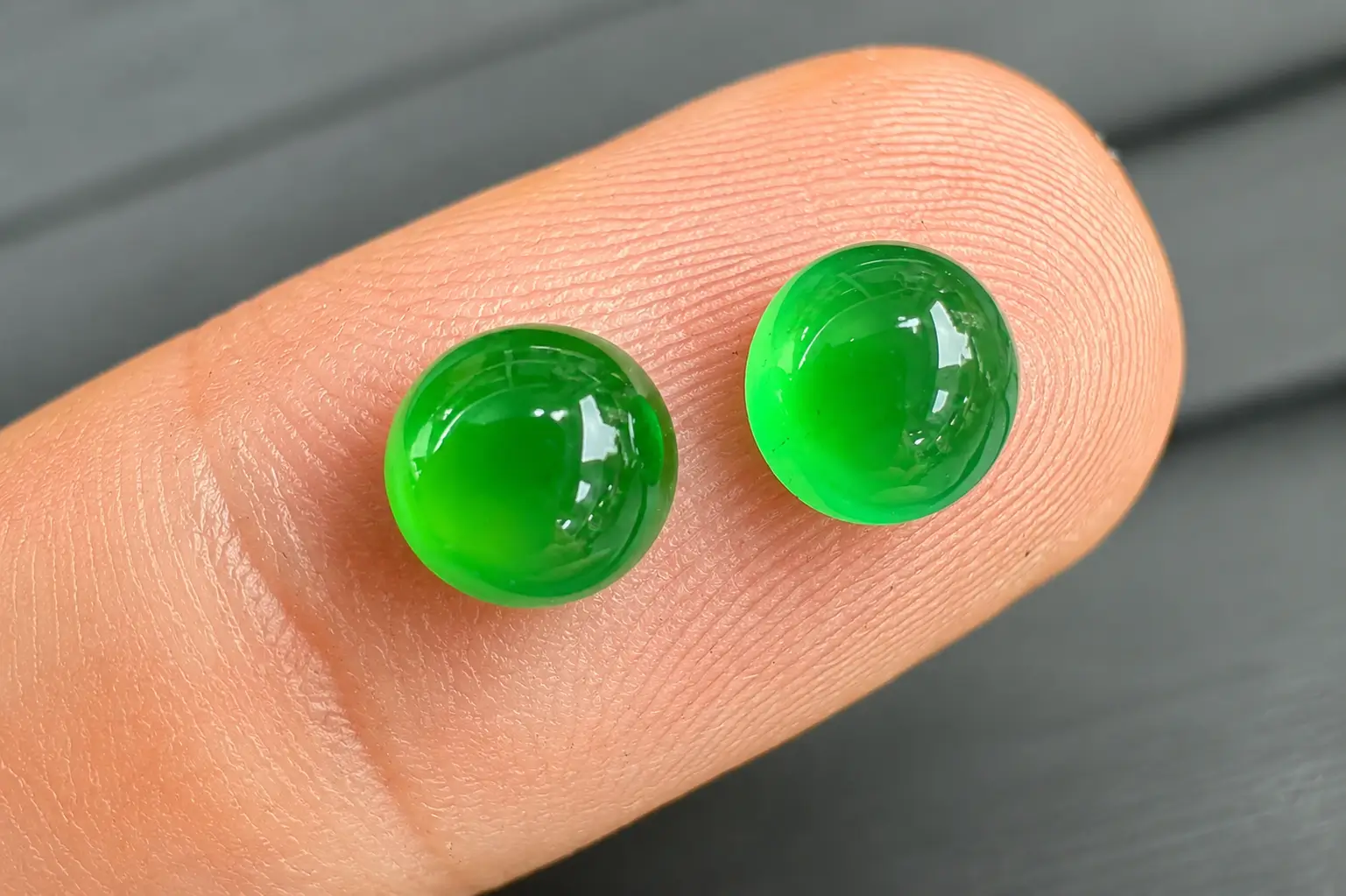
High-quality examples are relatively easier to find among small cabochons under 5 mm. After closed-back mounting, the visual difference between high- and medium-grade material may become less noticeable, yet high-quality stones command significantly higher prices.
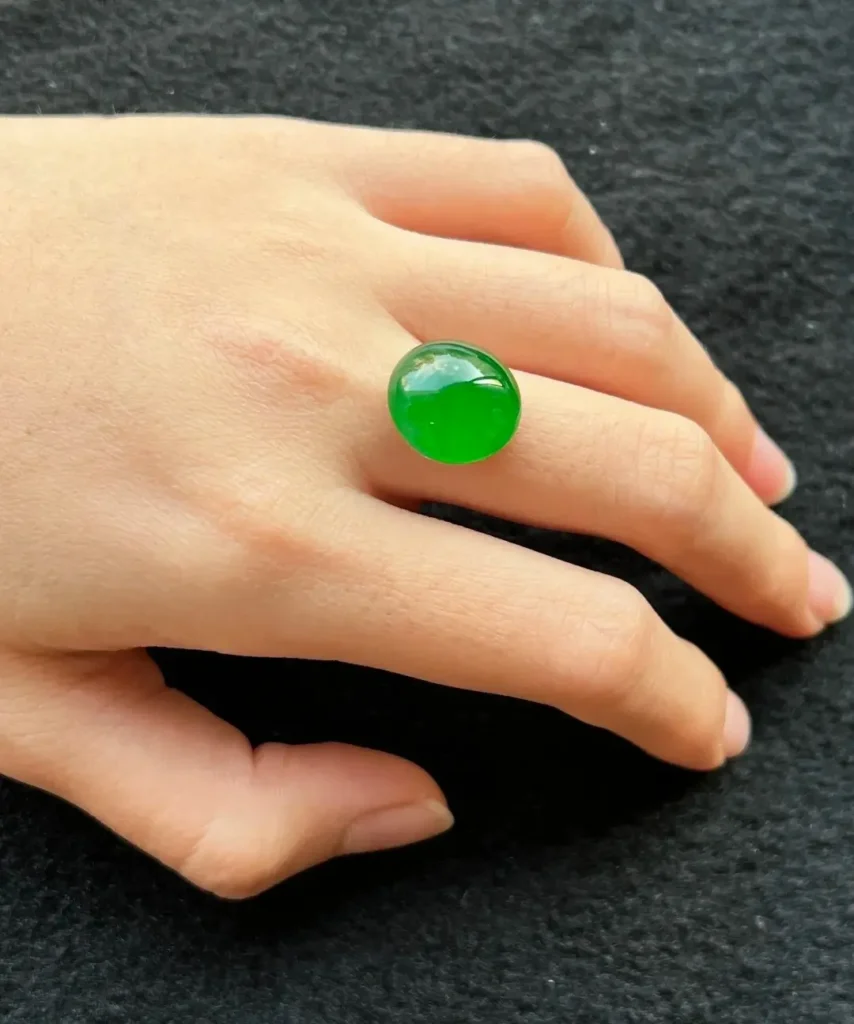
Large high-grade Guatemalan jadeite cabochons and substantial carved pieces remain extremely rare for two main reasons:
- Natural Limits in Size and Translucency: Larger rough stones that maintain both high translucency and vivid, even color are naturally scarce.
- Secondary Market Dynamics: When large, high-quality Guatemalan jadeite pieces do appear, they often enter secondary markets outside traditional wholesale channels, where they may be traded alongside Burmese jadeite. As a result, their prices can approach those of Burmese material with comparable quality.
Jewea’s Perspective: Origin Matters, but Quality Defines Value
Whether discussing jade, jadeite, or colored gemstones, our view remains consistent: origin can influence market premiums, but quality is the foundation of true value. Evaluating a gemstone based only on its origin, without considering its actual quality, has little meaning in either trade or appreciation.
A stone with a dark body tone, dull appearance, or poor texture remains a commercial-grade material, whether it comes from Guatemala or Myanmar. If it is sold at a price that reflects its true quality, it can still be a worthwhile choice for everyday jewelry.
The real issue begins when marketing crosses the line into misrepresentation. Some commercial materials are promoted as “Imperial Green” simply because strong lighting enhances their appearance. Others use extremely thin “eggshell” carvings with poor durability and sell them at prices far beyond their actual value.
For buyers who are new to jadeite, it is completely normal to lack industry experience. However, seeking remote identification or price evaluations through social media is rarely reliable for two main reasons:
- Limitations of Digital Images: Photos and videos cannot accurately capture jadeite’s optical properties, true color, or internal structure. Professional gemological laboratories do not determine origin based solely on images, and experienced appraisers do not evaluate market value from online photos alone.
- Uncontrolled Online Information: Social media allows anyone to share opinions, regardless of their expertise. Buyers can easily be influenced by inaccurate or unprofessional advice.
For jewelry enthusiasts, we always recommend: observe more, buy less, and learn before purchasing. For those who prefer a simpler and more reliable approach, the safest option is to choose reputable sellers with transparent information and rely on reports issued by recognized gemological laboratories.