Guangxi Nephrite: Discovering the Hidden Potential of Chinese “Seed” Jade
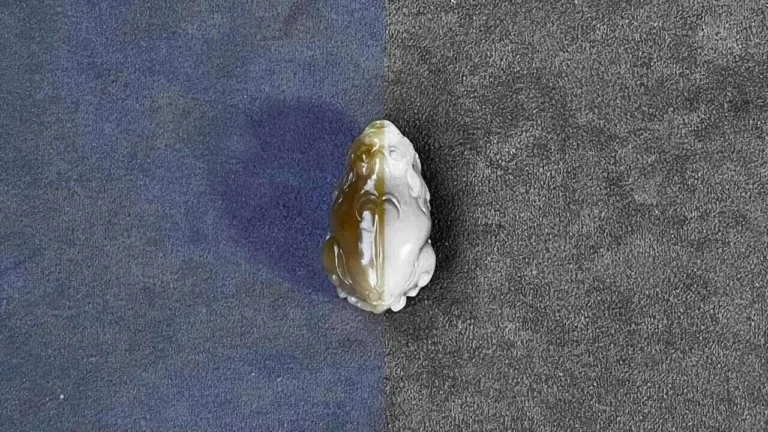
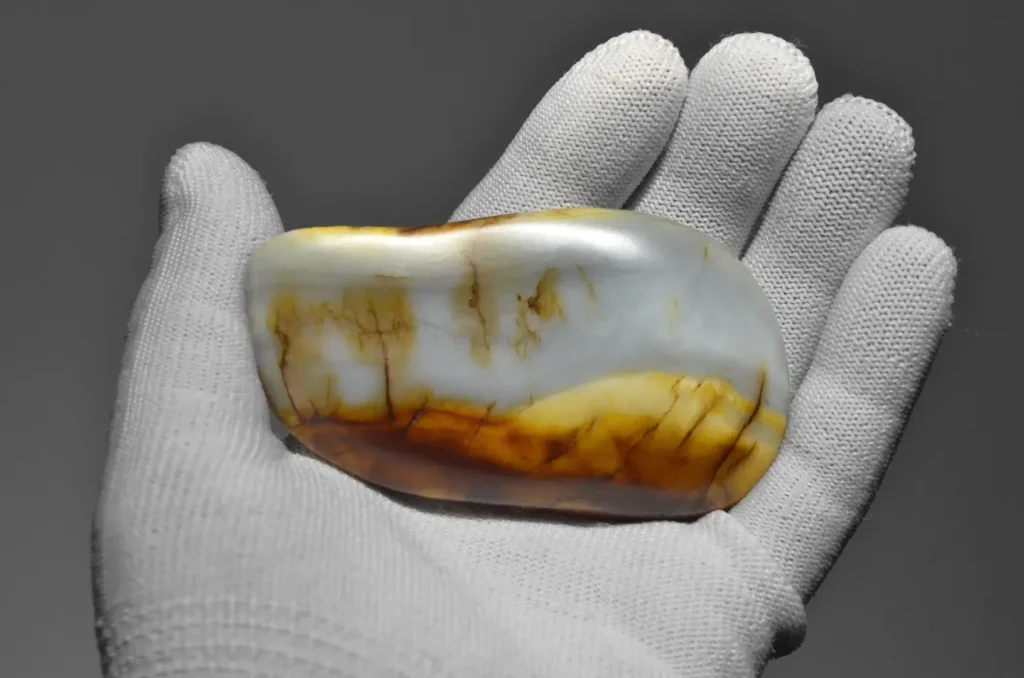
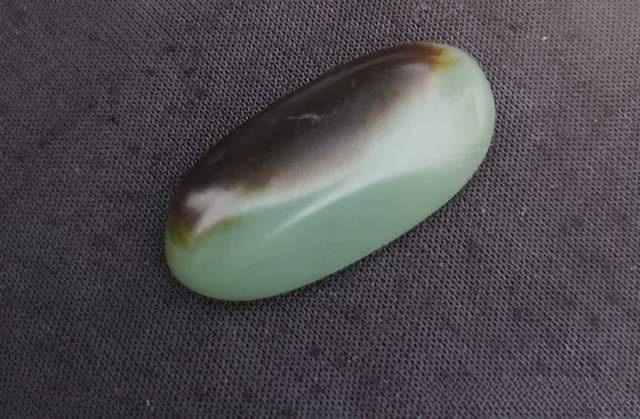
Last month, while scouting the market, I stumbled upon a few intriguing pieces of what appeared to be “Seed Jade” (Ziliaо). After a thorough investigation, they turned out to be something much more elusive: Guangxi Dahua Nephrite.
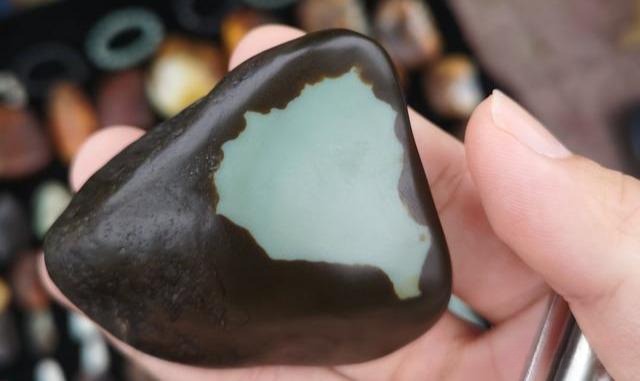
If you’ve been in the world of Hetian jade as long as I have, you probably know that feeling—that instant, gut reaction when something looks just a little too interesting. At first glance, the color was striking, reminiscent of the delicate “Powder Green” (Fen Qing) typically seen in Russian Nephrite. The texture was fine, yet it possessed a distinct, porcelain-like density rather than the typical buttery luster.
I picked them up for a closer look, expecting a clever imitation. But to my surprise? The “skin” was authentic, and the “seed” morphology was natural. Yet, it didn’t quite sit right with the “Sha Zao Qing” (Oleaster Green) varieties we usually see from Xinjiang.
Understanding Guangxi Dahua Nephrite
Despite its unusual appearance, the material I encountered is, in fact, genuine Nephrite Jade. Specifically, it is a variety of tremolite sourced from Guangxi. First discovered around 2008, this jade originates from the Yantan mineral vein in the Dahua Yao Autonomous County of Guangxi Province.
Scientifically and legally, it holds its ground. According to the national standard GB/T 38821-2020 (Testing and Classification of Hetian Jade), the tremolite-rich stones from Guangxi fall under the broad definition of “Hetian Jade.” This means that while it isn’t from the Kunlun Mountains of Xinjiang, it meets the rigorous mineralogical criteria required for official certification.
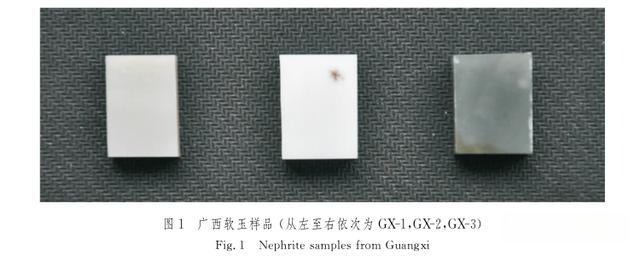
In terms of palette, Guangxi Nephrite mirrors the classic Hetian varieties we know and love. You’ll find it in a spectrum ranging from pure white and celadon (Qing) to deep black-green, “sugar” brown, and even a unique bean green. Because it is a relatively recent addition to the industry, we have only seen it begin to circulate in significant volumes across the market in the last few years.
Guangxi Nephrite: “Mountain” vs. “Seed” Materials
Gemological studies of Dahua tremolite jade reveal a clear distinction between two primary types: “Seed Material” (Zi Liao) and “Mountain Material” (Shan Liao). This classification aligns closely with the established standards used for Xinjiang Hetian jade.
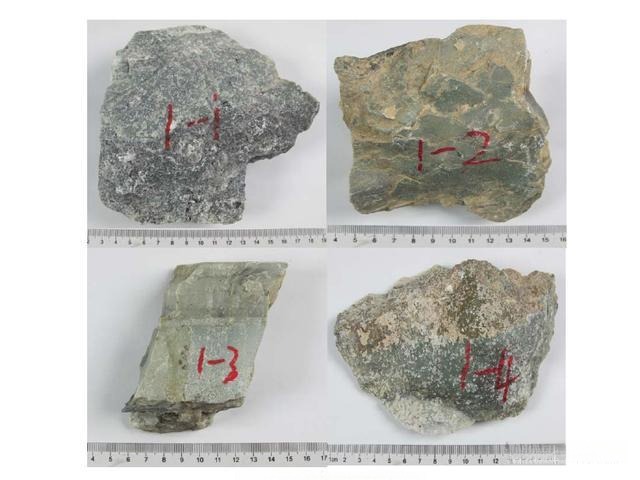
The Seed Material is recovered from the beds of the Hongshui River. These stones closely mirror the physical characteristics of classic seeds: a fine, delicate texture, high degrees of natural rounding, and distinct surface markings caused by centuries of river erosion. Due to these superior qualities, they carry the highest intrinsic value in the local market. Conversely, the Mountain Material is quarried directly from primary mineral veins; it tends to be coarser, carries more inclusions, and holds a significantly lower market value.
A significant lack of market transparency currently surrounds Guangxi Dahua Nephrite. Due to this information gap, vendors rarely market these stones—whether seed or mountain material—under their true origin. Instead, they frequently enter the trade masquerading as “Xinjiang Hetian Jade” to command higher interest. As for the official standing of “Seed Materials” from Guangxi or Northeast China (Hemu Jade), the industry has yet to reach a definitive consensus. Their long-term recognition depends on ongoing gemological research and, ultimately, the final verdict of the global marketplace.
A Shadow in the Market: Guangxi Mountain Material
Generally speaking, Mountain Material from Guangxi Dahua is relatively mediocre in quality, with premium specimens being the rare exception. You might wonder: “If Guangxi Nephrite is so prevalent, why have I never heard a dealer mention it?”
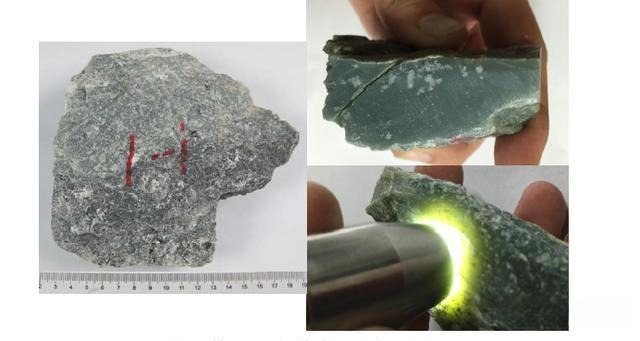
The answer is simple: in the gemstone trade, Guangxi material exists almost entirely in the shadows of more prestigious origins. Unlike legendary locations like Qiemo or Heishan—names that immediately provide a “value endorsement” and command a premium—the Guangxi mines are still in their infancy. Because the region lacks a long mining history and high-end brand recognition, its origin does nothing to boost a stone’s market appeal. Consequently, dealers often intentionally obscure the true source during a sale.
The Art of Origin Swapping: From “Tashkurgan” to “Luodian”
To secure better market reception, Guangxi Mountain Material frequently adopts the “mask” of more established origins. This strategic mislabeling generally follows two paths:
- Black-Green Nephrite: High-quality specimens often receive the coveted “Tashkurgan” (Ta Qing) label. Meanwhile, average-grade stones are routinely mixed into batches of Qinghai material for bulk sale.
- White Nephrite: Most white jade from Guangxi enters the market rebranded as “Luodian Nephrite” from Guizhou.
This phenomenon stems from geographic and geological mimicry. The mining districts of Guizhou Luodian and Guangxi Dahua sit barely 200 kilometers apart, sharing nearly identical tectonic backgrounds. This proximity results in stones that are virtually indistinguishable to the naked eye. While Luodian jade itself has a polarizing reputation among collectors, its earlier market entry and higher name recognition provide a convenient “safe harbor” for Guangxi material to hide behind.
Identifying the Markers: Porcelain vs. Oiliness
In the vast landscape of the jade market, Guangxi Mountain Material exists like a nameless shadow—solitary, yet stubbornly persistent. To see through its various disguises, you must focus on the following defining gemological traits:
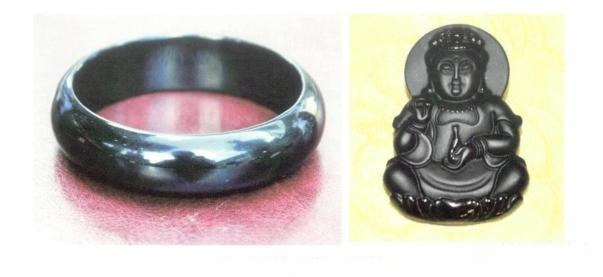
- The “Dry” Profile: Guangxi material is notoriously “dry.” It lacks the legendary, “mutton-fat” warmth of traditional Hetian jade—a quality that should feel naturally buttery to the touch. Whether you are evaluating it visually or holding it in your hand, you will notice it misses that deep, nourishing oiliness that collectors prize.
- The Porcelain Feel (Porcellaneous): One of the most telling signs is its heavy, “stone-like” character. While the material is undeniably dense, the texture feels rigid and “porcelainized.” It possesses a certain static quality that feels more like high-density ceramic than vibrant jade, lacking the inner “soul” or translucency found in premium Xinjiang stones.
- Luster Analysis: In terms of light reflection, most Guangxi mountain slabs exhibit a Waxy Luster. Compared to the radiant, resinous glow of top-tier Nephrite, it appears matte and slightly dull. Only a tiny fraction of the highest-grade specimens can achieve a true greasy luster.
A Hidden Gem with Potential: The Guangxi “Seed” Jade
In the jade world, traditional Hetian Seed Jade (Zi Liao) represents the pinnacle of quality. Its prestige comes from a grueling natural selection process. Over millennia, relentless river currents act as a master lapidary. The water erodes the stone’s porous exterior. It leaves behind only the densest, most resilient core. This is why seed jade possesses that coveted, buttery oiliness. It remains the top choice for serious collectors.
In our previous feature, Hetian Jade Types: From Mountain Material to Seed, Alluvial & Gobi Jade, we explored the dramatic origins of these stones.
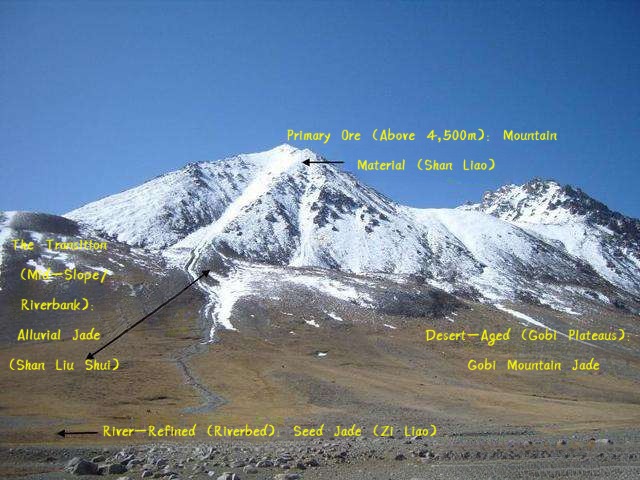
It begins when geological shifts and moving glaciers dislodge primary mountain slabs from their peaks. These fragments tumble down the Kunlun Mountains, swept into the Yurungkash River by powerful snowmelt. This journey is violent. Constant collisions and intense hydraulic abrasion grind away the stone’s weaker, porous layers. Only the strongest, densest core survives the trip. What remains is a smooth, pebble-like treasure: the Seed Material.
Beyond the Kunlun: Rediscovering the “Seed” Definition
Conventionally, many enthusiasts believe that true “Seed Jade” originates exclusively from Xinjiang. However, if we move beyond geographic bias and focus strictly on the geological formation process—the long-term refinement by flowing water—we find that two other regions produce legitimate alluvial seeds.
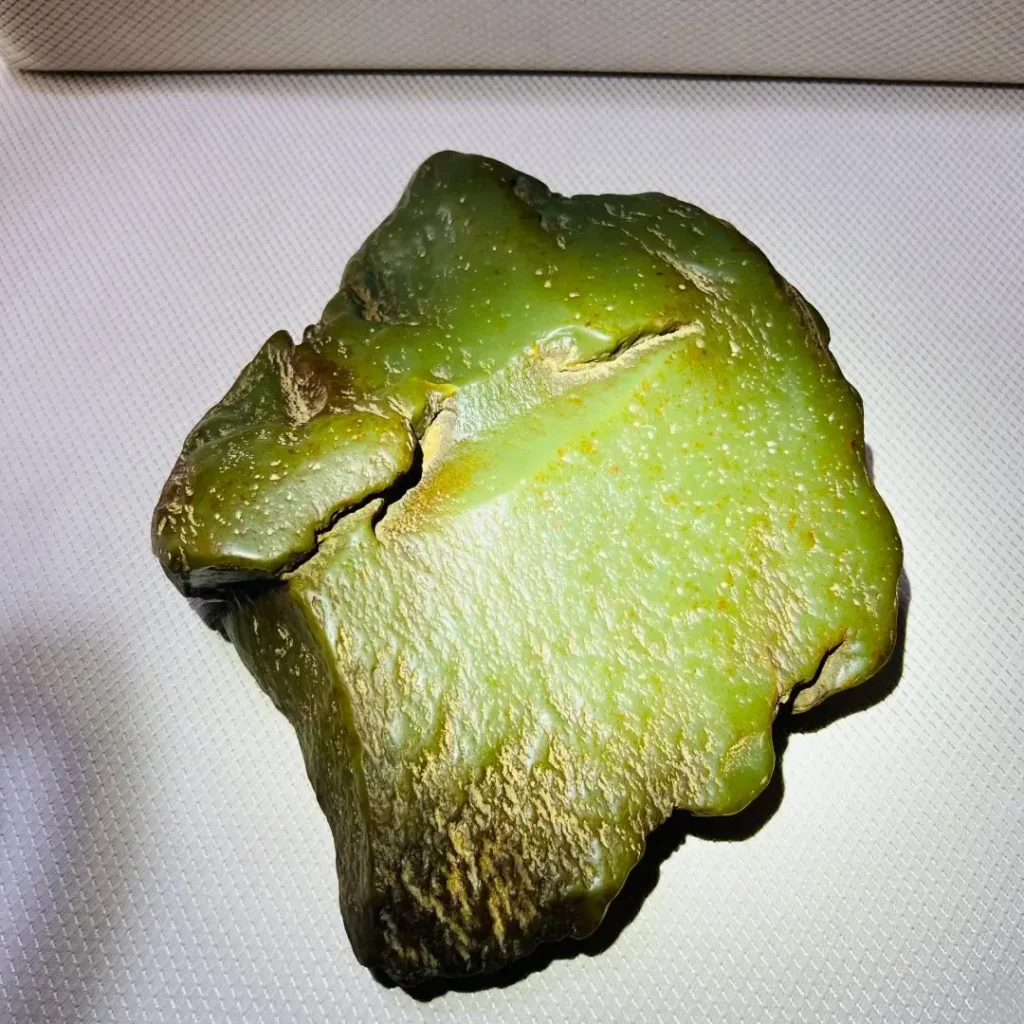
First, there is the Northeast Hemu “Seed” Jade, which we explored in our feature on the award-winning Ximu Nephrite Jade: A 5,000-Year Legacy from Hongshan Culture to the “Oscars” of Jade Carving. The second is the subject of today’s discussion: Guangxi Dahua Nephrite Seeds.
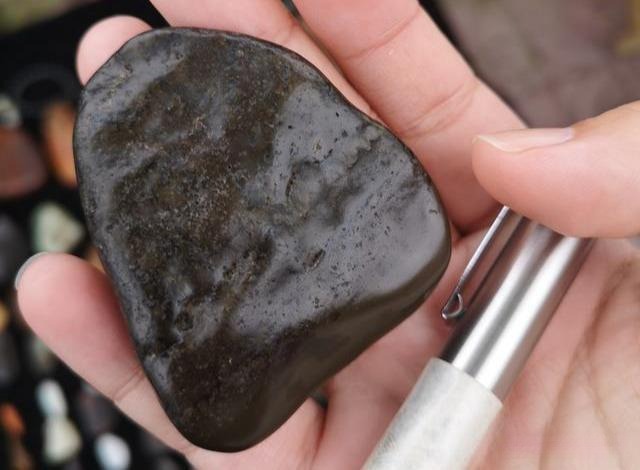
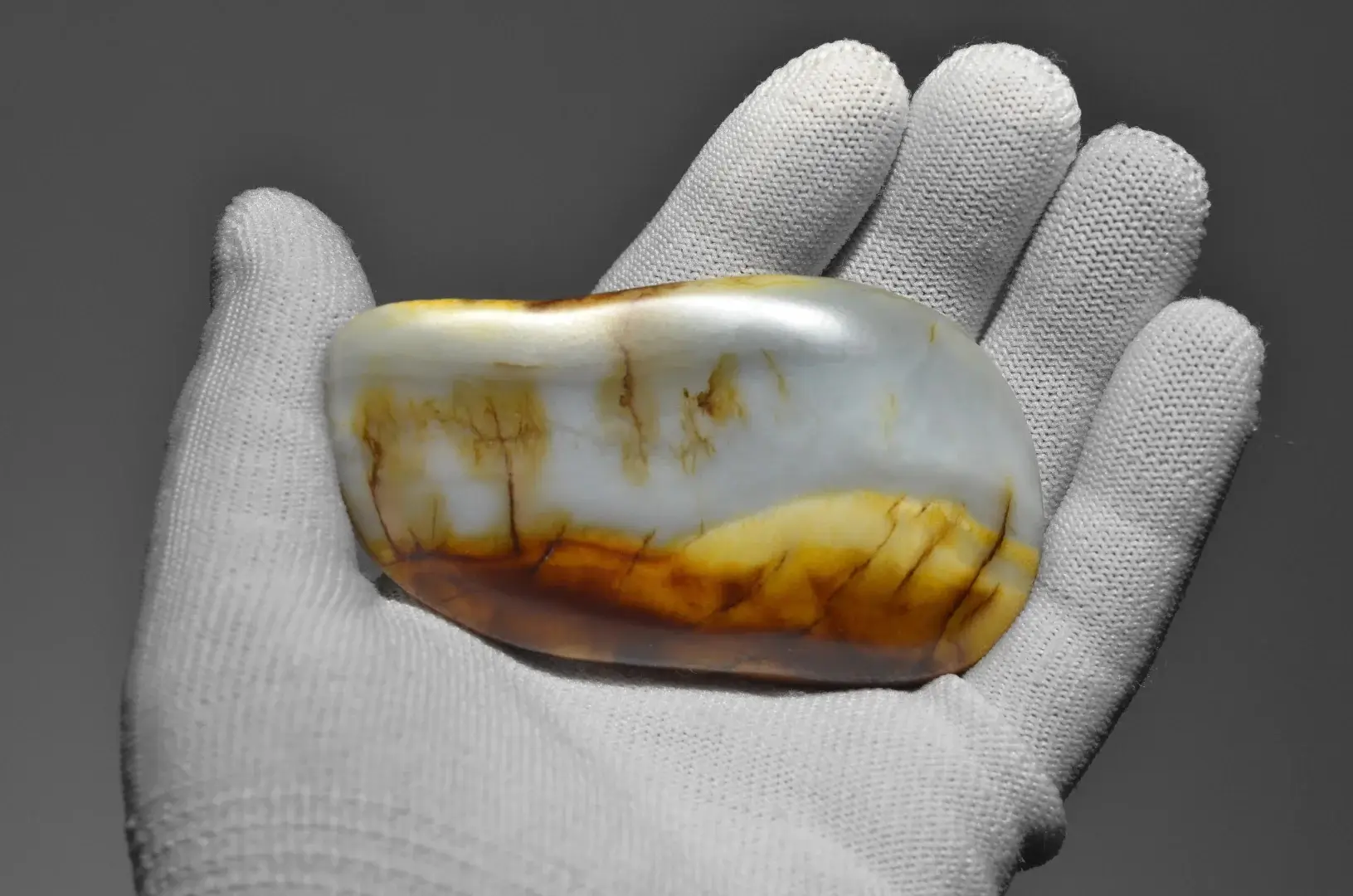
The specimen featured at the beginning of this article is a prime example of this “hidden gem.” Born from the same hydraulic principles as its Xinjiang cousins, these stones have been patiently sculpted and refined by the currents of the local Hongshui River.
Is All Guangxi Material “True” Nephrite?
In the professional gemological world, a stone’s classification as “Hetian Jade” (Nephrite) isn’t based on origin or appearance, but on rigorous scientific data. Laboratories evaluate mineral composition, density, and refractive index against strict national standards, such as GB/T 16553-2017. Unfortunately, not all material sourced from Guangxi Dahua meets these criteria.
Most Guangxi material consists primarily of tremolite and actinolite. However, many specimens fall into a “gray area.” These stones often fail to receive an official Hetian Jade certificate. This happens when they contain too many secondary minerals. Even if a stone looks perfect, these microscopic deviations prevent a legal classification as true Nephrite.
The Hidden Impact of Mineral Impurities
This issue is particularly prevalent with Guangxi Black-Green Nephrite. The market is flooded with carvings that appear identical to high-end black-green jade from other regions. However, a laboratory analysis often reveals high concentrations of amphibole or other secondary mineral inclusions.
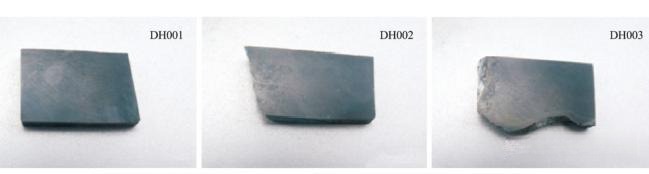
While the visual difference might be subtle to the naked eye, this minor chemical variance has a massive impact on the stone’s intrinsic and resale value. A stone without a certificate is often viewed with skepticism by seasoned collectors.
For this reason, when sourcing Guangxi Nephrite, I strongly recommend requesting an official gemological certificate. In a market defined by information gaps, a verified lab report is your only guarantee that the stone’s internal composition matches its outward beauty.
Jewea’s Perspective: Authenticity Over Origin
While I always advocate for judging a stone by its merit rather than its map coordinates, meeting the fundamental mineralogical threshold is non-negotiable. Ultimately, market trends don’t define what qualifies as “true” Nephrite—rigorous scientific standards do.
Beyond the lab report, however, a stone’s true soul lies in its “jade nature.” The reason Guangxi material hasn’t yet secured a prestigious standing is largely due to its common tendency toward a stony, porcellaneous character.
That said, every mine has its rare exceptions. Even within these rugged deposits, nature occasionally yields specimens of remarkable fineness and buttery luster. It makes me wonder—among your own cherished pieces, could there be a “hidden gem” from Guangxi waiting to be rediscovered?