Turquoise: From December Birthstone to High Jewelry Masterpieces
Turquoise is an officially recognized birthstone for December. It embodies the spirit of victory and enduring success. This ancient gemstone commands attention with a unique character that transcends time. For centuries, turquoise jewelry has captivated civilizations with its vibrant hues and one-of-a-kind textures.
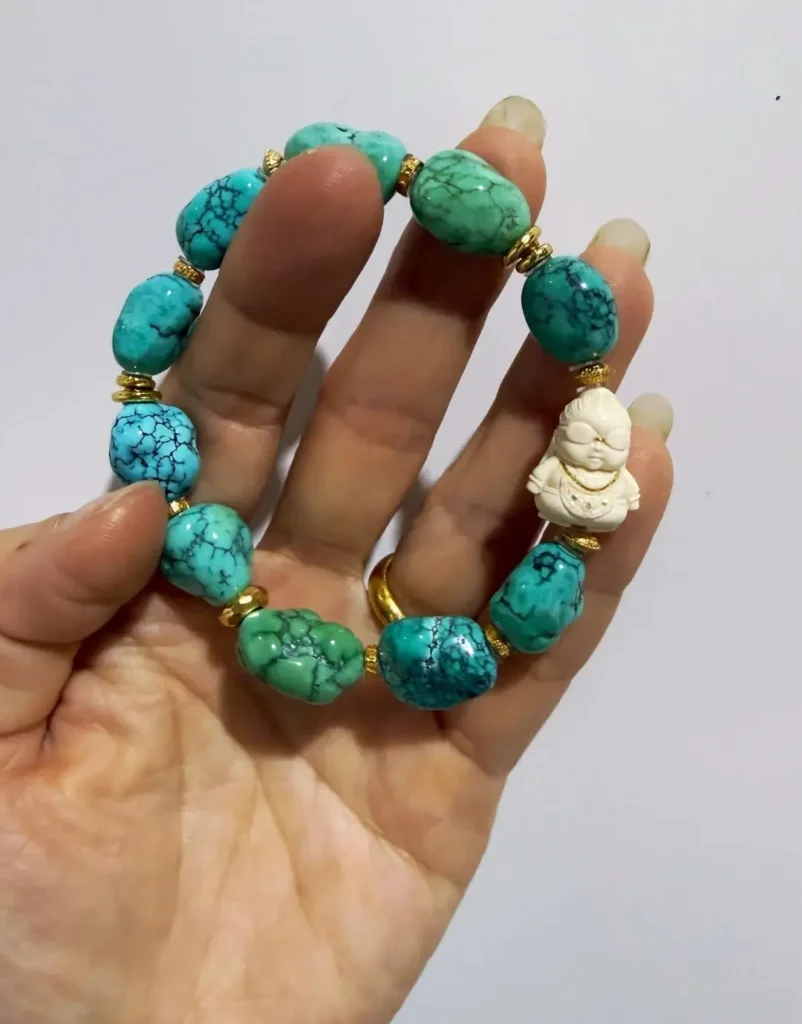
In China, turquoise beaded bracelets became a must-have for every enthusiast during the “Wenwan” craze of years past. Its distinctive blue-green palette allowed it to stand out effortlessly among a sea of other traditional stones.
In today’s article, we will dive deep into the world of turquoise, exploring everything from its mineral origins to its prestigious evolution into the realm of high jewelry.
What Exactly is Turquoise?
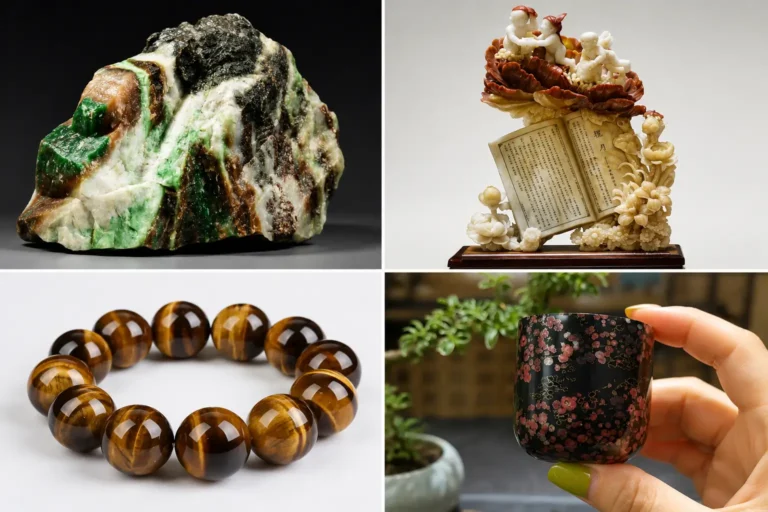
Turquoise is a hydrated phosphate of copper and aluminum, formed through a slow, intricate geological process near the Earth’s surface at ambient temperatures. In its raw state, this gemstone typically appears in dense, massive, or crust-like formations. Its Chinese name, Lüsongshi (“green pine stone”), stems from its uncanny resemblance to a green pine cone in both shape and color.
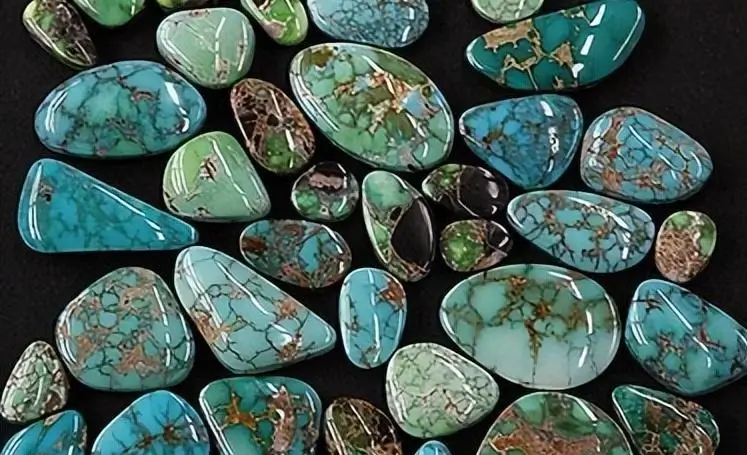
With a Mohs hardness ranging from 5 to 6, turquoise possesses a naturally porous texture, making it sensitive to high temperatures and prone to fading if not handled with care. In mid-to-low-grade specimens, the gemstone often hosts a variety of associated minerals, such as kaolinite, quartz, mica, and limonite. The concentration of these inclusions directly dictates the final quality of the stone.
The Colors of Turquoise
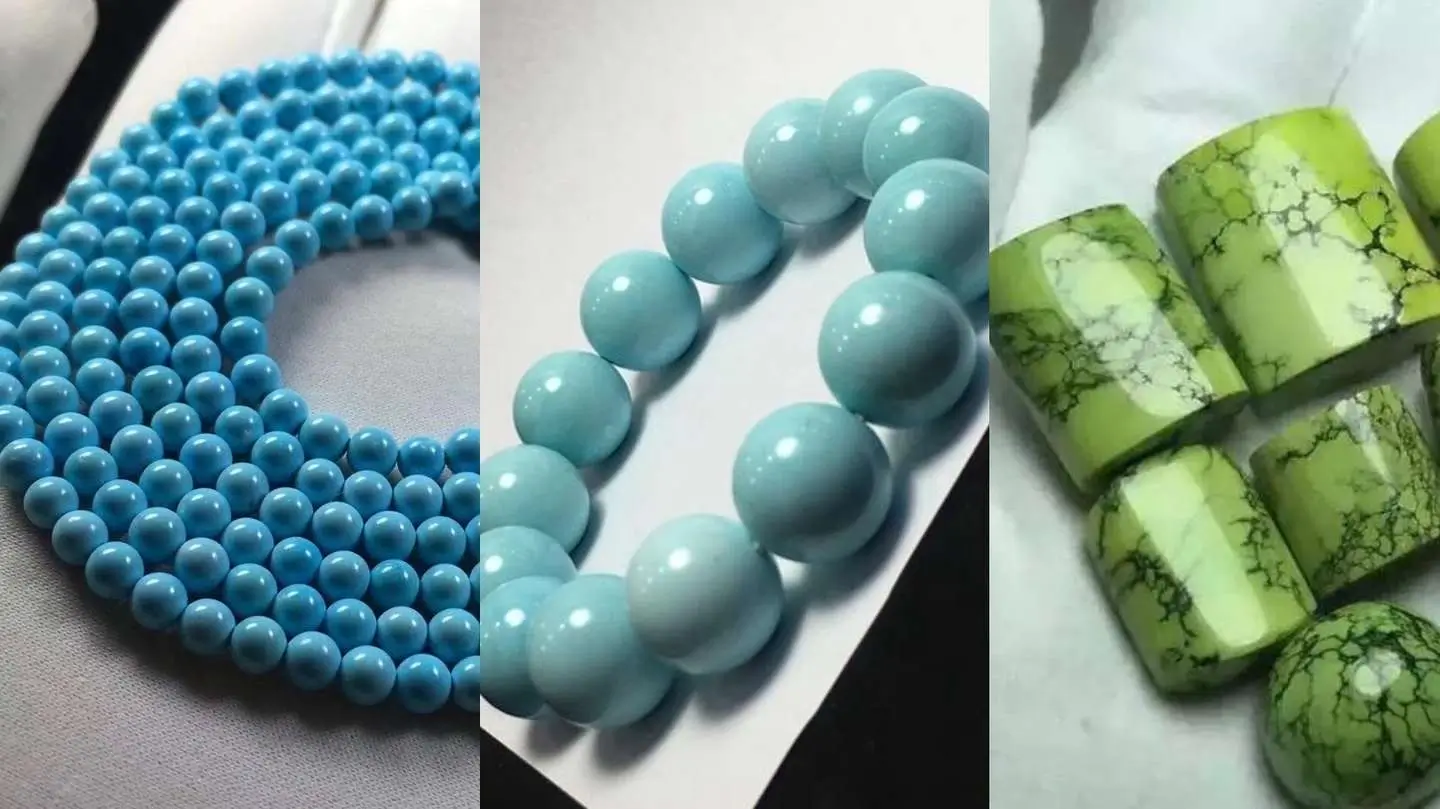
Turquoise displays a mesmerizing spectrum, typically ranging from pale to medium blue and greenish-blue to vivid green. These colors often come accompanied by delicate white veins, spots, or the iconic dark, web-like patterns known as “matrix” (or iron wire), which consist of brownish-black host rock or mineral impurities.
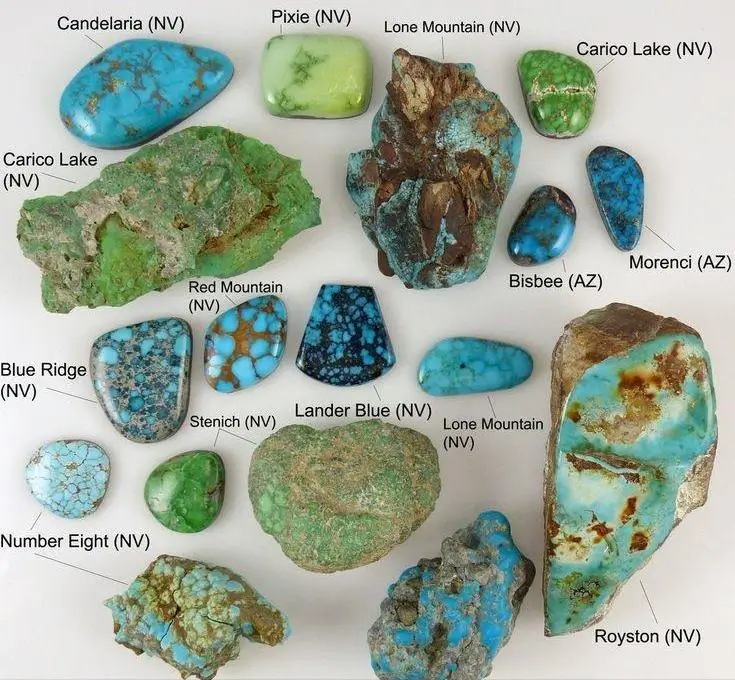
While we generally categorize turquoise into three primary groups—blue, green, and variegated—gemologists in China utilize a more detailed classification system based on specific hues. They further divide the gemstone into distinct varieties, including “Sky Blue,” “Blue-and-White,” and “Canola Yellow,” to categorize stones with greater technical precision.
What Defines Premium Turquoise?
High Porcelain Luster & “Gem-Grade” Density First and foremost, turquoise must never “lose its hydration,” making its porcelain-like luster (Cidu) a critical quality marker. The finest “gem-grade” (highly densified) and high-porcelain materials offer far more than just a silky, refined texture; they possess superior hardness and exceptional durability.
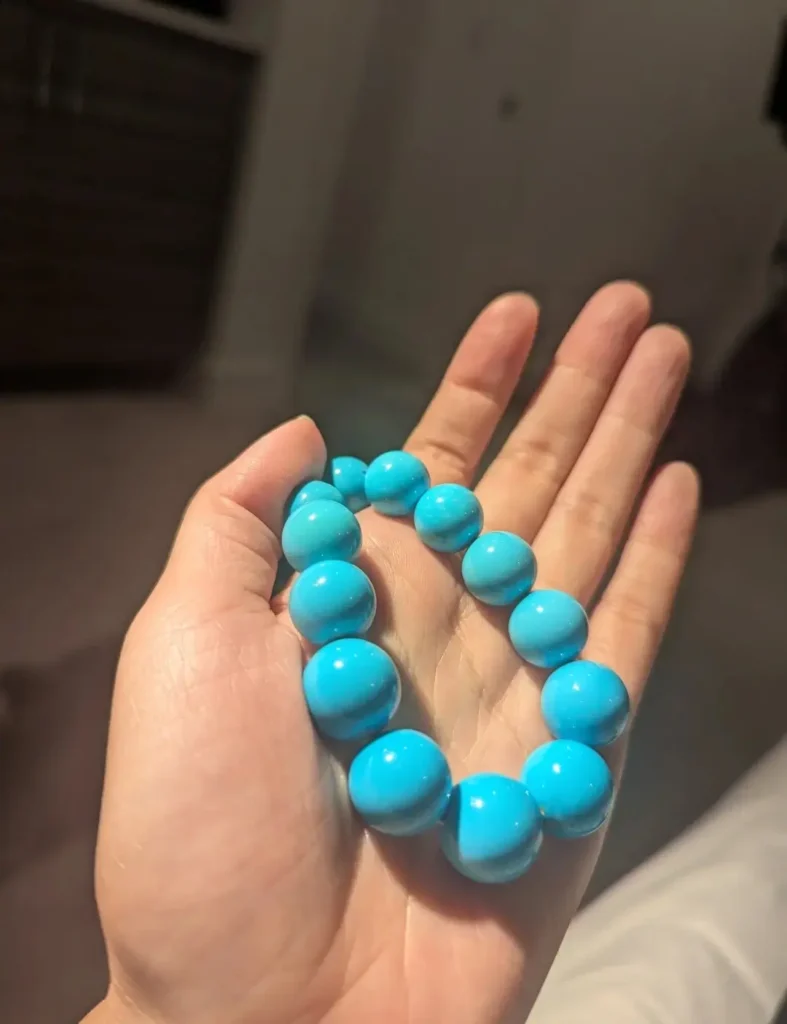
Vibrant Blue Hues and Clean Clarity In the international market, blue remains the gold standard. The deeper the blue and the “cleaner” the stone—meaning an absence of matrix or impurities—the higher the value. The legendary “Sleeping Beauty” turquoise from the United States perfectly embodies this coveted trifecta of high-porcelain luster, intense blue color, and exceptional clarity.
High-Quality Unique Varieties If you seek something truly one-of-a-kind, certain varieties gain prestige specifically because of their stunning matrix patterns. A prime example is “Wulanhua” (Violet Flower) turquoise. Collectors prize these stones for their high-porcelain finish and intense color intertwined with beautiful, intricate iron wires, commanding consistently high prices.
Beyond these inherent quality factors, the presence of enhancements or treatments also significantly impacts a stone’s value within the market.
A Legacy of Adoration Spanning Millennia
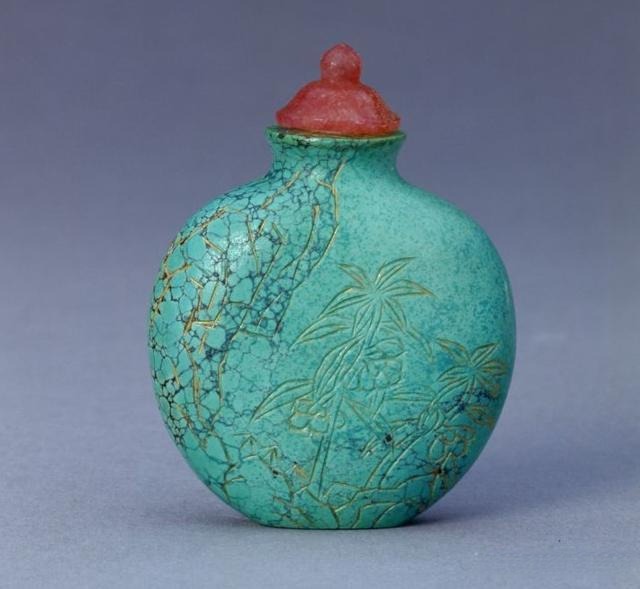
In China, the tradition of wearing and using turquoise dates back over 5,000 years. Before the Qing Dynasty, locals referred to this stone as “Dianzi.” China’s Hubei Province, in particular, has long enjoyed a prestigious reputation for its deposits, known in ancient times as “Jingzhou Stone.”
While many people call it “Turkish Delight” or “Turkish Jade,” these names are actually misleading. Turkey does not produce turquoise. The name “turquoise” originated because Persian turquoise from ancient Persia (modern-day Iran) reached Europe through Turkish trade routes. Over time, Westerners associated this gemstone with Turkey and adopted the name “Turkish Stone.” Discover more about Iran Gemstones and the origins of Persian Turquoise in our dedicated guide.
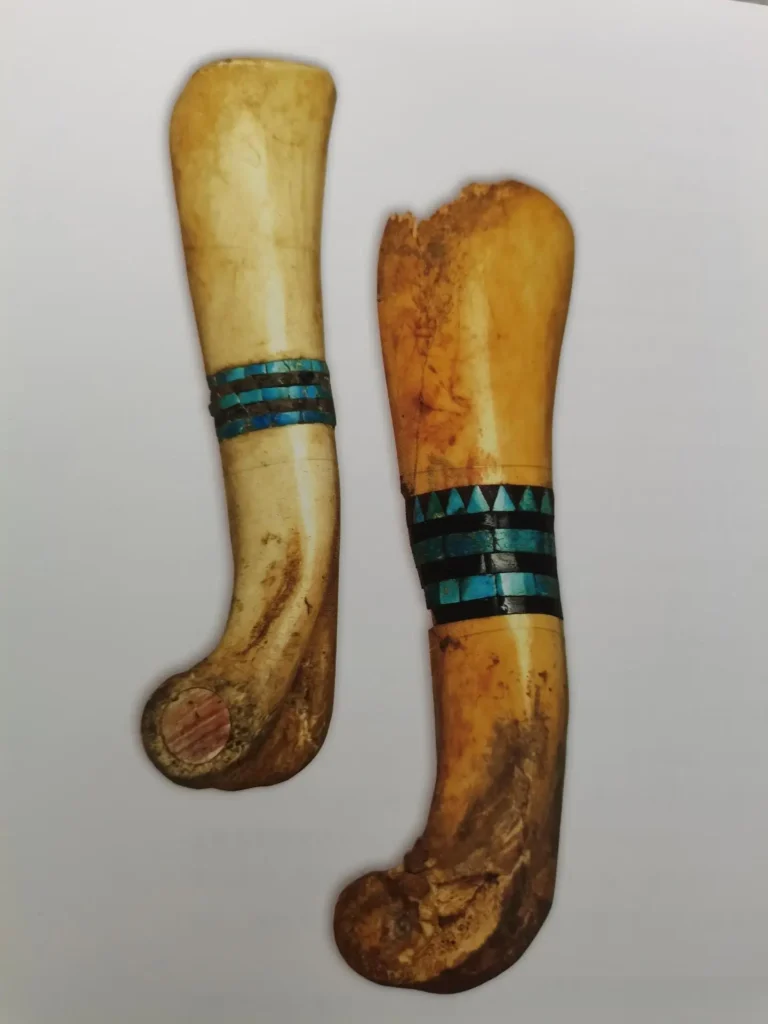
This fascination extends far across the globe. From Ancient Egypt and Mexico to the Persian Empire, civilizations crafted turquoise into powerful amulets and sacred burial goods. In ancient Europe, high-quality turquoise jewelry remained a staple of desire among royalty and the nobility, cementing its status as a stone of the elite.
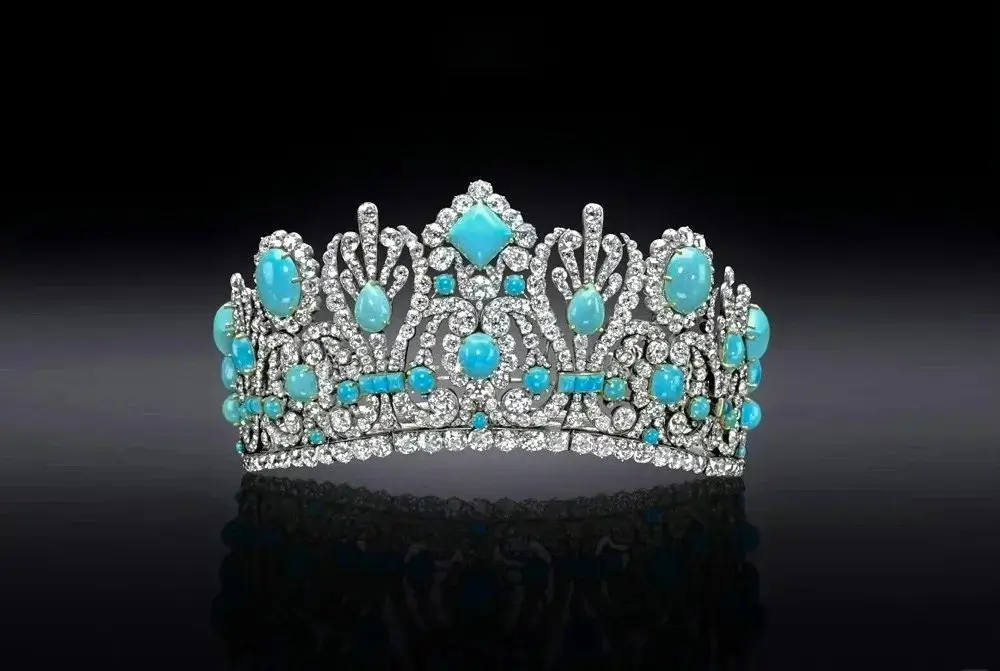
Appreciating Turquoise High Jewelry
If you still associate turquoise solely with collectible prayer beads, these high-jewelry masterpieces will completely redefine your perspective.
Intricate Cluster Settings
In the global luxury market, master jewelers often grind turquoise into tiny, matrix-free cabochons or beads, clustering them together to create rich, textured designs. This technique delivers a concentrated pop of that signature blue, making each piece an instant conversation starter.
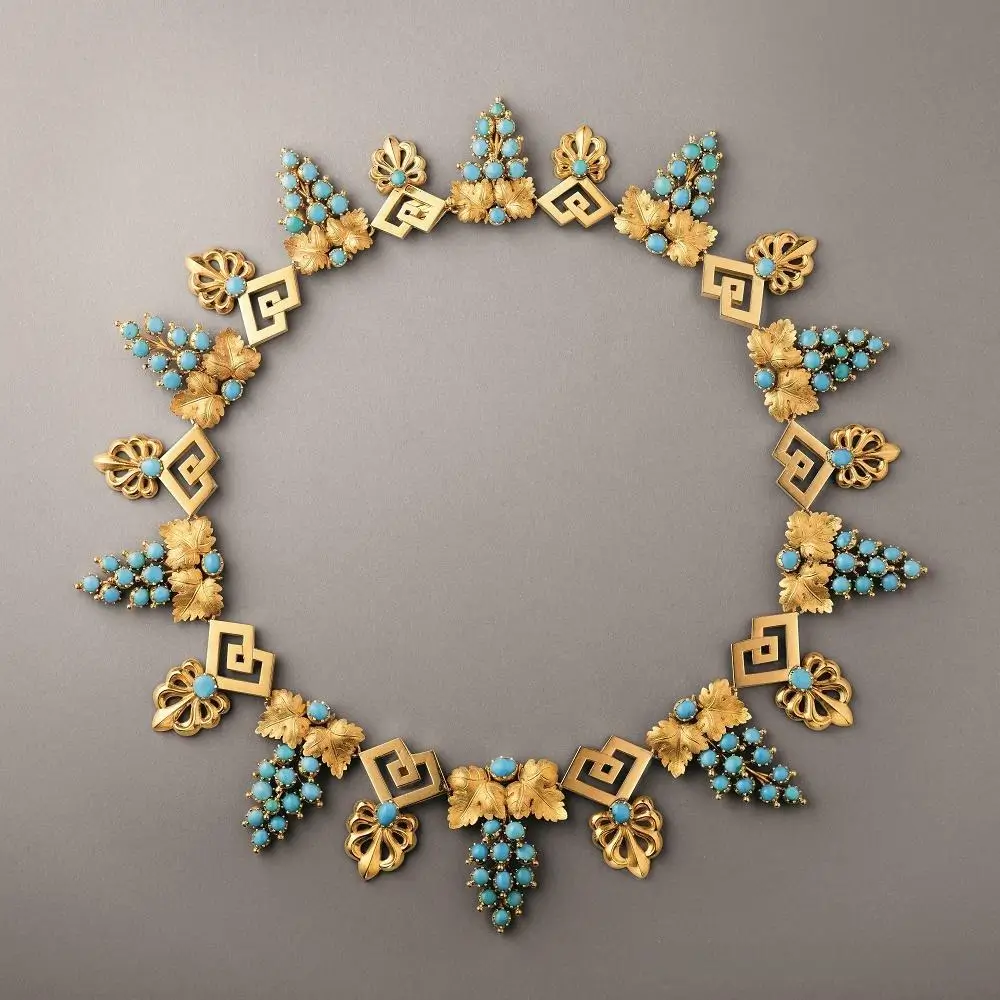
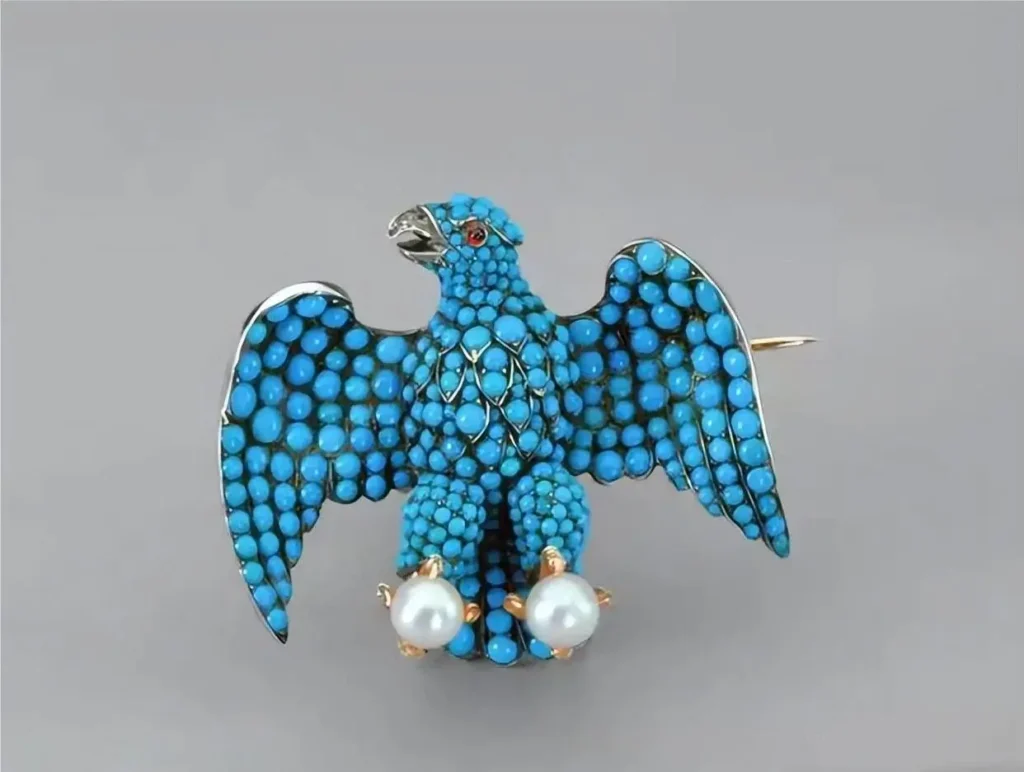
A stunning historical example is the eagle brooch pictured below. Prince Albert commissioned this piece specifically for Queen Victoria’s bridesmaids, featuring a dense pavé of turquoise. Another popular artisan technique involves alternating small turquoise stones with gold accents—a delicate approach that adds a sophisticated, eye-catching rhythm to the jewelry.
Custom-Cut Turquoise Jewelry
Compared to other precious gemstones, turquoise possesses a relatively lower hardness (approximately 5.5 to 6 on the Mohs scale), which makes it an ideal medium for intricate carving and custom shaping. When master artisans work with high-porcelain grade turquoise, they can sculpt the stone into diverse, fluid forms that showcase expansive surfaces of pure, vibrant color.
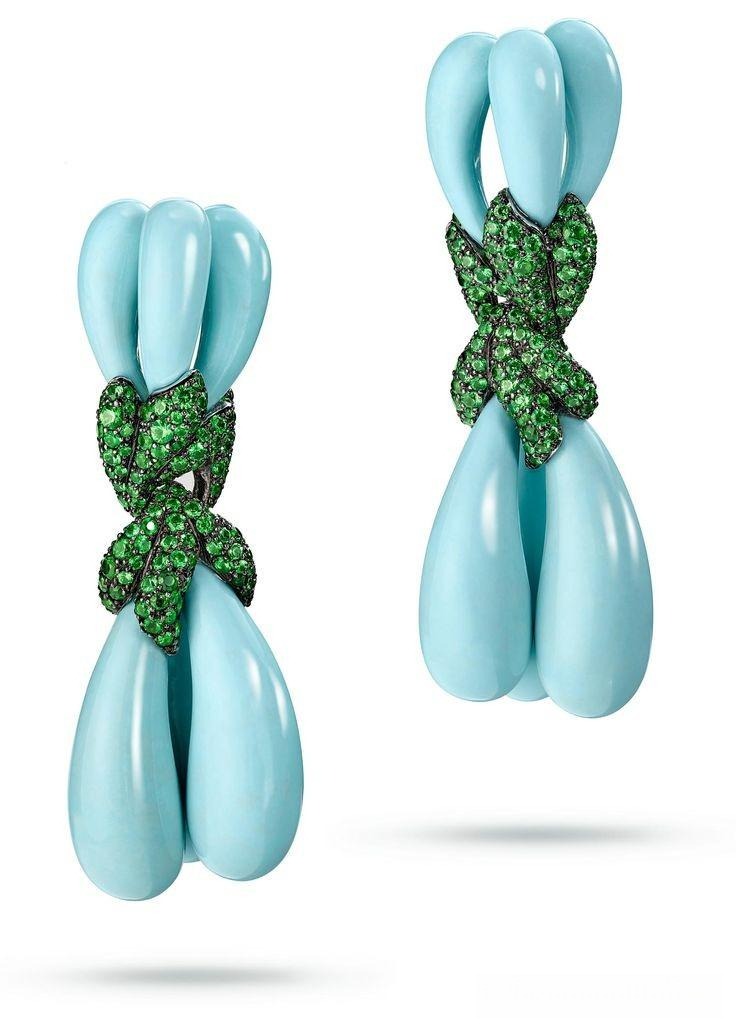
Jewelry designers and luxury houses frequently push the boundaries of creativity with this versatile stone. By utilizing unconventional and avant-garde cuts, they breathe new life into turquoise, transforming it into refreshing, modern masterpieces that break away from traditional jewelry silhouettes.
The Art of Turquoise Inlay and Layering
Beyond unique cuts, designers often use turquoise for sophisticated inlay and layering. Its vivid, energetic hue provides a bold backdrop. This color creates a striking contrast that makes center gemstones pop. For example, the “Lollipop” collection by Retrouvaí draws inspiration from vintage cocktail rings to showcase this layered look.
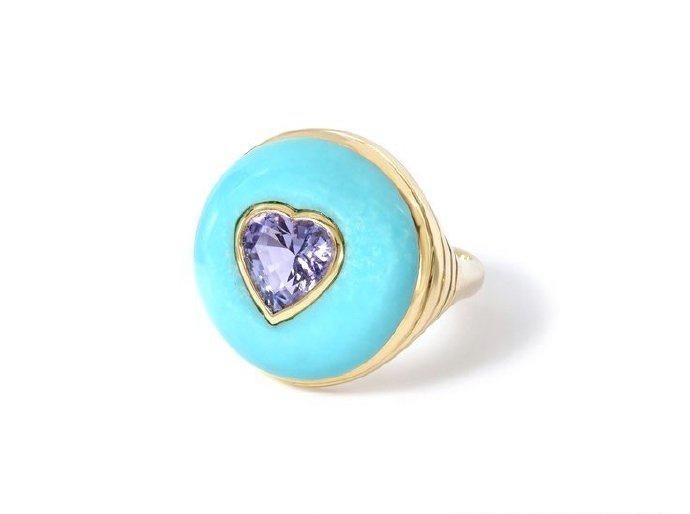
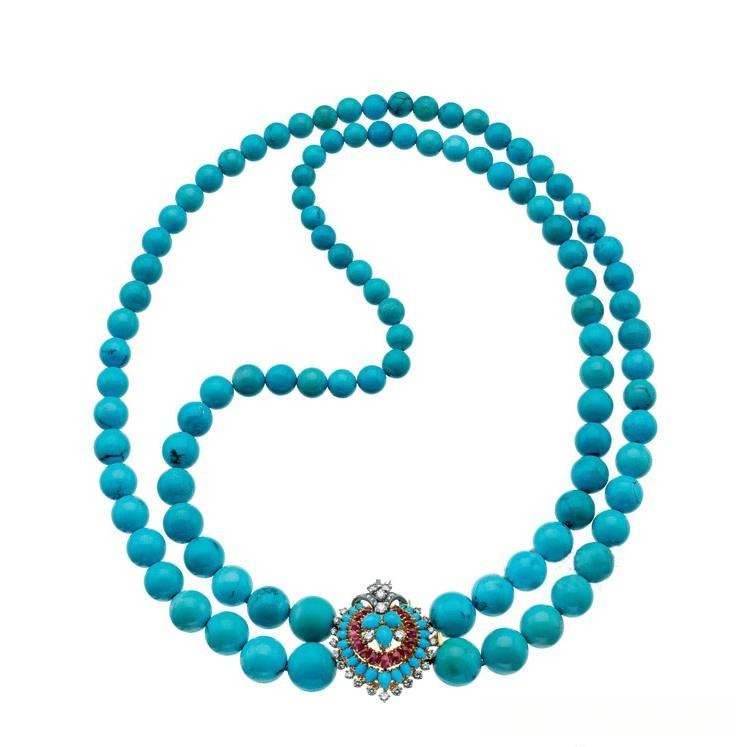
Similarly, David Morris uses turquoise to dramatize the contrast between pink sapphires and diamonds. Even classic round beads find a second life in modern high jewelry. By pairing oversized beads with intricate 18K gold clasps, designers elevate the traditional “beaded” look into luxury fashion.
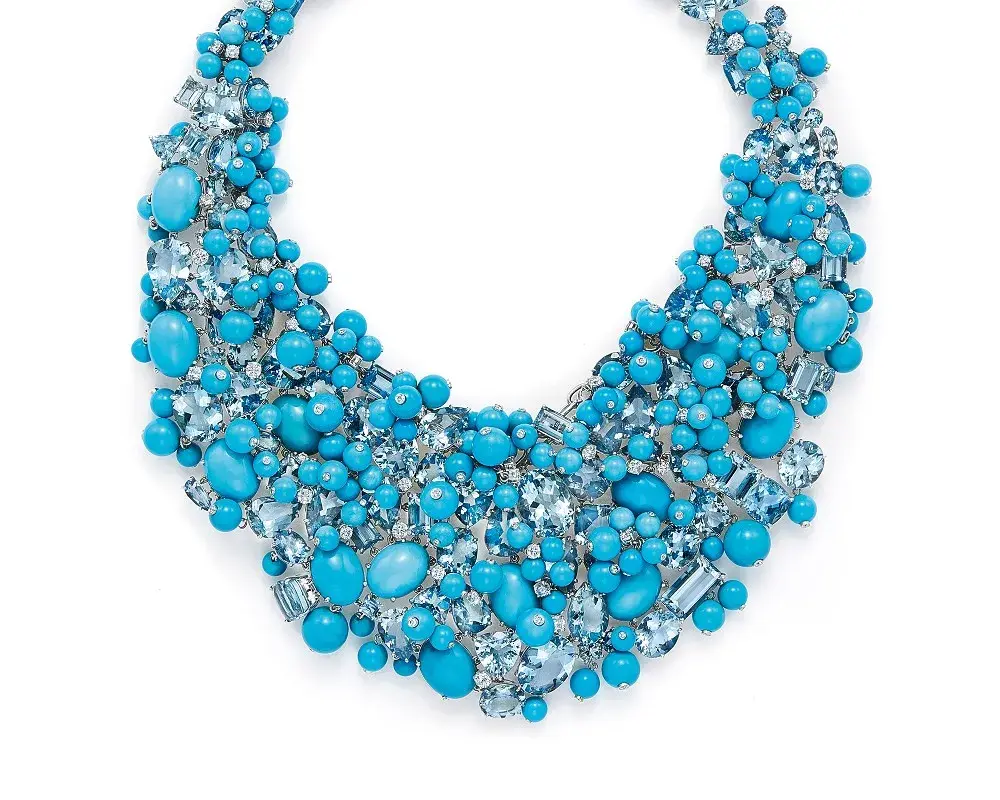
The necklace shown below features an intentional mix of cabochons and round beads. It offers a fresh, rhythmic perspective on how to style this timeless stone.
Everyday Elegance with Turquoise Jewelry
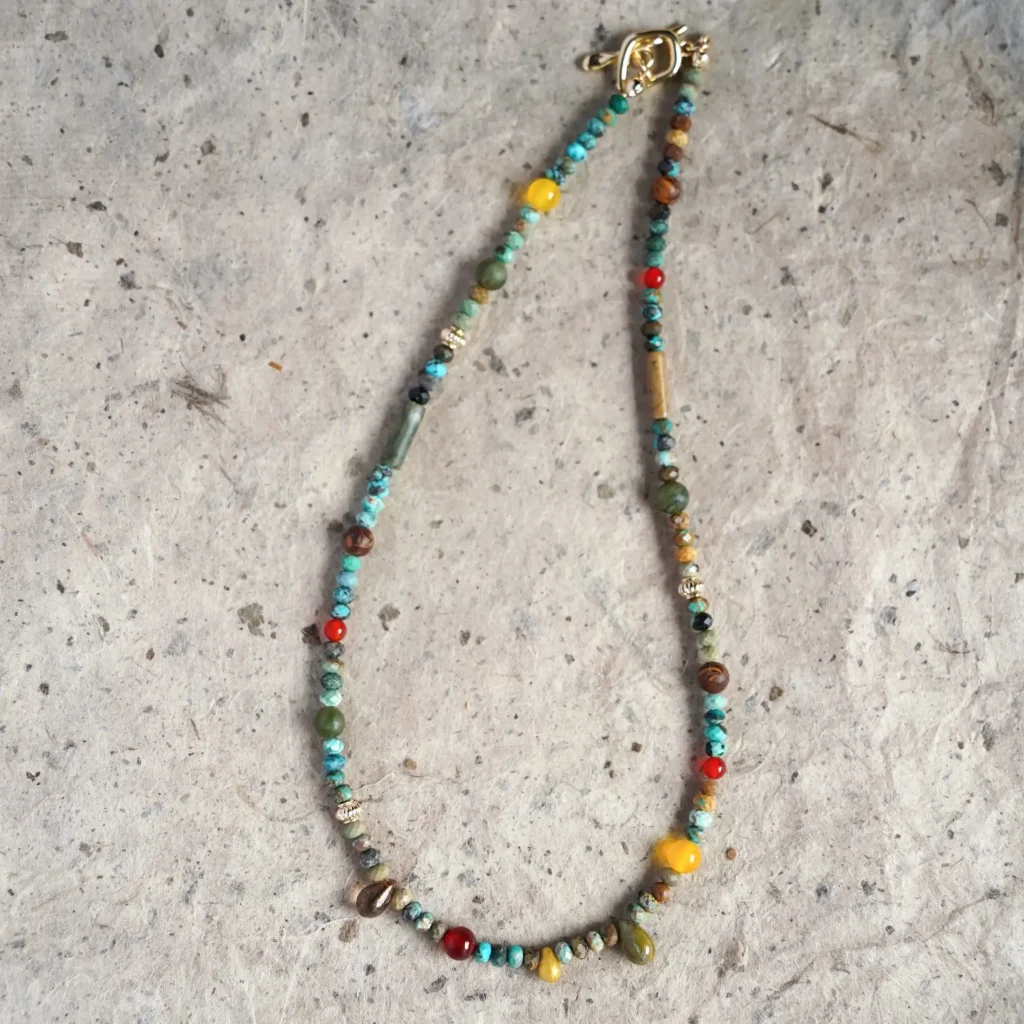
If high-jewelry masterpieces feel a bit too formal for your daily routine, turquoise still offers plenty of versatile options. Our Dunhuang Collection features a Turquoise Multi-Color Beaded Necklace that perfectly blends turquoise with picture stone and red and yellow agates. This piece leans into a bohemian aesthetic, making it an effortless choice for your everyday wardrobe.
Final Thoughts from Jewea
Whether featured in traditional beads, high-jewelry masterpieces, or effortless everyday wear, turquoise remains a standout. Its vibrant, refreshing color and incredible versatility allow it to shine in any setting. Among the vast world of gemstones, turquoise truly offers something for every style.
Which style of turquoise jewelry resonates with you the most?