Gemstones of Ningxia: Helan Stone & Gobi Agate | Gems of China Series
In this edition of our Gemstones of China series, we head west to Ningxia. Exploring the region is like opening a “treasure chest” of natural history.
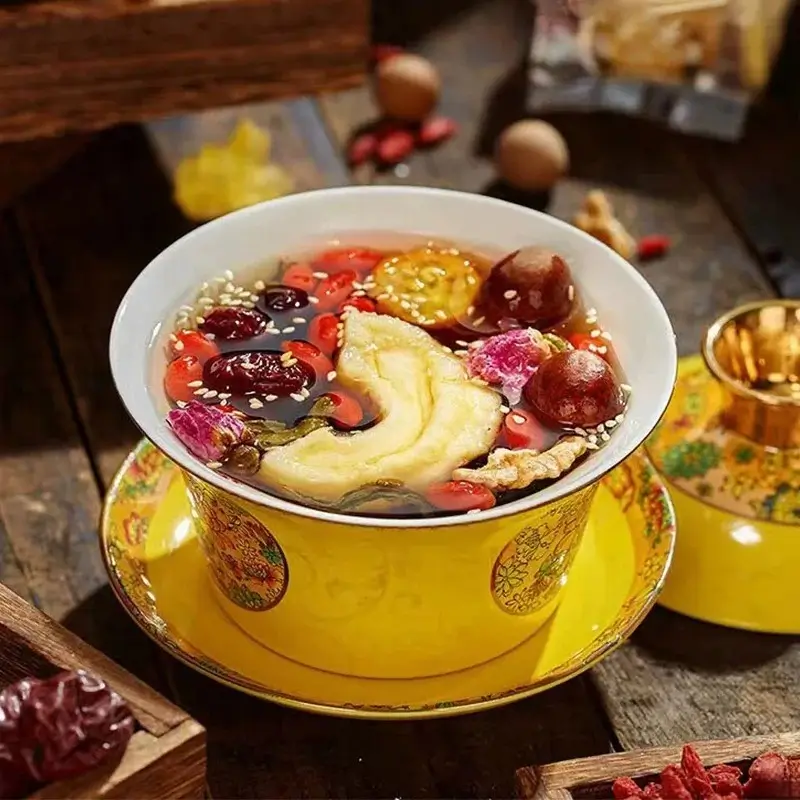
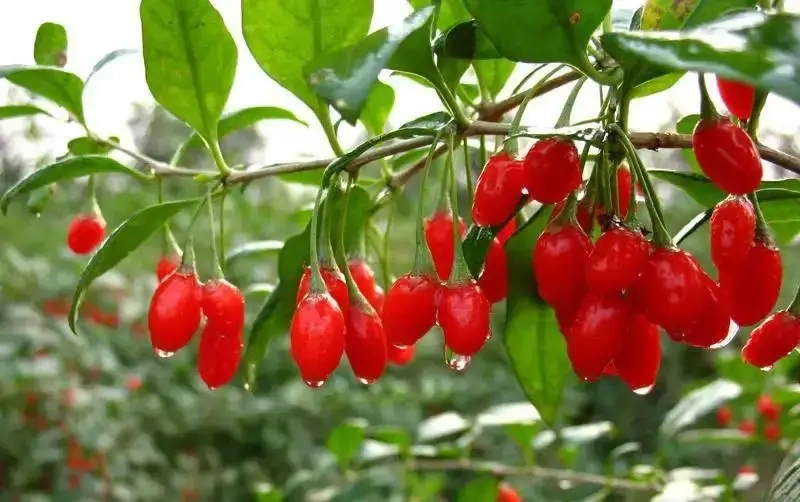
For most, Ningxia’s reputation begins with its local bounty—its Tan sheep, Goji berries, traditional “Eight-Treasure” tea, and the vineyards lining the Helan Mountains. While these flavors have made the region famous, Ningxia’s true heritage lies deeper than the surface.
The gemstones formed within this ancient landscape represent the most enduring legacy of this land. Today, we explore the two most significant Gemstones of Ningxia: Helan Stone and Gobi Agate.
Helan Stone: The Bi-Color Siltstone
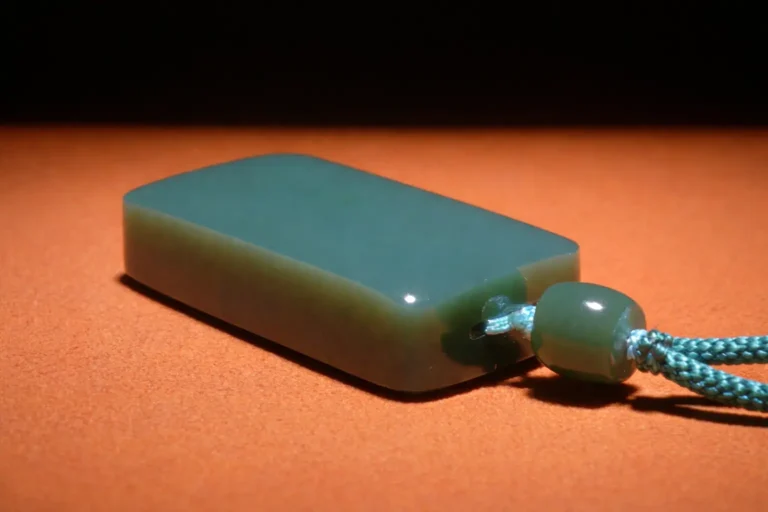
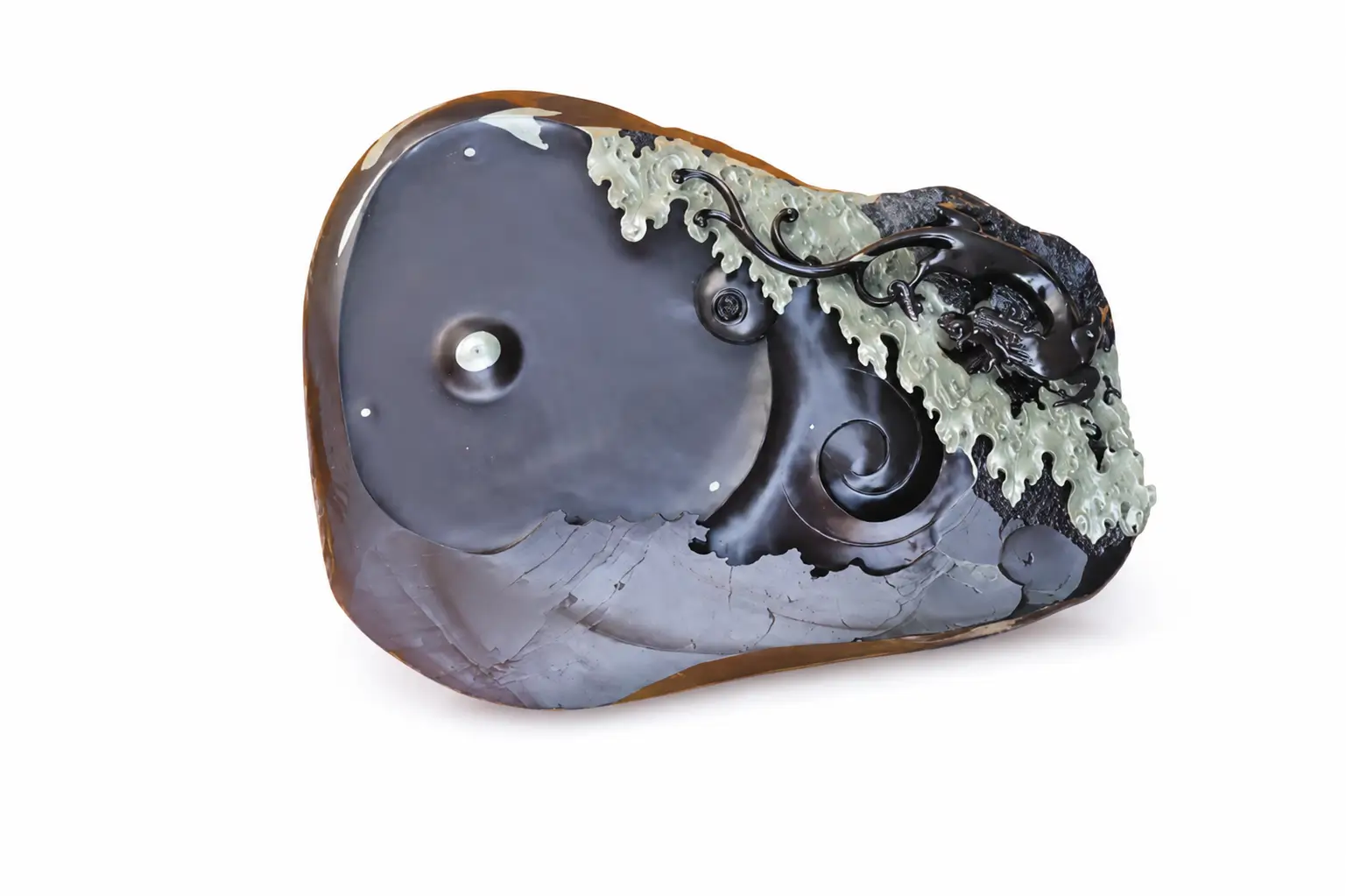
Helan Stone, also called Helan Inkstone or Bi Zi Shi (Green-Purple Stone), takes its name from the Helan Mountains of Ningxia. It ranks first among the “Five Treasures of Ningxia,” alongside goji berries, licorice, facai (black moss), and Tan sheepskin. Since the Qing Dynasty, it has served as an imperial tribute stone.
Mineralogically, this stone is a siltstone slate within the argillaceous jade family. Found mainly in the north-central Helan range, it consists of clay minerals, sericite, and chlorite, with traces of muscovite, feldspar, and various metals.
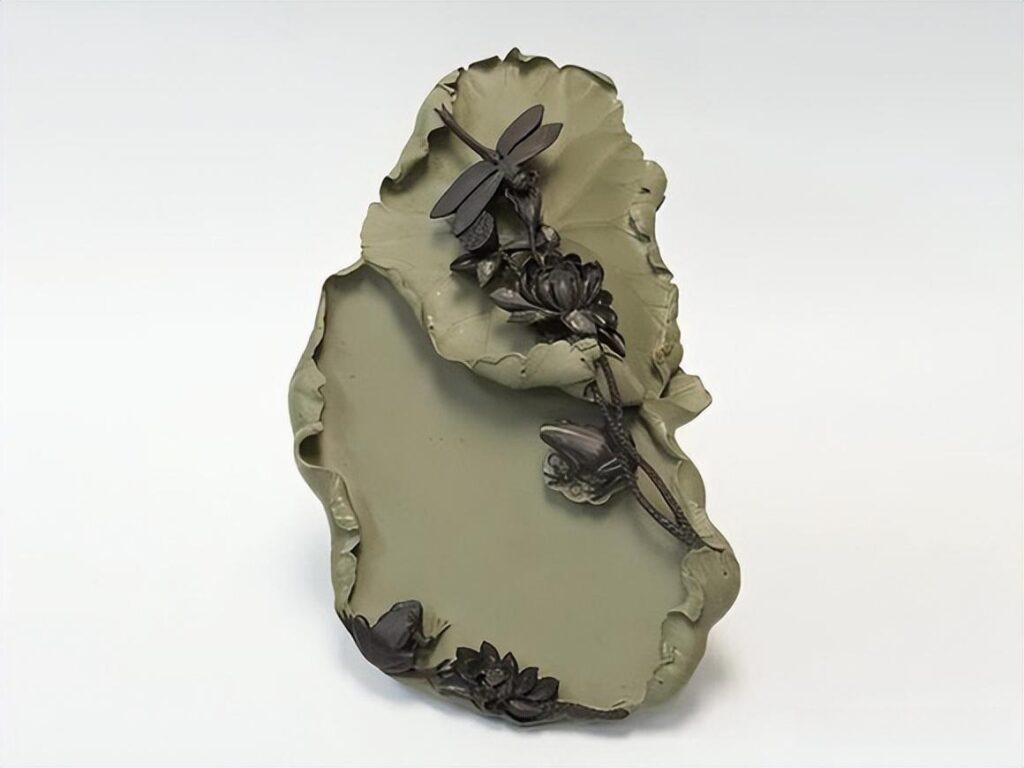
The stone features a fine, uniform structure with a Mohs hardness of 2–3. This ideal density allows for intricate carving while remaining free of cracks or coarse sand impurities.
The Art of the Inkstone
Calligraphy remains the stone’s most famous application. Its beauty comes from the natural contrast of deep purple (the “Purple Base”) and bean-green (“Green Accents”). These two colors interweave naturally to create a dignified, vintage aesthetic.
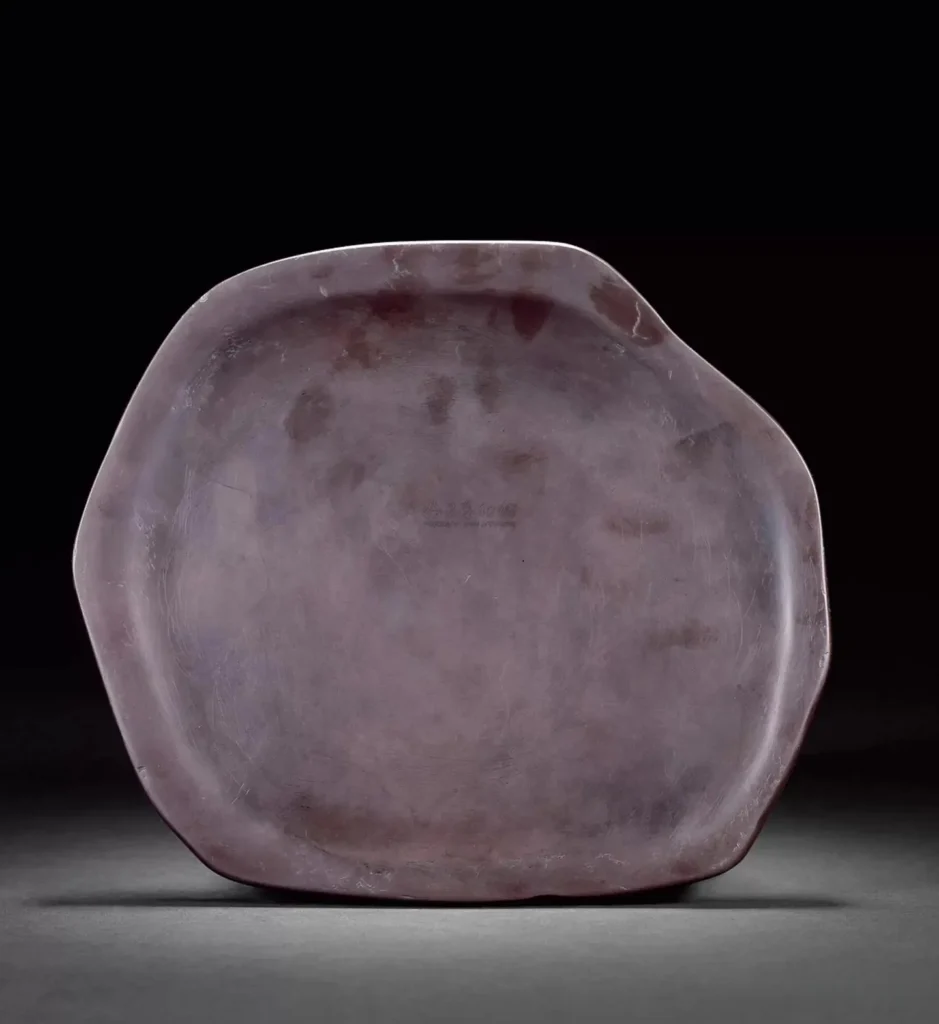
As an inkstone, it offers three key functional advantages:
- It does not absorb water.
- It facilitates smooth ink grinding without damaging brush bristles.
- It preserves wet ink for several days without drying or spoiling.
These qualities place it in the elite tier of scholar’s tools, ranking alongside the Duan and She stones in the famous “Top Three” hierarchy.
Beyond inkstones, artisans transform Helan Stone into seals, brush pots, tea sets, and lamps. Modern carvers use a “color-pointing” technique to exploit the stone’s natural bi-color layers. By aligning the purple and green tiers with specific motifs, they create lifelike landscapes, figures, and wildlife that are highly sought after in international markets.
Gobi Agate: Sculpted by the Desert Winds
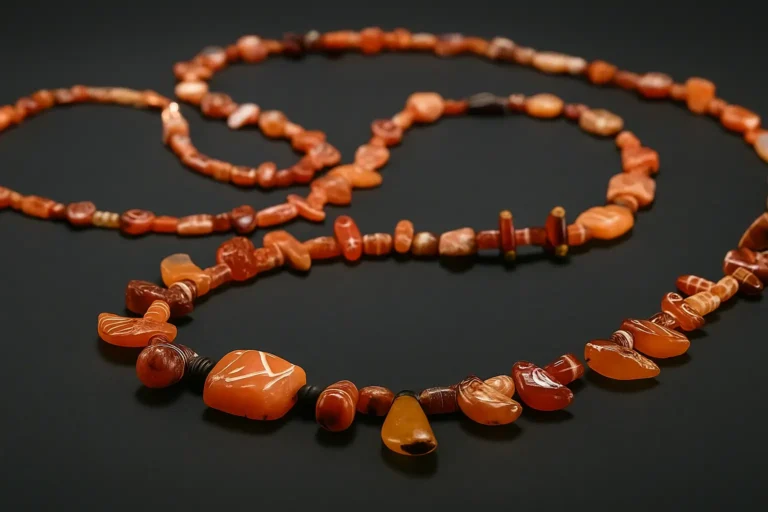
In our previous article, Types of Agate: Exploring Rare and Unique Varieties from China, we explored several of China’s most celebrated agates. In Ningxia, the regional landscape yields a different treasure: Gobi Agate. This variety stands out for its exceptional hardness, rich color palette, and extraordinary natural silhouettes.
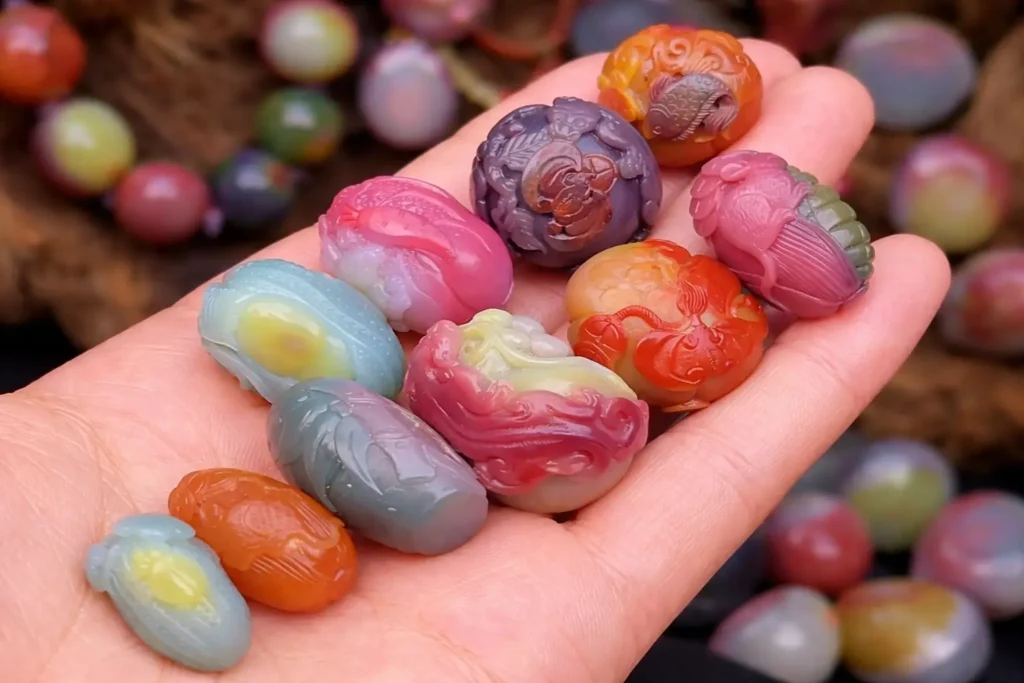
Primarily composed of silica, Gobi Agate is a cryptocrystalline quartz with a Mohs hardness of 6.5–7. This high density ensures the stone remains remarkably hard and stable. These gems surface mainly in the desert expanses of Zhongwei and Wuzhong, near the border between Ningxia and Inner Mongolia.
The Gobi Agate palette is grounded and sophisticated, dominated by earthy reds, yellows, browns, greys, and milky whites. These hues frequently interweave, creating an understated, ancient aesthetic. While their transparency remains low, the beauty of these stones lies in their individuality. Since no two stones share the same form, collectors prize them as one-of-a-kind natural sculptures.
A Legendary Example: “Ages”
One of China’s four legendary “viewing stones”—an agate titled Ages—was discovered in the desert stretches connecting Ningxia and Alashan.
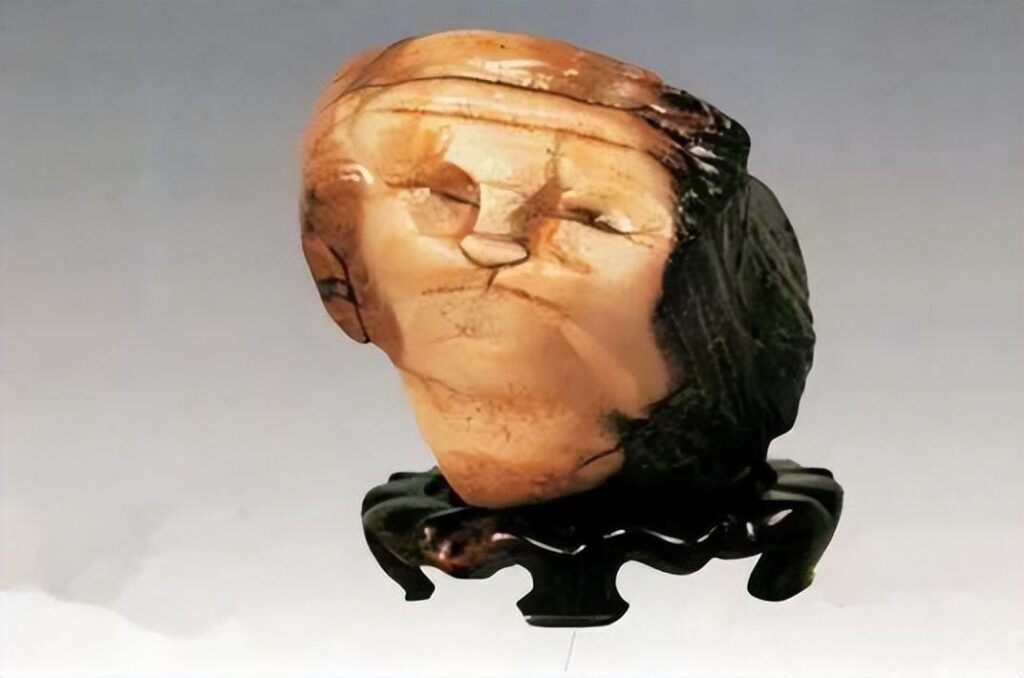
This masterpiece perfectly illustrates the species’ unique characteristics. Its formation dates back 150 to 300 million years to ancient volcanic eruptions. Over eons, relentless wind and sand erosion polished these stones into their signature forms: rounded pebbles, grape-like clusters, and irregular nodules. Their surfaces often showcase a natural, wind-worn “patina” or intricate textures such as silk bands and “tortoise-shell” (turtle-back) patterns. Ultimately, these elements combine to create a boundless variety of bizarre and fantastic shapes.
Explore More in Our Chinese Gems Series
At Jewea, our mission is to uncover the hidden geological wonders across China. Before we dove into the Gemstones of Ningxia we explored several other regions famous for their rare and storied treasures.
Take a look back at our previous journeys:
Northwest China
- Gansu: Gemstones of Gansu: Gannan Agate, Wushan Yuanyang Jade, and Dunhuang Quartz | Gems of China Series
- Qinghai: Gemstones of Qinghai: Hetian Jade, Turquoise, Serpentine, and Alabaster | Gems of China Series
- Shaanxi: Gemstones of Shaanxi: Lantian Jade, Turquoise, Ink Stone & Coral Fossil | Gems of China Series
- Xinjiang: Gemstones of Xinjiang: From Sacred Nephrite to Desert Quartz and Pegmatite Crystals | Gems of China Series
China’s vast landscapes yield a nearly endless variety of mineral treasures. From seasoned collectors to curious newcomers, the gemstones of this region offer a lifetime of discovery. Follow along as we continue to uncover the hidden brilliance of China’s mineral heritage.