Gemstone Fire vs. Brilliance: The Professional Guide to Sparkle
Gemstone fire has become a bit of a confused concept lately, thanks to a flood of AI-generated “guides” that lazily mix it up with simple brilliance.
Think back to that classic Tom and Jerry moment: Tom hopefully presents a modest one-carat ring to the white cat, only for her to pull out a pair of welding masks—one for herself and one for Tom. She then reveals the 20-carat rock gifted by his rival, the black cat, with a flash so blinding it practically melts Tom’s eyeballs.
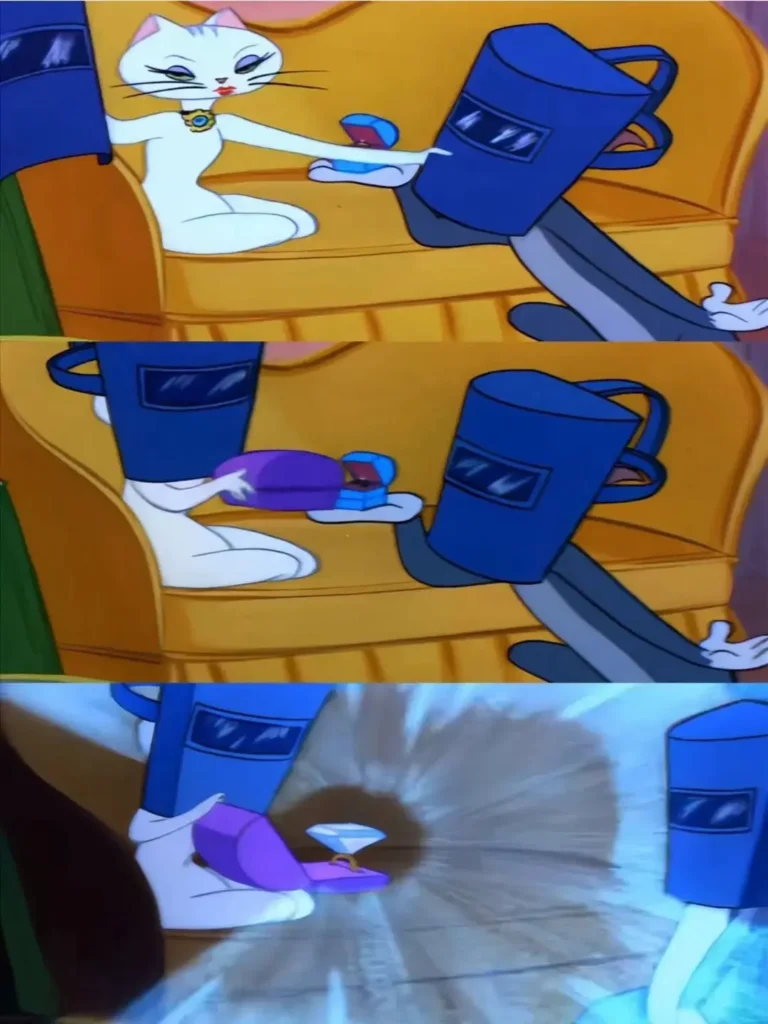
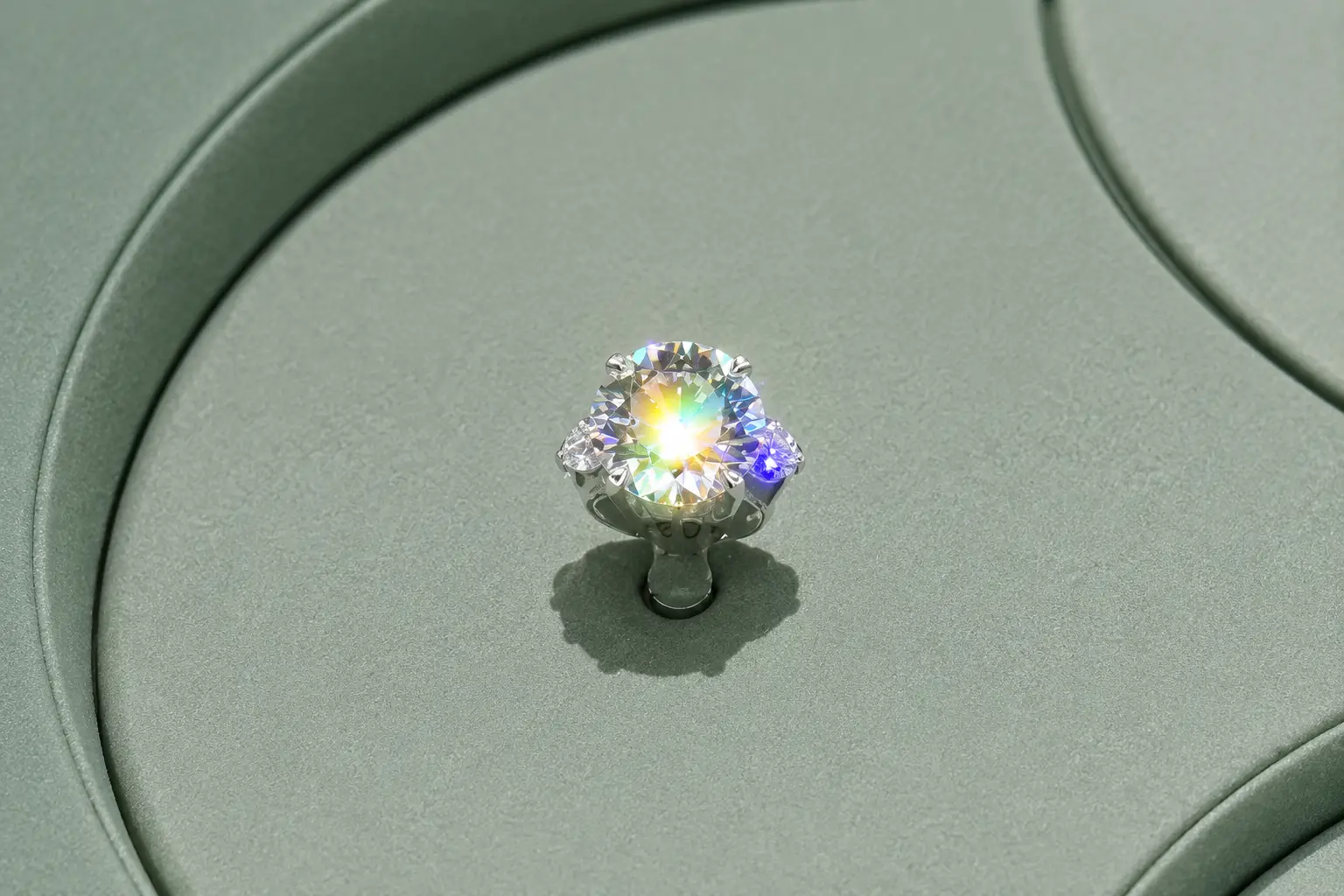
Most people mistake that “bling-bling” animation effect for “fire,” and even assume it’s the sole gold standard for a gemstone’s value. In reality, true Fire refers specifically to the phenomenon where a gemstone acts as a prism, splitting white light into a vivid spectrum of rainbow colors.
So, let’s get serious. What exactly is gemstone fire, and what factors actually control that “rainbow” dance?
Dispersion: The Master of Gemstone Fire
It is a well-known fact that white light is a composite of seven colors: red, orange, yellow, green, blue, indigo, and violet.
When white light passes through a prism-like material, each wavelength travels at a different speed, resulting in a unique refractive index for each color. As light enters and exits the material, these two stages of refraction break the original white light into its component colors. Just like a classic prism experiment, gemstones possess this same ability to split light—a property known as Dispersion. The vibrant, multi-colored spectral flashes produced by this process are what we call Fire.
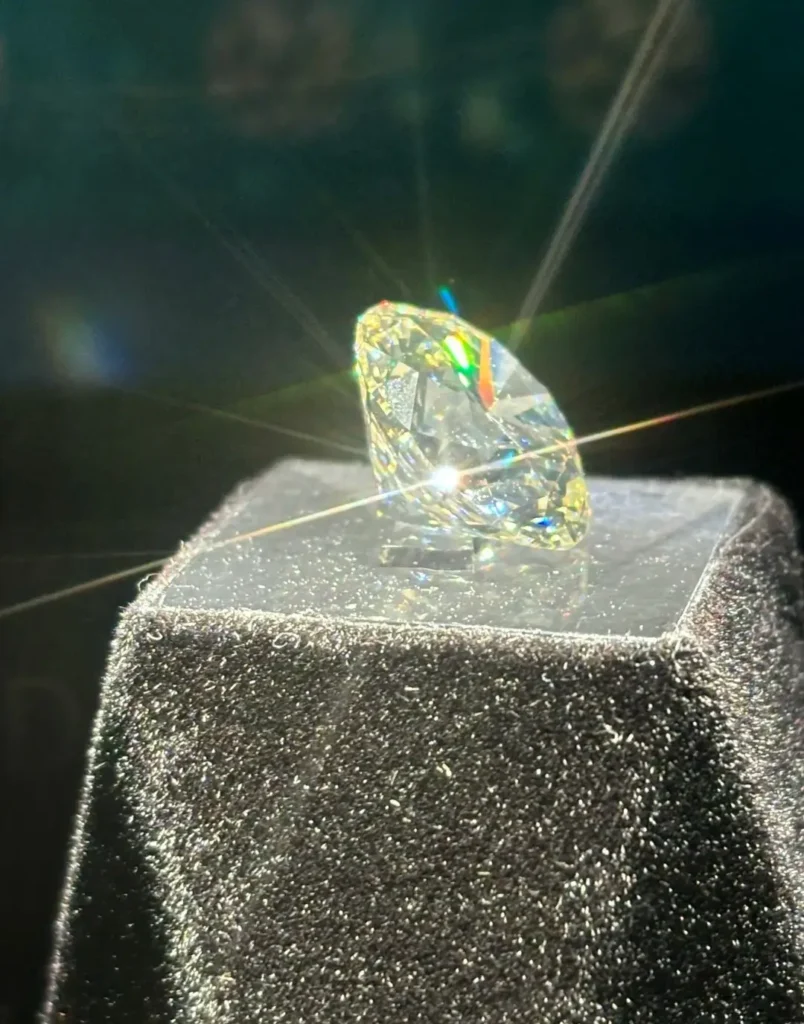
In diamonds, the intensity of this fire is measured by its Dispersion Value. The higher the value, the wider the resulting color spectrum and the more vivid the fire. When light hits a well-angled diamond facet, it produces breathtaking flashes—predominantly in shades of blue and yellow—that define the stone’s soul.
Pro Tip: How We Measure Gemstone Fire
Technically, a material’s Dispersion Value is defined as the difference in its refractive index between red light (686.7nm) and violet light (430.8nm). Every gemstone has a unique dispersion signature, which determines not just the intensity but also the specific palette of colors you see.
Gemstones are generally categorized by their dispersion levels:
- Low (<0.019): Quartz (0.013), Emerald (0.014), Chrysoberyl (0.015), Tourmaline (0.017), Ruby/Sapphire (0.018).
- Medium-High (0.020–0.029): Tanzanite (0.020), Peridot (0.020), Spinel (0.020), Spessartite Garnet (0.027).
- High (0.030–0.059): Zircon (0.039), Diamond (0.044).
- Ultra-High (>0.060): Sphene (0.051), Demantoid Garnet (0.057), Cubic Zirconia (0.065), Moissanite (0.104).
This is why the Diamond remains the king of gems. Its unmatched hardness and high refractive index give it that famous adamantine luster, but its high dispersion value provides the captivating “rainbow dance” we all fall in love with.
How Body Color and Clarity Muffle Gemstone Fire
A high dispersion value is a great start, but it doesn’t guarantee a fiery stone. Several factors can act like a “dimmer switch” on a gem’s natural fire.
The “Masking” Effect of Body Color
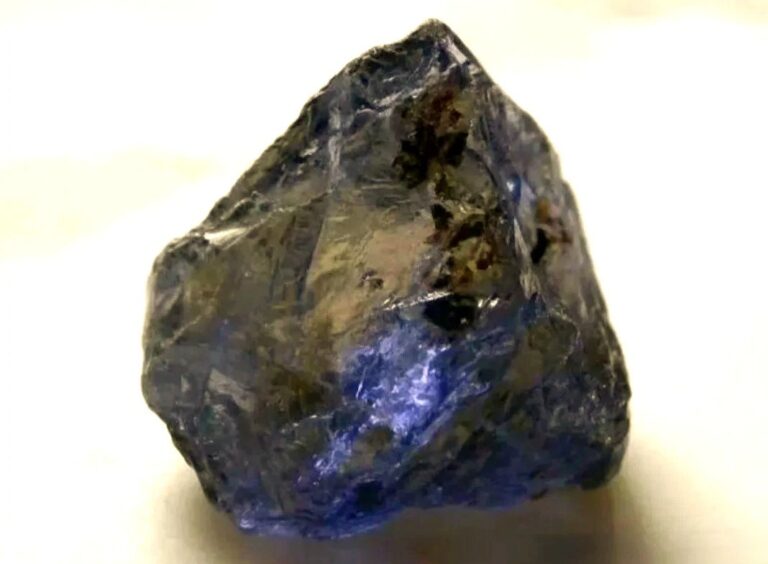
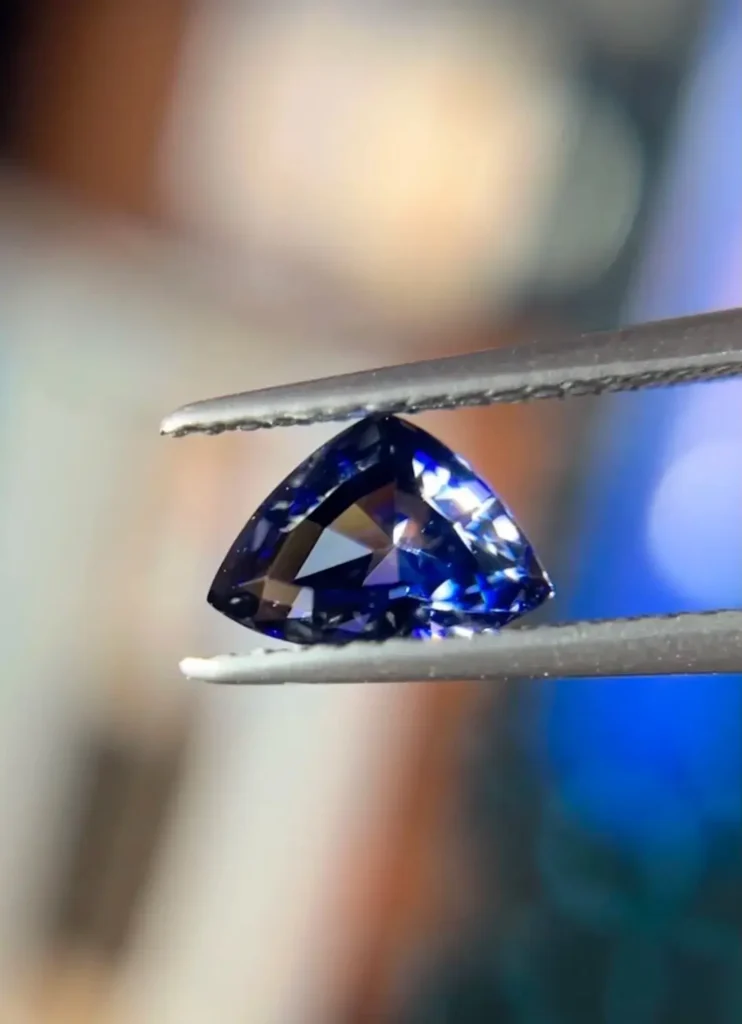
Deeply saturated gemstones often swallow their own fire. When a stone has a dark body color, the intensity of that hue masks the spectral colors. Take Benitoite, for example. Even though it boasts a higher dispersion value than a diamond, its deep blue body color often conceals its fire.
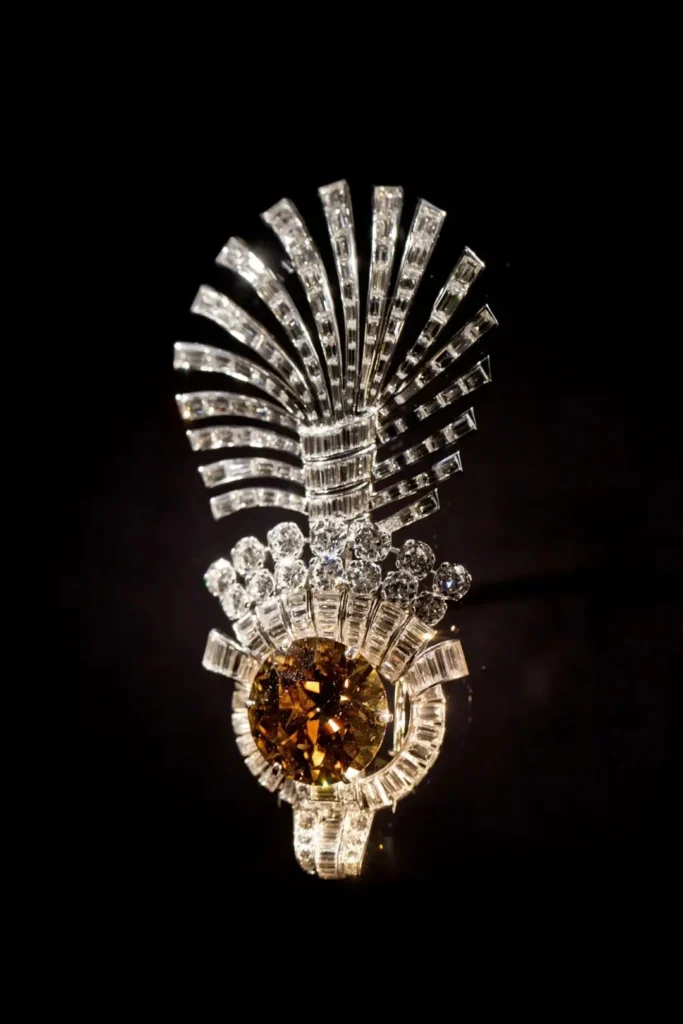
You can see this same effect within the diamond family. A brown diamond lacks the vibrant color play of a colorless diamond simply because its dark tint absorbs the light that would otherwise create fire.
The Barrier of Clarity
Clarity plays an equally vital role. Even if a stone has a sky-high dispersion value, internal inclusions can act as roadblocks. These flaws block and scatter light before it can refract properly, effectively killing the fire.
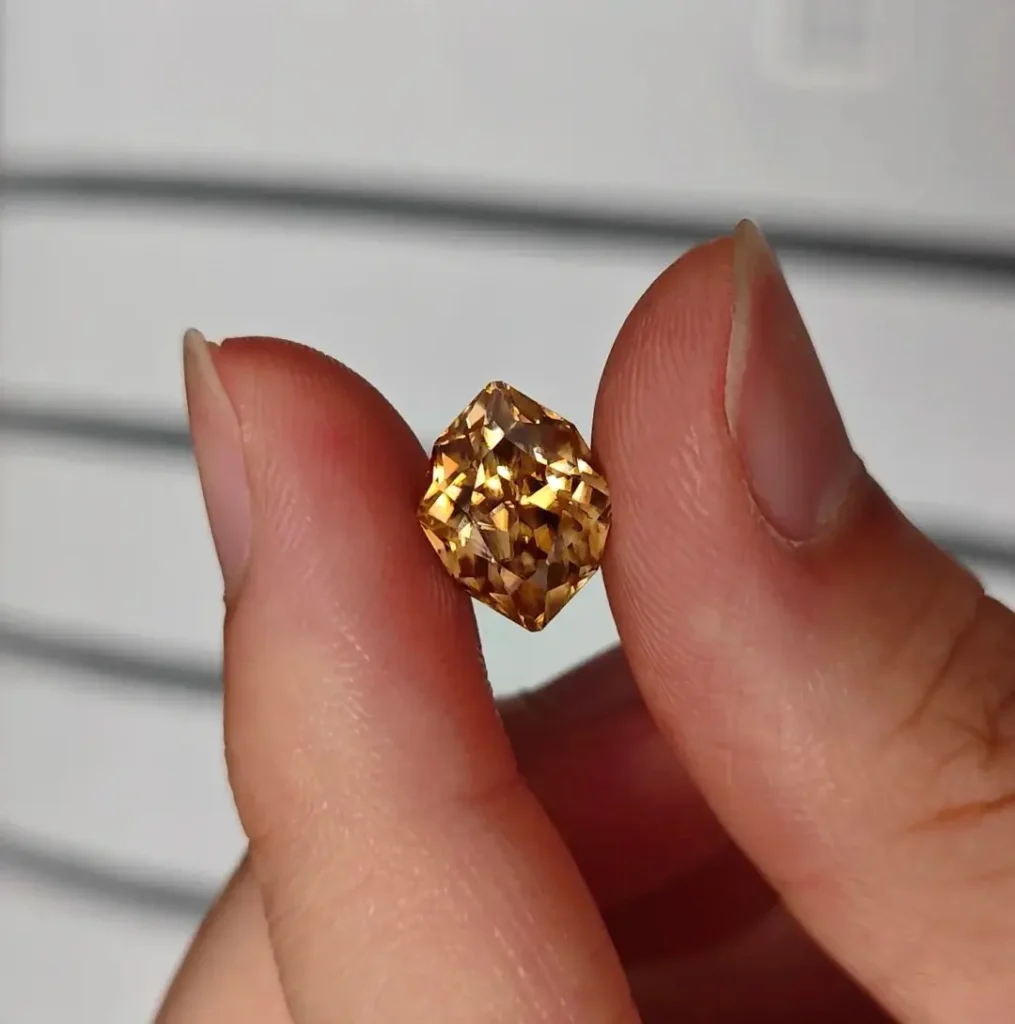
Cassiterite is the perfect cautionary tale. It features a massive dispersion value of 0.071, but because it is almost always riddled with inclusions, it rarely gets the chance to show off that potential. Without high clarity, a stone’s high dispersion simply goes to waste.
How Cut and Light Define Gemstone Fire
Beyond the stone’s inherent properties, two external factors dictate whether a gem truly comes to life: precision cutting and the right environment.
Masterful Cutting: The Engine of Light
A superior cut acts as an engine for light performance. When a lapidary shapes a stone with perfect proportions, they enable light to reflect and refract internally with maximum efficiency. This precise movement of light allows the gem to break down white light to its fullest potential, resulting in a breathtaking display of fire.
The Magic of Focused Light
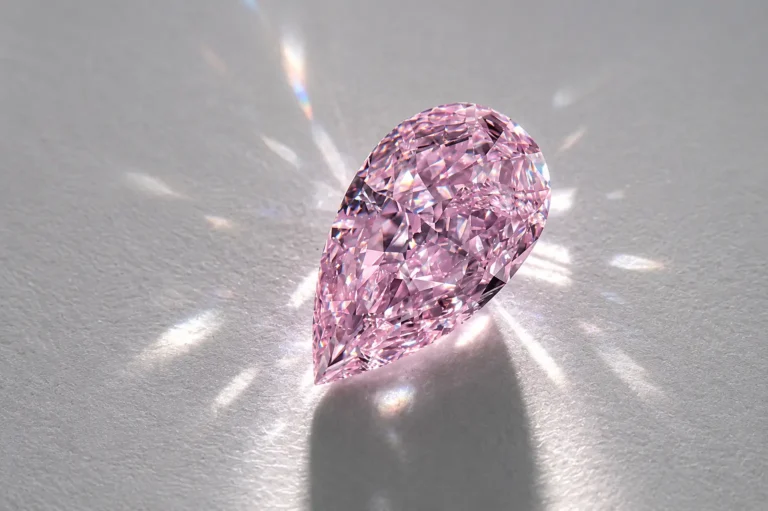
Environment is everything. In soft, diffused light, even a top-tier diamond can look underwhelming. To see a gem’s truly “dreamy” side, you need a focused light source—like a spotlight.
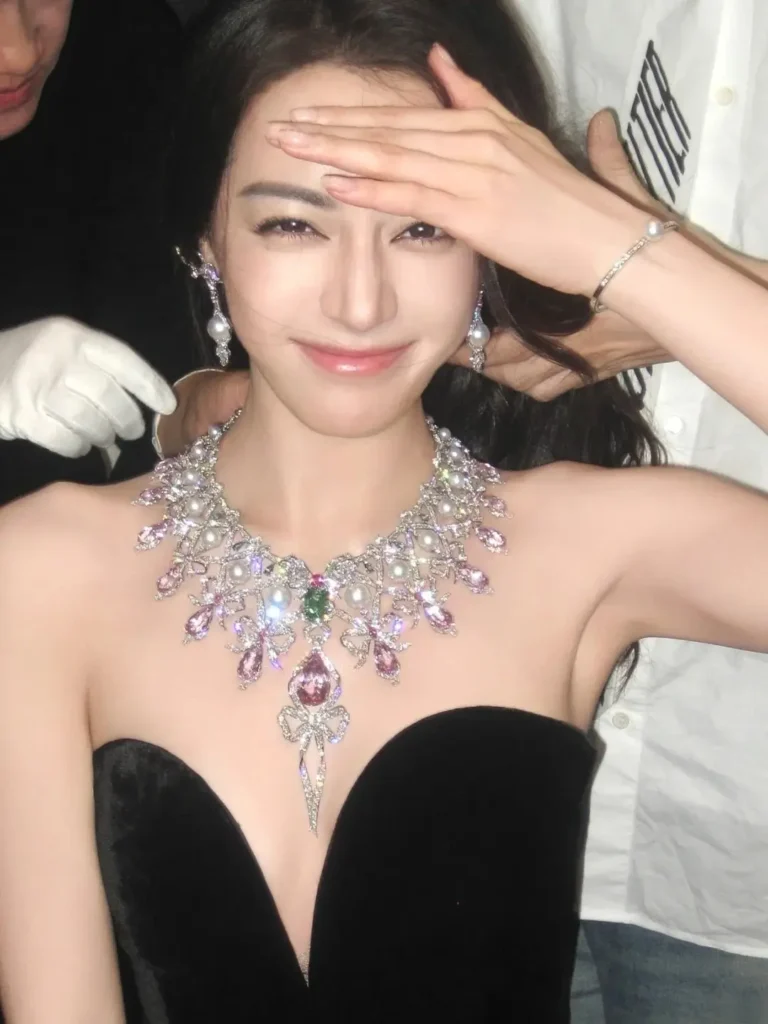
This is exactly why celebrity jewelry looks so incredible in photos; they are constantly under the high-intensity stage lights that pull every ounce of fire from their gems.
Pro Tip: If your own diamond or gemstone feels a bit dull, try moving it under a direct spotlight. You’ll suddenly see a side of its beauty you never knew existed. From my personal experience, some of the best spots to catch that “wow” factor are under the sharp overhead lights in theaters, elevators, and even hotel bathrooms.
The “Cheat Code” for Sparkle
Want that blinding, star-like glow for your social media? Simply add a Star Filter to your camera lens. It’s the easiest way to capture those “shining bright” rays, making almost any stone look like a sparkling masterpiece on screen.
Is “Bling-Bling” Always Gemstone Fire? Not Exactly.
As we established earlier, true Fire is the phenomenon where a gem splits light into a vivid rainbow of spectral colors. However, at Jewea, we work with many custom-cut gemstones that may not have high dispersion values, yet they still look incredibly radiant. This is due to a different effect: Brilliance.
To keep it simple: we describe great Fire as “flowing with color,” while we describe great Brilliance as “bright and vivid.”
Fire vs. Brilliance: The Technical Breakdown
To be technically precise, these two effects come from entirely different optical journeys:
- Fire (Color): This is colored light born from refraction and dispersion. It is dictated by the stone’s Dispersion Value.
- Brilliance (Flash): This is white light reflecting off the surface and internal facets. It is determined by the Refractive Index (RI) and the quality of the Cut.
Why Some Stones Look “Brighter” Than Others
The higher the Refractive Index, the brighter the gemstone appears. Gems like Chrysoberyl, Spinel, and Garnet all boast high RIs, giving them that crisp, “crystal clear” sparkle that people love. In contrast, glass has a much lower RI, which is why glass imitations often look dull and “fake” at a glance.
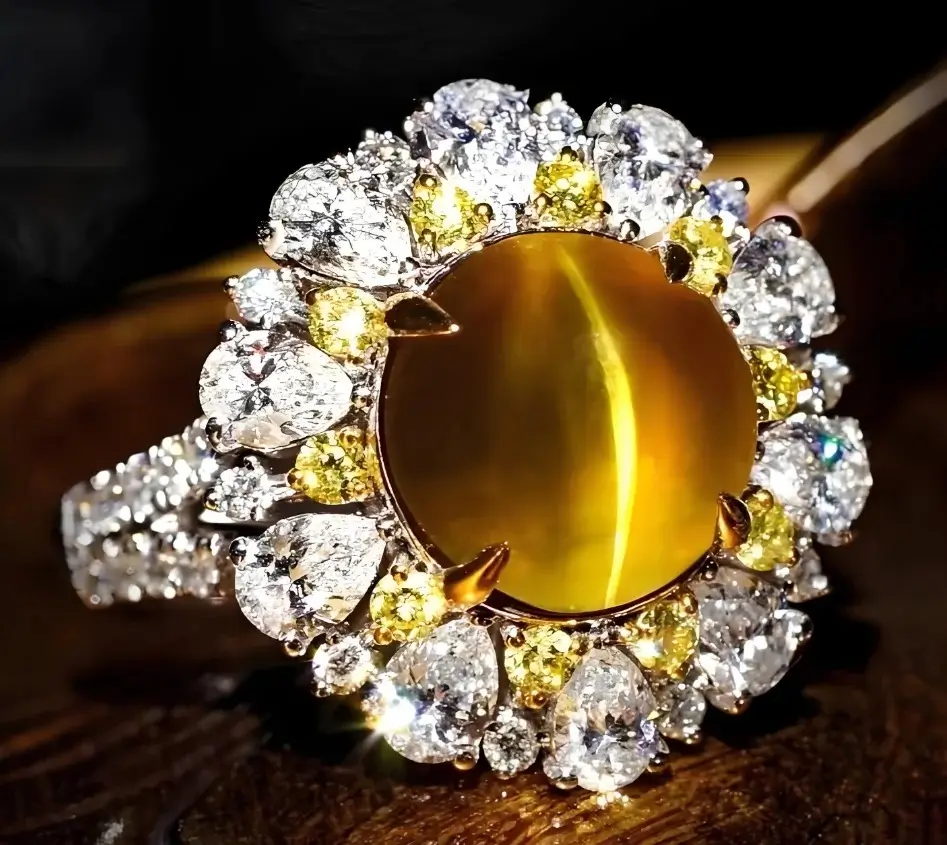
When you pair a high-Refractive Index stone with a master-level cut, magic happens. Light enters the stone and reflects back out through almost every part of the table, creating a lively, dancing effect. In the industry, we call this “Full Brilliance.”
So, the next time you see a stone that is “blindingly bright,” remember: you aren’t just seeing fire—you are seeing exceptional Brilliance.
Does “Fire” Equal Value? Not Necessarily.
You have likely seen the headlines. Marketing accounts and AI-generated listicles often claim that “blinding fire” is a privilege reserved for top-tier, investment-grade gems. Let’s be real: that is mostly marketing hype.
It is understandable when non-experts confuse “fire” with “brilliance.” To the untrained eye, both look like “sparkle.” However, the reality is quite the opposite of the hype. In many cases, synthetic stones pack the most “blinding” punch.
The Overachievers: Lab-Grown Simulants
Ironically, the flashiest stones on the market are often not natural. Scientists engineer these simulants for maximum optics. As a result, their dispersion values often dwarf those of natural gemstones.
- Strontium Titanate: The National Lead Company developed this lab-grown stone in 1953. It boasts a massive dispersion value of 0.190—more than four times that of a diamond! While it once enjoyed fame as a diamond stimulant, it was actually too fiery. The stone looked so unnaturally flashy that people easily spotted it as a fake. Eventually, it faded into the background of the jewelry world.
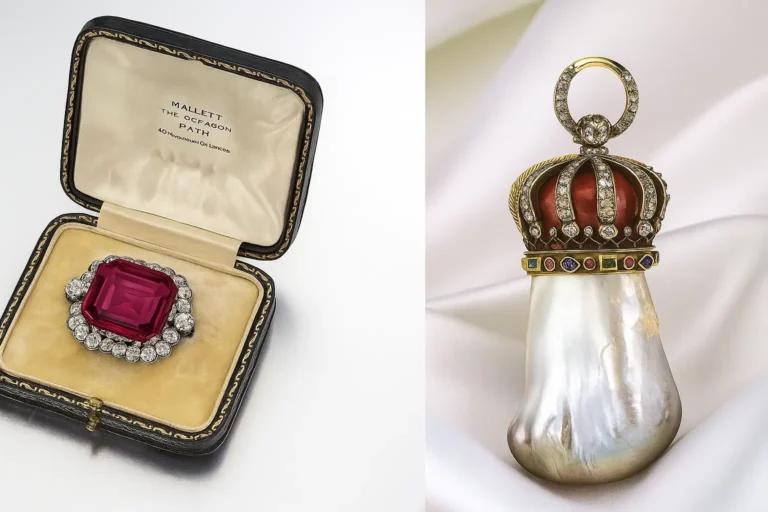
- Cubic Zirconia (CZ): With a dispersion of 0.065, CZ is noticeably more “fire-heavy” than a diamond. It remains the most common diamond simulant in the silver jewelry market. Even the legendary Patiala Necklace by Cartier—originally a masterpiece of natural diamonds and rubies—now uses Cubic Zirconia in its restored exhibition version. Yes, that world-famous, “blinding” piece is currently rocking high-quality “fakes.”
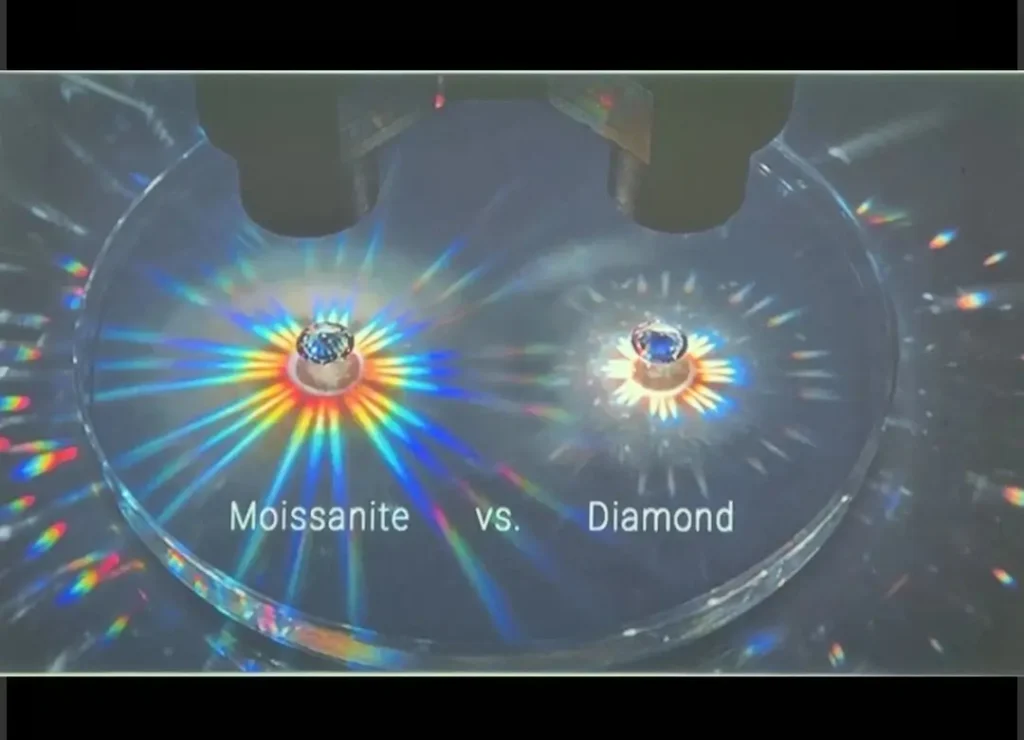
- Moissanite: This stone has a dispersion value of 0.104, nearly double that of a diamond. Moissanite prices have hit rock bottom lately, making it a great choice for affordable fashion jewelry. However, its extreme fire is a dead giveaway. It throws off so many rainbow flashes that experts easily distinguish it from the “composed” elegance of a natural diamond.
Related Reading: Moissanite vs Diamond: The Ultimate Simulant Identification Guide
The takeaway? While fire is beautiful, it isn’t a shortcut for determining a stone’s value or rarity. Sometimes, the most sparkling stone in the room is simply a masterpiece of human engineering.
Nature’s Overlooked Gemstone Fire
Beyond the diamond, nature offers plenty of stones with incredible optical performance. Many of these gems boast fire that rivals—or even surpasses—a diamond. However, because they often have lower hardness or limited supply, they haven’t been “commercialized” on a massive scale. They remain a secret among niche collectors, which keeps their prices surprisingly accessible.
Some of these stones have deep body colors that “swallow” their fire in photos. You really have to hold them and rotate them in your hand to see the light catch.
Sharp Brilliance Without the Premium Price
If you aren’t necessarily chasing rainbow fire but want that “blinding” white brilliance instead, several budget-friendly gemstones fit the bill:
- Spinel: While red and pink spinels command high prices, the purple and grey-lavender varieties are incredible values. They possess a sharp, metallic—almost sub-adamantine—luster. They look as bright and edgy as a “Blade Runner” aesthetic.
- Chrysoberyl: Alexandrite and Cat’s Eye versions are expensive, but standard chrysoberyl is very accessible. Some highly saturated specimens even glow like a “neon highlighter,” making them impossible to ignore.
- Zircon, Garnet, and More: Stones like Spessartite (Fanta) Garnet, Tourmaline, Peridot, and Natural Zircon all feature high refractive indices. When paired with a master cut, these gems deliver a brilliance that punches far above their price tag.
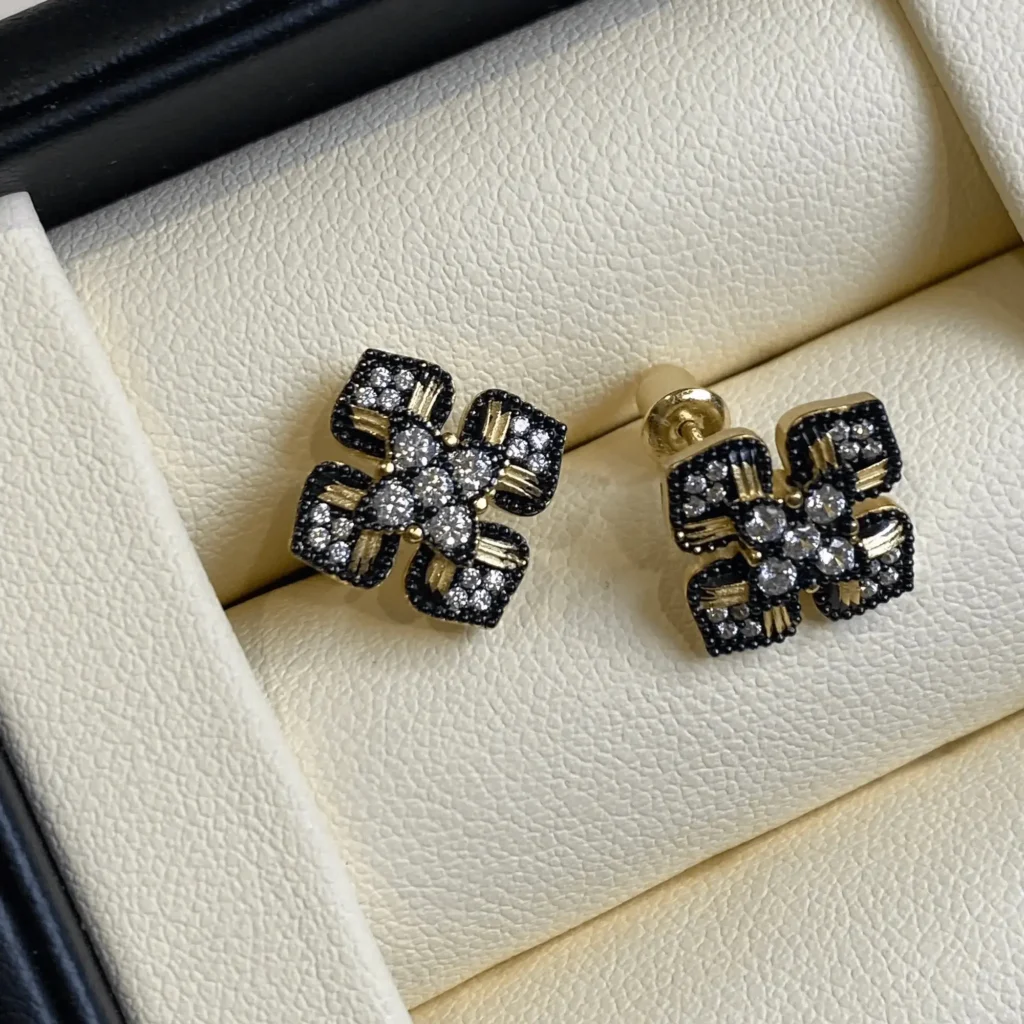
You can see this effect in our Subtle Sparkle: Elegant Lucky Clover 925 Silver Studs. We’ve paired handcrafted vintage silver and blackened beads with zircon accents to capture that sophisticated, “bright” look in a versatile, lucky clover design.
The “Color Over Fire” Rule
It is important to remember that many “Big Three” precious stones—Ruby, Sapphire, and Emerald—often lack significant fire or brilliance. Many have deep body colors or low dispersion values that keep them from “sparkling” in the traditional sense.
But these gems win on color. No one would kick a high-quality Ruby or Emerald out of the “top-tier” category just because it doesn’t flash like a diamond. They are prized for their rich, soul-stirring hues, proving that fire isn’t the only way to measure beauty.
Final Thoughts from Jewea
In the world of gemology, we judge quality based on three pillars: Beauty, Durability, and Rarity.
While fire adds a soul-stirring movement to a gemstone, it is only one part of the beauty equation. It is a “bonus” feature, not a definitive yardstick for quality. After all, as we’ve seen, a lab-engineered stone can sometimes appear far more “perfect” and flashy than a natural treasure.
True luxury lies in understanding what you are wearing. Whether it is the rainbow fire of a zircon or the deep, quiet soul of an emerald, the most beautiful gem is the one that resonates with you. When it comes to navigating the complex world of jewelry, trust the experts—and your own eyes.