Unveiling the Truth Behind Pearl Color Treatment: Are You Buying Dyed Pearls?
As of 2026, Pearl Color Treatment dominates the market. It saturates everything from high-end boutiques to chaotic gemstone livestreams.
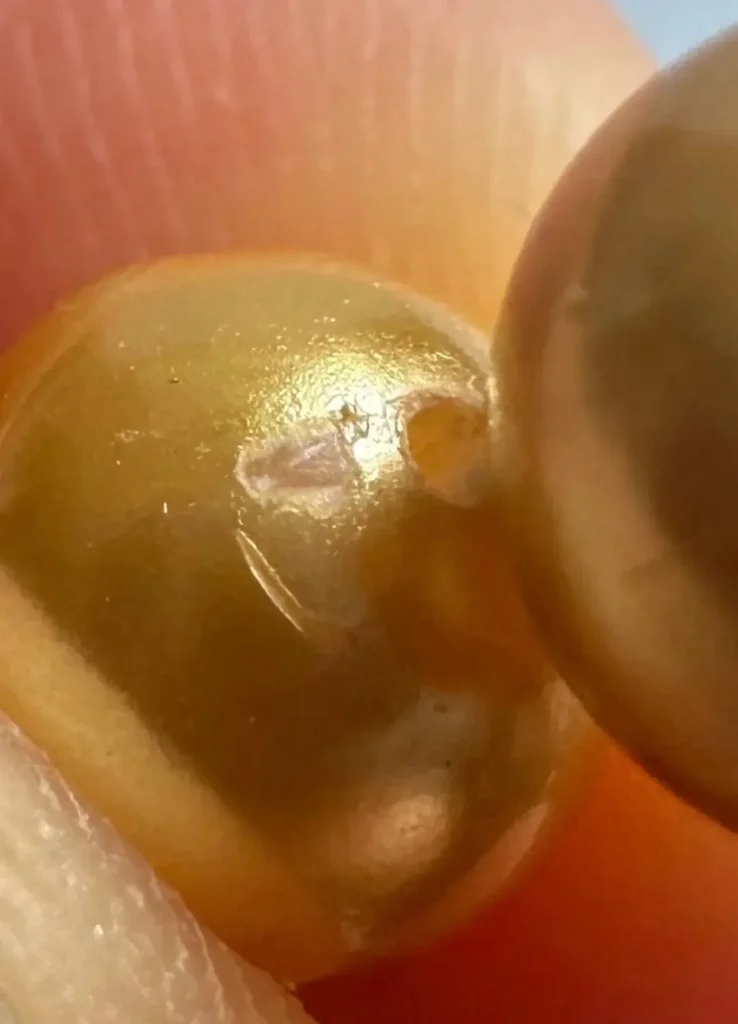
A follower recently messaged me about a $1,000 livestream purchase. The host marketed the necklace as a ‘Natural, Round, Near-Flawless Deep Golden South Sea’ pearl strand. Something felt wrong the moment she unboxed it. She sent me photos for identification, and the images appalled me. This wasn’t subtle enhancement. It was blatant commercial fraud.
The host promised ‘natural saltwater pearls.’ However, the scam went even further; they used dyed plastic beads to mimic high-end saltwater pearls. Thankfully, she followed my advice and secured a full refund.
Ultimately, mastering the basics of Pearl Enhancement and Treatment is a mandatory prerequisite for any serious jewelry lover before hitting the ‘buy’ button. It is the only way to see past the filtered ‘glamour shots’ and distinguish between a true heirloom investment and a temporary, synthetic imitation.
Part 1: Enhancement vs. Treatment in Pearl Color Treatment
Understanding the difference between pearl optimization and pearl treatment is the first step toward becoming a savvy collector. While optimization methods like bleaching and whitening are accepted industry standards that maintain the pearl’s integrity, treatment methods such as dyeing and irradiation fundamentally alter the pearl color origin.
I. Pearl “Optimization”: The Industry-Accepted Standard
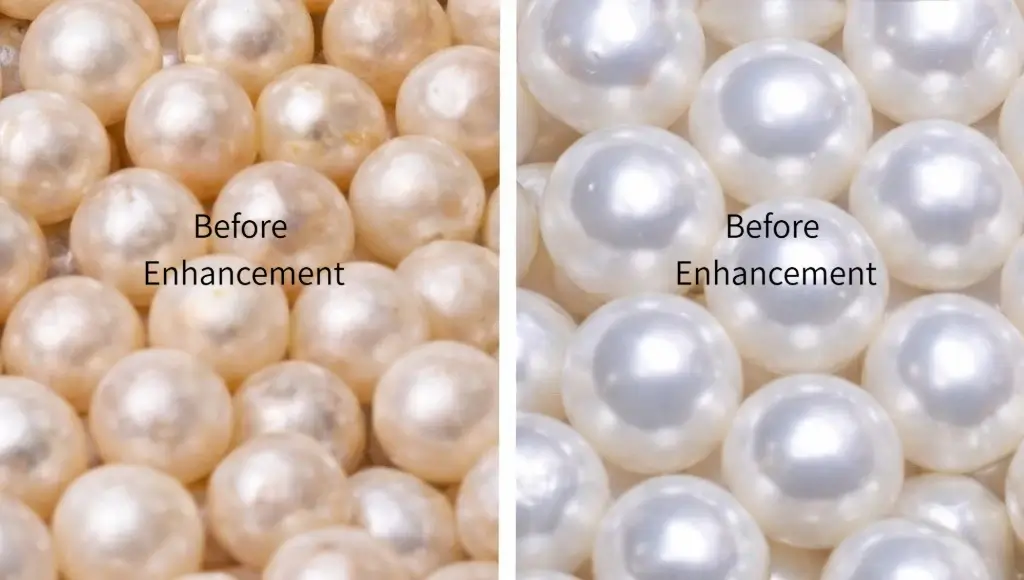
In the jewelry industry, we don’t view every intervention as “fraud.” Instead, we categorize minor adjustments to white pearls as “Optimization.” * Why it’s a Necessity: Truly pristine, untreated pearls are exceptionally rare and carry astronomical price tags. To satisfy the mass market’s demand for flawless aesthetics, jewelers use these light refinements to make premium beauty commercially accessible
- Common Optimization Methods Standard methods include bleaching, pinking, lustering, and polishing.
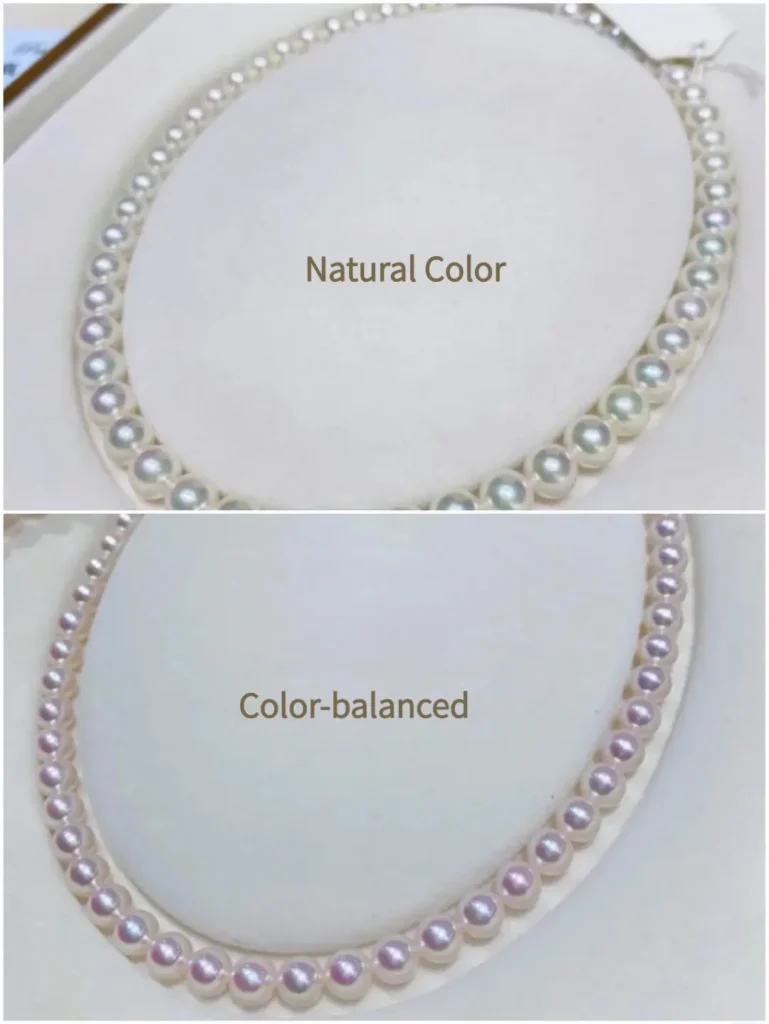
- Market Acceptance For white pearls, bleaching and whitening represent the industry “norm.” Think of this as light makeup on a beautiful face; it simply refines the pearl’s overtone and orient. For example, jewelers use it to emphasize the delicate pink hues of Akoya pearls. These techniques do not alter the pearl’s core body color or structural quality. Because the processes are stable and mature, laboratories often omit these details from official grading reports.
- The Akoya Reality Over 95% of Akoya pearls on the market undergo some form of professional color-balancing or whitening. Most consumers prefer the “lightbulb” luster and cherry-blossom pink overtones that natural, untreated Akoya often lacks. This mature technology actually offers a benefit: it helps protect the nacre, potentially extending the pearl’s longevity.
II. Pearl “Treatment”: The Science of Altering Essence
Unlike the “optimization” used for white pearls, we define interventions on colored pearls as “Treatment.” The industry maintains a strict boundary between these two concepts.
- Core Treatment Methods
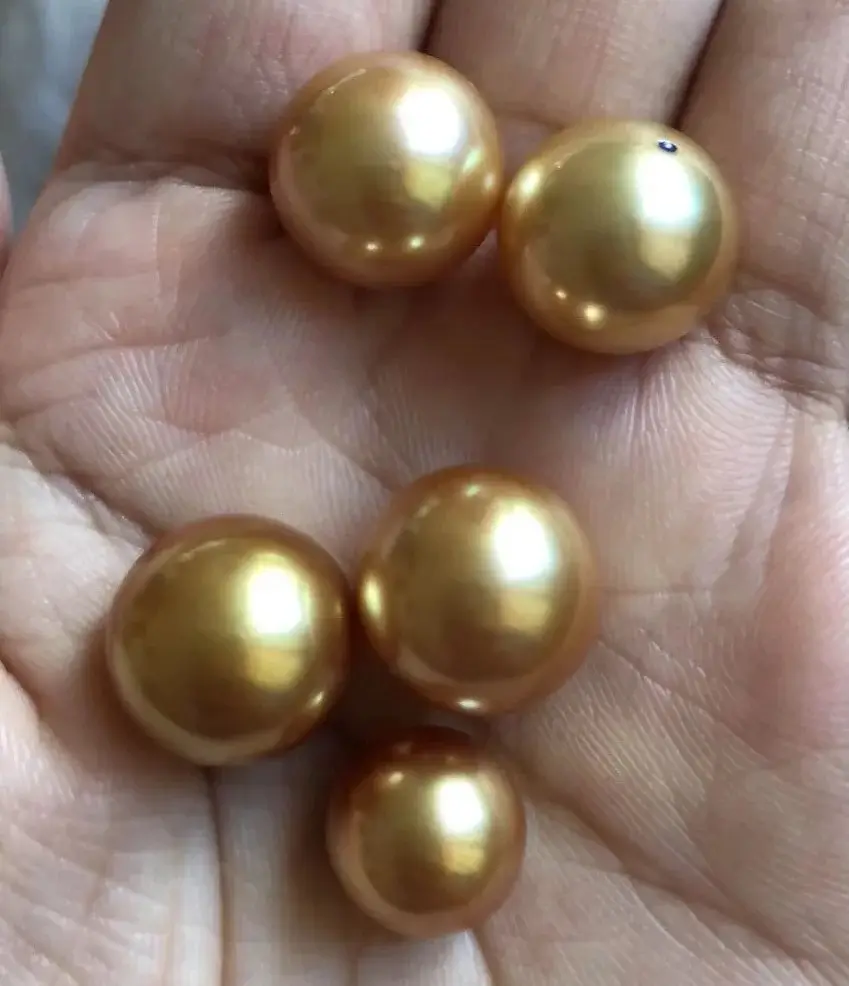
- Dyeing: Jewelers use chemical dyes to change the pearl’s color.
- Irradiation: Technicians use gamma rays to alter the color of internal structures, such as the nacre or the bead nucleus.
- Coating: This process involves applying a thin, colored film onto the pearl’s surface.
- The Distinction: Makeup vs. Surgery Think of bleaching and whitening as “makeup” for a pearl. In contrast, dyeing and irradiation function like “plastic surgery.” Bleaching aims to restore or refine the natural clarity of a white pearl (like whitening). Conversely, the latter methods force a fundamental change in the pearl’s color palette (like tanning).
- Impact on Market Value Treatments like dyeing, irradiation, or coating significantly diminish a pearl’s rarity and investment value. Professional gem labs must explicitly label these treatments on grading reports. If a seller fails to disclose these modifications, the transaction constitutes blatant commercial fraud.
Part 2: Pearl Color Treatment: Dyeing vs. Irradiation
Dyeing introduces external pigments into the nacre, which often fade over time. Irradiation, however, permanently alters the pearl’s crystal lattice, creating highly stable colors. While dyeing compromises the pearl’s surface, irradiation targets the core structure. Both techniques mask a pearl’s natural origin, making technical knowledge essential for identifying authentic gems.
I. Pearl Dyeing: The Science of Color Alteration
We classify this as true “high-tech intervention.” Dyeing forces chemical agents deep into the nacre, permanently masking the pearl’s original body color. Unlike irradiation—which targets the bead nucleus—dyeing compromises the nacre itself.
- Core Dyeing Techniques
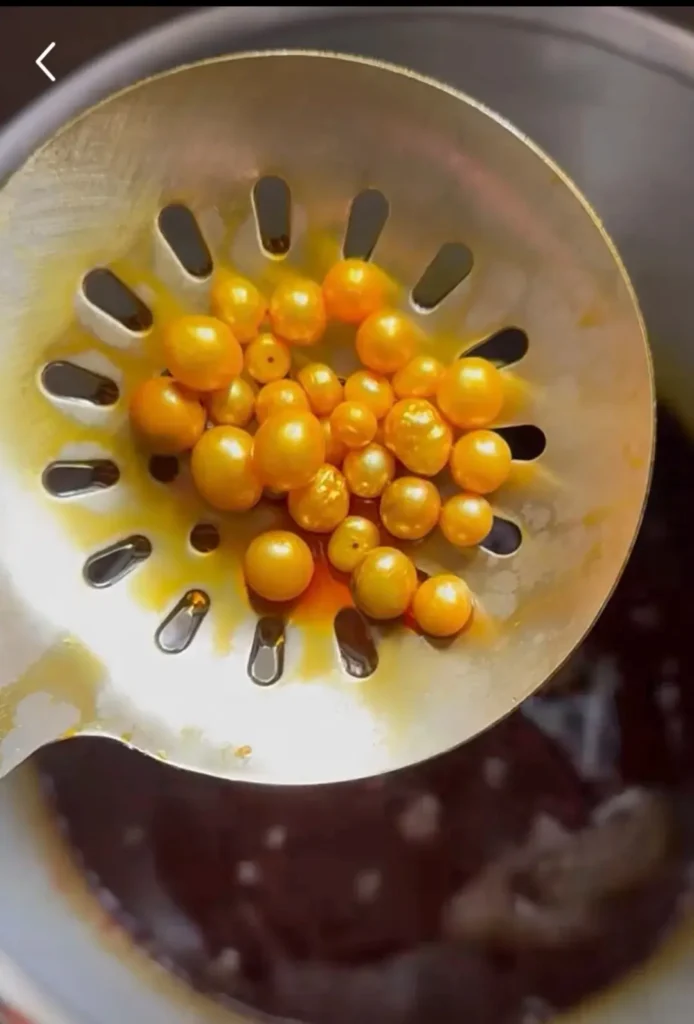
- Chemical Immersion: Jewelers soak pearls in chemical dye baths. The dye then adheres to the surface or infiltrates the inner nacre layers.
- Nucleus Dyeing: Technicians use pre-dyed bead nuclei during the grafting stage. Because nacre is translucent, the nucleus color radiates outward, giving the pearl its desired hue.
- Common Chemical Formulas and Effects
- Black: Jewelers soak pearls in a silver nitrate ammonia solution, then expose them to light or hydrogen sulfide gas.
- Golden to Brown: Technicians treat pearls with a strong, oxidizing potassium permanganate solution.
- Pink: Experts use a specialized mixture of alkali and cobalt salts.
- Rose-Red: Processors apply a diluted, oil-based red dye mixed with alcohol.
- Color Stability Pearls treated with organic extracts or aniline dyes often lack long-term stability. Because these pigments are not permanent, the color frequently fades over time.
II. Pearl Irradiation Treatment
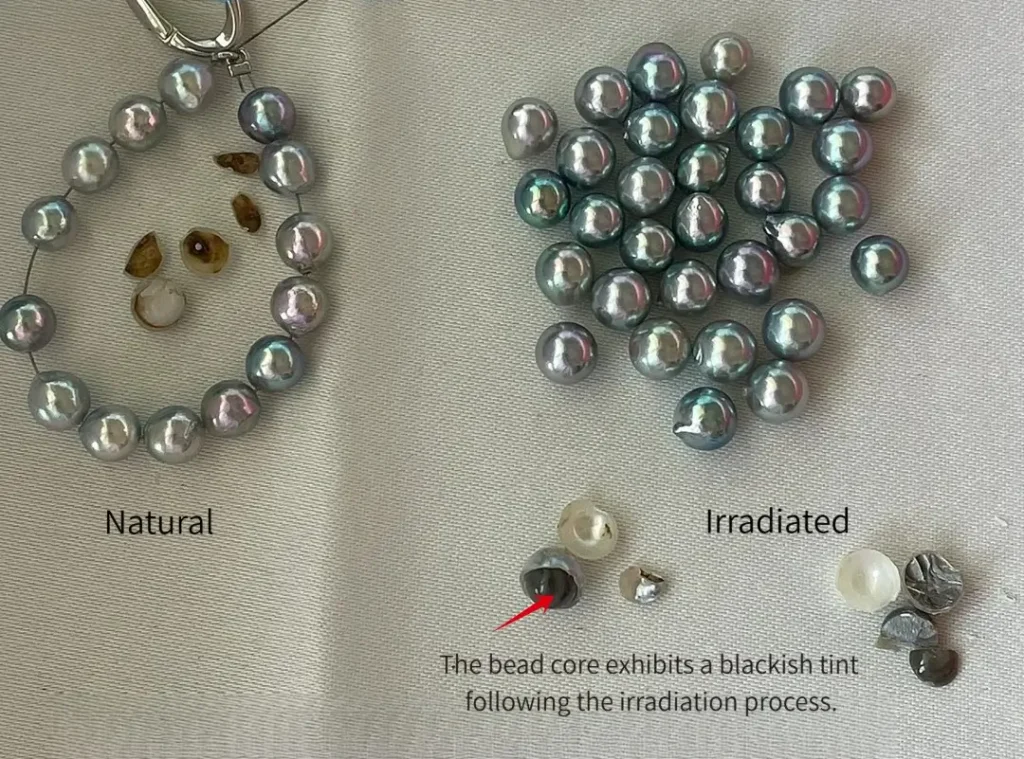
Irradiation represents a sophisticated technique. It alters a pearl’s physical structure through exposure to high-energy radiation, inducing a permanent color change.
How It Works:
Technicians expose pearls to gamma rays, high-energy electron beams, or neutron reactions. As these high-energy particles penetrate the aragonite crystals, they create lattice defects. These defects trigger new “color centers,” which fundamentally transform the pearl’s visual appearance. Unlike dyeing, this pearl color treatment is highly stable but still masks the pearl’s natural origin.
Color Characteristics and Stability:
The final hue depends on the pearl’s original nacre and nucleus color. Common results include gray, blue-gray, charcoal, and black tones. Unlike some dyeing processes, irradiation yields highly stable colors. Furthermore, this method preserves the integrity of the nacre itself.
Common Market Targets:
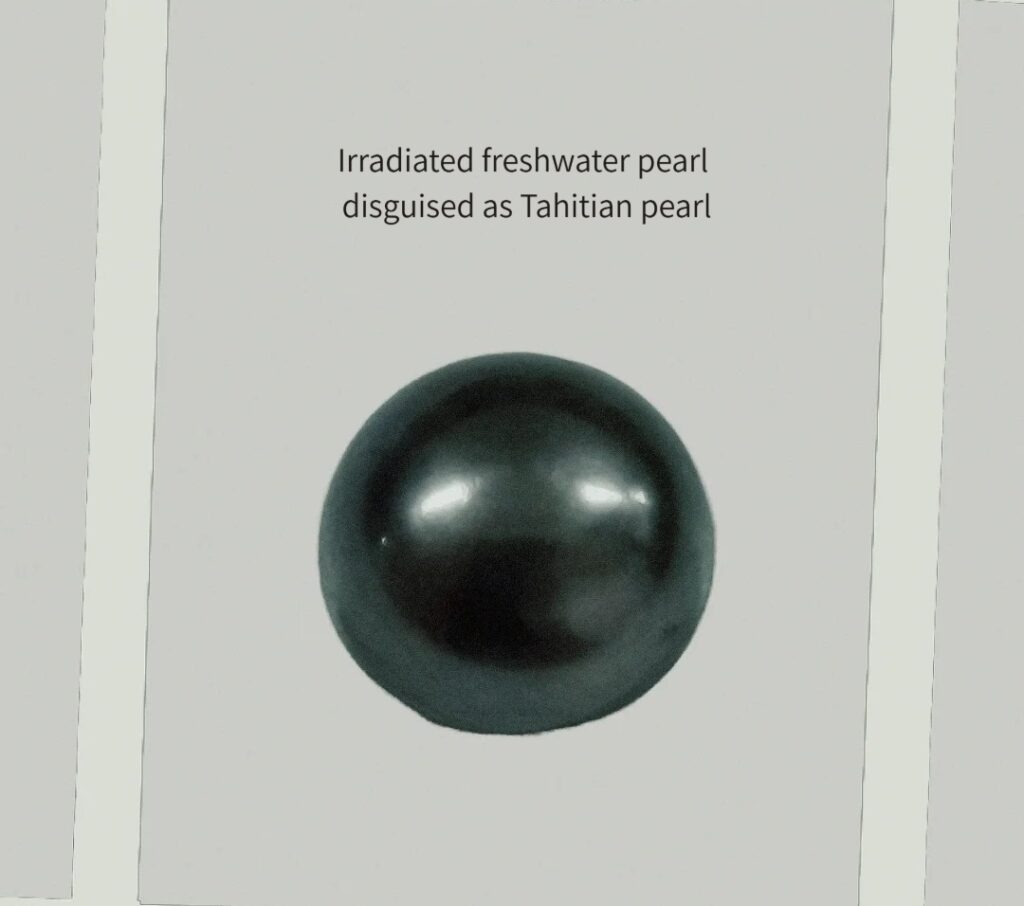
Sellers frequently utilize this technique to transform freshwater pearls into convincing imitations of high-value Tahitian Black Pearls or Akoya “Madama” pearls. Additionally, some traders apply irradiation to natural saltwater pearls to boost their aesthetic appeal and color uniformity.
Part 3: Identifying Treated Pearls: Visual Indicators and Market Risks
While physical cues like pigment buildup or unnatural fluorescence help you spot potential red flags, they are not foolproof. Sellers frequently target high-value gems like South Sea Golden and Tahitian pearls with increasingly sophisticated treatments. Use these visual checks as a first line of defense, but always demand official laboratory certification. Remember: natural beauty has a depth and complexity that artificial processes cannot replicate.
I. How to Spot Dyed Pearls: Visual Indicators
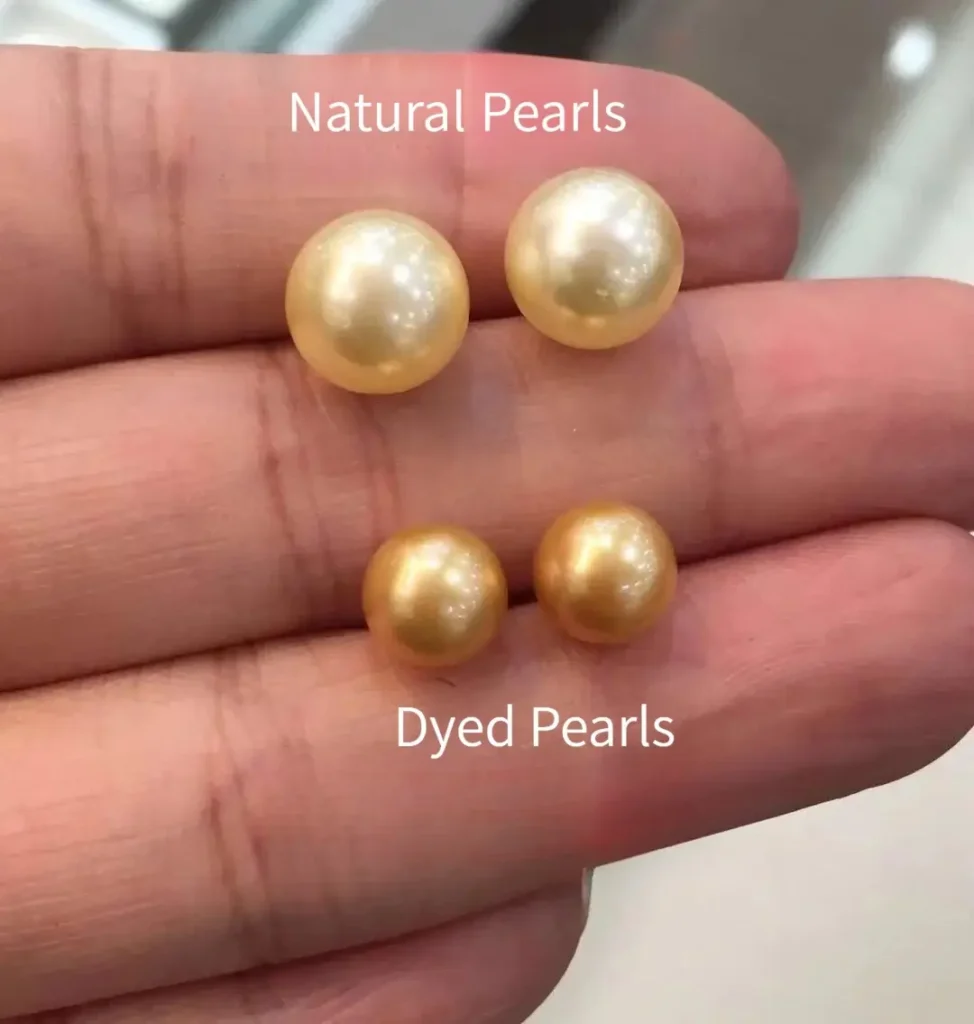
While professional laboratory testing remains the gold standard, experienced collectors often rely on physical indicators for preliminary assessments. To master these visual nuances, we recommend consulting our [Ultimate Pearl Color Guide: Varieties, Overtones, and How to Spot Dyed Pearls].
However, these techniques require a highly trained eye; even experts can easily be misled by subtle deceptions if they aren’t careful.
- Color Appearance: Dyed pearls often display dull, lifeless hues. They lack the vibrant, natural transition of color found in untreated specimens.
- Overtone and Orient: Some dyed pearls completely lose their orient. Even when an overtone exists, it often appears superficial rather than glowing from within the nacre.
- Pigment Concentration: Macroscopic: Low-quality dyed pearls frequently show obvious dye residue around the drill holes or on the stringing cord.
- Microscopic: Under magnification, look for uneven color patches. Pigments tend to settle and concentrate within surface cracks, growth lines, or natural blemishes. This is a common giveaway for improper pearl color treatment.
- Color Authenticity: If a pearl displays a hyper-saturated or “neon” color that falls outside the species’ known natural range, it carries a high probability of artificial dyeing.
II. How to Spot Irradiated Pearls: Visual Indicators
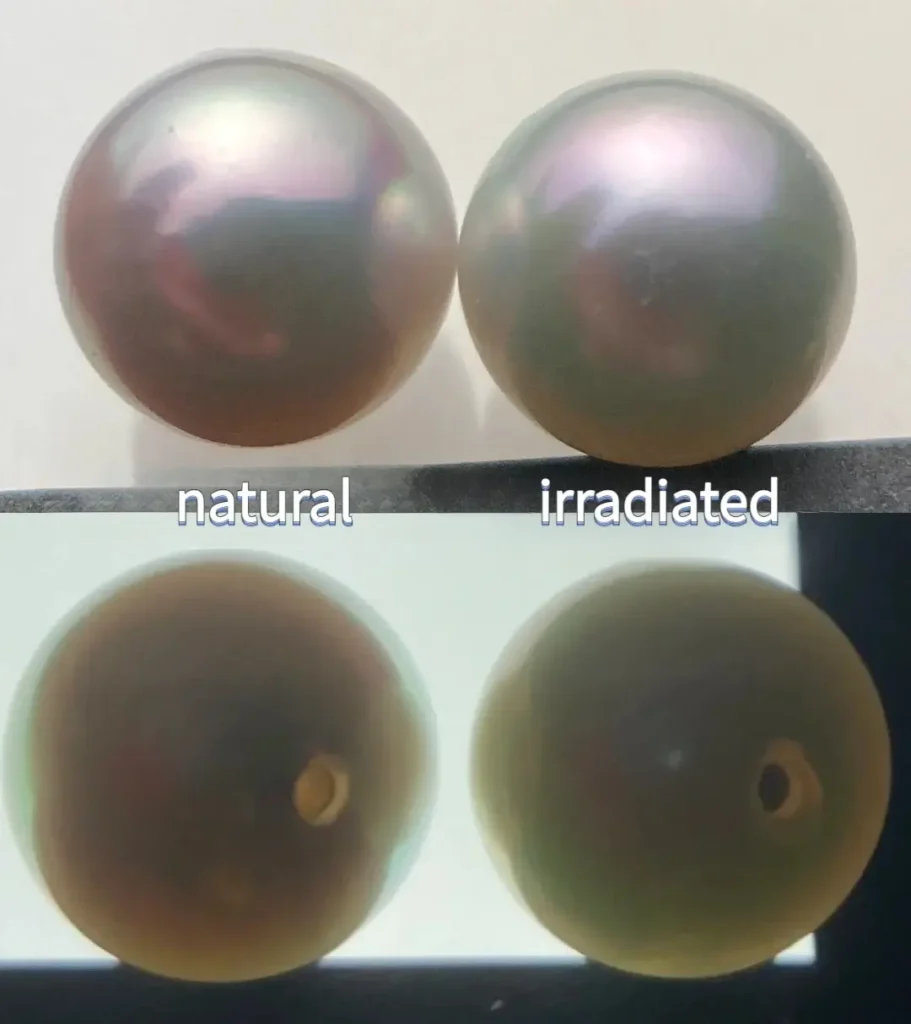
Irradiated pearls possess unique physical characteristics that often distinguish them from natural specimens. However, these techniques require a highly trained eye; even seasoned experts can easily be misled by subtle deceptions if they aren’t careful.
- Metallic Luster and Overtones: These pearls often exhibit intense metallic lusters and deep overtones. However, the color distribution remains unnaturally uniform, lacking the layered depth found in natural cultured pearls.
- Nucleus Characteristics: In irradiated beaded pearls, the nucleus often appears black. This occurs because radiation penetrates the nacre and reacts directly with the bead core.
- Fluorescence: Under long-wave UV light, many irradiated pearls show a weak-to-moderate yellow-green or blue-white fluorescence. Some show complete inertness (no reaction).
- Signs of Over-processing: Over-irradiated pearls may take on an opaque, porcelain-white appearance. Furthermore, you can occasionally observe a cracked nucleus or compromised internal structure through the translucent nacre.
III. High-Risk Pearl Varieties: Market Warning List
When purchasing pearls, understanding the origin is only the first step—our guide, [How to Choose a Top-Quality Pearl: Know Its Origin First], provides the essential foundation. Beyond the origin, you must be aware that certain pearl varieties are frequently targeted for artificial treatments, such as dyeing or irradiation. Please exercise extra caution when purchasing the following:
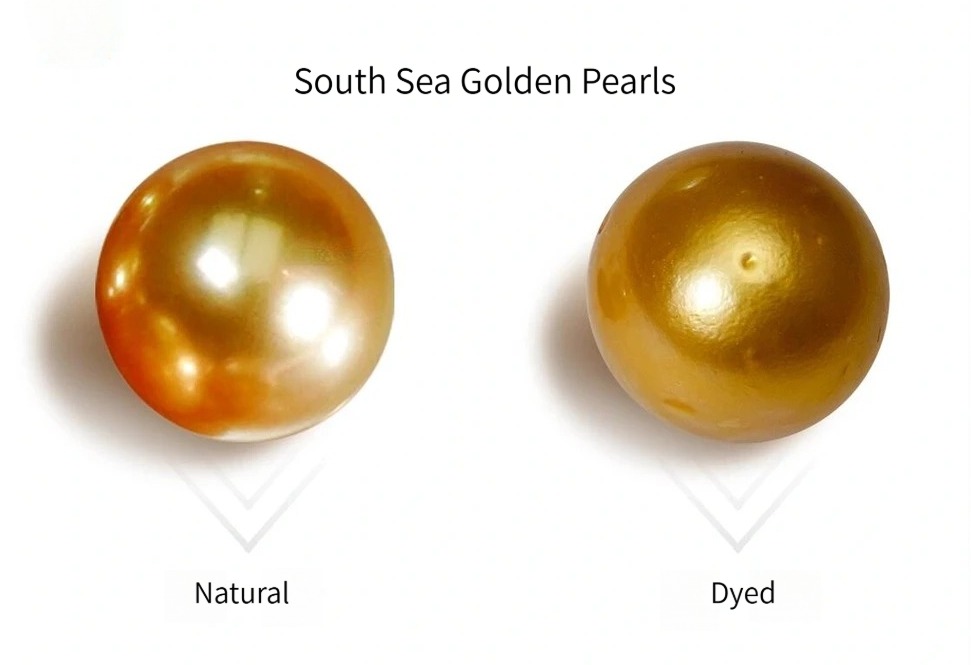
- South Sea Golden Pearls: Commonly targeted for chemical dyeing. As shown above, the visual difference is stark. While the natural pearl exhibits a rich, multi-layered golden hue, the dyed imitation is often overly uniform and lacks the depth of real nacre.
- Tahitian Black Pearls: Frequently subjected to both dyeing and irradiation.
- Akoya “Madama” / Gray Pearls: Sellers often irradiate freshwater or lower-quality saltwater pearls to mimic these high-value tones.
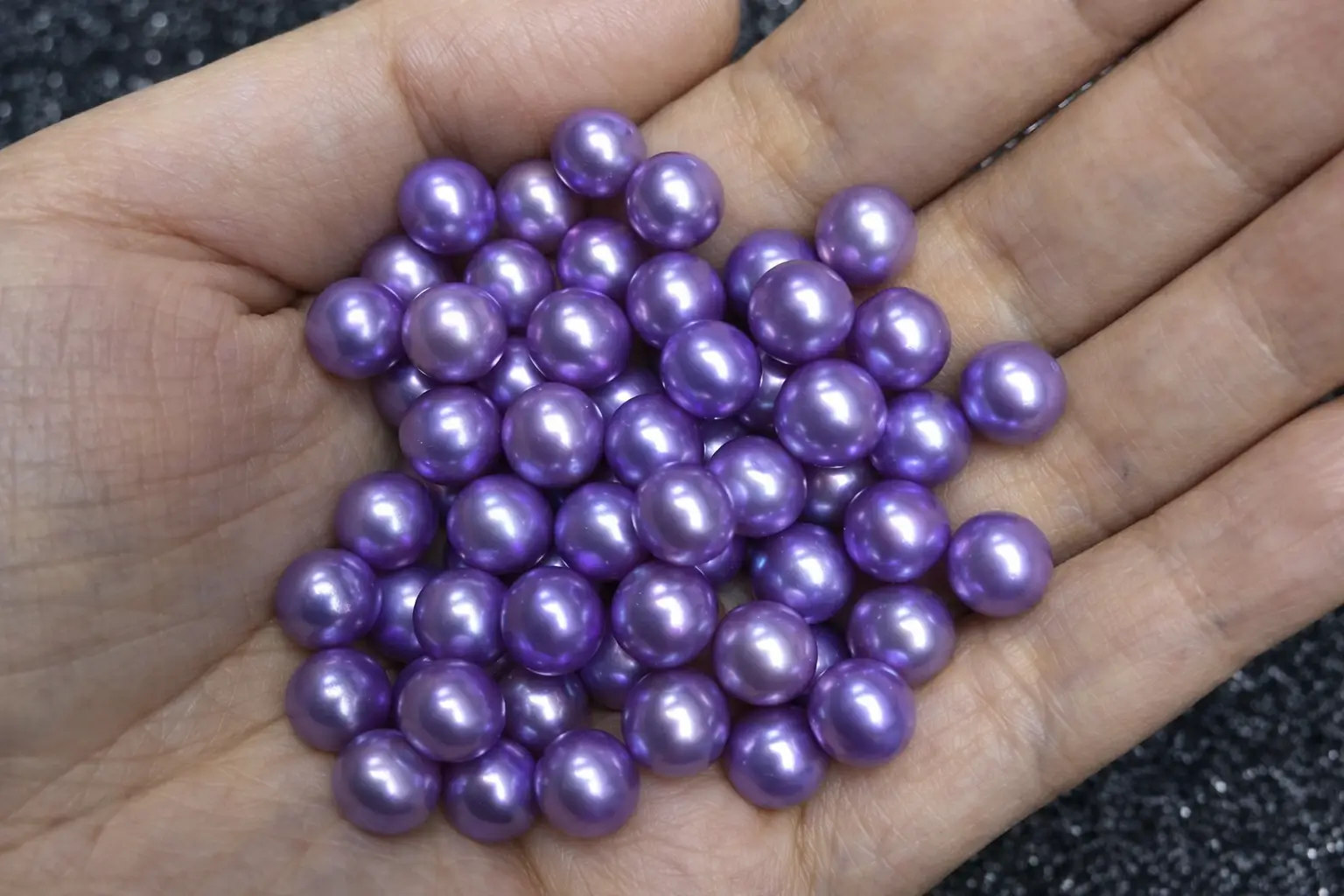
- Edison “Purple” Pearls: High-saturation purple varieties often involve artificial dyeing processes.
Jewea Guide: Identifying Treated Pearls – Why Science Matters
In the fast-evolving world of pearl enhancement, even seasoned collectors struggle to navigate the risks solely by eye. As treatments become increasingly sophisticated, relying on intuition alone is a gamble. True security lies in trusting the science. To protect your investment, you must balance visual assessment with a disciplined, scientific approach.
The Limitations of Visual Inspection
Visual observation serves only as a preliminary tool, not a definitive one. While seasoned gemologists can identify warning signs—such as color concentrations, uneven blotchiness, or a dull, lifeless luster—these indicators remain subjective.
Consumer Caution: Do not rely on “flashlight tests” or other DIY methods circulating online. These tricks lack scientific rigor and frequently lead to incorrect conclusions.
The Scientific Standard for Identification
Professional laboratory testing provides the only 100% accurate method for identifying color-treated pearls. Accredited gemological centers (such as NGTC or GIA) utilize advanced equipment, including spectral analysis, to detect artificial color origins.
Expert Buying Advice:
At Jewea, we believe that transparency is the most valuable gemstone of all. We understand that your collection represents more than just financial value—it reflects your personal aesthetic and legacy. That is why we refuse to compromise on quality.
- Prioritize Reputable Channels: Beginners should purchase exclusively from established, trustworthy jewelers.
- Insist on Certification: Never complete a purchase without an authoritative grading report. Always confirm that the document explicitly specifies the “Color Origin.”