Does Purple Hetian Jade Truly Exist? Unveiling the Truth Behind “Taro Purple” Nephrite
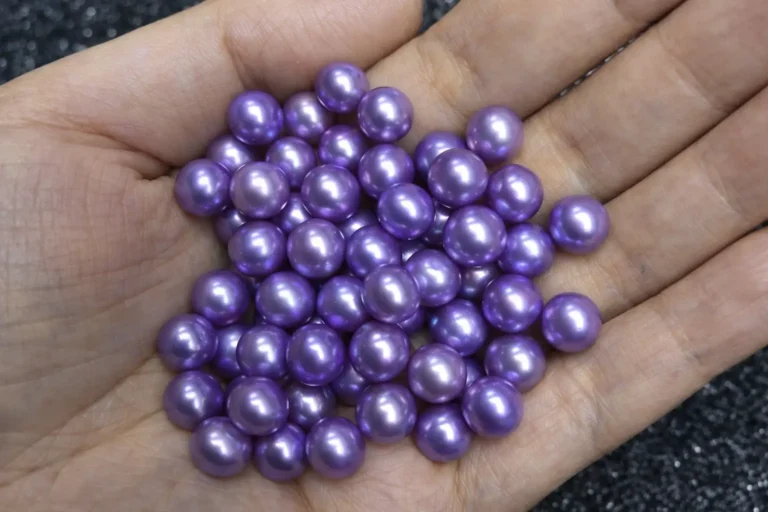
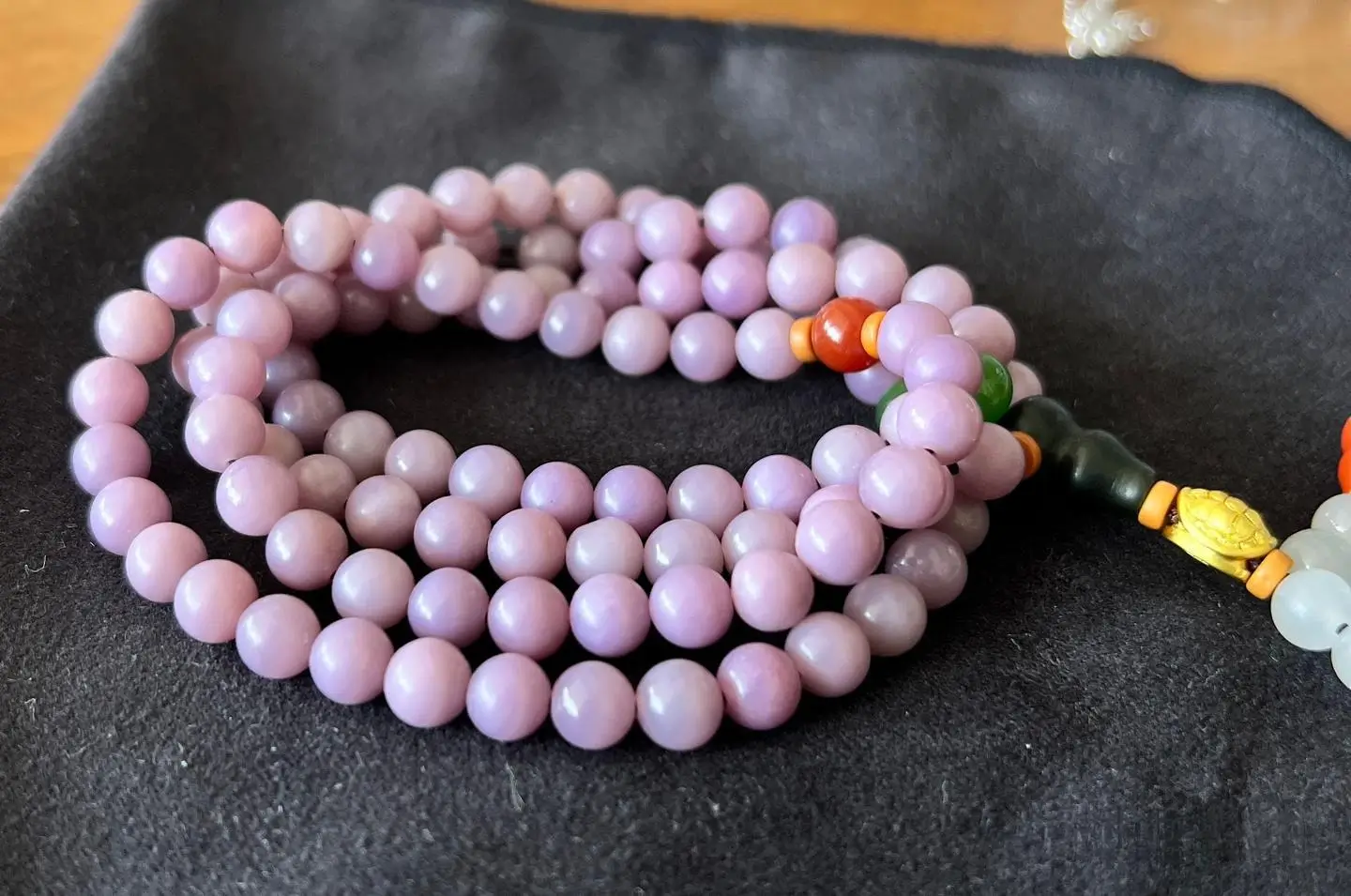
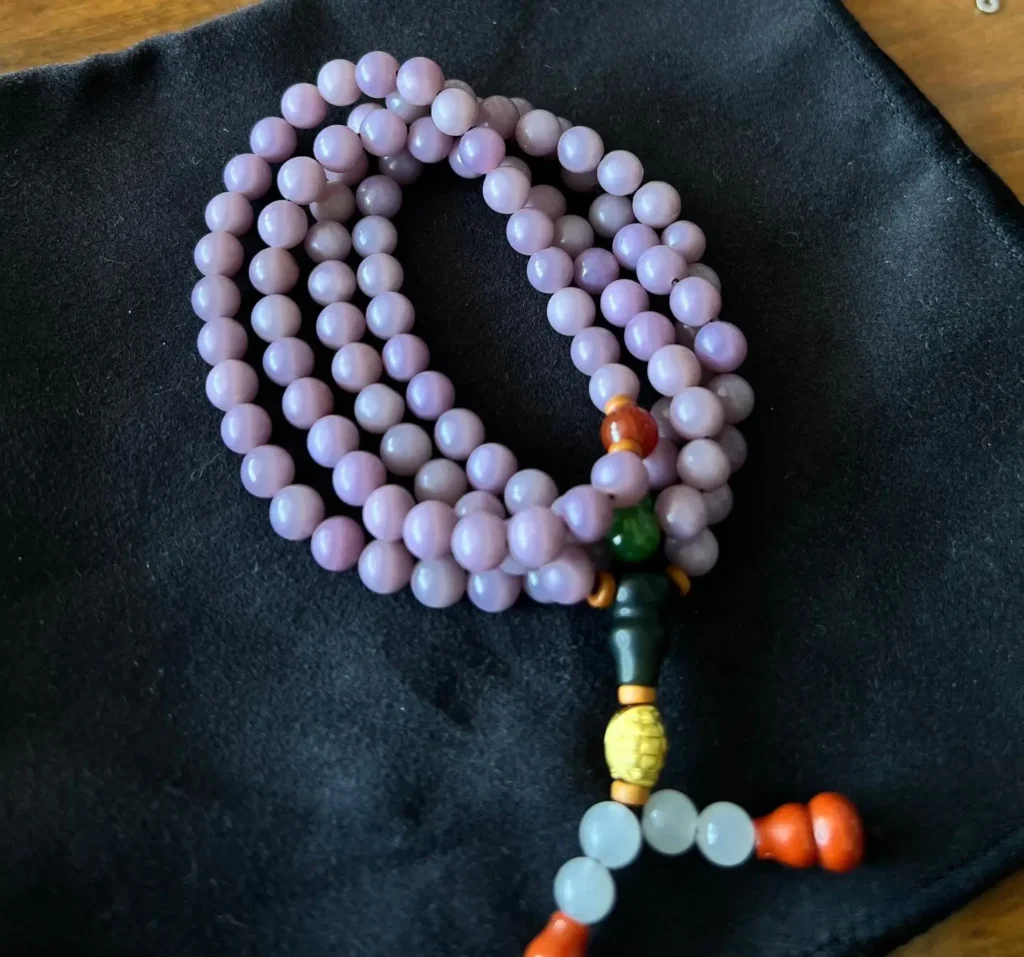
Not long ago, a client walked into our studio with a strand of beads that immediately caught my eye—a striking, creamy “taro purple” hue. The question followed: “Where does this purple Hetian jade come from?”
Purple gemstones have taken the market by storm this year. This “royal color” is everywhere, from regal Amethyst and Sugilite to rare purple diamonds. But for Hetian jade—traditionally prized for its whites and greens—such vivid purple raises eyebrows. Is this a groundbreaking geological discovery? Or is it a triumph of modern “lab-enhanced” technology?
Today, we’re putting this “Taro Purple” mystery under the microscope to uncover the truth.
Does Purple Hetian Jade Actually Exist?
Authentic purple tones do exist within the Hetian jade family, specifically in the form of Smoky Purple Nephrite. As we’ve explored in our previous feature,Smoky Purple Nephrite: A Rising Star Among Niche Hetian Jade Varieties, this material has carved out its own space in the market. Although it isn’t considered a “mainstream” variety, it has become a favorite among younger collectors looking for something unique and trendy.
Geologically speaking, these stones belong to the Qingyu (Green/Cyan Jade) category, more accurately termed Smoky Qing. Depending on the dominant undertone, the trade further divides them into Smoky Gray and Smoky Purple.
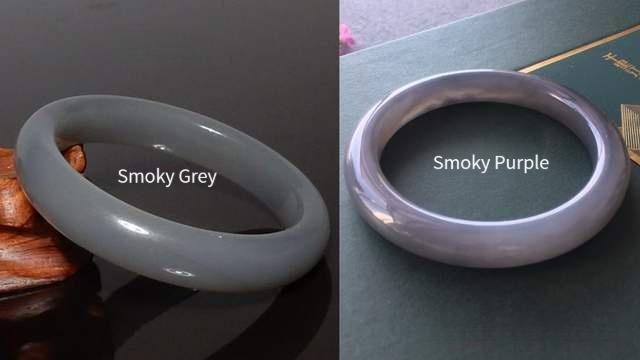
The “Gray” Area in the Market
Here is where the confusion starts. Because high-saturation purple is rare and carries a premium, many vendors will “call a mule a horse,” passing off common gray stones as “Smoky Purple.” This deceptive labeling is exactly why many buyers walk away disappointed, asking: “Is there actually any purple in this jade, or am I just looking at gray rocks?”
To appreciate a genuine Smoky Purple specimen, you need more than just daylight. While the purple hue should be visible to the naked eye, a true specimen reveals its soul under a flashlight, emitting a stunning, unmistakable purple halo.
While Smoky Purple nephrite varies in intensity, it always retains a signature dusky, “smoky” character. Whether scouring the bustling jade markets or diving deep into mineralogical literature, I have never encountered a natural nephrite that exhibits the opaque, milky “Taro Purple” seen in the beads brought to me by that client. This leads us to a critical question: If it isn’t Smoky Purple, what exactly is it?
Amphibole Jade: Keeping it in the Family?
If it isn’t Smoky Purple nephrite, could it be a “close relative”?
In our previous deep dive, Unveiling the Truth About “Pink Hetian Jade”: Is It Real Nephrite or Anthophyllite Jade?, we broke down the chemical relationship between Tremolite (true Hetian jade) and Anthophyllite. While classic Hetian jade like “Duck Egg Blue” is primarily tremolite, many trendy varieties like “Buffy/Oleaster Blue” (Shazaoqing) or “Peach Blossom Jade” are actually Anthophyllite-rich stones.
Distinguishing between them can be tricky, as we explained in Nephrite Jade Varieties: Distinguishing Duck Egg Green from Sha-zao-qing. In the trade, if a vendor tried to pass off Agate as Hetian jade, they’d be branded a fraud and redlisted by the community. But when it comes to Anthophyllite, the market is much more forgiving. Most collectors view these stones as part of the same “Amphibole group”—close relatives with a shared mineral heritage.
A Quick Science Lesson
Amphiboles are common silicate minerals that branch into varieties like Tremolite, Anthophyllite, and Glaucophane based on their chemical makeup. While “Oleaster Blue” (Shazaoqing) is already well-known, Blue Amphibole Jade—or simply “Blue Jade”—remains a niche rarity, prized for its deep blue-purple hue.
A notable subset is Lithium-bearing Glaucophane. First discovered in 1910 on Sweden’s Utö Island, it was once considered extremely rare until more deposits were identified globally in the 1950s. By 1977, it was also found in the Altay Mountains of Xinjiang. Under a flashlight, this stone reveals a brilliant indigo glow, earning it the local nickname “Sapphire”—a nod to its color, rather than its mineral structure.
According to national standards, “Hetian Jade” refers specifically to stones primarily composed of Tremolite. Once the mineral balance shifts toward other family members, labs reclassify the stone simply as Amphibole Jade.
You likely encounter Amphibole jade more often than you realize—specifically in Sugilite. While the mineral sugilite provides the iconic purple, the swirling blue veins often consist of Richterite or Arfvedsonite (both alkaline amphiboles). In fact, a lab test of a blue-dominant Sugilite specimen will almost certainly return a result of “Amphibole Jade.”
“Taro Purple” Hetian Jade: A New Discovery or a Tech-Driven Illusion?
Now that we’ve covered natural purple varieties and their amphibole cousins, let’s return to that “Taro Purple” strand from the beginning. Is it a groundbreaking new find or the product of modern lab trickery? In gemology, the golden rule is never to judge a stone solely by a photograph. When I encounter an anomaly, I follow a strict protocol: start with a hands-on inspection, then move to laboratory instruments.
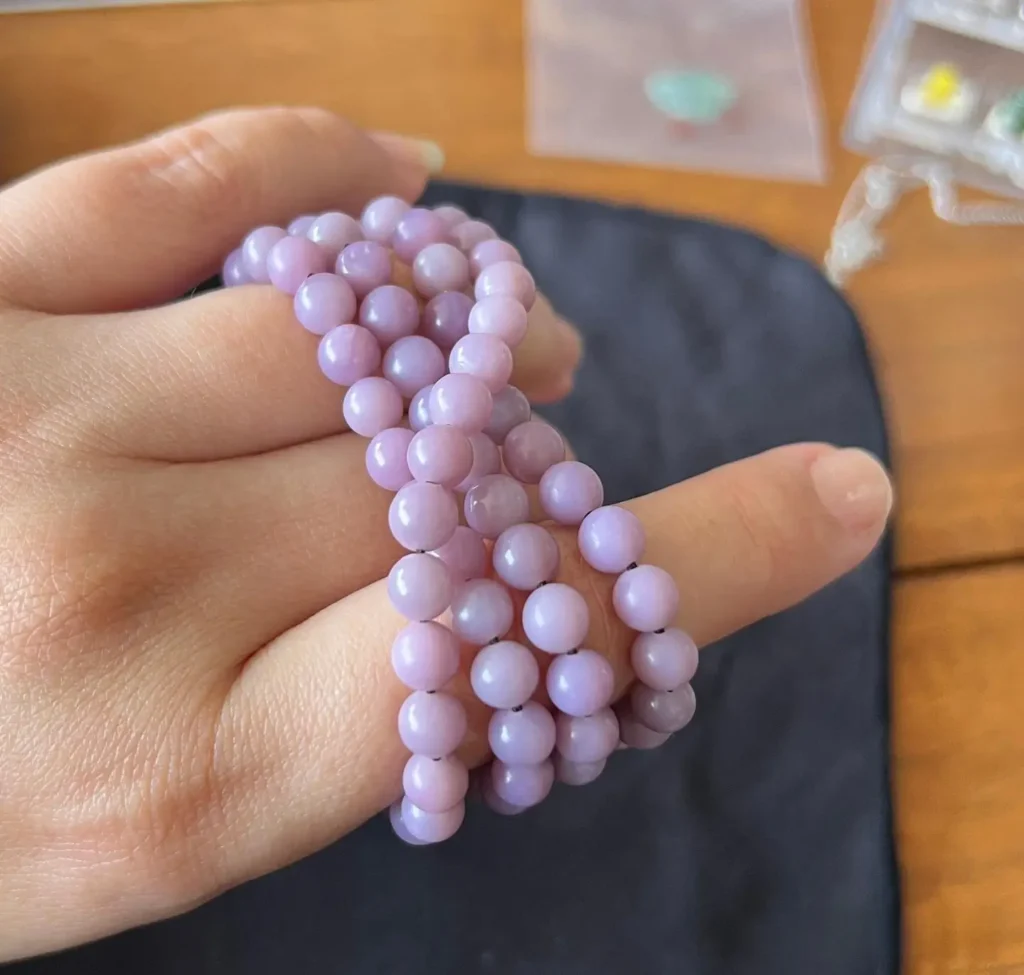
Hands-On Inspection
If I hadn’t handled the piece myself, I would have guessed it was Phosphosiderite (often mislabeled as “purple mica”) or Lepidolite based on the color in the photos.
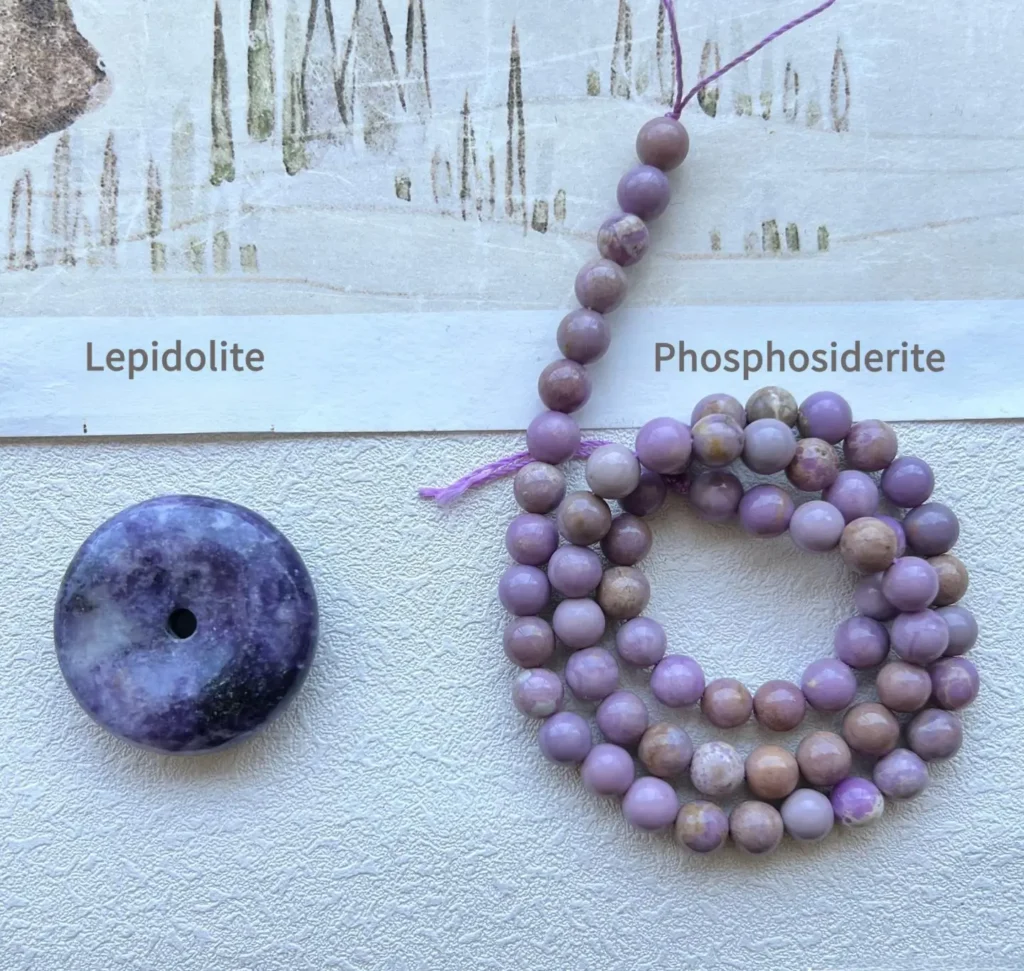
The former, despite its common name, has no mineralogical link to mica; it is actually a purple phosphate mineral. The latter is a mica, though the market prefers the more romantic alias “Lilac Jade” for promotion. I’ve detailed both in our comprehensive guide to purple gemstones, so I won’t repeat those details here.
However, once I felt the heft of the beads and examined their structure, I ruled out both possibilities. Despite a heavy, waxy surface and a distinct “stony” feel, the material possessed the unmistakable texture of Nephrite. Under a torch, the internal structure became clear, and I could see natural white “cotton” inclusions and water lines with the naked eye. Even the accompanying certificate confirmed it: “Hetian Jade.”
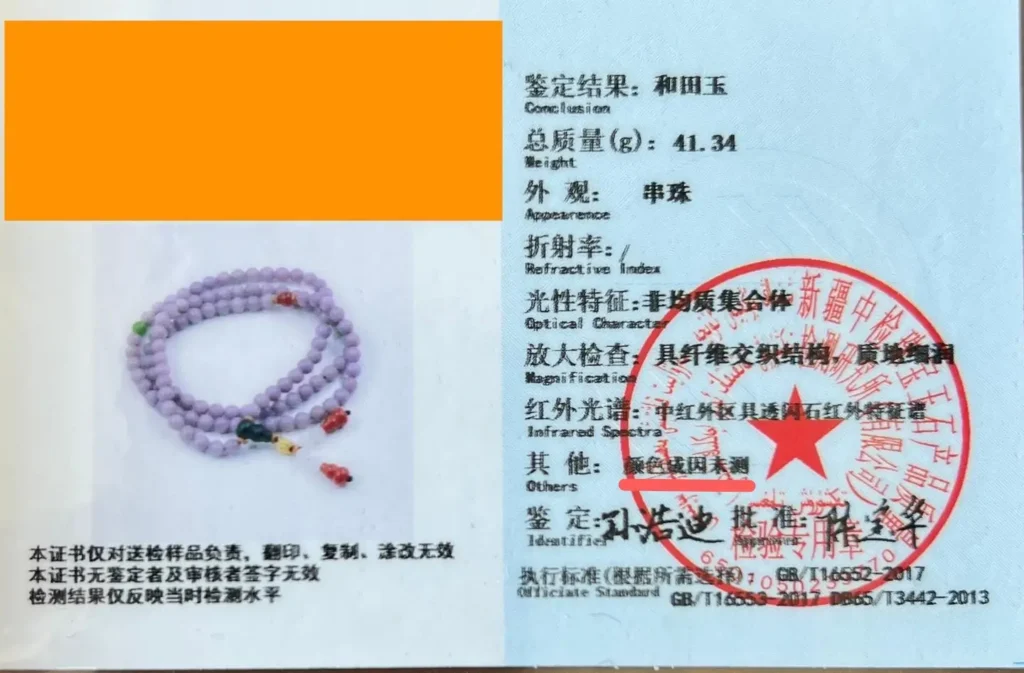
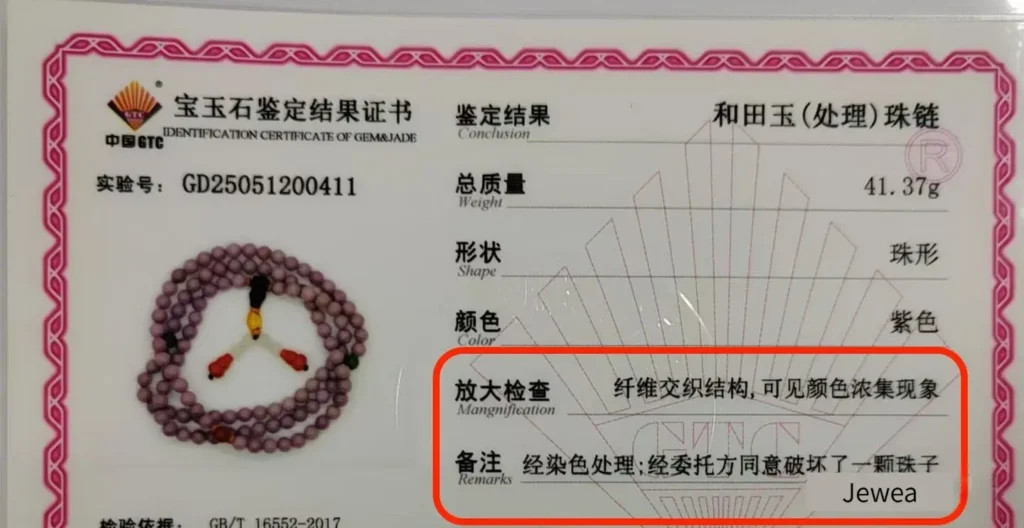
So, was it a rare new variety? The answer lay in the certificate’s “Remarks” section: “Color origin undetermined.” This phrase often serves as a euphemism for potential treatment. As I rotated the strand, I finally found the smoking gun on one of the beads: clear dye concentrations settled deep within the surface fractures.
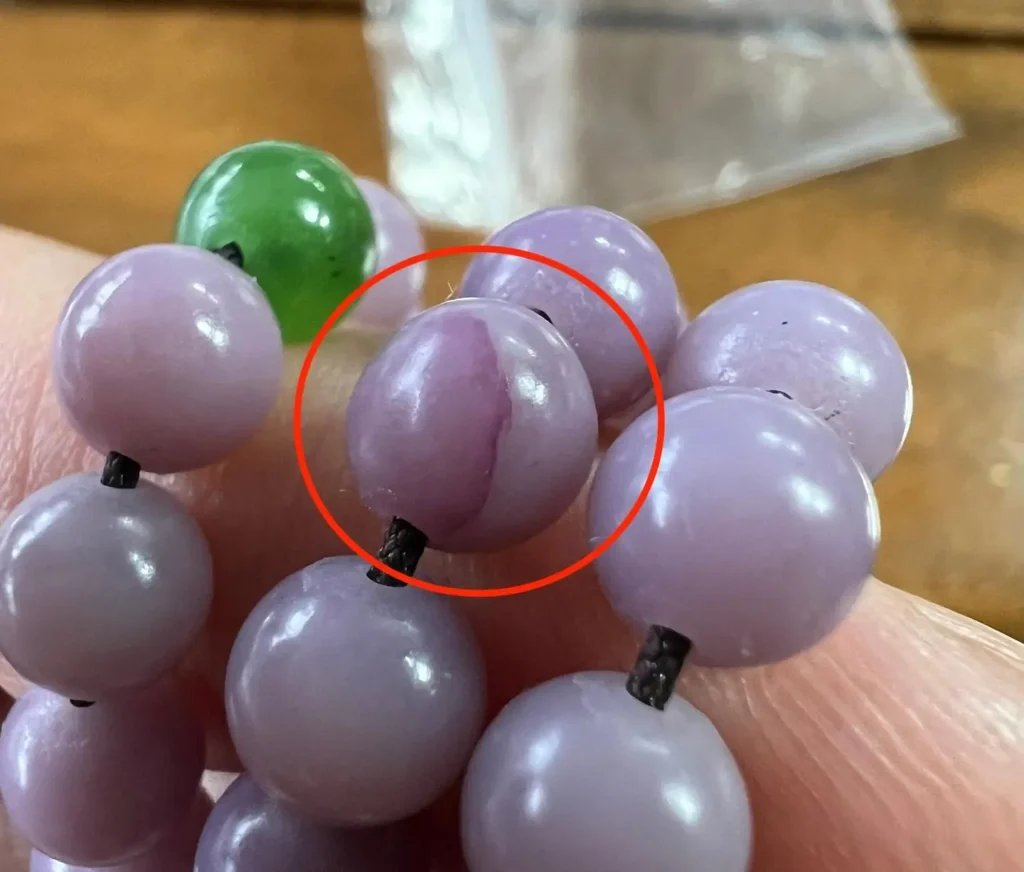
Laboratory Analysis
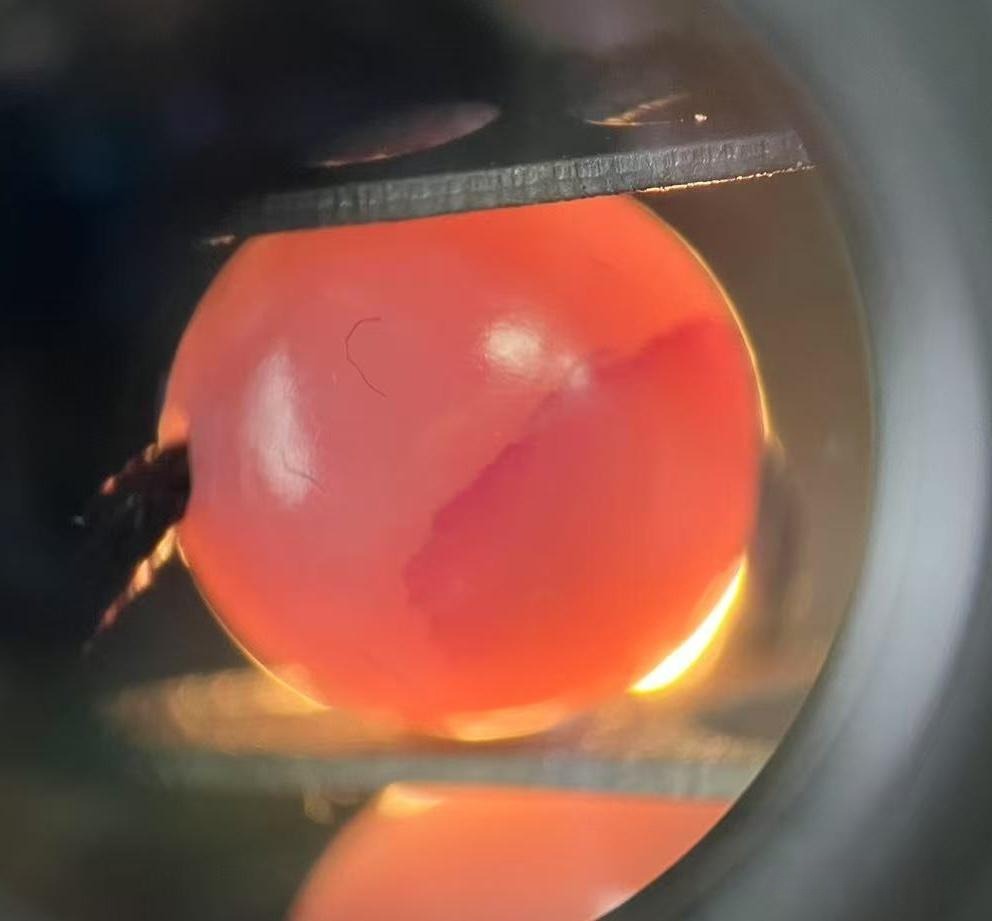
Under the microscope, the dye concentrations became even more obvious. However, not every bead showed these surface deposits. Since our in-house equipment had reached its limit, we sent the sample to the Guangdong Gemstones & Precious Metals Testing Center (GTC) for advanced analysis.
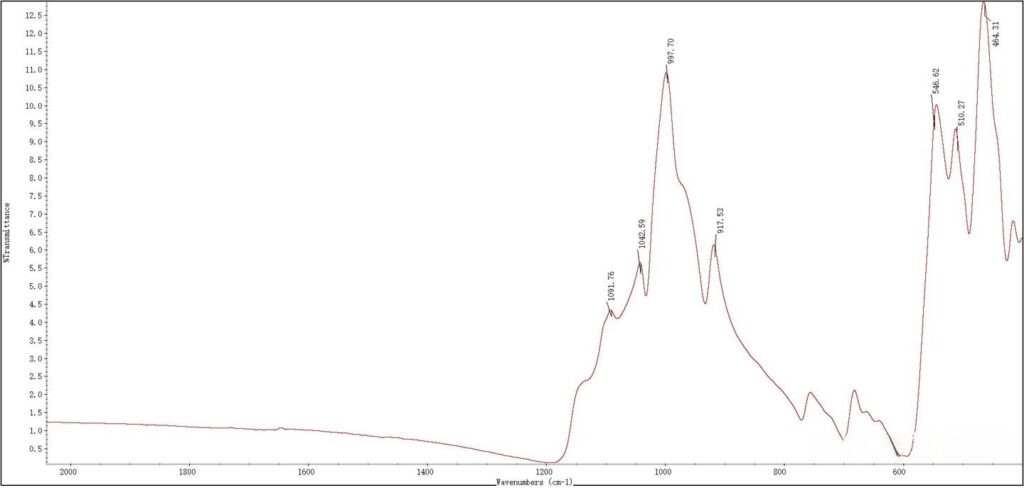
The results from Infrared (FTIR) and X-ray Fluorescence (XRF) spectroscopy were telling. They confirmed the material was indeed Tremolite-based Hetian jade, effectively ruling out purple Anthophyllite.
The most revealing clue was the chemistry. While some fractures and “cotton” inclusions appeared clean, the overall sample showed high levels of Cobalt. This element does not occur naturally in Hetian jade.
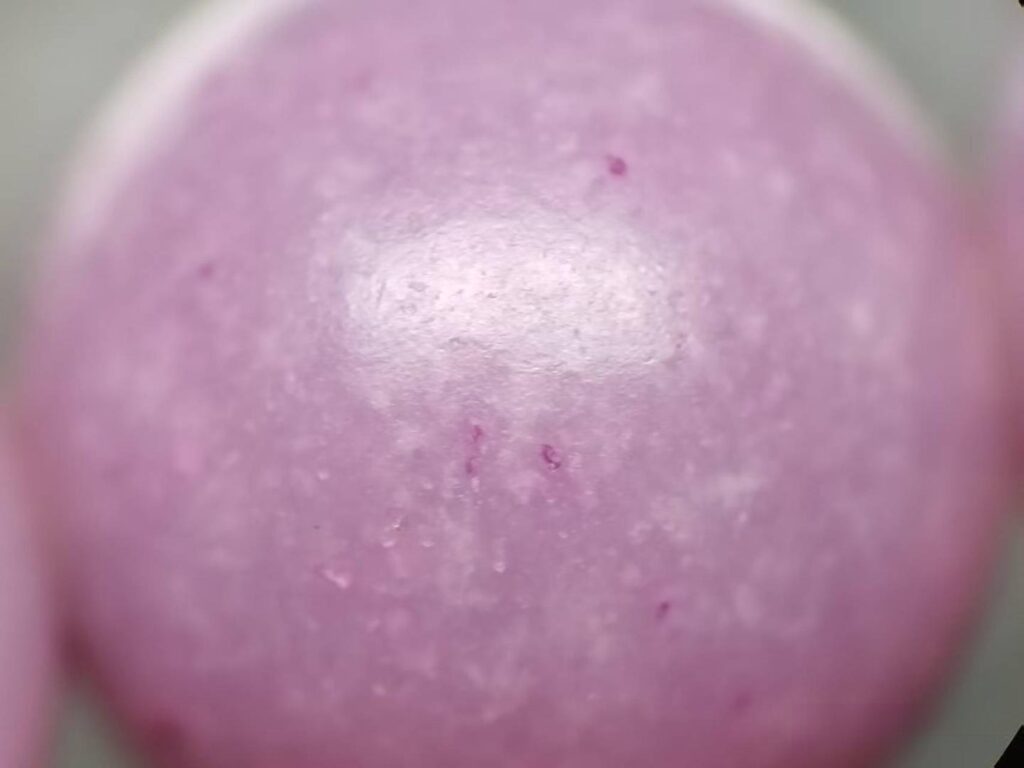
To be certain, we performed a destructive test on a single bead. We found only colorless wax inside the drill hole, ruling out the use of tinted wax. However, the purple color remained uniform throughout the bead’s interior. This confirmed that the dye had penetrated deep beyond the surface.
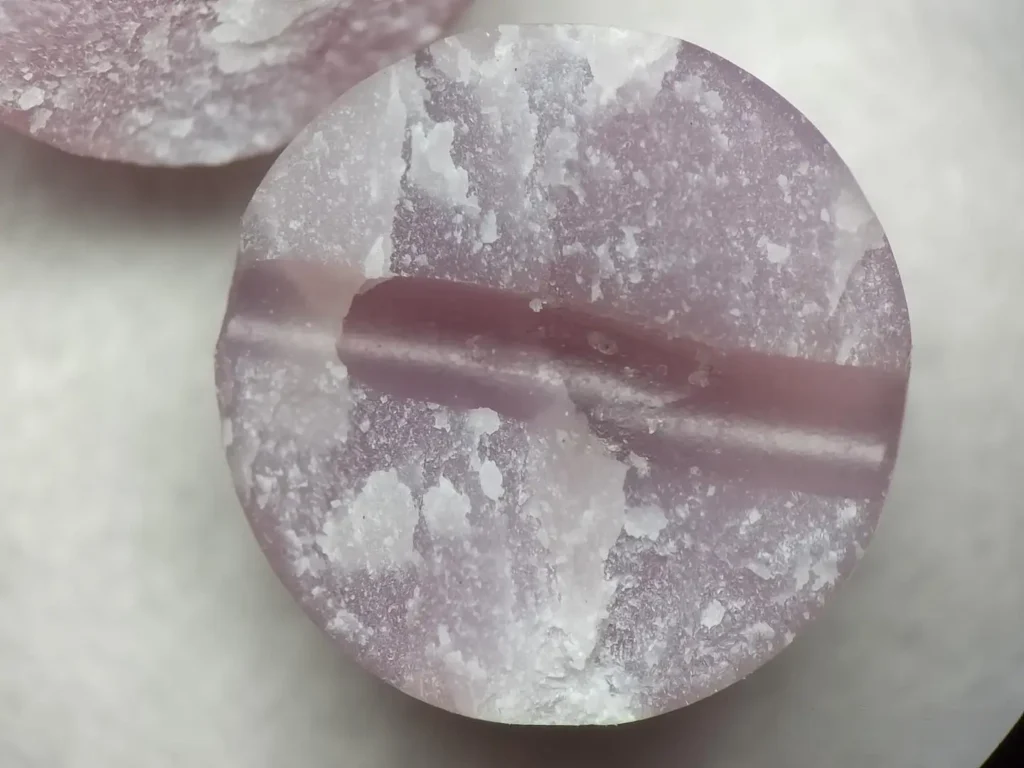
After a final review of the data, GTC reached a definitive conclusion: the sample is dyed (treated) Hetian jade.
The Rise of “Purple Peach Blossom Jade”: A Market Warning
This wasn’t an isolated case. When I consulted an appraiser’s group, a colleague from the Zhuhai Quality and Metrology Supervision & Testing Institute confirmed they had recently tested similar samples.
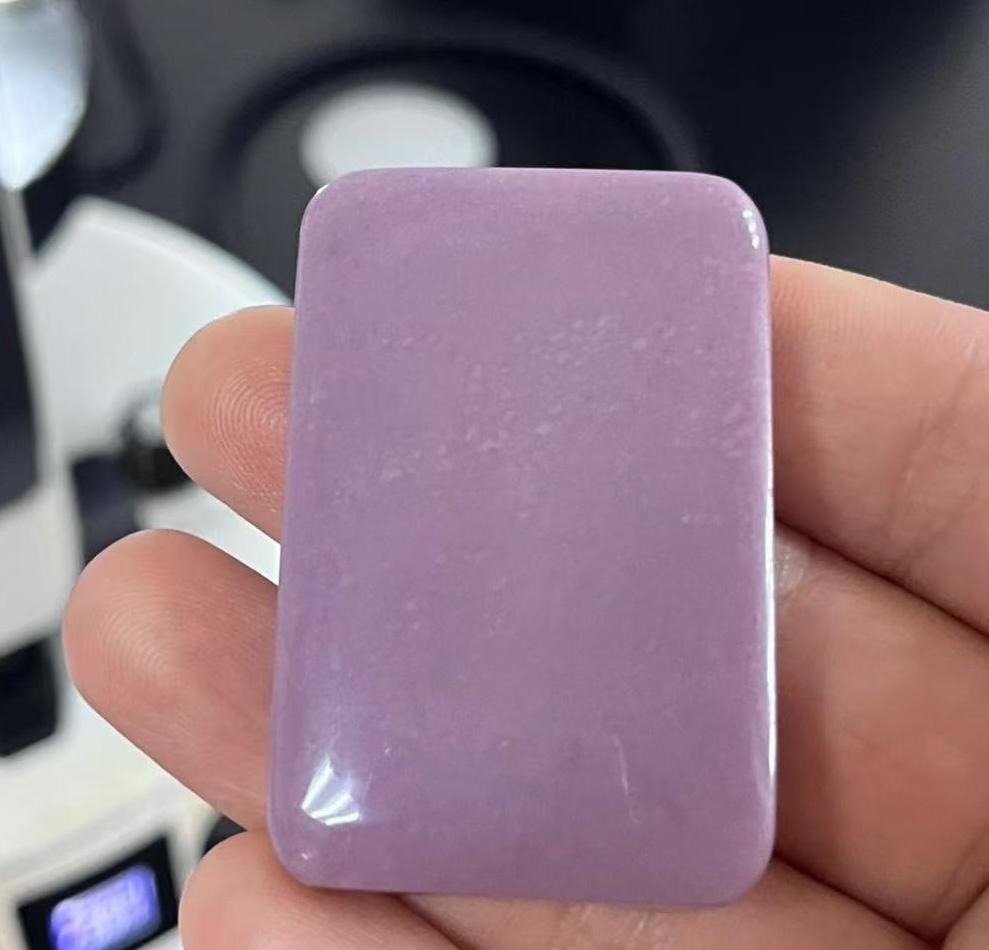
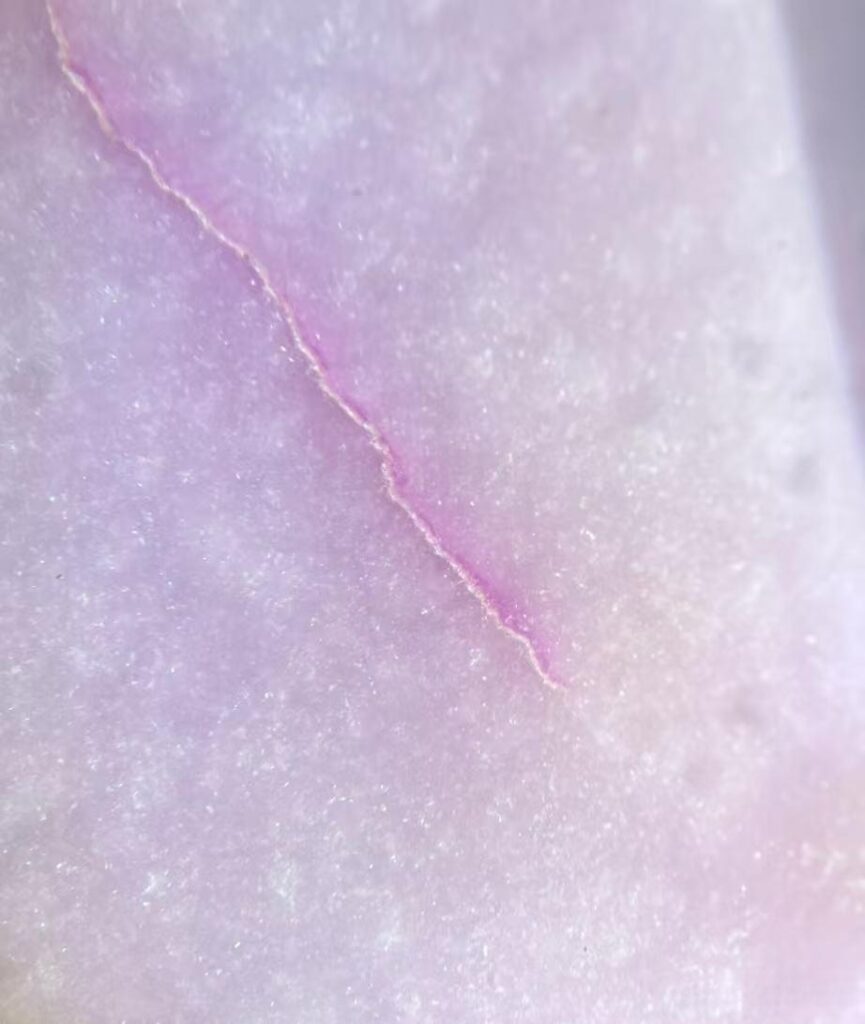
Detecting dye in Hetian jade is notoriously difficult because of the stone’s dense, compact structure. In these cases, the only giveaway was the subtle accumulation of pigment within the surface fractures—the same “smoking gun” we found in our lab.
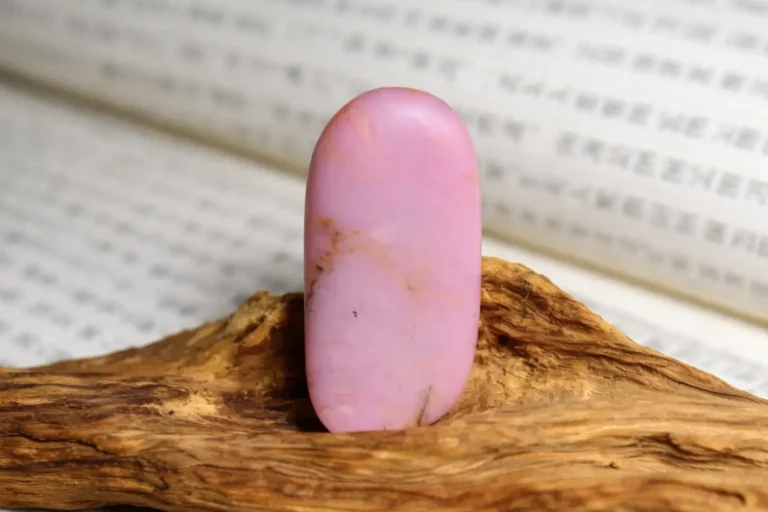
A quick online search reveals a troubling trend. These “Purple Hetian Jades” are flooding the market as authentic specimens. They are often marketed under the name “Rare Purple Peach Blossom Jade” and come in many forms: beaded strands, bangles, carvings, and even egg-shaped “raw pebbles.”
Despite the steep price tags, these are not natural treasures. As we discussed in our previous exposé, The Truth Behind “Miracle Whitening” and Other Hetian Jade Forgery Techniques, dyeing remains one of the most common methods used to deceive even seasoned collectors.
Jewea’s Final Word
I understand the thrill of finding a “new” variety. Discovering a rare color on the market is always exciting. However, I urge you to balance that enthusiasm with caution.
Never rely on guesswork or marketing hype for high-stakes purchases. If you have even a shadow of doubt, avoid the shortcuts. Send the piece to a reputable testing laboratory instead.
A professional certificate is a small investment. It is far better than spending a fortune on a stone that brings only disappointment.