Gemstones of Guizhou: Guicui Quartzite, Luodian Nephrite, & Chinese Bloodstone | Gems of China Series
In this edition of our Gemstones of China series, we head to the southwest. Together, we will uncover the treasures hidden beneath Guizhou’s dramatic karst landscapes.
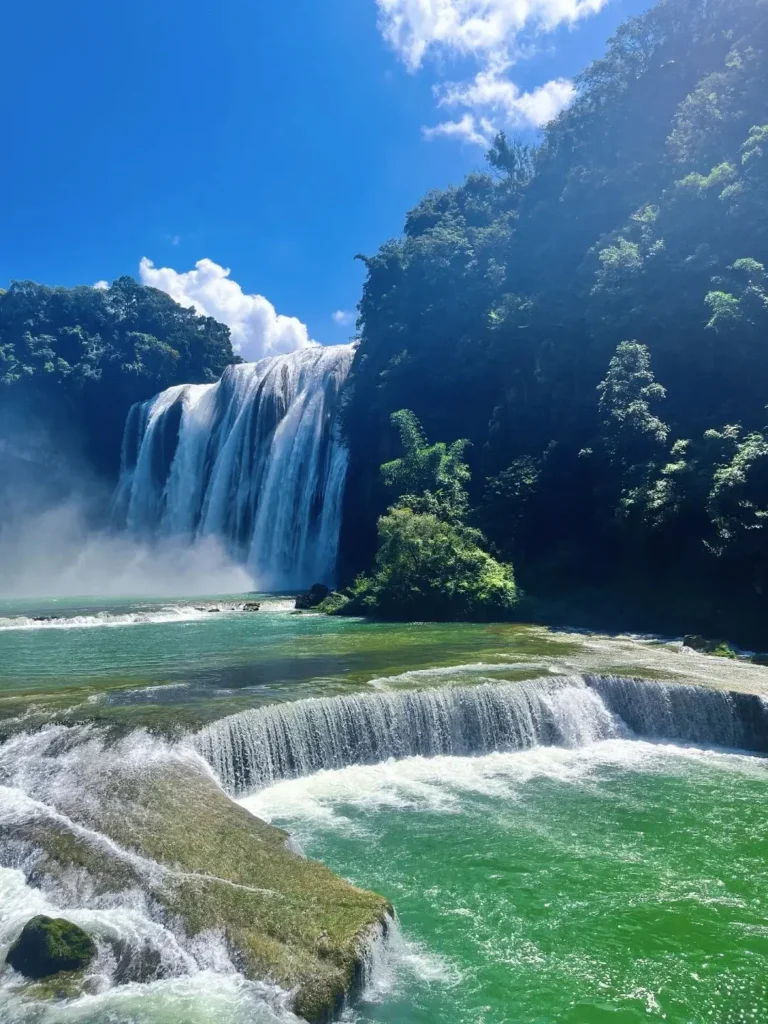
Mention Guizhou to anyone familiar with China, and a vivid picture comes to mind. They think of misty mountains, roaring waterfalls, and the warm glow of Miao and Dong villages. Others think of Moutai, the famous state-banquet spirit, or the iconic Lao Gan Ma chili sauce.
All of this stems from Guizhou’s unique location. Nestled in the heart of southwest China on the eastern flank of the Yunnan-Guizhou Plateau, the province serves as a vital regional hub. This geography shapes both its breathtaking scenery and its vast underground wealth. In fact, explorers have found over 110 types of minerals here, with many reserves ranking among the top in the nation.
Today, we dive deep into the unique Gemstones of Guizhou. From Guicui quartzite and Luodian nephrite jade to prized chicken-blood stone, let’s explore this mineral-rich province.
Guicui: A Quartzite Jade with a Hardness Similar to Jadeite
At first glance, the Chinese name Guicui (贵翠) sounds deceptively similar to Fei Cui (jadeite jade). However, the two share no mineralogical connection. Locally called Guizhou Jade or green quartz, this stone comes from Dachang Town in Qinglong County, Guizhou Province.
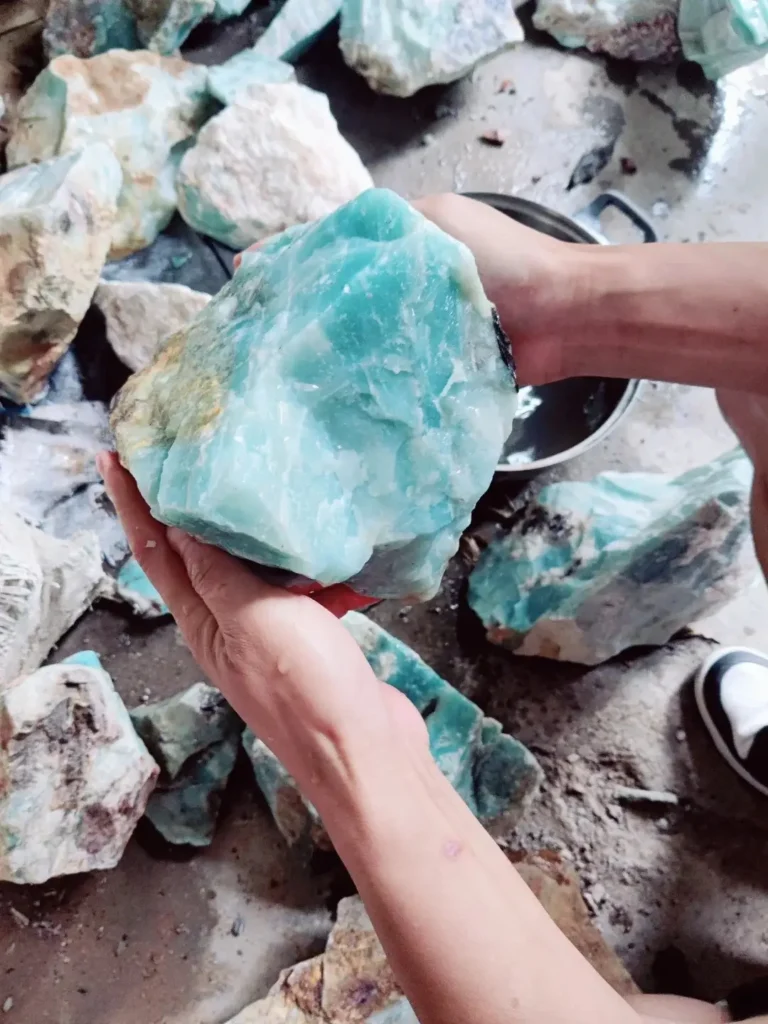
In reality, Guicui is a variety of quartzite that displays distinct jade-like characteristics. It is quite durable, with a Mohs hardness of 6.5–7. This level of hardness closely rivals that of natural jadeite.
How Guicui Quartzite Jade Formed
The story of Guicui dates back 230 million years. The stone originates in Qinglong County, located in the middle of the Guizhou Plateau—a region characterized by high elevations, rugged terrain, and deep highland canyons.
During the Late Permian period, a massive marine regression occurred. As the sea retreated, it exposed ancient seabed limestone to the surface, leaving it vulnerable to constant weathering by wind and rain.
This period saw highly active tectonic movements. Shifting plates expanded landmasses and shrank the oceans, triggering major biological evolution across the changing landscape.
Later, volcanic eruptions and geological disasters buried these weathered surface rocks deep underground once again. In this subterranean environment, a clay mineral called dickite encountered mineral-rich fluids. Silica gradually replaced the dickite, creating the raw prototype of Guicui.
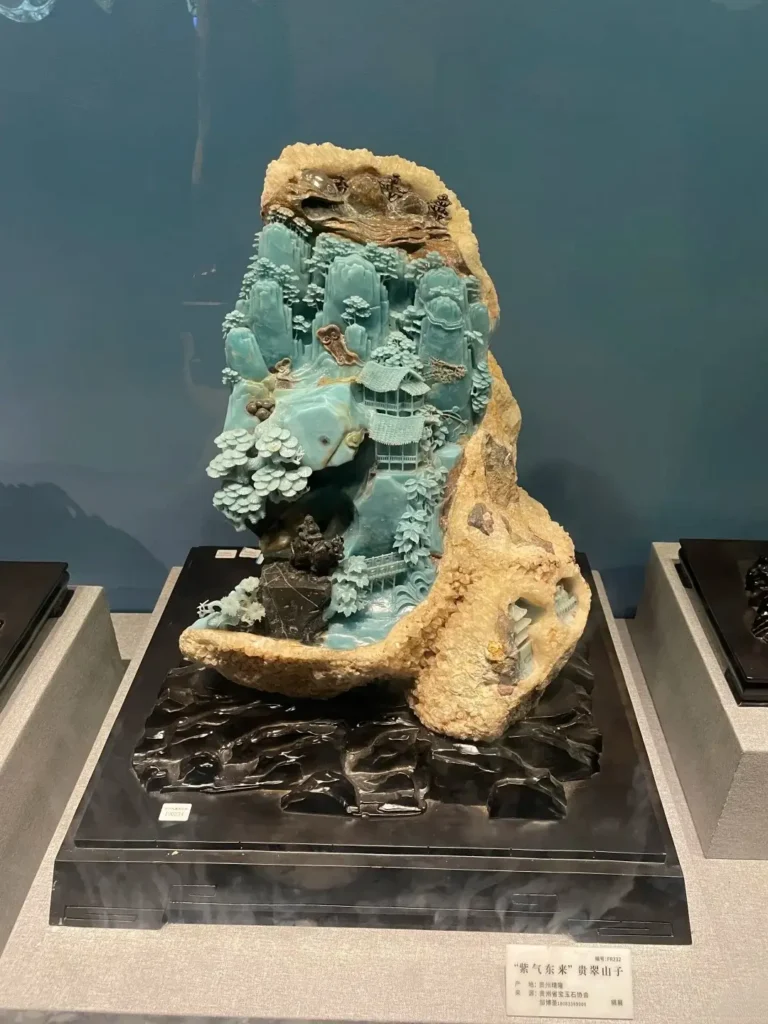
Over the next hundreds of millions of years, tectonic forces and climate elements continued their work. Metal cations like iron and copper seeped into the stone, yielding the vibrant colors we see today. Although Guicui formed in antiquity, its modern discovery came late. Large-scale mining only began in the 1950s, and Guicui finally entered the commercial market as a new variety in 2011.
A Vibrant Palette: From Jewelry to Viewing Stones
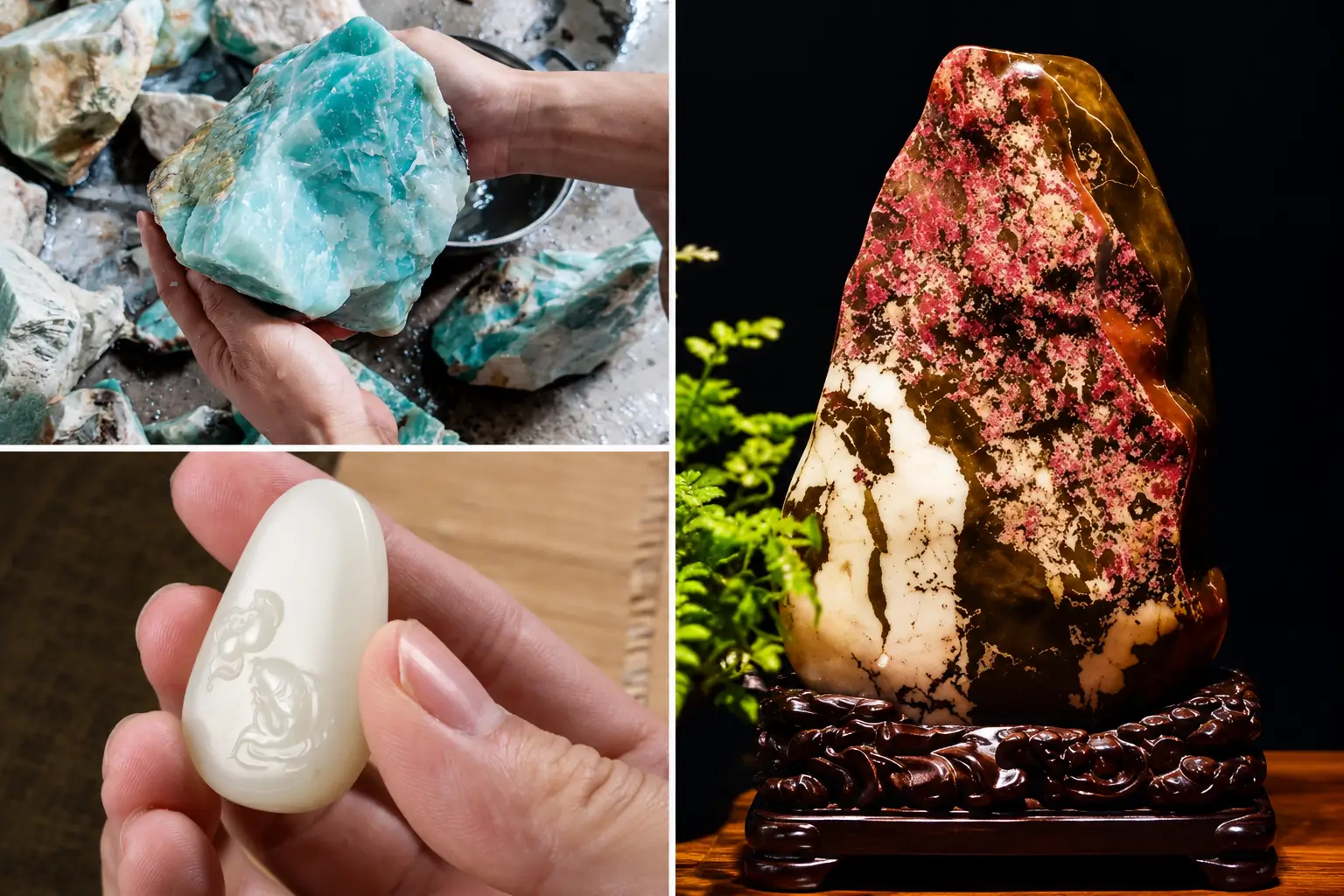
Despite having no mineralogical ties to jadeite, Guicui shares a similarly brilliant range of colors. It occurs in red, white, apricot, and blue hues. Among these, aquamarine blue (sea-water blue) stands out as the finest and most premium variety, offering high ornamental value and strong collectible appeal.
However, this rich palette comes with natural limitations. Guicui quartzite typically features uneven color distribution and contains noticeable impurities. Prolonged exposure to direct sunlight can also cause the stone to dehydrate, leaving it dull and lusterless. Consequently, its market value cannot compete with that of natural jadeite. Artisans typically craft higher-grade material into bangles and fine jade carvings, while transforming lower-grade pieces into unique ornamental viewing stones.
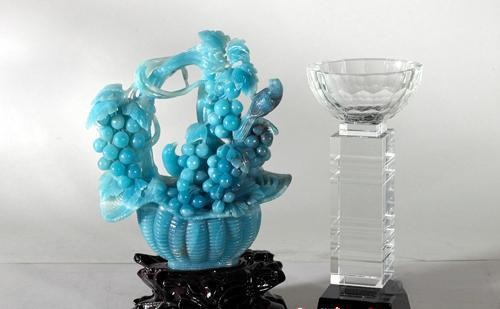
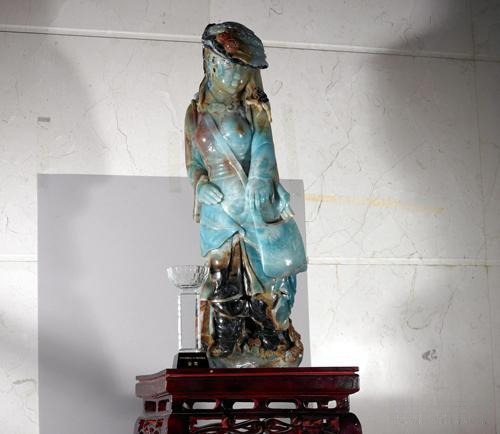
Industry Awards & Recognition:
- 2012 China Baihua Jade Carving Awards: The Guicui carving “Mountain Path” won the Gold Award, and “Autumn Harvest” took home the Silver Award.
- 2012 Haipai Jade Carving Art Exhibition (5th Shengong Awards): The Guicui masterpiece “Survival” captured the prestigious Gold Award.
Luodian Jade: A Broader Definition of Hetian Nephrite
Is Luodian jade truly Hetian jade? This question frequently puzzles even veteran collectors of Hetian nephrite.
As noted in our previous articles, China’s national standard, Classification and Grading of Hetian Jade (GB/T 38821-2020), issued in June 2020, defines Hetian jade from a strictly mineralogical standpoint:
“A naturally occurring mineral aggregate composed primarily of tremolite, with secondary actinolite, that possesses aesthetic beauty, durability, rarity, and artisanal value for jewelry and ornamental carving. It may contain trace amounts of calcite, diopside, graphite, pyrite, chromite, magnetite, quartz, serpentine, epidote, apatite, and garnet.”
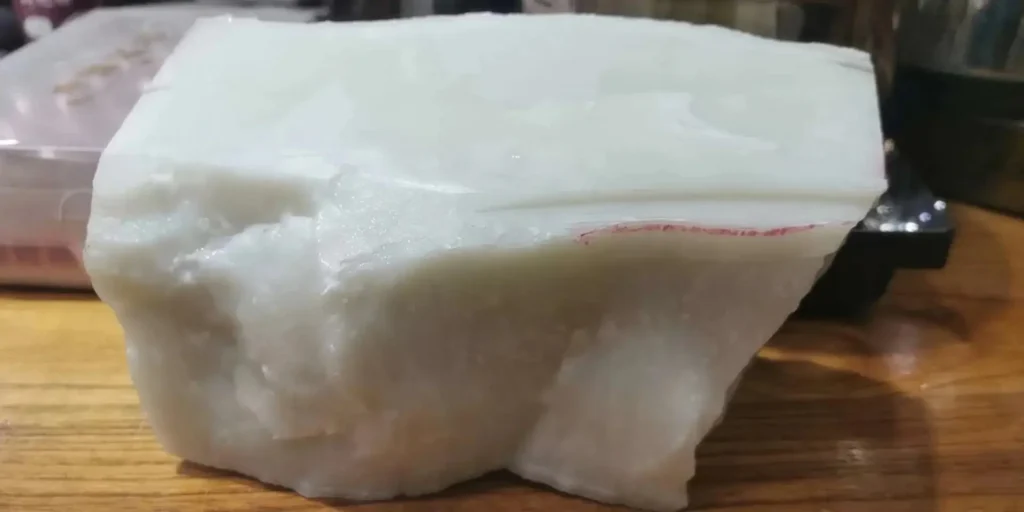
Mined in Luodian County, Guizhou Province, this stone typically occurs in massive blocks and features a relatively fine texture. In 2015, it officially gained protection as a National Geographical Indication Product in China. Compositionally, Luodian nephrite consists primarily of tremolite. This chemical makeup officially classifies Luodian Hetian jade under the broader definition of traditional Hetian jade.
How Luodian Jade Compares to Other Origins
In the world of Hetian nephrite, collectors prize material that exhibits a mature, finely knit structure and a rich, oily luster. Stones that are pure white, ultra-fine, and possess that coveted buttery, translucent texture represent the pinnacle of rarity.
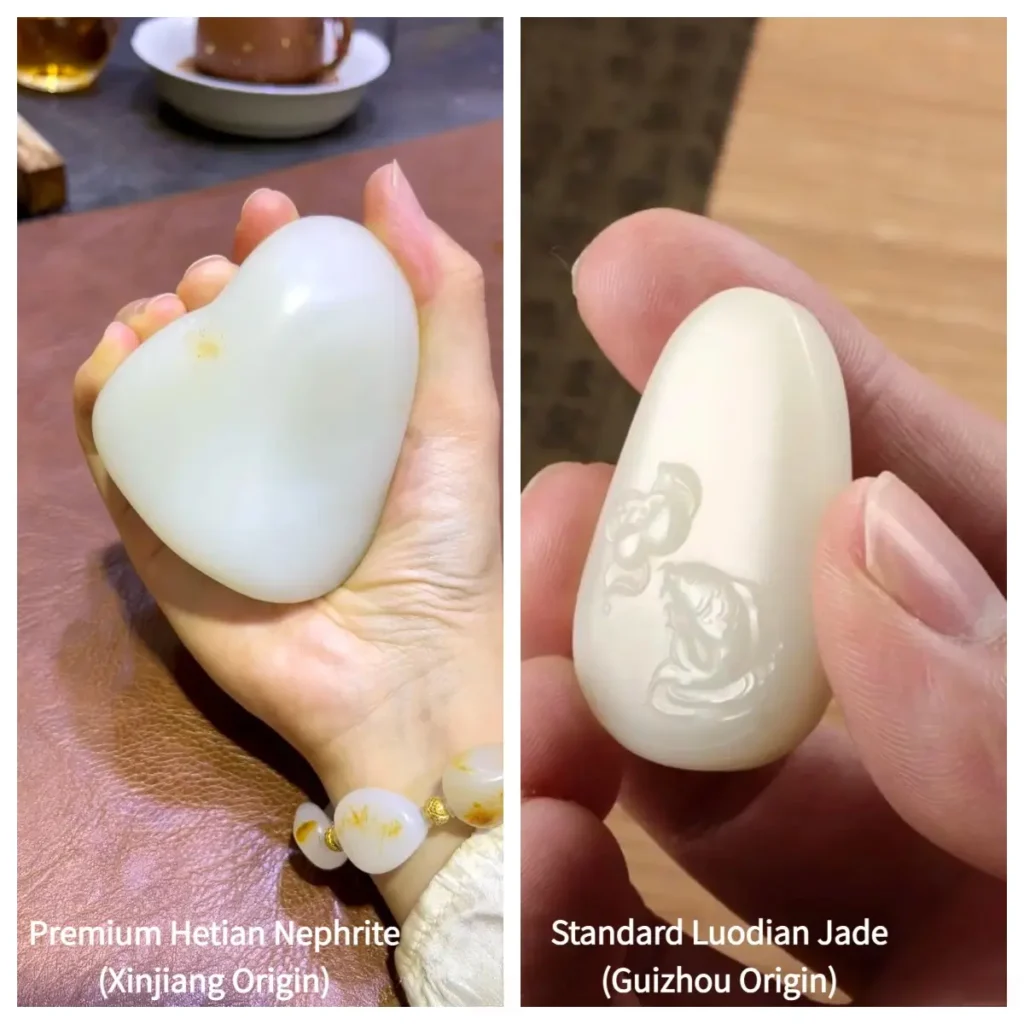
However, Luodian nephrite diverges significantly from its famous counterparts in Xinjiang, Qinghai, and Russia. The primary difference lies in its tremolite content. In fact, some Luodian specimens contain so little tremolite that they fail to meet the official standards for Hetian jade, making them ineligible for an authentic gemstone certificate.
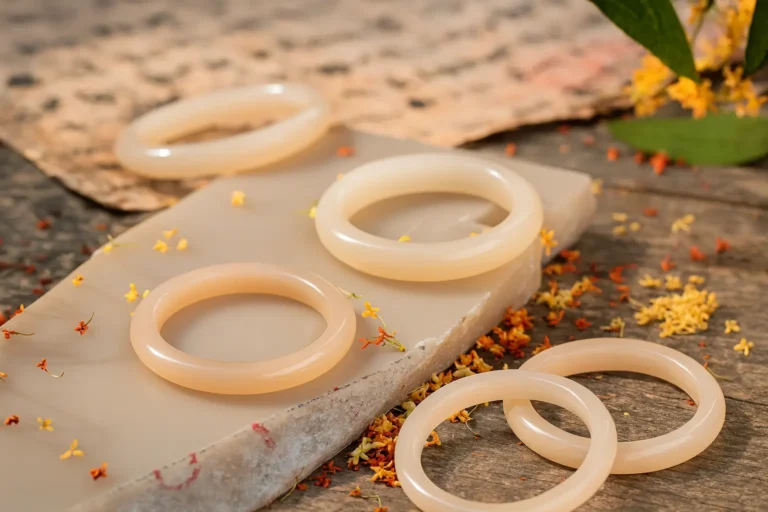
- Color Profile: Luodian jade boasts a diverse color palette, including white, grayish-white, greenish-white, green, and brown. Among these, a white hue with a subtle gray undertone is the most common.
- Texture and Luster: To understand the white tone of Luodian nephrite, look at a standard porcelain bowl. While it appears undeniably white, it lacks the deep, organic oiliness and vibrant translucency of top-tier jade. Luodian material typically feels dry to the touch. It exhibits a duller appearance, leaning toward a waxy or weak greasy luster. Its transparency ranges from translucent to completely opaque. This combination gives its gray-white body a somewhat rigid, bone-white look—often referred to in the trade as “porcelain white.”
Nevertheless, as seasoned collectors know, “quality is king; origin is just a label.” Even revered riverborn pebble material (zi liao) can yield low-grade scrap, while Luodian County can produce exceptional stones. High-grade Luodian material features a clean white color and a remarkably fine texture, making it highly collectible in its own right. In fact, during the recent market boom for rare Mida jade, many vendors passed off fine Luodian material as Mida jade. Buyers navigating the market must stay sharp to spot the difference.
Guizhou Chicken-Blood Stone: A Competitor to the Classics
When discussing chicken-blood stone, enthusiasts often recall the famous Changhua specimens from Zhejiang Province, traditionally crowned as the “Queen of Seals.” However, Zhejiang is not the sole source of this striking material. Tongren City, located in Guizhou Province, also yields highly prized deposits of this legendary collector’s stone.
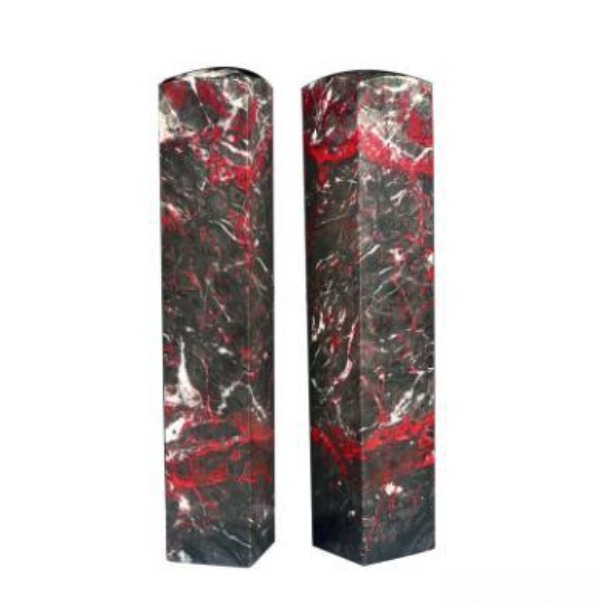
Like its traditional counterparts, Guizhou chicken-blood stone consists of two distinct components: the “ground” (matrix) and the “blood.”
- The “Ground” (Matrix): This refers to the non-red background area hosting various minerals. It consists primarily of calcite, accompanied by varying amounts of quartz, pyrite, and orpiment.
- The “Blood”: This vibrant red coloration formed over eons as hydrothermal fluids rich in mercury sulfide (cinnabar) permeated and seeped into the subterranean calcite matrix. This slow geological staining produced the stone’s signature, lifelike crimson hue.
In traditional deposits, the “blood” typically skews toward dark or pale red tones; specimens featuring an intense, uniform crimson are known as “Da Hong Pao” (Great Red Robe)—an exceptionally rare and premium grade.
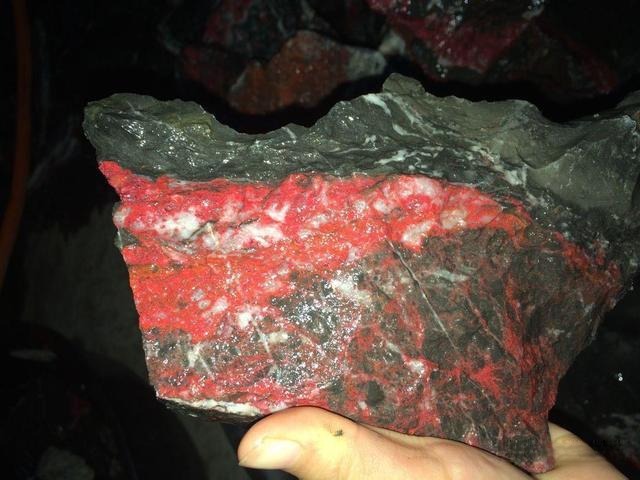
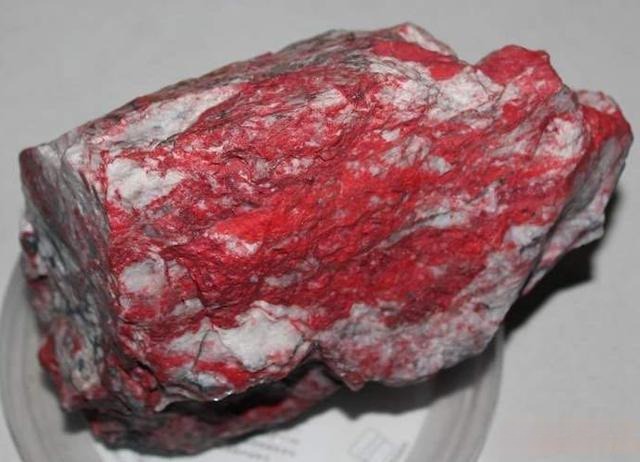
Characteristically, Guizhou chicken-blood stone presents its own distinct visual traits. The majority of specimens from this region naturally exhibit a vivid, bright red hue. Instead of solid fields of color, this vibrant red distributes across the matrix in varied patterns, ranging from misty clouds and broad patches to concentrated clusters and delicate veinlets. Coupled with an exceptionally fine texture and excellent color intensity, this unique material offers a highly distinctive and eye-catching option for collectors.
Mining History and Market Status
Unlike Changhua chicken-blood stone, which boasts nearly a millennium of history, large-scale mining of Guizhou chicken-blood stone only began during the Ming Dynasty. In recent years, geologists discovered new deposits in the Sandu Shui Autonomous County of Guizhou. The material from this specific locality features a full, rich color and a higher hardness, making it exceptionally well-suited for intricate ornamental carvings.
- Cultural Footprint: At the 3rd China Fine Arts Exhibition, a masterpiece carved from Sandu chicken-blood stone, titled “Peach Blossom Spring on the Lu River in March,” won the Silver Award. Later, in 2008, the Sandu county government sent their local chicken-blood stone to Beijing for exhibition during the Olympic Games. These milestones captured the attention of industry insiders and sparked a wave of gem hunters traveling to the region in search of hidden treasures.
Despite these achievements, Guizhou chicken-blood stone remains a hidden gem in terms of both market recognition and price point when compared to the legendary Changhua and Balin varieties. Two primary factors drive this current market reality:
- A Shorter Cultural Heritage: The commercial development of Guizhou’s deposits spans a much shorter timeframe, meaning it lacks the centuries of historical lore, imperial endorsements, and celebrity anecdotes that elevate its famous counterparts.
- Disparities in Material Quality: While the “blood” in Guizhou specimens is undeniably rich and saturated, the “ground” (matrix) typically contains higher amounts of impurities. Consequently, the overall texture and purity still fall short when compared to traditional, investment-grade specimens from Changhua or Balin.
Explore More in Our Chinese Gems Series
At Jewea, our mission is to uncover the hidden geological wonders across China. Before we dove into the Gemstones of Guizhou we explored several other regions famous for their rare and storied treasures.
Take a look back at our previous journeys:
Southwest China
- Tibet: Gemstones of Tibet: Renbu Stone, Ivory Magnesite, Moss Agate, Tourmaline, and Amethyst | Gems of China Series
- Sichuan: Gemstones of Sichuan: Agate, Longxi Jade, and Rare Tabular Beryl | Gems of China Series
- Yunnan: Gemstones of Yunnan: Nan Hong Agate, Huanglong Jade, Emerald, Ruby, Tourmaline & Aquamarine | Gems of China Series