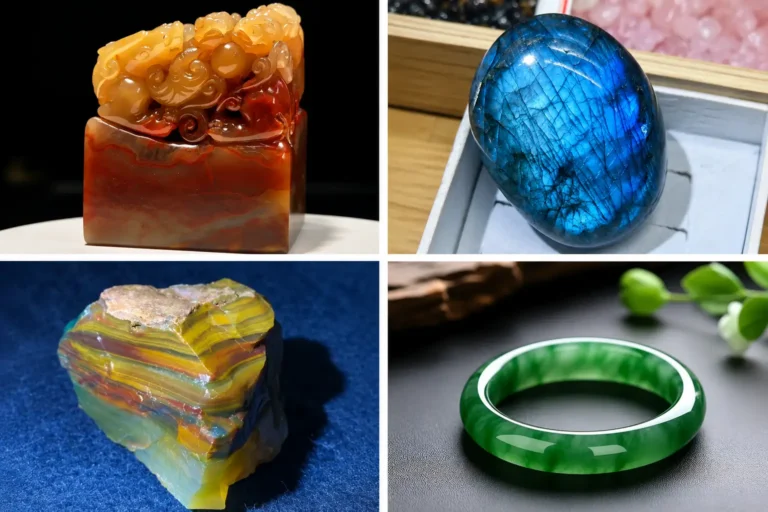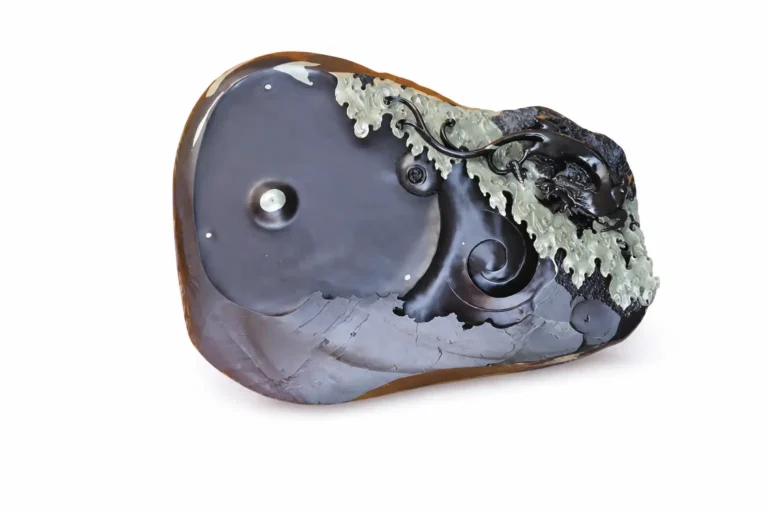
Gemstones of Sichuan: Agate, Longxi Jade, and Rare Tabular Beryl | Gems of China Series
In this installment of our “Gemstones of China” series, we journey south to uncover the hidden treasures of Sichuan Province. What comes to mind when you think of Sichuan? Perhaps it’s the iconic giant pandas, the tongue-numbing heat of authentic hot pot, or the mist-covered mountains that define its landscape.

Known historically as the “Land of Abundance” (Tianfu), Sichuan has long been a sanctuary for poets and artists who were captivated by its breathtaking scenery and rich culture. Beyond its famous cuisine and beauty, however, lies a geological marvel.
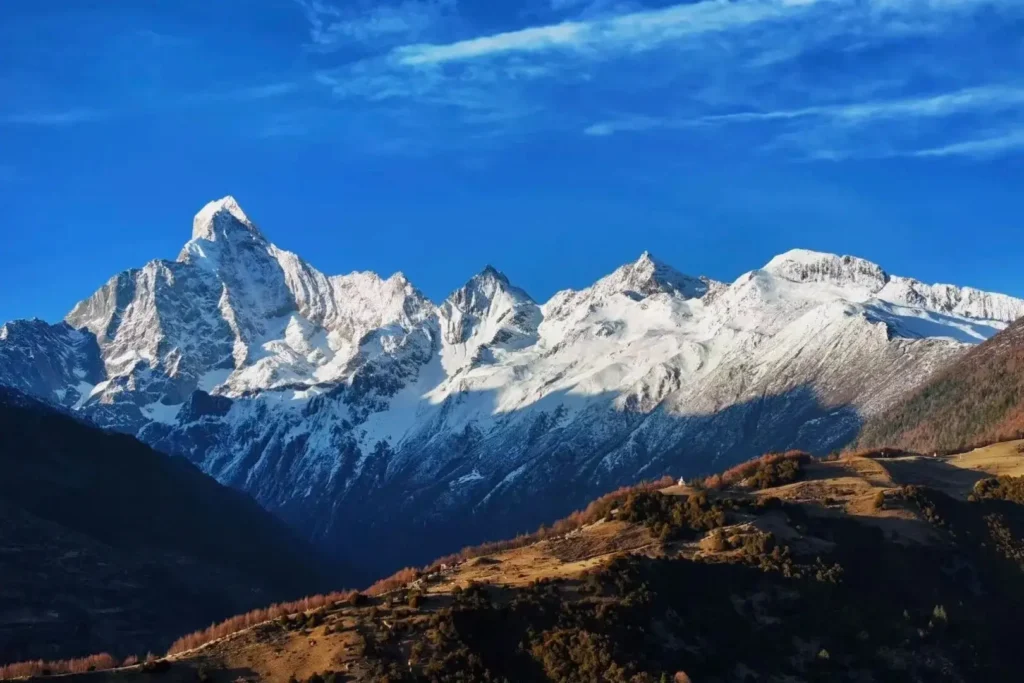
Sichuan’s vast territory—particularly the rugged southern and western regions—boasts a complex geological structure that creates the perfect “cradle” for rare minerals. In fact, the province has identified over 132 types of minerals, with 32 of them ranking in the top five for reserves across all of China.
Today, we are diving deep into the mineral wealth of this region to explore the Gemstones of Sichuan—a collection of local treasures that define the region’s unique legacy: Agate, Rhodonite (Peach Blossom Stone), Longxi Jade, Nephrite Cat’s Eye, Pingwu Beryl, and Ya’an Green Stone.
Sichuan Agate: From Fiery Reds to Multi-Colored Wonders
If you’ve been following our blog, Agate is likely a familiar friend. In our previous deep dive, Types of Agate: Exploring Rare and Unique Varieties from China, we touched on the many famous varieties found across the country. However, Sichuan holds a special place in this map, primarily producing two distinct types: the prestigious Nanhong (Southern Red) Agate from Liangshan and the vibrant Yanyuan Agate from Yanyuan County.
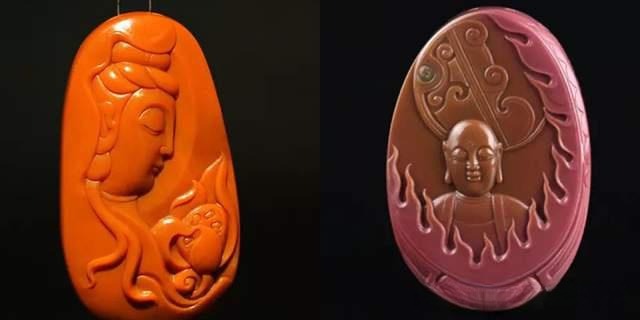
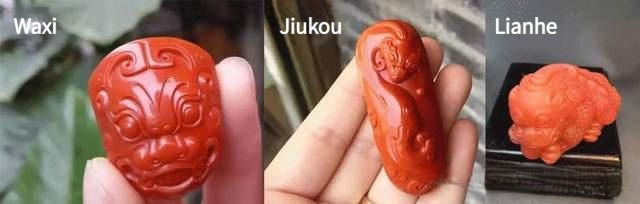
In Southern Red Agate: The Complete Guide to Colors, Quality, and Authenticity, we explored how Liangshan’s Nanhong is categorized by its specific mining pockets—namely Jiukou, Waxi, and Lianhe. Generally speaking, the Jiukou and Waxi deposits yield the coveted Persimmon Red, Rose Red, and Flame-patterned stones. In contrast, the Lianhe mines are famous for their “Cherry Red” clarity—though in the world of gemstones, these rules always have their beautiful exceptions.
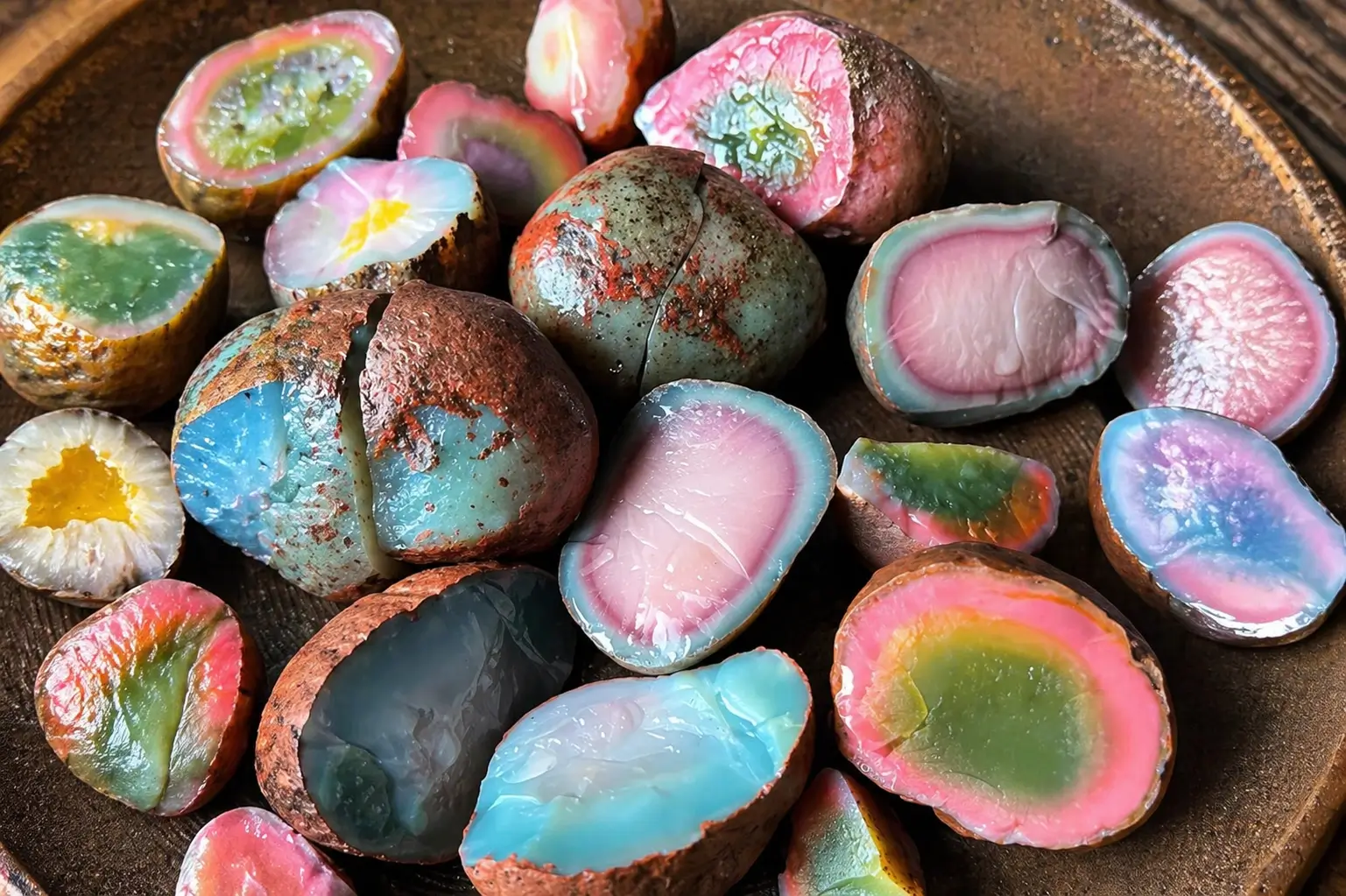
While Nanhong is a timeless classic, Yanyuan Agate has become a modern sensation. Often called “Seven-Color Jade” by locals, it boasts an incredible palette of yellows, pinks, greens, and reds. What makes Yanyuan truly remarkable is how these colors often coexist within a single stone, transitioning seamlessly without harsh borders.
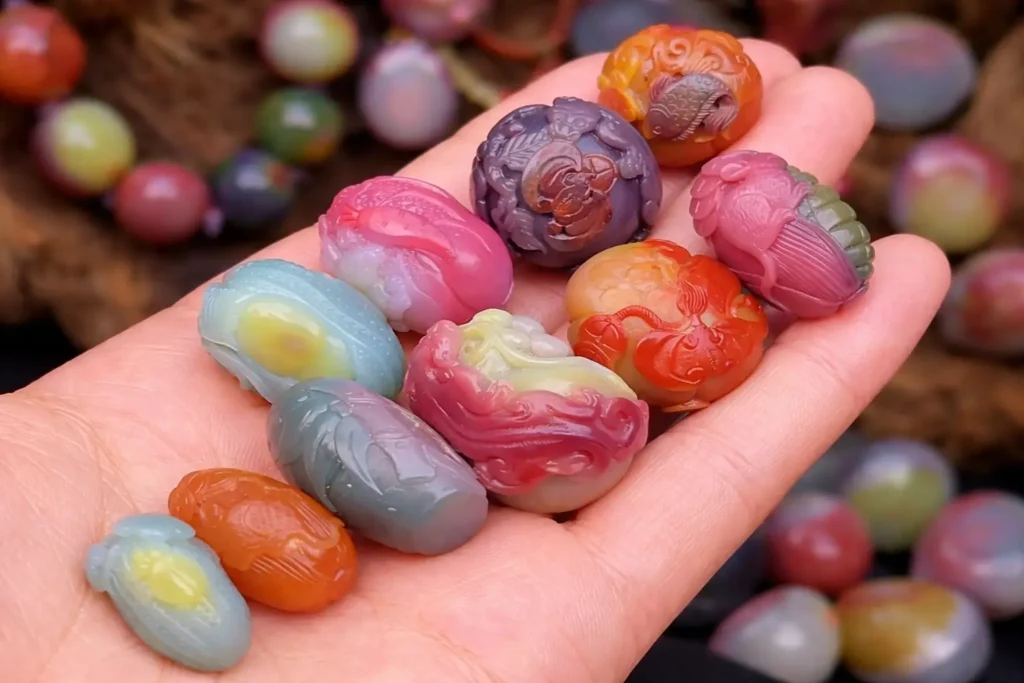
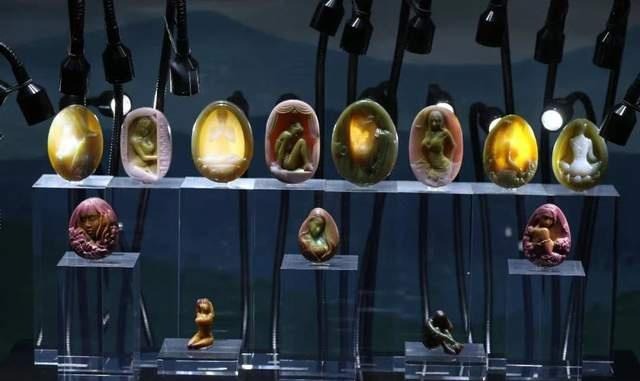
Beyond its stunning appearance, Yanyuan Agate is a carver’s dream. It possesses a dense, waxy texture and a high level of hardness that allows for intricate detailing. Its artistic potential was cemented at the 2020 Tiangong Awards—China’s most prestigious jade carving competition—where the Yanyuan Agate masterpiece “Song of Youth” took home the Gold Medal.
Rhodonite: The “Peach Blossom Stone” of Sichuan
Named for its striking resemblance to spring blossoms, Rhodonite—locally known as Peach Blossom Jade—is primarily composed of manganese silicate and quartz. While this vibrant stone occurs globally in regions like Australia, the U.S., and Sweden, China boasts significant deposits in Beijing, Qinghai, and particularly Sichuan.
Within Sichuan, the finest specimens emerge from the rugged terrains of Yanbian, Dukou, Derong, and Mianning in the Liangshan Prefecture. Sichuan Rhodonite typically showcases a vivid pink or peach-red hue with a fine-grained crystalline structure. Its glassy luster and saturated colors make it a standout for both collectors and designers.
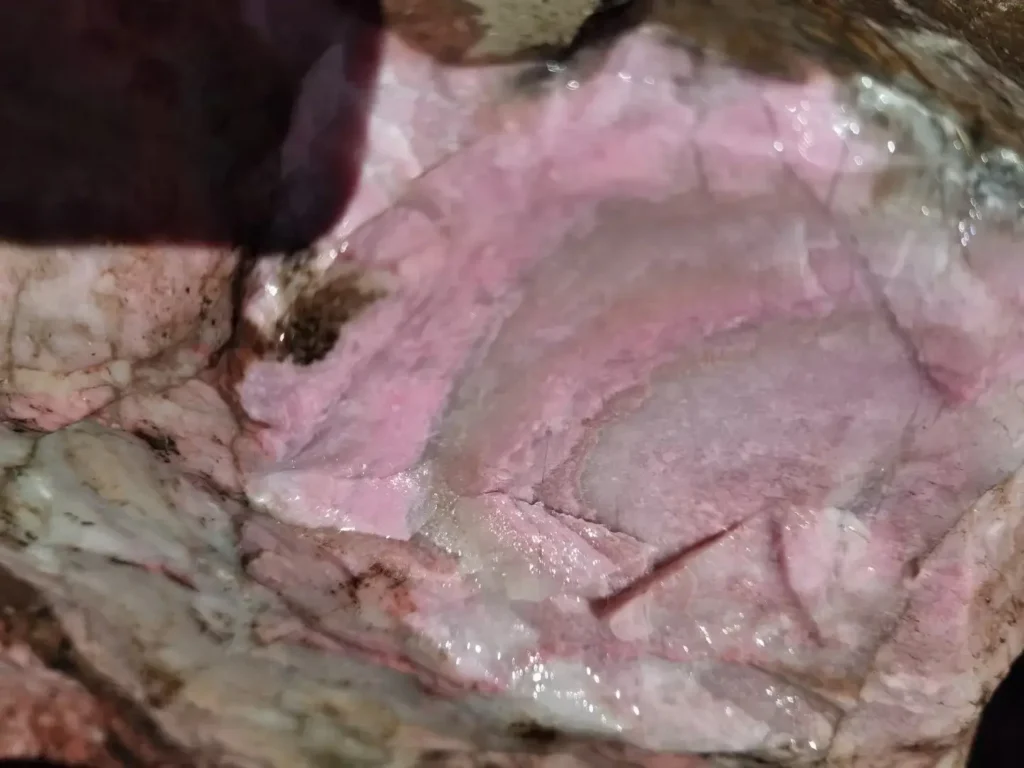
Because it occurs in varied sizes, artisans adapt their craft to the raw material: larger boulders often become ornate carvings or decorative centerpieces, while smaller, high-quality nodules find their way into delicate pendants, earrings, and bangles.
Despite its visual appeal, Rhodonite remains remarkably accessible compared to other rare jades. Its abundant reserves allow for a more competitive price point, making it an absolute favorite for “pink-obsessed” collectors and those seeking an affordable yet high-impact gemstone.
Clearing the Confusion: Pink Anthophyllite vs. Rhodonite
In our previous discussion, Unveiling the Truth About “Pink Hetian Jade”: Is It Real Nephrite or Anthophyllite Jade?, we explored a specific variety of pink anthophyllite jade often marketed as “Peach Blossom Jade.” However, it is important to distinguish this from the Rhodonite we are discussing today. While they may share a nickname, they are mineralogically distinct.
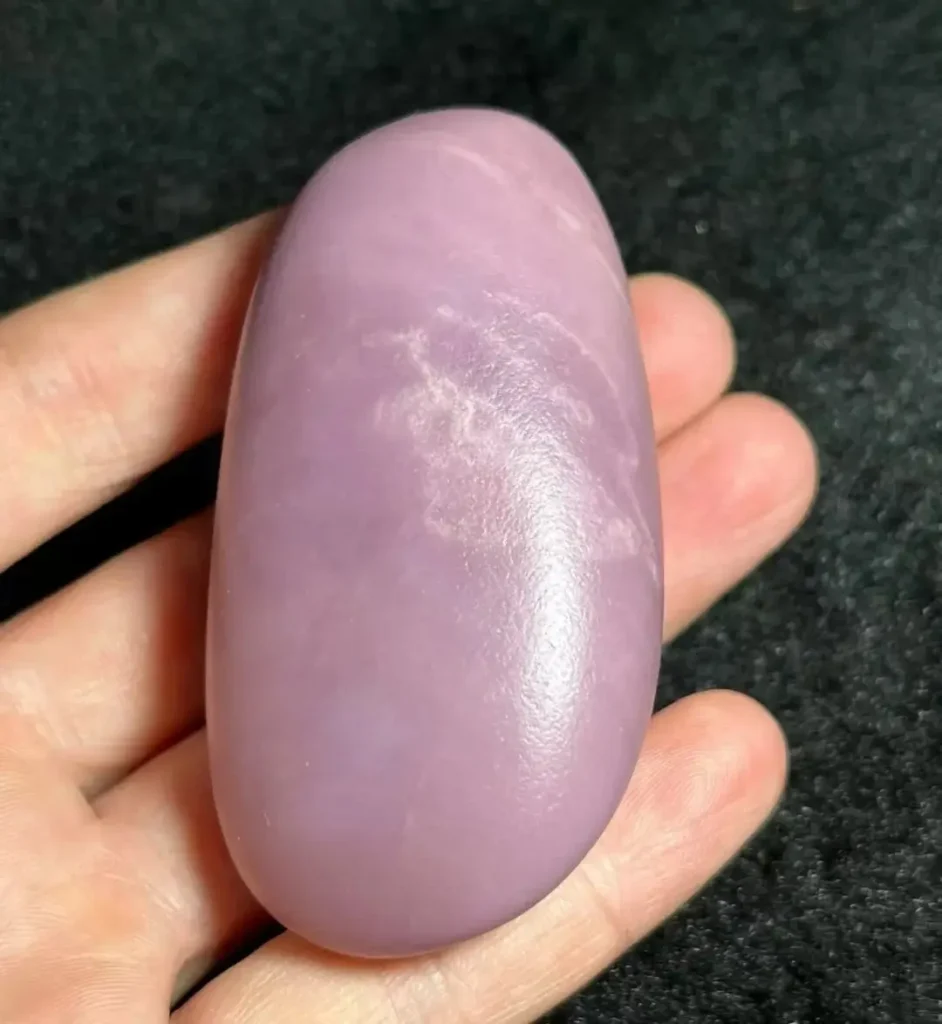
To help you shop with confidence, here is a quick breakdown of their physical and chemical differences:
| Feature | Pink Anthophyllite Jade | Rhodonite (Peach Blossom Stone) |
| Primary Mineral | Anthophyllite | Rhodonite, Quartz, and Manganese oxide spotting |
| Hardness (Mohs) | 6 | 5.5 – 6.5 |
| Density (g/cm³) | Approx. 3.0 | Approx. 3.5 (decreases as quartz content rises) |
| Luster | Greasy / Waxy | Vitreous (Glassy) |
| Color Profile | Various shades of pink, pink-purple, or pink-orange | Pale red to deep rose; often features black manganese veins, or green/yellow patches |
| Origin | Hotan, Xinjiang (China) | Global (USA, Sweden, Russia, Australia); China (Sichuan, Beijing, Qinghai, etc.) |
Longxi Jade: The Ancient Soul of Sanxingdui
Sichuan possesses a diverse palette of ornamental stones, from Serpentine and White Marble to various Nephrites. However, Longxi Jade—a Tremolite-rich nephrite sourced from Longxi Township in Wenchuan—holds a legendary status that far outweighs its physical abundance.
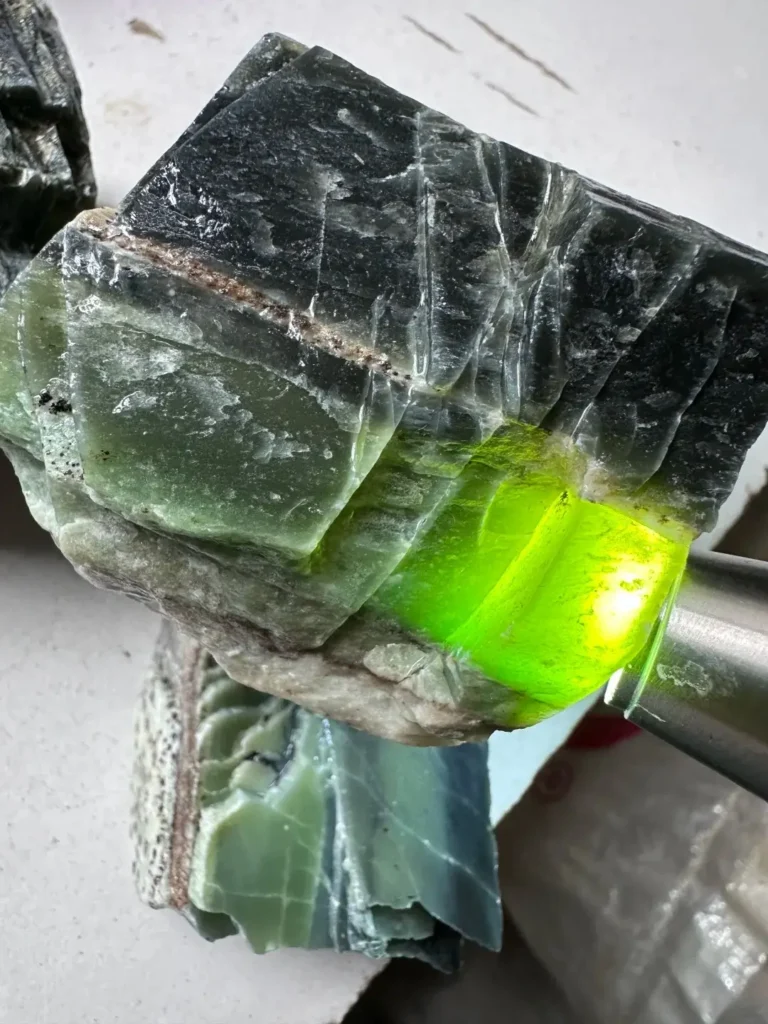
Interestingly, Longxi Jade didn’t earn its fame through flawless quality. In fact, the raw material is notoriously scarce, often riddled with natural fractures that make it brittle and difficult to work. Because it typically occurs in small nodules, its commercial value in modern jewelry remains limited.
Instead, its prestige lies in its remarkable history. Longxi Jade served as the primary medium for the awe-inspiring jade artifacts unearthed at the Sanxingdui archaeological site. If we view the Classic of Mountains and Seas (Shan Hai Jing) as a map of ancient China—a fascinating, if debated, perspective—the Minshan Mountains of Western Sichuan are described as a land teeming with “gold and jade.” This ancient text likely refers to the very same stones we identify today as Longxi Jade.
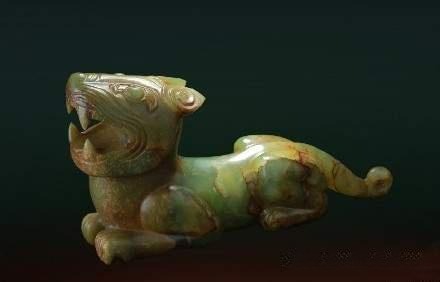
Mineralogically, Longxi Jade consists of over 90% Tremolite, accompanied by trace amounts of dolomite and talc. While it appears in various shades of celadon, misty gray, and deep forest green, it most commonly showcases a distinctive yellowish-green or pale mint hue—the silent witness to a civilization that flourished thousands of years ago.
Nephrite Cat’s Eye: A Rare Optical Phenomenon
Beyond the historic Longxi Jade, the Shimian mining district in Sichuan yields another fascinating variety: Nephrite Cat’s Eye. As we discussed in our guide, Chrysoberyl Cat’s Eye: The Only True “Cat’s Eye” Guide, the term “Cat’s Eye” used alone refers exclusively to Chrysoberyl. However, other stones can exhibit this same mesmerizing optical effect—known as chatoyancy—and Sichuan’s nephrite is a prime example.
Formed by dense, parallel inclusions of fibrous tremolite, these stones also contain trace amounts of magnetite and serpentine. The result is a gem with a smooth, waxy texture and a vitreous luster that brings the “eye” to life. When light hits the surface, a sharp, vivid band of light dances across the stone.
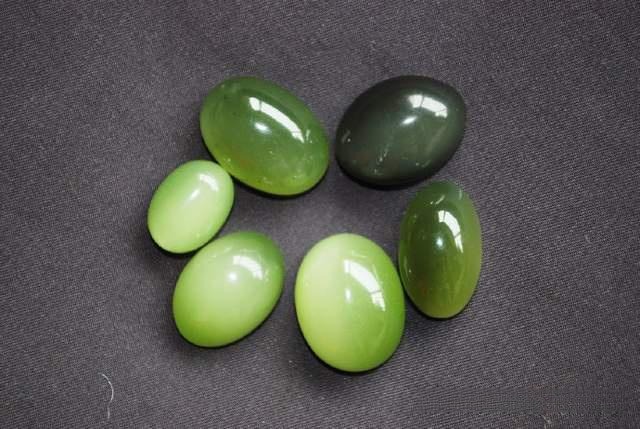
Thanks to the presence of iron and chromium, Sichuan’s Nephrite Cat’s Eye appears in a sophisticated palette: from pale mint and deep forest greens to earthy browns, misty grays, and the highly sought-after honey yellow. For collectors who appreciate the interplay of light and texture, these stones offer a lively and more accessible alternative to their chrysoberyl cousins.
Pingwu Beryl: The World’s Unique Tabular Crystals
As a “noble family” of the gemstone world, Beryl occurs across China—from Xinjiang and Inner Mongolia to Hunan and Yunnan. However, the deposits in Pingwu, Sichuan, stand in a league of their own.
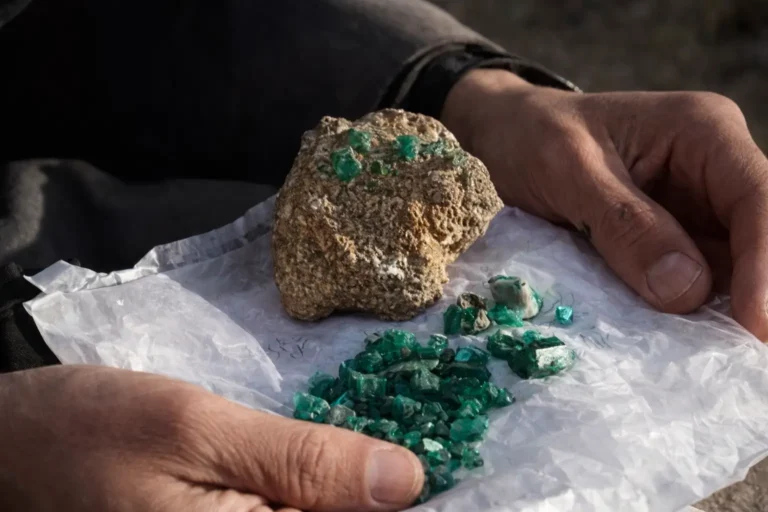
What sets Pingwu Beryl apart is its extraordinary tabular crystal habit. While most beryl forms as hexagonal prisms, Pingwu produces unique, flattened crystals. It is arguably the only location in the world to produce these tabular formations in commercially viable quantities. While a rare few exhibit a delicate pale blue, the majority of these crystals are colorless and transparent (Goshenite).
The finest specimens are a sight to behold: perfectly formed, highly transparent, and possessing a brilliant vitreous luster. These unique crystals often form stunning symbiotic clusters with muscovite, feldspar, quartz, fluorite, and calcite. Due to their architectural beauty and diverse color contrasts, these specimens are highly coveted by mineral collectors worldwide.
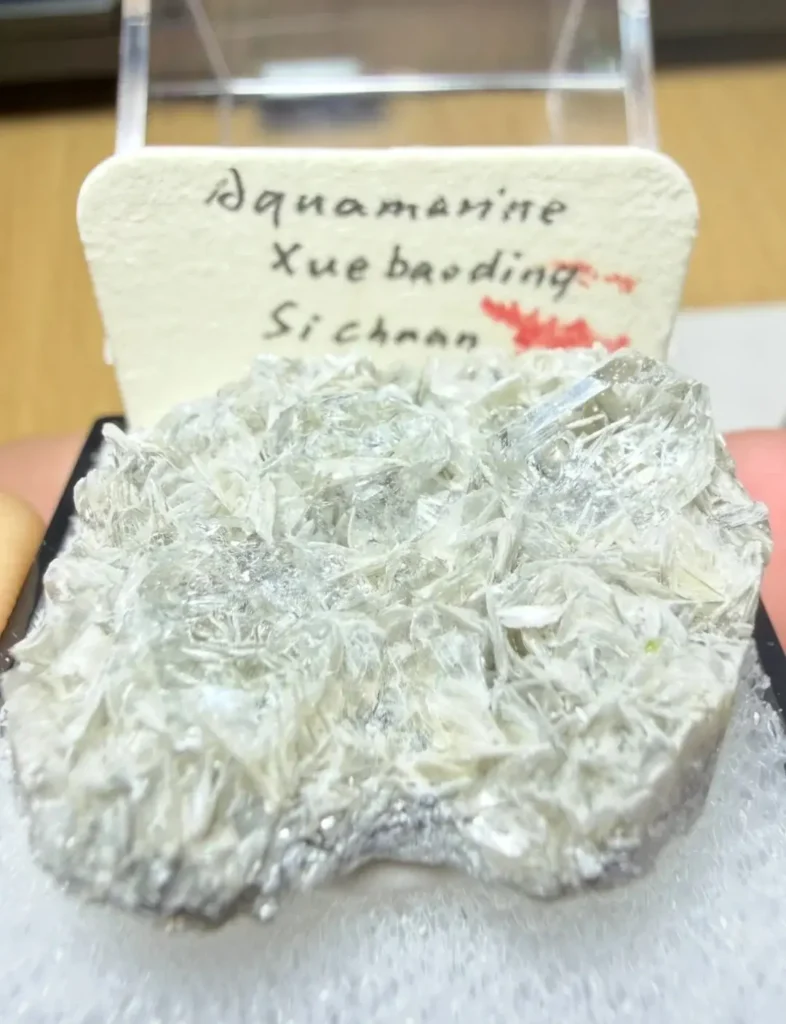
It is worth noting, however, that while their crystal shape is a geological marvel, “gem-quality” material suitable for faceting is exceptionally rare. Because much of the raw output lacks deep color or high clarity, many stones on the market have undergone treatments to “improve” their appearance. For the true connoisseur, the value of Pingwu Beryl often lies in its natural, untreated crystal form.
Ya’an Green: The Rising Star of Seal Stones
In our previous look at Beyond Traditional Jade: Discovering the Next Wave of China’s Emerging Carving Materials, we highlighted several obscure carving stones that stole the spotlight, including the vibrant Ya’an Green stone.
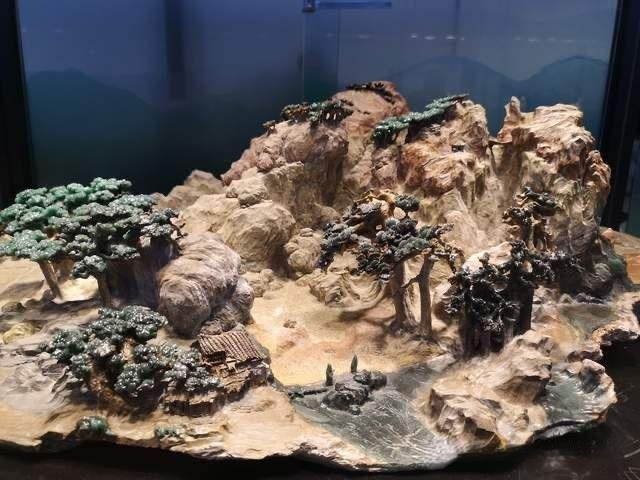
Hailing from Shimian County in southwestern Sichuan, Ya’an Green has recently emerged as a sensation in the market. Its lush, emerald-like saturation has made it a fast favorite among seal-stone enthusiasts and collectors. From a mineralogical standpoint, Ya’an Green consists primarily of sericite, quartz, kaolinite, and calcite. With a Mohs hardness ranging from 3.0 to 3.5 and an incredibly fine-grained texture, it offers the perfect canvas for intricate micro-carvings.
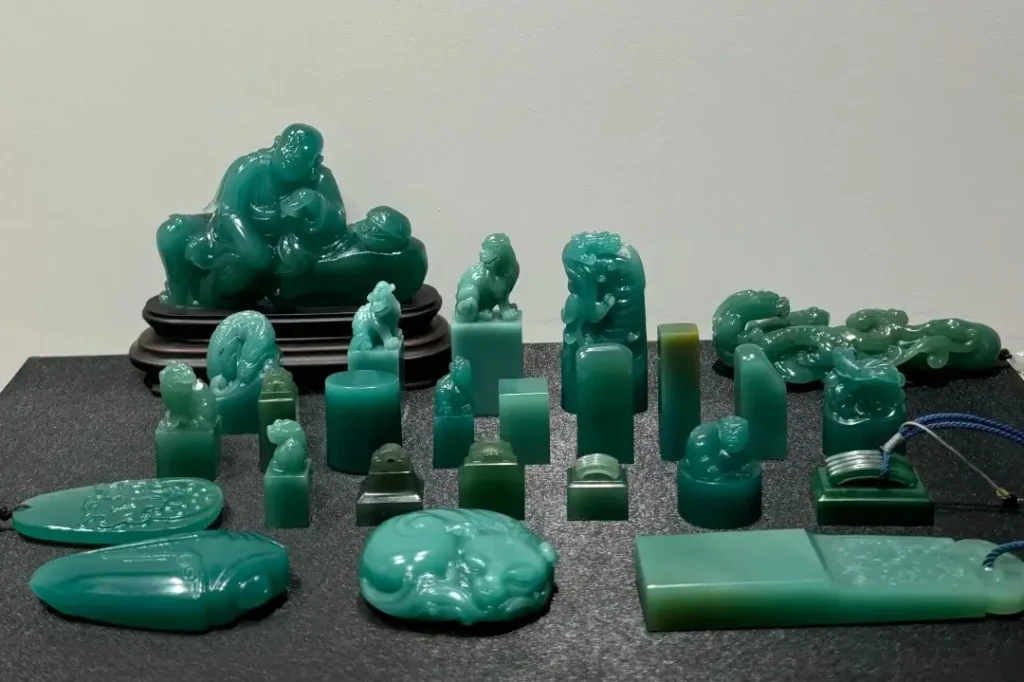
Within this category, the “Baishui River” (Baishuihe) material is the undisputed gold standard. It boasts a pure, vivid green that commands the highest prices in the market. However, because Ya’an Green is a relatively new discovery, public awareness remains low. This knowledge gap often allows unscrupulous sellers to pass off inferior-grade stones as premium Baishui River material.
Due to limited veins and low annual yield, the market value of Ya’an Green is currently on a steep upward trajectory. If you happen to come across a substantial piece with “perfect flesh”—meaning flawless color and consistency throughout—it is well worth adding to your collection now.
Explore More in Our Chinese Gems Series
At Jewea, our mission is to uncover the hidden geological wonders across China. Before we dove into the Gemstones of Sichuan we explored several other regions famous for their rare and storied treasures.
Take a look back at our previous journeys:
Southwest China
- Yunnan: Gemstones of Yunnan: Nan Hong Agate, Huanglong Jade, Emerald, Ruby, Tourmaline & Aquamarine | Gems of China Series
- Tibet: Gemstones of Tibet: Renbu Stone, Ivory Magnesite, Moss Agate, Tourmaline, and Amethyst | Gems of China Series
- Guizhou: Gemstones of Guizhou: Guicui Quartzite, Luodian Nephrite, & Chinese Bloodstone | Gems of China Series