Gemstones of Inner Mongolia: From Balin Stone to Rare Agates | Chinese Gems Series
In this edition of our “Gemstones of China”, we head to Northern China to uncover the hidden geological treasures of Inner Mongolia.
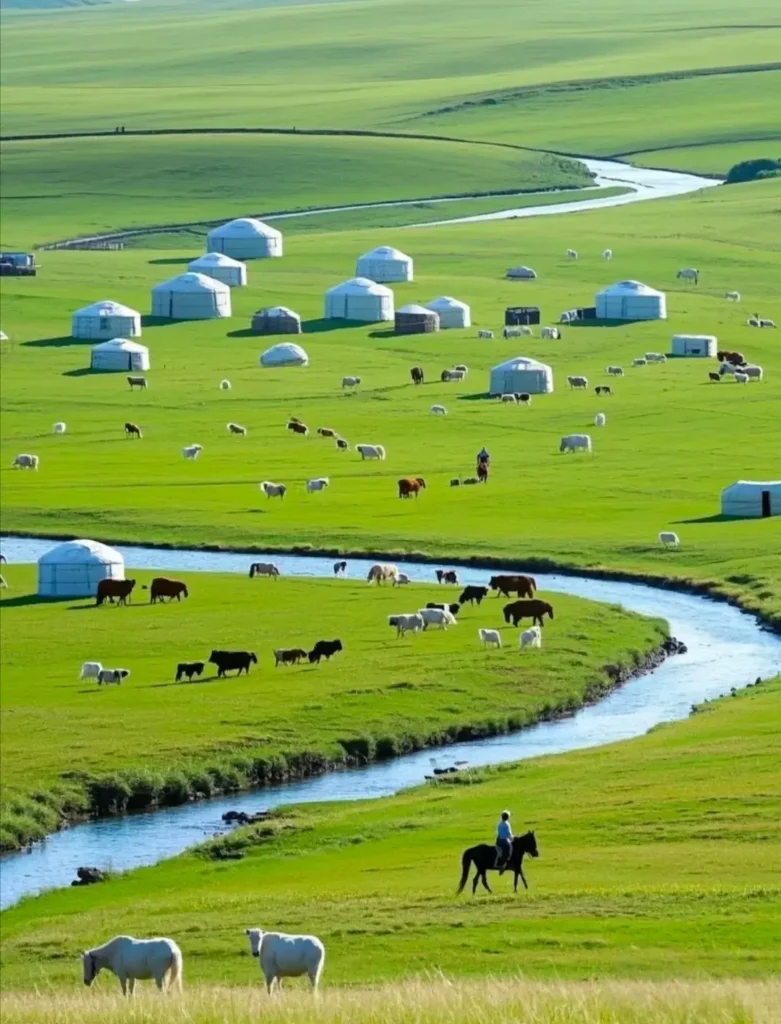
Mention Inner Mongolia, and most people instantly picture endless, sweeping grasslands under a vast sky, just as the famous ancient Chinese poem describes: “The sky is boundless, the wilderness immense; the wind blows, the grass bends, and sheep and cattle appear.”
But this massive region—spanning over 1.18 million square kilometers and stretching 2,400 kilometers from east to west—is far more than just pastures. With dense forests in the east, rolling steppes in the center, and dramatic deserts in the west, Inner Mongolia boasts an incredible wealth of natural resources. Among its discovered mineral resources, 17 types rank first in China, 43 rank in the top three, and 85 place in the top ten nationwide.
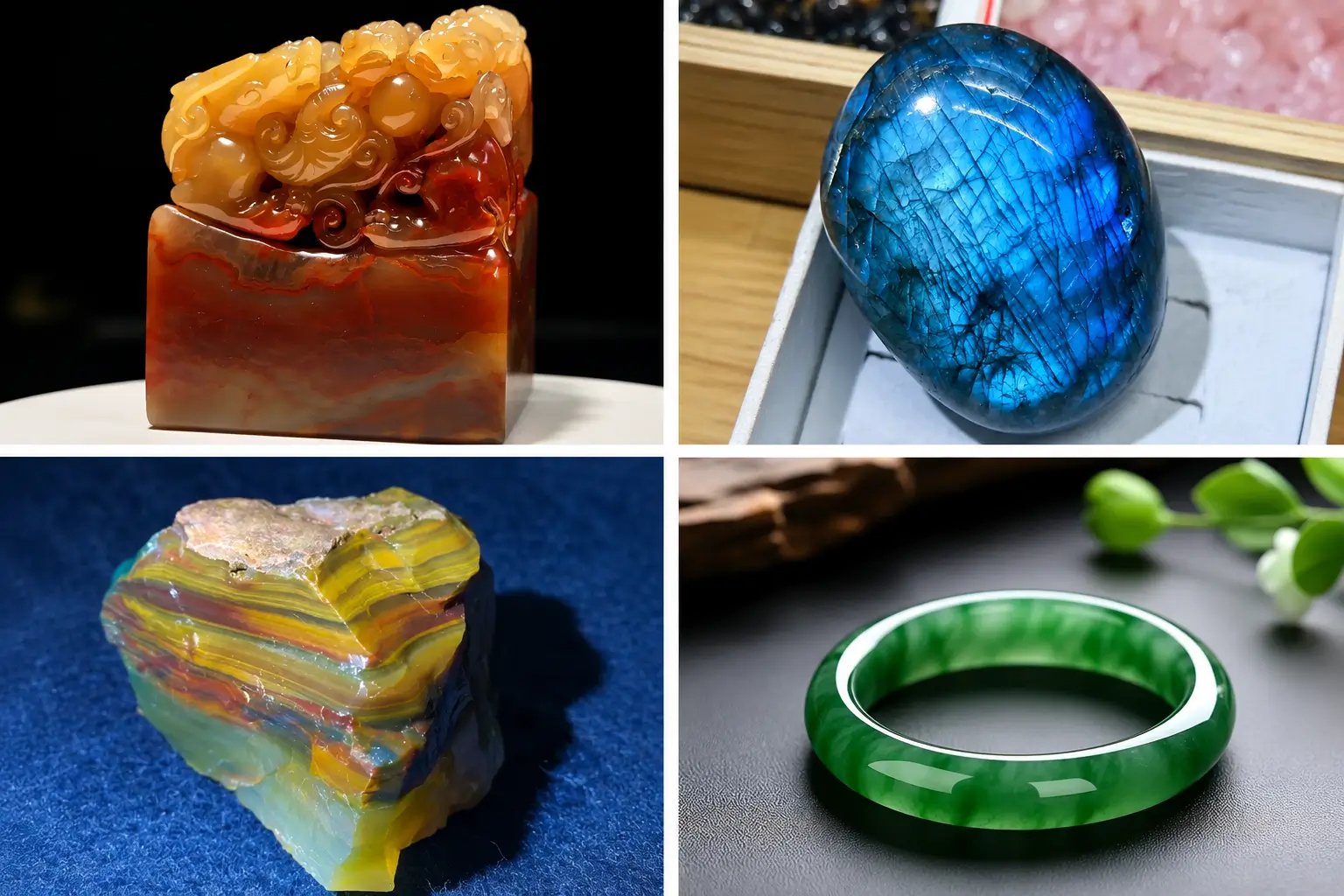
Today, we are diving deep into Inner Mongolia’s unique gemstone wealth. Join us as we explore its finest treasures: the prized Balin stone (one of China’s four legendary seal stones), Shetaicui quartzite jade, vibrant Alashan agates, as well as local moonstone, tourmaline, and aquamarine.
Balin Stone: China’s Legendary Pyrophyllite Seal Stone
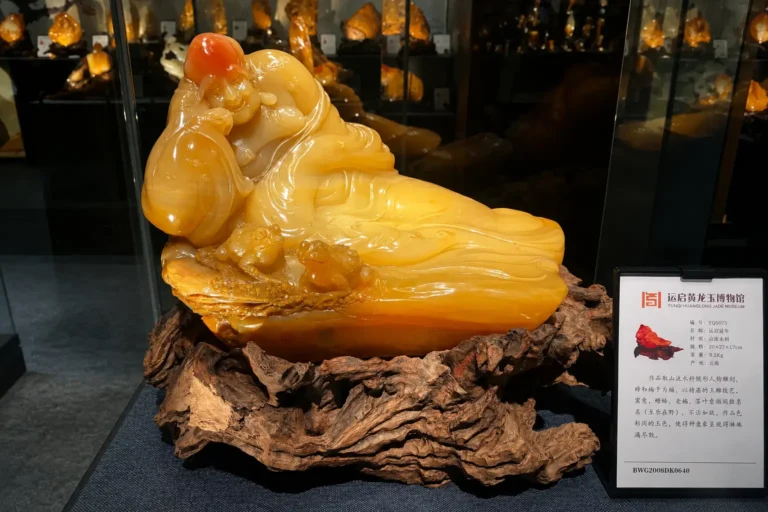
China is known for four famous seal stones: Changhua stone, Shoushan stone, Qingtian stone, and Balin stone. In our previous guide to Zhejiang Gemstones, we explored Changhua chicken-blood stone and Qingtian stone. Today, we focus on Balin stone. Gemologically, it is a variety of pyrophyllite. This stone comes from the Yamatu Mountain region in Bairin Right Banner, Chifeng, located in northeastern Inner Mongolia.
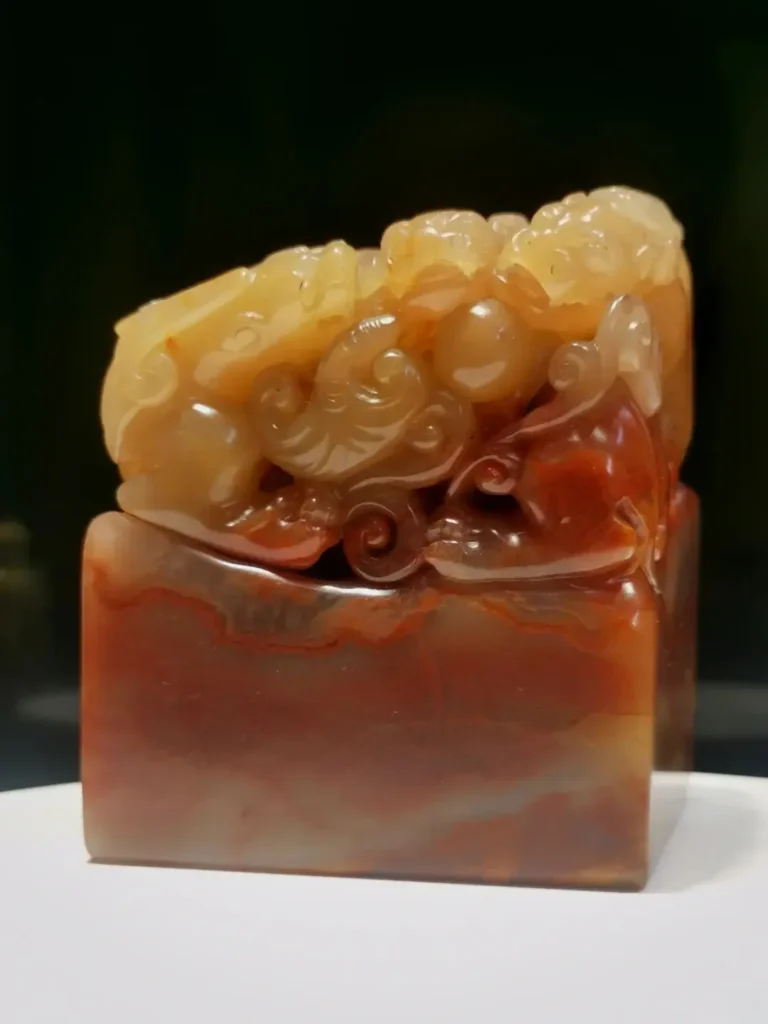
Balin stone has a Mohs hardness of 2 to 4. It features exceptional translucency, a fine, vitreous-to-waxy luster, and a rich, variegated color palette. People have mined and used this stone since the Neolithic Age. Commercial large-scale mining began in the 1970s, and the trade officially recognized it as one of China’s four famous seal stones in 1979.
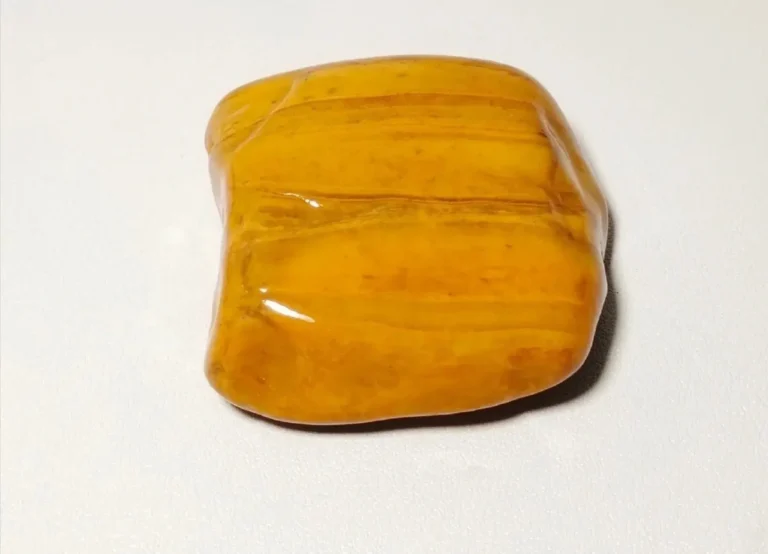
Based on variations in color, clarity, and inclusion patterns, the market divides Balin stone into five main categories and over a hundred sub-varieties: Balin chicken-blood stone, Balin Fuhuang (yellow) stone, Balin jelly stone, Balin colored stone, and Balin pattern stone.
Among these, Balin chicken-blood stone offers a beautifully translucent matrix (or “ground”), though its cinnabar-induced red patches are softer and more delicate than its southern counterpart. This distinct geological contrast sparked the famous trade maxim: “Southern Blood, Northern Matrix” when comparing it directly to Changhua stone.
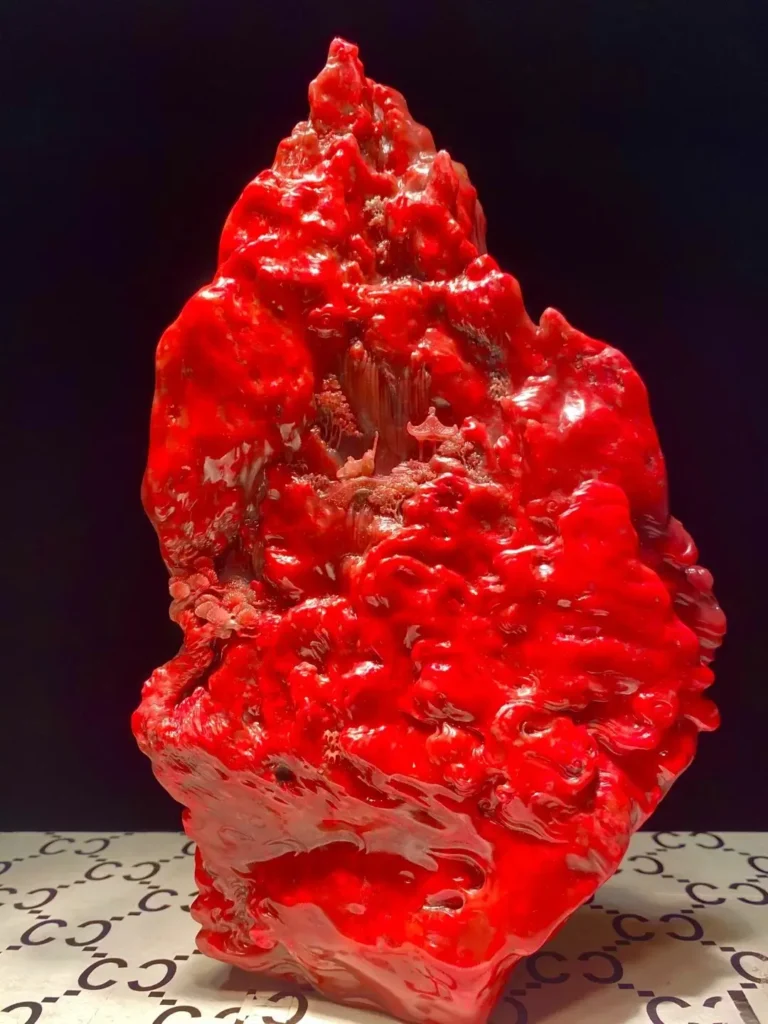
Meanwhile, Balin jelly stone is the most abundant and varied type. It is highly prized for its clear, delicate texture and diverse palette.
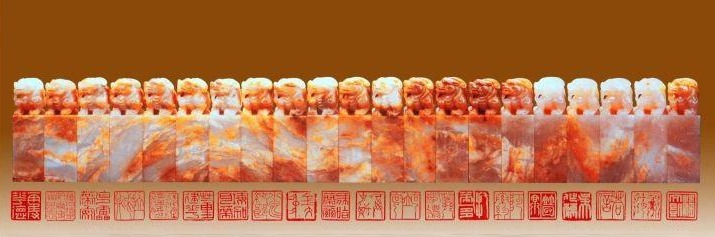
This stone also carries significant diplomatic pedigree. In 2001, craftsmen cut a massive 21-kilogram Balin yellow flower jelly stone into 21 identical seals. Named “The Surging Pacific,” the Chinese government presented these bespoke carvings as official state gifts to the 21 world leaders attending the APEC summit.
Shetaicui: Inner Mongolia’s Famous Quartzite Jade
In our previous article, What is Shetaicui Quartzite? The Truth Behind the “New Jade” Craze, we explored the broad market definition of this material versus authentic, origin-specific Shetaicui from Inner Mongolia.
Discovered in Dashetai Town within the western Urad Front Banner, “Shetaicui” is a popular trade name. According to China’s National Standards (Names of Gems and Jades), its official, correct gemological classification is quartzite jade.
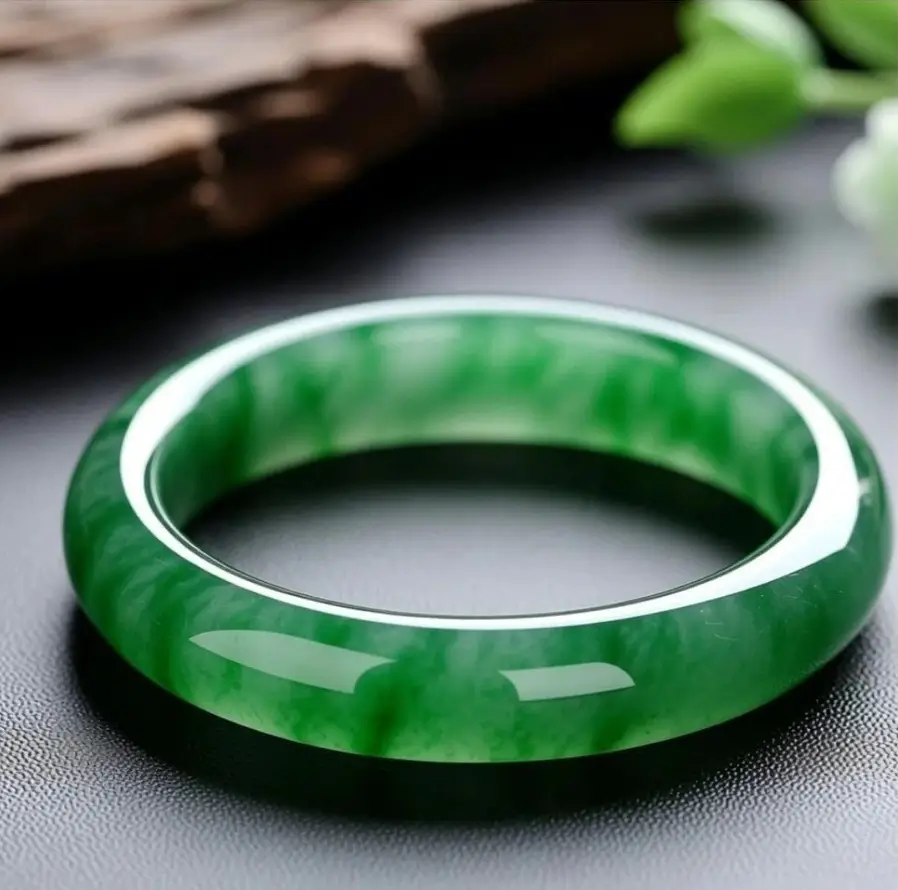
Shetaicui features a dense, granular structure and a Mohs hardness of 6 to 7. It displays a beautiful luster that ranges from vitreous to waxy. The stone also occurs in a rich palette of colors; while green is its signature shade, you can also find it in white, bluish-gray, yellow, and light purple.
Different mineral compositions drive this diverse array of colors. Gemologically, the pure green varieties get their vibrant hue from trace amounts of green sericite. These stones exhibit a striking shimmering effect known as aventurescence, allowing gemologists to also classify them as aventurine quartz. In contrast, the white varieties consist primarily of dolomite, classifying them as dolomite jade. Finally, the yellow and other multi-colored varieties consist mainly of quartz, along with minor amounts of feldspar, sericite, and muscovite—making them standard quartzite jades.
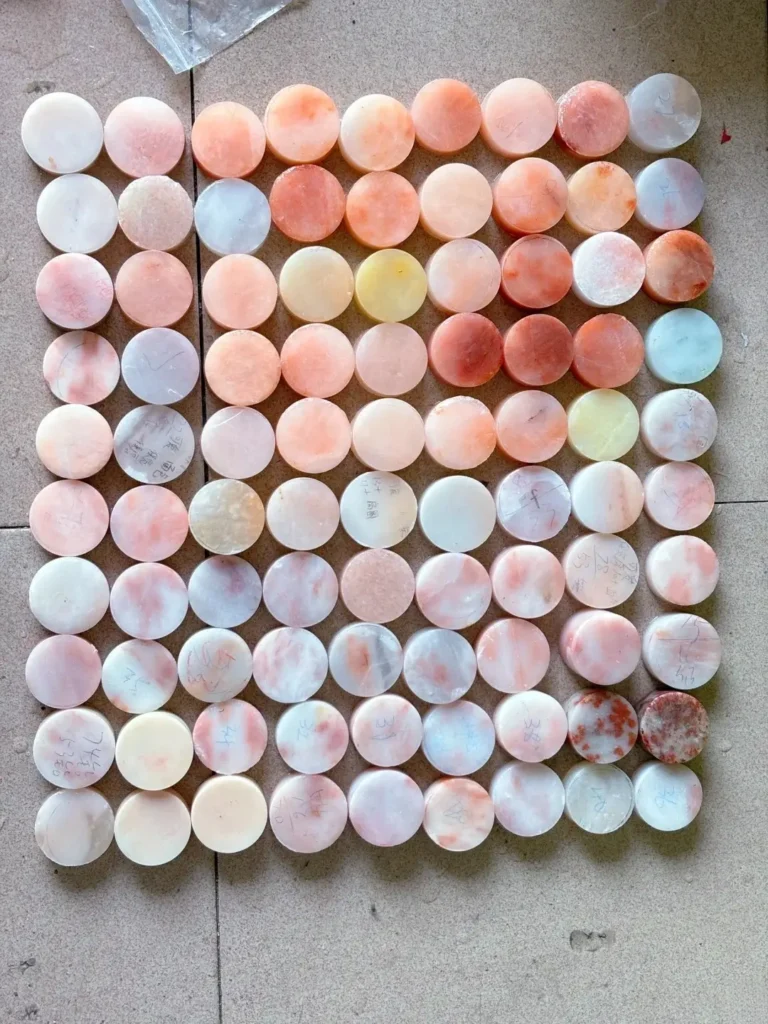
Because Shetaicui deposits are massive, shallow, and easy to mine, artisans frequently carve the large blocks into grand jade sculptures. On social media, its slightly coarse texture has made it a viral, “interactive” stone; oiling or frequent handling noticeably improves its appearance over time. However, the market also sees lower-grade pieces passed off as prized Hetian nephrite jade, so buyers must always stay sharp.
Aventurine Jewelry: The Matisse Collection
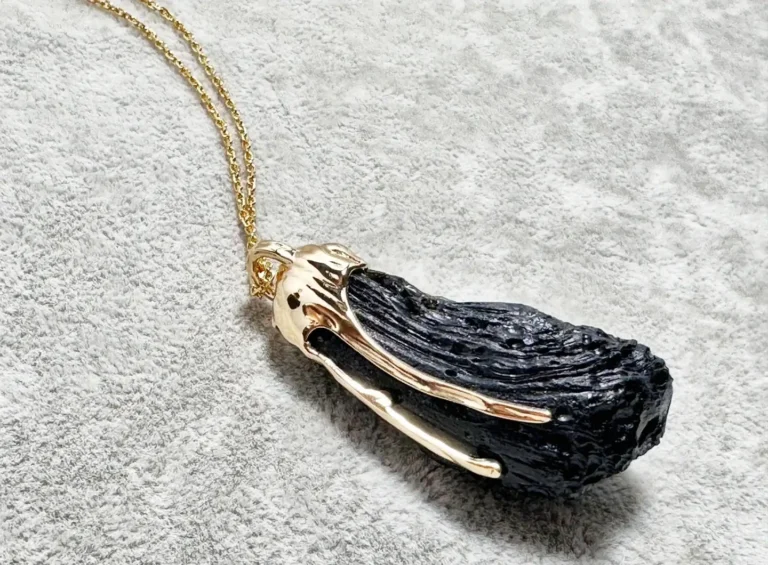
At Jewea, we love translating natural minerals into wearable art. Our Matisse Collection Red Aventurine Necklace draws direct inspiration from Henri Matisse’s masterpiece, Red Interior: Still Life on a Blue Table.
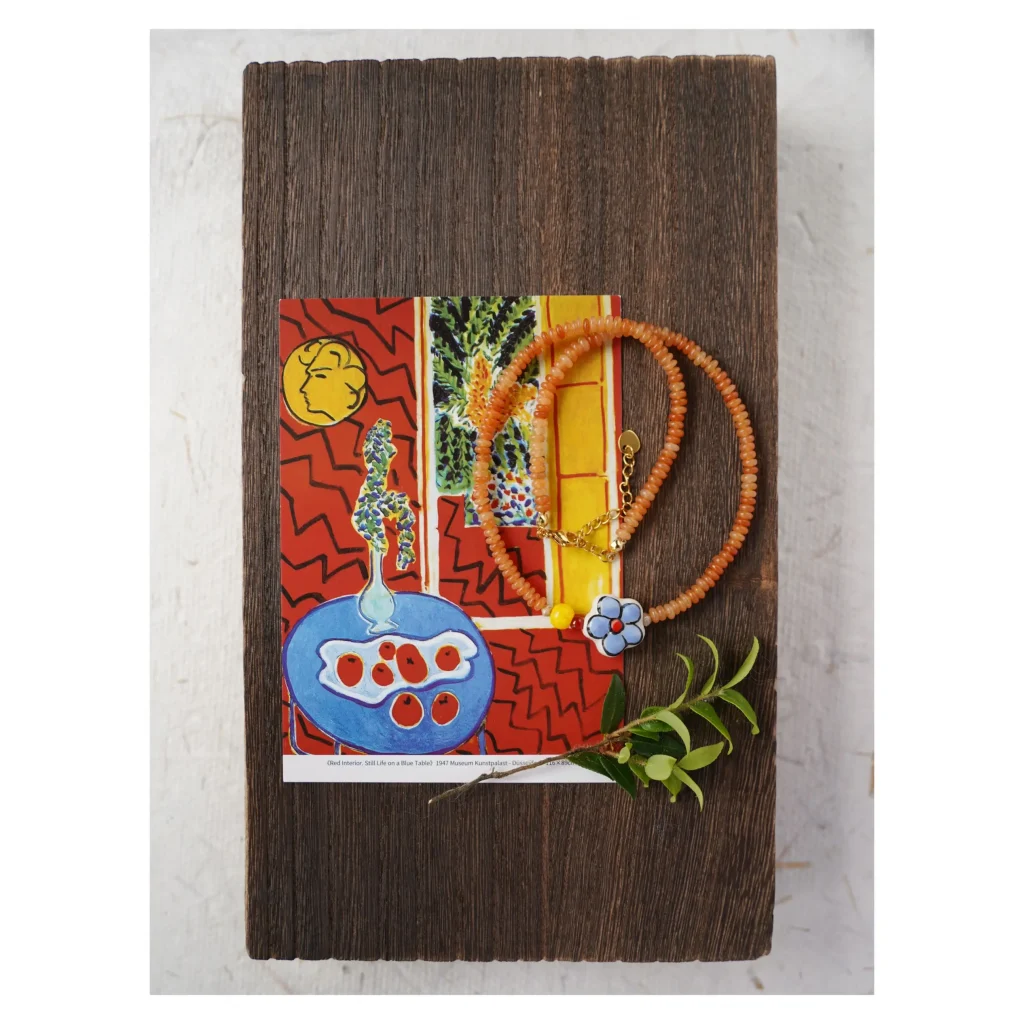
We captured his signature, bold color contrasts by pairing the natural shimmer of red aventurine with hand-painted ceramics. Designed like vibrant brushstrokes, these pieces celebrate color, joy, and the expressive spirit of modern art.
Alashan Agate: The Gobi Desert’s Multicolored Treasure
In our previous article, Types of Agate: Exploring Rare and Unique Varieties from China, we introduced several famous agate varieties across the country. Among them, Inner Mongolia stands out. The region boasts widespread deposits and numerous mining sites, producing nearly every type of agate known in China. These include silk-banded agate, enhydro agate (water-inclusion agate), and the highly sought-after Alashan agate.
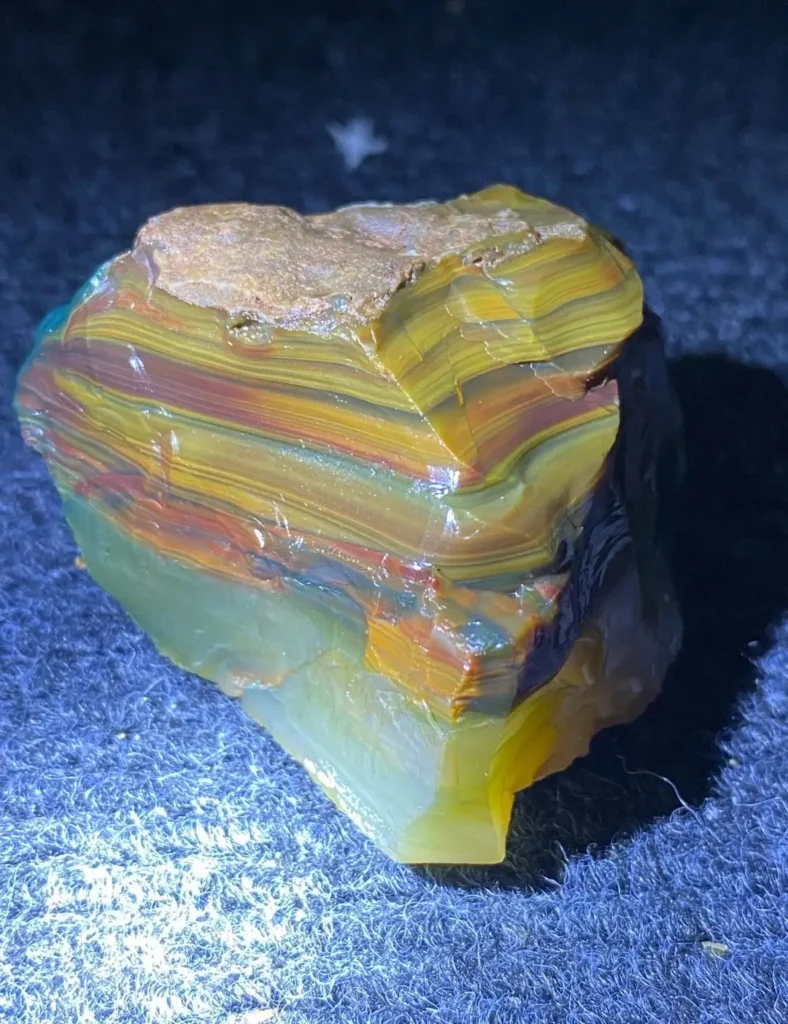
Also known as Alashan jade, Alashan agate originates from the harsh Gobi Desert of Inner Mongolia. Gemologically, quartz serves as its primary mineral component. It also contains minor traces of clay, goethite, hematite, and moganite. With a Mohs hardness of 7, this durable stone ranges from translucent to semi-translucent and displays a beautiful waxy-to-vitreous luster. Thanks to its vibrant, diverse palette, it has recently become a favorite medium for master contemporary jade carvers.
Alashan Agate Varieties: Meet “Alashan Jasper” and “Sugar-Heart Agate”
Alashan agate offers incredible variety. Based on its internal structure and geological formation, the trade divides it into two main categories: true agates and siliceous jaspers. Recently, two unique varieties have completely stolen the spotlight in the contemporary carving world:
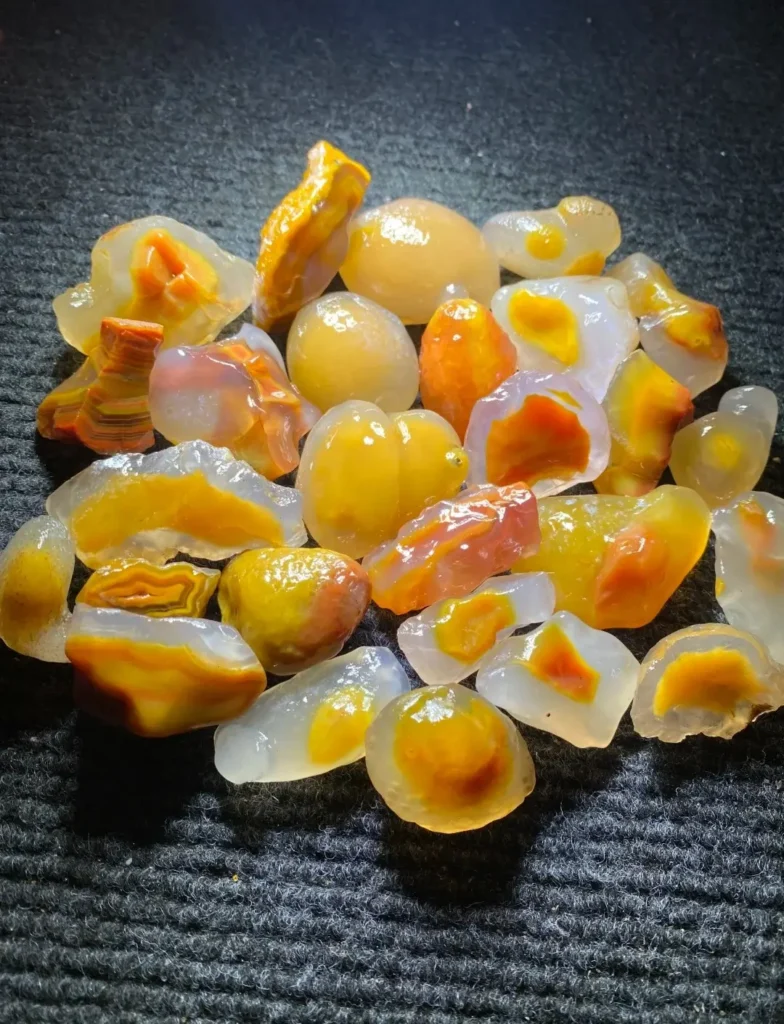
- Sugar-Heart Agate: Sourced primarily from the sweeping Gobi Desert, this variety counts the Alashan Left Banner as its largest distribution hub in China. True to its sweet name, it looks entirely unique compared to standard solid-colored agates. It features a translucent-to-transparent outer “skin” that encapsulates a much darker, concentrated center “core”—just like a piece of candy. By cleverly contrasting the colors of the outer skin and the inner filling, master carvers create breathtaking, one-of-a-kind masterpieces.
- Alashan Multicolored Jade (Alashan Jasper): Gemologically, this stone actually classifies as a “jasper” within the siliceous chalcedony family. It is highly prized for its rich colors, fine texture, and excellent hardness. Artisans love working with it because a single rough stone often features sharp, contrasting color zones—the perfect canvas for intricate, multi-colored cameo carvings.
Alashan Agate Bracelet: The Avocado Palette
At Jewea, we bring the rugged beauty of the Gobi Desert into daily life. Our Avocado Alashan Agate & Green Sandalwood Bracelet pairs the soothing, creamy green shades of select Alashan stones with aromatic green sandalwood and vintage Thai silver accents.
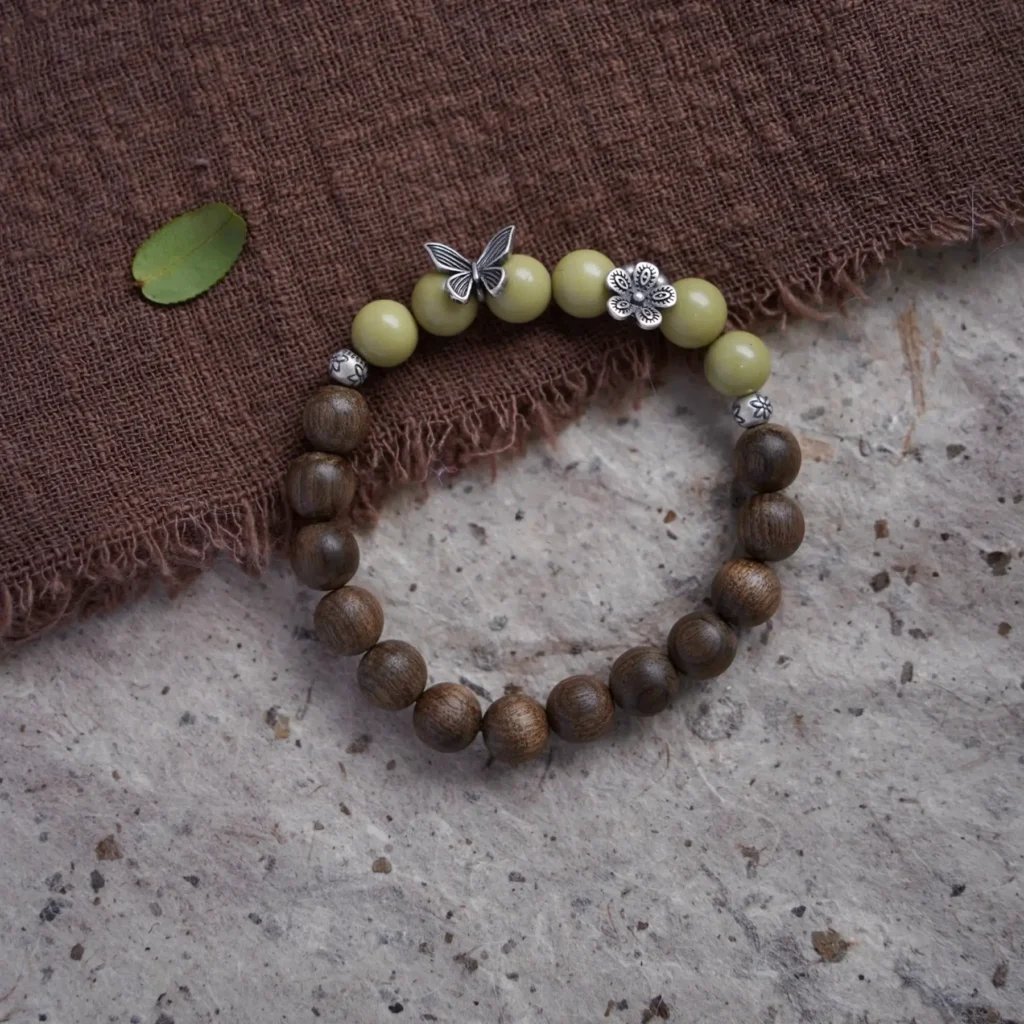
The stone’s natural luster perfectly complements the rich, organic grain of the wood, while the detailed Thai silver adds a timeless touch. It is a grounding, tactile piece designed for those who appreciate mindful craftsmanship and effortless, nature-inspired luxury.
Labradorite-Type Moonstone: Inner Mongolia’s Unique Feldspar
Moonstone, celebrated for its ethereal schiller effect, remains the most famous gem in the feldspar family.
In our previous article, June Birthstone: Can the Legendary Moonstone Really Predict the Future? Tiffany and Dior Have Used It Too!, we broke down how mineralogists divide the feldspar group into three main subgroups: potassium feldspar (alkali feldspar), plagioclase feldspar, and barium feldspar. Gemology focuses primarily on the first two. Traditional moonstone belongs to the potassium feldspar branch, while labradorite belongs to the plagioclase branch. Though they share the same family tree, they sit on entirely different branches.
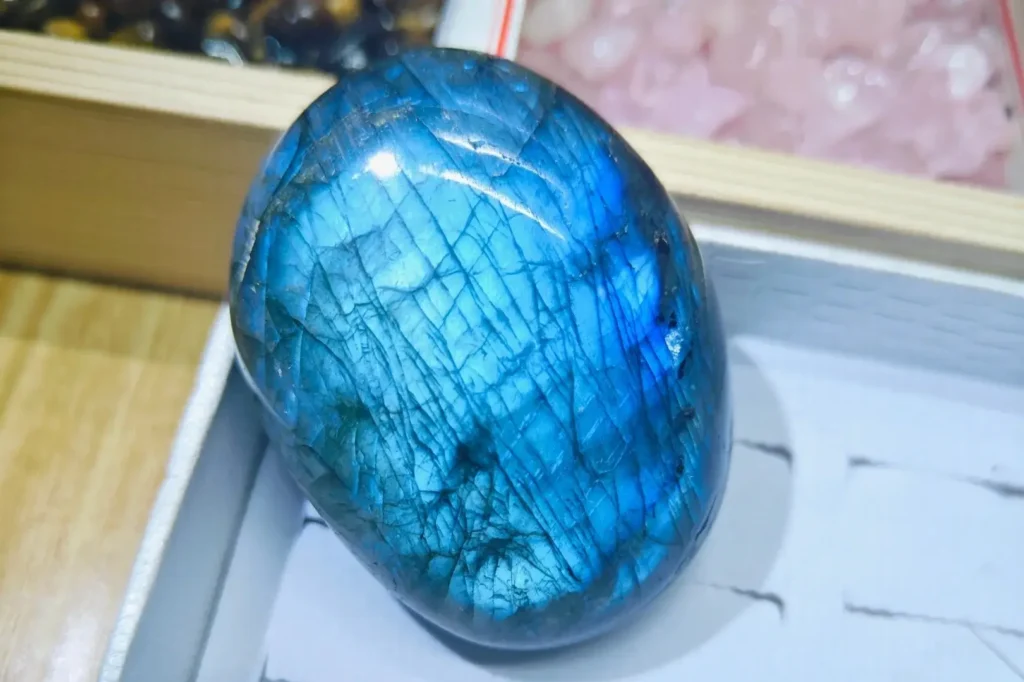
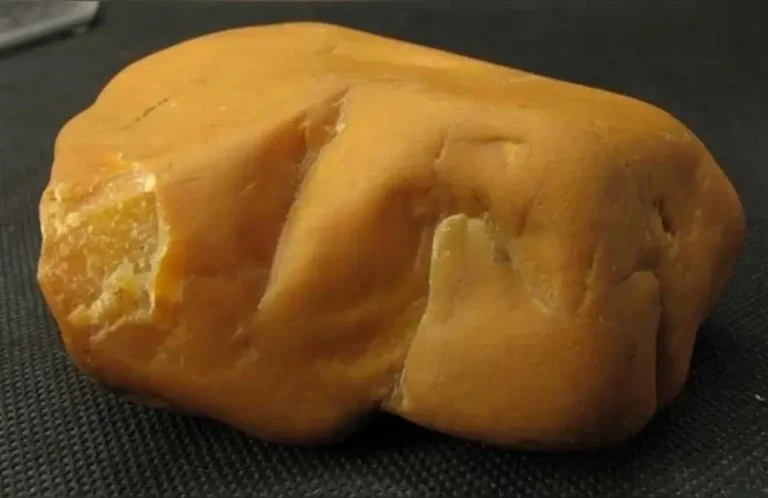
However, the moonstones from central Inner Mongolia break the rules. Gemologists classify these unique specimens as labradorite-type moonstones. Holding a Mohs hardness of around 6.5, the rough material typically occurs in irregular blocks or nodules. It ranges from translucent to semi-translucent and displays a delicate pale-yellow body color. Once cut and polished, these stones become wonderfully crystal-clear, rarely showing the typical cleavage fractures found in other feldspars. Some even exhibit beautiful optical phenomena like opalescence, chatoyancy (cat’s-eye effect), and labradorescence, making them highly prized by collectors.
Pegmatite Gems of Urad Middle Banner: Tourmaline and Aquamarine
The Jiaoligetai region within the Urad Middle Banner serves as a geological treasure trove. This prolific area yields a stunning variety of minerals, including tourmaline, aquamarine, agate, garnet, and quartz crystals.
Tourmaline
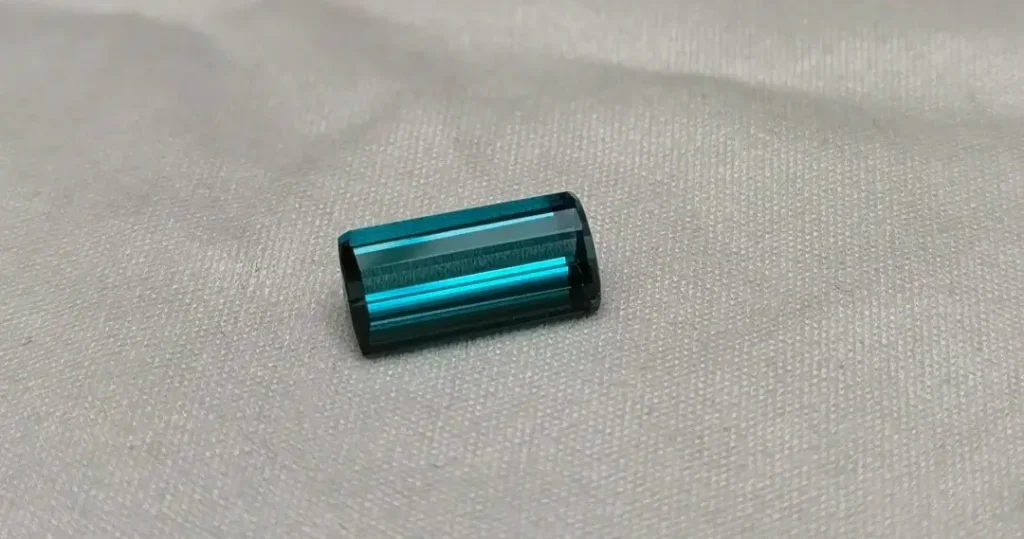
The tourmaline from this region features excellent quality and a vibrant color spectrum. You can find specimens in green, emerald green, grass green, sky blue, rose red, and pale yellow. Among these, the rich green varieties stand out as the finest. However, findable crystals that are both large and highly transparent remain incredibly rare; most of the local material does not quite reach gem-grade quality.
Aquamarine
In addition to tourmaline, miners have also discovered limited deposits of aquamarine in the Jiaoligetai area. Here, aquamarine frequently grows alongside blue-green tourmaline and rutilated quartz.
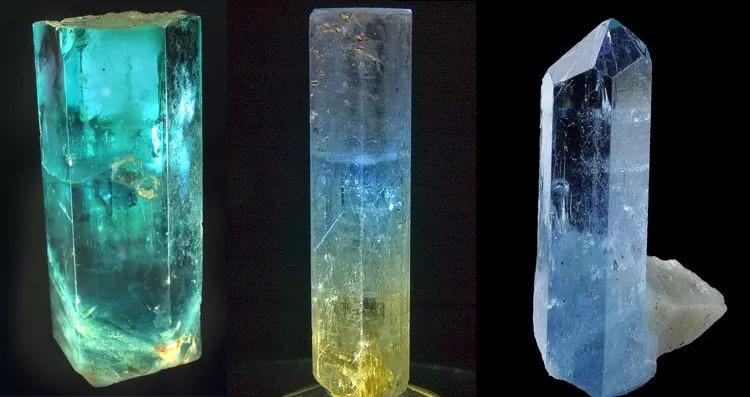
These local stones offer high transparency and typically feature crystal diameters exceeding 5 millimeters. Interestingly, some specimens even display a beautiful chatoyancy (cat’s-eye effect). Their colors range from pale blue to a medium deep blue, though the lighter-colored stones often house dense clusters of two-phase (gas-liquid) inclusions.
Explore More from the Gemstones of China Series
At Jewea, our mission is to uncover the hidden geological wonders across China. Before our deep dive into the Gemstones of Inner Mongolia, we explored several other regions known for their exceptional treasures.
Catch up on our previous journeys through these provinces:
North China