Gemstones of Henan: Dushan Jade, Mi Jade, Plum Blossom Jade & Tiger’s Eye | Gems of China Series
In this edition of our Gemstones of China series, we journey to the heart of the Central Plains to uncover the hidden geological treasures of Henan Province.
Henan is the cradle of Chinese civilization. It serves as the historic seat of thirteen ancient dynasties and boasts five UNESCO World Heritage sites. This remarkable region is also the birthplace of three of ancient China’s Four Great Inventions: the compass, paper, and gunpowder. Today, Henan has evolved into a powerhouse of agriculture and modern industry.
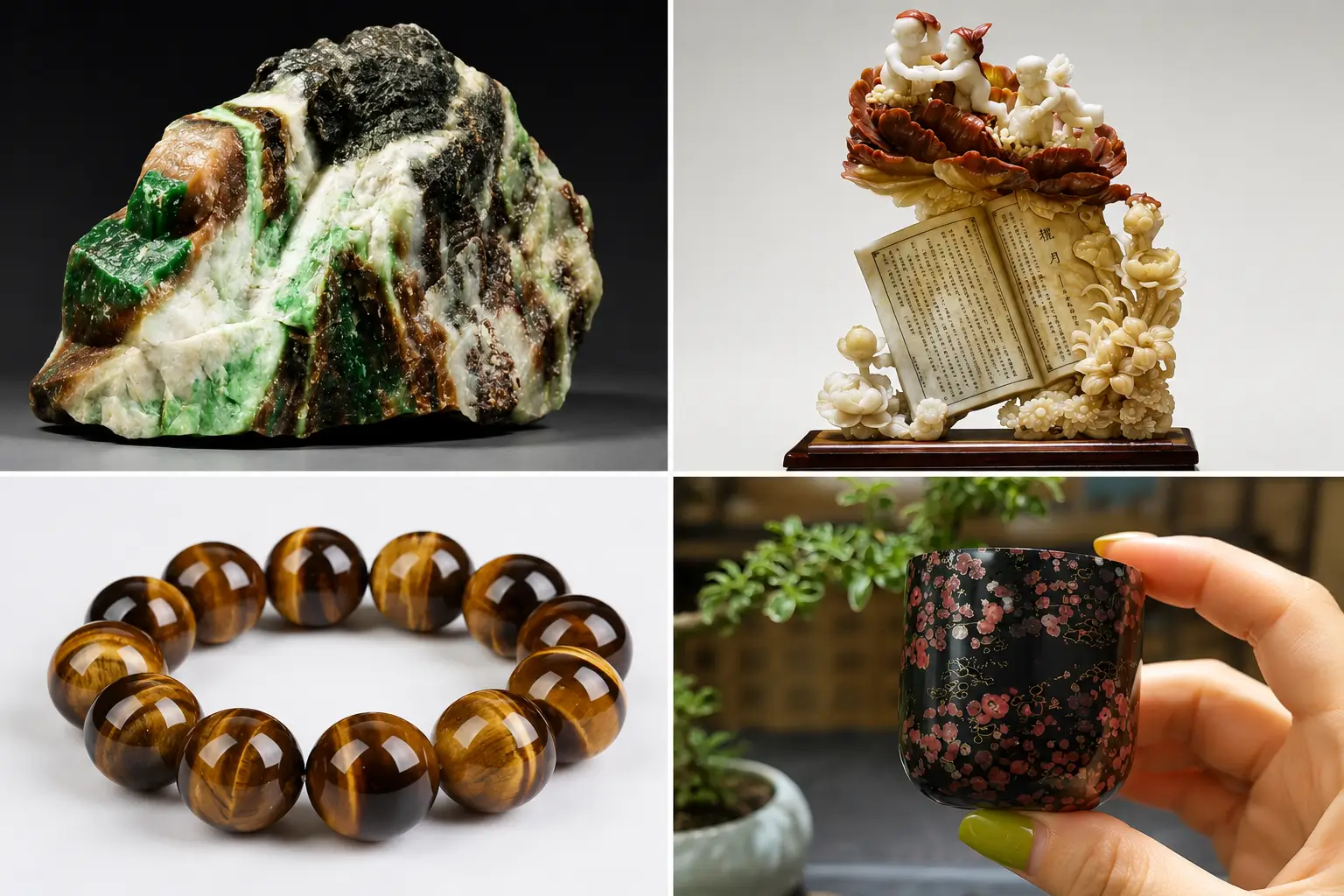
While the tech world knows Henan for producing over 50% of the world’s lab-grown diamonds, our focus today shifts to the earth’s raw artistry. We are exploring four of the most spectacular Henan Gemstones: Dushan Jade, Mi Jade, Plum Blossom Jade, and Tiger’s Eye.
Dushan Jade: One of China’s Four Great Ancient Jades
As we previously explored in our dedicated guide to Nanyang Dushan Jade, this historic stone derives its name from Mount Du in Nanyang, Henan Province. It is recognized as one of the four great ancient jades of China. Historical records show that large-scale mining began as early as the Neolithic period and peaked during the Han and Tang dynasties. By the Ming and Qing dynasties, advanced carving techniques made Dushan Jade highly favored among royal courts and nobility.
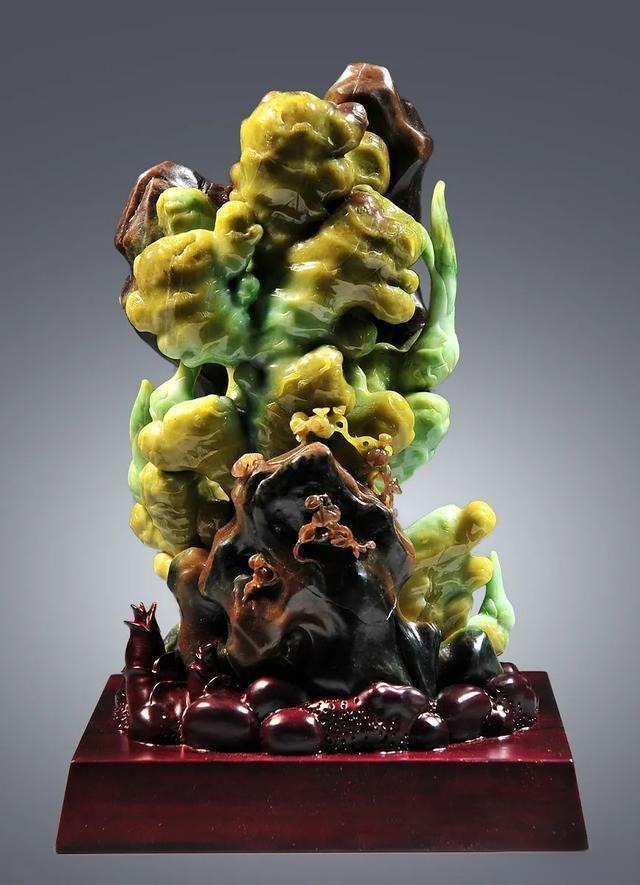
Following the rise of Hetian nephrite and jadeite, Dushan Jade gradually lost its dominant market position and faded from public focus. It experienced a major resurgence after the implementation of China’s reform and opening-up policies, regaining popularity among modern collectors.
Mineralogical Composition and Color Spectrum
From a gemological perspective, Dushan Jade is a complex multi-mineral rock, primarily classified as a plagioclasite. Its composition mainly consists of plagioclase feldspar and zoisite. It can also contain varying amounts of chrome mica, prehnite, zeolite, and actinolite.
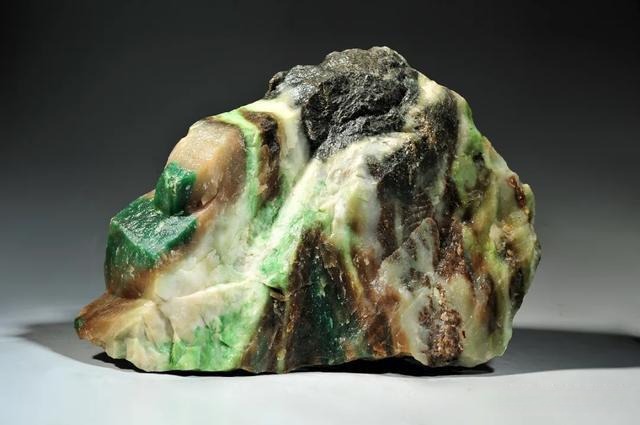
Because of this complex composition, the stone contains various trace elements and color-causing ions, including chromium (Cr3+), iron (Fe2+), and manganese (Mn2+). These ions produce a highly diverse color palette. A single specimen often exhibits two to three distinct hues arranged in bands, patches, or gradients.
- Green Variety: High-quality green specimens display excellent color and translucency, making them comparable to fine jadeite.
- Single-Colored Variety: Uniform, single-colored Dushan Jade is exceptionally rare and carries a higher market value.
Physical Properties and Lapidary Craftsmanship
In addition to its diverse colors, Dushan Jade possesses a strong luster and a high Mohs hardness of 6 to 6.5, making it an excellent material for intricate carving.
Lapidary artists frequently utilize a traditional heritage technique called Qiao Diao, or clever carving. Instead of working against the multi-colored nature of the stone, carvers strategically use the natural color boundaries to dictate the forms within the final sculpture.
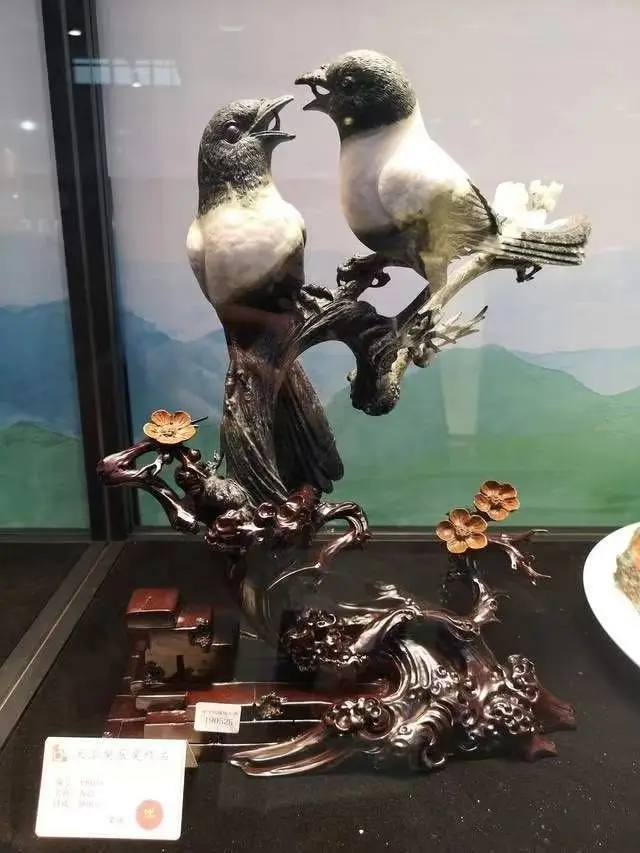
The physical properties and unique color distribution of Dushan Jade make it highly valued in the modern carving industry, as demonstrated by recent industry recognition:
- 2020 Tiangong Awards: The artwork Spring Whispers (Chun Yu), crafted primarily from Dushan Jade, won the Award of Excellence at this premier annual jade carving competition.
Mi Jade: A Quartzite Gemstone
In addition to Dushan Jade from Nanyang, Xinmi City in Henan Province produces a notable quartzite gemstone known as “Mi Jade.” Broadly classified as a type of aventurine quartzite, Mi Jade mining dates back to the late Ming and early Qing dynasties. Artisans quickly adopted it as a primary raw material for crafting items like tobacco pipes and snuff bottles.
Mineral Composition and Color Classification
Mi Jade features a fine texture and a distinct vitreous luster. It is composed primarily of quartz, along with trace amounts of zircon, tourmaline, and rutile.
Various transition metal ions yield a highly diverse color palette. According to the regional “Mi Jade” standards established by Henan Province in 2014, the trade classifies this gemstone into seven color categories and twenty specific varieties:
- Green Mi Jade: This variety features a vivid green hue. As the rarest and most valuable type, it carries the trade moniker “Henan Jadeite” (Henan Cui).
- Multi-Colored Mi Jade: This variety displays variegated, intertwining bands of red, yellow, black, and green.
Lapidary Artistry and Heritage
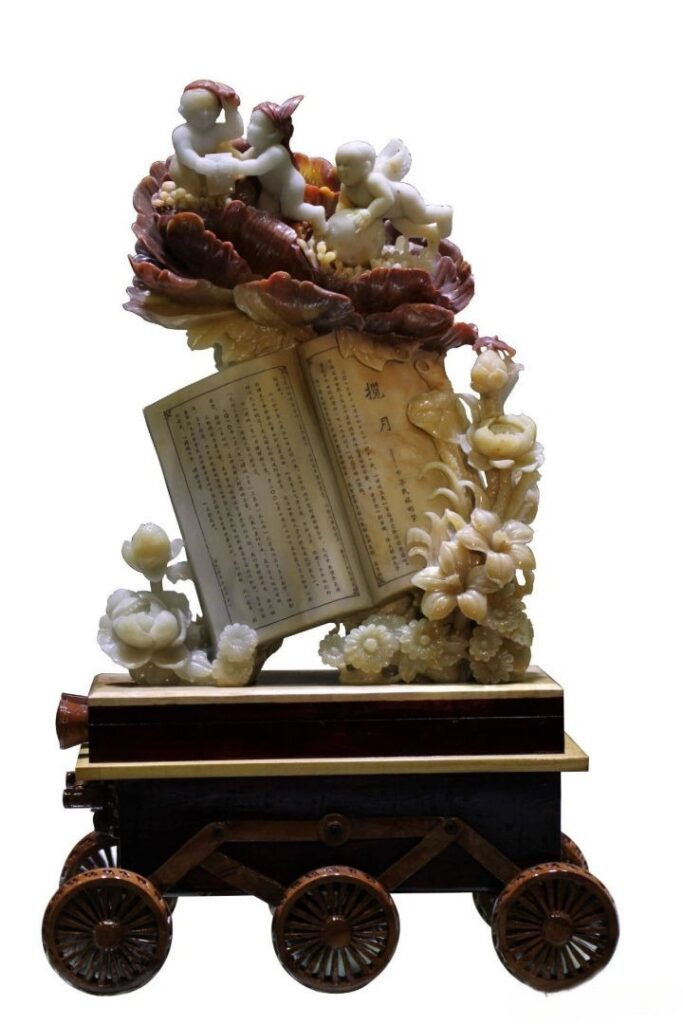
Due to this rich color variation, lapidary artists frequently employ the Qiao Diao (clever carving) technique to maximize the stone’s natural patterns.
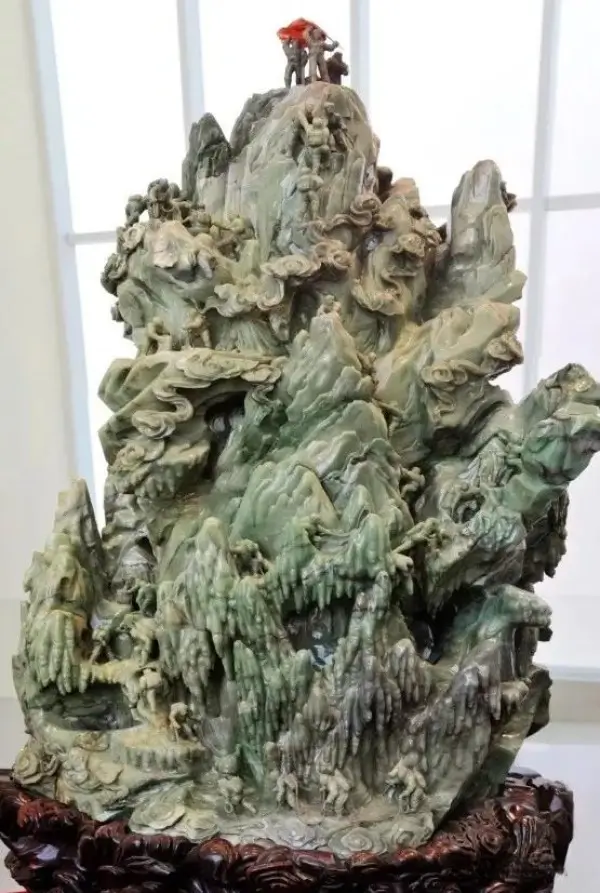
The historical and artistic significance of this material is preserved in prominent museum collections:
- The “King of Mi Jade”: Discovered in Xinmi in 1958, a team of 13 master lapidaries spent three years transforming this massive specimen into a monumental sculpture titled Scaling the Heights (Yong Pan Gao Feng). The masterpiece is currently on display at the Shanghai Museum.
Plum Blossom Jade: Exclusive to China
Plum Blossom Jade, also known as “Ru Jade,” derives its name from its exclusive source in Ruyang County, Henan Province. This unique ornamental stone is a black, amygdaloidal andesite (a type of volcanic rock). It features a jet-black base punctuated by red, white, and yellow patterns that closely resemble blossoming plum trees.
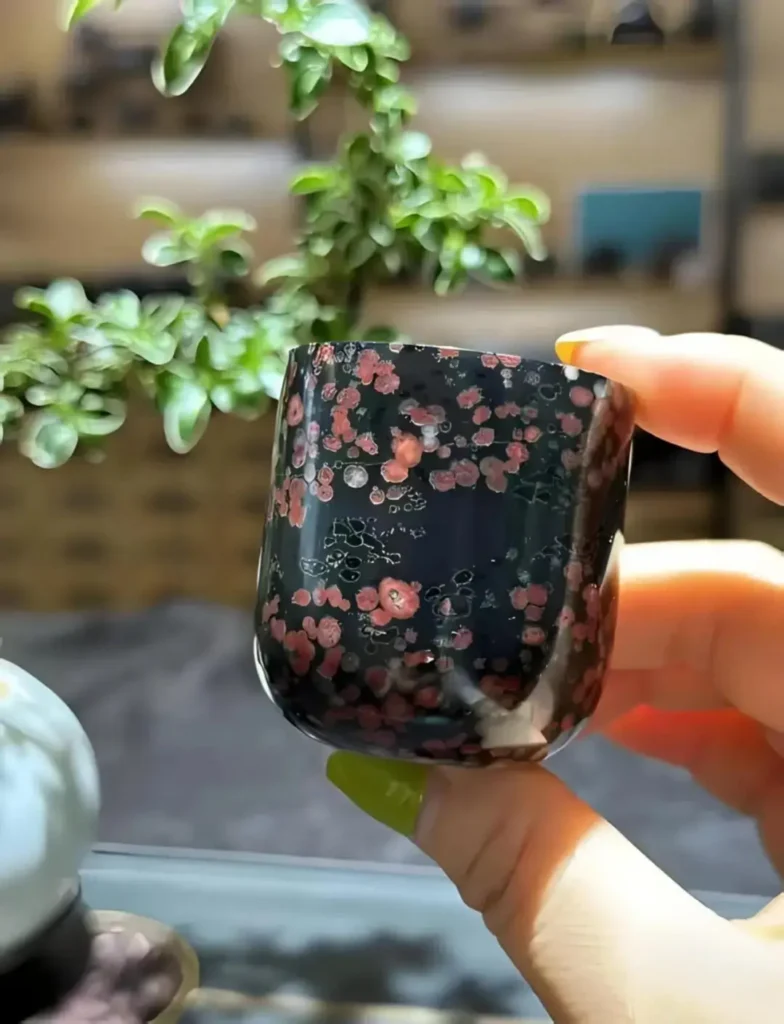
Historical records indicate that mining for Ruyang Plum Blossom Jade began as early as the Shang and Zhou dynasties. Political conflicts and the rising popularity of alternative gemstones eventually led to the decline of its production. Mining operations only resumed following China’s economic reforms in the late 20th century.
Geological Formation and Varieties
The distinctive pattern of Plum Blossom Jade is a direct result of volcanic activity. As the hot lava cooled, escaping gases formed numerous mineral vesicles within the rock. Over time, rich secondary minerals filled these empty voids. Varying trace elements within the deposits created the different colors. These colorful mineral pockets are what form the iconic “plum blossom” patterns.
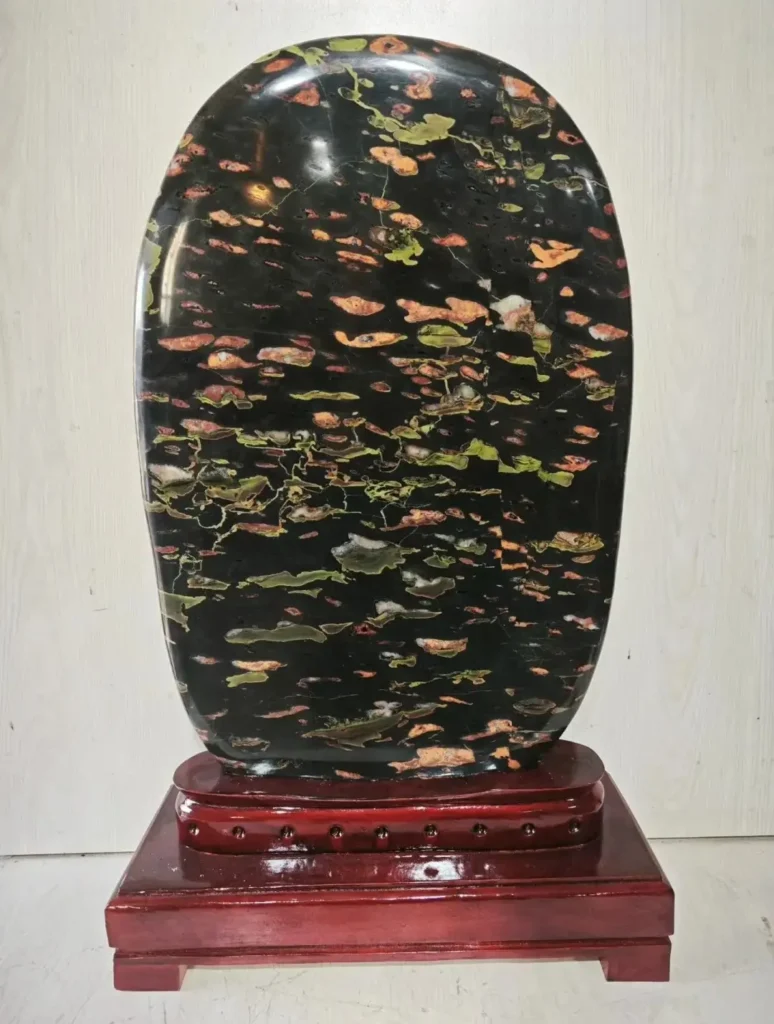
The trade classifies Plum Blossom Jade into several distinct varieties based on the shape and color of these floral patterns, including Green Plum, Red Plum, Rice Plum, Shuo Plum, and Xin Plum.
- Green Plum Jade: In this traditional and abundant variety, epidote and omphacite serve as the primary mineral infills. Because of its large mineral reserves and high yield, lapidaries frequently process this variety into ornamental crafts, carvings, and display pieces.
Tiger’s Eye: A Silicified Gemstone
Tiger’s Eye, trade-named locally as “Xichuan Jade,” occurs primarily in the Xichuan and Neixiang counties of the Nanyang region in Henan Province. Geologically, it belongs to the chatoyant silicified rock family, commonly known as “pietersite” or “crocidolite-bearing quartzite.”
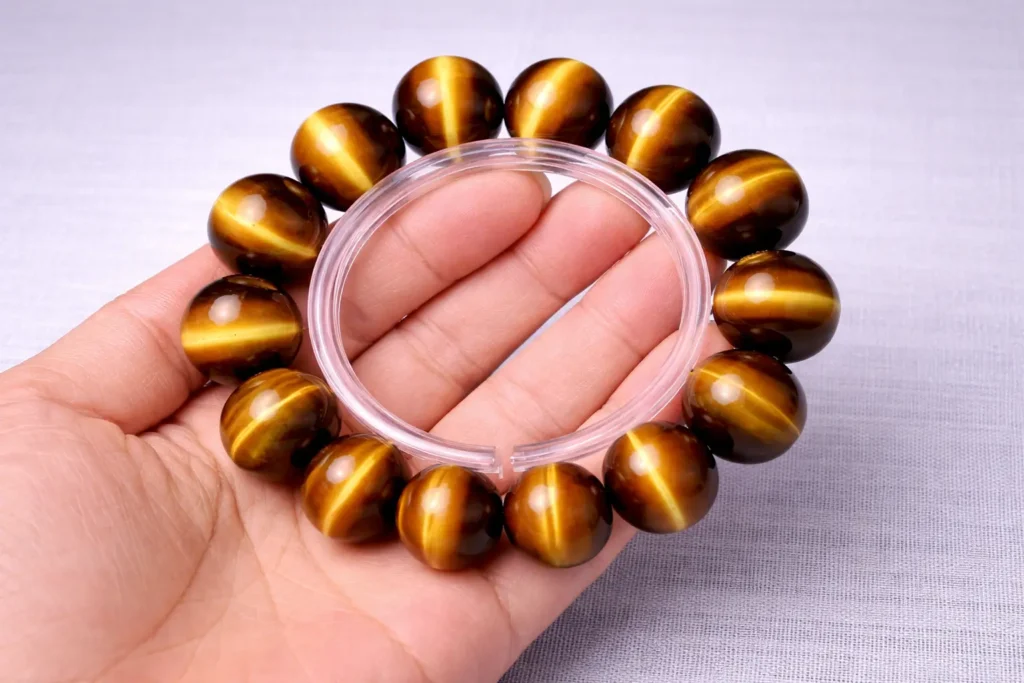
The mineral composition consists of silicified asbestos. Originally formed as blue crocidolite (riebeckite asbestos), a pseudomorphic replacement process later substituted the original structure with silica SiO2, preserving the finely fibrous texture.
Color Variations and Optical Effects

Uniform, single-colored Tiger’s Eye is rare. Instead, most specimens exhibit multicolor combinations, with reddish-purple, pure blue, golden-yellow, gold, and variegated hues being the most common.
- Hawk’s Eye: The trade specifically applies this name to the pure blue variety.
- Chatoyancy (The Cat’s-Eye Effect): When the internal mineral fibers are exceptionally fine and highly ordered, cabochons or spherical beads display a distinct, moving band of light across their surfaces. This striking optical phenomenon makes the gemstone highly sought after in the jewelry market.
Further Reading: To dive deeper into the mineral properties of this stone, explore the differences between Tiger’s Eye and Hawk’s Eye, or learn how to authenticate genuine specimens, read our complete guide: Tiger’s Eye Bracelet: Is Yours Natural?
Contemporary Application: Wearable Art by Jewea
At Jewea, we bring the geological wonders of Henan into modern fashion. We handcraft each of our designs, ensuring that no two pieces are exactly alike.
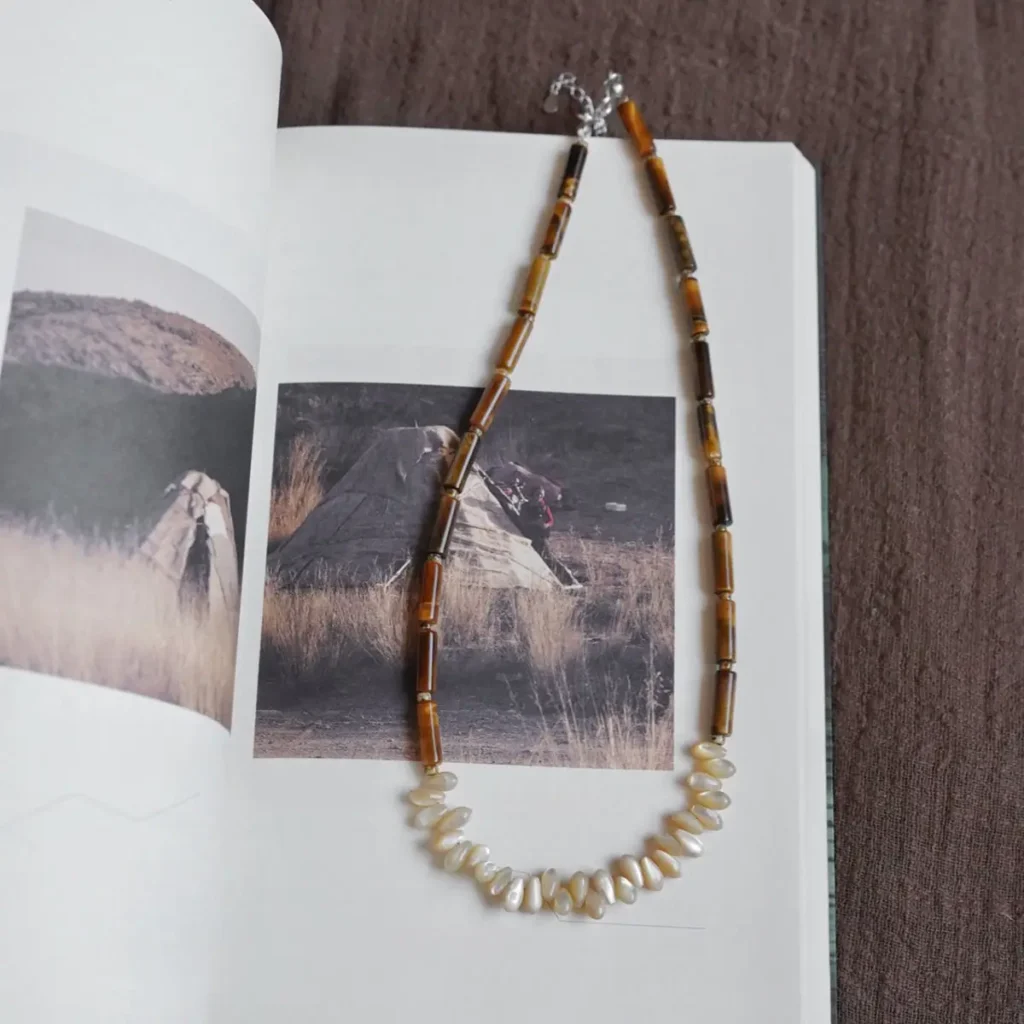
In this specific piece, we pair the deep, rich bands of our Tiger’s Eye Beaded Necklace with smooth, high-luster shell accents. We contrast the fibrous, earthy tones of the silicified stone with the soft iridescence of the shell. This interplay celebrates natural asymmetry and expert hand-assembly. The result is a unique piece of wearable art.
Explore More in Our Chinese Gems Series
At Jewea, our mission is to uncover the hidden geological wonders across China. Before we dove into the Gemstones of Henan we explored several other regions famous for their rare and storied treasures.
Take a look back at our previous journeys:
Central China