Abalone Pearl: An Iridescent Wonder from the Ocean
In our previous feature, Edison Pearls: The Bold Revolution in Freshwater Gems, we unraveled how nucleated cultivation technology transformed the freshwater pearl industry and sparked an inspiring new era in pearl design.
Today, we dive into the open ocean to explore one of the marine world’s rarest organic treasures: the Abalone Pearl.
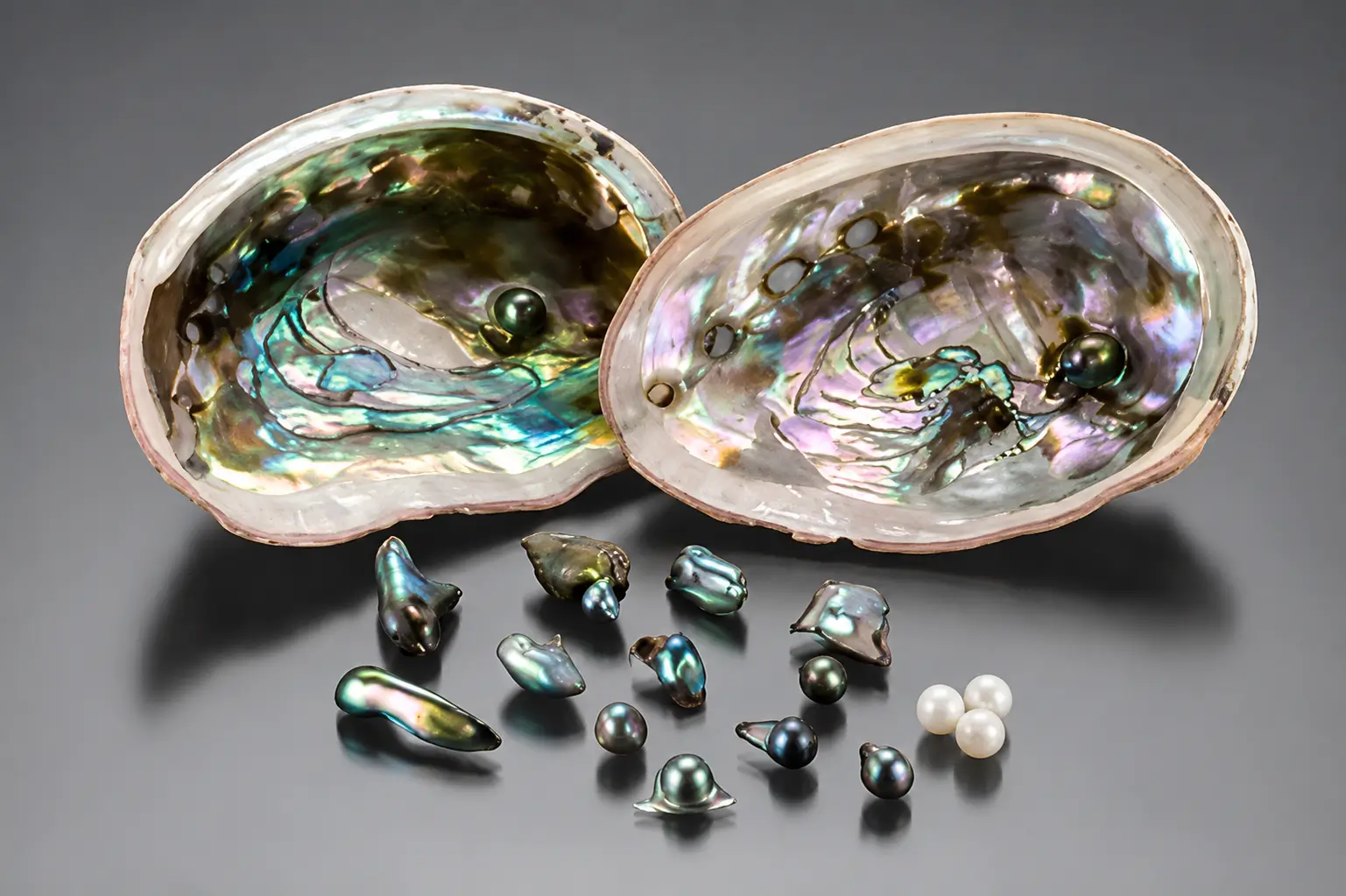
Unlike traditional bivalve pearl oysters, abalone is a single-shelled marine gastropod. Its unique anatomy limits pearl growth space, leading to distinctive organic shapes, complex growth patterns, and intense iridescence.
In this article, we examine the natural habitat of abalone, the intricate mechanisms behind pearl formation, the grueling challenges of cultured production, and the breathtaking color spectrums that make these rare ocean gems highly prized by collectors, designers, and connoisseurs worldwide.
The Host: Understanding Abalone
Abalone belong to the family Haliotidae, a group of single-shelled marine gastropods that live along rocky coastlines around the world. Known for their rich flavor and nutritional value, abalone has long been regarded as a prized seafood delicacy in many cultures.
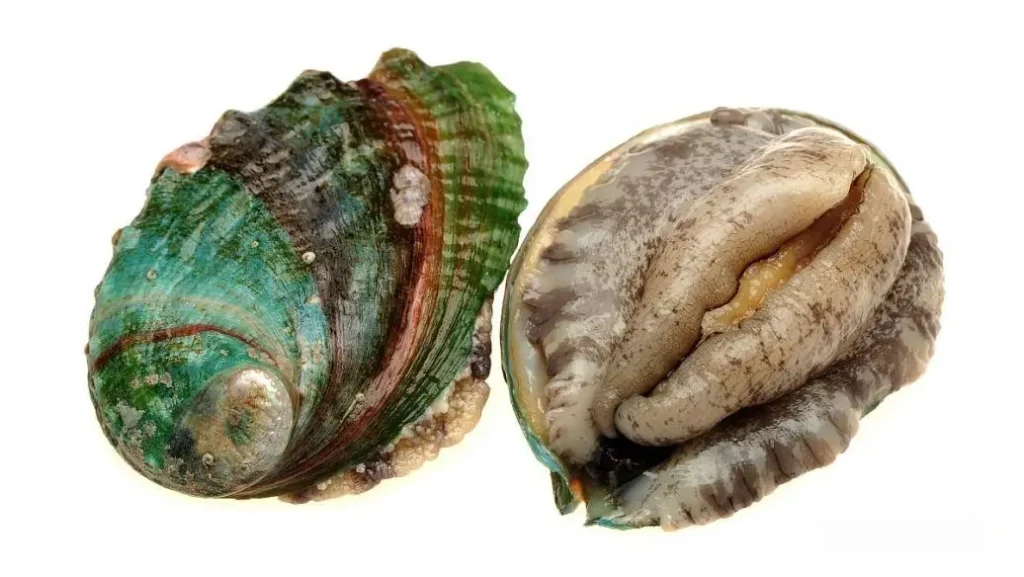
Wild abalone mainly inhabit cold and temperate marine waters. Major populations are found along the coasts of New Zealand, Australia, South Africa, Japan, and the Pacific coast of North America. Several abalone species also live along China’s coastline, and some are now commercially cultivated through aquaculture.
Beyond their culinary value, abalone shells also have unique artistic appeal. Most people are familiar with the vibrant iridescence created by the nacreous inner layer of the shell. After professional cleaning and polishing, abalone shells can reveal natural patterns, distinctive textures, and subtle variations in color and luster.
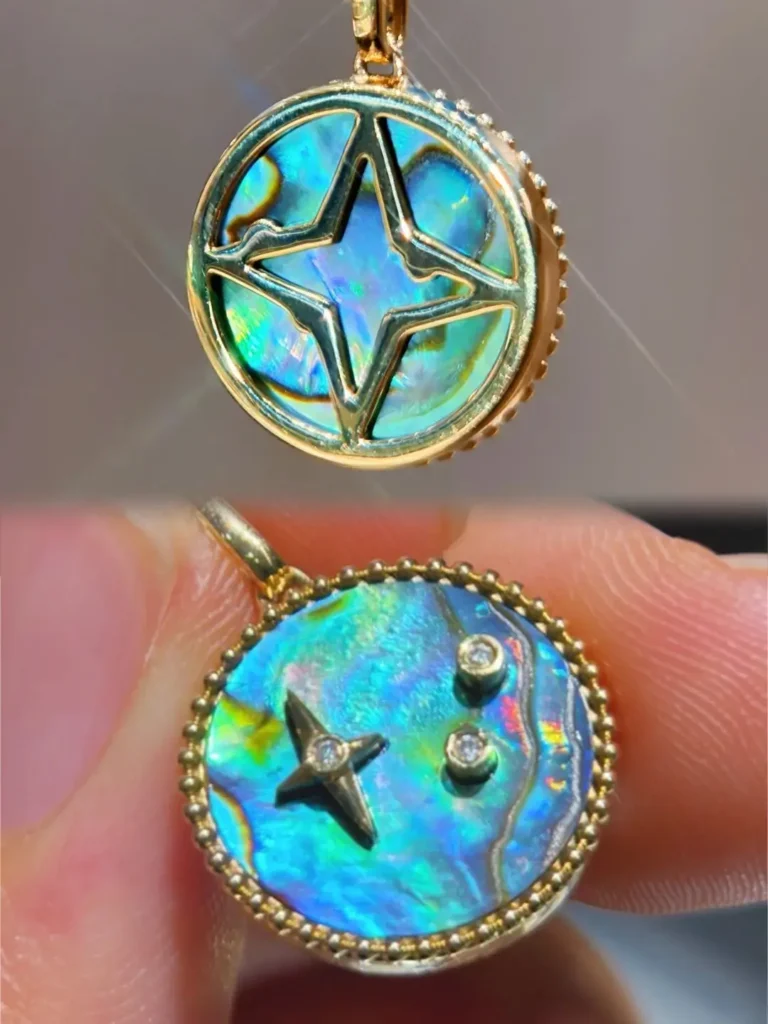
As we introduced in 4 Shell Jewelry Materials from the Ocean: Natural Beauty in Handmade Design, artisans treasure abalone shell for its unique play of color. Today, this natural material appears in handcrafted jewelry, artistic inlays, luxury watch dials, and fine decorative arts.
Formation of Abalone Pearl: A Rare Gift from Nature
Although abalone shells are relatively accessible, genuine Natural Abalone Pearls are exceptionally rare.
Abalone has the biological ability to produce nacre and form pearls, but natural pearl formation occurs only under very specific conditions. As a result, most wild abalone never produce pearls, and only a small number of Natural Abalone Pearls reach gem-quality standards.
The formation of an Abalone Pearl follows the same basic principle as other natural pearls. When an irritant or foreign material triggers a defensive response, the mantle secretes nacre and gradually deposits layers around the source of irritation. Over many years, these layers can develop into a pearl.
Unlike traditional pearl-producing bivalves, such as Akoya and South Sea pearl oysters, abalone is a single-shelled mollusk. This unique shell structure limits the space available for pearl growth inside the soft tissue.
As a result:
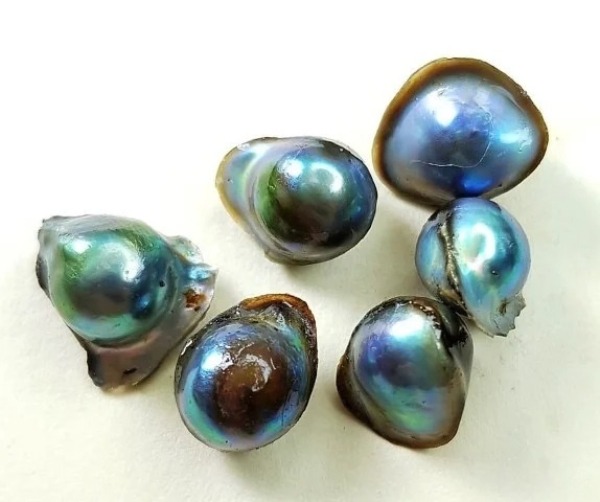
- Most Abalone Pearls occur as blister pearls, which grow directly against the inner shell surface and are often used in mabe-style jewelry.
- True free-form pearls that develop completely within the soft tissue are extremely rare.
- Naturally round Abalone Pearls are almost never found.
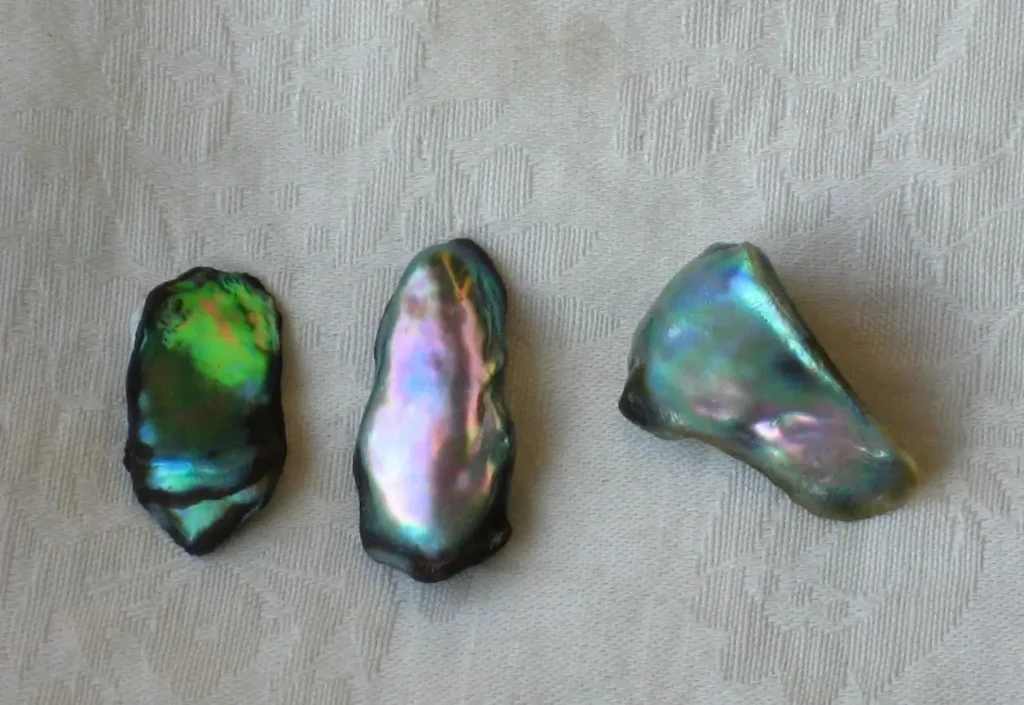
Instead, Abalone Pearls usually display organic shapes, including curved, horn-like, tooth-like, and other free-form forms.
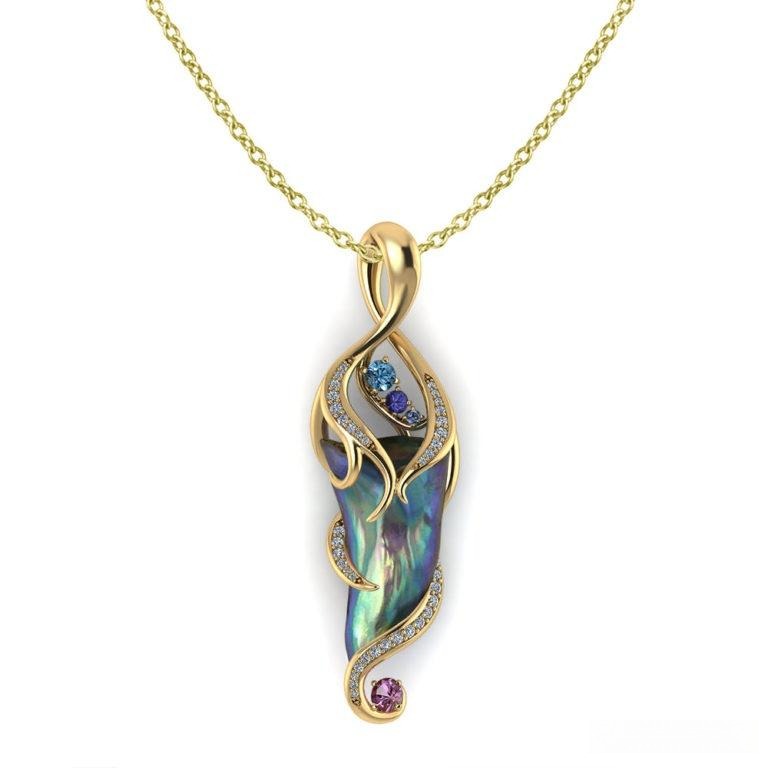
For jewelry designers, these natural variations are part of the appeal. Each Abalone Pearl has its own contours, colors, and patterns. Designers often combine them with gold, platinum, diamonds, and colored gemstones to create distinctive one-of-a-kind jewelry pieces.
Can Abalone Pearls Be Cultured?
Compared with traditional pearl farming, the commercial cultivation of Abalone Pearls remains far more challenging.
The main difficulty comes from abalone’s unique biological structure.
Abalone has an open circulatory system, and its hemolymph, clotting response, and wound repair process differ from those of traditional pearl oysters. During nucleus implantation or tissue procedures, larger injuries can increase the risk of mortality.
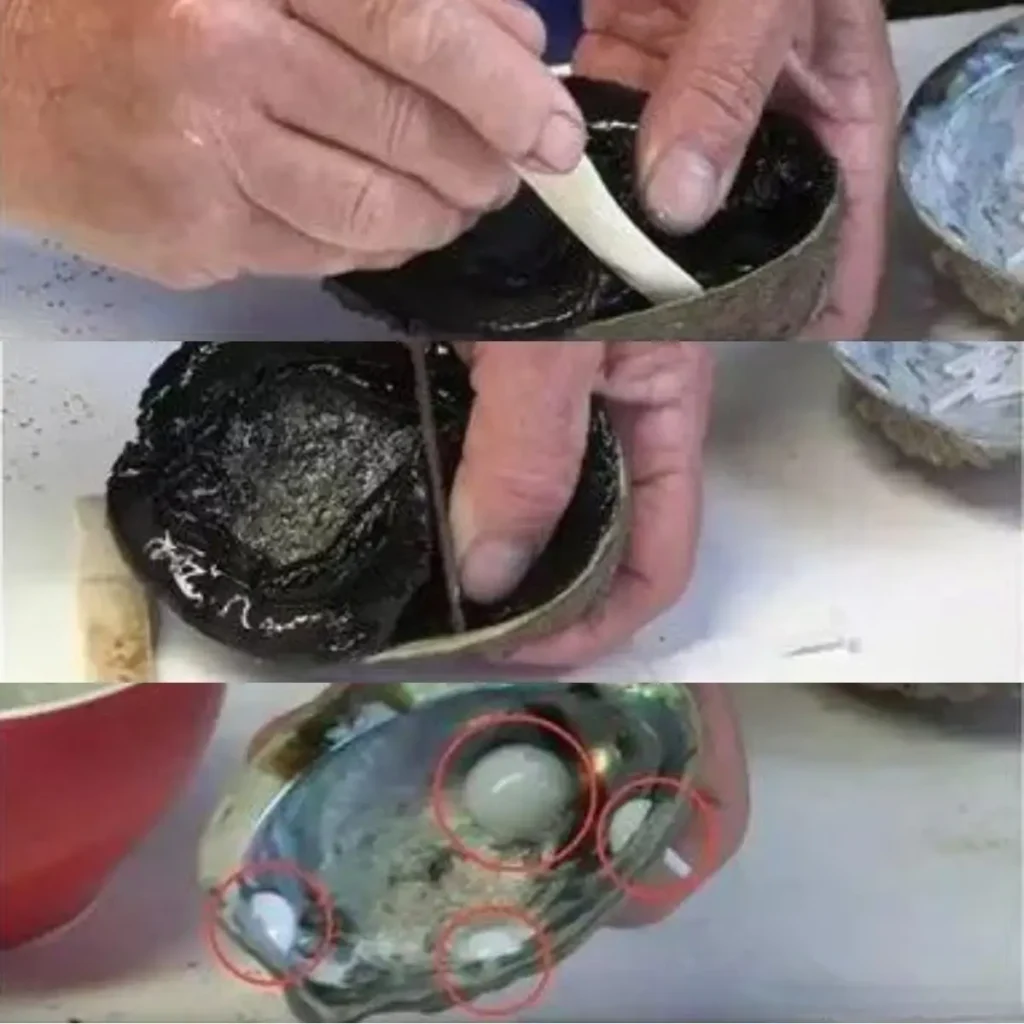
As a result, abalone grafting techniques require greater expertise than traditional pearl cultivation. Successful production depends on precise procedures, controlled conditions, and the overall health of the abalone.
- Historical exploration:
In the late 19th century, French zoologist Louis Boutan experimented with pearl cultivation using the European abalone (Haliotis tuberculata). He successfully produced some blister pearls and a small number of free-form pearl specimens. However, high mortality rates and technological limitations prevented these early attempts from reaching commercial production. - Commercial development:
By the late 20th century, New Zealand became one of the first countries to achieve commercial cultivation of abalone blister pearls. Using Haliotis iris, commonly known as pāua in New Zealand, producers developed pāua pearls valued for their unique colors and applications in jewelry design.Compared with traditional pearl farming, abalone pearl production remains extremely limited.
Today, Abalone Pearls are still considered a niche organic gemstone material valued by collectors. Their unusual shapes and vibrant color variations require jewelry designers to have a deeper understanding of the material and a more creative approach to design. - Recent research:
In recent years, research teams in countries such as Chile have continued exploring techniques for cultivating free-form Abalone Pearls. Although experimental progress has been made, large-scale commercial production remains a significant challenge.
Unique Characteristics of Abalone Pearls
Unlike the soft glow of Akoya pearls or the rich presence of South Sea pearls, Abalone Pearls stand out for their intense and complex iridescence.
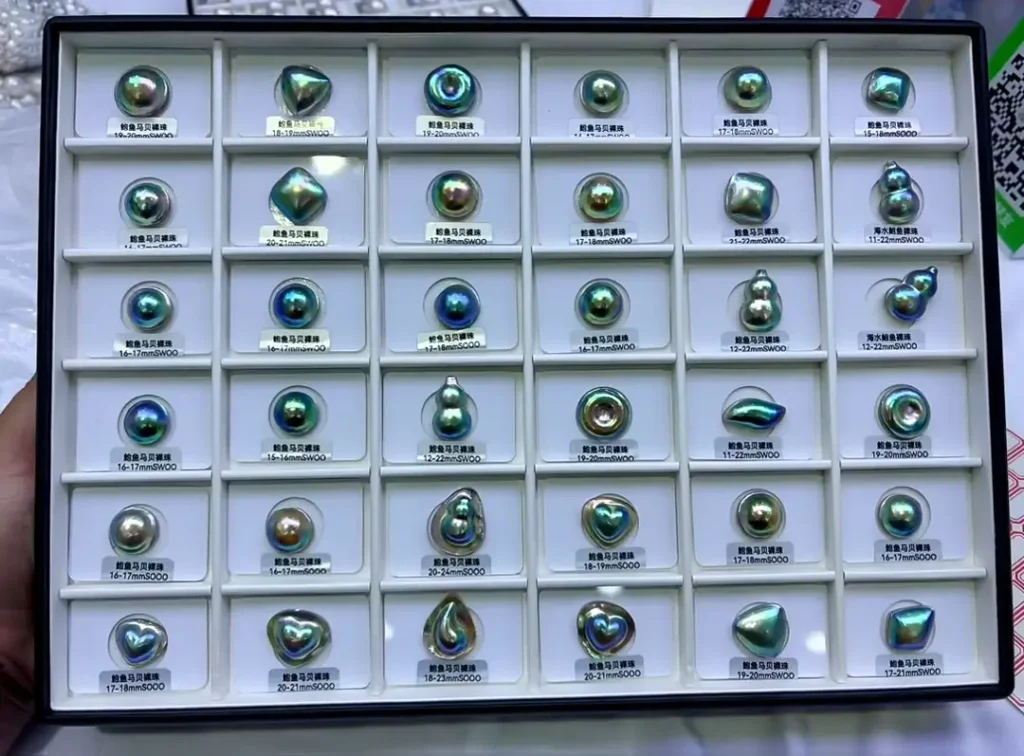
1. Multilayered Iridescent Colors
The unique colors of Abalone Pearls come from their nacre structure.
Nacre mainly consists of:
- Aragonite crystal layers;
- Conchiolin and other organic shell proteins.
These microscopic layers interact with light to create the pearl’s distinctive play of colors.
Common colors include:
- Blue;
- Green;
- Purple;
- Pink;
- Silver;
- Bronze.
Among them, the combination of metallic blue-green tones with purple and pink flashes creates one of the most recognizable visual features of Abalone Pearls.
2. Distinctive Organic Shapes
Due to limited growing space inside the shell, Abalone Pearls rarely develop into traditional round shapes.
Common forms include:
- Flattened free-form shapes;
- Curved or horn-like forms;
- Tooth-like contours;
- Wave-like shapes;
- Half-domed blister forms.
These natural variations give each Abalone Pearl its own individual character and appearance.
3. Wide Range of Sizes
Abalone Pearls can vary significantly in size.
Some large natural specimens can reach several centimeters in length, while gem-quality examples are usually smaller and far less common.
Rather than size alone, collectors often focus on:
- The strength of iridescence;
- The quality and completeness of the nacre layer;
- The uniqueness of the shape;
- The natural condition of the pearl.
4. Structure, Durability, and Care
The layered nacre structure of Abalone Pearls creates their remarkable iridescence, but it also presents challenges during processing.
Some Abalone Pearls may contain natural internal stresses formed during growth. If the nacre layer does not fully mature, or if the pearl experiences repeated impact or external pressure, fine cracks may develop along natural growth structures.
For this reason, experienced jewelry designers carefully evaluate each pearl’s shape, nacre thickness, and internal condition before selecting suitable cutting, polishing, and setting techniques.
With proper care, Abalone Pearls can maintain their unique luster for many years. Avoid strong impacts, prolonged exposure to direct sunlight, and contact with harsh chemicals or cleaning agents during daily wear.
Market Value and Collectible Appeal
Unlike traditional pearl varieties with stable production and established markets, Abalone Pearls remain a niche gemstone material known for their individuality and natural character.
Today, they mainly attract:
- Independent jewelry designers;
- Natural gemstone collectors;
- Jewelry enthusiasts who appreciate rare and distinctive materials.
In markets such as New Zealand, Australia, and North America, Abalone Pearls continue to attract attention from designers and collectors for their unique origin, vibrant colors, and one-of-a-kind appearance.
Because high-quality natural Abalone Pearls are extremely limited and often remain in their natural state, they hold strong appeal among collectors who value rarity, uniqueness, and organic beauty.
Jewea Note
Because natural Abalone Pearls are extremely rare, the market occasionally sees imitations made from cut, polished, or assembled abalone shell materials.
When evaluating an Abalone Pearl, consider:
- Whether the nacre structure appears naturally continuous;
- Whether the colors show natural depth and variation;
- Whether the surface patterns reflect authentic growth characteristics.
A genuine natural Abalone Pearl is more than a piece of jewelry. It is a unique record of marine life shaped by years of natural growth.
Its value comes not only from rarity, but also from the individuality of each pearl and the unrepeatable process that created it.