Beyond Traditional Jade: Discovering the Next Wave of China’s Emerging Carving Materials
In the world of Chinese lapidary art, household names like nephrite jade, jadeite, turquoise, and agate usually steal the spotlight. However, recent design awards reveal an exciting shift, as a new wave of emerging jade carving materials captures the industry’s attention. While these alternative carving stones lack the instant fame of traditional jade, they offer incredible density, fine texture, and highly distinctive color patterns.
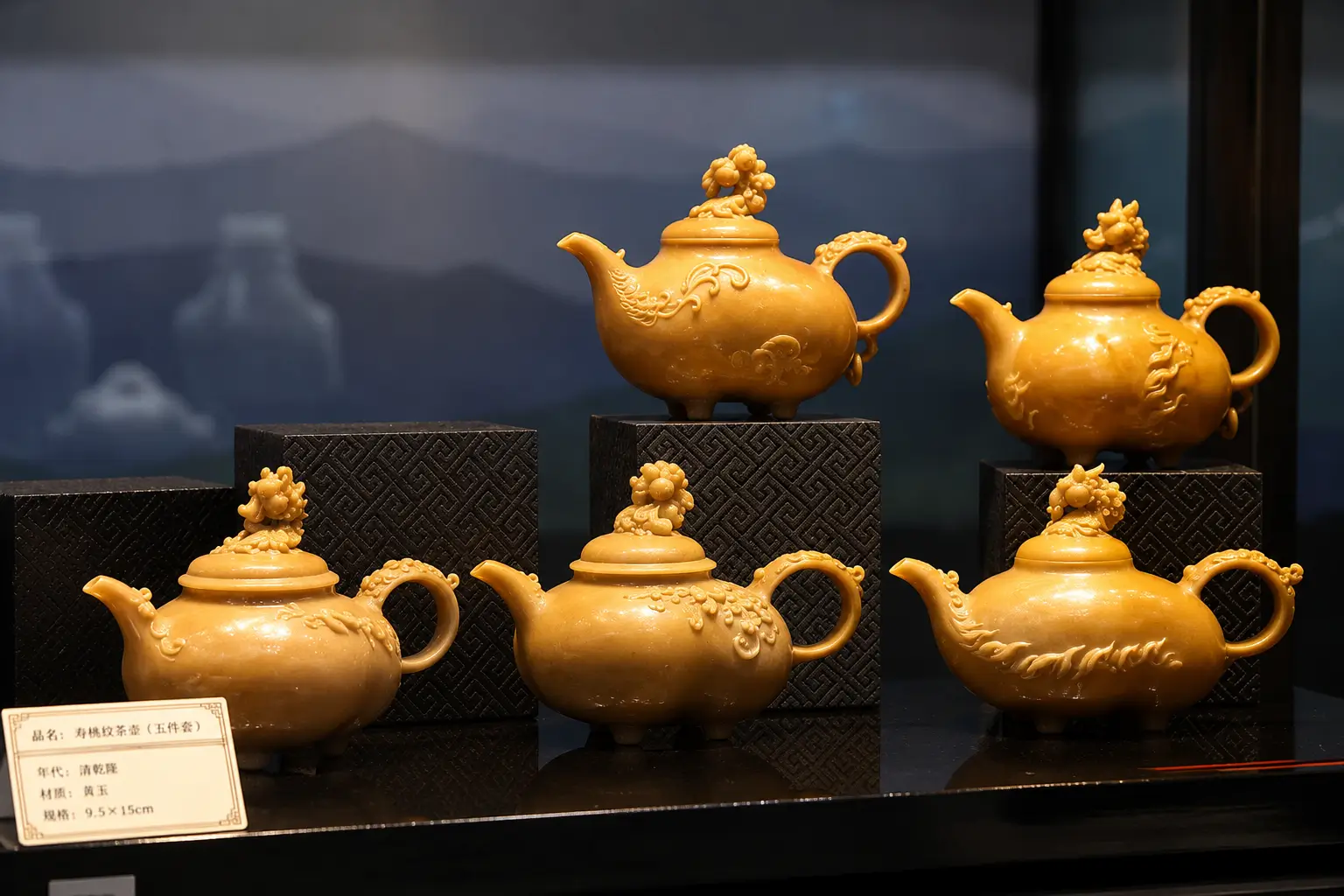
In the hands of master carvers, these lesser-known stones transform into breathtaking pieces with remarkable expressive power and intricate detail. Today, we are diving deep into these emerging jade carving materials that are redefining the market. Let’s explore Panlong Jade, Baoli Stone (Laos Stone), the diverse Yellow Wax Stone family (including Huanglong, Huidong, and Taishan Jade), Hanzhong Jade, Ya’an Green Stone, Zipao Yudai Stone, and Liaoyan Stone.
Panlong Jade: A New Quartz-Based Discovery from Jilin
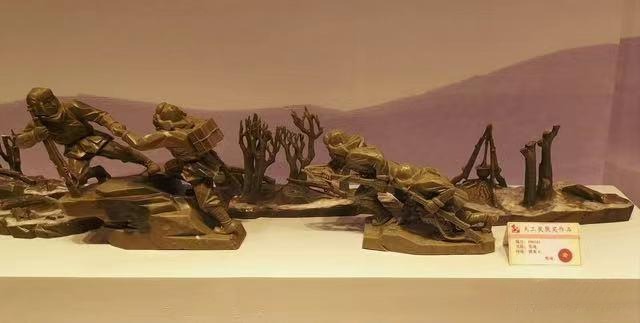
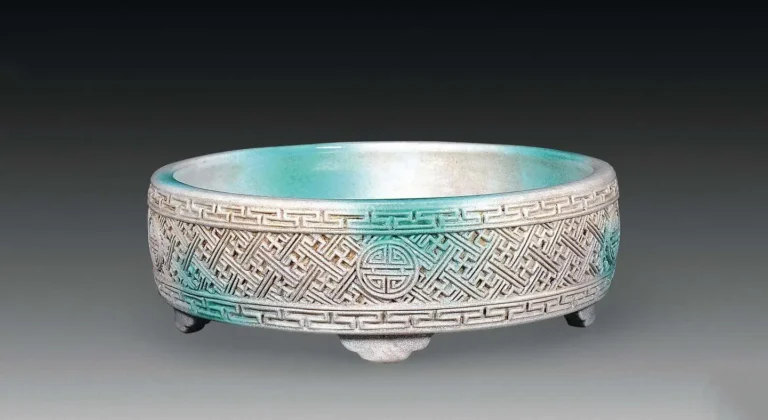
The stunning gold prize winner, The Heroic Soul (pictured above), showcases a recently discovered material: Panlong Jade.
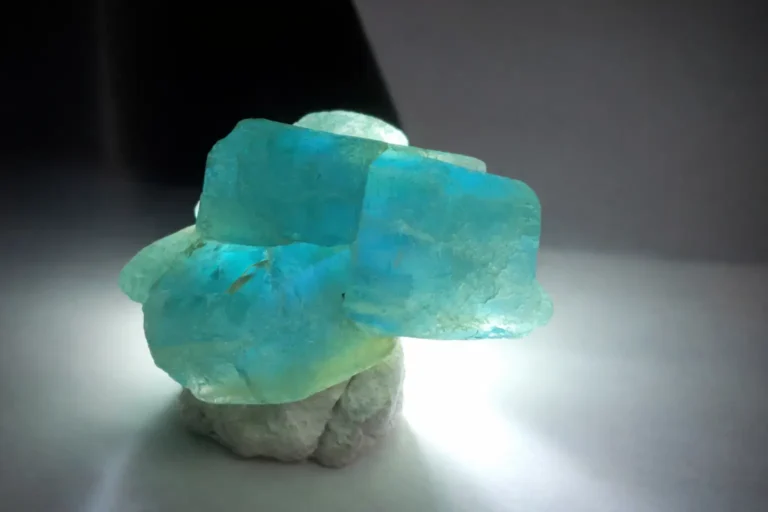
As we explored in our previous guide on Jilin gemstones, Panlong Jade is a very recent discovery among modern gemology’s emerging jade carving materials. This stone originates from the Longgang Mountains in Panshi City, Jilin Province. In fact, miners first unearthed it in 2015 during a lead-zinc mining operation. By 2016, it gained official recognition as Panlong Jade. Consequently, this remarkable material successfully filled Jilin Province’s historical vacancy for a high-hardness jade resource.
Geologically, the Longgang deposit yields two distinct varieties:
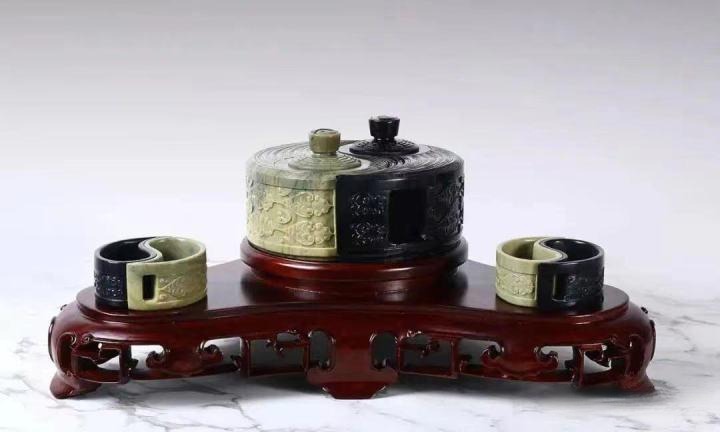
- Panlong Jade (Yellow-Green Range): This variety features shades of pale yellow, greenish-yellow, and deep yellow-green. Quartz is its primary mineral. It also contains mica, calcite, feldspar, and pyrite. Gemologists classify this variety as a quartzite jade.
- Panlong Black Jade (Dark Range): This variety ranges from deep black to dark green and purplish-black. It consists primarily of mica and quartz, with secondary traces of chlorite, feldspar, and calcite.
Panlong Jade features a dense, fine-grained texture, making it an exceptional medium for intricate carving. Interestingly, the source deposit sits just 140 kilometers east of the ancient Hongshan Culture ruins. This proximity offers archaeologists exciting new clues regarding the raw material sources used in ancient Chinese jade artifacts.
Baoli Stone (Laos Stone): A Emerging Mineral with Shoushan-Like Properties
In late 2019, Baoli Stone took the carving world by storm, leaving many collectors scratching their heads. As one of the most talked-about emerging jade carving materials, it didn’t take long to solve its mystery. Baoli Stone was simply the new commercial trade name for Laos Stone. This newly rebranded material made a massive splash at the 2020 Tian-Gong Awards, even taking home a prestigious gold medal.
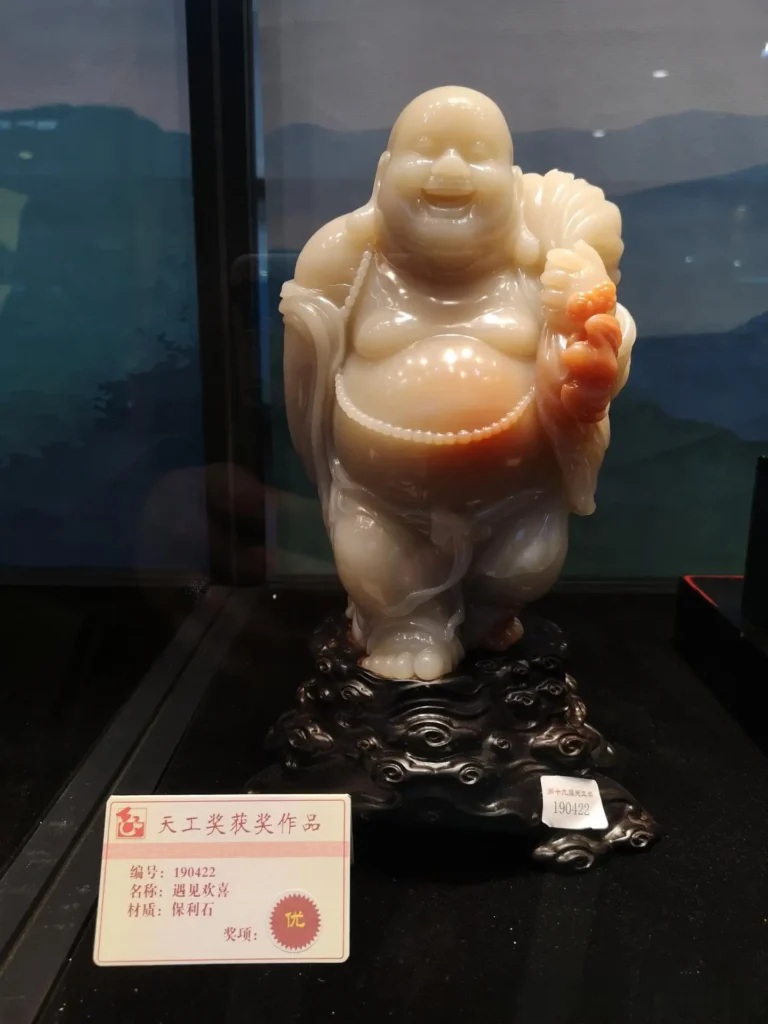
If you follow the fine jewelry auction scene, the name “Baoli” might sound familiar. That is no coincidence. The stone shares a direct connection with the famous Poly Group (Baoli).
Laos Stone first flooded the Chinese market in 2014 as a newly discovered material from Laos. In its early days, traders often called it “Vietnam Stone.” Because its texture closely mirrors the highly coveted, premium Shoushan Stone—but at a significantly lower cost—some sellers initially used it as a Shoushan simulant. Recently, a subsidiary of the Poly Group reportedly gained control of the raw mines. Through strategic commercial branding, they officially renamed the material Baoli Stone.
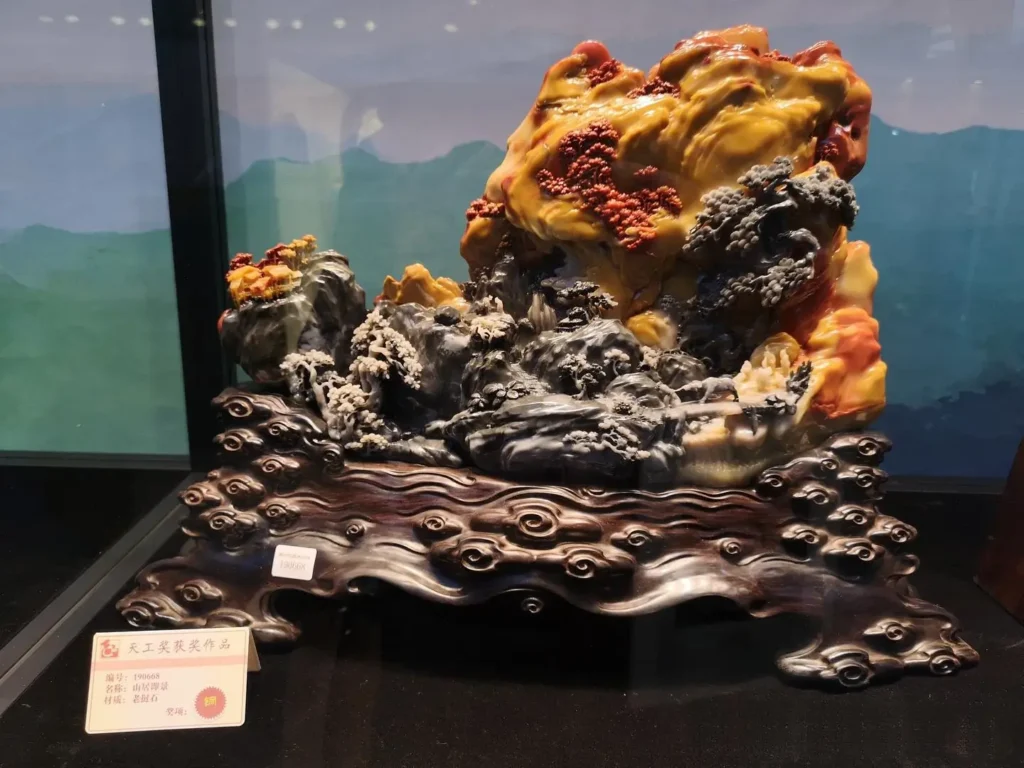
However, market terminology is still catching up to the rebranding. At the recent Tian-Gong Awards, winning pieces appeared under both names: some registered as Baoli Stone, others as Laos Stone.
Mineral and Gemological Breakdown
At their core, Laos Stone and Baoli Stone are the exact same material. Mineralogically, the stone consists primarily of dickite, kaolinite, and nacrite. While this composition heavily overlaps with Shoushan Stone, the two materials are not identical and differ slightly in their exact mineral ratios.
The most notable difference lies in their color profiles:
- Laos/Baoli Stone: Predominantly features whites, reds, and soft pinks. Yellow tones remain exceptionally rare.
- Shoushan Stone: Offers a much wider, more vibrant, and luminous color palette overall.
Yellow Wax Stone: A Historic Quartz-Based Carving Material
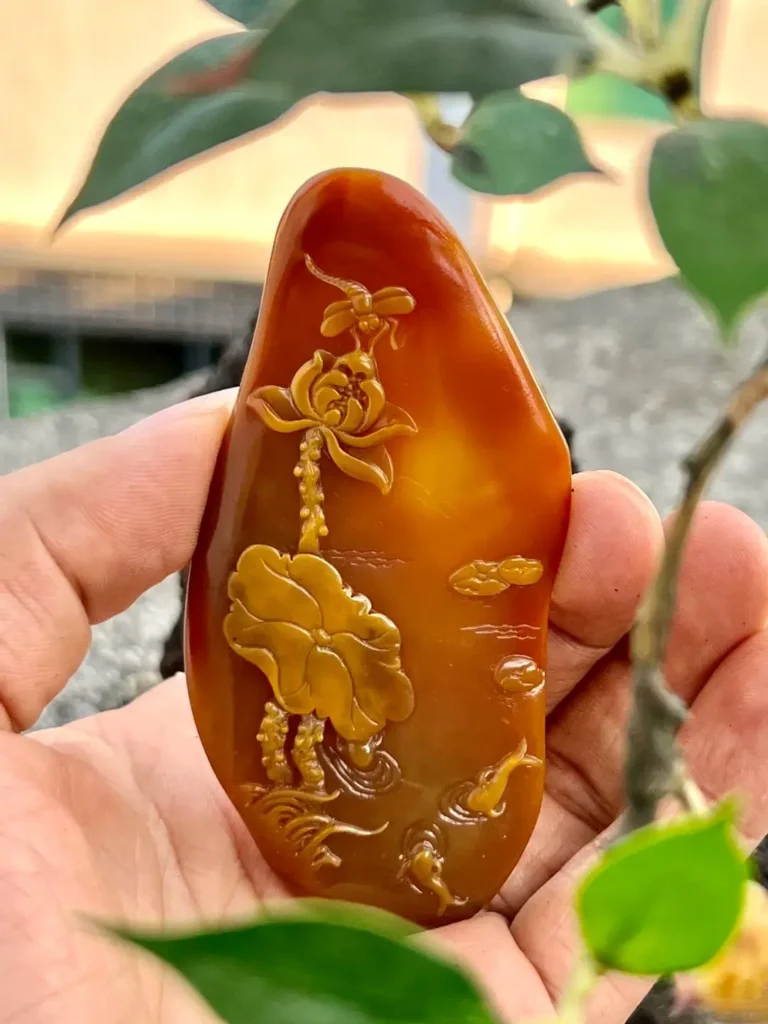
In Chinese culture, yellow has long symbolized power, wealth, and royalty. Because of this cultural reverence, yellow-toned stones naturally become highly prized ornamental treasures. Yellow Wax Stone (Huangla Shi) is a perfect example.
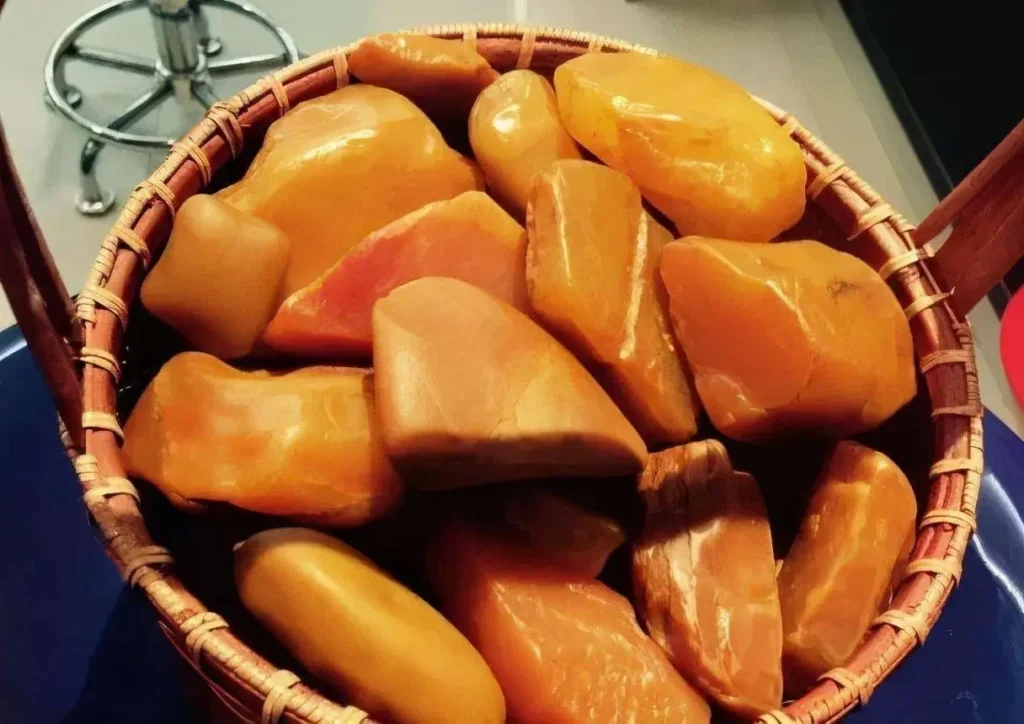
While collectors who focus strictly on precious gemstones might find the name unfamiliar, Yellow Wax Stone is actually a true “veteran” in the world of ornamental and viewing stones. The Lingnan region (southern China) boasts the earliest recorded history of collecting this material. By the Ming and Qing dynasties, it had already become a highly sought-after collectible.
Chemically, Yellow Wax Stone consists primarily of silicon dioxide (SiO2). Geologically, it belongs to the quartzite family. It is a dense, durable mineral aggregate characterized by its dominant yellow hues and a distinctive, smooth, waxy surface texture. Deposit origins span broadly across China, with notable sources in Guangdong, Guangxi, Yunnan, Jiangxi, Zhejiang, Fujian, Hunan, Henan, Hebei, and the northeastern provinces.
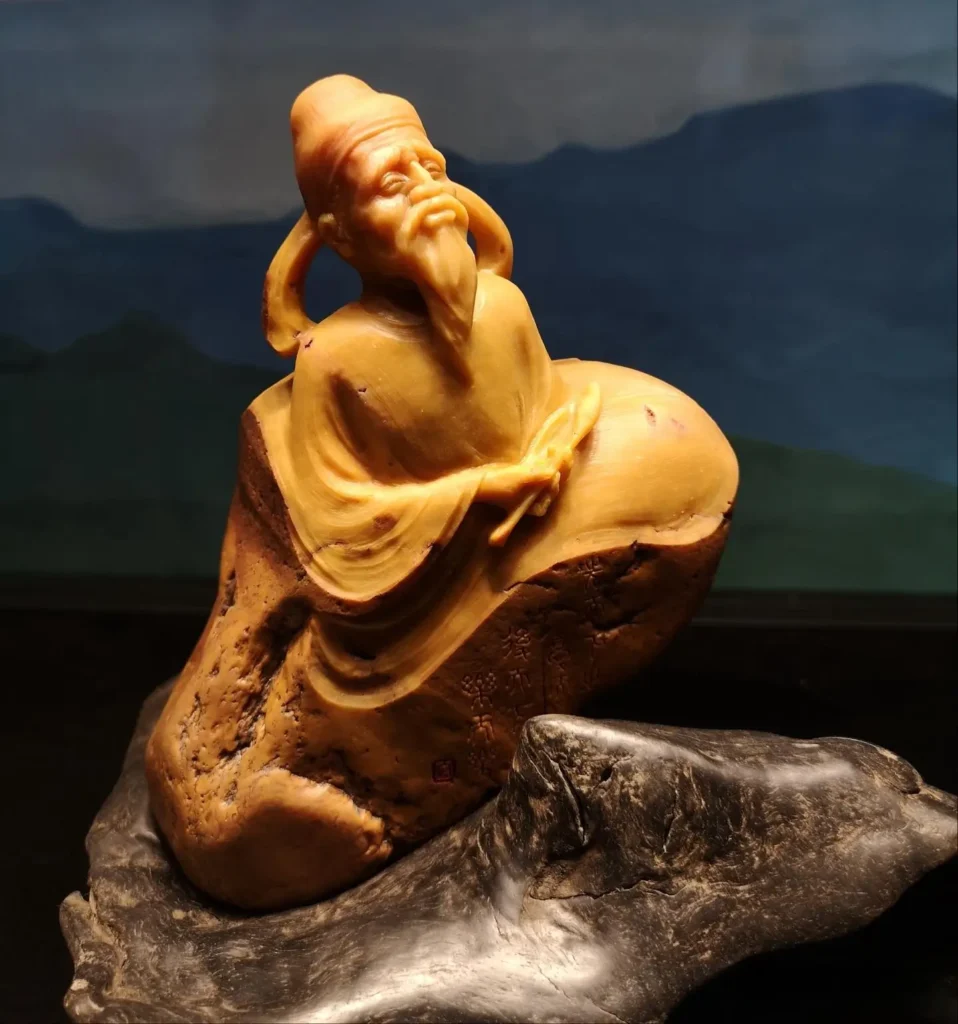
Thanks to its ideal hardness and toughness, collectors do not just appreciate it as raw, natural viewing stones. Master lapidaries also highly value it as an exceptional medium for intricate carving.
Notable Varieties of the Yellow Wax Stone Family
The Yellow Wax Stone family extends into several celebrated commercial varieties:
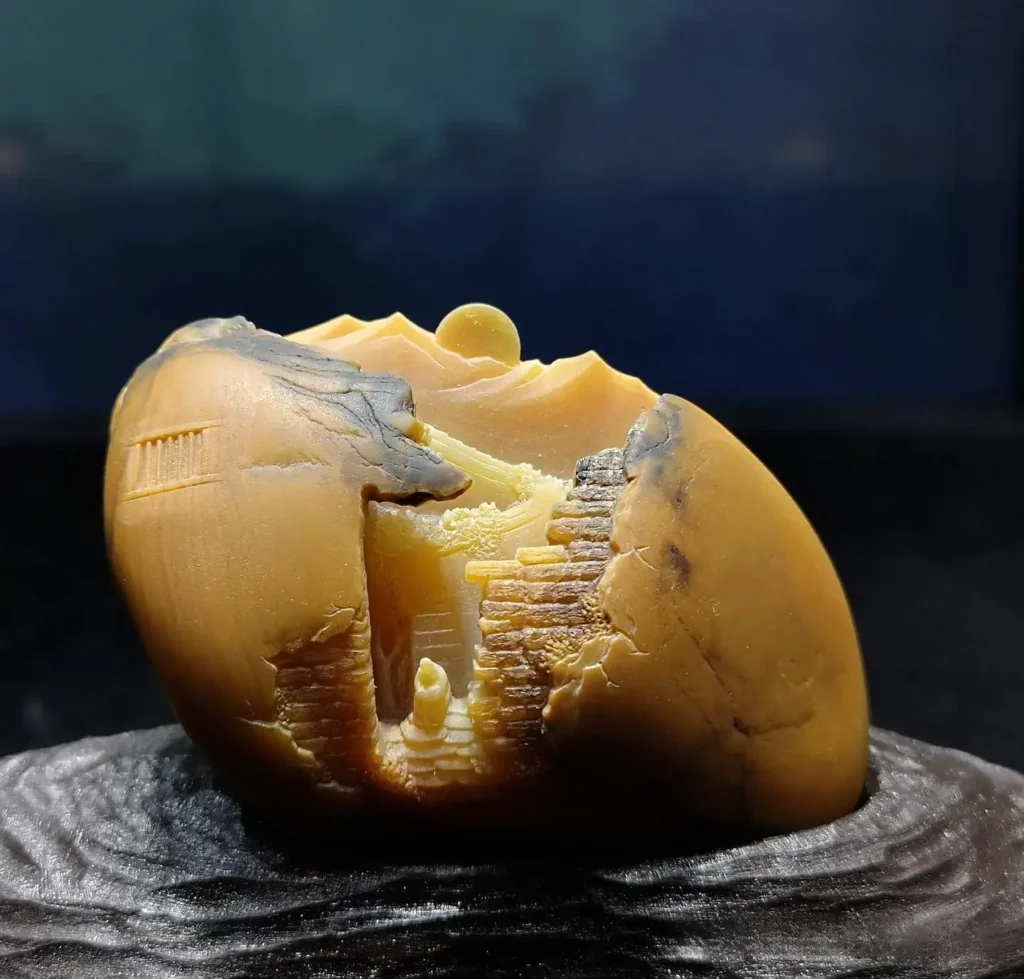
- Huanglong Jade (Huanglong Yu): This quartzite jade exploded in popularity in the gemstone market a few years ago. Sharing the same primary chemical composition of silicon dioxide, you can essentially think of Huanglong Jade as Yellow Wax Stone that has achieved a superior, highly translucent degree of natural jadeization (aggregation and texture refinement).
- Huidong Jade (Huidong Yu): This is the commercial trade name for the specific variety of Yellow Wax Stone sourced from Huizhou, Guangdong Province.
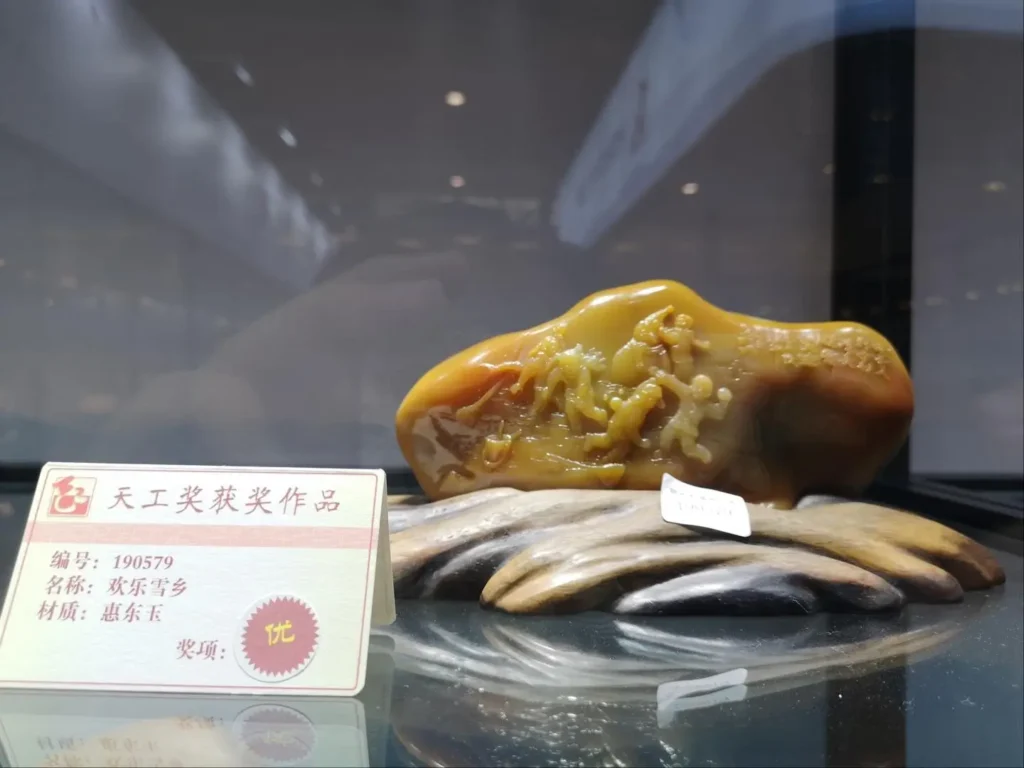
Taishan Jade: A Cryptocrystalline Quartz Treasure from Guangdong
Sourced from the scenic Naqin Bay area in Taishan City, Taishan Jade originally entered the market under the name “Yellow Wax Stone.” As we explored in our comprehensive guide to Guangdong Gemstones, this material has since earned its rightful title as Taishan Jade. Today, it stands proudly alongside malachite, Guanglu Stone (Guangning Jade), and Xinyi Southern Jade as one of the “Four Famous Stones of Guangdong.”
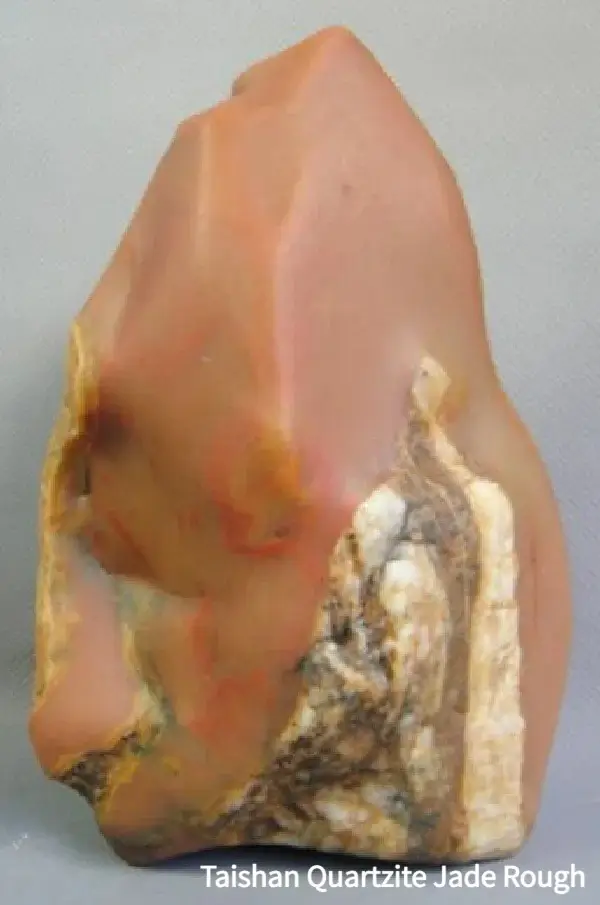
Mineralogically, Taishan Jade consists primarily of cryptocrystalline quartz, with secondary compositions of either dickite or kaolinite. Interestingly, dickite and kaolinite do not co-exist within the stone; one always dominates the other.
With a Mohs hardness of 6.5 to 7 and a smooth, waxy-to-greasy luster, Taishan Jade shares a striking visual resemblance to premium Shoushan Stone and the legendary Tianhuang Stone. In its early days, unscrupulous dealers took advantage of this likeness, frequently passing it off as counterfeit Tianhuang. Today, however, Taishan Jade has stepped completely out of the shadow of Tianhuang Stone. Thanks to growing market awareness and appreciation, it has established its own powerful identity as a standalone collector’s material.
Its showcases at the Tian-Gong Awards in recent years further cement its rising status in the lapidary world.
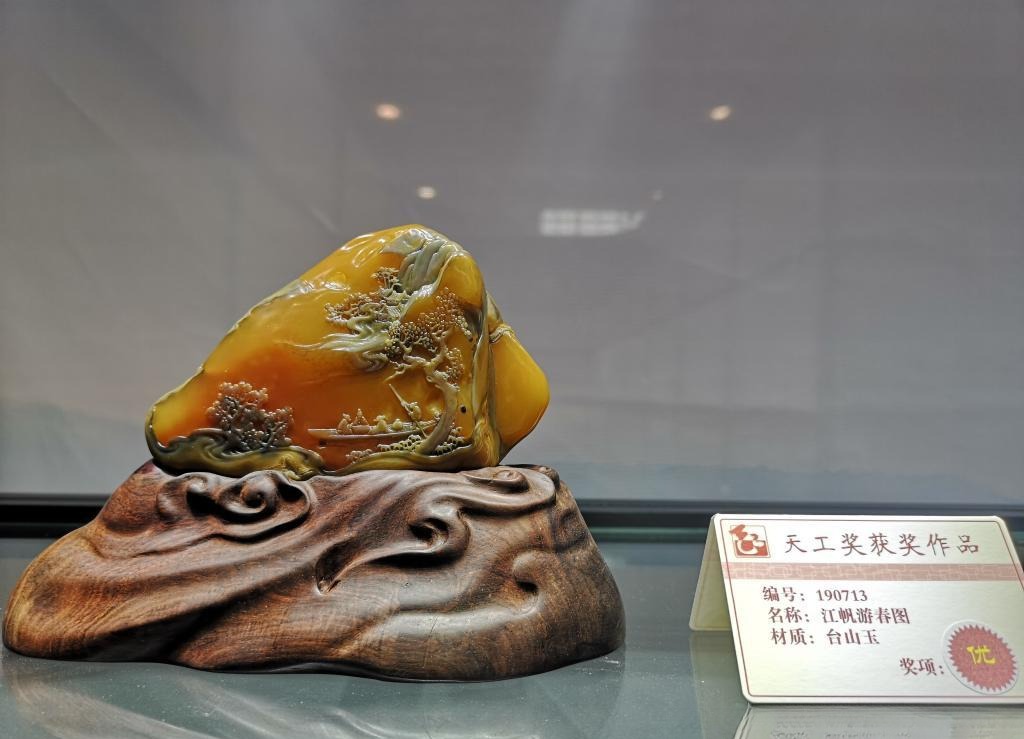
Ultimately, while the trade names of these regional stones can seem dizzying, they all share a fundamental truth: they are quartz-based jades. Their true distinctions lie in their geographic origins and unique secondary mineral inclusions.
Hanzhong Jade: A Multi-Mineral Material with a Rich Palette
The primary mining district for Hanzhong Jade (a trade name) sits in Beiba Town, Nanzheng County, just east of Mount Guangwu—the main peak of the Micang Mountain range.
Unlike most other jades that feature a single dominant mineral, Hanzhong Jade breaks the mold. It does not rely on a fixed composition. Instead, this unique material boasts an incredibly diverse family of varieties, including serpentine jade, tremolite jade, variegated “flower” jade, diopside jade, and mica jade, spanning over a dozen distinct color patterns.
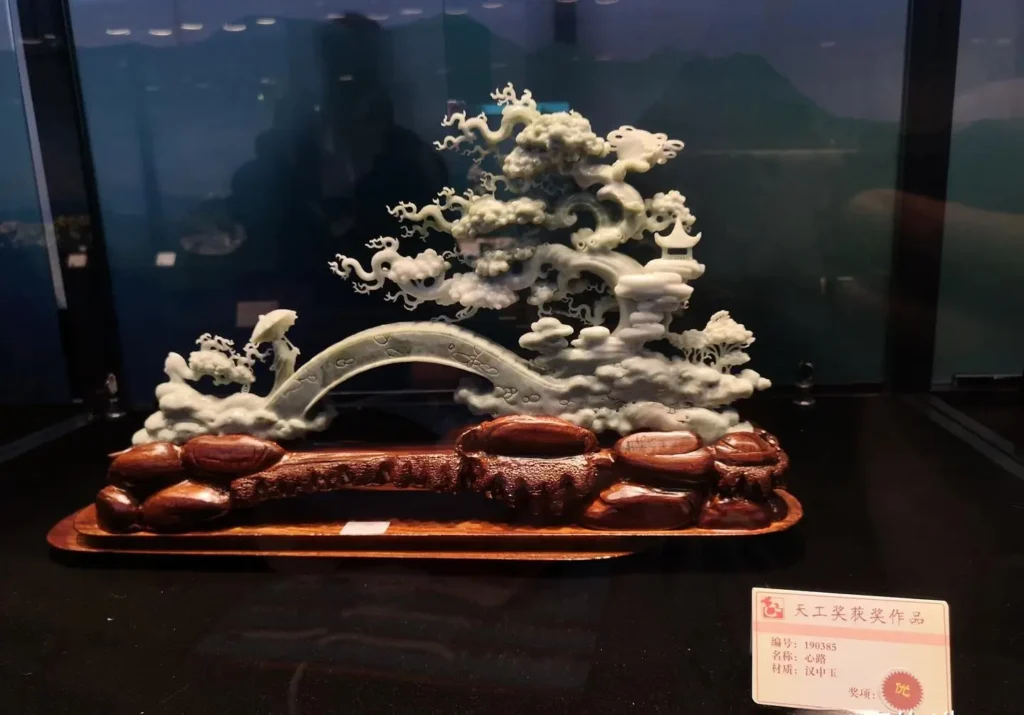
Among these varieties, the serpentine-rich stones are the most abundant. They display a stunning color spectrum that ranges from pure white, greenish-white, and pale teal to vibrant yellow-green, deep forest green, ink black, brownish-yellow, and bright gold.
Thanks to its exceptionally fine structure, striking color variations, and high-quality waxy luster, master lapidaries frequently choose Hanzhong Jade for high-end carvings, ornamental displays, pendants, and handheld handling pieces. Beyond fine jewelry and carvings, artisans also transform larger specimens into landscape stones, viewing rocks, custom tea tables, and architectural slabs.
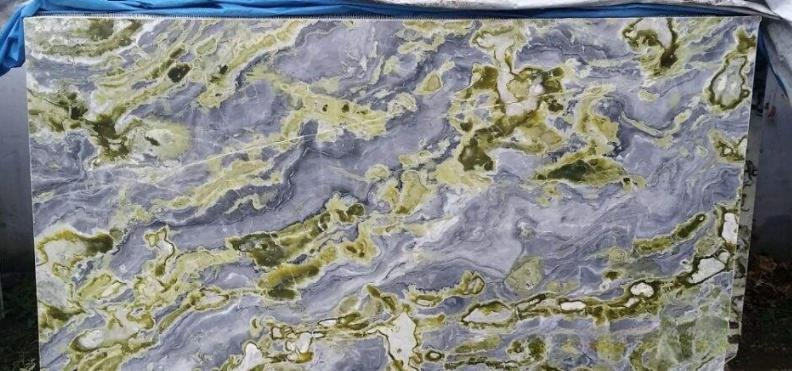
Intriguingly, local lore suggests that fresh fractures of certain Hanzhong Jade varieties release a distinct, coffee-like aroma. While still unverified by scientific gemology, this poetic trait has earned the stone two fascinating nicknames among collectors: Hanzhong Xiang Yu (Hanzhong Fragrant Jade) and Jinxiang Yu (Golden Fragrant Jade).
Ya’an Green Stone: A Rare Sericite Marvel from Sichuan
Sourced from Shimian County in southwestern Sichuan Province, Ya’an Green Stone is one of the most promising emerging jade carving materials. Although it is a relative newcomer to the lapidary market with a short mining history, its wonderfully fresh, vibrant green hues have already caused a massive stir in the carving world.
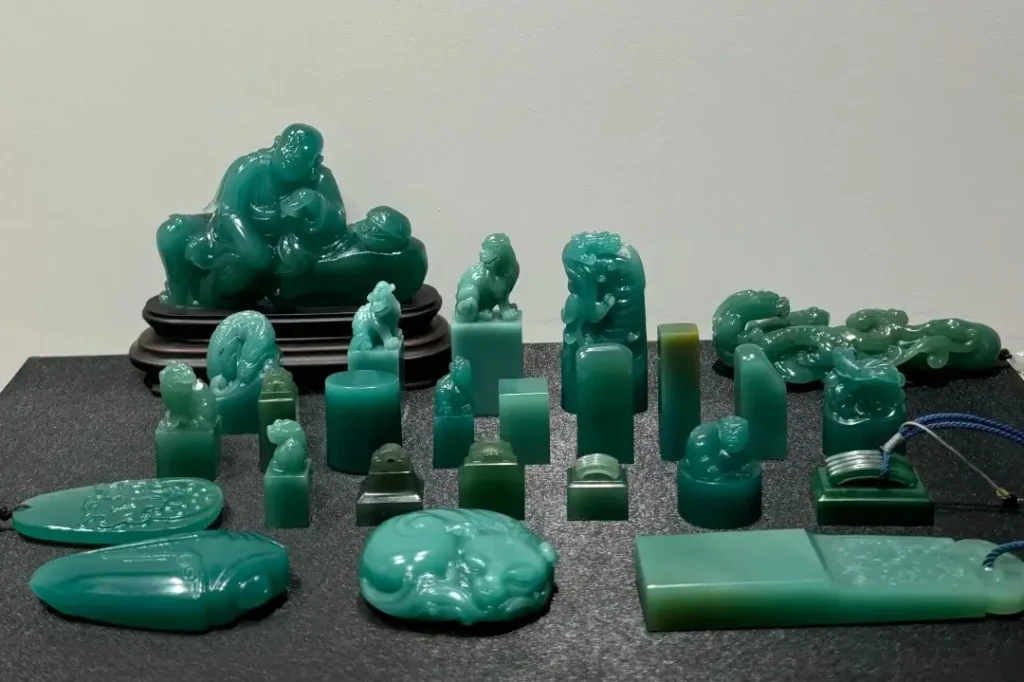
As we detailed in our guide to Sichuan Gemstones, the primary composition of Ya’an Green includes sericite, quartz, kaolinite, and calcite. This mix gives it a mineral profile closely resembling premium Shoushan and Balin stones. Beyond its striking color, master carvers absolutely love this material for its ultra-fine texture and ideal working hardness. Measuring between 3.0 and 3.5 on the Mohs scale, it responds beautifully to intricate tool work.
However, this seemingly flawless material presents a massive challenge in raw production: deposits are incredibly scarce. The mines rarely yield large, clean, solid blocks of pure carving-grade material.
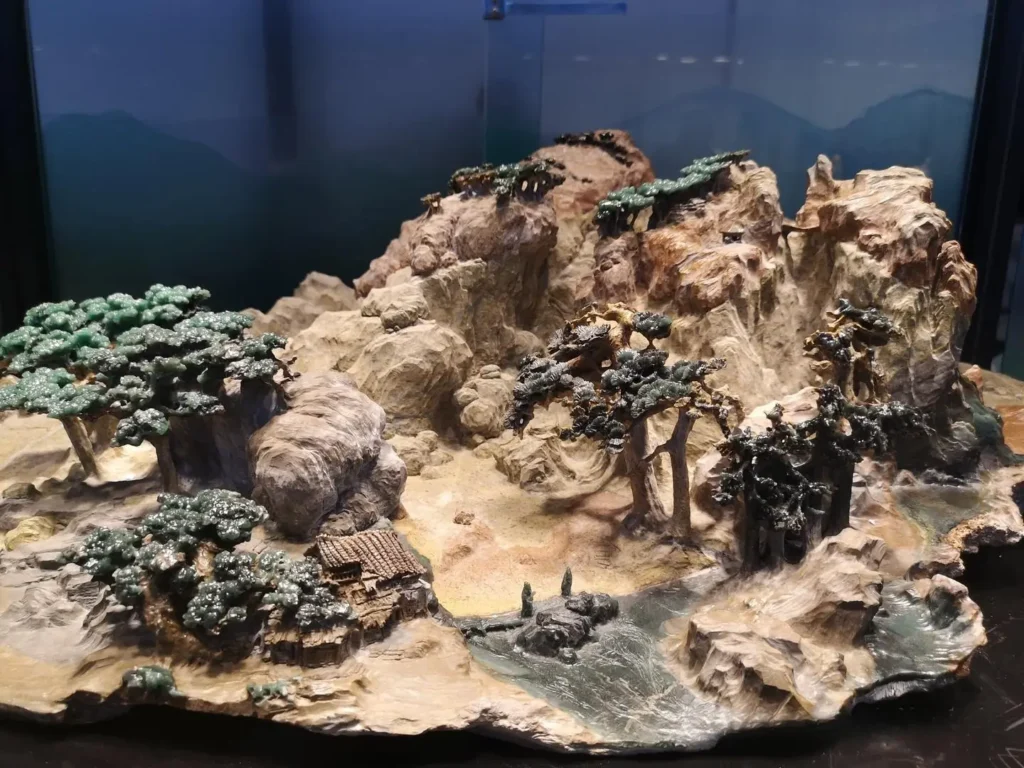
Consequently, most Ya’an Green displays on the market today rely on cameo-style clever carving (Qiao Diao). Artisans skillfully carve a tiny patch of precious green “flesh” while leaving the surrounding host rock intact. Finding a sizable, uniform specimen composed entirely of pure green material is incredibly rare—making it a true holy grail for gemstone collectors.
Zipao Yudai Stone: The Purple and Jade-Belt Patterned Carving Stone
Zipao Yudai Stone (traditionally translated as the “Purple Robe and Jade Belt” stone) originates from the rugged Wuling Mountain Range, spanning from Mingshan in Zhijiang, western Hunan, to the sacred Mount Fanjing area in eastern Guizhou. Today, the primary mining operations cluster around Jiangkou County in Guizhou Province.
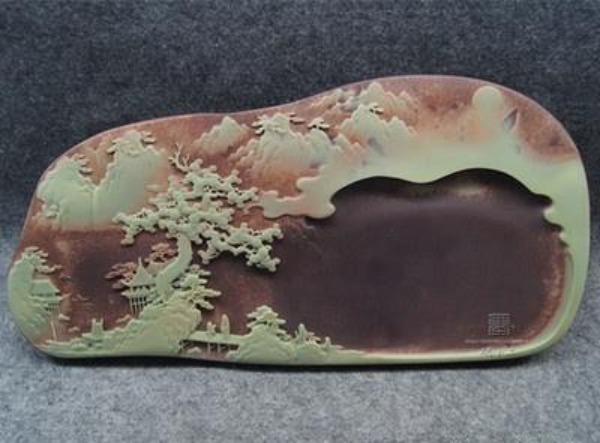
Historical records show that stone carvers have utilized this material since the Song Dynasty. Today, master lapidaries primarily transform it into premium inkstones, signature seals, intricate carvings, and ornamental display pieces.
Mineralogically, Zipao Yudai Stone consists mainly of illite, along with secondary compositions of quartz, sericite, chlorite, and feldspar.
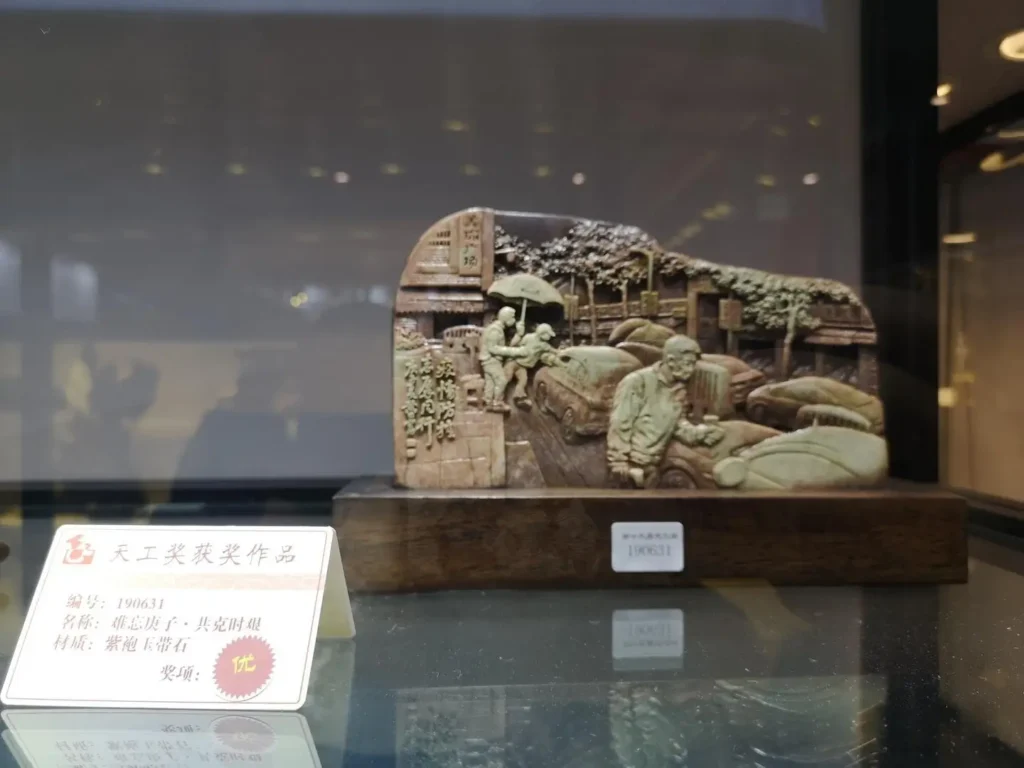
Its most striking feature is its unmistakable, high-contrast color banding. The stone features a deep, dignified purple base naturally interleaved with vibrant green bands (the “jade belts”). Occasionally, ribbons of orange-red, milky white, yellow, and rich brown accent these layers. These alternating multi-layered bands create a visually stunning, highly defined color contrast. Combined with its dense, silky-fine texture, this unique patterning makes Zipao Yudai Stone a highly prized material for both viewing and masterful carving.
Liaoyan Stone: The Distinctive Origin Material of China’s Historic Liaoning Inkstones
Liaoyan Stone is the exclusive material used to craft Liaoning Inkstones (Liao Yan), a celebrated specialty of Benxi City, Liaoning Province, and a protected National Geographic Indication product in China.
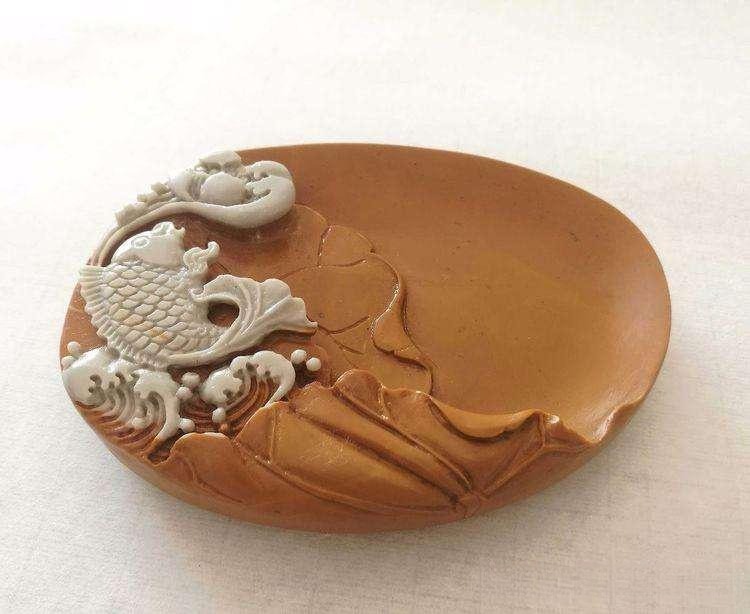
Found uniquely in Benxi, this unique material earns high praise among collectors for its clear, resonant ring when struck, its rich color spectrum, and its diverse mineral variations.
Geological surveys indicate highly abundant reserves of this material, with initially proven deposits reaching 1 billion cubic meters. Within the 4.5 million cubic meters currently authorized for active mining, lapidaries extract several distinct varieties, including Ziyun (Purple Cloud) Stone, Qingyun (Green Cloud) Stone, Muwen (Wood-Grain) Stone, and Xian (Threaded) Stone.
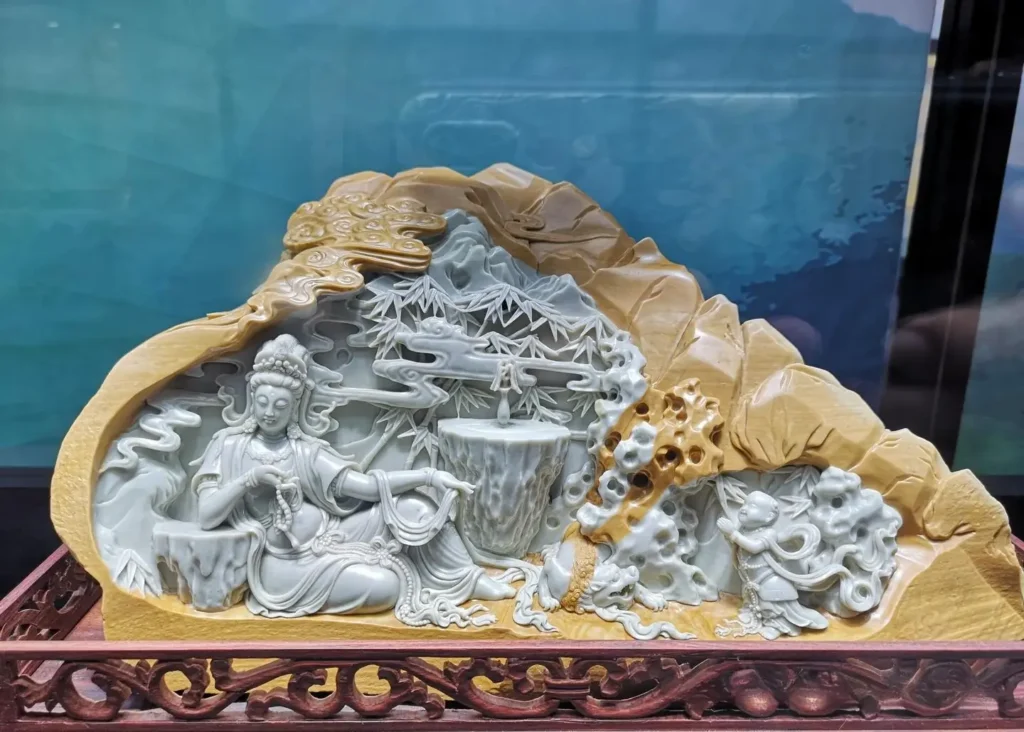
In the collector market, the commercial value of Liaoyan Stone hinges heavily on its color profile. While deep chestnut yellow represents a premium choice and fresh poplar green marks an exceptional grade, vibrant maple red stands as the ultimate, ultra-rare holy grail.
Conclusion: The Hidden Gems of Regional Jades
Traditional Burmese jadeite and Hetian nephrite still dominate global name recognition. Even so, these regional varieties possess their own distinct mineral charm. They prove that a stone does not need a centuries-old monopoly to be extraordinary.
Here at Jewea, we believe true luxury lies in exceptional artistry and structural uniqueness. That is why we love watching master lapidaries work with these emerging jade carving materials. With incredible skill, they transform raw local stones into captivating, masterfully carved statement pieces. These unique treasures are finally breaking out of their local boundaries. Now, they are rightfully claiming their own spotlight in the international collector world.