4 Shell Jewelry Materials from the Ocean: Natural Beauty in Handmade Design
In our previous article, Shell Jewelry: Natural Treasures from the Ocean, we explored how ocean shells have been transformed into jewelry materials. We also introduced shells used for Cameo carving and the unique iridescent beauty of Mother-of-Pearl.
However, the ocean offers far more natural materials for jewelry design. Each type of shell has its own colors, patterns, structure, and working characteristics. Some shells are ideal for carving, while others are better suited for cutting, polishing, and inlay work. Some stand out because of their unique optical effects and become distinctive elements in contemporary jewelry design.
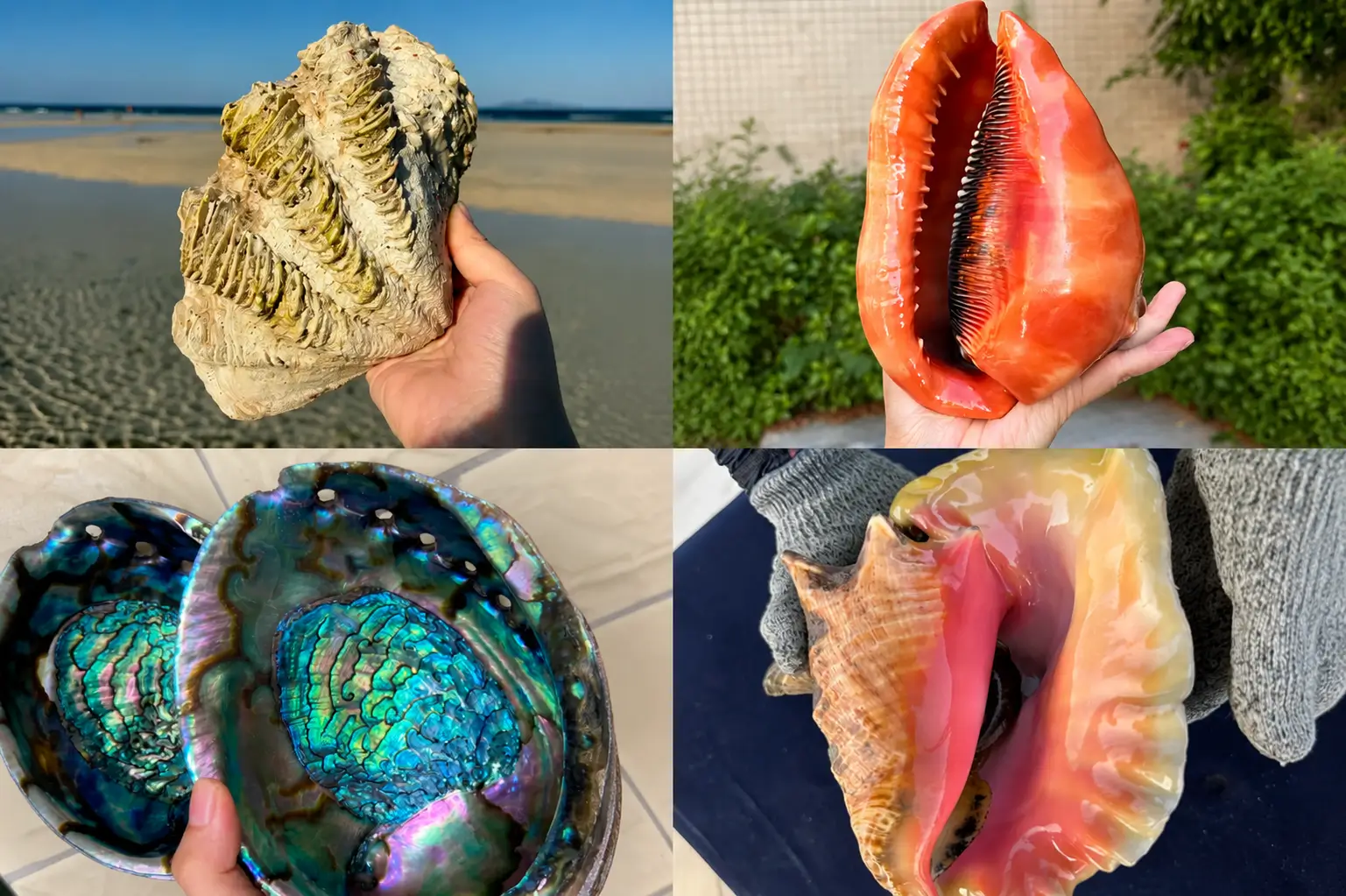
In this article, we will explore four remarkable shell materials used in handmade jewelry: Tridacna Shell, Helmet Shell, Abalone Shell, and Queen Conch Shell.
Beyond their natural colors and textures, these shells also reflect a long history of human creativity — transforming materials from the sea into artistic jewelry pieces that connect nature, craftsmanship, and culture.
Tridacna Shell
Tridacna shell comes from one of the largest bivalve mollusks in the ocean. Tridacna is a genus of giant clams in the family Cardiidae. Some species can grow over 1 meter in shell length. The true giant clam, Tridacna gigas, is the largest species in the group, with exceptional specimens reaching around 1.3 meters. Due to its impressive size, it is sometimes known as the “King of Shells.”
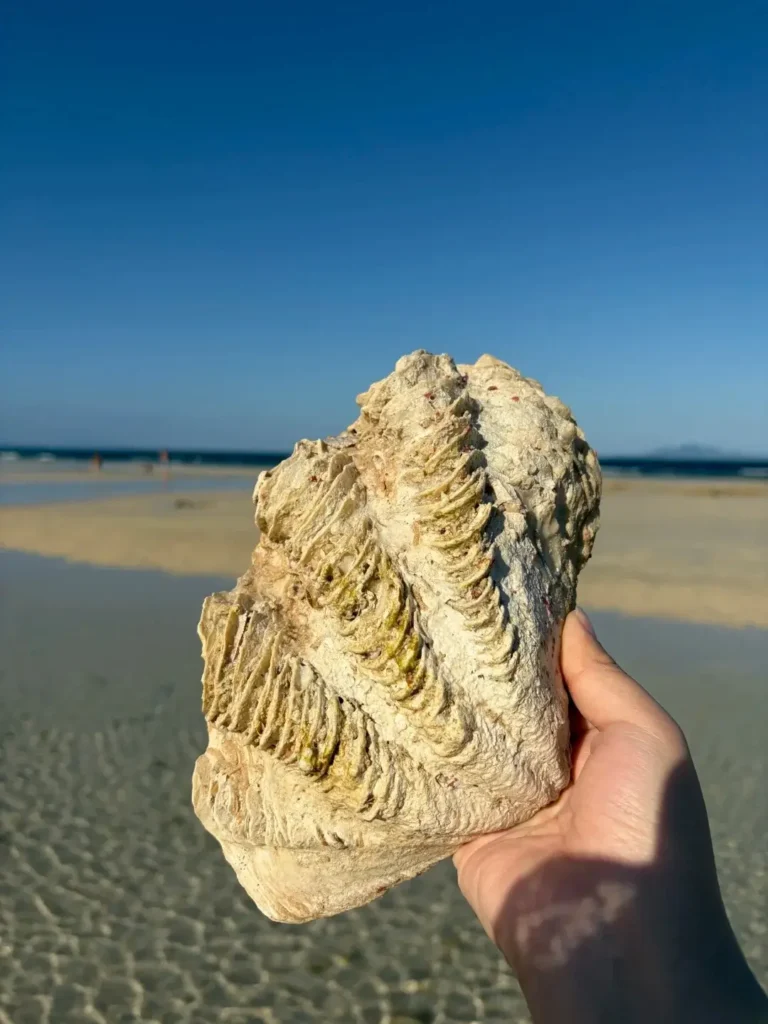
In Chinese, 砗磲 (chēqú) is the traditional name for giant clam shell. The name is commonly associated with the shell’s deep radial grooves, which resemble the tracks of ancient cartwheels. The scientific name Tridacna has a different origin and comes from the Greek word tridaknos, referring to the shell’s ribbed structure.
Tridacna shells have two distinct surfaces:
- Outer layer: Usually shows gray-brown, yellow-brown, or stone-like tones with natural growth patterns.
- Inner layer: Appears smoother and whiter. After cutting and polishing, it develops a soft, warm luster similar to ivory.
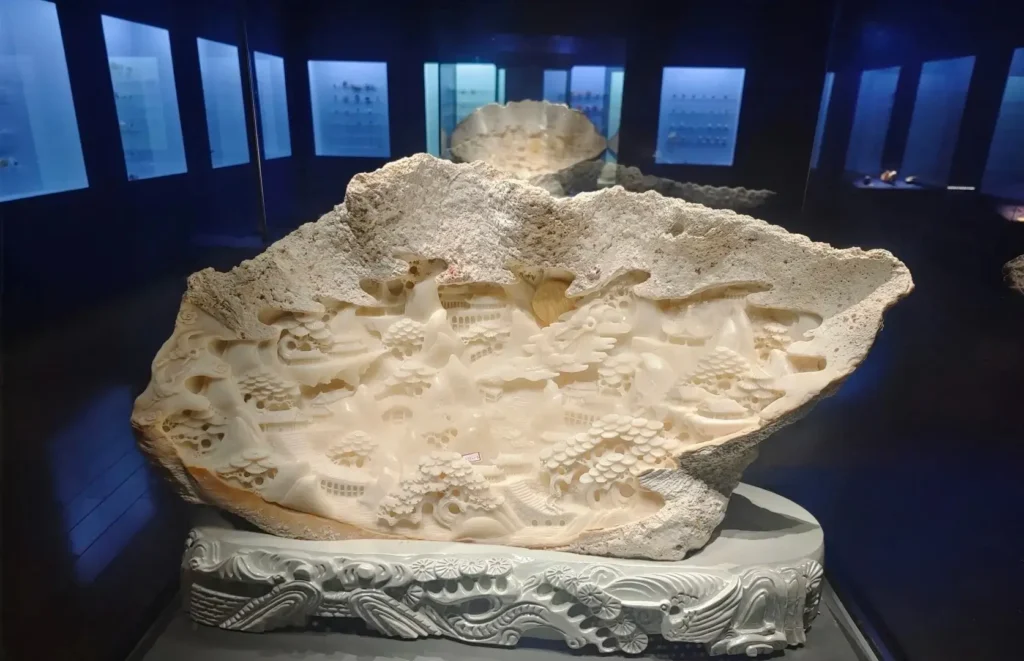
Because of its thick structure and large workable surface, artisans have used Tridacna shell for centuries to create beads, pendants, carved artworks, and decorative objects. Unlike thinner shell materials, its substantial thickness allows artisans to produce more detailed three-dimensional carvings.
The Cultural Significance of Tridacna Shell in Jewelry
In many Asian cultures, Tridacna shell carries a long history of symbolic meaning.
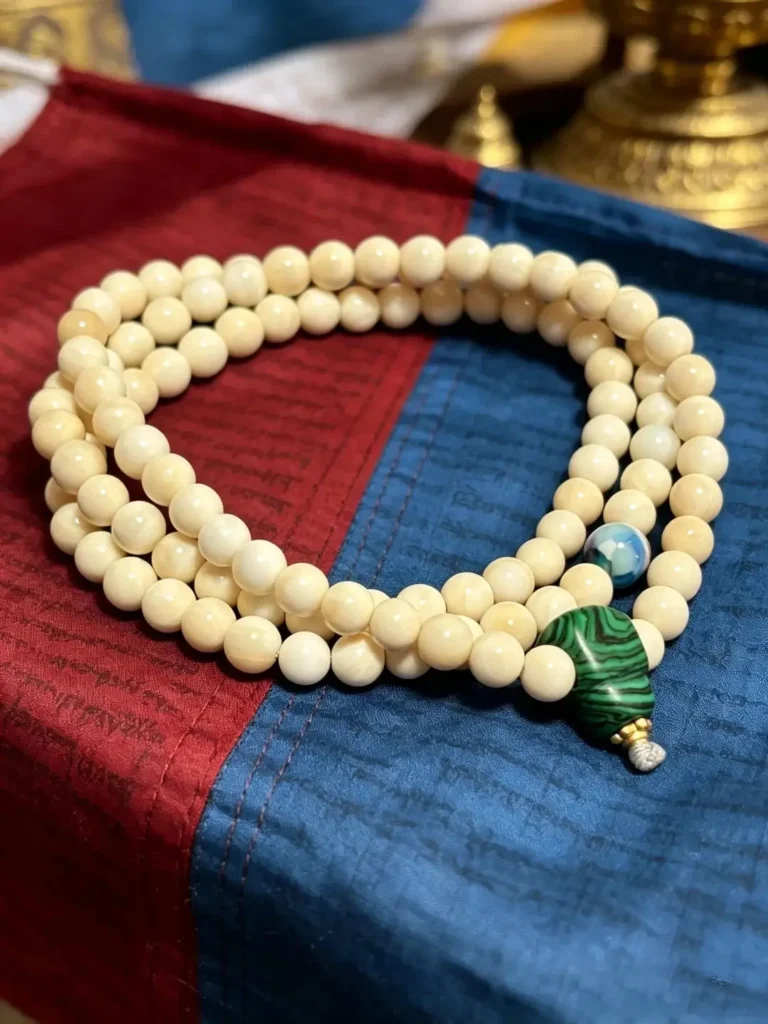
Traditional Buddhist texts include Tridacna shell among the Seven Treasures, although the exact list varies across different sources. Because of this cultural connection, artisans have traditionally used Tridacna shell to create prayer beads, meditation jewelry, and decorative pieces inspired by Eastern aesthetics.
Beyond its cultural significance, designers value Tridacna shell for its distinctive material qualities:
- Thick and durable structure: Compared with many other shells, Tridacna provides a larger working surface, allowing artisans to create beads, pendants, and detailed carved ornaments.
- Natural white luster: Its clean white surface creates an elegant appearance after polishing.
- Fine texture: The smooth texture gives finished jewelry a soft and refined feel.
Today, Tridacna shell continues to appear in both traditional and contemporary jewelry design, combining natural characteristics with centuries of craftsmanship and cultural heritage.
Common Types of Tridacna Shell
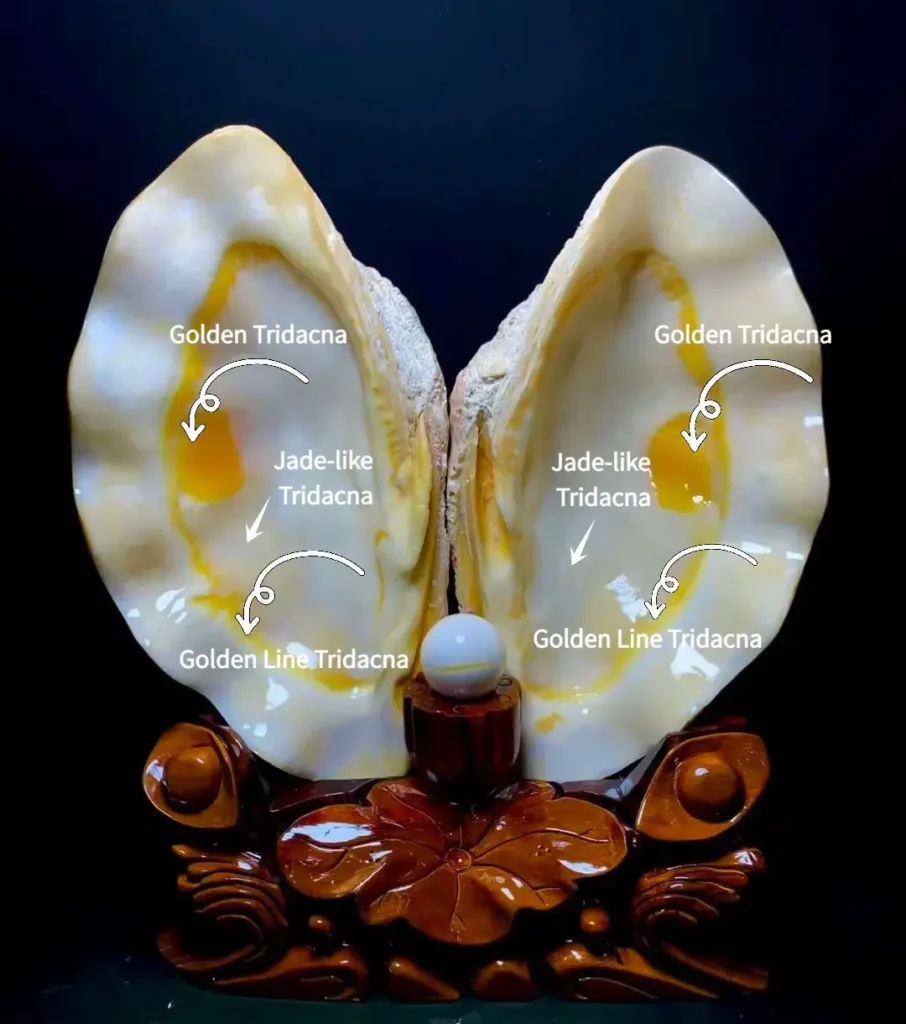
Many people know Tridacna shell for its classic white appearance. However, this natural shell material can show different colors and patterns depending on the species, growth environment, shell structure, and cutting position.
Common varieties include:
- White Tridacna
One of the most recognized varieties, White Tridacna features a clean white color and a fine, smooth texture. Artisans commonly use it for prayer beads, carved ornaments, and decorative jewelry pieces. - Golden Line Tridacna
This variety displays natural yellow or golden lines within the shell. These patterns form during the shell’s growth process and create a distinctive contrast against the white background. - Golden Tridacna Shell
Natural Golden Tridacna Shell ranges in color from pale yellow to rich golden hues. Raw specimens often feature natural fissures, growth lines, or tiny surface pits, making fully saturated, structurally complete, and flawless pieces exceptionally rare. - Jade-like Tridacna
Some Tridacna shells develop a denser structure and smoother surface, creating a slightly translucent appearance with a jade-like visual effect. The term describes the material’s appearance rather than an actual transformation into jade. - Purple Tridacna and “Blood Tridacna”
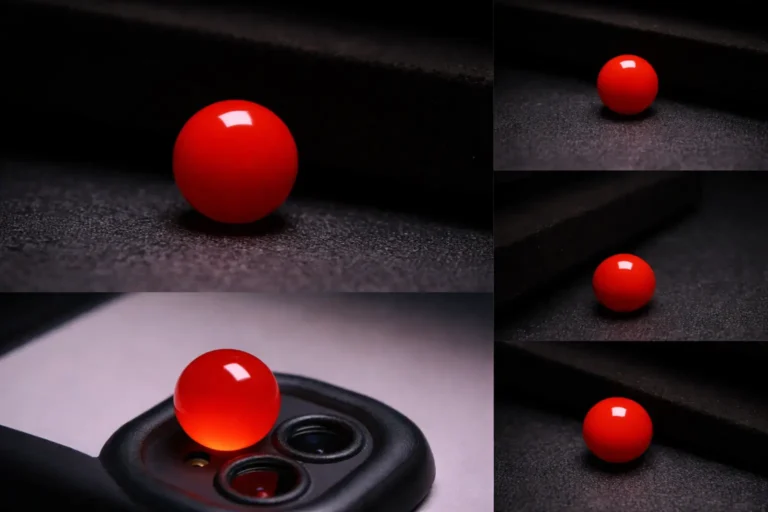
Purple Tridacna and naturally red Tridacna materials are among the rarest varieties. The term “Blood Tridacna” is often used commercially for red-colored materials, but true natural red areas usually appear only in very limited sections of certain shells, often near the shell edge.
In fact, some materials sold under the name “Blood Tridacna” may come from the naturally reddish-orange sections of the Red Helmet Shell (Cypraecassis rufa) rather than genuine red Tridacna. Buyers should focus on material verification and origin instead of relying solely on trade names. To learn more about identifying shell substitutes and dye treatments, explore our full Tridacna Shell Jewelry Identification: A Guide to Natural vs. Imitation.
Protecting Tridacna Shell and Marine Conservation
Due to historical overharvesting and changes in marine ecosystems, wild Tridacna populations have declined significantly in many regions.
Today, some Tridacna species receive international protection and face trade restrictions under conservation regulations, including the Convention on International Trade in Endangered Species of Wild Fauna and Flora (CITES).
As a result, modern jewelry designers increasingly focus on using legally sourced Tridacna shell and exploring creative ways to reuse existing materials. Responsible sourcing allows this unique ocean material to remain part of jewelry design while respecting marine conservation efforts.
Helmet Shell (Bullmouth Helmet Shell, Cypraecassis rufa)
The Bullmouth Helmet Shell (Cypraecassis rufa), also known as the Red Helmet Shell, is a large marine gastropod belonging to the family Cassidae, with natural reddish-brown inner layers and lighter outer tones.
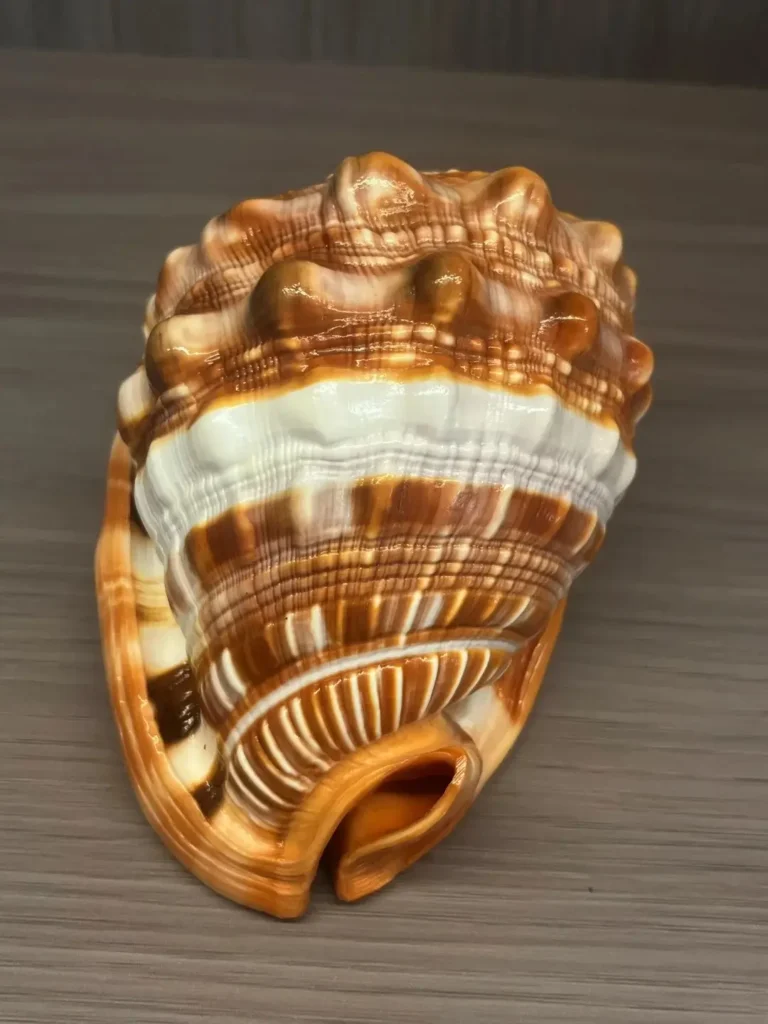
Bullmouth Helmet Shells are mainly found in tropical waters of the Indo-Pacific region. They usually inhabit sandy seabeds near coral reefs and rocky areas, where they feed on marine organisms in their natural habitat.
Adult Cypraecassis rufa specimens typically reach around 15–30 cm in length, although size varies among individual shells. Larger shells provide more material for cutting, polishing, carving, and artistic applications.
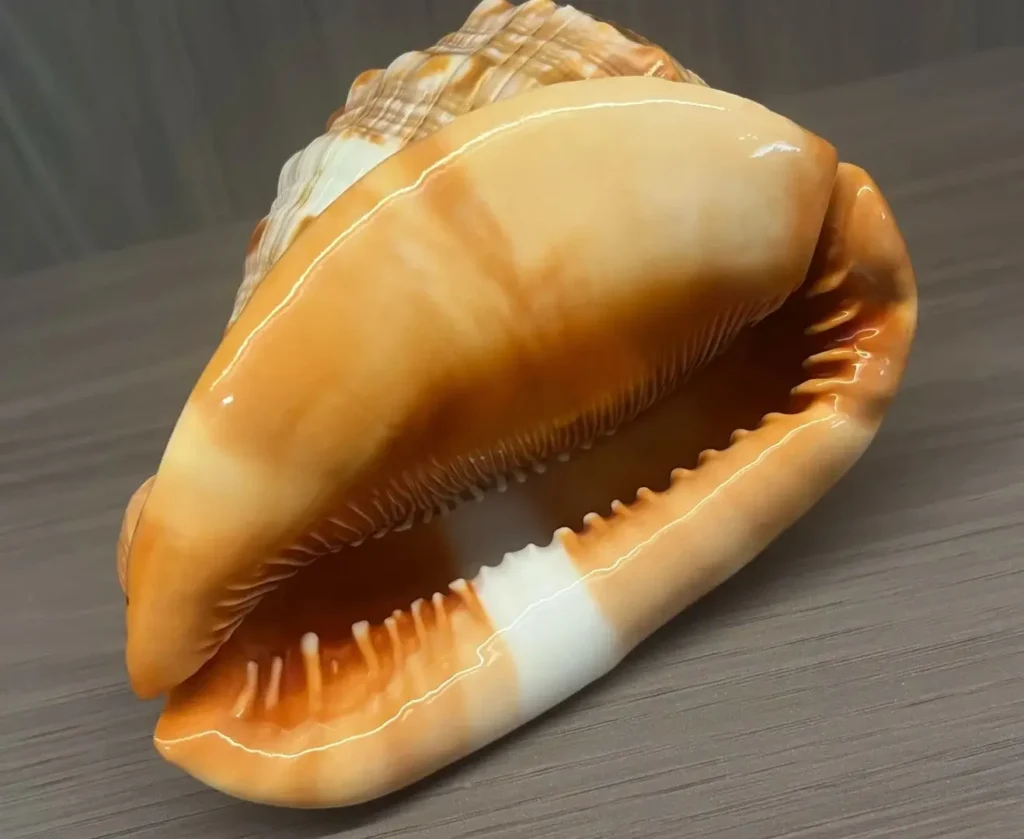
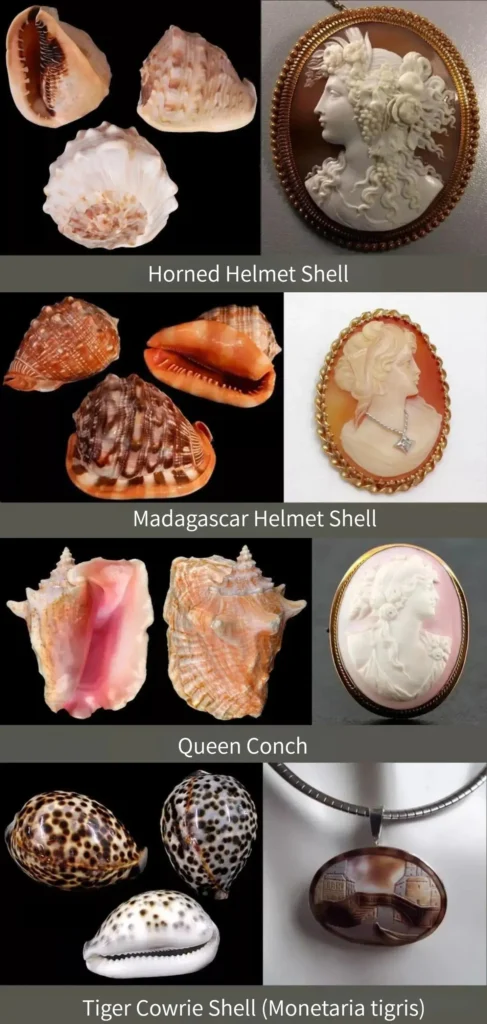
In traditional Chinese shell culture, the Bullmouth Helmet Shell is regarded as one of the “Four Famous Shells,” together with the Horned Helmet Shell (Cassis cornuta), Triton’s Trumpet (Charonia tritonis), and Nautilus. This cultural classification highlights the unique shapes and artistic value of these iconic marine shells.
Color, Texture, and Jewelry Applications of Helmet Shell
The most attractive feature of Helmet Shell is its naturally warm color palette, which ranges from orange and reddish-orange to orange-brown and deep red-brown tones.
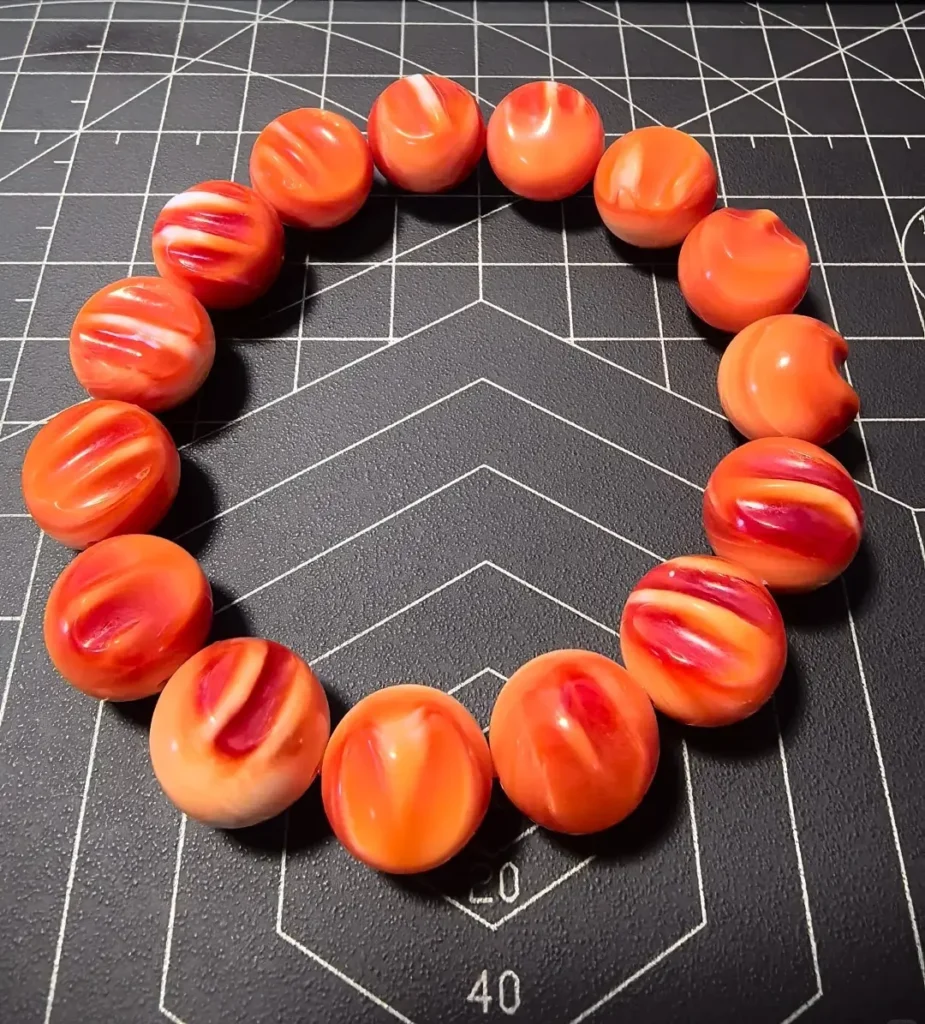
After cutting, polishing, and finishing, Helmet Shell reveals a smooth surface with a warm natural glow and rich depth. Artisans often use it to create:
- Beaded necklaces and bracelets;
- Pendants;
- Inlay jewelry;
- Cameo carvings.
Its layered color patterns also make Helmet Shell a popular material for traditional cameo carving. Skilled artisans can use the natural contrast within the shell to create more dimensional designs, adding depth and character to carved portraits and decorative motifs.
When selecting Helmet Shell for jewelry, designers usually consider several factors:
- Color intensity: Richer and more saturated colors often create a stronger visual impact.
- Size and thickness: Thicker shell sections provide more flexibility for carving and high-quality inlay work.
- Natural patterns: Pieces that preserve clear, organic patterns often offer greater artistic appeal than plain-colored sections.
Because each shell develops its own unique colors and textures over time, every Helmet Shell jewelry piece carries a natural pattern that cannot be completely replicated.
Abalone Shell
Abalone shell comes from marine mollusks in the family Haliotidae. It is one of the most visually distinctive natural shell materials used in jewelry design.
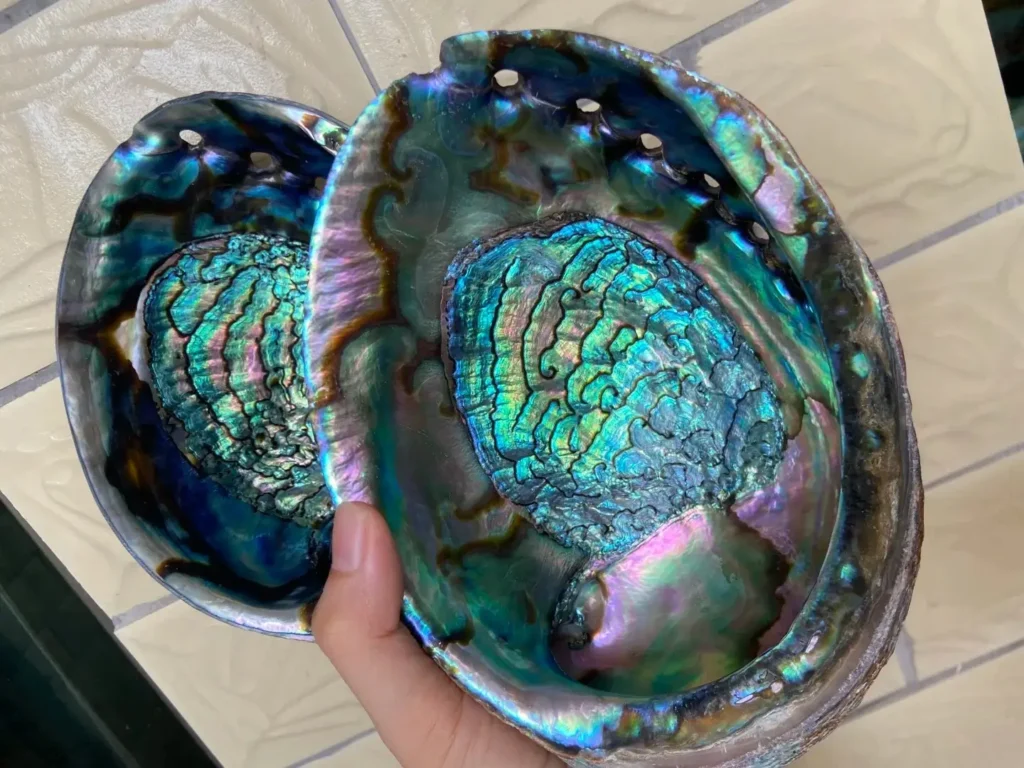
Unlike many shells that attract attention mainly through their colors, Abalone shell stands out for its remarkable iridescence.
When light moves across its surface, the shell reveals shifting shades of blue, green, purple, pink, and silver. This dynamic play of color has earned Abalone shell the nickname “the natural color palette of the ocean.”
These vibrant colors do not come from artificial dyes. They form naturally through the shell’s unique microscopic structure, which interacts with light to create its signature rainbow-like glow.
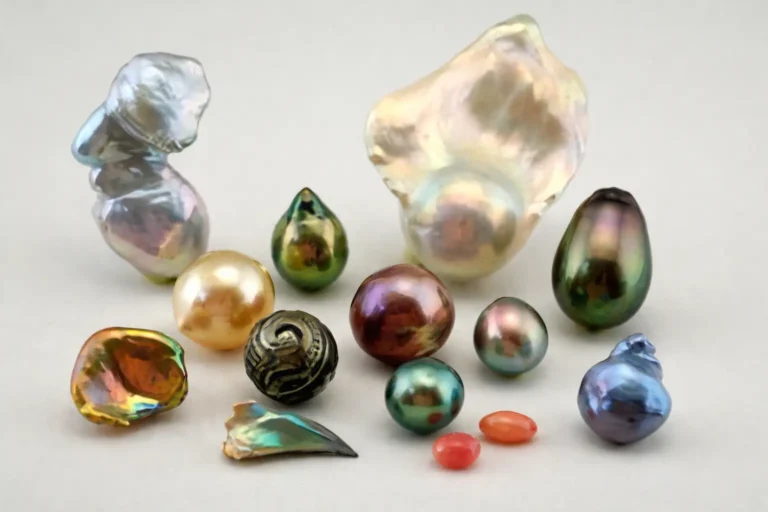
These vibrant colors do not come from artificial dyes. They form naturally through the shell’s unique microscopic structure, which interacts with light to create its signature rainbow-like glow. The same unique biology behind abalone shell also gives rise to the rare Abalone Pearl, a natural gem admired for its vivid colors and organic forms. Discover more in Abalone Pearl: An Iridescent Wonder from the Ocean.
The Science Behind Abalone Shell Iridescence
The inner layer of Abalone shell is mainly made of nacre, also known as mother-of-pearl.
Nacre consists of countless microscopic layers of aragonite crystals arranged with organic materials. This highly organized structure interacts with light in several ways:
- Light reflection;
- Light interference;
- Light diffraction.
As light travels through these microscopic layers, certain wavelengths become stronger than others. This process creates the shifting rainbow-like colors that make Abalone shell so distinctive.
The same structural principle also creates the iridescent effects found in pearls and Mother-of-Pearl. It is a classic example of structural coloration, where natural materials produce color through microscopic structures rather than pigments or dyes.
Abalone Shell Varieties from Different Regions
Abalone shells from different regions develop unique colors and patterns because of differences in species and marine environments. Some varieties are especially popular in jewelry design for their distinctive iridescent colors.
- New Zealand Pāua Abalone
One of the most recognized abalone shell materials, Pāua Abalone is known for its intense blue-green and purple iridescence. Its deep ocean-like colors make it a popular choice for jewelry, decorative art, and inlay work. - California Red Abalone
Native to the Pacific coast of North America, Red Abalone displays a broad range of colors, including blue, green, pink, and purple tones. Its layered color changes create a soft yet complex visual effect. - South African Abalone
Some South African Abalone varieties show striking peacock green and blue-purple tones. Their rich color combinations and natural patterns make them suitable for jewelry inlay and decorative applications. - Japanese Abalone
Japanese Abalone has a long history in traditional decorative arts. Certain varieties are valued for their fine texture, delicate luster, and subtle color transitions.
Abalone Shell in Jewelry Design
Abalone shell offers stunning iridescent colors, but its natural structure also creates some limitations. Because the shell is relatively thin and delicate, designers rarely use it for large three-dimensional carvings.
Instead, artisans usually work with cutting, inlay, and layered techniques to preserve its beauty and improve durability.
Common applications include:
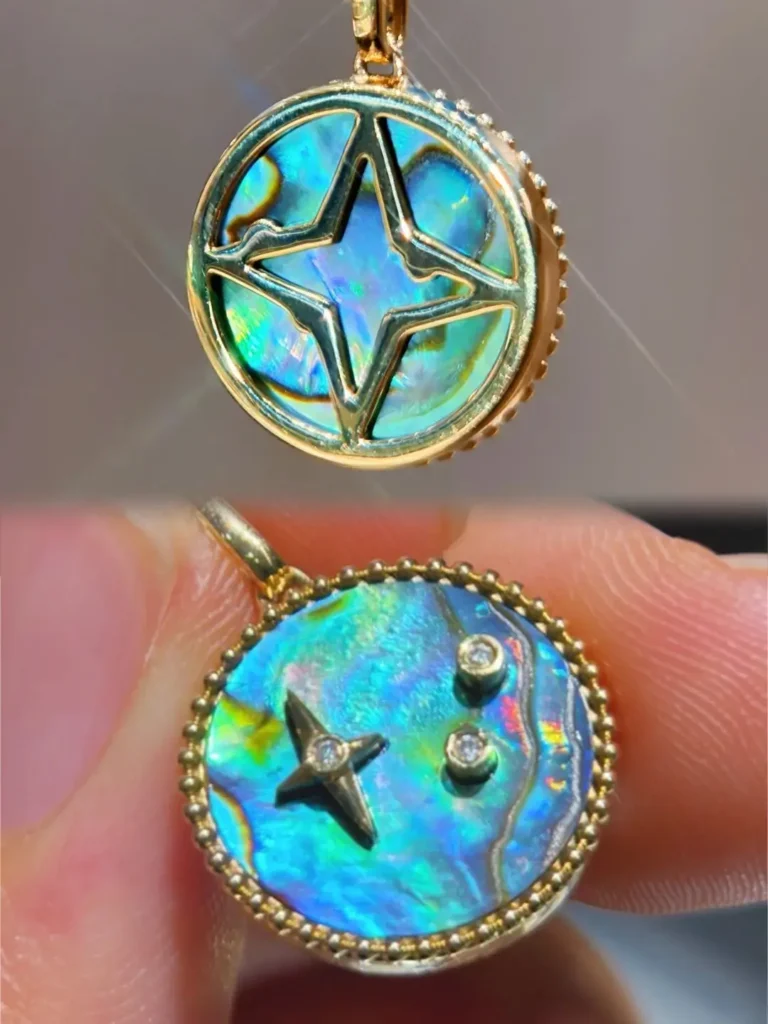
- Doublet and Triplet settings: Designers combine thin abalone shell layers with transparent materials such as crystal or glass. This approach protects the shell while enhancing its depth and iridescent colors.
- Mosaic inlay: Craftspeople cut abalone shell into small pieces and arrange them into geometric patterns, floral designs, or decorative motifs. The natural color variations make each piece unique.
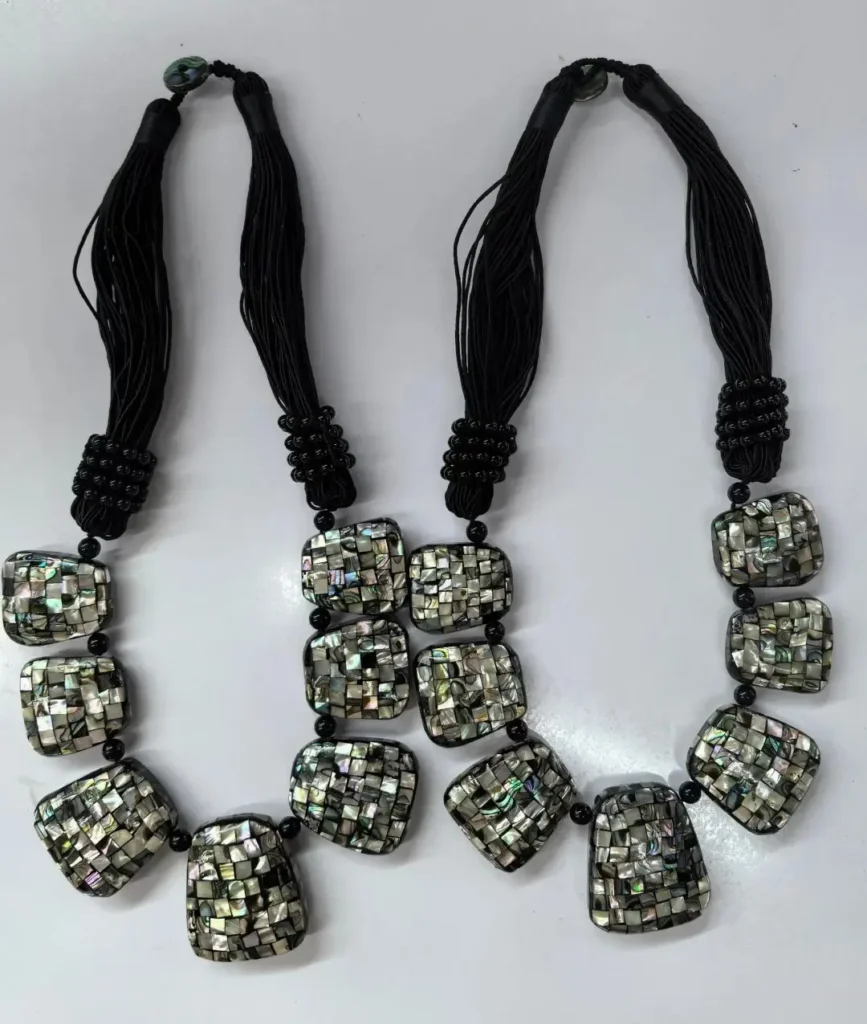
Through these techniques, abalone shell jewelry highlights the ocean’s natural colors while transforming a delicate material into durable artistic designs.
Queen Conch Shell
The Queen Conch Shell (Lobatus gigas) is one of the most recognizable pink shell materials used in jewelry design. It belongs to the family Strombidae and mainly lives in the warm waters of the Caribbean Sea.
Unlike many shells that attract attention through iridescent effects, Queen Conch is best known for its naturally soft pink tones. Its colors range from pale blush pink and creamy white-pink to deeper rose shades. These natural color variations give Queen Conch jewelry a gentle and elegant appearance.
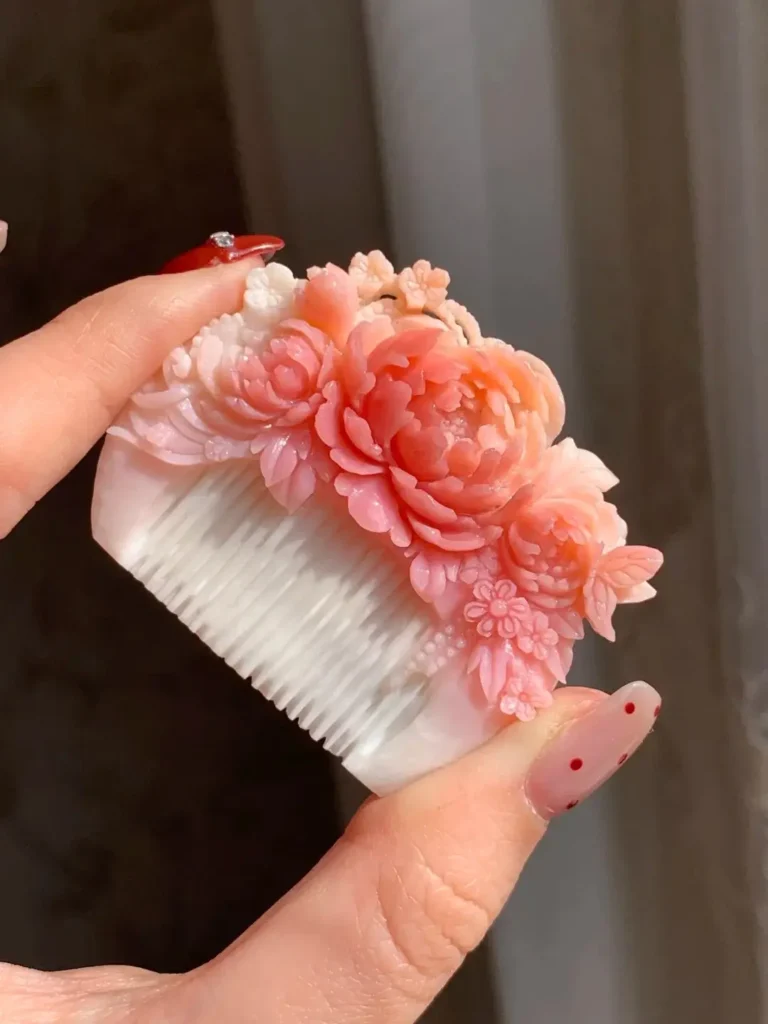
After cutting and polishing, Queen Conch reveals a smooth, porcelain-like luster (porcelaneous luster). Artisans often use it to create cabochons, beads, pendants, and carved decorative pieces.
Queen Conch is also the natural host shell for the rare Conch Pearl. Its layered color patterns make it an excellent material for Cameo carving, allowing artisans to create designs with natural color contrast and depth.
For a deeper look at Queen Conch jewelry, Conch Pearls, and its role in modern jewelry design, explore our article Queen Conch Shell Jewelry: A Pink Organic Gemstone from the Caribbean Sea.
Jewea’s Thoughts
The ocean has created countless shell materials for jewelry design, and the four shells introduced in this article represent only a small part of this natural collection.
From the cultural heritage of Tridacna Shell to the warm colors of Helmet Shell, from the iridescent beauty of Abalone Shell to the soft pink tones of Queen Conch Shell, each material carries its own story, texture, and artistic character.
For jewelry designers, shells are more than decorative materials. They are a way to bring the colors, patterns, and history of the ocean into handmade creations.