Helmet Shell: Ocean Beauty and the Art of Cameo Carving
In our article Shell Jewelry: Natural Treasures from the Ocean, we introduced several natural shell materials widely used in modern jewelry design, including the Helmet Shell and the traditional art of Cameo carving created from this unique material.
In this article, we will take a closer look at the Helmet Shell’s distinctive biological features, natural habitat, and the reasons why it has become one of the most treasured materials in the world of shell carving and Cameo art.
What Is a Helmet Shell?
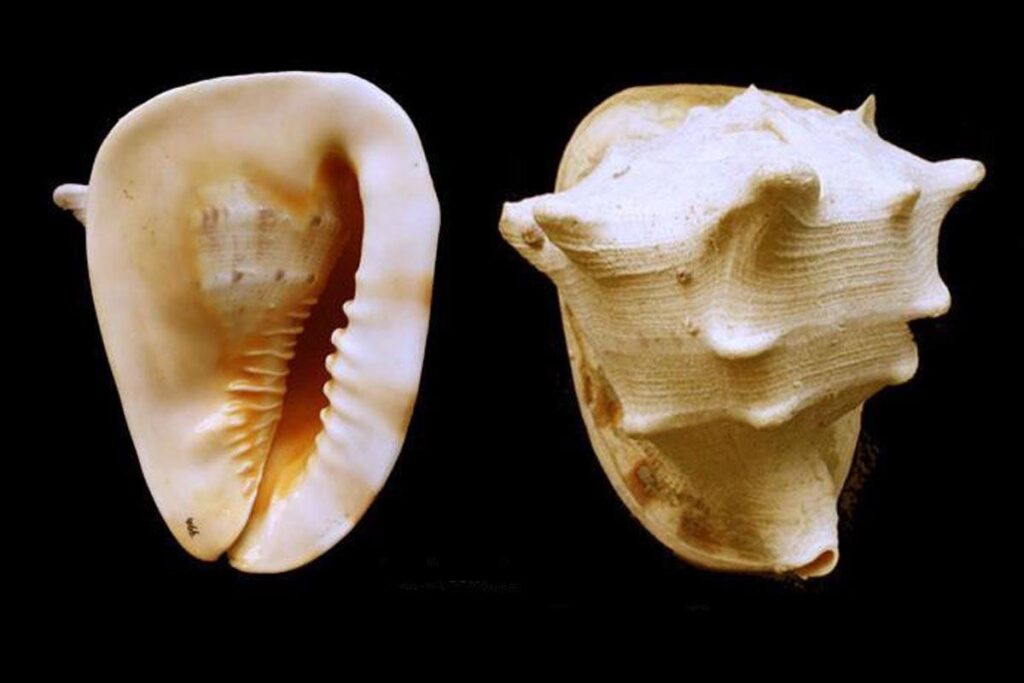
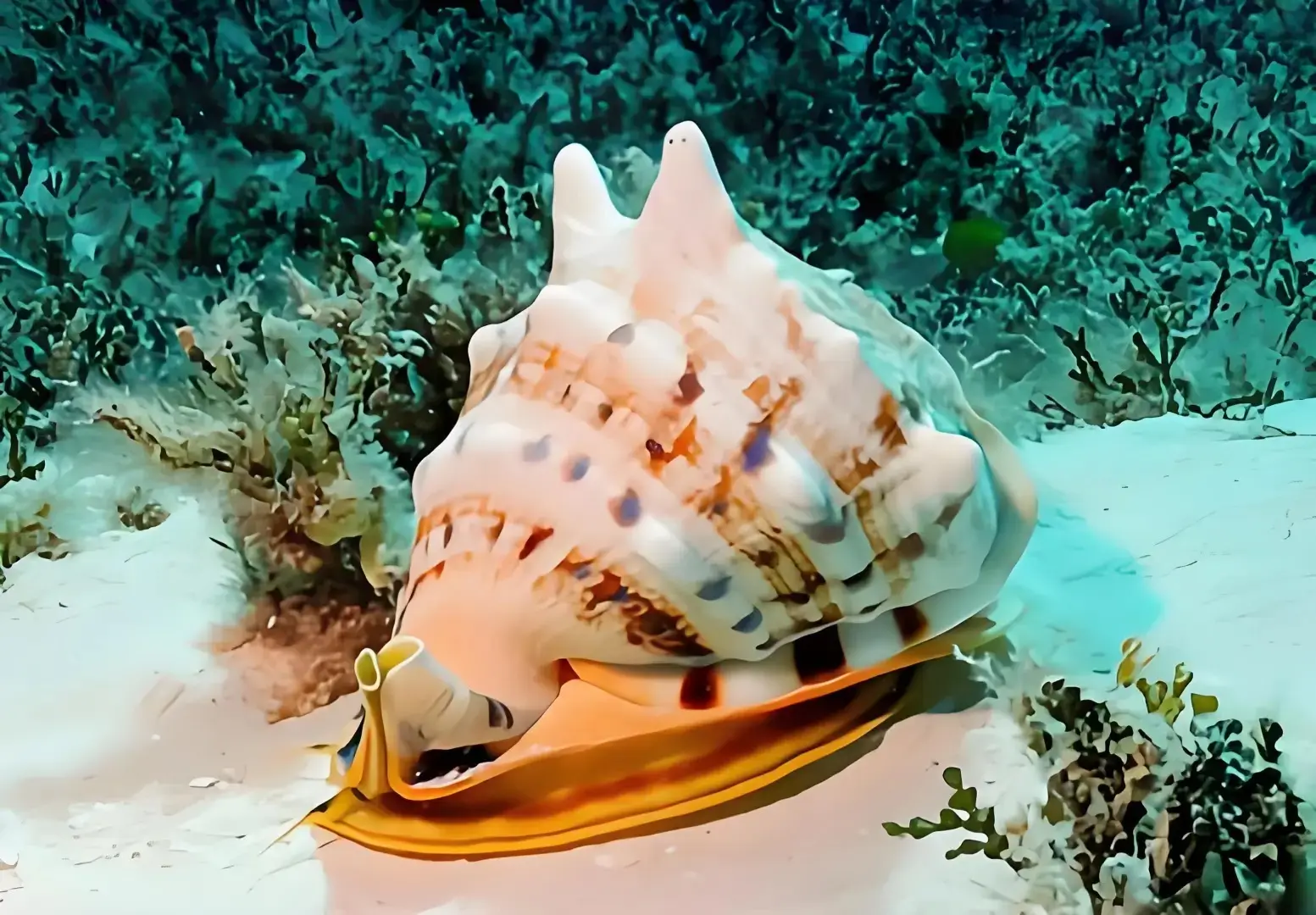
The Helmet Shell (Cassis cornuta), known as Tangguanluo (唐冠螺) in Chinese, is a large marine gastropod recognized for its impressive size and distinctive shell shape. The Chinese name refers to the shell’s crown-like shape, which resembles the traditional headwear worn by monks during China’s Tang Dynasty.
It is also known as the Horned Helmet Shell, a name inspired by the prominent horn-like projections along the shoulder of its shell.
From a biological perspective, the Helmet Shell belongs to the following classification:
- Kingdom: Animalia
- Phylum: Mollusca
- Class: Gastropoda
- Family: Cassidae
- Genus: Cassis
Due to historical harvesting pressure and changes in marine environments, wild populations of Helmet Shells are protected in some regions.
In traditional Chinese marine culture, the Helmet Shell is often appreciated alongside other iconic large shells, including the Melo Shell, Triton Shell, and Nautilus, which have long been valued for their unique forms and natural beauty.
Physical Characteristics of the Helmet Shell
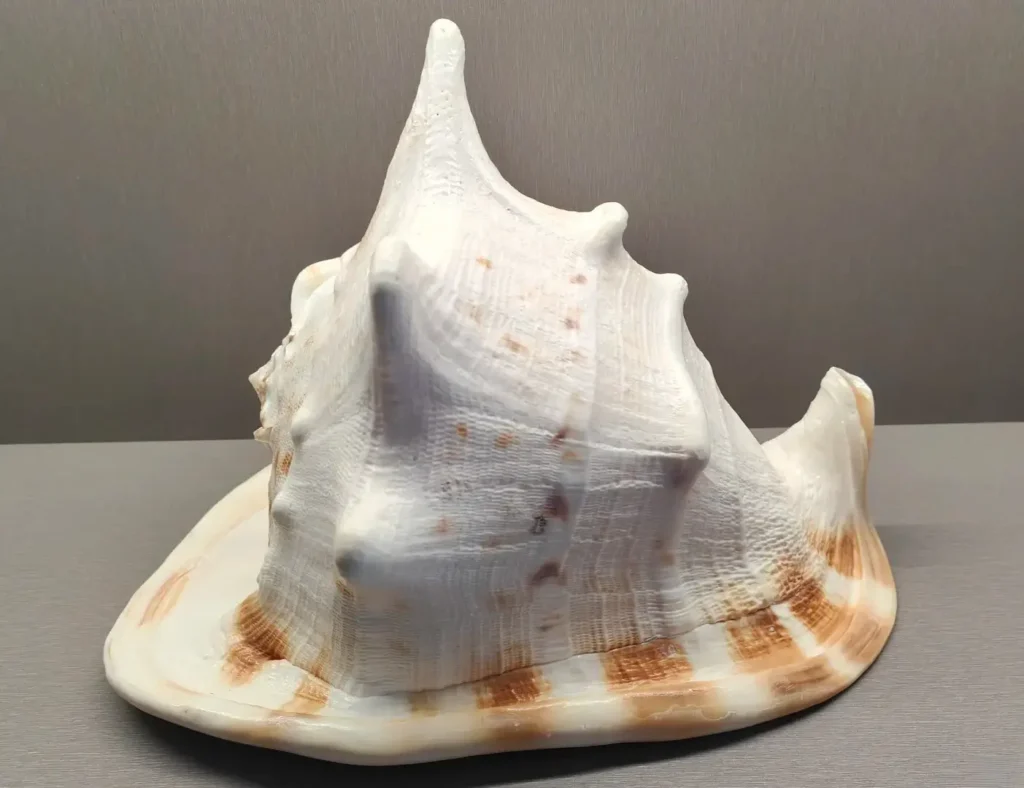
The Helmet Shell is best known for its thick, sturdy shell structure and naturally layered colors. These unique features give the shell its distinctive appearance and make it a valued material in decorative arts and shell carving.
Size and Color
Adult Helmet Shells typically reach 15–30 cm in length, with some larger specimens growing even bigger.
Their shells usually display natural tones such as:
- Grayish white
- Cream or ivory
- Light brown
After careful polishing, the shell reveals a smooth surface with a warm, natural luster.
Some larger related species, such as the King Helmet Shell (Cassis madagascariensis), can grow up to 40 cm in length. These impressive shells are highly regarded among marine shell collectors for their remarkable size and appearance.
A Distinctive Crown-Like Shape
The Helmet Shell gets its name from its unique appearance:
- It has a low spire and a thick, oval-shaped shell.
- Its shoulder features 5–7 prominent horn-like projections, creating a natural crown-like appearance.
- The shell surface is generally smooth, with fine spiral grooves adding subtle texture.
These features give this species its distinctive beauty and help distinguish it from other large marine shells.
A Thick Shell Lip and Natural Color Layers
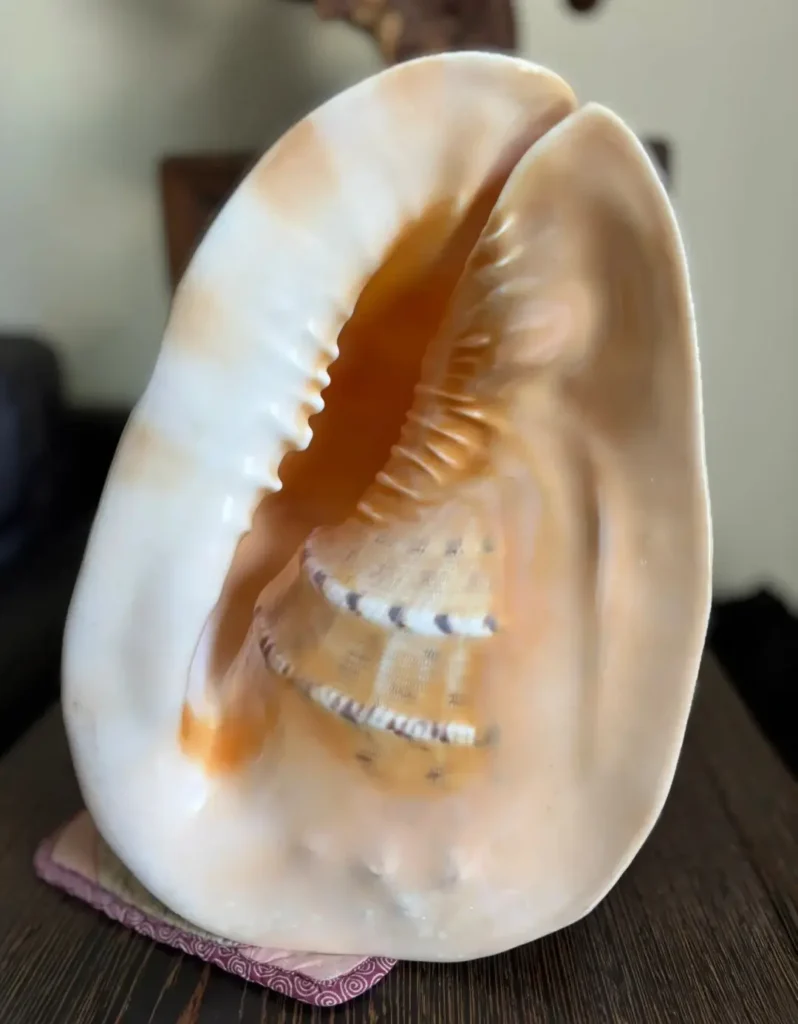
The Helmet Shell develops a strong and well-formed shell opening with several unique characteristics:
- The outer lip expands outward and becomes thick and sturdy.
- The inner lip forms a prominent shield-like area.
- The inner shell often displays warm tones, including orange, reddish orange, and deeper color layers.
This naturally layered color structure makes the Helmet Shell a highly valued material for traditional Cameo carving, allowing artists to create detailed relief designs by revealing different layers of the shell.
Geographic Distribution and Habitat
The Helmet Shell mainly inhabits tropical waters across the Indian Ocean and Pacific Ocean. Its range includes the eastern coast of Africa, Indonesia, the Philippines, the islands of the South Pacific, and southern waters of China.
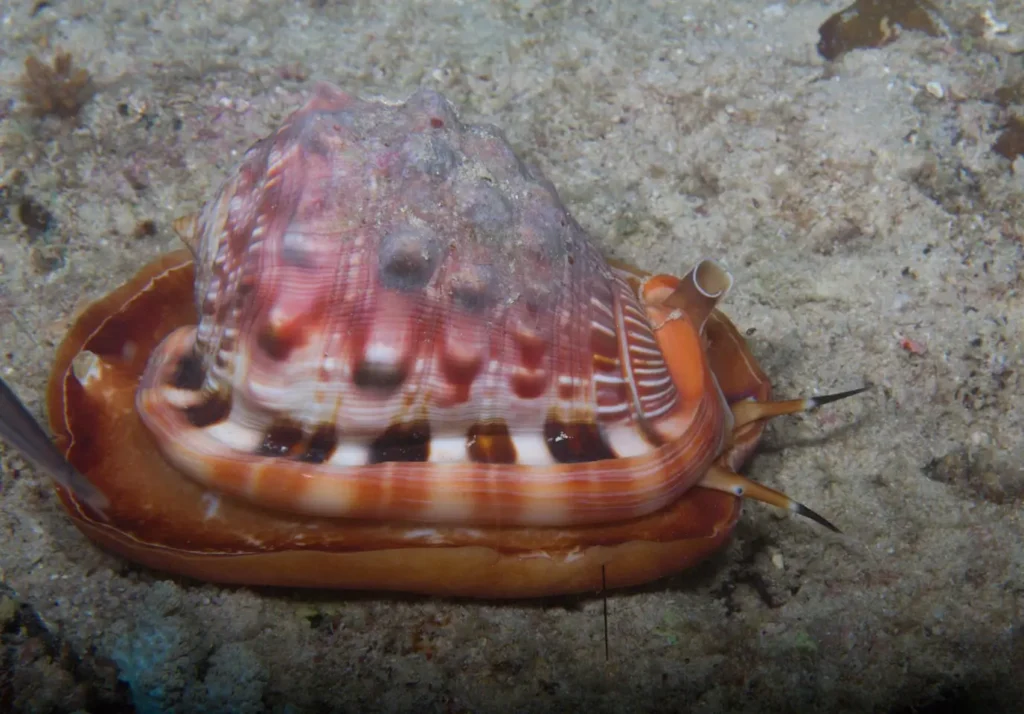
These shells usually live in:
- Shallow coastal areas
- Coral reef environments
- Sandy bottoms and areas with broken coral debris
They are commonly found at depths of around 1–30 meters below the surface.
A Carnivorous Marine Predator
Unlike many shellfish that feed on algae or organic debris, the Helmet Shell is a carnivorous gastropod.
It mainly preys on:
- Sea urchins
- Other echinoderms
- Small benthic invertebrates
Although this species moves slowly, it has developed specialized adaptations for hunting. These include:
- Powerful foot muscles that help it hold onto prey.
- A well-developed radula, which allows it to drill through hard shells and access its food.
These adaptations help this marine gastropod survive as an effective predator in its natural environment.
A Nocturnal Lifestyle
The Helmet Shell is mainly active at night.
During the day, it usually hides beneath sandy bottoms or stays near rocks to avoid predators and reduce exposure.
When night falls, it becomes more active and begins searching for food.
Reproduction
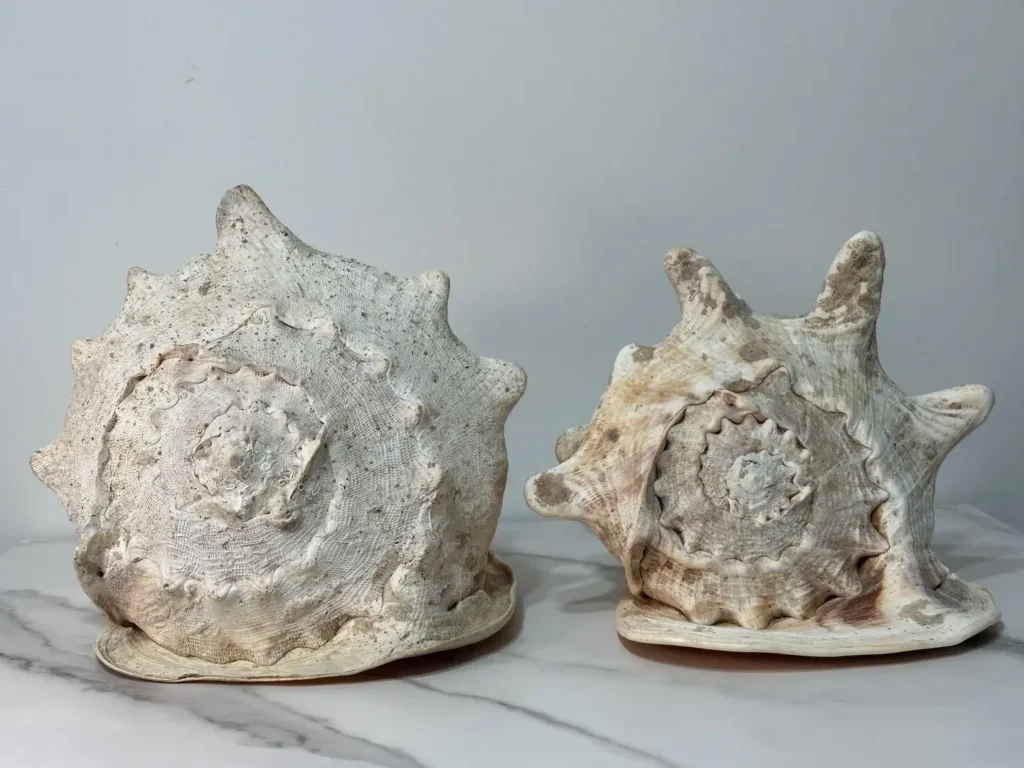
The Helmet Shell is a separate-sex species, with males and females developing as distinct individuals. Females are usually larger than males, and the breeding season often occurs during summer.
During reproduction:
- Females lay egg capsules in suitable environments.
- After hatching, the young larvae enter a planktonic stage.
- As they grow, they gradually transition to life on the seafloor.
This complex life cycle helps maintain healthy Helmet Shell populations in marine ecosystems.
From Ocean Life to Cameo Art: The Cultural Value of the Helmet Shell
One of the most remarkable qualities of the Helmet Shell is its natural suitability for Cameo carving.
The shell features distinct color layers:
- A lighter outer layer, often in white or ivory tones
- A darker or warmer inner layer, showing shades of orange or deeper hues
Artists reveal these natural layers by carefully carving away different sections of the shell. This technique allows them to create detailed portraits, mythological scenes, floral patterns, and other decorative designs.
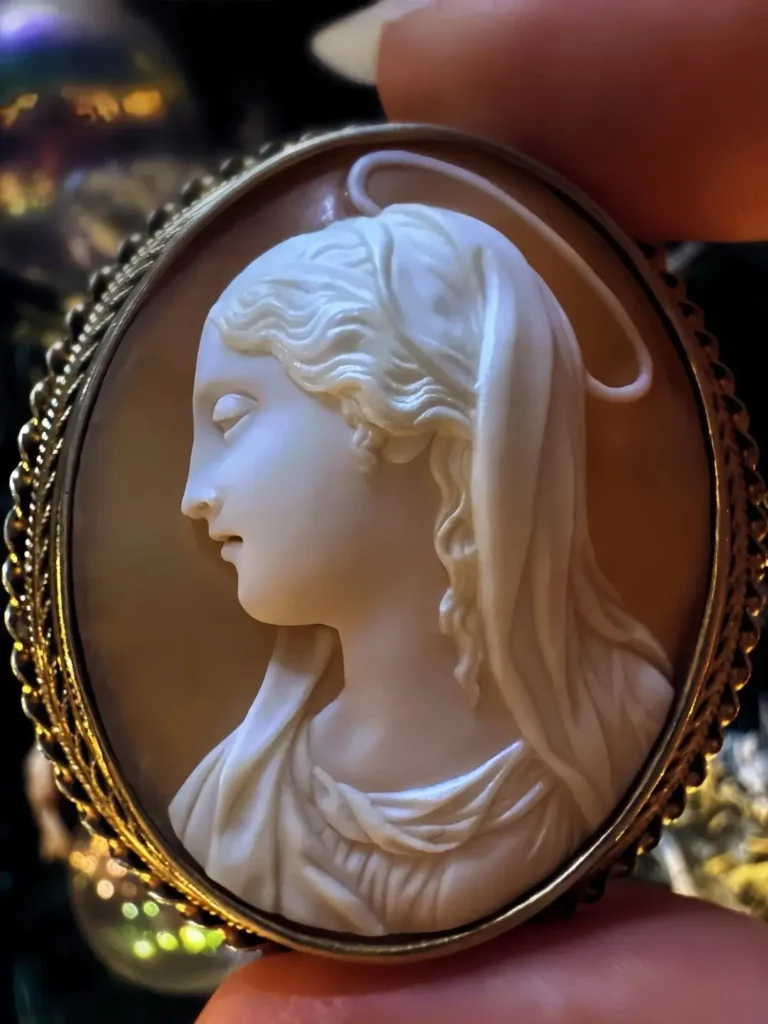
The art of using natural color contrasts to create raised relief designs has a history spanning hundreds of years. It has become an important part of traditional European jewelry and decorative arts.
Today, artisans still use this natural material to create:
- Cameo pendants
- Cameo brooches
- Handmade shell jewelry
- Decorative art pieces
Each piece preserves the shell’s natural patterns and textures, making every creation truly unique.
The Helmet Shell and Marine Ecosystems
Beyond its artistic value, the Helmet Shell also plays a meaningful role in marine ecosystems, especially in coral reef environments.
As a carnivorous gastropod, it helps regulate populations of some benthic animals, including sea urchins.
When populations of large marine predators decline, food chains within the ecosystem can become disrupted. In some regions, long-term harvesting pressure has reduced the number of these predators, allowing sea urchin populations to increase and placing additional pressure on seagrass beds and coral reef habitats.
Protecting the Helmet Shell and other large marine mollusks helps preserve not only a beautiful natural material but also the balance of marine ecosystems.
JEWEA Conclusion
The Helmet Shell is more than a unique marine creature. It is also a natural material that connects the beauty of the ocean with human creativity.
At JEWEA, we believe every natural shell carries a story from the ocean. By respecting marine ecosystems, choosing responsible sources, and honoring traditional craftsmanship, we can help preserve the beauty of these natural treasures for generations to come.