3 Lesser-Known Alternatives to Ruby
In our previous article, Jewelry Alternatives: What’s a Smart Buy and What’s a Total Scam?, we shared how we found a 6-carat-plus Malaya garnet for a client as an alternative to ruby. We also looked at other gemstone alternatives.
This time, we’re going even further off the beaten path with three lesser-known red gemstones: Oregon Sunstone from the United States, rhodonite, and fire opal.
In the right material, all three can create a ruby-like look. But they are not ruby equivalents. Their color, durability, rarity, and market value can differ significantly from those of ruby.
Oregon Sunstone: A Feldspar Alternative to Ruby
We covered sunstone and its place in the feldspar family in our guide to Sunstone Jewelry. Among the many varieties, fine red Oregon Sunstone stands out for its rarity. The best stones can show a rich, vivid red that gives them a look reminiscent of fine ruby.
Oregon Sunstone is a copper-bearing labradorite feldspar. One of its defining features is the presence of tiny particles of natural native copper within the crystal. These copper particles contribute to its distinctive aventurescence and, in some stones, to its red body color.
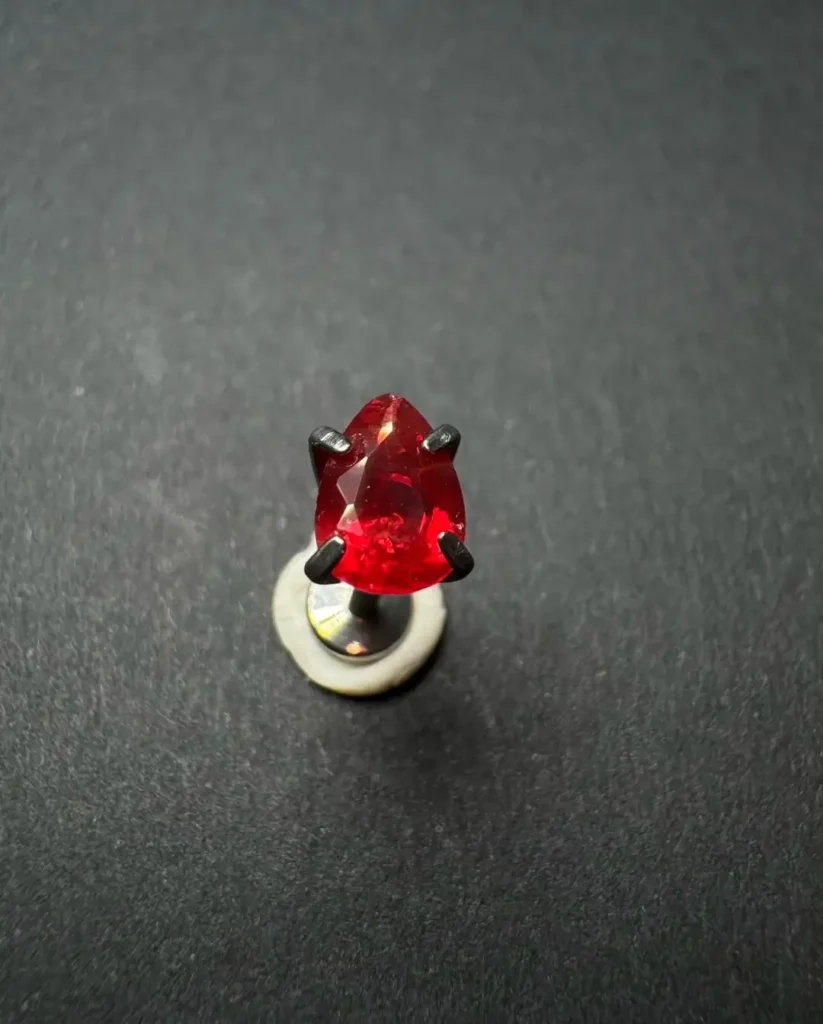
Oregon Sunstone comes in a wide range of colors. Fine red material with strong color, good transparency, and an attractive overall appearance is much harder to find. The finest red stones can show a ruby-like appearance, making them an unusual choice for lovers of red gemstones.
Oregon is currently the only verified source of gem-quality natural copper-bearing sunstone with established commercial production.
When Red Feldspar Gets Confused
Fine red Oregon Sunstone is not easy to find, which has led to confusion with other red feldspar materials. Some stones sold on the market have been identified as copper-diffused feldspar.
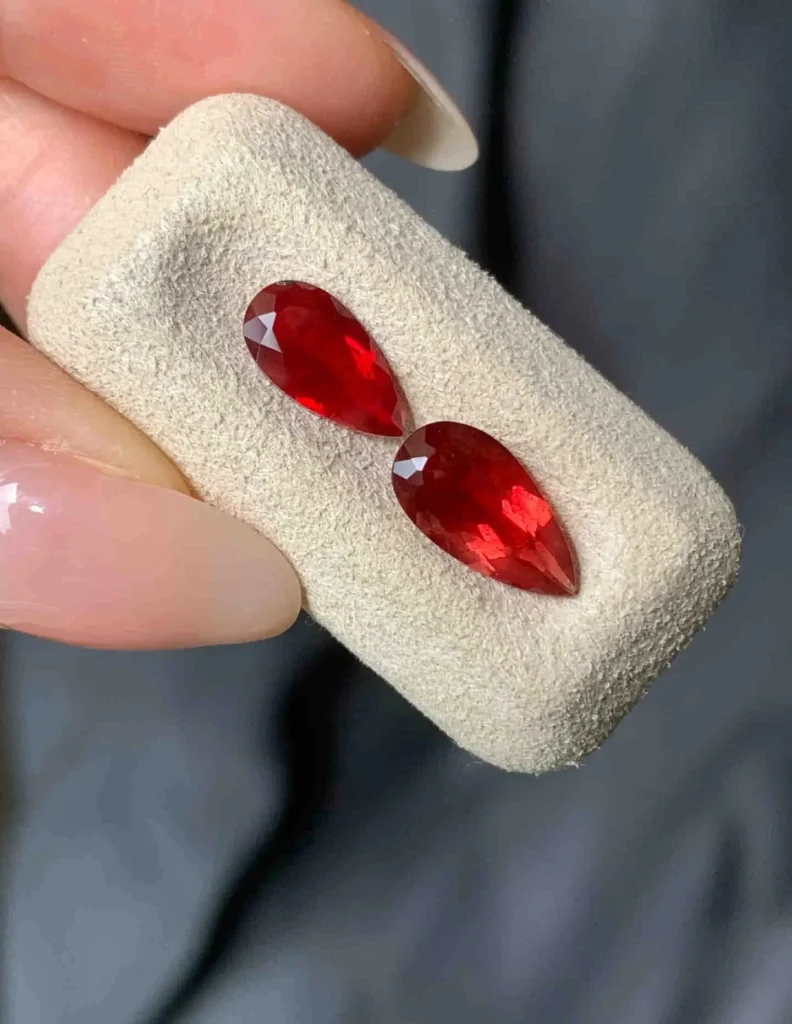
Some copper-diffused red andesine can look remarkably similar to natural red Oregon Sunstone. In certain cases, even a visual inspection may not be enough to tell them apart.
That is why color and appearance alone cannot reliably establish whether a red feldspar is natural or where it came from. For valuable or questionable stones, gemologists may need to examine internal features, chemical composition, and, when necessary, use advanced testing such as LA-ICP-MS alongside an independent laboratory report.
How Does It Compare with Ruby?
Color and optical effect:
Fine red Oregon Sunstone can show a vivid red, but its aventurescence gives it a character that differs from ruby. Ruby gets its appeal from the color, transparency, and luster of corundum itself.
Durability:
Oregon Sunstone has a Mohs hardness of about 6–7, well below ruby’s hardness of 9. Feldspar also has distinct cleavage, which means a hard impact can cause the stone to fracture. For this reason, Oregon Sunstone works particularly well in earrings, pendants, and brooches. Rings require more careful setting and everyday wear.
Why consider it as a ruby alternative?
Oregon Sunstone is not a mineralogical equivalent of ruby. Its appeal lies elsewhere: its distinctive Oregon origin, natural copper inclusions, aventurescence, and the ruby-like appearance that some fine red stones can achieve.
For anyone who wants a red gemstone with a different geological story and optical character, Oregon Sunstone offers a genuinely distinctive alternative to ruby.
Rhodonite: An Affordable Alternative to Ruby
The name rhodonite comes from the Greek word rhodon, meaning “rose,” a reference to its characteristic pink to red color.
Most rhodonite on the market has a distinctly opaque, stone-like appearance. It often shows black or dark veins and patches against a pink background. But gem-quality rhodonite can look very different. Rare transparent to translucent material can range from soft pink and rose-red to vivid red, with an attractive glassy luster.
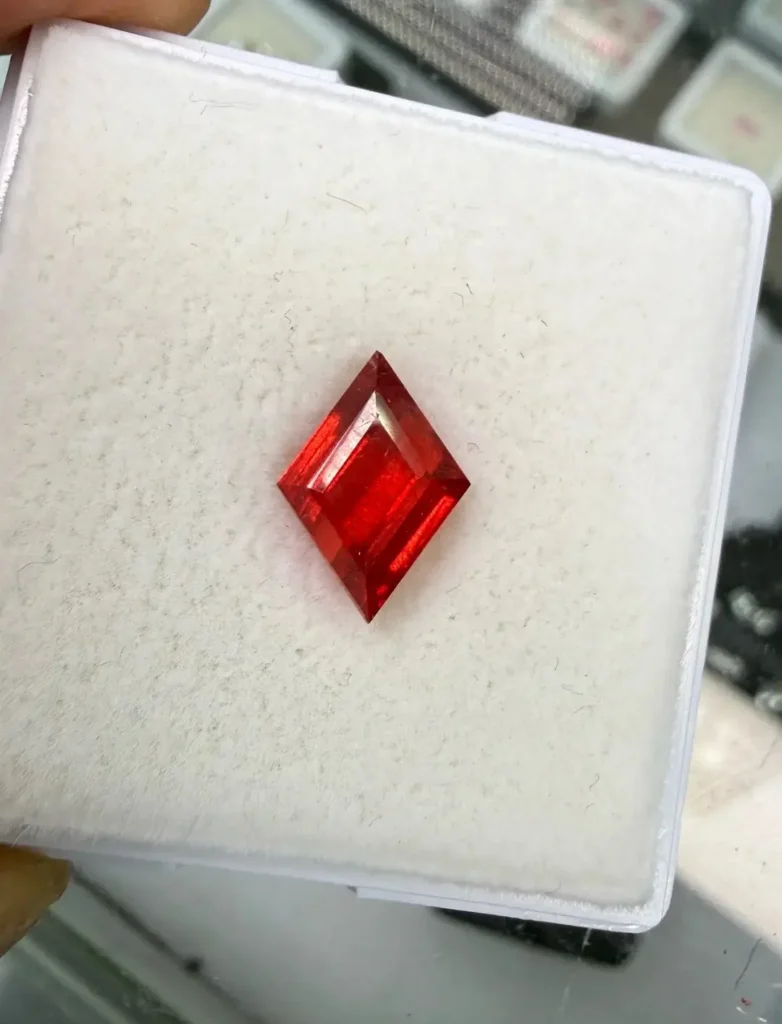
Fine red rhodonite with good transparency is uncommon. The best pieces can show a rich red that gives them a ruby-like appearance.
How Does It Compare with Ruby?
Color and clarity:
Fine rhodonite can show beautiful red tones, but material with both strong color and good transparency is rare. Even the best rhodonite generally does not match fine ruby in color saturation, transparency, or overall visual quality.
Durability:
Rhodonite has a Mohs hardness of about 5.5–6.5, well below ruby’s hardness of 9. It scratches more easily, and internal fractures or inclusions can make some stones more vulnerable during cutting, setting, and wear.
For this reason, even gem-quality rhodonite is not considered a particularly durable jewelry stone. Earrings and pendants are generally safer choices than rings. Avoid hard knocks and excessive friction during everyday wear.
Why consider it as a ruby alternative?
Rhodonite’s appeal lies in its beautiful red color, unusual gem-quality material, and relatively accessible price. It can be an appealing option for anyone who loves red gemstones but does not need the durability or market value of ruby.
For collectors, transparent rhodonite with strong color can also offer something different from the usual commercial material. It is not a substitute for ruby in terms of durability or value, but it can be a distinctive and affordable red gemstone in its own right.
Fire Opal: A Little-Known Ruby Look-Alike
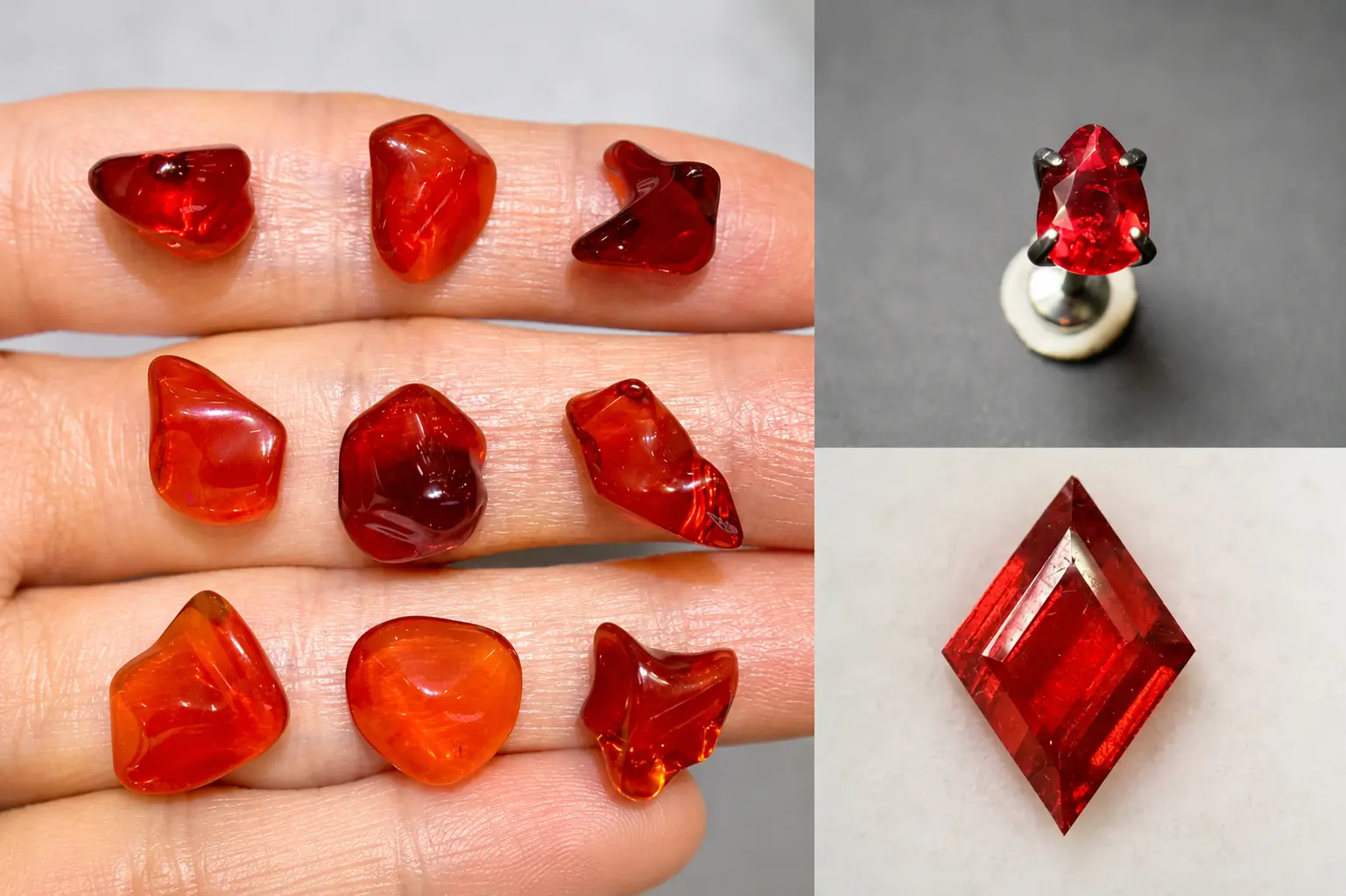
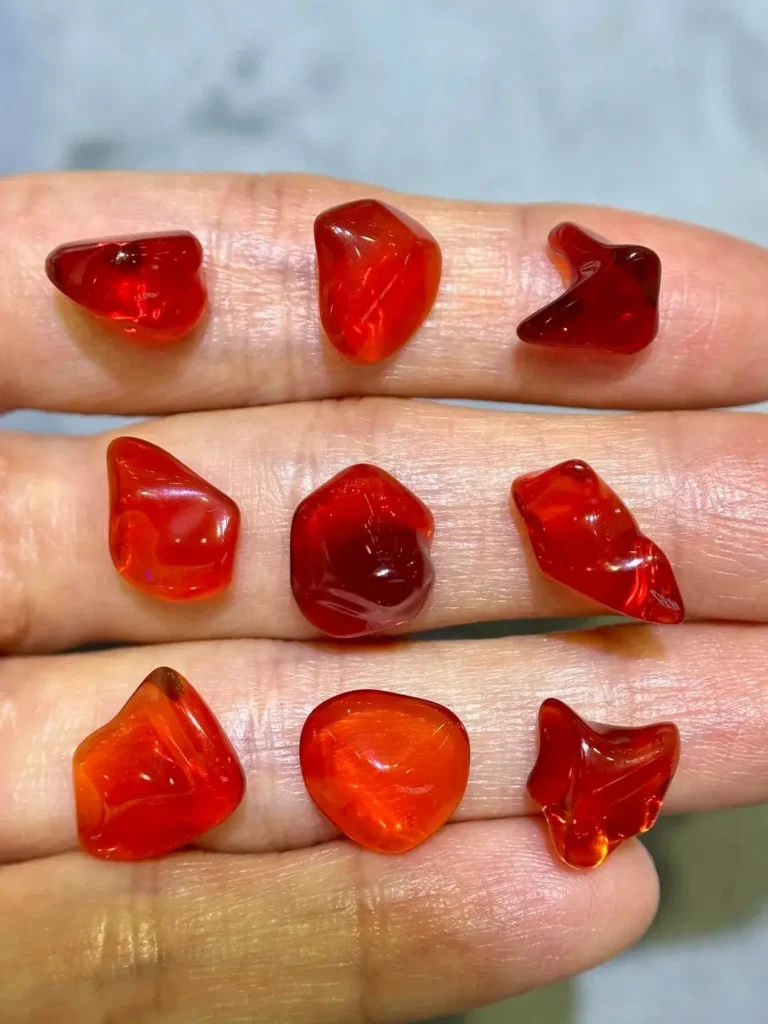
In The Opal Buying Guide, we explored the different types and sources of opal. Mexican fire opal stands out for its vivid yellow, orange, and red colors. Some red specimens can show a ruby-like appearance under the right lighting.
Mexican fire opal generally falls into three categories: common fire opal, precious fire opal, and matrix fire opal. For a ruby alternative, the most relevant type is red common fire opal without play-of-color.
How Does It Compare with Ruby?
Color:
Red fire opal can show a vivid red, but it often carries a noticeable orange or warm undertone. Fine ruby typically shows a richer, more saturated red.
A small red fire opal can sometimes look surprisingly similar to ruby, especially when cut as a small faceted stone. As the stone gets larger, differences in color, luster, and overall appearance usually become easier to see.
Durability:
Opal has a Mohs hardness of about 5.5–6.5, far below ruby’s hardness of 9. It also has relatively limited toughness and requires more care during everyday wear. Avoid hard impacts, excessive friction, and sudden temperature changes.
For this reason, fire opal works particularly well in earrings and pendants, where the stone faces less impact. Rings need more protective settings and careful day-to-day wear.
Why consider it as a ruby alternative?
Fire opal does not try to replicate ruby. Its appeal comes from its warm red-to-orange color, distinctive opal character, and more accessible price point.
For buyers who love red gemstones but want something less conventional, fire opal offers a colorful and individual alternative to ruby.
Jewea’s Take: Are They Really Ruby Alternatives?
Oregon Sunstone, rhodonite, and fire opal can all show a ruby-like look under the right conditions. But none of them matches ruby in every respect.
Oregon Sunstone stands out for its natural copper inclusions and distinctive aventurescence.
Rhodonite offers rare gem-quality red material at a more accessible price.
Fire opal brings warm red-to-orange color and the unique character of opal.
All three fall well short of ruby in hardness and overall durability. They also occupy very different places in the market from fine natural ruby. That does not make them inferior. It simply makes them different.
After all, an alternative does not have to copy the original.
If you want a beautiful red gemstone for jewelry, rather than specifically a ruby, these lesser-known stones can offer something different. Each brings its own color, optical character, geological story, and price point.
They are not true equivalents of ruby, but they can be worthwhile Ruby Alternatives for anyone looking for a red gemstone with its own unique character.