Should You Buy a Diamond Ring With or Without Fluorescence?
When buying a diamond ring or other diamond jewelry, many consumers face the same question:
Should you choose a diamond with fluorescence or one without it?
Some buyers worry that fluorescence may affect a diamond’s fire or brightness in natural light. Others believe that blue fluorescence can make a diamond with a yellow tint look whiter.
So, does fluorescence affect a diamond’s appearance? Does it mean the diamond has lower quality? And can it affect the diamond’s market value?
This article looks at what Diamond Fluorescence is, how it can affect a diamond’s appearance, and how it relates to diamond quality and market value.
What Is Diamond Fluorescence?
Diamond fluorescence occurs when a diamond emits visible light after exposure to ultraviolet (UV) light.
Some natural diamonds contain structural defects or trace elements. When UV light excites these features, the diamond absorbs the UV energy and releases part of it as visible light.
One point is important: You cannot see UV light itself, but you can see the visible light produced by the diamond in response to UV exposure.
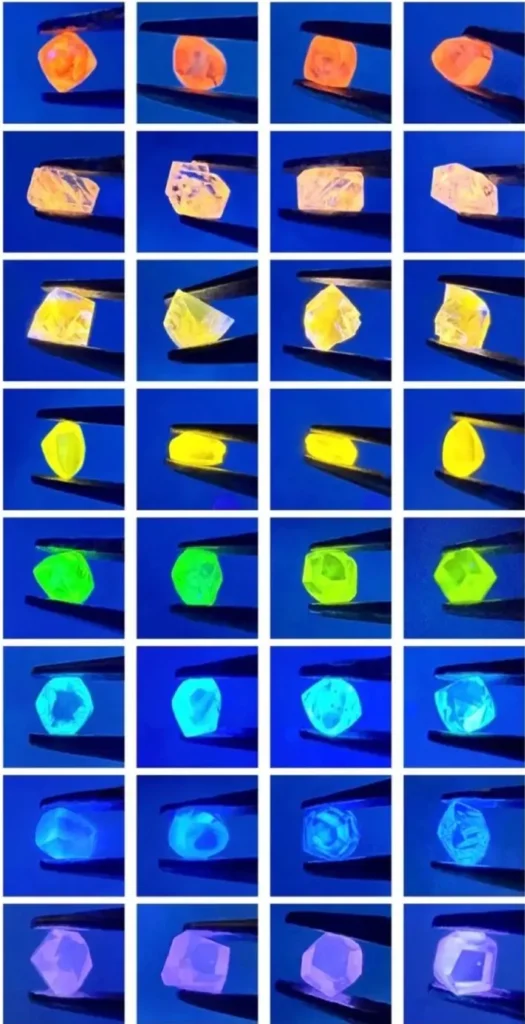
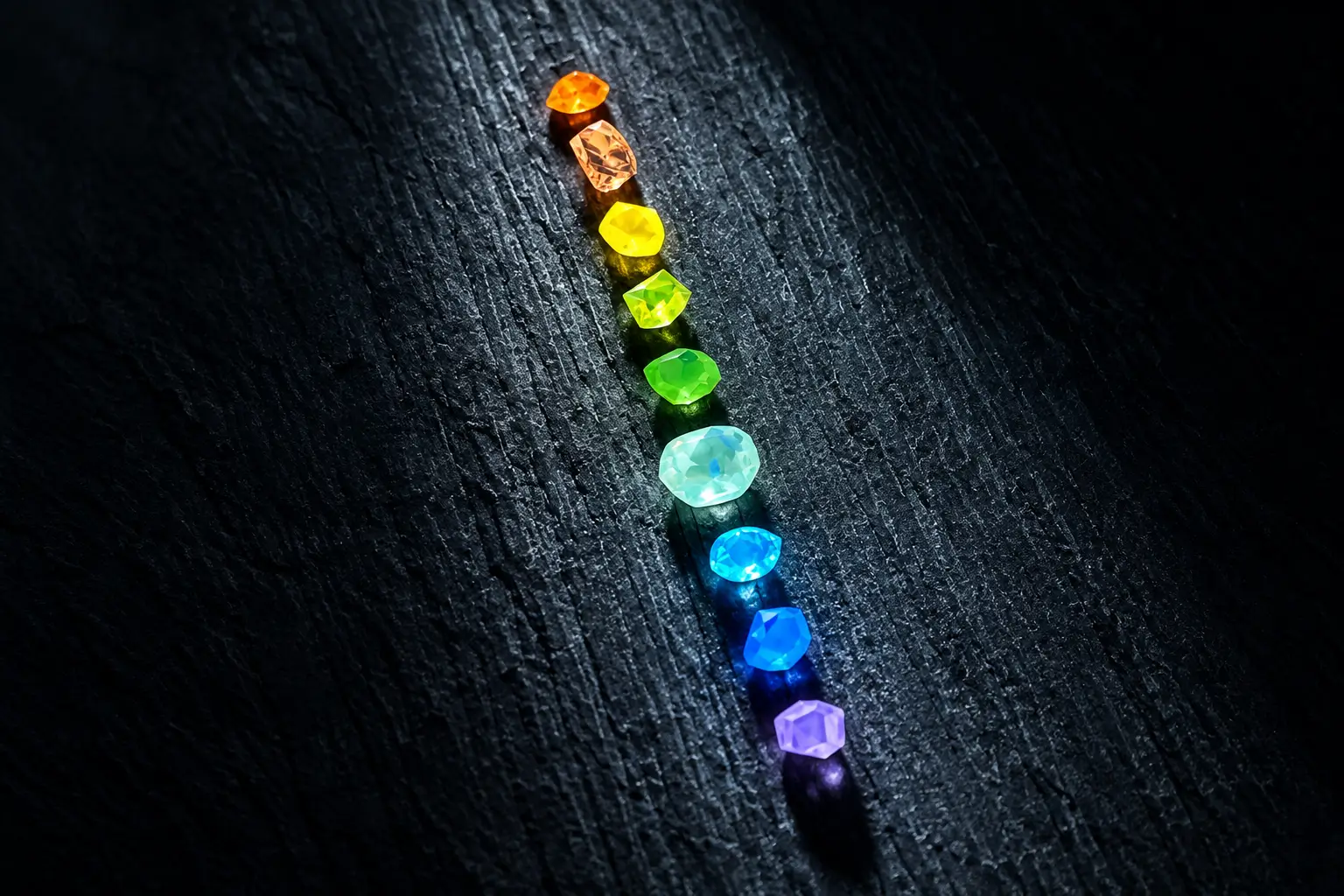
Blue is the most common fluorescence color in diamonds. Diamonds can also show red, orange, yellow, green, or violet fluorescence.
If you want to learn more about how UV light reveals fluorescence in gemstones, including different wavelengths and common testing mistakes, see our article How to Use a UV Light for Gemstone Testing.
How Does GIA Grade Diamond Fluorescence?
GIA evaluates diamond fluorescence under standardized long-wave UV light and grades it according to the observed fluorescence intensity:
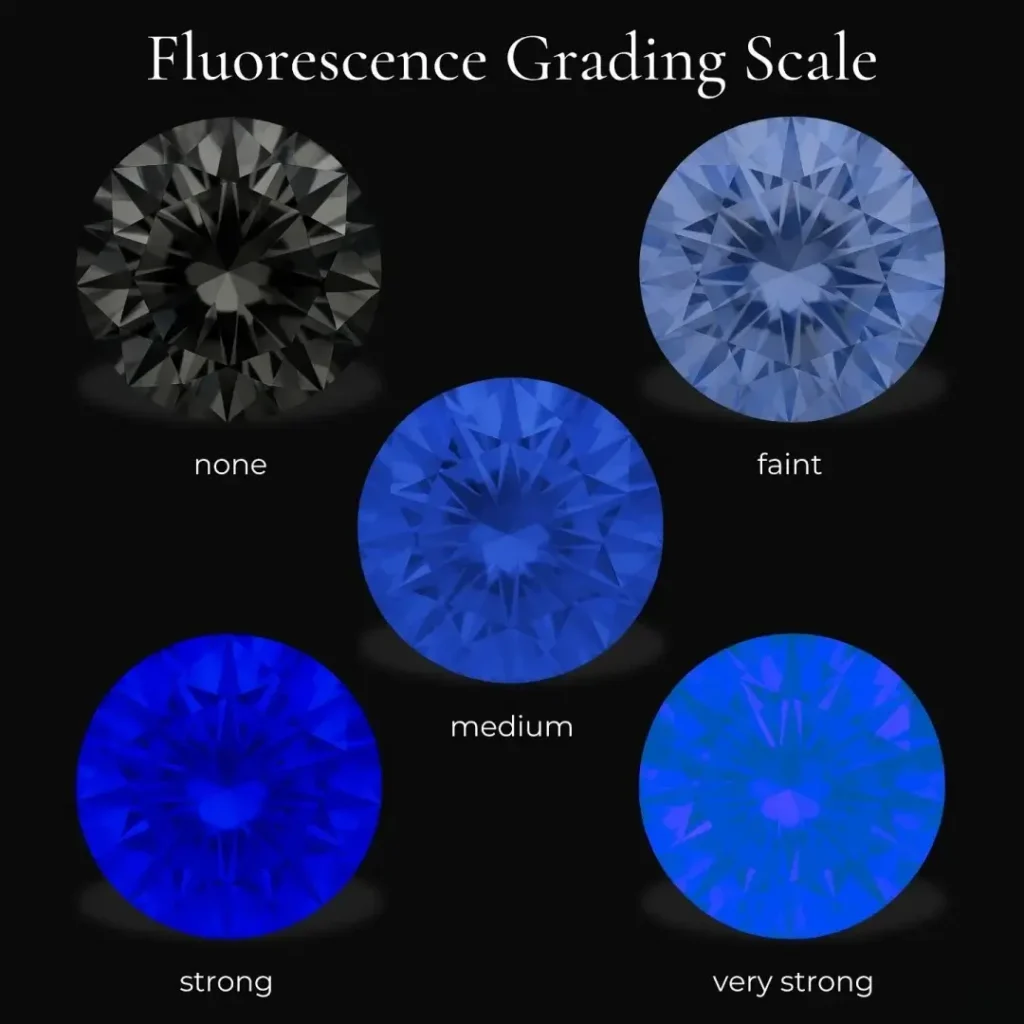
- None
- Faint
- Medium
- Strong
- Very Strong
GIA’s research on a large number of natural diamonds shows that roughly one-quarter to one-third of diamonds show some degree of fluorescence under standard long-wave UV light.
This means that not every natural diamond fluoresces, and fluorescence alone cannot determine whether a diamond is natural or laboratory-grown.
Some laboratory-grown diamonds can also show fluorescence. If you need to determine whether a diamond is natural or laboratory-grown, you should rely on proper gemological testing and a recognized grading or identification report rather than fluorescence alone.
In jewelry with small accent diamonds or dense pavé settings, removing and testing each stone individually may not be practical. In a professional testing environment, UV observation can provide additional information. When the jewelry is viewed under standardized UV conditions in a darker environment, differences in fluorescence intensity or color may appear between individual diamonds.
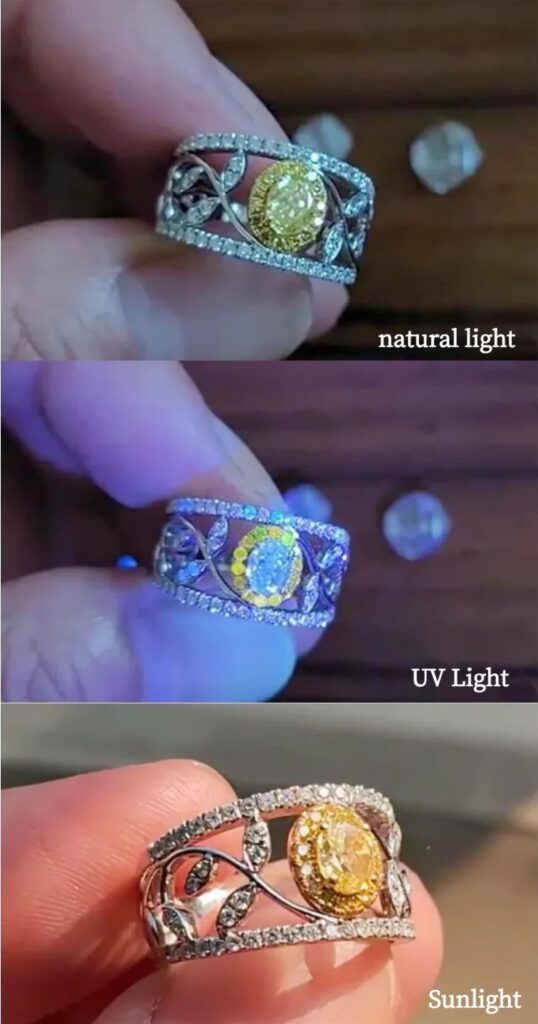
However, different fluorescence reactions do not by themselves indicate whether a diamond is natural or laboratory-grown, and they cannot determine a diamond’s origin. UV observation should therefore be treated as a supporting testing method rather than a standalone identification method.
Does Diamond Fluorescence Affect Appearance?
This is one of the most common questions consumers ask.
According to GIA research, fluorescence does not have a noticeable effect on the appearance of most diamonds.
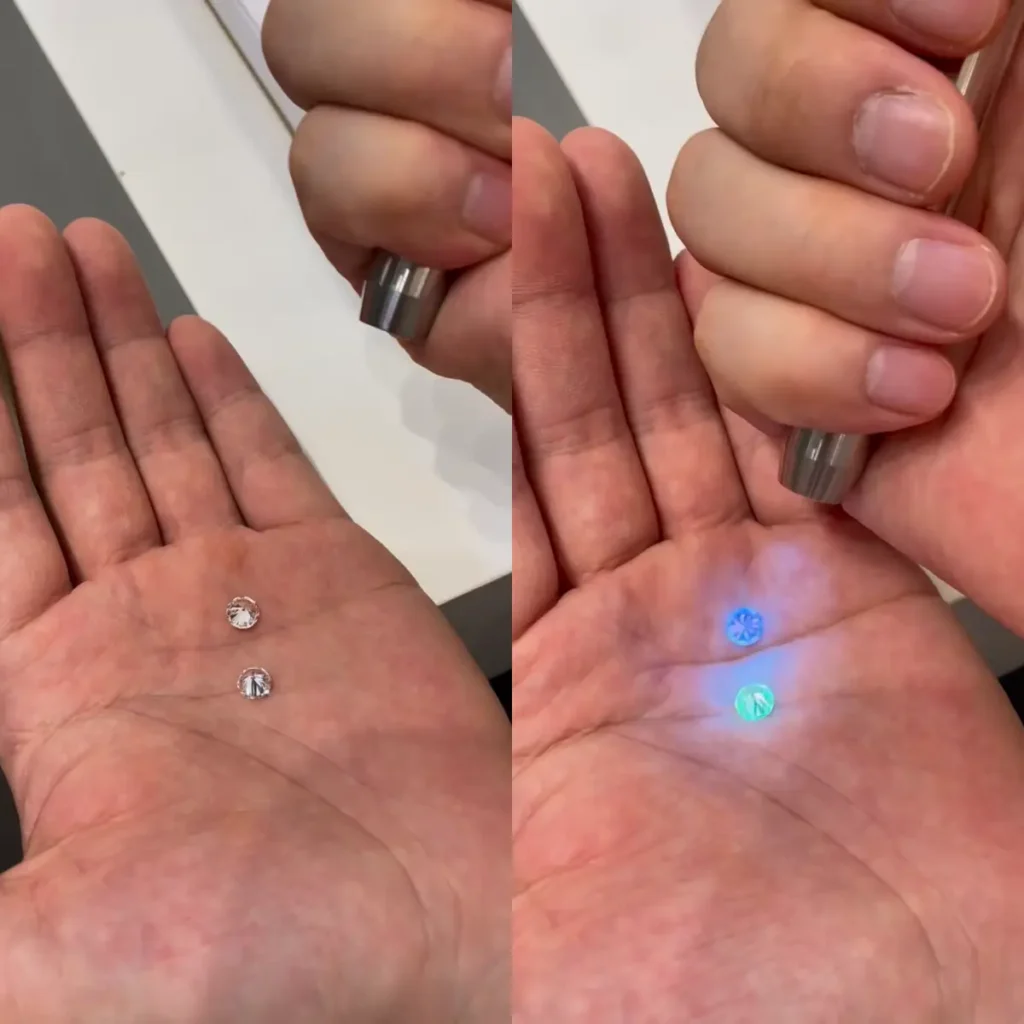
In other words, a diamond with fluorescence does not automatically look darker, hazier, or less brilliant under normal lighting.
However, the visual effect can vary depending on the diamond’s color, fluorescence intensity, and lighting conditions.
Very Strong Fluorescence Can Affect the Appearance of Some Diamonds
In rare cases, a diamond with Very Strong fluorescence may develop a slightly hazy or oily appearance under strong UV-rich lighting. This can reduce its apparent transparency and affect its overall visual appearance.
This effect is uncommon.
GIA research found that fewer than 0.2% of fluorescent diamonds submitted for examination showed this type of noticeable appearance effect.
So, the presence of fluorescence does not mean that a diamond will have a negative visual effect.
The lighting environment also matters. The effect may become more noticeable in places with high levels of UV light, such as bright sunlight or environments that use strong fluorescent or UV-emitting lighting.
Under typical indoor lighting and in everyday wear, fluorescence does not produce a noticeable negative effect in most diamonds.
Blue Fluorescence May Benefit Diamonds With Lower Color Grades
For diamonds with lower color grades and a noticeable yellow tint, blue fluorescence may visually offset some of the yellow body color under certain lighting conditions. As a result, the diamond may appear slightly whiter.
This is one reason why the diamond trade does not always view fluorescence as a negative feature.
For some diamonds with lower color grades, Medium or Strong blue fluorescence may improve their apparent color.
However, this effect is not consistent, and you should not assume that:
“Blue fluorescence makes a diamond look whiter.”
A diamond’s appearance depends on several factors, including its color grade, cut, clarity, lighting environment, and fluorescence intensity.
If you are considering a specific diamond, the best approach is to view the diamond under normal lighting and judge its actual appearance, rather than relying on its fluorescence grade alone.
Does Diamond Fluorescence Affect Diamond Quality?
It is important to distinguish between the 4Cs of diamond quality and fluorescence.
As we explained in our article, The Ultimate Guide to the 4Cs of Diamonds, the 4Cs provide the main framework for evaluating diamond quality:
- Carat — carat weight
- Color — color grade
- Clarity — clarity grade
- Cut — cut quality
Fluorescence is not one of the 4Cs.
Therefore, a diamond with fluorescence is not automatically lower in quality, just as a diamond without fluorescence is not automatically higher in quality.
A diamond with Strong blue fluorescence can still have excellent cut, color, and clarity.
Likewise, a diamond with no fluorescence does not necessarily perform better in these other areas.
For consumers, it is more useful to view fluorescence as an additional optical characteristic of a diamond, rather than as a primary measure of its overall quality.
Does Diamond Fluorescence Affect Price?
Diamond fluorescence can affect market price, but its impact depends on several factors, including the diamond’s color, clarity, cut, fluorescence intensity, and current market demand.
In some markets, diamonds with higher color grades may receive more cautious pricing when they show fluorescence, especially at higher fluorescence intensities.
One reason is that buyers of high-color diamonds often place greater value on a colorless appearance and strong transparency. In rare cases, Very Strong fluorescence may affect the way a diamond looks.
For diamonds with lower color grades and a noticeable yellow tint, however, blue fluorescence may improve the diamond’s apparent whiteness. As a result, fluorescence does not always have a negative effect on price.
For most consumers buying diamond jewelry, fluorescence usually has a much smaller effect on price than the 4Cs.
Differences in carat weight, color, clarity, and cut generally have a more direct effect on a diamond’s price.
So, you should not assume that:
“A diamond with no fluorescence always costs more and offers better value.”
The actual price relationship depends on the individual diamond and the market.
Jewea Summary
Fluorescence is a natural optical characteristic of some diamonds. It is not a direct measure of diamond quality.
For most diamonds, fluorescence does not have a noticeable effect on their appearance in everyday viewing conditions.
When choosing a diamond, it is better to consider the 4Cs, fluorescence grade, actual appearance, budget, and personal preference rather than simply choosing a diamond with no fluorescence.
For everyday diamond jewelry, fluorescence usually does not need to be a priority. For high-color, high-value, or collectible diamonds, however, it is worth paying closer attention to fluorescence intensity and its potential effect on the diamond’s appearance and market value.