Hetian Jade Nail-Shaped Marks: What They Reveal About Seed Jade
In our previous article, How to Identify Hetian Seed Jade Through Its Skin Color, we looked at the skin color of Hetian jade and explored how it can help identify Hetian seed jade.
This time, we take a different approach. We focus on the crescent-shaped marks often found on the surface of seed jade, known as “nail-shaped marks.” These natural marks can reveal important clues about the jade’s surface and provide another useful feature when identifying Hetian seed jade.
What Are Nail-Shaped Marks on Hetian Seed Jade?
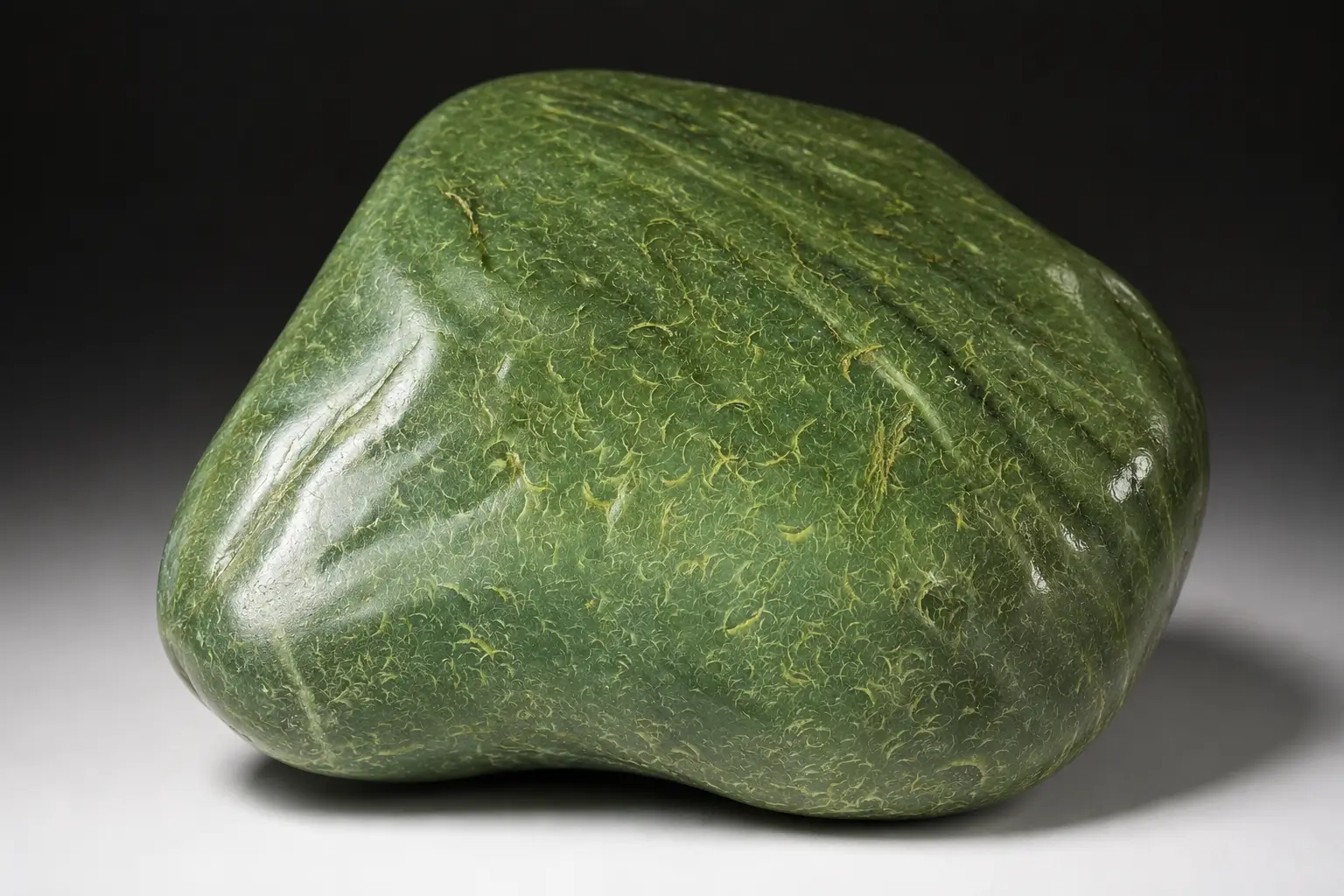
When experienced jade buyers examine Xinjiang Hetian seed jade, they often look for the “ox-hair-like patterns” left in the natural skin of the stone. Nail-shaped marks are another useful surface feature to look for when assessing seed jade.
Characteristics of Nail-Shaped Marks on Hetian Jade
Nail-shaped marks develop over a very long geological period. Natural forces such as rivers and glaciers expose the jade to constant abrasion, impact, and movement. These processes can create cracks on the stone’s surface.
Over time, river flow and glacial movement gradually slow down. Continued erosion and abrasion wear down some of these original cracks. The sharp, visible cracks become less distinct and eventually develop into crescent-shaped or curved marks that are difficult to reproduce artificially. These are what we call nail-shaped marks.
You are more likely to see clear nail-shaped marks on the skin of larger pieces of Hetian seed jade. However, not every piece of Hetian seed jade has them.
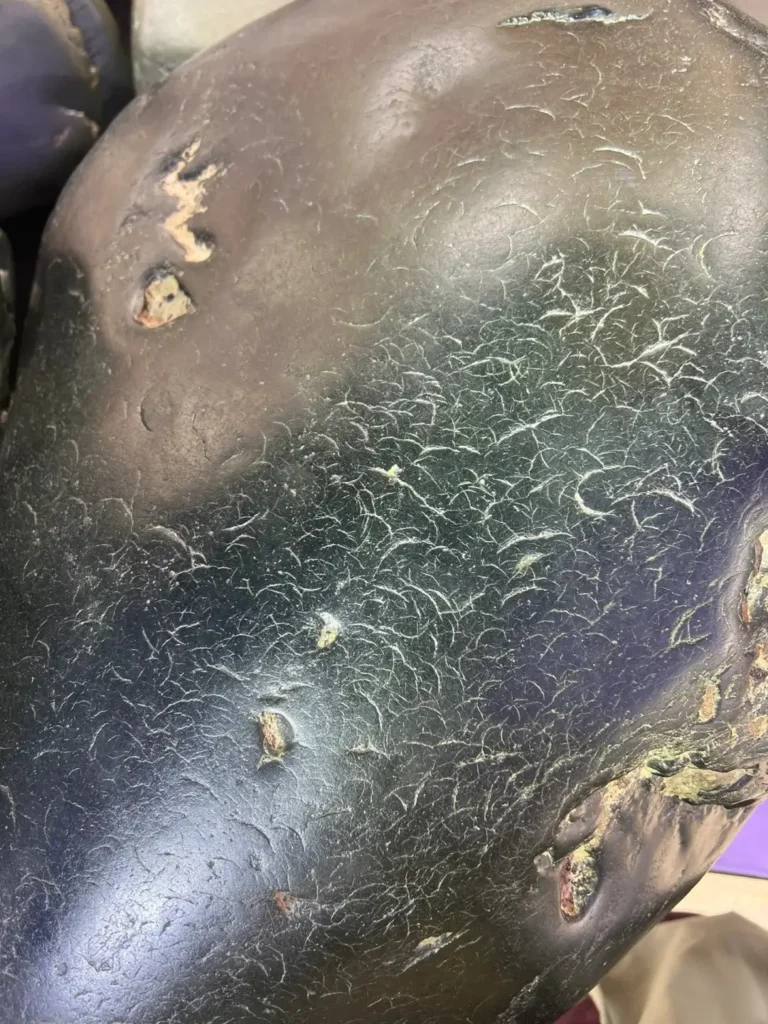
Nail-shaped marks typically have several distinctive characteristics:
- They appear irregularly across the surface.
- Their curves point in different directions.
- They vary in size.
- Some overlap or cross one another.
- They have no consistent directional pattern.
This irregularity makes natural nail-shaped marks difficult to reproduce through human processing. For this reason, they are considered one of the useful surface features when assessing Hetian seed jade.
Nail-Shaped Marks and Secondary Coloration
Depending on the geological and environmental conditions the jade experienced during its formation and later alteration, secondary minerals can sometimes accumulate around nail-shaped marks or within the cracks. This is what is commonly referred to as “secondary coloration” (沁色).
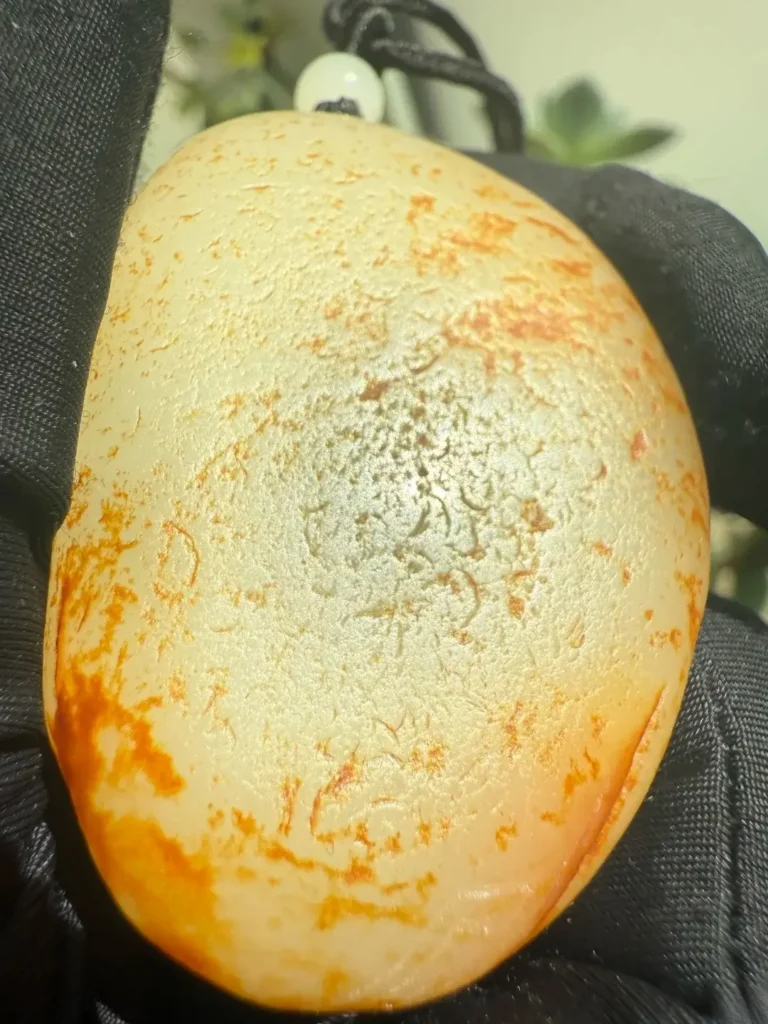
This coloration often penetrates the jade along existing cracks. Common colors include:
- Yellowish brown
- Brown
- Reddish brown
- Black
In general, the deeper the nail-shaped mark, the more pronounced the secondary coloration along the crack may be. These colors can further highlight the marks, making them easier to see on the surface of the jade.
How Do Nail-Shaped Marks Form on Hetian Jade?
To understand why nail-shaped marks appear on seed jade, we first need to look at how Hetian seed jade forms.
Hetian seed jade originally comes from Hetian jade mountain material within its source deposits. Geological movements and glacial transport can break pieces away from the original deposits and carry them into river systems. Over long periods of geological time, the jade undergoes repeated water erosion, transport, and collisions. Softer and less compact areas gradually wear away, leaving behind the more solid jade material.
As the stone breaks away from the original mountain material and eventually becomes seed jade, these geological processes leave different types of cracks and surface marks on the jade. Nail-shaped marks are one of these characteristic surface features.
Nail-Shaped Marks and Glacial Abrasion
The formation of nail-shaped marks on Hetian jade is closely associated with glacial transport and abrasion. Some geological sources and related studies also refer to these marks as “chatter marks” (颤痕).
Another name used for them is “Li Siguang rings”. According to some accounts, the term comes from the Chinese geologist Li Siguang, who first identified this geological phenomenon.
These curved marks are generally associated with Quaternary glacial activity. As glaciers moved, they could break mountain material away from its original deposit. During melting, flowing, and glacial transport, the material continued to break apart. Repeated collisions and pressure between the jade and glacial debris could then produce curved cracks that resemble fingernail impressions.
However, small pieces of jade that have undergone glacial transport may lose these marks later. Continued exposure to river currents and sediment can gradually wear them down or erase them completely. Therefore, not every piece of Hetian jade that experienced glacial activity will retain clearly visible nail-shaped marks. Conversely, Hetian jade that did not undergo the relevant glacial processes would not develop this type of mark associated with glacial abrasion.
A Quick Note: The “Fingerprint” Features of Hetian Seed Jade
Cracks and surface marks associated with glacial abrasion are considered some of the “fingerprint” features that can help identify Xinjiang Hetian seed jade.
These features mainly include:
- Abrasion breaks
- Glacial striations
- Nail-shaped marks
Glacial striations, also known as “blunt-knife marks,” are marks left on the surface of larger pieces of jade as glacial abrasion moves across the stone. They generally follow the direction of glacial movement.
For further reference, see:
《Discovery and Study of the Microstructures and Formation of Surface Features on Xinjiang Hetian Jade Seed Material》.
Nail-Shaped Marks Are Not Unique to Hetian Jade
Although nail-shaped marks are often used when examining Hetian seed jade, this type of surface pattern is not unique to Hetian jade rough stone.
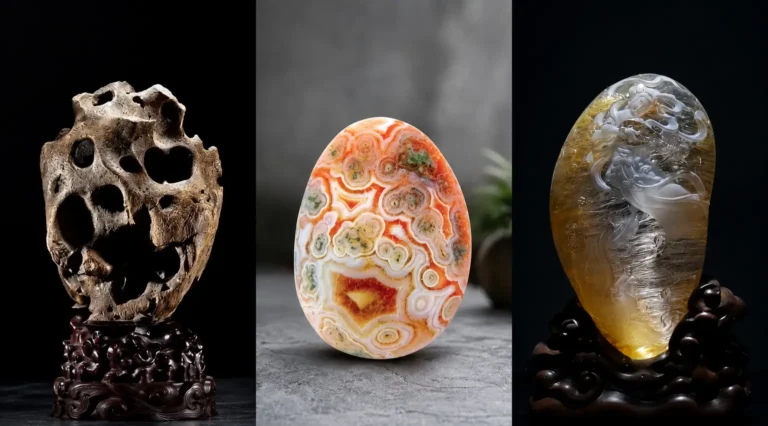
Similar nail-shaped marks can also appear on the outer surfaces of other gemstones and ornamental stones in their natural, uncut state. Examples include:
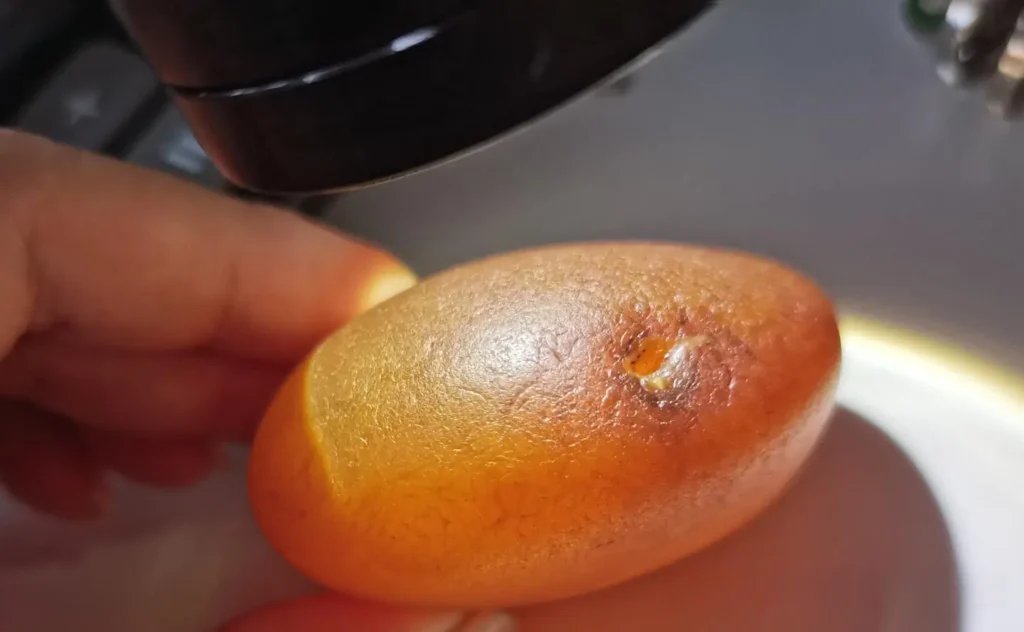
- Water-worn agate rough from Madagascar
- Nanhong “water seed” agate with nail-shaped marks
- Yuhua stones — these stones have several types of natural outer surfaces, and some can show similar nail-shaped patterns
- Nail-shaped marks on Huanglashi, or yellow wax stone
- Other natural gemstones and ornamental stones
From a geological perspective, similar patterns on different types of rough stone can result from the geological processes and environmental conditions they experienced during formation and later weathering.
Over long periods of formation and weathering, rocks and jade can undergo many types of natural processes, including thermal expansion and contraction, freeze-thaw cracking, geological activity, abrasion, impact, river erosion, and weathering. These processes can act together to create distinctive natural weathering patterns on the surface of rough stone.
Therefore, the presence of nail-shaped marks alone does not prove that a stone is Hetian seed jade.
Artificially Aged “Nail-Shaped Marks”
Similar nail-shaped marks can appear naturally on the surface of rough gemstones and ornamental stones. The term “nail-shaped marks” also appears in the world of antique and miscellaneous collectibles.
In antique collecting, the term usually describes certain weathering marks found on old beads, Dzi beads, and similar objects. Some collectors also call them “horseshoe marks” or “crescent marks.”
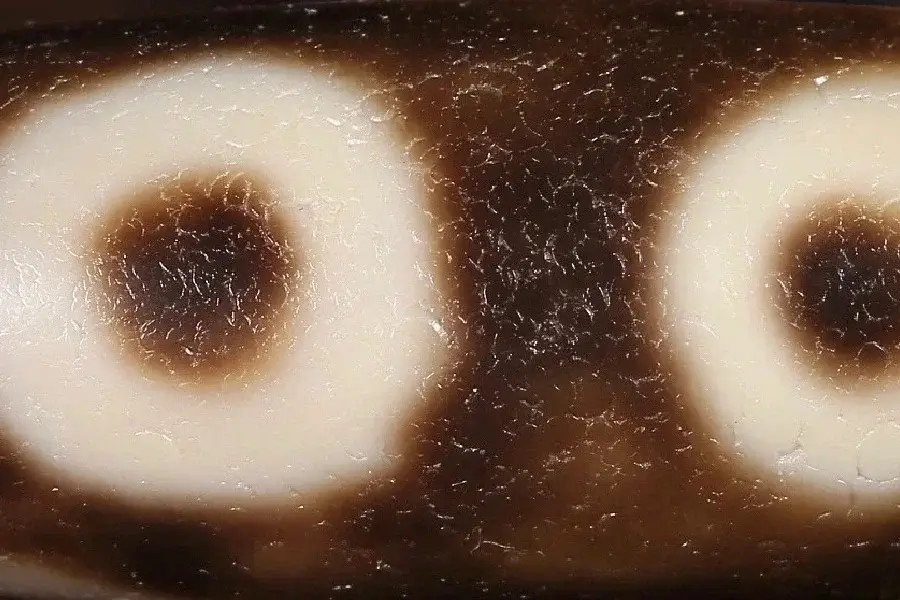
These marks are generally thought to result from long-term wear, repeated knocks, and natural weathering. Collectors sometimes use them as one of several clues when assessing the age of old agate, crystal, and glass beads.
However, one point deserves special attention:
The presence of “nail-shaped marks” does not prove that an object is genuinely old.
Modern aging techniques can reproduce similar marks convincingly enough to fool even experienced collectors. For this reason, you should never determine the age or authenticity of old beads, Dzi beads, or other collectibles based on these marks alone.
A proper assessment should consider the material, signs of workmanship, weathering, surface wear, overall form, and other relevant characteristics together.
As for the so-called “old Dzi beads” and “thousand-year-old beads” sold in various collectible bead strands, buyers should carefully assess their authenticity.
Jewea Summary
Nail-shaped marks are natural surface patterns created by geological processes on jade and other rough stones.
On Hetian seed jade, these marks can reveal clues about the geological and environmental conditions the stone experienced as it formed, moved, and weathered. That makes them a useful feature to look for when assessing seed jade.
However, nail-shaped marks alone cannot prove that a piece is genuine Hetian seed jade, and they are not unique to Hetian jade. A reliable assessment should consider several factors, including skin color, jade quality, surface features, cracks, secondary coloration, and the stone’s geological history.
In short, nail-shaped marks are an important clue when assessing Hetian seed jade, but they should never be used on their own to reach a final conclusion.