Hetian Jade Flaws and Value: How Natural Characteristics Affect Price (Part 2)
In Part 1 of our guide to Hetian jade imperfections and their impact on value, we explored how four common natural characteristics—cotton inclusions, water lines, natural fractures, and fine internal fissures—can influence quality and market value.
In this second part, we examine five more features: stone-like zones (Jiang, 僵), mineral inclusions (Zang, 脏), internal sugar-color penetration (Chuan Tang, 窜糖), mottled sugar coloring (Yi Tang, 翳糖), and chipping (Beng Kou, 崩口).
These traditional Chinese jade terms describe specific mineral features, color variations, and localized surface conditions found in nephrite jade. Not every natural characteristic lowers value. Some can affect appearance and price, while others can become distinctive artistic features when skilled carvers work with them. Understanding these five characteristics can help you evaluate jade more confidently, assess craftsmanship, and make more informed purchasing decisions.
5. Stone-like Zones (Jiang, 僵)
In Chinese jade terminology, Jiang (僵), also called Shi Jiang (石僵), refers to coarse, stone-like areas within Hetian jade. These areas contrast sharply with the fine, smooth, and lustrous nephrite around them. They are typically white or grayish-white, feel dry to the touch, and lack the characteristic oily luster of high-quality jade.
Geologically, these zones can form when the mineral composition contains impurities such as quartz or feldspar, or when parts of the material remain incompletely nephritized. In simple terms, Jiang describes incompletely nephritized, stone-like areas within the jade, providing an important reference when assessing material purity and market value.
Common Types of Jiang
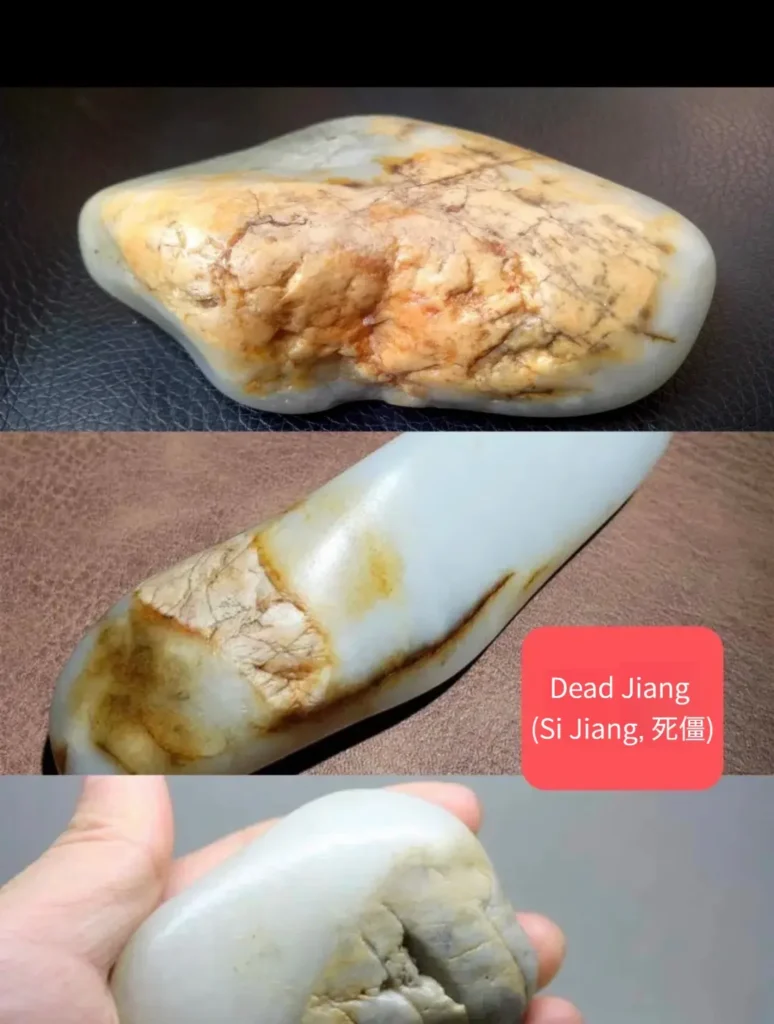
- Dead Jiang (Si Jiang, 死僵): Features a relatively hard texture and a sharp boundary against the surrounding nephrite. Carvers can often trim these sections away or cleverly incorporate them into designs, such as rugged mountain landscapes.
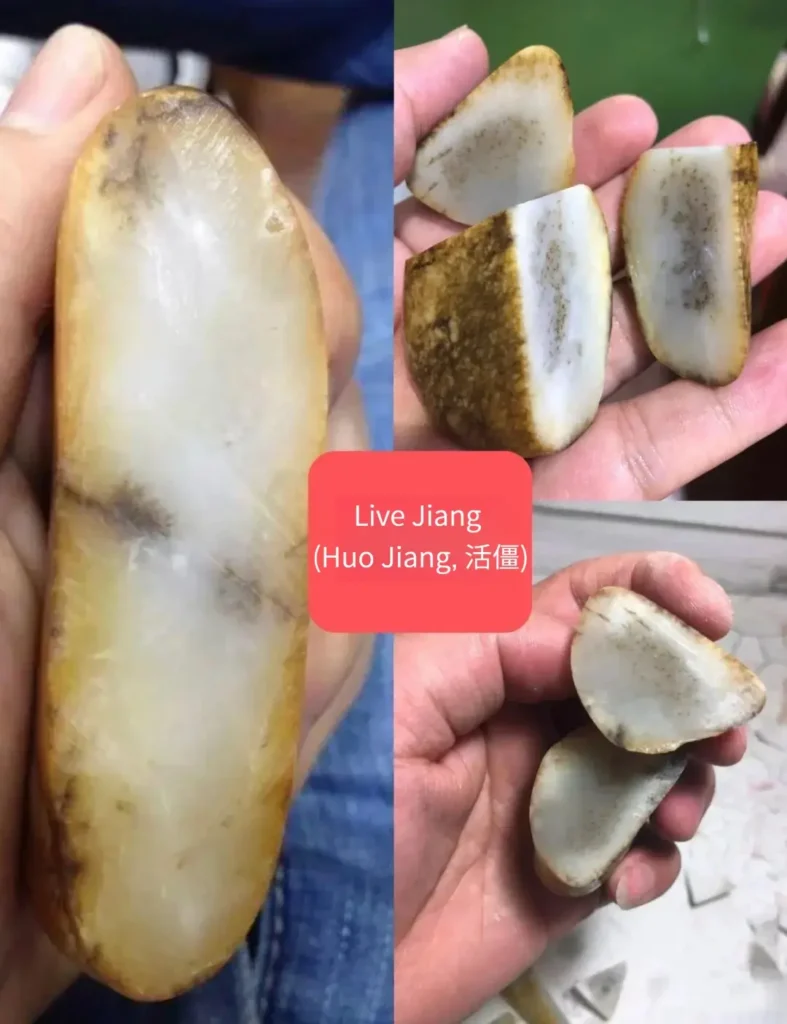
- Live Jiang (Huo Jiang, 活僵): Extends through the nephrite matrix in streaks or bands. Because these formations can penetrate deeper into the jade body, they can significantly affect the material’s overall uniformity and value.
- Scattered Jiang (San Jiang, 散僵): Appears as isolated spots or small patches throughout the stone. Lapidaries can often remove shallow formations through cutting or polishing, while deeper or more widespread patches can lower the overall grade.
Impact on Quality and Value
The presence of Jiang generally indicates less pure, unevenly nephritized material. Compared with fine nephrite, these zones have a coarser texture and lack the smooth, dense feel that collectors value. Extensive Jiang can therefore reduce visual appeal, workability, and market value.
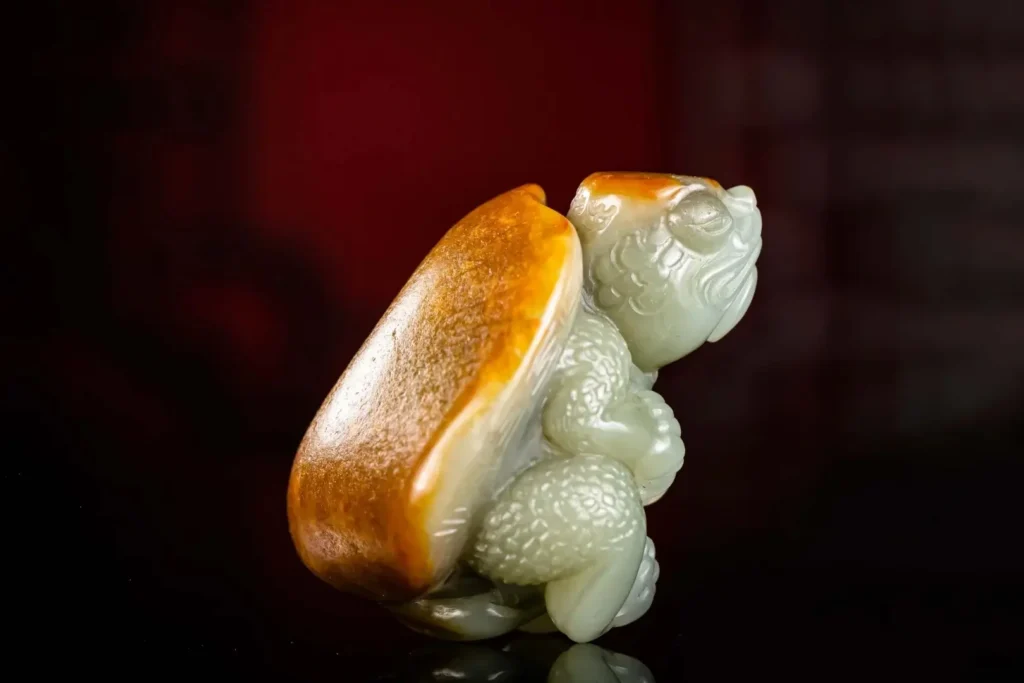
However, Chinese jade collectors have a saying: “Good jade often appears beside Jiang.” The intense geological pressure that forms stone-like zones can also compress the adjacent nephrite into exceptionally fine, dense material. Skilled carvers may further use Qiao Diao to incorporate an otherwise undesirable stone-like area into the design, turning it into a distinctive artistic feature.
6. Mineral Inclusions (Zang, 脏)
In Chinese jade terminology, Zang (脏), literally meaning “dirty,” is a broad term for mineral inclusions and secondary coloration that differs from the jade’s primary color. In simple terms, it refers to other mineral components present within the nephrite.
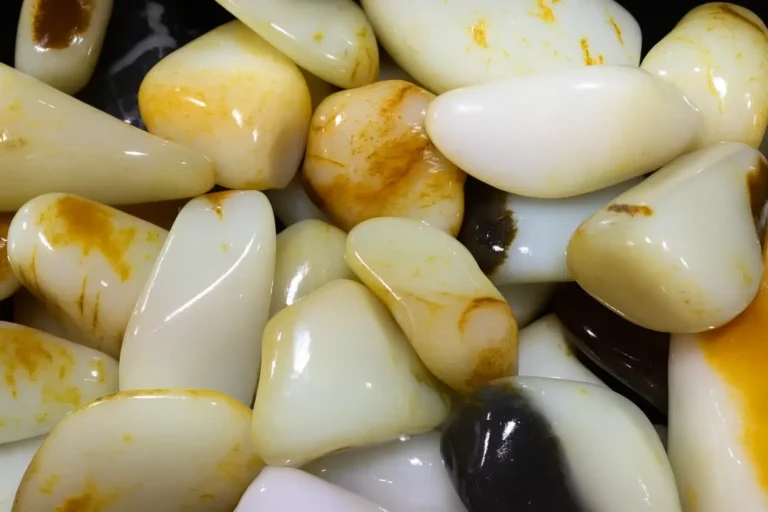
Iron-bearing minerals are the most common. They often occur along natural fractures and may appear as brown, dark brown, yellow, or sugar-colored areas that are visible to the naked eye. In finished mountain jade (Shan Liao), they often appear as black specks.
Some specific patterns have their own traditional names:
- Internal Sugar-Color Penetration (Chuan Tang, 窜糖): Large areas of sugar-colored material spread into the jade body.
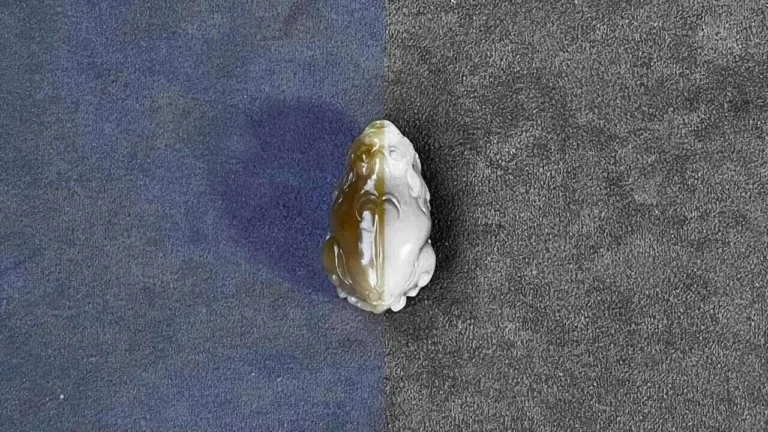
- Mottled Sugar Coloring (Yi Tang, 翳糖): Sugar color appears in irregular, mottled patterns resembling the appearance of a century egg.
- Dragon Fruit (Huo Long Guo, 火龙果): A rough pebble has an attractive, thin outer skin with clean white jade underneath, but cutting into it reveals dense areas of dark inclusions throughout the interior.
The term Zang carries a strong subjective judgment. These features are simply natural differences in mineral composition or color, but because they contrast with the main body of the jade, collectors often regard them as undesirable.
The problem becomes more serious when these inclusions spread unpredictably through the material. Dense areas of Zang can make it difficult to extract usable sections for carving or bead-making. In some cases, the entire piece may contain so much Zang that very little usable material remains.
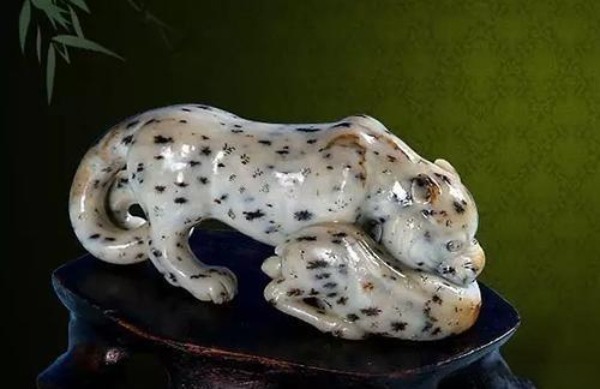
Yet skilled carvers can sometimes give such material a second life. By working with the natural distribution of the inclusions and incorporating them into the design, they can turn challenging material into distinctive, one-of-a-kind works of jade art.
7. Internal Sugar-Color Penetration (Chuan Tang, 窜糖)
Chuan Tang (窜糖) describes sugar-colored material that has migrated from the outer skin into the interior of the jade. A piece may appear clean and pure on the outside, yet cutting into it can reveal unwanted sugar color along the edges of the jade body.
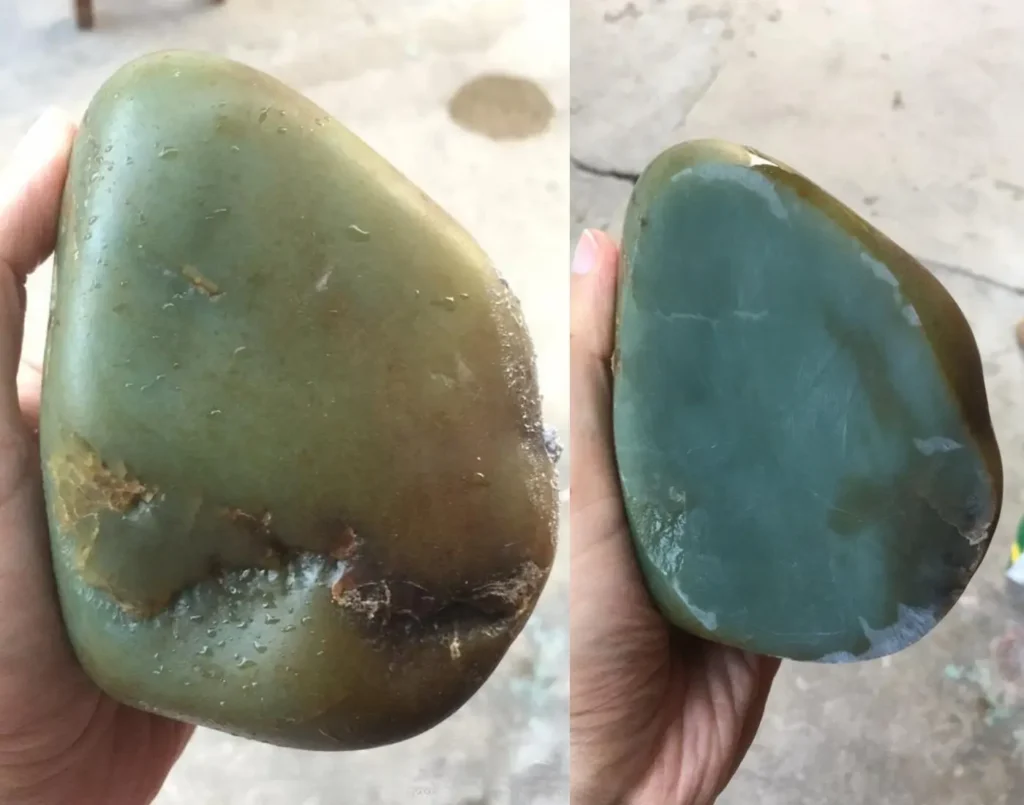
Whether this secondary color is considered a flaw (Zang) depends largely on its appearance and distribution.
- Clever Color Use (Qiao Se, 俏色): When the sugar color is attractive and well distributed, carvers can incorporate it into the design as a decorative color, adding artistic value to the piece.
- Undesirable Color (Zang Se, 脏色): When the color appears dull or occurs in an unattractive location, collectors may regard it as Zang Se, reducing the piece’s visual appeal and market value.
8. Mottled Sugar Coloring (Yi Tang, 翳糖)
Sugar jade (Tang Yu) can exhibit rich and beautiful hues. However, when the sugar color spreads unevenly in shadowy, mottled patches—resembling the patterned yolk of a century egg—Chinese jade traders call this Yi Tang (翳糖).
Beginners sometimes confuse Yi Tang in Hetian jade with Luodian nephrite from Guizhou. Luodian material can feature a dry, white, stone-like matrix mixed with brown sugar-colored patches, which can make it resemble Yi Tang to the untrained eye.
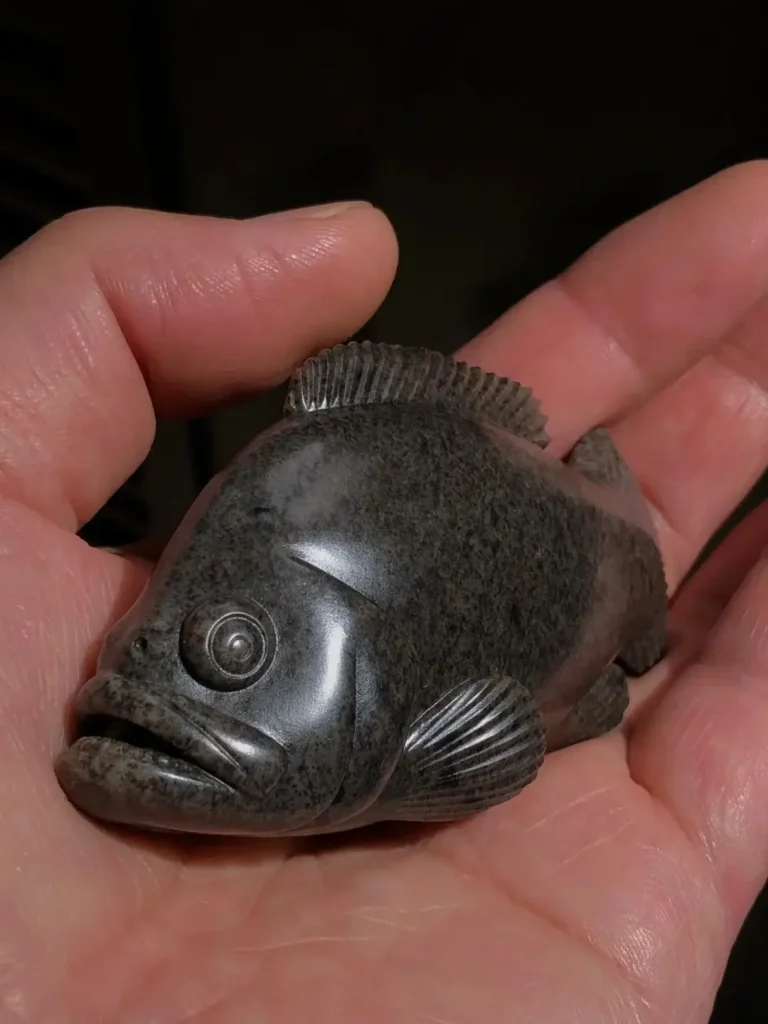
Whether Yi Tang is viewed as a flaw remains open to interpretation. Some collectors regard it as a distinctive natural style rather than an imperfection. Ultimately, appreciation comes down to personal taste—if you find it beautiful, it may be worth considering; if not, there are plenty of other materials to explore.
9. Chipping (Beng Kou, 崩口)
Beng Kou (崩口) refers to small chips that can occur during cutting or carving. When the jade’s interlocking fibrous structure is not fully developed and the material lacks sufficient nuo (糯性), parts of the stone may chip during processing. These small chips can appear different in color from the surrounding jade, sometimes resembling the sharp edges of broken glass.
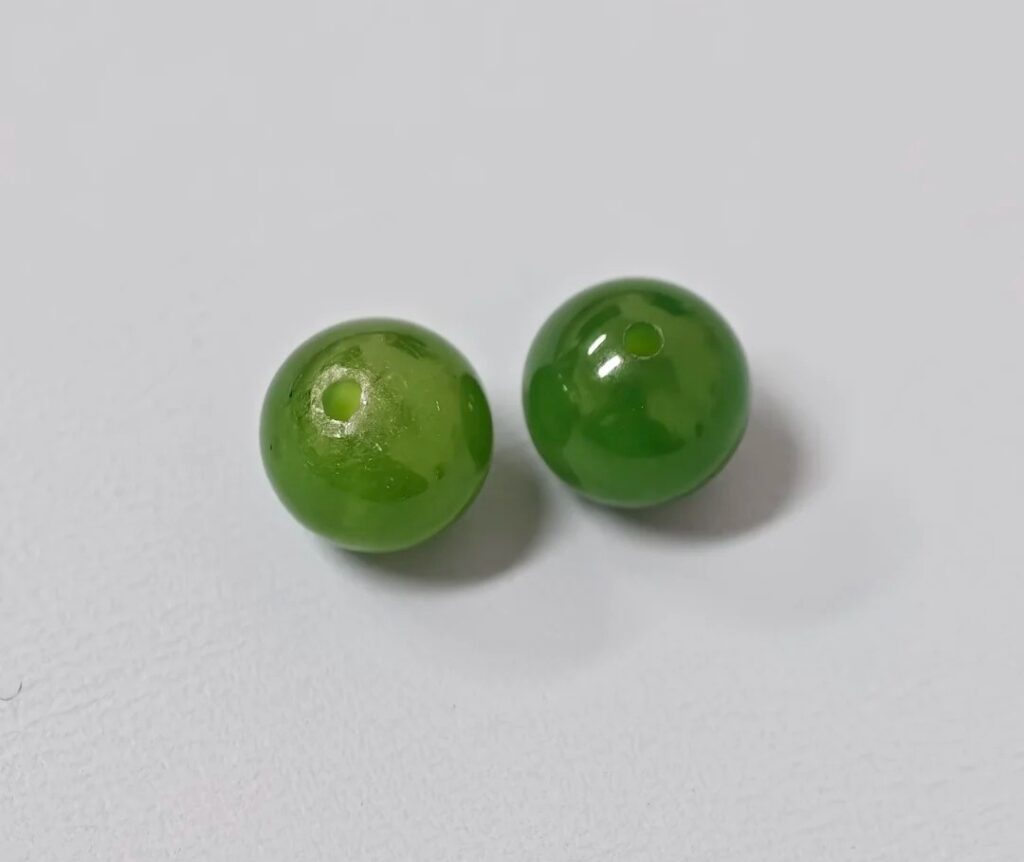
In most finished pieces, Beng Kou remains minor and does not significantly affect the overall appearance.
Collectors often wonder whether chipping automatically means that the jade has poor texture or insufficient nuo. Not necessarily. The extent and location of the chipping matter:
- Widespread Chipping: If large areas of the material repeatedly chip during cutting, this may indicate weaknesses in the jade’s overall material quality or internal structure.
- Localized Chipping: If a finished carving shows only a few tiny chips in isolated areas, the local structure may simply be slightly less compact. This does not necessarily mean that the entire piece is of poor quality.
Jewea’s Perspective
Hetian jade is prized for its toughness, fine texture, and rich, oily luster. Its soft appearance hides an inner strength—an enduring symbol of the traditional Chinese Junzi, or noble gentleman.
Truly flawless jade is exceptionally rare. Nature creates no two stones alike. Every inclusion, color variation, and natural fissure records part of a stone’s journey.
Do not judge jade only by its imperfections. Look at the whole stone. Flaws do not always diminish beauty, and uniqueness is part of jade’s value.
The more you understand these natural characteristics, the more confidently you can appreciate—and choose—Hetian jade.
← Hetian Jade Flaws and Value: How Natural Characteristics Affect Price (Part 1)