The Opal Buying Guide 2026: Types, Value, Origins & Care
For centuries, opal has fascinated people with its extraordinary play of color.

The Roman scholar Pliny the Elder described opal in his Natural History as a gemstone that brought together the fire of carbunculus, the purple of amethyst, and the sea-green of emerald, all shining together in an extraordinary mixture.
In our experience, opal buyers often ask:
- Why can opal prices vary so dramatically?
- How can you avoid buying synthetic or imitation opal?
- Does opal really need water, and how should it be cared for?
In this Opal Buying Guide, we draw on years of experience in the jewelry and gemstone market to explain the major types and origins of opal, common treatments, synthetic opal, and imitations, as well as how to care for this distinctive gemstone. Our goal is to help you make informed decisions and enjoy your opal with confidence.
📑Table of Contents
- What Is Opal?
- Major Opal Origins
- Australian Opal: Black, White, Crystal and Boulder Opal
- Mexican Fire Opal
- Ethiopian Opal: Hydrophane and Matrix Opal
- Common Opal Treatments, Assembled Opal, Synthetic Opal and Imitations
- Opal Value: What Determines the Price?
- Opal Care Guide
1. What Is Opal?

Unlike crystalline gemstones such as diamonds and sapphires, opal is a natural hydrated silica mineraloid rather than a true crystal. Its silica structure and water content give opal its distinctive optical properties, including the play-of-color seen in precious opal. They also make opal more sensitive to heat, sudden temperature changes, and physical impact than many harder gemstones.
Key Gemological Properties
The table below summarizes the essential gemological characteristics of opal:
| Property | Description |
|---|---|
| Mineral Classification | Opal (hydrated silica mineraloid) |
| Chemical Composition | SiO₂·nH₂O |
| Water Content | Commonly around 5–10%, but some opals can contain more |
| Transparency | Transparent to opaque |
| Common Body Colors | White, gray, black, blue, orange, yellow, red |
| Refractive Index | Approximately 1.37–1.47 |
| Density | Approximately 1.9–2.3 g/cm³ |
| Mohs Hardness | Approximately 5–6.5 |
Body Tone and Play-of-Color
Opal’s appearance comes from two distinct features: body tone and play-of-color. Understanding the difference helps when evaluating opal quality and market value.
Body tone is the underlying color of the opal, ranging from white and light gray to dark gray and black. It provides the visual background against which any play-of-color appears. Darker body tones can create stronger contrast and make spectral colors appear more vivid, which is one reason fine black opal can command high prices.
Play-of-color is the shifting display of spectral colors that distinguishes precious opal from common opal. It results from the diffraction of light by the ordered arrangement of microscopic silica spheres within the material. The colors can change with the viewing angle, giving precious opal its characteristic depth and movement.
Core Categories by Body Tone
In the gem trade, opals are often described by their body tone and appearance:
| Category | Typical Body Tone | Key Features |
|---|---|---|
| Black Opal | Dark gray to black | Strong contrast can make play-of-color especially vivid; fine examples can be highly valuable. |
| White Opal | White to light gray | A lighter body tone with softer visual contrast; play-of-color can still be vivid in fine stones. |
| Fire Opal | Yellow, orange, or red | Often transparent to translucent; valued primarily for its body color, although some specimens also show play-of-color. |
Note: Crystal opal is transparent or translucent material in which the play-of-color can be seen through the body of the stone. It is not simply a fixed price category between black and white opal. Its value depends on factors such as body tone, transparency, play-of-color, pattern, brightness, size, and overall quality.
2. Major Opal Origins
Opal is found in several regions around the world, but Australia, Mexico, and Ethiopia are among the most important sources in today’s opal market. Each region produces opal with distinctive characteristics shaped by its geological environment.
Australia
Australia has a long-established role in the international opal trade, with fine material widely represented in the collector and fine jewelry markets.
- Major varieties: Black Opal, White Opal, Crystal Opal, and Boulder Opal
- Key characteristics: A wide range of body tones, from light to dark, with fine material often showing strong and well-defined play-of-color
Mexico

Mexican opal forms in silica-rich cavities within volcanic rock. Unlike Australian opal, which is often known for dark body tones and strong play-of-color, Mexican opal stands out for its transparency and flame-like body colors. This makes it particularly appealing to buyers who prefer warm tones, distinctive character, and vivid color.
- Main varieties: Fire Opal and Precious Fire Opal
- Transparency: Most specimens are transparent to translucent, making Mexican opal well suited to faceted gemstones
- Play-of-color: Most Mexican Fire Opal does not show obvious play-of-color, the shifting rainbow effect seen as the stone moves under light
Ethiopia
Ethiopian opal has become increasingly popular in recent years, and the Welo region has emerged as an important source of opal.
- Main variety: Hydrophane opal
- Appearance: Ethiopian opal often offers bright colors, lively play-of-color, and relatively high transparency at more accessible prices. Many specimens range from translucent to transparent and are commonly cut with a cabochon surface.
- Hydrophane behavior: Many Ethiopian opals absorb water readily. They can lose moisture and may develop cracks if exposed to excessive heat, prolonged drying, or unsuitable conditions.
3. Australian Opal: Black, White, Crystal and Boulder Opal
Australia is the world’s leading source of precious opal and its official national gemstone. It produces about 95% of the world’s precious opal.
Australian opal includes several major varieties, including Black Opal, White Opal, Crystal Opal, and Boulder Opal. Each type has its own body tone, transparency, geological setting, and appearance.
Many Australian opals are relatively stable under normal conditions, although stability still varies with the material and structure of the individual stone. Australian opal has long been an important choice for collectors and fine jewelry designers.
Black Opal from Lightning Ridge
Lightning Ridge, in northern New South Wales near the Queensland border, is the best-known source of fine black opal. Opal was discovered there in the late 1880s, and commercial mining developed in the early 20th century. GIA identifies Lightning Ridge as a major source of fine-quality black opal.
From a gemological perspective, Black Opal has a dark body tone. It can range from true black and deep gray to dark blue, green, or brown.
Key characteristics include:
- Water content: Typically around 6–10%
- Structure: Amorphous and non-crystalline
- Luster: Vitreous
- Transparency: Translucent to opaque, although some stones can be more transparent
- Play-of-color: A dark body tone can create strong contrast and make the spectral colors appear especially vivid

The dark background gives fine Black Opal its distinctive visual impact. Bright flashes of red, green, blue, and other spectral colors can stand out sharply against the darker body tone.
Among opal varieties, fine Black Opal is one of the rarest and most valuable. Exceptional stones with distinctive patterns, including rare Harlequin patterns, can command very high prices.
Even a Black Opal weighing less than one carat can sell for thousands of U.S. dollars per carat when it combines strong color, high brightness, and a desirable pattern. Prices vary widely, and value depends on the quality of the individual stone rather than its origin alone.
Coober Pedy White Opal
White Opal generally refers to opal with a white, milky, or other light body tone. It can range from opaque to translucent and may show play-of-color or more subtle flashes of color.

White Opal is common in Australia, with Coober Pedy in South Australia being one of its best-known sources. Formed in the region’s arid desert environment, Coober Pedy opal is known for its light body tone and softer visual contrast.
White Opal occurs in relatively large quantities, but fine-quality material remains much less common. Prices vary widely depending on the brightness and pattern of play-of-color, body tone, transparency, and overall quality.
Crystal Opal
Some Australian opals have a transparent or translucent body with a glass-like appearance. This clarity can give the play-of-color a cleaner and brighter look. The trade commonly refers to this material as Crystal Opal.

The name describes the opal’s transparency and body tone. A dark-bodied stone is called Black Crystal Opal, while a light-bodied stone is called White Crystal Opal.
Crystal Opal prices vary widely. Brightness, pattern, transparency, body tone, size, and overall quality all affect value.
Queensland Boulder Opal

Boulder Opal comes mainly from Queensland, Australia. It is one of the country’s major opal types. Central Queensland has several large opal fields, where opal formed in sandstone deposited millions of years ago. These opal-bearing formations cover a wide area, making Queensland an important opal-producing region.
Boulder Opal forms when precious opal develops along cracks, cavities, and layers within ironstone host rock. The opal and host rock remain closely connected, so cutters usually keep part of the ironstone as a natural backing. This gives Boulder Opal its distinctive combination of colorful opal and natural rock patterns.
The dark ironstone can create strong contrast with the play-of-color. Even a thin layer of opal can show bright, vivid flashes of color. The combination of color and natural matrix gives Boulder Opal a distinctive, almost sculptural appearance.

Boulder Opal prices vary widely. The market considers overall size, opal layer thickness, brightness and pattern of play-of-color, matrix pattern, and overall appearance. Pieces with unusual shapes, well-defined patterns, and strong play-of-color can attract particular interest from collectors.
Major Forms of Boulder Opal

- Vein Boulder Opal: Opal fills fractures and cavities in the host rock, creating branching, web-like, or tree-like patterns. Each piece can develop a highly individual pattern, making this material particularly interesting to collectors.
- Layered Boulder Opal: Opal follows the layers or fractures in the ironstone. The patterns can appear wavy, folded, or irregular. Some pieces create natural scenes that resemble landscapes.
- Fossil Boulder Opal: Ancient wood and other organic structures can become replaced or mineralized by opal. Some specimens retain their original growth patterns, combining fossil structure with colorful play-of-color.

4. Mexican Fire Opal

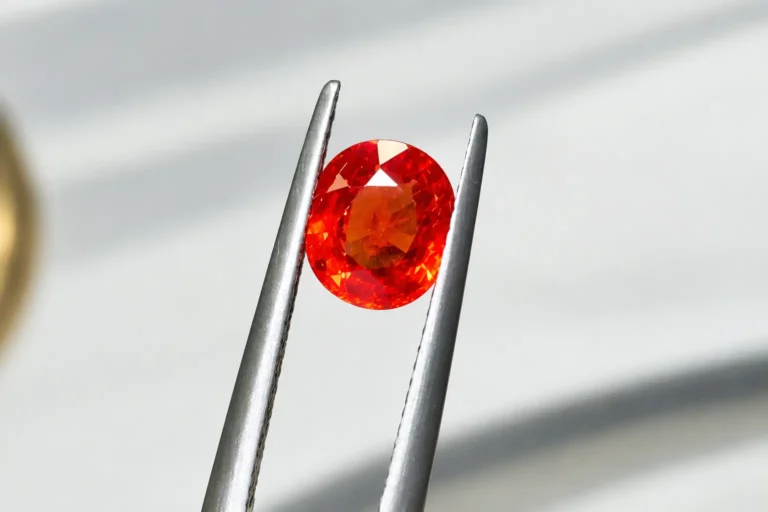
Mexico is one of the world’s major sources of Fire Opal. It is also the national gemstone of Mexico. Mexican Fire Opal is known for its yellow, orange, and red body colors. Iron oxides and hydroxides contribute to these colors.
Fire Opal can be divided into two broad types based on whether it shows play-of-color:

- Common Fire Opal: This is the more common type. It is usually transparent to translucent, with a clean and vivid yellow, orange, or red body color. It does not show obvious play-of-color. The surface typically has a vitreous luster. Even without play-of-color, fine Fire Opal with a large size, high transparency, and rich red body color can attract collector interest. Fine stones above 5 carats are relatively uncommon, while high-quality stones above 10 carats are rarer.
- Precious Fire Opal: This type shows both the characteristic body color of Fire Opal and visible play-of-color. The transparent to translucent orange-red body can combine with flashes of spectral color that shift with the light and viewing angle. This effect often creates what collectors describe as a “flowing flame.” Value depends on several factors, including body color, transparency, brightness and coverage of play-of-color, pattern, size, and overall quality, rather than any single characteristic.

5. Ethiopian Opal: Hydrophane and Matrix Opal
Ethiopia has become an important source of opal in recent years. The Welo (Wollo) region is particularly well known for its opal. Ethiopian opal often shows vivid, bright play-of-color. Some stones also display distinctive honeycomb, scale-like, or other natural patterns.
Ethiopian opal can vary considerably in appearance and stability. Hydrophane Opal and Matrix Opal differ in their structure, transparency, and response to environmental changes.
- Hydrophane Opal: Many Ethiopian opals are hydrophane, meaning they can absorb and release water. They often have relatively high transparency, and fine material can show bright, lively play-of-color. Hydrophane behavior and stability vary from stone to stone. Some opals can change in transparency or appearance after absorbing water. Rapid drying, heat, or sudden temperature changes may also cause color changes or cracking. Avoid high heat, rapid drying, and sudden temperature changes during cutting, wear, and storage.
- Matrix Opal: This type of opal forms within or alongside volcanic host rock, with some of the host rock remaining in the finished stone. The host rock can affect the opal’s transparency, appearance, and overall structure. Its stability depends on the structure, water content, and relationship between the opal and its host rock.
6. Common Opal Treatments, Assembled Opal, Synthetic Opal and Imitations
Opal is valued for its distinctive play-of-color, but its relatively delicate nature and market value have also led to various treatments, assembled stones, synthetic materials, and imitations. Understanding these differences can help buyers make more informed decisions.
Common Treatments
These treatments can modify body color, improve apparent clarity, or enhance the appearance of play-of-color.
- Sugar-Acid Treatment: This process uses sugar and acid to darken porous opal and create a darker body tone that enhances the contrast of play-of-color. It has been used on porous opal, including Ethiopian material. Under magnification, treated areas may show dark particles concentrated around fractures and cavities.
- Smoke Treatment: Smoke treatment can darken porous opal by introducing carbonaceous material into its porous structure. The treatment can create a dark body tone that makes play-of-color appear more vivid. The depth and distribution of the treatment can vary depending on the material.
- Oil and Wax Impregnation: Oil or wax can fill surface-reaching pores and fractures, improving apparent clarity and appearance. These treatments can be difficult to detect by eye alone.
- Plastic or Resin Impregnation: Manufacturers can impregnate porous or fractured opal with plastic or resin to improve apparent clarity and durability. Some treated material may require laboratory testing for reliable identification.
Assembled Opal
Natural opal can form in very thin layers. Cutters may combine these layers with other materials to create a more durable finished stone. These assembled stones are common in the opal market and are not necessarily imitations because they can contain genuine natural opal.
- Opal Doublet: A thin layer of natural opal is cemented to a darker backing material. Common backing materials include black glass, black chalcedony, obsidian, plastic, or natural matrix.
- Opal Triplet: A transparent crystal or glass dome is added on top of an opal doublet as a protective cap. It protects the thin opal layer from wear and can enhance its play-of-color.

A close look at the side profile can often reveal the separate layers and cemented seams. However, visual inspection alone may not always provide a definitive identification.
Synthetic Opal
Synthetic opal is grown in a laboratory to reproduce the structure and play-of-color of natural opal. Its composition is silica-based and may include some water, but the exact composition and internal structure vary with the manufacturing process.

- Gilson Synthetic Opal: Gilson synthetic opal is one of the best-known early types of synthetic opal. The process controls the settling, arrangement, and sintering of microscopic silica spheres to create an ordered structure that produces play-of-color. Under magnification, the color patches may appear more regular than those in natural opal. Common patterns include lizard-skin, snake-skin, and regular honeycomb structures, with relatively clear and uniform boundaries between color patches.
- Other Synthetic Opals: Other manufacturers, including Kyocera and Almaztechnocrystal, have produced synthetic opal using different processes. Their internal structures can differ from classic Gilson material.

Identification: Natural opal often shows irregular color patterns with variations in patch size, shape, and distribution. As you rotate the stone, the play-of-color changes with the viewing angle, creating natural variations in color, brightness, and distribution. Synthetic opal may show more regular or repetitive patterns and a more uniform play-of-color.
Under UV light, some natural and synthetic opals can show different fluorescence reactions. However, fluorescence is only an auxiliary identification clue and is not conclusive on its own. Gemologists combine microscopic observation, structural features, and other gemological tests to identify synthetic opal.
Opal Imitations
Opal imitations use materials other than natural opal to reproduce its appearance and play-of-color. Common materials include glass and plastic.
- Glass Imitations: Slocum Stone is a well-known early glass imitation of opal. It uses colorful metallic foil inside the glass to create an opal-like play-of-color. The colors often appear as relatively uniform patches or a hazy effect, with less angular color change than natural opal. Under magnification, some specimens may show bubbles or other features associated with glass production.
- Plastic Imitations: Plastic imitations are usually lightweight. Some show overly vivid or uniform colors and an artificial-looking luster. Their color patches and play-of-color often lack the natural variation and depth seen in natural opal. Some low-density plastics are less dense than water, but a float test should not be used as a standalone identification method.
7. Opal Value: What Determines the Price?
Opal prices vary widely, even within the same variety. A fine Black Opal and a commercial-grade Black Opal can differ dramatically in price. Body tone, brightness, play-of-color, pattern, transparency, size, origin, treatment, and cutting all influence the final price.
Auction Examples:
Louis Vuitton Black Opal and Diamond Necklace — £81,900
In November 2024, Christie’s sold a Louis Vuitton “Galaxie Monogram” opal necklace for £81,900. The necklace features two oval black opals weighing 7.64 and 9.21 carats, set with diamonds, platinum, and gold.
Fire Opal Jewelry Set — €11,700
In November 2024, Dorotheum sold a fire opal jewelry set for €11,700. The set contains approximately 38 carats of fire opal, along with diamonds and yellow sapphires, and includes a ring, two ear clips, and a necklace. The auction description also noted drying-related cracks in some of the fire opals, showing that condition and completeness can affect the market value of opal jewelry.
These two examples show why opal prices cannot be judged by price per carat alone. For an individual opal, buyers need to consider its quality, condition, and treatment. For opal jewelry, the design, materials, brand, provenance, and market conditions at the time of sale also matter. Carat weight is only one factor in determining price.
8. Opal Care Guide
Opal has a Mohs hardness of about 5–6.5. As we explained in our article on the Gemstone Hardness Scale, dust can act as a hidden enemy for many softer gemstones. Gentle, regular care helps protect opal’s surface and its distinctive play-of-color.
Cleaning Tips
- Gently wipe opal jewelry with a soft, slightly damp cloth.
- For a deeper clean, use mild soapy water and a soft cloth. Then dry the jewelry gently.
- Avoid ultrasonic and steam cleaners. They can damage opal or worsen existing cracks.
- Keep opal away from harsh chemicals and prolonged contact with cosmetics or cleaning products.
Storage Guidelines
- Store opal jewelry separately from harder gemstones to prevent scratches.
- Keep it in a soft pouch or a lined jewelry box. Store it away from direct sunlight and excessive heat.
Three Main Risks
- Heat and sudden temperature changes: Avoid prolonged exposure to high heat, strong sunlight, or sudden temperature changes. These conditions can increase the risk of cracking or changes in appearance.
- Impact and abrasion: Opal is relatively soft and can scratch or chip more easily than harder gemstones. Remove opal jewelry during sports, heavy household work, or activities where it may be knocked or struck.
- Water and environmental changes: Some hydrophane opals readily absorb water. This can change their transparency or appearance. Avoid prolonged soaking. If opal gets wet, let it dry naturally rather than using heat to speed up the process.
With simple, consistent care, opal jewelry can retain its color, luster, and distinctive play-of-color for many years.
Jewea Summary
No two opals are exactly alike. Their body tone, play-of-color, pattern, and natural character make each stone unique.

Understanding the differences between opal types, origins, treatments, and quality factors can help you make a more informed choice and care for your opal properly.
At Jewea, we appreciate opal for both its natural beauty and its individuality. Our Handmade Vintage Jewelry brings gemstones, nature, and cultural inspiration together in wearable designs.