The Padparadscha Sapphire: As Beautiful as a Lotus
One day, a customer came to me with an image of a Padparadscha sapphire. She hoped to find a gemstone with exactly the same color.
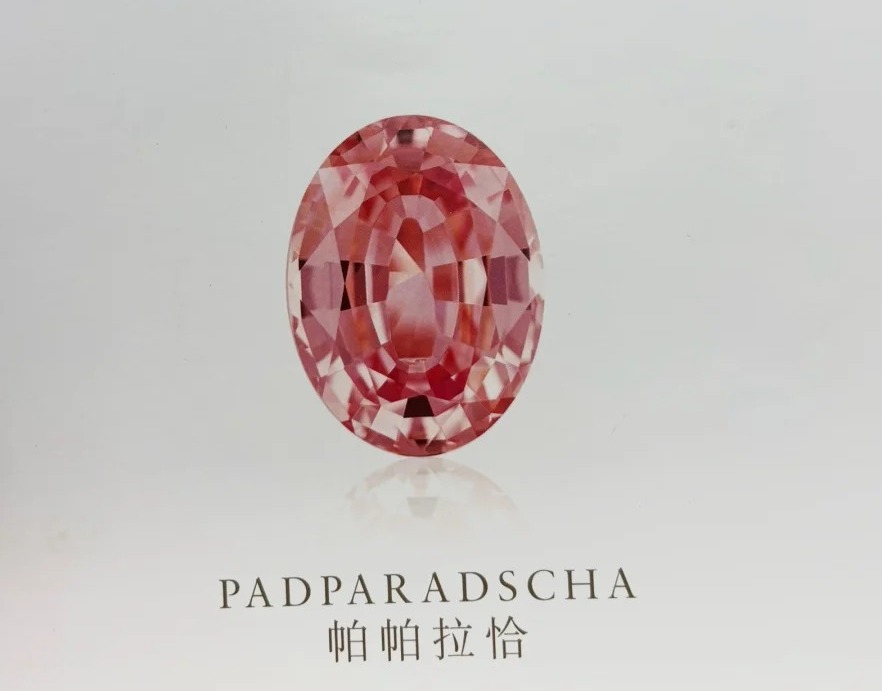
The pink and orange tones in the image blended beautifully, like the colors of a blooming lotus. It was a textbook example of an ideal Padparadscha sapphire.
But if someone took that image to the gemstone market and tried to find a match, I think they would most likely be disappointed.
Images produced through careful photography, color adjustment, and post-processing often show idealized, highly saturated colors. Even when such colors occur in real gemstones, they are usually seen in exceptional stones sold at major auctions.
So what does a Padparadscha sapphire actually look like in real life?
With that question in mind, let’s explore this rare gemstone, which has its own distinct name within the sapphire family.
- Do Padparadscha sapphires fade?
- What gives them their color, and can they regain it after fading?
- What is the difference between heat treatment and beryllium diffusion treatment in Padparadscha sapphires? How can we identify beryllium diffusion treatment?
- Where Do Padparadscha Sapphires Come From?
What Color Defines a Padparadscha Sapphire?
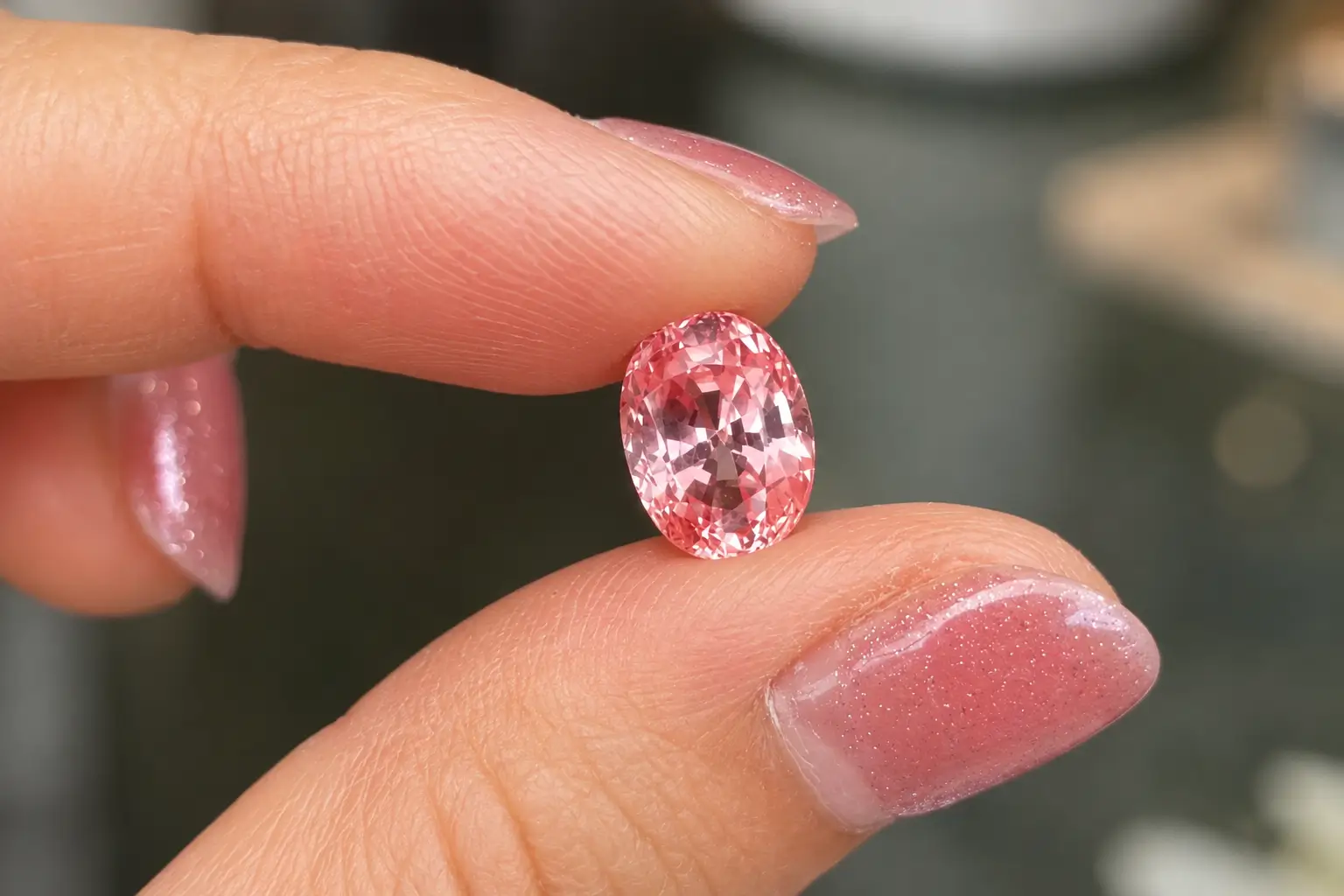
Padparadscha is a variety of sapphire with a blend of pink and orange hues. In gemological terms, it is a pinkish-orange corundum.
The name comes from Sinhala and is commonly associated with the color of a lotus flower. People also call it the “lotus sapphire.” Sri Lanka is its traditional source, and the gemstone holds a special place in the country’s gem culture.
Padparadscha is neither as soft and delicate as a pure pink sapphire nor as vivid as a pure orange sapphire. Its beauty lies in the subtle balance between the two colors.
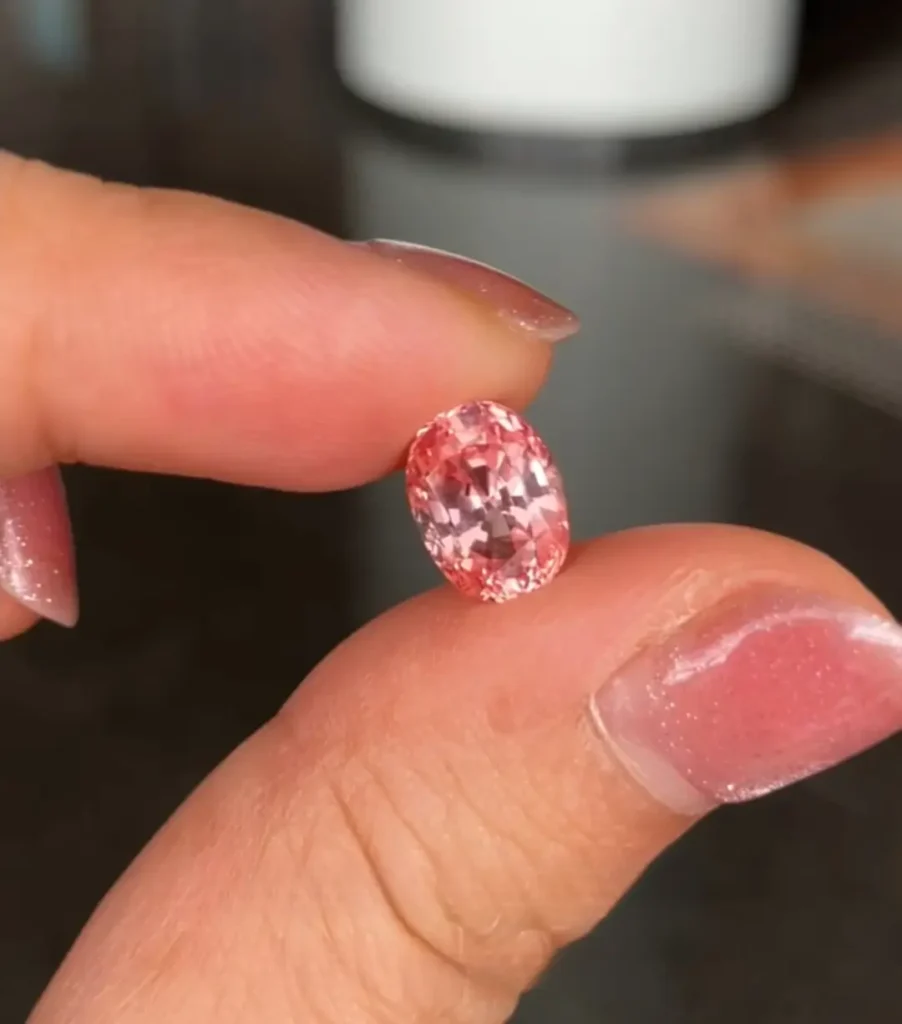
Depending on the dominant hue, people in the gemstone trade often describe Padparadscha colors as follows:
- Sunrise: A pink-dominant pinkish-orange, often described as approximately 70% pink and 30% orange.
- Sunset: An orange-dominant orangish-pink, often described as approximately 70% orange and 30% pink.
- Ideal lotus color: A balanced blend of approximately 50% pink and 50% orange.
These percentages are subjective descriptions. They help us visualize the color balance, but international gemological laboratories apply formal criteria when identifying Padparadscha sapphires.
Even a slight shift beyond the accepted color range may lead to a different classification, such as:
- Pink sapphire
- Orange sapphire
This narrow color range contributes to Padparadscha’s rarity. A saying often circulates in the gemstone market:
You might find only one Padparadscha among 50,000 sapphires.
Can Padparadscha Sapphires Fade?
Some Padparadscha sapphires do undergo color changes. I’d like to share an experience I had when buying one at a gemstone show.
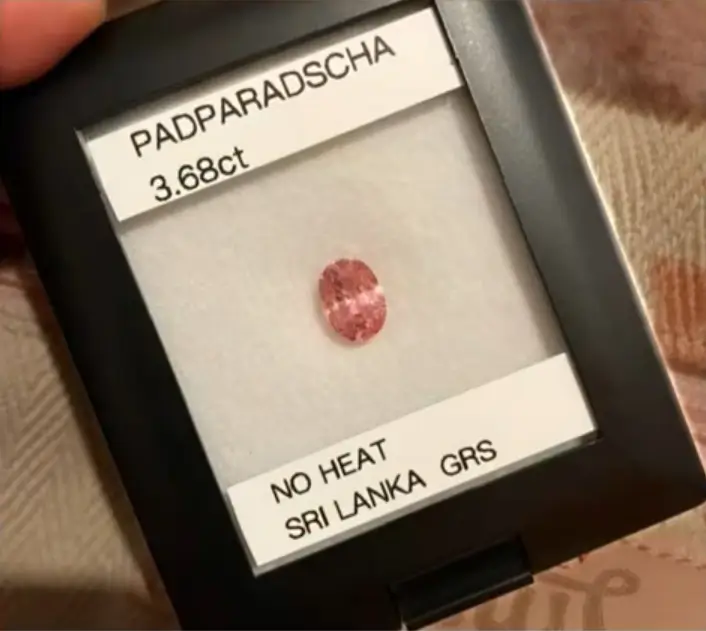
It was a 3.68-carat Padparadscha with a pinkish-orange color and a noticeable pink hue. I asked the seller whether its color was stable and received a clear yes. Based on that assurance, I bought it for a little over $30,000.
That evening, I took a closer look at the certificate and noticed it listed Type 2a rather than Type 1 or Type 3. This made me question the stone’s color stability, so I decided to test it under ultraviolet light.
To learn more about the different types assigned through the GRS color stability test for Padparadscha sapphires, read Understanding GRS Padparadscha Reports: Color Stability Test Types.
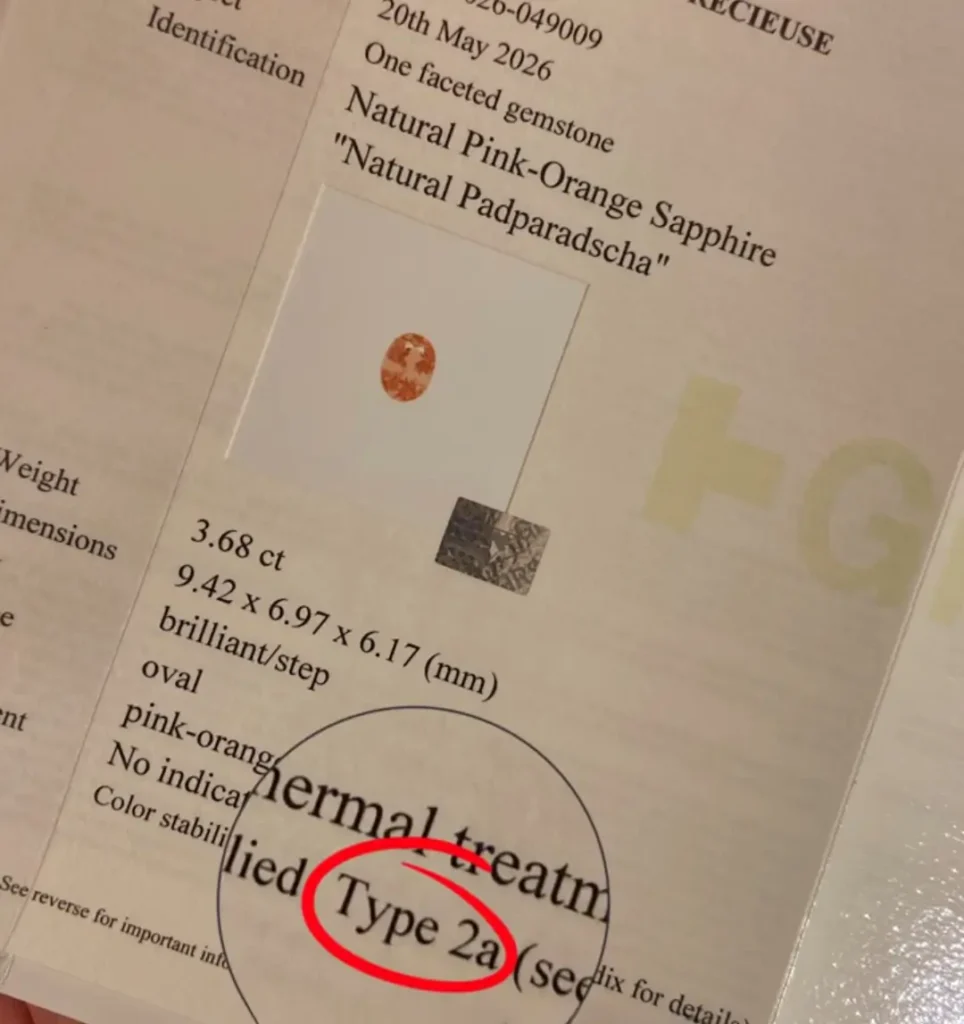
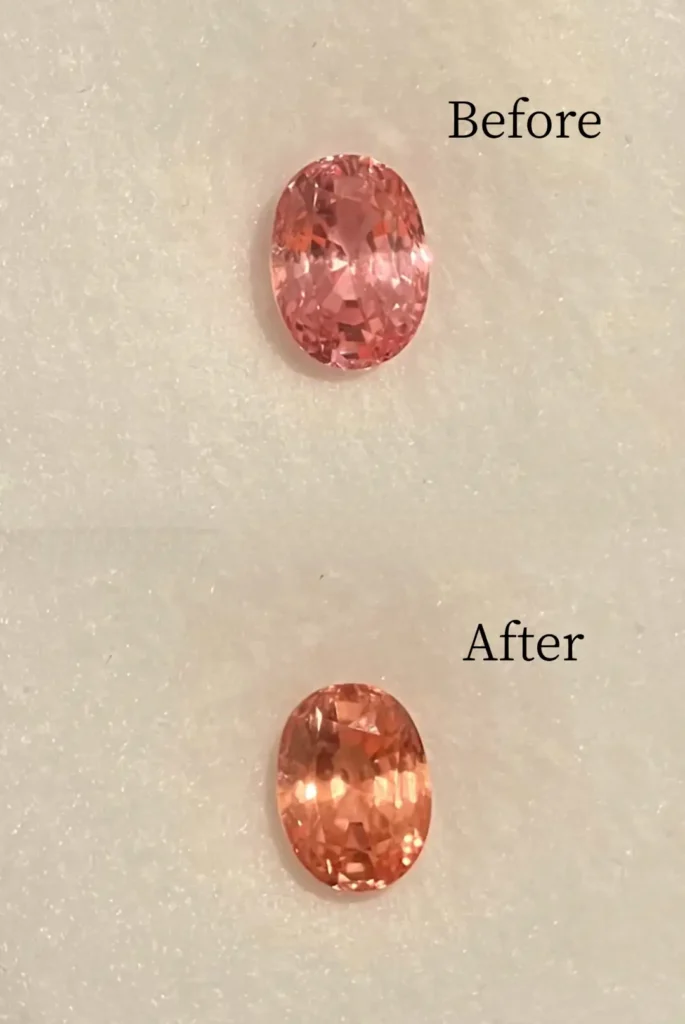
The result surprised me. Before the test, the sapphire had a pink-dominant pinkish-orange color. Afterward, its color shifted toward orange, becoming an orange-dominant orangish-pink. After giving it considerable thought, I decided to return it.
Other Padparadscha buyers have reported similar experiences. After sitting in a jewelry box for some time, their sapphires changed color. The original warm pinkish-orange gradually shifted toward pink, sometimes losing almost all of its orange hue.
Why does this happen? Can the original color return?
What Gives Padparadscha sapphire Its Color?
Before answering that question, let’s first look at what gives Padparadscha its distinctive color.
Imagine three different “artists” working inside the gemstone.
The first is chromium. It gives sapphires pink or red hues and plays an important role in creating the pink component of Padparadscha.
The second is iron. Iron can contribute yellow or orange hues in sapphire, but its effect depends on its chemical state and other crystal conditions.
The third is color centers. Certain unstable color centers can also contribute to the orange component.
Gemstones colored by chromium and iron are generally relatively stable. Color centers work differently. Rather than producing color simply through metal ions, they involve defects in the crystal structure and changes in electron states.
When these color centers are active, the sapphire may display a beautiful pinkish-orange color. But exposure to light or other conditions can change their state, causing the orange hue to gradually weaken or even disappear.
As a result, a Padparadscha that originally showed a pinkish-orange color may become a more pink-dominant sapphire.
Of course, color changes vary from one Padparadscha to another. For more on color centers in sapphire, you can also read my previous article:
Why Do Yellow Sapphires Fade? What Buyers Should Know
Can a Faded Padparadscha sapphire Regain Its Color?
The way a Padparadscha responds to fading depends on its color-causing mechanism and any treatments it has received.
- Color changes caused by natural color centers: Color changes in some gemstones colored by natural color centers can be reversible. In certain Padparadscha sapphires, the orange hue may become stronger under specific lighting conditions and gradually fade under different lighting or storage conditions.
For example, the 3.68-carat Padparadscha I returned showed a more noticeable orange hue after exposure to ultraviolet light. When I first bought it, however, it had a more pink-dominant pinkish-orange color because it had been stored away from light for an extended period. - Irradiation treatment: Some sapphires undergo artificial irradiation to change or enhance their color. Irradiation can create different types of color centers, and color stability depends on the specific treatment and the gemstone itself. In the irradiated sapphires we have encountered, most have been difficult to restore to their original color once they fade.
- Heat treatment: Among the gemstones we have encountered, most Padparadscha sapphires that have undergone proper high-temperature heat treatment do appear to have more stable colors. However, laboratory studies show that a small number of sapphires may still fade if the heating process was incomplete and weak color centers remain. So, “heated” does not guarantee absolute color stability, nor does it mean the original color will necessarily return after fading.
For this reason, you cannot judge a Padparadscha’s color stability or its ability to regain its original color simply by looking at whether it is unheated or heat-treated.
When wearing one, it is also best to avoid prolonged exposure to strong sunlight or high temperatures and to store it properly.
Heat Treatment vs. Beryllium Diffusion in Padparadscha
Padparadscha sapphires on the market may undergo different types of treatment, including heat treatment and beryllium diffusion.
Natural Padparadscha sapphires are extremely rare, and fine-quality stones can command high prices. Some sellers use beryllium diffusion to alter the color of ordinary sapphires, giving them a pinkish-orange appearance similar to Padparadscha.
If sellers do not clearly disclose the treatment, buyers may mistake these treated stones for Padparadscha sapphires with natural color.
It is important to understand the difference between heat treatment and beryllium diffusion.
- Heat Treatment (Heated): Heat treatment is a common enhancement method in the sapphire market.
High temperatures can improve a sapphire’s color and apparent clarity, enhancing its overall visual appeal.
Heat treatment generally does not introduce external coloring elements. A heat-treated sapphire remains a natural gemstone and can still hold significant market value. - Beryllium Diffusion: Gemological laboratories classify beryllium diffusion as a treatment rather than a conventional enhancement.
This process uses high temperatures to diffuse beryllium into the corundum crystal, changing or enhancing the gemstone’s color.
Unlike conventional heat treatment, beryllium diffusion introduces an external element into the crystal. This makes proper identification and disclosure particularly important in gemstone grading and trading.
Beryllium-diffused sapphires generally have lower market values than comparable natural unheated sapphires or sapphires that have received only conventional heat treatment.
How Can You Identify Beryllium Diffusion Treatment?
Beryllium diffusion treatment is difficult to identify with the naked eye.
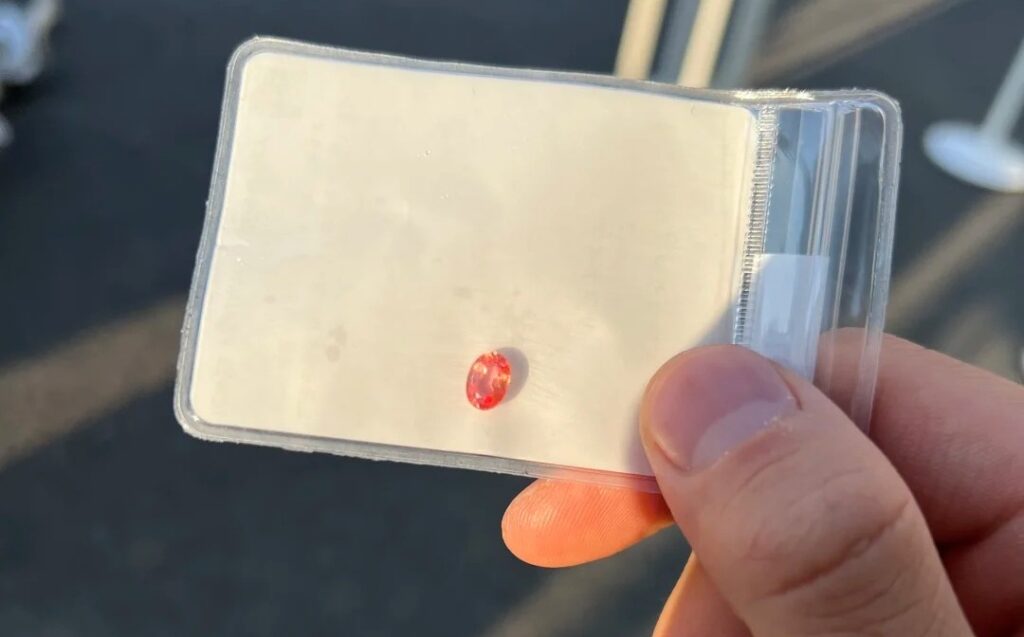
Some sapphires treated with beryllium diffusion in the early days showed color distribution patterns associated with the treatment. However, as treatment techniques have advanced, these features have become less obvious and may not always be present.
Professional gemological laboratories can detect beryllium through chemical analysis. Common techniques include:
- LA-ICP-MS (Laser Ablation Inductively Coupled Plasma Mass Spectrometry)
- LIBS (Laser-Induced Breakdown Spectroscopy)
LA-ICP-MS is an important method for detecting trace amounts of beryllium in sapphire. LIBS can also detect beryllium, but the two methods differ in sensitivity and quantitative analysis capabilities.
If you’d like to learn more about how gemological laboratories identify beryllium diffusion, how to read the certificates, and whether treated sapphires are suitable for everyday wear, you can read my previous article: Beryllium Diffusion Treatment in Sapphire: Color, Value, and Disclosure
When buying a Padparadscha, my advice is always the same: check the certificate first, then look at the gemstone.
Where Do Padparadscha Sapphires Come From?
When I think of sapphire origins, Sri Lanka is the first place that comes to mind.
Sri Lanka is also the traditional source of Padparadscha. Miners search for these rare pinkish-orange corundum gemstones in the gem fields and alluvial gravel deposits around Ratnapura.
Over the years, sapphires with similar colors have also been discovered in Madagascar, Tanzania, Vietnam, and other locations.
Yet for many gemstone enthusiasts and collectors, the name Padparadscha remains closely associated with Sri Lanka.
I think this connection comes from more than the gemstones themselves. Sri Lanka has a distinctive gem culture. Its lush river valleys, rich gemstone deposits, and natural imagery of lotus flowers and glowing sunsets all contribute to the unique cultural appeal of Padparadscha.
Today, gemological laboratories identify Padparadscha sapphires primarily by their color rather than their geographic origin. The name is no longer restricted to stones from Sri Lanka.
Of course, Padparadscha sapphires from Sri Lanka still appeal to collectors who value gemstone origin.
However, whether a Sri Lankan origin adds a premium ultimately depends on the individual stone’s quality, its identification report, and market demand.
Jewea’s Take
Padparadscha sapphires have a truly distinctive color.
Some remind me of sunrise, with soft pinkish-orange hues. Others resemble sunset, with warm orangish-pink tones. But my favorite is the color of a lotus just beginning to bloom. It is neither purely pink nor purely orange, but a beautiful balance between the two.
However, online promotional images often show colors that look more ideal and saturated than those of real gemstones. This is why many people search for a Padparadscha sapphire based on a picture but struggle to find a color they are happy with.