Why Do Yellow Sapphires Fade? What Buyers Should Know
When it comes to yellow sapphire, I want to share a buying experience from many years ago.
At the time, I bought a 5.37-carat natural, unheated yellow star sapphire. I had not yet decided how I wanted to set it, so I put it away for about a year. When I thought of the stone again and took it out, I was surprised to find that its original pale yellow color had almost completely disappeared.
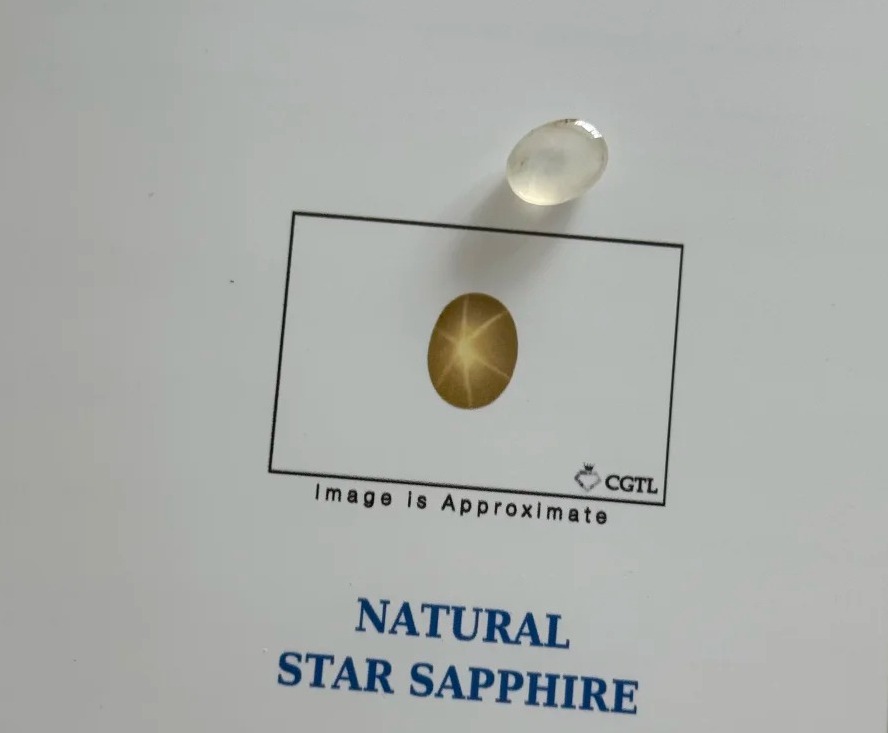
If the familiar star lines had not still been there, I might have wondered whether I had somehow picked up the wrong stone.
That experience gave me a much deeper understanding of color stability in yellow sapphires.
In our article Beryllium Diffusion Treatment in Sapphire: Color, Value, and Disclosure, we discussed beryllium diffusion, a treatment commonly encountered in some yellow sapphires. But treatment is not the only issue worth paying attention to. Some yellow sapphires can have unstable color and may fade noticeably with light exposure or under other conditions.
That is the focus of this article. We will look at why some yellow sapphires fade, starting with the mechanisms behind their color, and then discuss what buyers should know when choosing one.
Why Do Yellow Sapphires Fade?
To understand why yellow sapphires can fade, we first need to look at what gives them their color.

Sapphire is a variety of corundum, which is made primarily of aluminum oxide. Pure corundum is usually close to colorless. Trace elements, the oxidation state of those elements, crystal defects, and color centers can all affect how the stone absorbs visible light and, in turn, produce different colors.
Yellow sapphires do not all get their color from the same source.
In some stones, the yellow color mainly comes from trace elements and the stone’s chemical composition. In others, it may be related to color centers created by irradiation. Some sapphires may get their color from a combination of trace elements and crystal defects.
Different sources of color can have different levels of stability.
That is why you cannot judge whether a yellow sapphire is likely to fade simply by knowing whether it is natural or whether it has been heat-treated. You also need to understand what causes its color and how the stone has been treated.
Yellow from Trace Elements and Crystal Chemistry
In some yellow sapphires, the color mainly comes from iron in the crystal, including its oxidation state and coordination environment. Interactions between iron and titanium can also affect how sapphire absorbs visible light, which may produce or intensify a yellow color.
This type of color is generally quite stable. However, its stability still depends on the stone’s chemical composition and the mechanism responsible for its color.
From my experience in the market, I have found that the color stability of natural, unheated yellow sapphires is not always the same. Some unheated yellow sapphires can noticeably lose color, especially when the color has a more complex origin, appears unusually vivid, or may involve color centers.
So I would not simply assume:
A natural, unheated yellow sapphire is always more stable than a heat-treated yellow sapphire.
When a yellow color mainly comes from stable trace elements and crystal chemistry, it can generally remain stable. But if unstable color centers also contribute to the color, the possibility of color change cannot be completely ruled out, even when the sapphire has never been artificially heated.
Yellow sapphires with different color characteristics can be found in Sri Lanka, Madagascar, and Changle, Shandong, China, among other sources. The chemical composition can vary between different deposits and even between individual stones. For that reason, you cannot determine color stability based only on a sapphire’s origin or an “unheated” label.
Yellow from Color Centers and Crystal Defects
Another type of yellow is related to irradiation and color centers.
You can think of a color center as a defect state within the crystal structure. When these defects trap electrons or holes, they can change how the gemstone absorbs light. This can affect its color.
In some yellow sapphires, the color may be related to these color centers. If the color centers are unstable or exist in a metastable state, the color may gradually weaken when the stone is exposed to light, heat, or changes in storage conditions.
1. Irradiation-Induced Color
Artificial irradiation can change the electronic state inside a gemstone and create color centers that affect its color.

Some yellow color produced by artificial irradiation may have relatively poor stability. The color can gradually become lighter over time or with exposure to light and other environmental conditions. However, the final result depends on several factors, including the irradiation method, material composition, treatment conditions, and type of color center.
For this reason, you cannot treat all irradiation-induced yellow sapphires as the same. It is also not accurate to say that all irradiated gemstones will fade.
If the yellow color in a sapphire comes from color centers created by irradiation, its color stability deserves particular attention.
2. Color Centers Formed Naturally
Gemstones can also be exposed to natural radiation as they form and remain buried underground. This exposure may create certain color centers.
In theory, naturally formed color centers can also have stability issues. In the market, however, it is difficult to determine whether a gemstone falls into this category based on color or appearance alone.
A proper assessment usually requires a combination of gemological research, spectroscopic features, chemical composition, and laboratory testing.
3. Yellow Influenced by Trace Elements and Color Centers
In some yellow sapphires, the color does not come from a single factor. Trace elements, crystal chemistry, and lattice defects may all contribute to the final color.
For example, trace elements such as iron may play a role in producing the yellow color. Defects within the crystal, along with electron or hole color centers, may further change how the gemstone absorbs visible light.
This makes color stability more complex.
If unstable color centers contribute to the color, the gemstone may change when exposed to light, heat, or other environmental conditions.
How Do Treatments Affect Yellow Sapphire Color Stability?
Treatment and color origin are not the same thing.
A sapphire may naturally contain certain color-causing elements. Treatment can also change its color after the stone forms. Different treatments can affect the appearance of the color, how buyers assess its value, and how they evaluate its stability.
1. Traditional Heat Treatment
In some markets, traditional heat treatment is informally called “old burn.”
This treatment uses high heat to change the oxidation state of elements, their distribution within the stone, or aspects of the crystal structure. These changes can improve or alter the color.
In some yellow sapphires, traditional heat treatment can make the yellow more noticeable. In certain cases, the resulting color can also show good stability.
Based on my experience in the market, if I had to choose between a natural, unheated yellow sapphire with an unclear color origin and possible unstable color centers, and a yellow sapphire that had received traditional heat treatment with a clearly disclosed treatment history and better-understood color stability, I would generally lean toward the latter.
This does not mean that every “old burn” sapphire is better than every unheated sapphire. The point is that clear treatment disclosure and a better understanding of color stability can matter more to a long-term wearer than the “unheated” label alone.
One important point: “old burn” is a trade term, not a formal laboratory classification. When buying a yellow sapphire, rely on the specific treatment description given in the laboratory report.
2. Surface Diffusion Treatment
Surface diffusion treatment uses high heat to introduce certain external elements into the near-surface region of a gemstone and change its color. In some markets, surface diffusion treatment is informally called “new burn.”
Surface diffusion is different from traditional heat treatment. The color distribution, diffusion depth, and detectable features depend on the specific gemstone and treatment conditions.
Based on my experience in the market, if color stability were the main consideration, I would generally prefer the traditional heat-treated stone, provided that its treatment history and color stability were better understood.
For more information about surface diffusion treatment in ruby and sapphire, see: Ruby and Sapphire Diffusion Treatment
3. Beryllium Diffusion Treatment
Beryllium diffusion treatment is another treatment that deserves separate attention.
At high temperatures, external elements such as beryllium can enter the corundum crystal and change its color. This treatment can produce yellow, orangy-yellow, and padparadscha-colored appearances. Some materials may also develop other colors.
Color produced by beryllium diffusion is generally considered relatively stable. However, that does not mean you can sell it as a natural, unheated color.
These are two separate questions:
Is the color stable?
Has the treatment been disclosed?
Even when a treatment produces a relatively stable color, failure to disclose the treatment can still affect how the gemstone is identified and how the market values it.
Can a Faded Yellow Sapphire Regain Its Color?

The answer is: not necessarily.
Whether a faded yellow sapphire can regain its color, and whether the color will remain stable afterward, depends on its color-forming mechanism, chemical composition, the state of its color centers, and its treatment history.
So you should not assume:
A yellow sapphire that has faded will always regain its color simply by exposing it to sunlight or a UV light.
- Natural color-center-related color changes: If an unheated yellow sapphire gets its color from naturally formed color centers, its color may change under light, heat, or other environmental conditions. In some materials, the change may be partly reversible, but this cannot be assumed for every stone. Any apparent recovery should not be treated as proof that the color will remain stable over time.
- Color changes caused by irradiation treatment: If the color change results from color centers created by irradiation, whether the color can return depends on the specific material, irradiation method, and treatment history. In some cases, further irradiation may change the color again, but the original color may not be fully restored, and the result may not remain stable.
Buying Tips for Yellow Sapphire Jewelry
Many buyers are drawn to the rich, refined look of yellow sapphire. But sometimes, after wearing a piece for a few months, the color becomes noticeably lighter. The stone may start to look pale, dull, or washed out.
So how can you reduce the risk of buying a yellow sapphire with unstable color?
- Do not make “unheated” your first priority when buying a yellow sapphire. Based on my experience in the market, some yellow sapphires treated with traditional heat may have more stable color than certain unheated stones whose color involves unstable color centers. Some irradiation-colored stones may also require additional caution. At the same time, you should check whether the stone has received beryllium diffusion treatment. Although the color produced by this treatment is generally stable, the market price can differ significantly from that of natural, unheated material.
- If you specifically want an unheated yellow sapphire, consider obtaining a report or color-stability assessment from a recognized gemological laboratory, such as GRS, GUILD, or AIGS, where the relevant testing is available. The goal is to learn more about the stone’s color origin, treatment history, and any known color-stability concerns. However, laboratory testing should not be understood as an absolute guarantee that the stone will never change color.
- Be more cautious with yellow sapphires that show unusually strong color but sell at a relatively low price. A low price may reflect differences in treatment, origin, material quality, or market demand. In some cases, the stone may also have received a treatment such as irradiation or diffusion. Color and price alone, however, cannot establish the treatment history.
Jewea Summary
A beautiful yellow sapphire is worth appreciating. But for a piece you plan to wear, lasting beauty matters just as much as its color today.
You cannot judge a yellow sapphire’s color stability simply by asking whether it is natural or unheated. You also need to consider how the color formed, whether color centers are involved, the stone’s chemical composition, and whether it has received any treatment that may affect its color.
For buyers, clear treatment disclosure and a better understanding of color stability are often more useful than relying on a single label such as “unheated.”