Understanding GRS Padparadscha Reports: Color Stability Test Types
In an earlier article, I shared my experience of returning a 3.68-carat unheated natural Padparadscha sapphire.
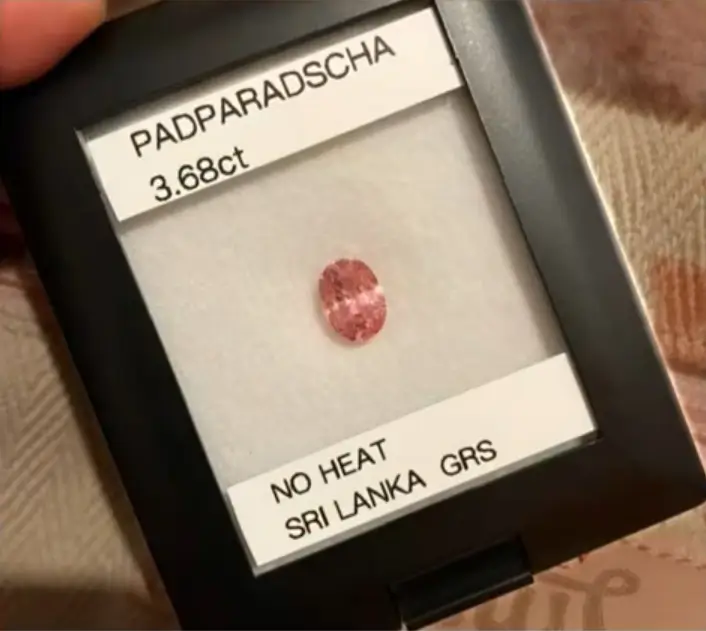
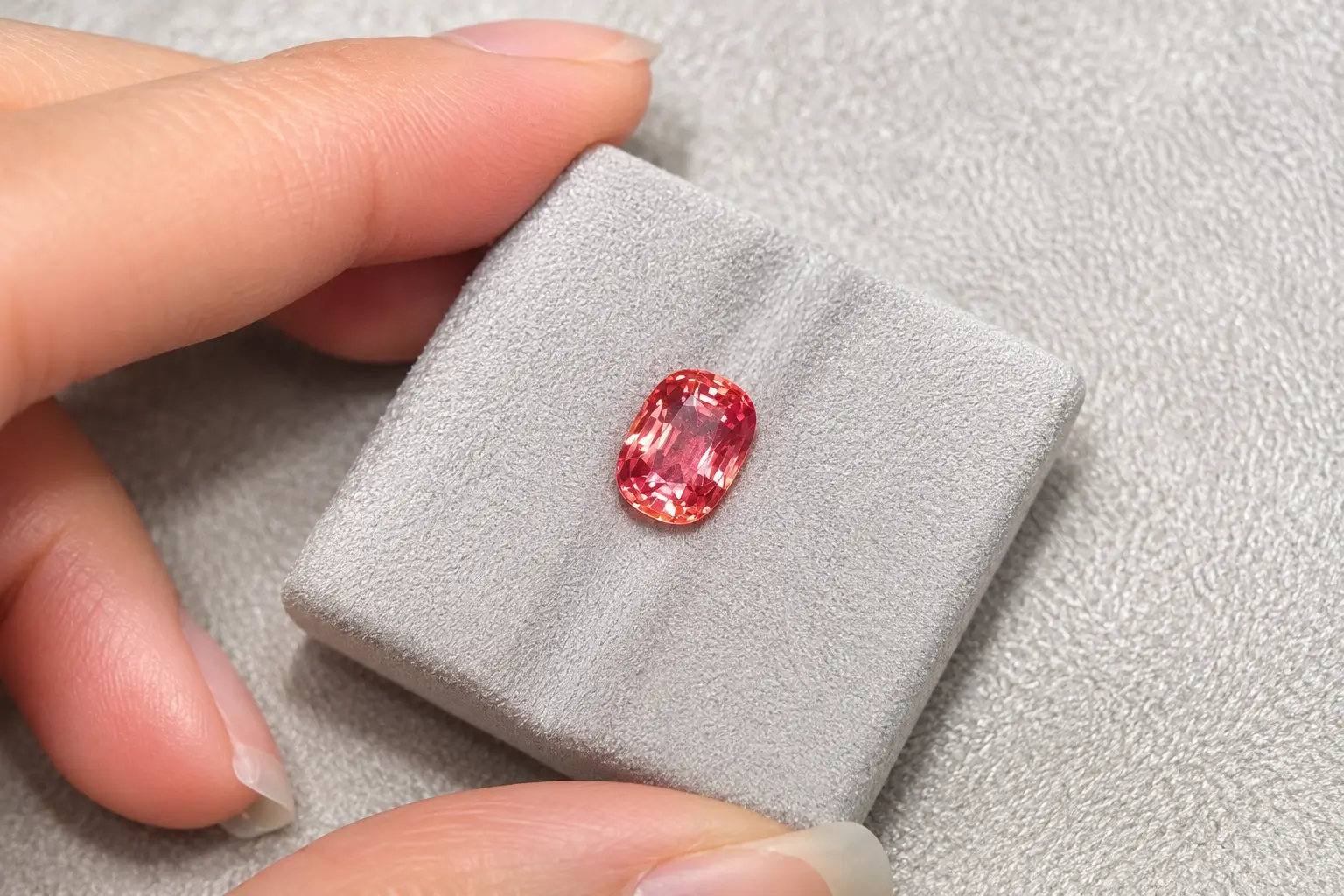
The moment I first saw its pinkish-orange color, I was drawn to its sunrise-like glow. But when I noticed the Type 2a designation on its GRS report, I began to have second thoughts. After some hesitation, I decided to return it.
So, what does Type 2a actually tell us about GRS Padparadscha color stability?
In my previous article, The Padparadscha Sapphire: As Beautiful as a Lotus, I discussed why some Padparadscha sapphires can change color. In certain stones, unstable color centers contribute to their orange or yellow hues. These color components may change under specific lighting conditions.
You cannot judge this kind of color instability by looking at a gemstone alone. When buying a high-value Padparadscha, it is important to look beyond its appearance and understand the findings in a reputable gemological report, including its color stability test classification. This information gives us a clearer picture of the stone and helps us make more informed purchasing decisions.
Choose a Reputable Gemological Laboratory
When buying a high-value Padparadscha sapphire, I recommend choosing a gemological laboratory with international recognition, professional expertise, and a strong reputation in the market.
Here are some of the better-known laboratories in the colored gemstone industry:
- GRS (GemResearch Swisslab): GRS has a strong presence in colored gemstone identification. The market particularly recognizes its work on color descriptions, geographic origin determination, and related research.
- Gübelin Gem Lab and SSEF (Swiss Gemmological Institute): Both laboratories are known for their rigorous gemological research and testing standards. They also enjoy strong recognition in the high-end colored gemstone market.
- Lotus Gemology and AGL (American Gemological Laboratories): Both have established reputations in colored gemstone identification.
- GIA (Gemological Institute of America): GIA has a broad influence on gemological research, gemstone identification, and treatment detection. It also conducts research into topics such as color stability.
Different laboratories may use different color descriptions, identification standards, and reporting methods. When reading a report, focus on the findings and standards of the laboratory that issued it rather than simply comparing laboratory names.
To learn more about choosing a reputable gemological laboratory, read Do You Really Need a Gemstone Certificate?
How to Read a Padparadscha Gemological Report
Start by checking the Identification or Description section.
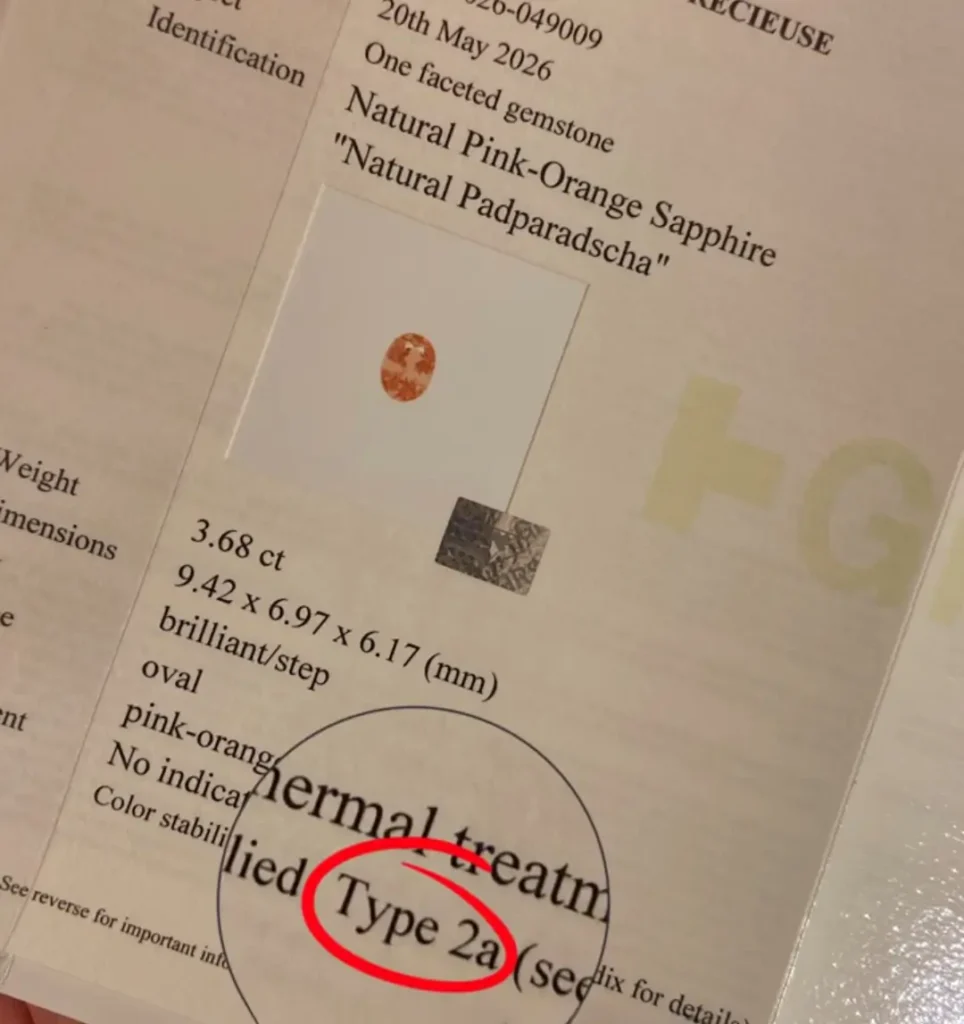
If the report explicitly identifies the gemstone as Padparadscha, it means the laboratory has classified it as a Padparadscha sapphire according to its own identification standards.
If the report describes it only as a Pink Sapphire, Orange-Pink Sapphire, or another color variety, you should not assume it qualifies as a Padparadscha based on the color description alone.
Padparadscha sapphires typically range in color from pinkish-orange to orange-pink. However, laboratories may differ in how they define the color boundaries and apply these descriptions.
Next, check the Comments or Treatment section.
- No Indication of Heating: The laboratory found no evidence of heat treatment. This is what we commonly refer to as an unheated gemstone.
- Heated: The gemstone has undergone heat treatment, a common enhancement method. This does not mean it is no longer natural.
- Beryllium Diffusion: This is a form of diffusion treatment that deserves particular attention. It can alter a sapphire’s color and color distribution, so you should not treat it as equivalent to conventional heat treatment. For more details, read Beryllium Diffusion Treatment in Sapphire: Color, Value, and Disclosure.
- Origin: Geographic origin can influence a gemstone’s market value. For example, Sri Lankan Padparadscha sapphires have long enjoyed strong recognition in traditional markets. However, origin alone does not determine a gemstone’s overall value.
Finally, check the Carat Weight, Dimensions, and any other relevant details on the report. Make sure they match the gemstone you are buying. This helps you avoid a mismatch between the report and the actual stone.
GRS Color Stability Test Types: Type 1–4
GRS classifies the results of its color stability tests into four types. These classifications describe the color changes observed during testing.
Type 1: No Signs of Fading
GRS observes no signs of color fading during the test.
According to GRS, further exposure to UV light or daylight after the test does not reduce the gemstone’s color saturation or change its hue.
Type 2: Signs of Fading in the Orange and/or Yellow Components
Type 2 indicates that the orange and/or yellow components show signs of fading during the test.
GRS further divides this category into Type 2a and Type 2b:
- Type 2a: The orange and/or yellow components show signs of fading, but the gemstone retains its Padparadscha color in both the charged and discharged states.
- Type 2b: The orange and/or yellow components show signs of fading, and the gemstone no longer displays a Padparadscha color in the discharged state.
The key difference between Type 2a and Type 2b is whether the gemstone still retains its Padparadscha color in the discharged state during testing. Here, “charged” and “discharged” are technical terms used in GRS color stability testing. They refer to different color states the gemstone displays under specific test conditions, not to battery charging and discharging in the usual sense.
Type 3: Signs of an Increase in the Orange and/or Yellow Components
Type 3 indicates that the orange and/or yellow components show signs of increasing during the test.
GRS further divides this category into Type 3a and Type 3b:
- Type 3a: The orange and/or yellow components show signs of increasing, but the gemstone displays a Padparadscha color in both the charged and discharged states.
- Type 3b: In the discharged state, the gemstone no longer displays a Padparadscha color. It also does not show a vivid yellow or orange color.
It is important to understand that Type 3 does not simply mean the gemstone has greater color stability or higher quality. It indicates that the test revealed an increase in the orange and/or yellow components.
Type 4: Signs of Fading, with No Color Recovery Through Further Exposure
GRS observes signs of fading during the test. Afterward, further exposure to UV light or daylight cannot increase the gemstone’s color saturation or change its hue.
This behavior differs from the color changes described under Types 2 and 3. For this reason, Type 4 deserves particular attention.
This also helps me understand why some sellers may hesitate to have a gemstone undergo color stability testing. They may be concerned about receiving this type of result, as it could affect how the gemstone’s color is evaluated and, in turn, its market value.
Understanding the A and B Subtypes
The key difference between the A and B subtypes is whether a gemstone retains its Padparadscha color in both the charged and discharged states during color stability testing.
A Subtypes: The Difference Between Type 2a and Type 3a
Both Type 2a and Type 3a belong to the A subtype.
They share one important characteristic: the gemstone displays a Padparadscha color in both the charged and discharged states during testing.
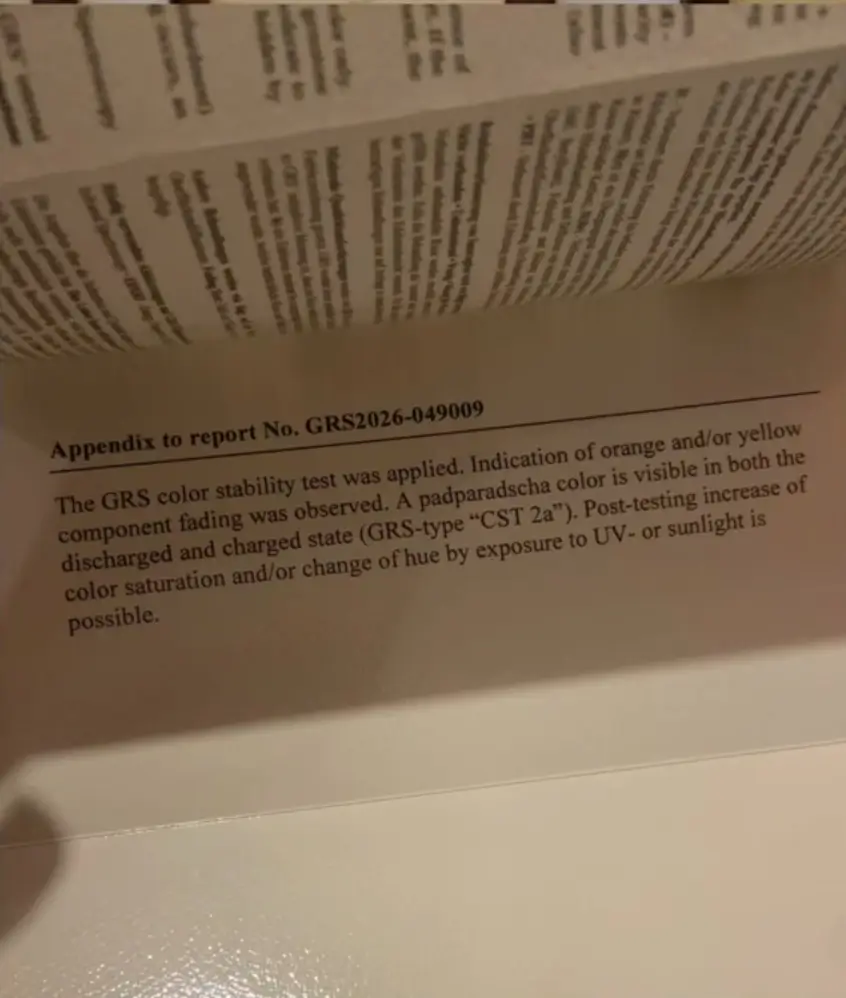
The difference lies in the direction of the observed color change:
- Type 2a: The orange and/or yellow components show signs of fading.
- Type 3a: The orange and/or yellow components show signs of increasing.
Going back to the Padparadscha sapphire I returned earlier, I first saw it in a soft, pinkish-orange hue that I loved for its sunrise-like glow. After testing it under UV light that evening, I noticed that it had shifted to a more orange-pink hue. I was also struck by the difference between its initial appearance and the color shown in the GRS report photograph. It had looked more pink when I first received it, while the report photograph showed a more orange-pink color.
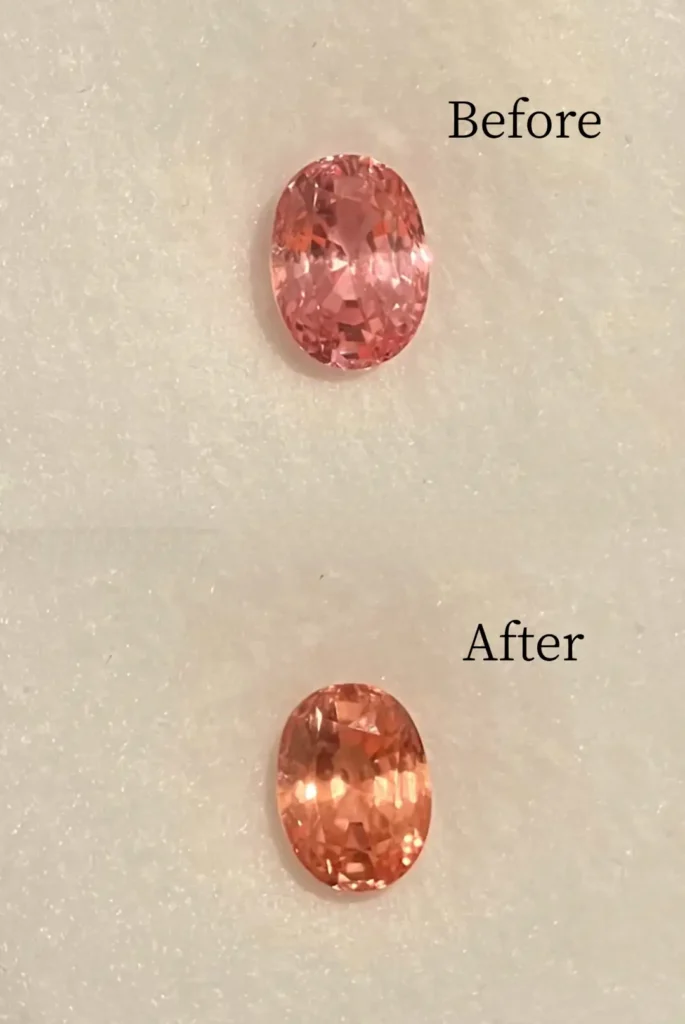
I began to wonder whether the Type 2a classification, rather than Type 3a, might be related to the stone’s color state when GRS received it and the direction of the color change observed during testing.
Based on this possibility, the stone may have been in a more orange-dominant state when it was submitted for testing, similar to the color shown in the report photograph. If the laboratory then observed a decrease in the orange and/or yellow components during testing, the result would show Type 2 characteristics, leading to a Type 2a classification.
If I had submitted the stone after my UV test, when it appeared more pink, the laboratory might instead have observed an increase in the orange and/or yellow components during testing. In that case, the result might have shown Type 3 characteristics, leading to a Type 3a classification.
It was truly a fascinating experience. The same sapphire displayed two distinct color appearances in different states: pinkish-orange and orange-pink. Both fell within the Padparadscha color range.
B Subtypes: The Difference Between Type 2b and Type 3b
Both Type 2b and Type 3b belong to the B subtype.
Their shared characteristic is that the gemstone no longer displays a Padparadscha color in the discharged state.
For example, a gemstone that originally showed an orange-pink color may shift to a pure orange sapphire after the color change. Another stone that originally had a stronger pink tone may shift to a pure pink sapphire.
In either case, the resulting color may fall outside the accepted Padparadscha color range.
Jewea’s Take
This article shares my personal buying experience and what I have learned about GRS reports and gemstone color stability.
Learning more about GRS color stability testing for Padparadscha sapphires has also led me to reconsider my original decision to return the stone.
If I came across that same 3.68-carat unheated natural Type 2a Padparadscha sapphire again today, I might choose to keep it.
After all, it was its distinctive and captivating color that drew me to it in the first place.