Beryllium Diffusion Treatment in Sapphire: Color, Value, and Disclosure
Two years ago, a friend traveled to Thailand on business. Through a local intermediary, he purchased a yellow sapphire ring from a jewelry store for nearly $20,000. Because he trusted the referral, he did not ask for a laboratory report at the time of purchase.
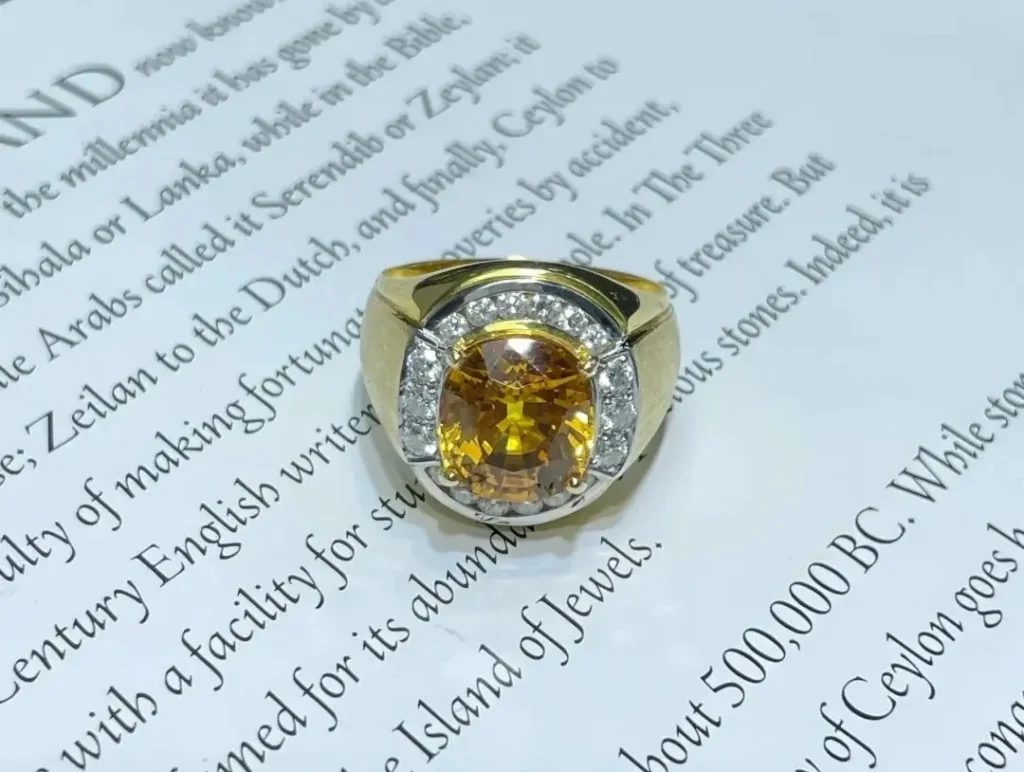
After he returned home, he showed me the ring. Based on my years of experience in gemstone identification and my observations under a microscope, I suspected that the yellow sapphire had undergone not only heat treatment but also beryllium diffusion treatment. We then sent the stone to GUILD Gem Lab for testing. The report confirmed that the sapphire had received beryllium diffusion treatment.
This case highlights a common issue in the sapphire market. Buyers can easily be drawn to a stone’s vivid, saturated color while overlooking how that color formed—and how treatment information affects value.
Among the sapphire cases I have encountered, yellow sapphires deserve particular attention. The market includes yellow and orangy-yellow sapphires treated with beryllium diffusion.
In our previous article, Ruby and Sapphire Diffusion Treatment, we introduced diffusion treatment in corundum. This time, we take a closer look at beryllium diffusion treatment: what it is, how it affects sapphire color, whether you can identify it by appearance, and why treatment disclosure matters.
What Is Beryllium Diffusion Treatment, and How Does It Affect Corundum Color?
Beryllium diffusion is a high-temperature treatment. By controlling the temperature, treatment time, and chemical environment, technicians introduce beryllium into the crystal structure of corundum, including ruby and sapphire. This process not only changes the gemstone’s color but can also improve color stability in some yellow sapphires. For more information about yellow sapphire color changes, read Why Do Yellow Sapphires Fade? What Buyers Should Know
Corundum consists mainly of aluminum oxide (Al₂O₃). The color of natural sapphire and ruby usually comes from trace elements and their related electronic structures within the crystal. When beryllium enters the crystal during treatment, it affects the electrical balance and defect states. These changes alter how the gemstone absorbs visible light.
Unlike surface diffusion, which forms color mainly near the surface, beryllium diffusion is a bulk diffusion treatment. Corundum in many colors can potentially undergo beryllium diffusion. Common examples seen in the market include:
- Yellow and orangy-yellow sapphires
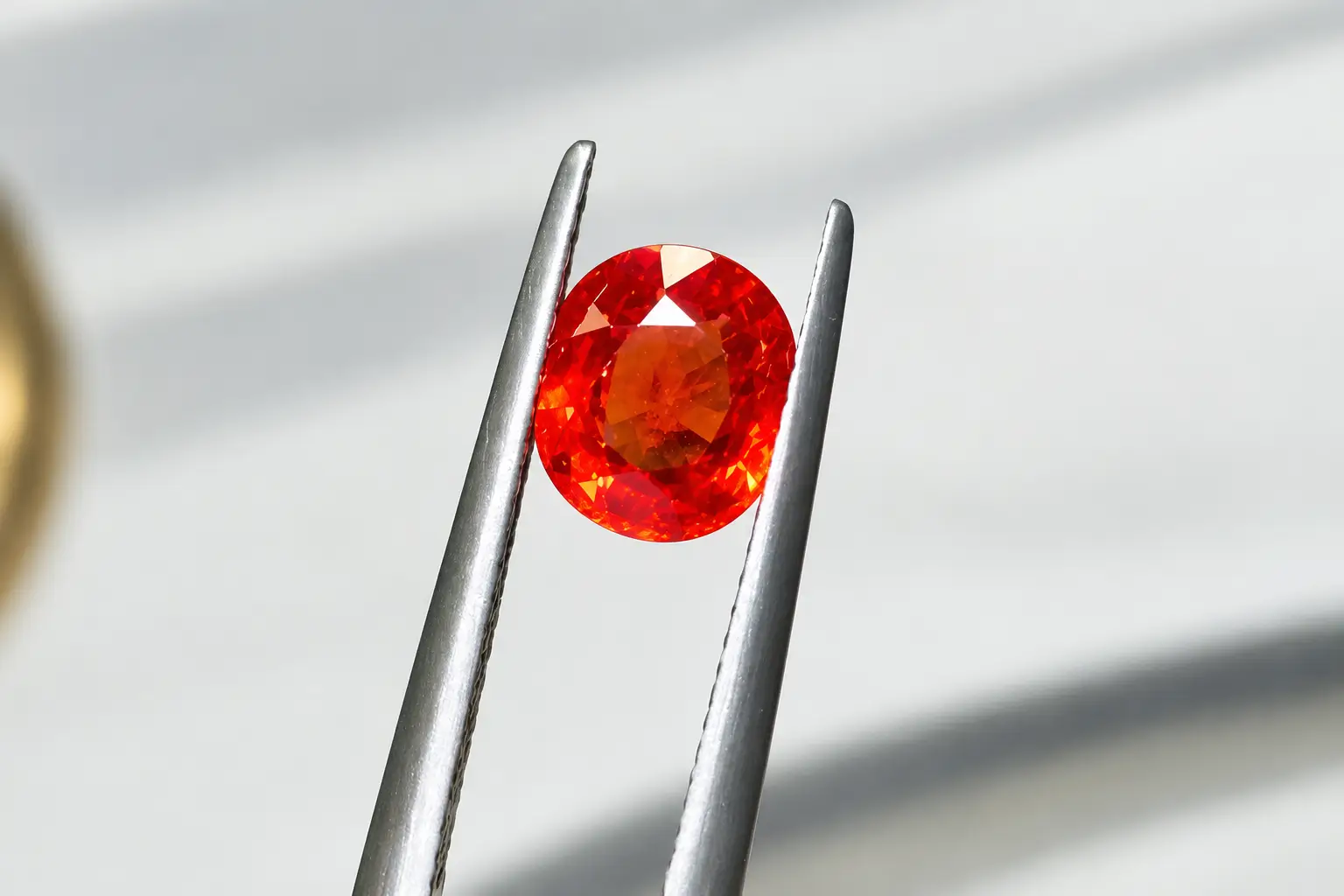
- Padparadscha-colored sapphires
- Some blue sapphires
- Some rubies
Beryllium should not be viewed simply as an independent “yellow coloring element.” In many beryllium-diffused corundum gemstones, beryllium works together with other elements and defect states to produce color. The final color and its distribution depend on the original gemstone composition, treatment temperature, treatment time, and other treatment conditions.
When Did Beryllium Diffusion Treatment Emerge?
Beryllium diffusion treatment began to attract major attention in the gem trade in the early 2000s. In the early 2000s, gemological laboratories saw a large influx of pinkish-orange to orangy-pink sapphires that raised concerns about a new treatment.
Research soon confirmed that beryllium diffusion was being used to alter the color of corundum. Gemological institutions such as GIA then conducted systematic research into the treatment, helping the industry understand both its effects and the challenges involved in detecting it.
Rather than crediting a specific person with “inventing” the treatment in a particular year, it is more accurate to view beryllium diffusion as a treatment method that developed from earlier high-temperature diffusion techniques for corundum.
Can You Identify Beryllium Diffusion by Appearance?
Many people associate beryllium-diffused sapphires with darker color around the edges and lighter color toward the center. This feature is often called a rim, referring to the darker-colored area along the edge.
But the reality is more complicated.
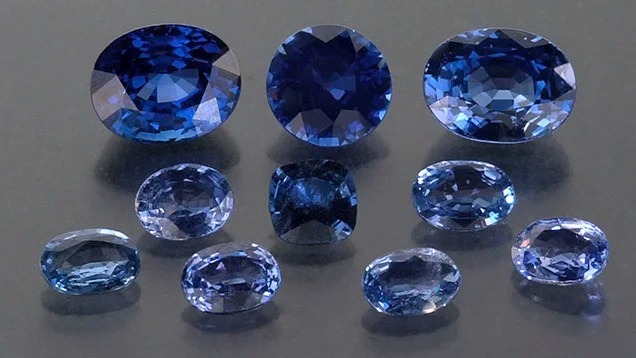
Not every sapphire confirmed to have undergone beryllium diffusion shows a clearly visible darker rim.
Some stones have a lighter center that may even look slightly “washed out.” This appearance can result from the cut, light transmission, and viewing angle. It does not necessarily indicate beryllium diffusion.
When diffusion remains mainly near the surface, a sapphire may show stronger color around the edges that gradually becomes lighter toward the center.
When beryllium penetrates deeper into the stone, the color may become more evenly distributed. The difference between the rim and center can become much less noticeable.
In such cases, the sapphire may look more natural, with no obvious visual signs of diffusion.
For this reason, relying only on a darker rim to identify beryllium diffusion can lead to a false conclusion.
Confirming beryllium diffusion requires more than looking at the color. Testing the elements in the gemstone and their related characteristics is key.
Beryllium diffusion cannot always be identified with the naked eye or even under a microscope.
How Is Beryllium Diffusion Detected?
Some gemstone enthusiasts try using a UV light to check for beryllium diffusion. However, UV light cannot detect beryllium diffusion. Fluorescence under UV light does not provide a reliable way to confirm or rule out this treatment.
Detecting beryllium diffusion requires a combination of gemological examination and laboratory testing. Different testing methods have different applications and limitations. The final determination should come from a professional gemological laboratory.
1. Fourier-Transform Infrared Spectroscopy (FTIR)
Some beryllium-diffused corundum can show treatment-related features in its infrared spectrum. Studies have reported characteristic peaks around 3046, 2628, and 3212 cm⁻¹.
However, these peaks should not be used on their own as a definitive test for all beryllium-diffused corundum. Laboratories need to evaluate the results together with the characteristics of the stone, testing conditions, and their own experience.
2. LA-ICP-MS and LIBS
LA-ICP-MS (laser ablation inductively coupled plasma mass spectrometry) and LIBS (laser-induced breakdown spectroscopy) can analyze trace elements in corundum.
Beryllium diffusion may leave detectable levels or patterns of beryllium within the gemstone. These techniques allow laboratories to look for elemental evidence associated with beryllium diffusion and assess whether the stone has undergone this treatment.
If you want to learn more about the role of UV light in gemstone testing, read How to Use a UV Light for Gemstone Testing: Fluorescence, Wavelengths, and Common Mistakes.
What Is the Difference Between Beryllium Diffusion and Traditional Heat Treatment?
Heat treatment is one of the most common treatments used to improve or change the color and appearance of corundum. Beryllium diffusion also uses high temperatures, but the two treatments are not the same.
The main difference is:
- Traditional heat treatment uses high temperatures to change the color state, defect structure, or other factors that affect color within the gemstone.
- Beryllium diffusion also uses high temperatures, but it introduces beryllium into the corundum crystal structure, where it affects the gemstone’s color.
Simply put, beryllium diffusion involves heat treatment and the introduction of an external element. This means that a sapphire confirmed as “No Heat” has not undergone beryllium diffusion treatment.
For buyers, it is important to know whether a sapphire has undergone beryllium diffusion. A description such as “heated” or “heat treated” alone does not provide enough information.
Is Beryllium-Diffused Sapphire Jewelry Safe to Wear?
Beryllium is a toxic element, so many buyers may wonder whether wearing beryllium-diffused sapphire jewelry could pose a health risk.
The answer depends on several factors, including the toxicity of the element itself, its concentration and form, and how a person comes into contact with it.
In beryllium-diffused sapphire, beryllium is typically present in trace amounts within the crystal structure. It is not present as free metal or as a soluble beryllium compound.
Under normal jewelry-wearing conditions, the beryllium in the gemstone does not create the same type of exposure as inhaling beryllium dust or coming into contact with certain industrial beryllium compounds.
Therefore, the mere presence of beryllium in a treated sapphire does not by itself establish a health risk from normal jewelry wear.
For sapphires that have undergone proper treatment and are normally worn as jewelry, there is currently insufficient evidence to indicate a specific health risk to ordinary wearers simply because the gemstones contain trace amounts of beryllium.
Why Must Beryllium Diffusion Be Disclosed?
Accurate treatment disclosure helps keep the gemstone market transparent. It also protects honest sellers and helps buyers avoid paying too much because of inaccurate treatment descriptions.
Beryllium diffusion should not be hidden behind vague terms such as “heated,” “enhanced,” or “optimized.” There are two main reasons:
- It changes the gemstone’s color and the conditions responsible for that color: Beryllium diffusion introduces an external element into the corundum crystal and changes the conditions that produce its color.
- It can affect market value: A beryllium-diffused sapphire may have a significantly different market value from an untreated sapphire or a traditionally heat-treated sapphire of otherwise similar appearance and quality.
If a sapphire is submitted to GUILD Gem Lab for testing, the laboratory report will state whether the stone shows evidence of beryllium treatment based on the test results.
For example, a report may use wording similar to:
Indication of thermal enhancement. No indication of beryllium treatment.
(LA-ICP-MS / LIBS tested)
or:
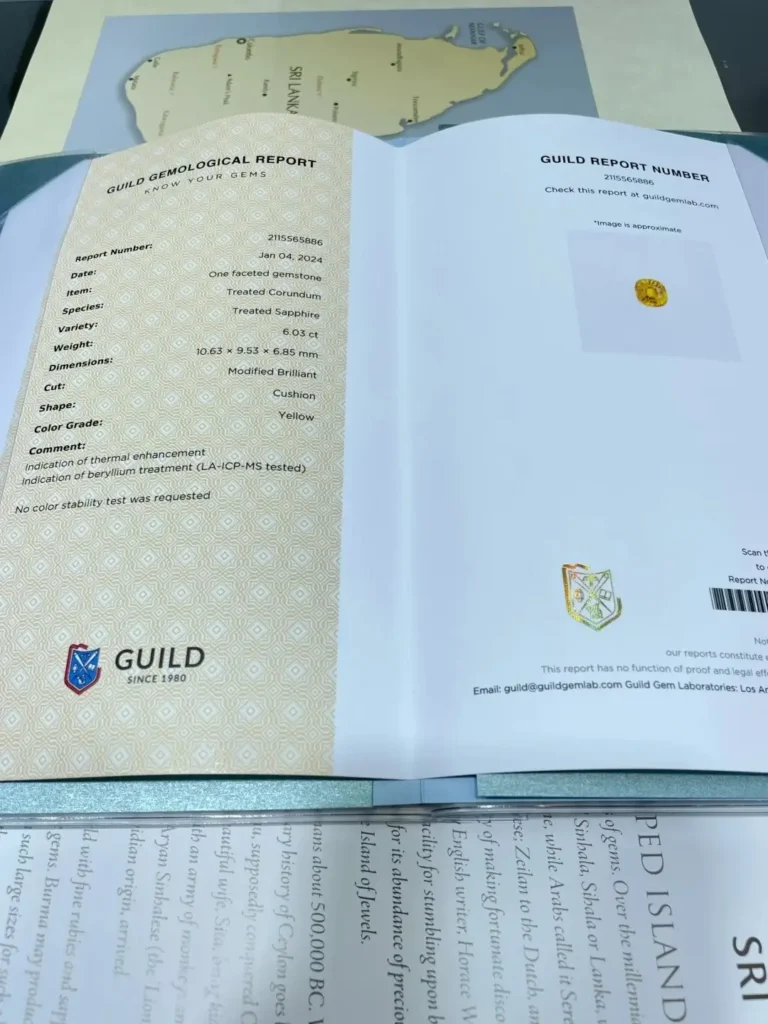
Indication of thermal enhancement. Indication of beryllium treatment.
(LA-ICP-MS / LIBS tested)
Jewea’s Takeaway
When buying a sapphire, vivid color matters, but the treatment matters too.
Beryllium diffusion does not mean a gemstone is not worth buying. If you are drawn to the rich color of a yellow sapphire, ask for a gemstone report and make sure you understand its treatment history. This helps you avoid paying a premium for a stone that is not what you thought you were buying.
Our advice: Learn first, compare carefully, and then decide. Know exactly what you are buying.