Jade Chain Carving: The Art of Creating Movable Interlocking Jade Chains
In our previous article, The Art of Jade Carving: Understanding Machine-Carved and Hand-Carved Jade Types, we explored the differences between machine-carved and hand-carved jade. Today, we turn our attention to one of China’s most remarkable traditional hand-carving techniques — Jade Chain Carving.
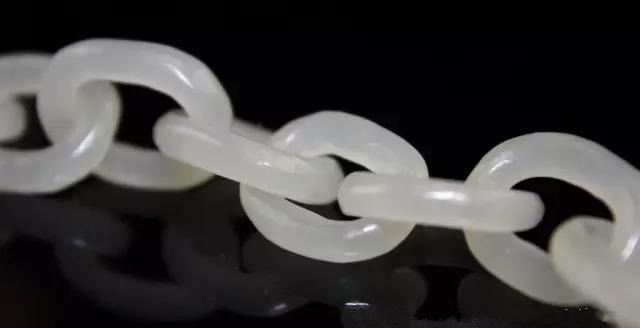
Unlike ordinary jade jewelry, Jade Chain Carving transforms a single piece of solid jade into delicate, freely moving chains without any cutting, joining, or assembly.
In this article, we will explore the history, craftsmanship, and techniques behind this unique jade carving art, from its origins to the intricate process of creating movable jade chains.
The History of Chinese Jade Chain Carving
Jade Chain Carving (Lian Zi Huo) is one of the most sophisticated hollow-carving techniques in traditional Chinese jade art. Its technical foundation can be traced to ancient jade-working methods, including drilling, openwork carving, and hollowing. Building on thousands of years of jade-working traditions, jade artisans gradually developed the ability to carve a single piece of jade into delicate, interlocking rings that move freely while remaining part of the original material.
Shang Dynasty: Early Interlocking Jade Techniques
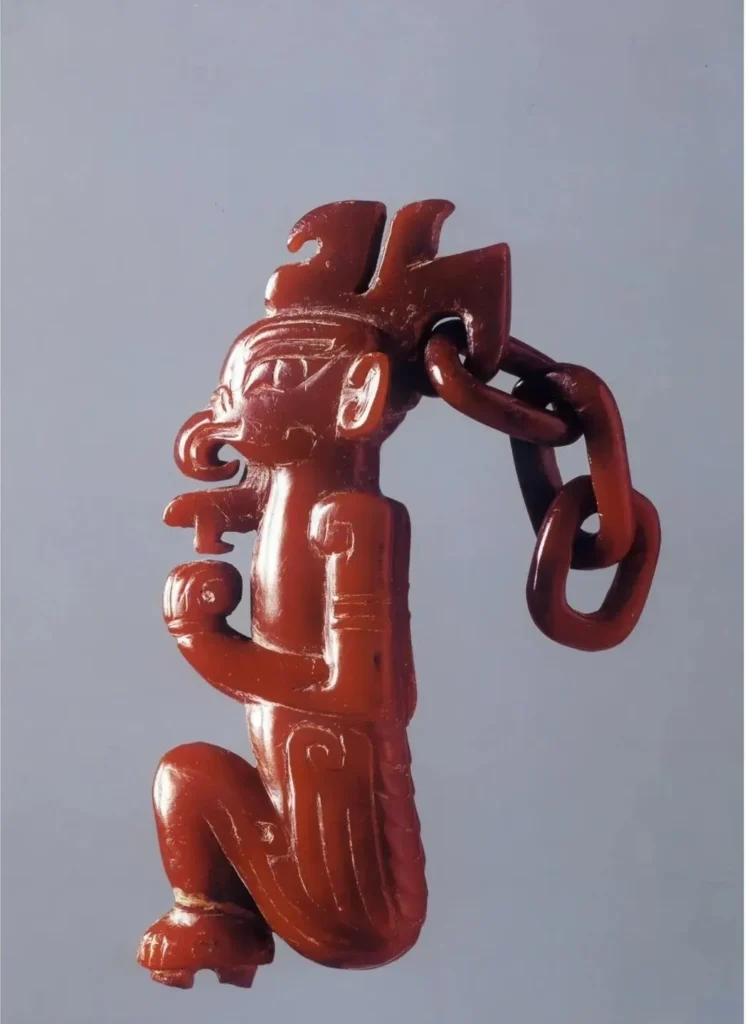
The Shang Dynasty Yuyuren Jade Figure (Jade Winged Figure), excavated in Xin’gan County, Jiangxi Province, is recognized as one of the earliest known examples of movable interlocking jade artifacts. Although the carving appears relatively simple and rustic, its interlocking design had already taken shape, reflecting the distinctive style of the Shang Dynasty.
Warring States Period: Complex Interlocking Techniques
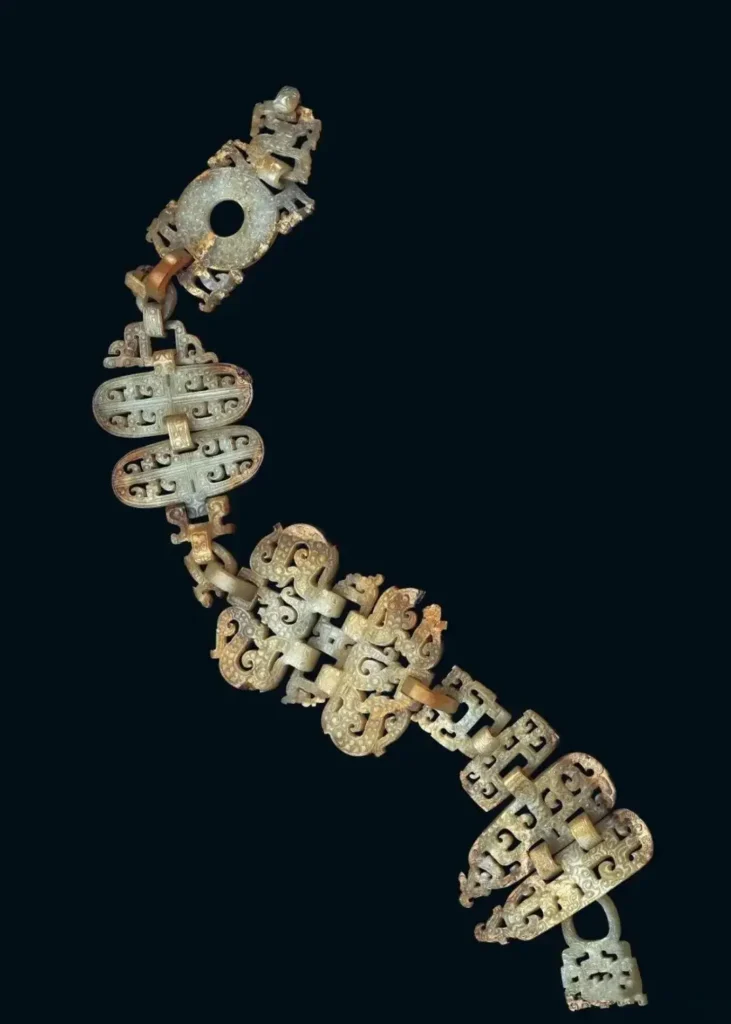
During this period, artisans refined openwork and interlocking techniques. The famous Warring States Multi-Segment Jade Pendant with Dragon and Phoenix Motifs consists of five jade sections. Through intricate carving, artisans created connected segments featuring dragons, phoenixes, coiled dragons, and mythical beasts. Its detailed patterns reflect the precision of ancient jade craftsmanship.
Song Dynasty: Refinement of Jade Carving Techniques
During the Song Dynasty, Yangzhou jade carving developed toward more delicate and refined decorative works. Jade objects such as incense burners, vessels, and floral ornaments became increasingly diverse and sophisticated. These advancements in hollow and openwork carving helped refine the interlocking techniques that later contributed to the development of Jade Chain Carving.
Ming and Qing Dynasties: The Maturity of Jade Chain Carving
A Qing Dynasty text, Chun Cao Tang Ji, describes the intricate structure of a Song Dynasty jade pagoda from Yangzhou:
“At the top of the pagoda were interconnected chains linking the upper tiers, arranged in perfect order.”
Artisans carved these interconnected chains directly from the original jade material. They shaped numerous small rings into a continuous structure within the piece itself. Known as Jade Chain Carving, this technique requires exceptional precision and control.
Through the Ming and Qing dynasties, Jade Chain Carving continued to develop and became one of the defining achievements of Yangzhou jade carving. Its delicate structures, precise craftsmanship, and natural movement represent the refinement of traditional Chinese jade art.
The Types and Masterpieces of Jade Chain Carving
In jade art, Jade Chain Carving is often used as a decorative and functional element in vessels and ornamental jade pieces. Based on structural complexity and the number of chain strands, it falls into three main categories:
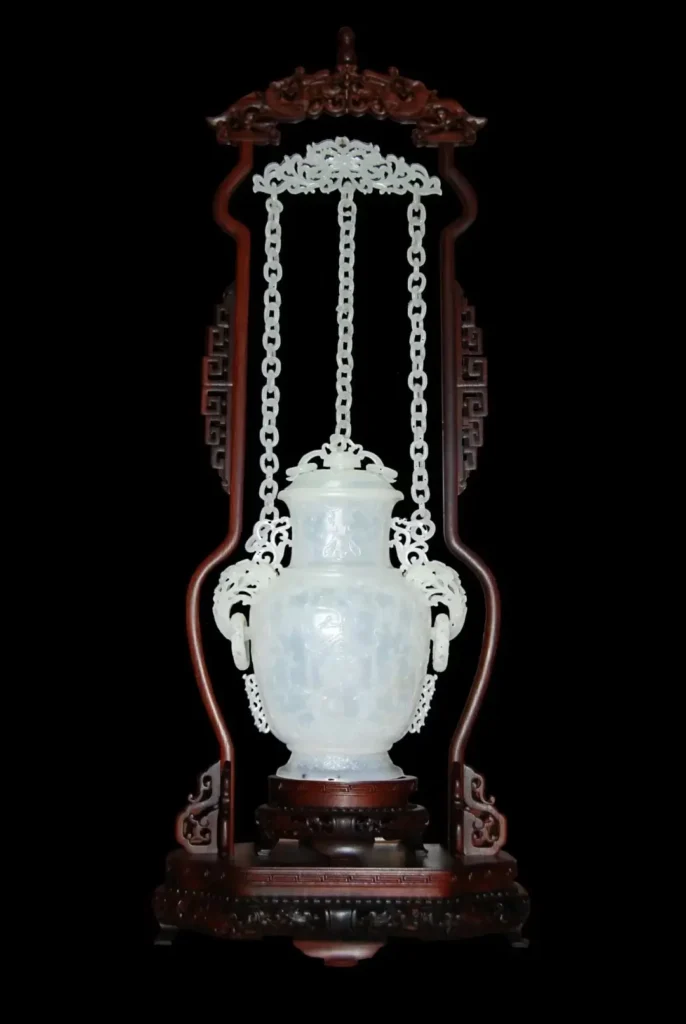
- Single Chain: A single continuous chain of movable interlocking rings. This form frequently appears in smaller jade pendants, ornaments, and vessel handles.
- Double Chain: Two parallel chains arranged symmetrically, creating a balanced, dynamic structure. This style commonly enhances the handles or suspended elements of jade vases and incense burners.
- Multi-Chain: A complex structure formed by three or more interconnected chains arranged in layered or three-dimensional patterns. This technique typically elevates large-scale display pieces, such as jade pagodas and lamps.
The jade carving shown above, created by master jade carver Liu Chaoguo, showcases the complexity and precision of Multi-Chain Jade Chain Carving.
White Jade Five Elements Pagoda
Created by the Yangzhou Jade Factory in 1986 and now housed in the China Arts and Crafts Museum, the White Jade Five Elements Pagoda represents one of the most sophisticated applications of Multi-Chain Jade Chain Carving.
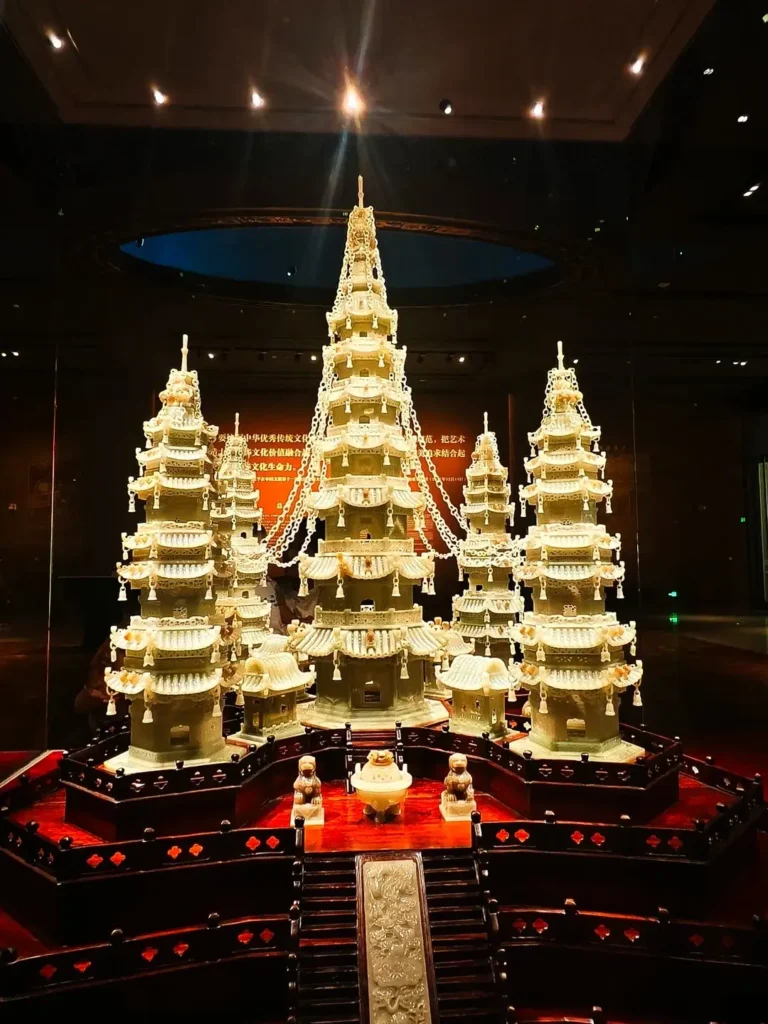
The entire piece consists of 956 hand-carved movable rings, intricately connected to create a complex structure with precise balance and movement.
- Between the fifth-tier eaves of the central pagoda, eight chains made from 440 delicate rings extend in four directions, connecting the central tower with the third-tier eaves of the four surrounding pagodas. Together, they form a unified architectural structure.
- At the top of the central pagoda, another eight chains composed of 204 rings spiral upward to connect with the jade gourd finial. The four surrounding pagodas each feature six chains made from 312 rings, linking the pagoda tops with their main bodies.
White Jade Double Bottle with Inner Chain
Among the most challenging examples of Jade Chain Carving, the White Jade Double Bottle with Inner Chain, created in 1988, stands as a remarkable achievement in traditional jade craftsmanship.
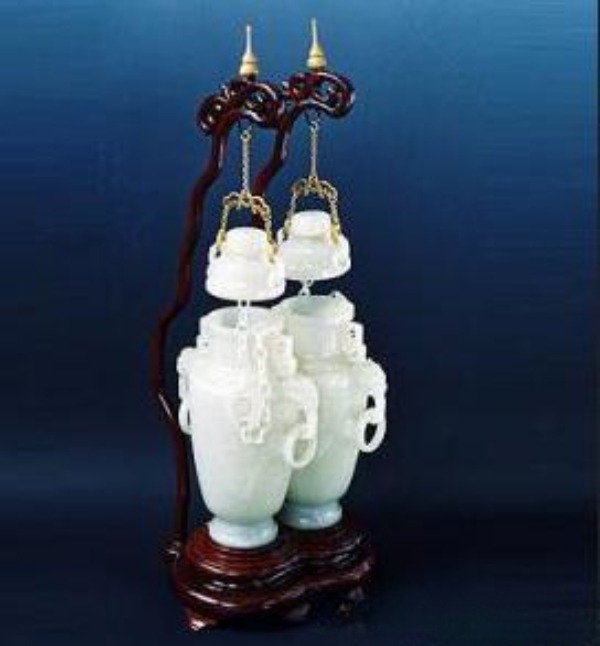
While Jade Chain Carving usually accentuates the exterior of a vessel, this extraordinary piece pushes the technique to its limits by carving a fully movable chain inside the bottle itself.
- Using the specialized internal hollowing technique (known as tao tang), the chain emerges directly from the interior of the solid jade block. The interlocking rings extend deep into the double bottle while remaining seamlessly anchored to the main structure.
- Artisans carved the chain together with the remaining inner jade material, forming a saddle-shaped structure. They then carefully lifted and suspended the finished chain through the narrow bottle opening. This process required precise control within a confined space, leaving almost no room for error.
The Craft Behind Jade Chain Carving: Techniques and Process
Jade Chain Carving is typically used on jade vessels and ornamental pieces, such as incense burners, vessels, pagodas, plaques, locks, and pendants. The chain structure usually serves as a decorative element within the overall design.
Unlike gold or metal chains, jade cannot be melted, reshaped, or assembled through cutting and joining. Jade Chain Carving is a subtractive process. Artisans carve each movable ring directly from a single piece of solid jade by carefully hollowing and removing excess material.
This technique requires exceptional carving skills, along with patience, precision, and the ability to make careful adjustments throughout the process.
The Four Key Steps of Jade Chain Carving
Even with today’s advanced technology and automated machinery, Jade Chain Carving still cannot be fully replaced by machines. Natural jade often contains uneven hardness and tiny internal fractures. Only an artisan’s experience, touch, and ability to adjust each carving movement allow this demanding traditional technique to continue.
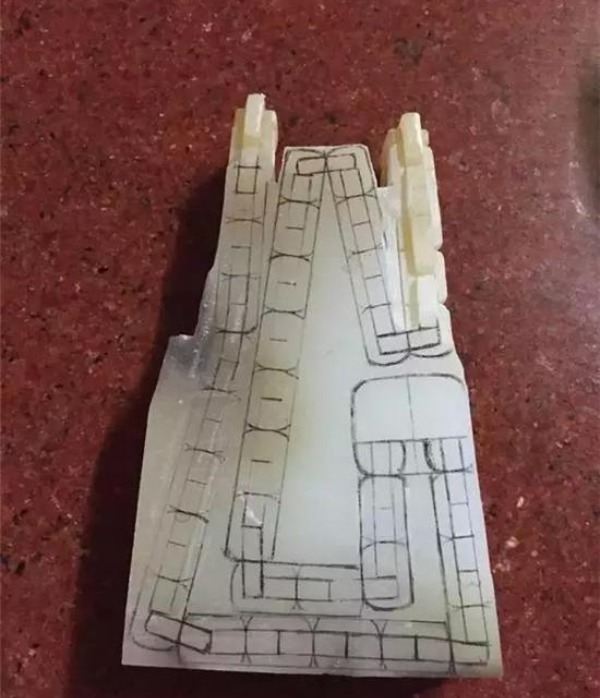
- 1. Material Selection and Chain Layout
- Selecting the Jade Material:
Artisans first examine the entire jade material and select areas with fewer fractures and impurities for the chain design. - Planning the Chain Structure:
They then shape the planned chain area into a cross-shaped framework. This early preparation helps maintain consistent thickness and size for each future ring.
- Selecting the Jade Material:
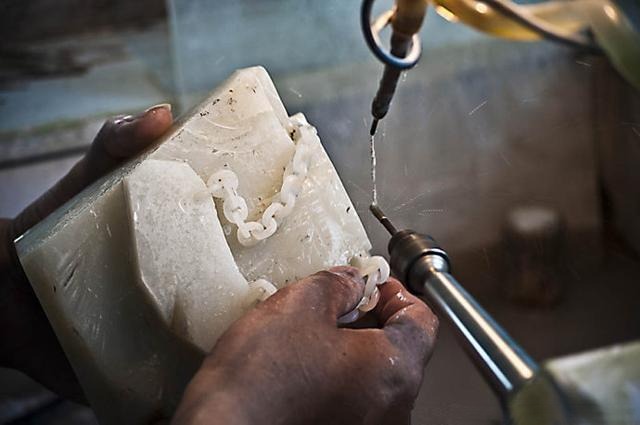
- 2. Hollowing and Ring Formation
- Removing Excess Jade:
Artisans carefully remove the surrounding jade material to reveal the basic outline of each chain ring. - Creating the Inner Ring Structure:
Using precisely sized round tools, they slowly carve out the inner openings of each ring. Each ring must maintain consistent thickness, with the inner and outer shapes carefully matched to ensure structural symmetry.
- Removing Excess Jade:
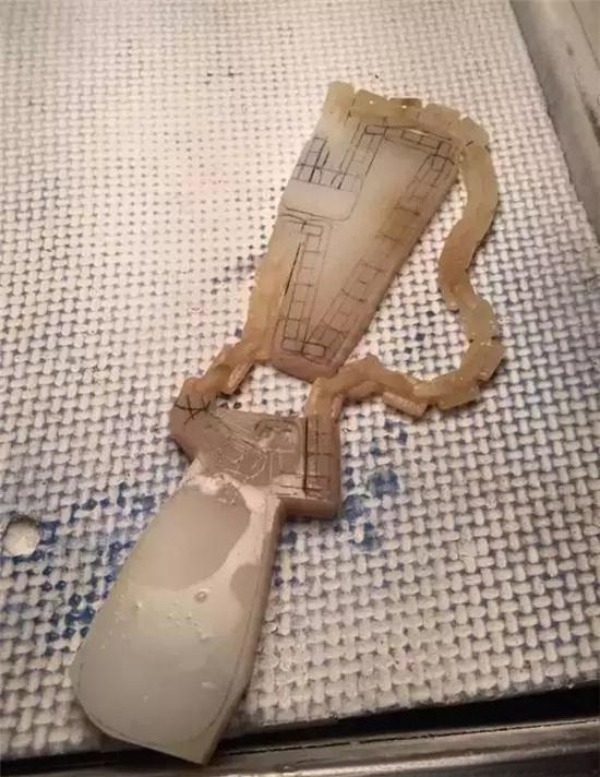
- 3. Separating and Freeing the Links
- Releasing the Links:
Using fine tools such as pointed chisels, they carefully remove the remaining jade between adjacent rings. This is one of the most delicate stages of the process, where even a slight error in tool control can damage the ring structure and ruin the entire chain. - Testing Movement from Multiple Angles:
Once the rings are released, they rotate and test the chain from different angles. If any section remains stuck, they make precise adjustments within the limited space until every ring moves freely.
- Releasing the Links:
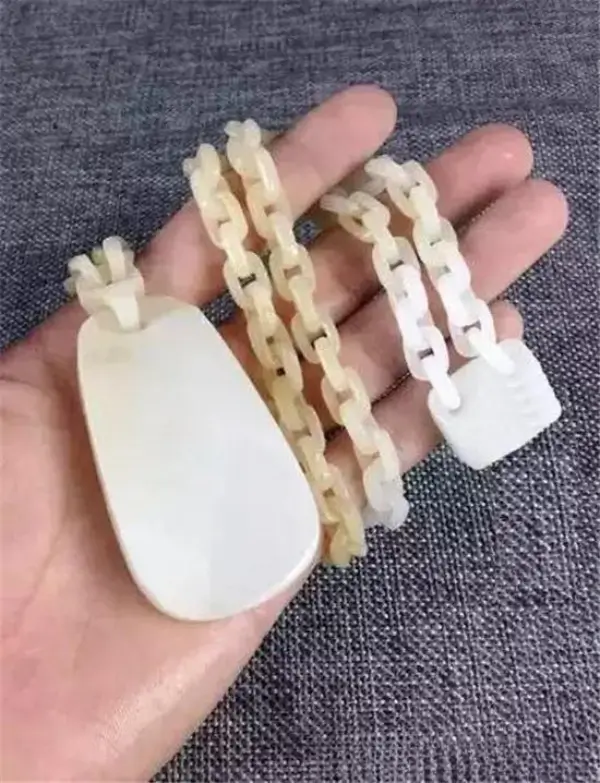
- 4. Final Refinement
- Artisans carefully refine each ring one by one. The finished chain must maintain proper jade thickness, consistent size and thickness, balanced symmetry, smooth inner surfaces, precise ring shapes, and free movement.
Jewea’s Perspective
The intricate art of Jade Chain Carving exists not to stand alone, but to enhance the beauty and elegance of the jade piece itself. It reflects a pursuit of balance, precision, and craftsmanship, transforming technical skill into artistic expression.
For generations, jade artisans have relied on patience, experience, and careful control to complete each delicate step. Even as technology continues to advance, the human touch behind this ancient craft remains irreplaceable.
← Have You Seen Thin-Walled Jade Vessels Only 0.5 Millimeters Thick?