Hetian Jade Flaws and Value: How Natural Characteristics Affect Price (Part 1)
In our previous introduction to Hetian jade basics, we briefly discussed how natural characteristics can influence a stone’s worth. In this guide to Hetian Jade Flaws and Value, we explore how different internal features affect quality, appearance, and market pricing.
Like humans, no piece of natural jade is perfect. Formed through millions of years of geological processes, Hetian jade often contains unique internal characteristics that tell the story of its formation. While some minor features add to the stone’s natural character, more significant internal features can greatly affect both visual appeal and market value.
We have categorized nine common natural characteristics found in Hetian jade and examined how each one influences pricing. This is Part 1, covering the first four: cotton inclusions, water lines, natural fractures, and fine internal fissures.
1. Cotton (Cloud-like Inclusions)
Cotton-like inclusions are among the most common natural characteristics found in Hetian jade, appearing across almost all varieties and sources of nephrite. In Chinese jade culture, these cloud-like white inclusions are commonly called “cotton” because their soft appearance resembles scattered fibers, clouds, or snow.
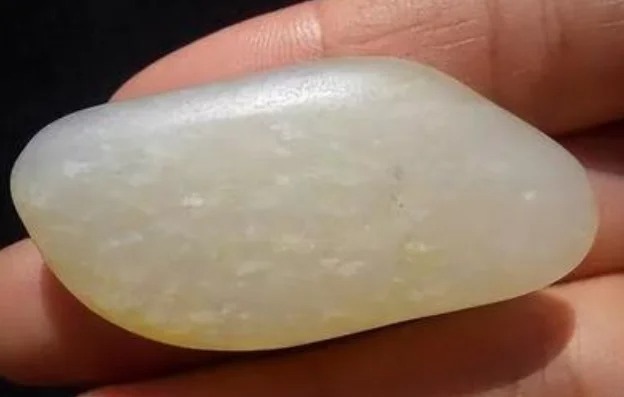
Formed by concentrated white mineral crystals within the stone, cotton can appear as tiny dots, flakes, cloud-like patches, or thread-like structures. Some are sparse and barely noticeable, while others form dense clusters that affect the stone’s translucency, texture, and overall visual appeal.
Impact on Price: The influence of cotton inclusions on market value depends largely on their size, density, and distribution. A few scattered inclusions within a carved piece usually have little impact on its beauty or price.
However, large areas of dense cotton in Hetian jade beads or broad exposed surfaces can significantly reduce visual quality and market value—unless an experienced carver transforms these natural features through Qiao Diao, a traditional Chinese carving technique that turns imperfections into artistic elements.
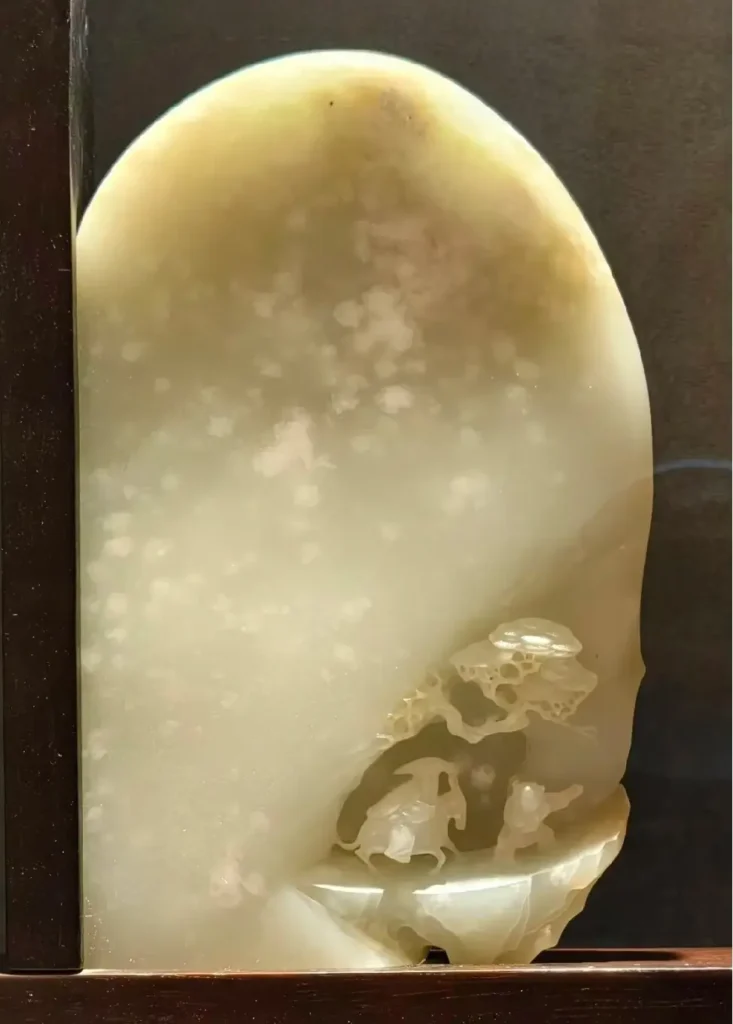
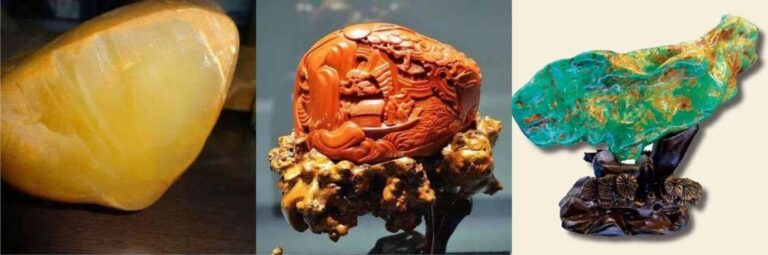
For example, in the classic landscape carving motif Feng Xue Ye Gui Ren (“A Traveler Returning Home Through Wind and Snow”), extensive white inclusions are transformed into falling snow, adding atmosphere, depth, and artistic character to the artwork.
Such artistic solutions require exceptional craftsmanship and often involve substantial carving fees. Without the budget for master-level work, heavily clouded rough material is generally best avoided.
Gemology Tip: Be cautious of sellers who claim that cotton inclusions will disappear with daily wear. These mineral features formed through geological processes over millions of years will not simply vanish after years of handling. At most, long-term contact and surface polishing may create a subtle sheen that slightly changes how light interacts with the stone, making some small inclusions less noticeable from certain angles. This is only a change in appearance—not the inclusions disappearing.
2. Water Lines (Translucent Linear Features)
A water line is a translucent, thread-like band that appears inside Hetian jade. During geological formation, pressure and deformation can create zones where the mineral structure becomes more regularly aligned, creating areas of increased translucency within the stone.
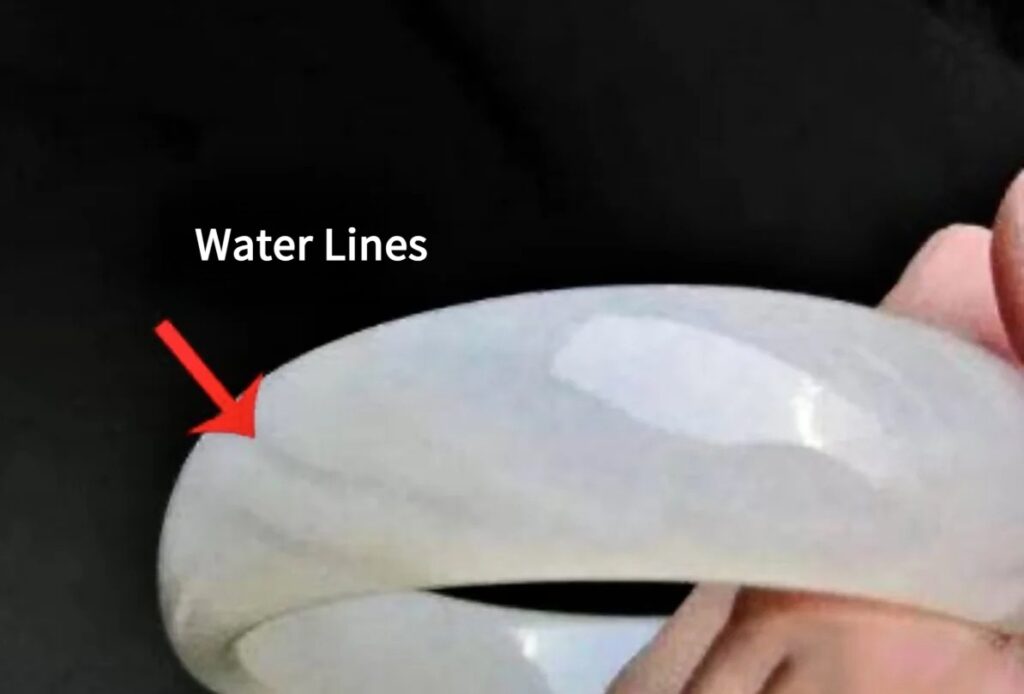
Many beginners encounter the claim that water lines only occur in Qinghai nephrite. This is a common misconception. Qinghai material does often contain more visible water lines, and some pieces show broad, interconnected patterns that resemble a river map inside the jade. However, these features also naturally occur in Hetian mountain material (Shan Liao), river seed material (Zi Liao), and Russian nephrite. Water lines reflect the jade’s internal structure—they cannot be used alone to determine geographic origin.
The jade surrounding a water line often has a finer texture. This is not simply a marketing explanation. The geological pressure that forms water lines can also compress the surrounding mineral structure, making it denser and more compact.
Impact on Price:
Water lines usually have a much smaller effect on value compared with major structural flaws. During carving, experienced craftsmen often cut along water lines, minimize their visual presence, or incorporate them into the design.
For larger pieces such as bangles or pendants, some water lines may be impossible to avoid. Buyers do not need to reject a piece simply because it contains a few subtle lines. Light water lines rarely have a major impact on beauty or price. Only jade with dense, widespread water lines experiences a significant reduction in market value.
3. Natural Fractures (Lie, 裂)
Among experienced jade collectors, there is a saying: “Nine out of ten seed jades have cracks.” This does not mean every crack damages the jade. Instead, it reflects the natural journey of river seed jade (Zi Liao). After millions of years of tumbling, collisions, and erosion in riverbeds, many seed jades carry these marks as evidence of their formation history.
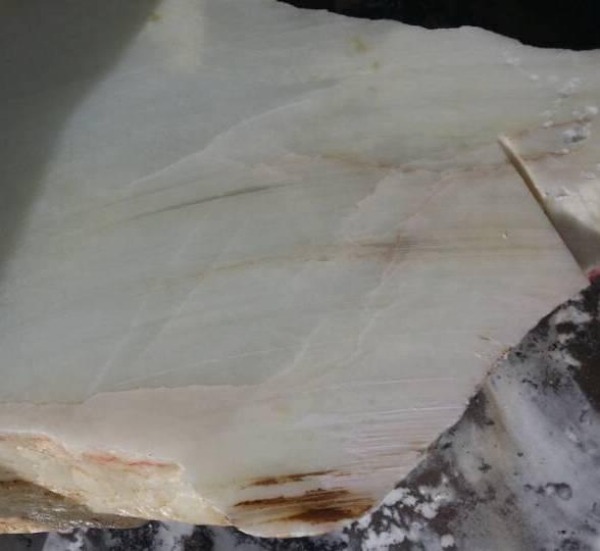
Mountain material (Shan Liao) can also contain internal fractures. During modern mining and extraction, internal stress may affect the material, leaving fractures hidden inside the stone.
Impact on Price:
Mountain jade is usually found in larger blocks, allowing cutters to remove heavily fractured areas during the initial cutting process. As a result, finished mountain jade pieces rarely show extensive cracking.
Seed jade is different. Most seed jade pieces are smaller, rounded forms, making it difficult to avoid every crack without sacrificing valuable material. Small, shallow surface fractures usually have little effect on appearance or price. For deeper fractures, experienced carvers often use the design to avoid or minimize them, making them difficult to notice in the finished piece.
However, if a small raw seed jade piece contains deep fractures that prevent further carving, its value can decrease significantly.
Gemology Tip: Many buyers worry that visible fractures mean Hetian jade may break easily. In reality, the impact of a fracture depends on its location, depth, and whether it has naturally healed.
Shallow fractures formed during geological processes often become naturally stabilized over time. Unless a fracture reaches a thin or structurally vulnerable area of a carving, it usually does not affect the durability of a finished piece during normal wear.
4. Fine Internal Fissures (Liu, 绺)
In Chinese jade terminology, Liu and Lie are often mentioned together, but they describe different structural conditions.
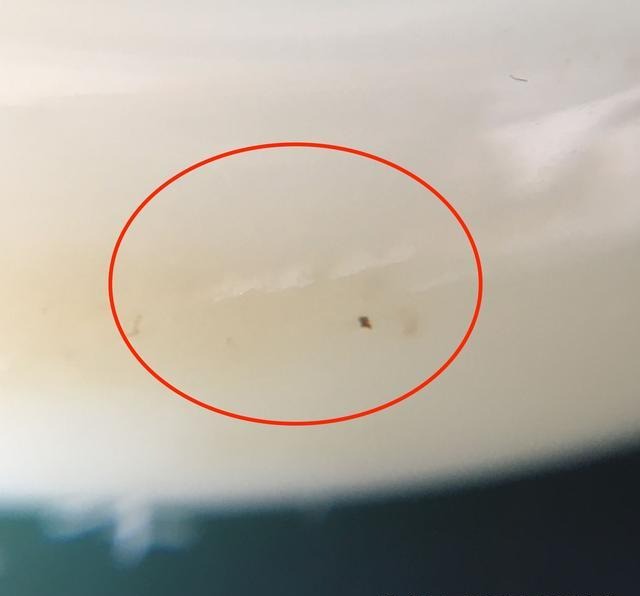
A Liu refers to fine, shallow internal fissures formed when jade experiences external forces during geological formation, mining, or later impact. Unlike a true fracture, these lines have not fully separated the material.
Simply put:
- Fractures (Lie): Larger and deeper breaks that may extend toward the surface and have a greater impact on structural stability.
- Fine Fissures (Liu): Smaller, shallower internal lines that remain closed within the jade.
Impact on Price
Fine fissures may appear on the surface or remain hidden inside the stone, only becoming visible under strong transmitted light. They usually do not affect the durability of a well-crafted Hetian jade piece, but they can significantly influence market value because collectors often prefer cleaner material.
For example, a high-quality white seed jade (Bai Yu Zi Liao) bangle may have excellent whiteness, fine texture, and a smooth, oily luster under natural light. However, when examined under a flashlight, multiple internal fissures may become visible, causing its value to be much lower than a visually flawless piece with similar quality.
Jewea’s Perspective
Hetian jade is valued for its toughness, fine texture, and warm, oily luster. With its soft appearance yet strong inner structure, jade has long represented the qualities of the traditional Chinese gentleman—gentle on the outside, resilient within.
Every piece of natural jade is a unique creation of nature. A piece that combines pure whiteness, fine texture, a smooth oily luster, and no visible imperfections under normal viewing conditions is extraordinarily rare. Even when price is not a consideration, encountering such material is a matter of great fortune.
Natural jade, like people, is never completely without imperfections. Learning to appreciate its beauty while understanding its natural characteristics is an essential part of the jade collecting experience.
← Hetian Jade Flaws and Value: How Natural Characteristics Affect Price (Part 2)