What Does “Oiliness” Mean in Hetian Jade? The Most Misunderstood Quality Explained
If you’ve spent any time exploring Hetian jade, you’ve likely encountered the term “oiliness” (you xing). It’s one of the most frequently used—and most misunderstood—descriptions in the jade world.
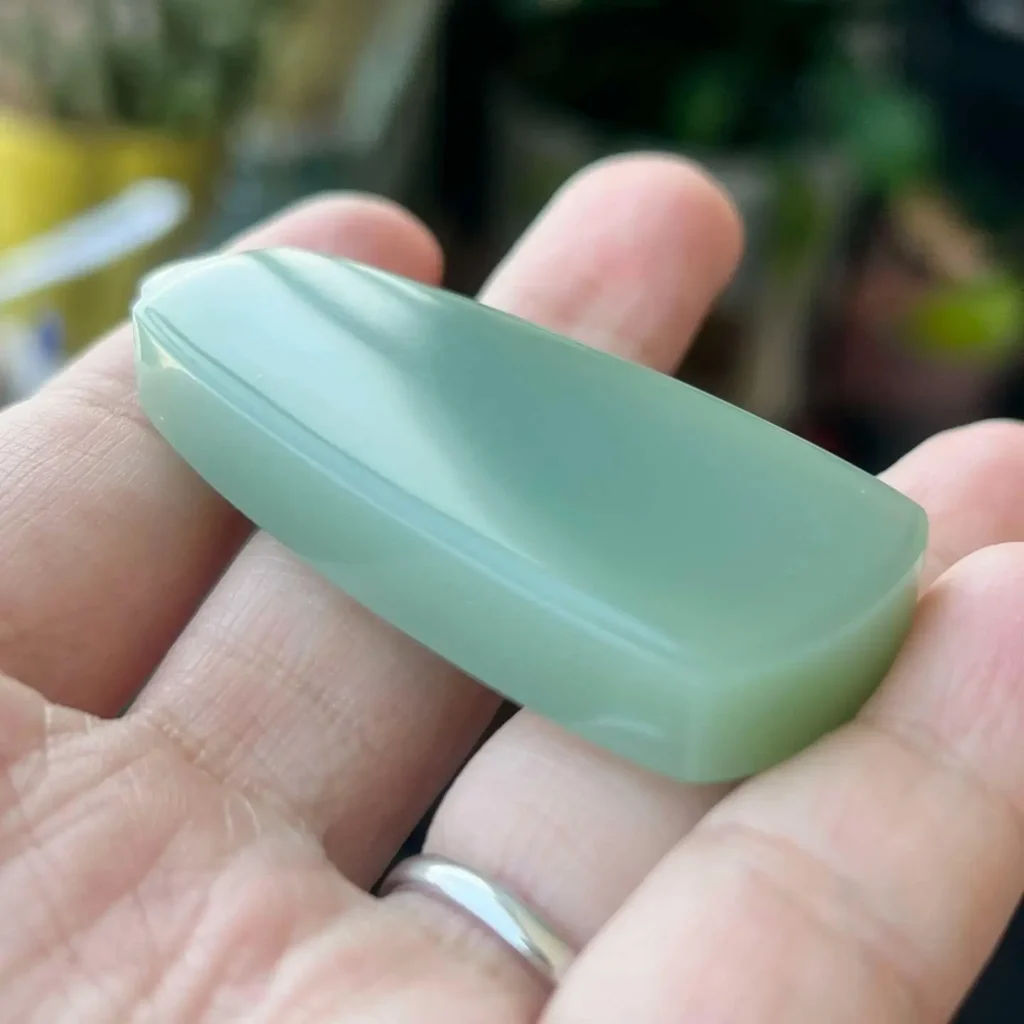
In gemological terms, Hetian jade exhibits what is known as a greasy luster, a soft, diffused sheen caused by its unique mineral structure. When dealers describe a piece as exceptional, they often praise its fineness, maturity, and that elusive sense of “oiliness.” Seasoned collectors, meanwhile, use more evocative language—describing jade that seems to feel almost alive in the hand, with a subtle, velvety resistance rather than a slick surface.
In a previous guide, The Soul Within White Hetian Nephrite Jade, we explored how whiteness, texture, fineness, and luster interact. In this article, we focus exclusively on Hetian Jade Oiliness—unpacking what it truly means, why it matters, and why so many interpretations miss the point.
The Dual Nature of Hetian Jade Oiliness: Luster vs. Tactile Feedback
I recently came across a social media post mocking the phrase “pushing out oil with the hand.” The user joked, “Does the jade turn into an oil press the moment you touch it?” To me, this critique suggests a very surface-level understanding of what “oiliness” (You Xing) actually signifies in fine nephrite.
In the professional jade world, oiliness describes two distinct attributes: visual luster and tactile sensation.
1. Visual Luster: An Optical Phenomenon
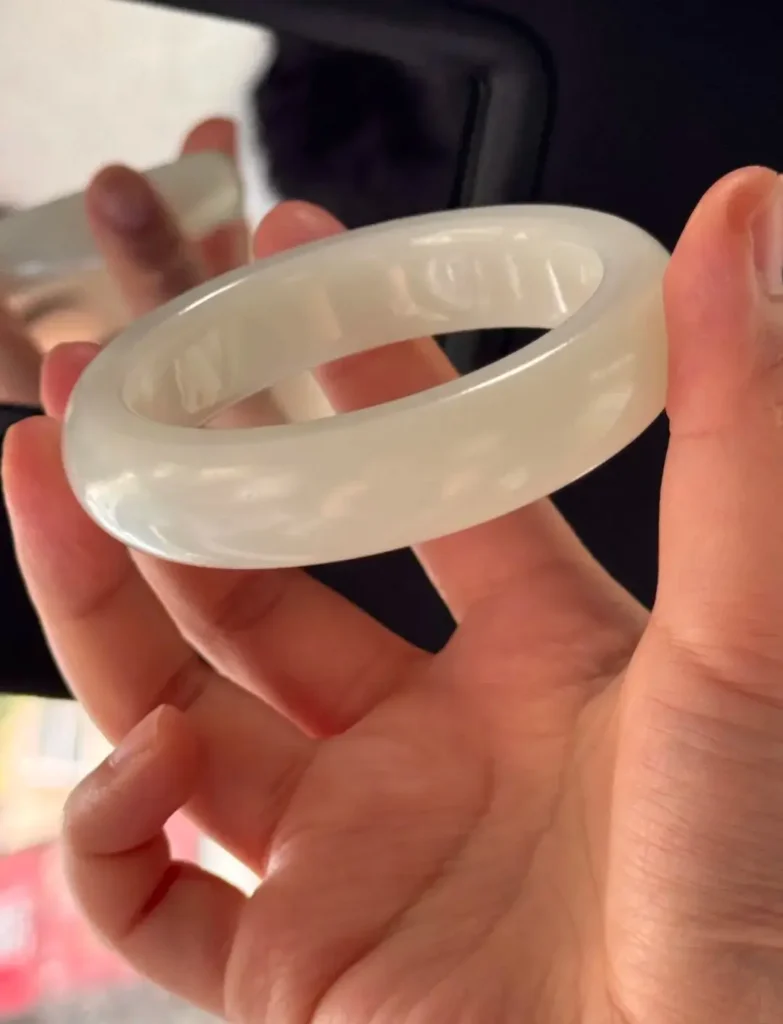
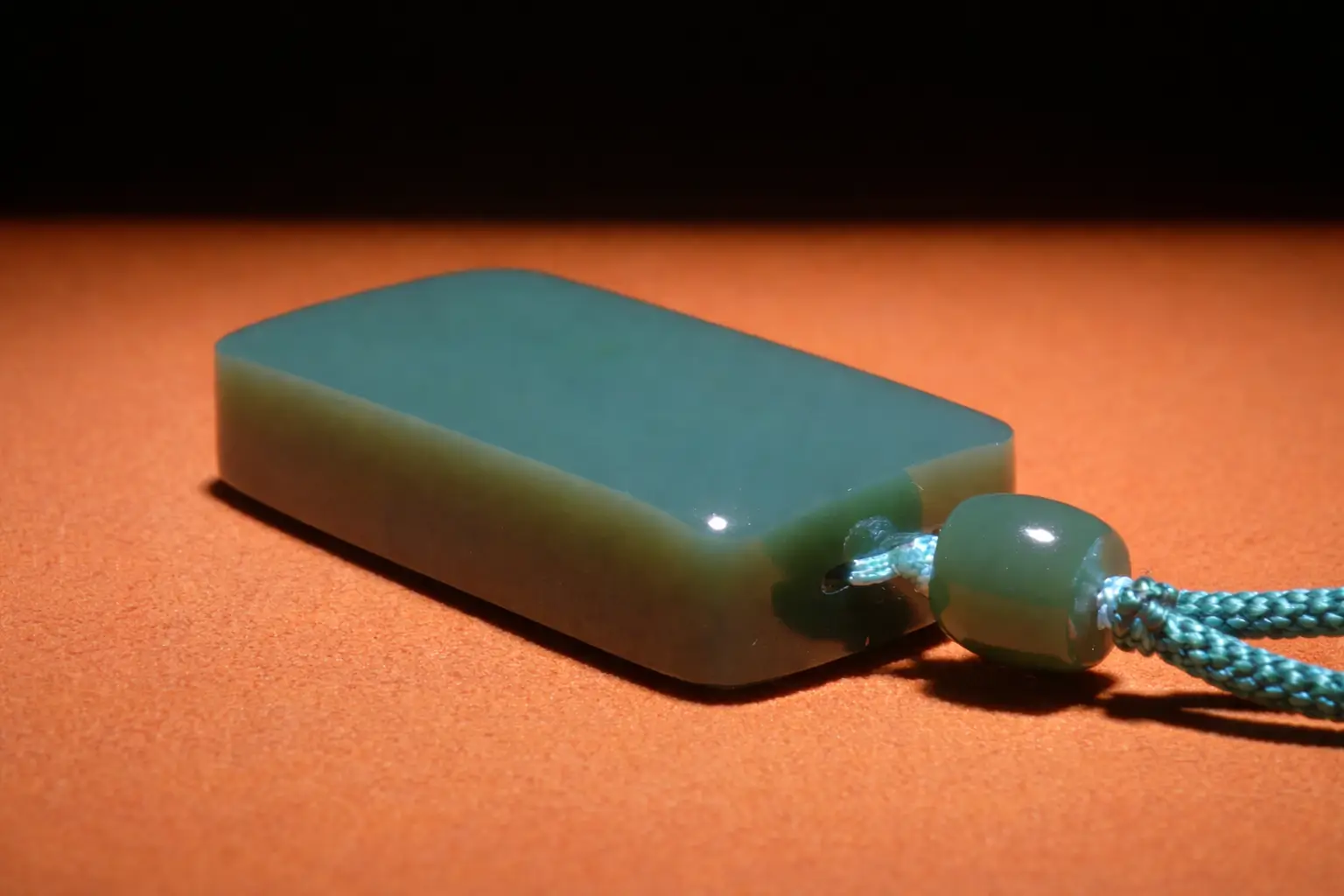
When we say Hetian jade has a “greasy luster,” we aren’t suggesting the stone secretes actual fat. This is an optical effect caused by the stone’s microcrystalline, interlocking fibrous structure. Because the mineral grains are so tightly interwoven, a properly polished surface doesn’t produce a sharp, mirror-like reflection like glass or diamond. Instead, it creates a soft, diffused glow—much like the way light scatters across the surface of solid grease. In short, “oil” is a metaphor for how the stone reflects light; it is a matter of physics, not chemistry.
2. Tactile Feedback: The Science of “Damping”
While “oiliness” refers to the look, the phrase “pushing out oil” describes the feel. To understand this, think about writing with a high-quality fountain pen. Every nib creates a different level of friction against the paper, a sensation enthusiasts call “damping.”
A superior pen offers a perfect balance of resistance—not so scratchy that it stutters, but not so slippery that you lose control of the stroke. The “oily” feel of Hetian jade is remarkably similar. It is the result of the perfect amount of friction between your skin and the stone’s surface.
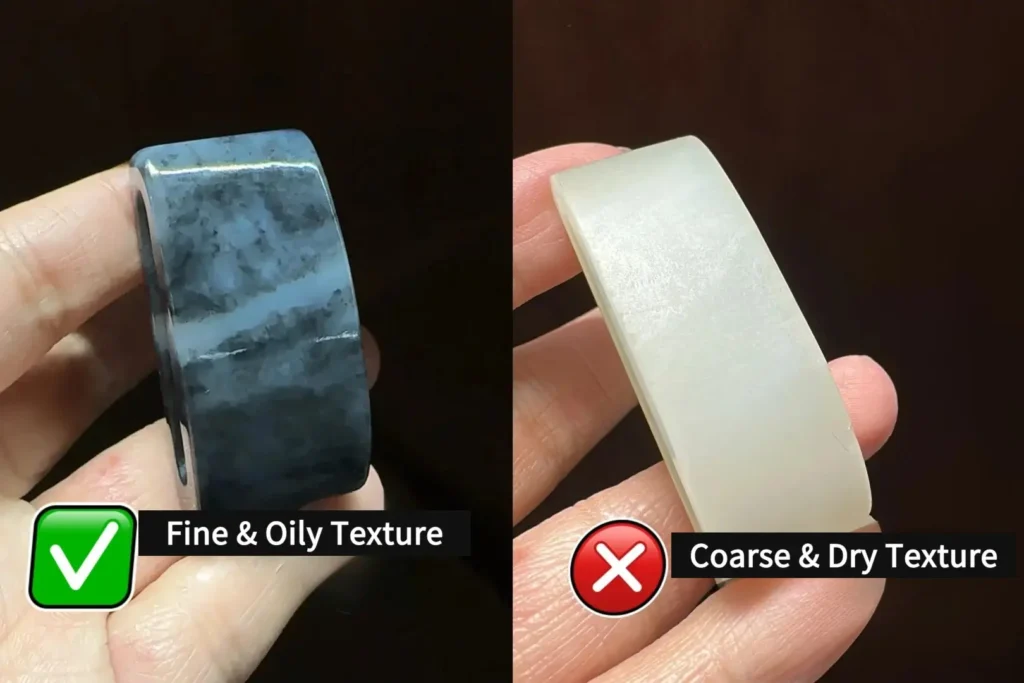
- High Friction: The stone feels dry or “astringent” to the touch.
- Zero Friction: The stone feels glass-like and overly slick, lacking “soul.”
- The “Oily” Sweet Spot: This is the sensation of “pushing out oil.” When the stone’s texture is exceptionally fine, your finger glides with a subtle, silky resistance.
3. Surface Treatment vs. Natural Material Response
You will occasionally find vendors who rub actual mineral oil onto a stone to fake this quality. However, the sensation is inevitably wrong—it feels artificially greasy and lacks that signature “damping” resistance. Furthermore, once that oil evaporates, the stone’s true, dry nature is revealed.
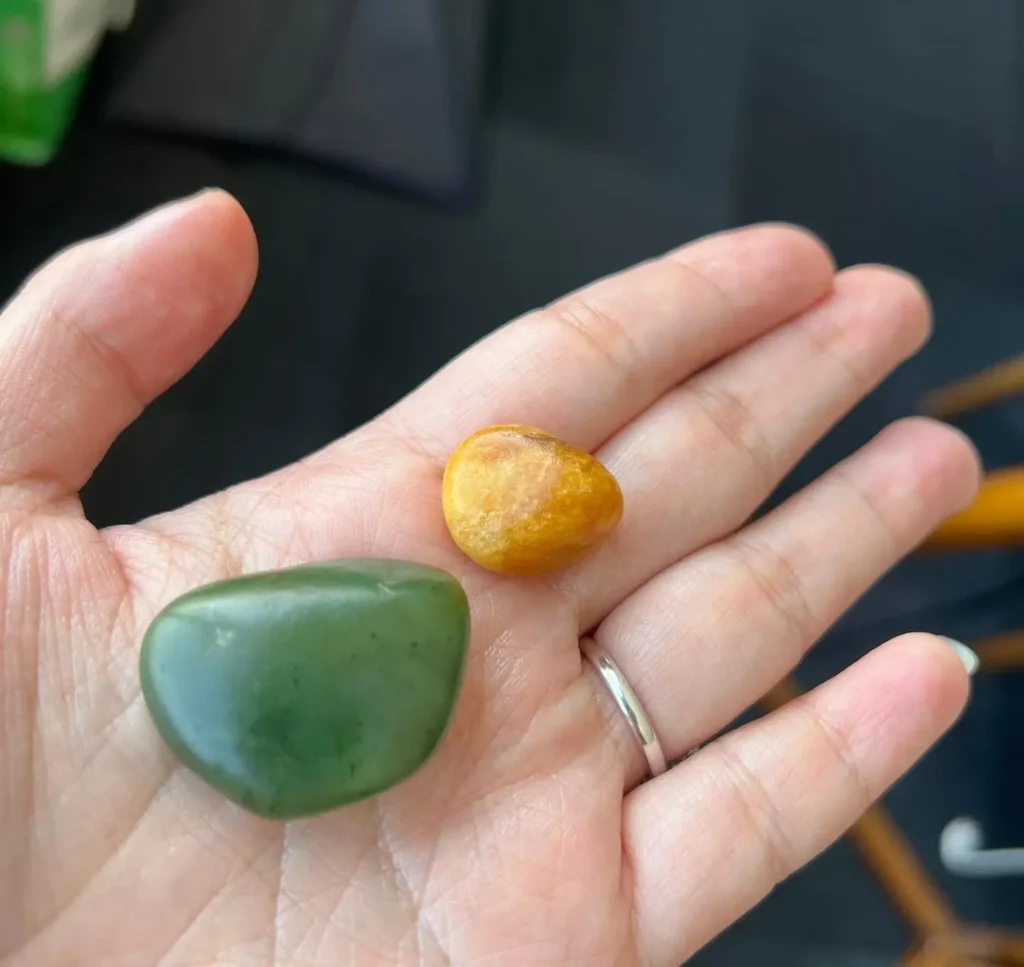
Authentic Hetian Nephrite Jade derives its tactile qualities from its internal density. A piece with superior oiliness is like a “Gentleman among Gemstones”—it remains warm and mellow whether you handle it every day or leave it untouched for decades.
Defining Hetian Jade Oiliness: What Makes a Stone Feel “Oily”?
Visually, almost all Hetian jade shows a greasy luster because of its mineral makeup. However, when a professional says a piece has “great oiliness,” they are primarily talking about the tactile feel—the physical response to your touch.
The Impact of Internal Density and Mineral Fineness
From a material science perspective, the oiliness of Hetian jade is driven by its internal density and interlocking crystal structure.
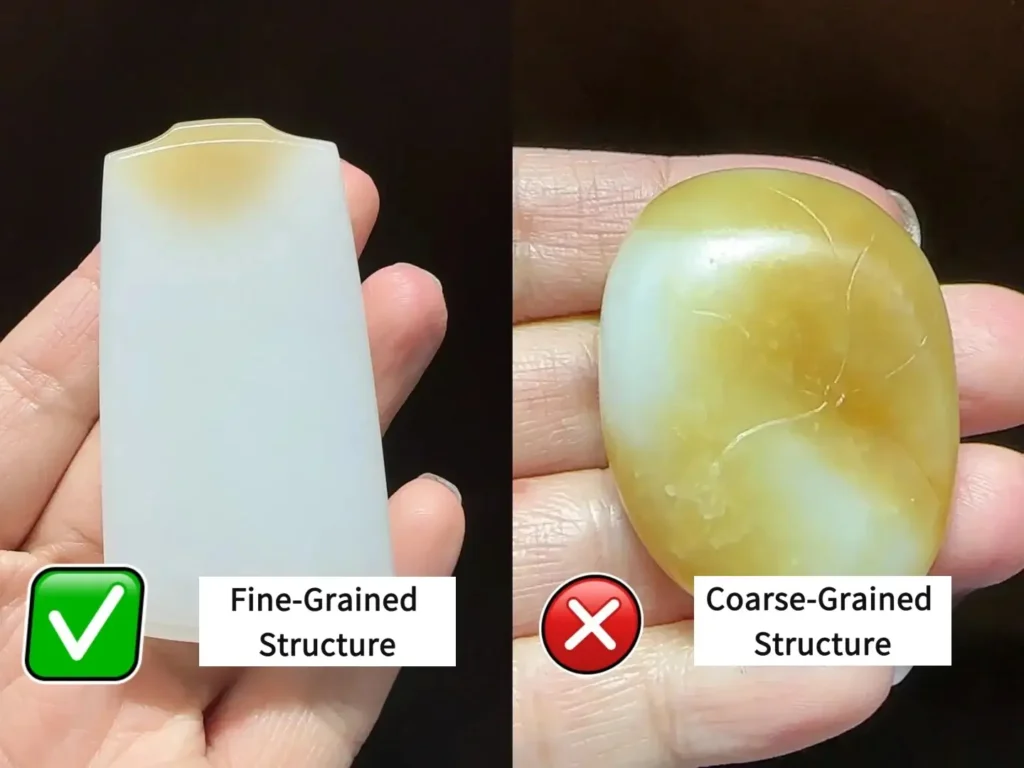
There is a common misconception that “Seed Material” (Zi Liao) is automatically oilier. In reality, the reason is physical: seed materials have been tumbled in riverbeds for geological ages. This prolonged mechanical abrasion acts as a natural “filter,” wearing away the loose, porous parts of the stone and leaving only the most compact and stable mineral core. Higher density directly correlates to better oiliness. This principle applies to all varieties—whether it is Seed Material, Mountain Material from Qinghai, or the “Powder Green” (Fen Qing) variety of Jasper. Any specimen with an ultra-fine internal structure will exhibit superior oiliness. Conversely, even a piece of river-worn material will feel dry and “chalky” if its internal structure remains loose or underdeveloped.
Evaluate the Stone, Not the Provenance
The takeaway for any serious collector is that provenance is not a substitute for structural evaluation. Do not let broad commercial categories like “Seed Material” or “Qinghai Jade” dictate your judgment. There are exceptional stones from mountain deposits and poor-quality stones from rivers. You are buying the actual mineral quality of the specific piece in your hand, not the marketing titles assigned by sellers.
How Professional Polishing Influences Surface Luster
Many collectors focus entirely on the quality of the carving while overlooking the finish. In reality, polishing is decisive; while carving defines the form, polishing defines the surface behavior—specifically how the jade reflects light and responds to your touch.
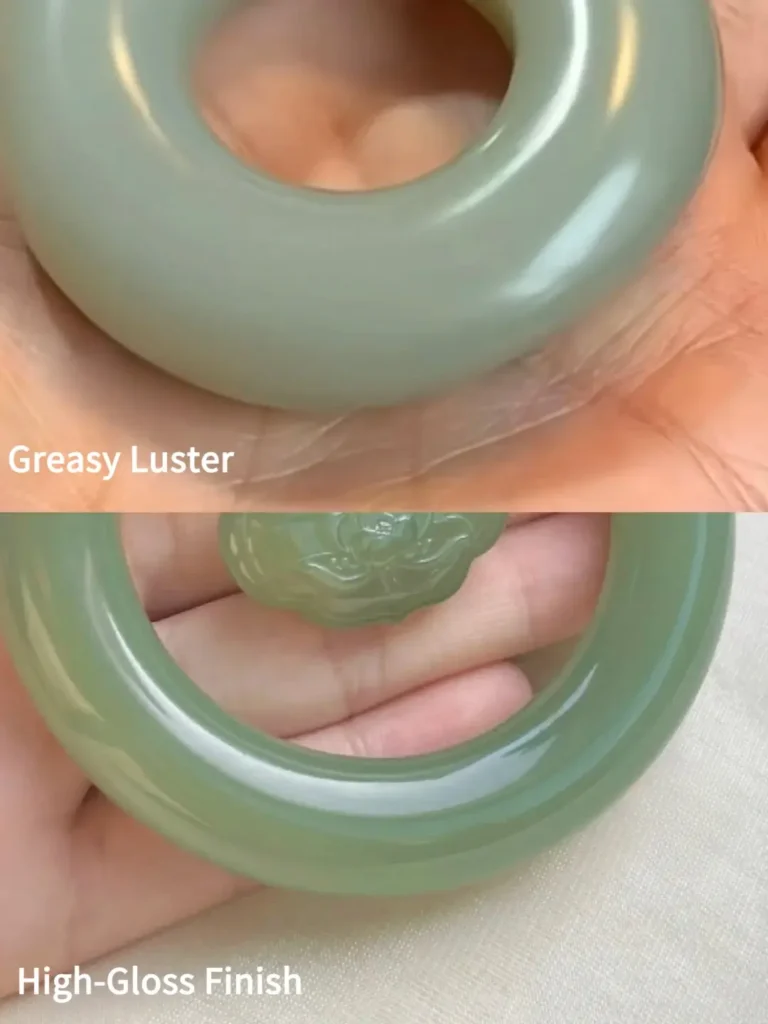
Hand-Rubbed Matte Finish (Rou Guang)
For most high-end Hetian jade pieces, master polishers choose a matte or “soft-glow” surface. This meticulous manual process—known in the industry as Rou Guang (hand-rubbing)—intentionally softens the stone’s luster. Instead of creating a harsh, superficial shine, this technique coaxes out a warm, internal glow from within the mineral. By carefully refining every plane and curve, the polisher ensures a smooth, even surface while strictly preserving the integrity of the delicate carved lines.
A well-executed soft-glow finish produces that sought-after “damping” sensation—a subtle, controlled resistance between the stone and your skin. In contrast, a high-gloss “mirror” polish often makes the surface too slippery and reflective, stripping away the sophisticated, “oily” soul that defines top-tier nephrite.
Technical Refinement vs. Industrial Shortcuts
At a technical level, professional polishing requires a strict progression through abrasive grades. A master polisher will move from coarse to ultra-fine without skipping any intermediate stages, ensuring the surface is microscopically even.
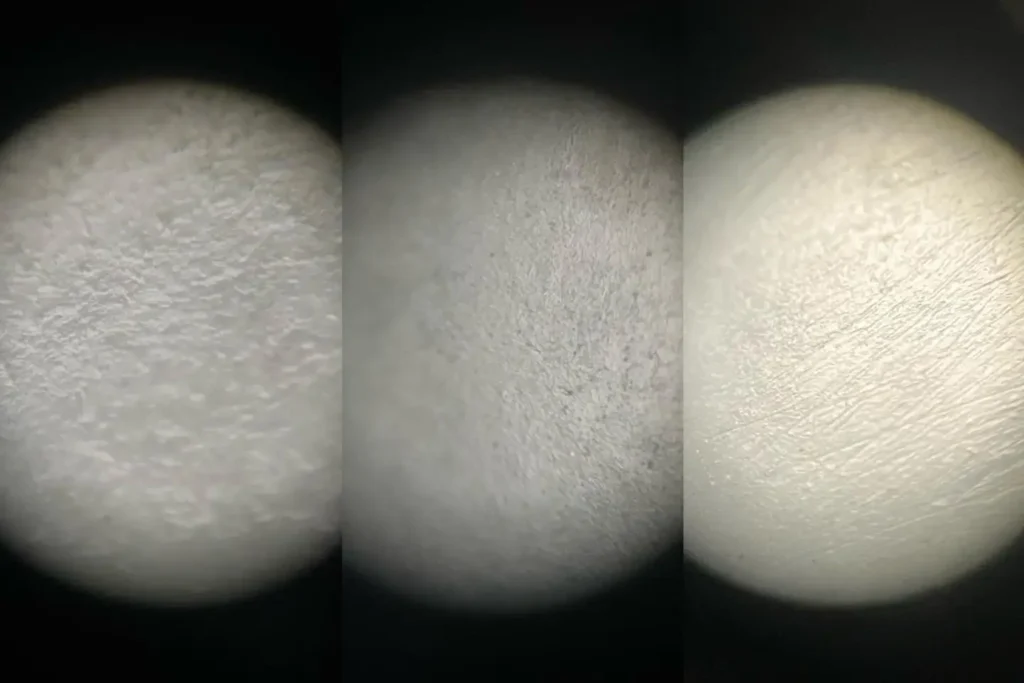
Average commercial polishing often skips these finer stages to save time. While the stone may look smooth to the naked eye, it remains irregular under magnification. The most basic method—machine polishing—prioritizes surface gloss over structural refinement. It buffs the surface to a quick shine but ignores the tiny pits and uneven “valleys” left by the carving tools.
The “Makeup” Analogy
If you are familiar with skincare or makeup, the difference is easy to visualize:
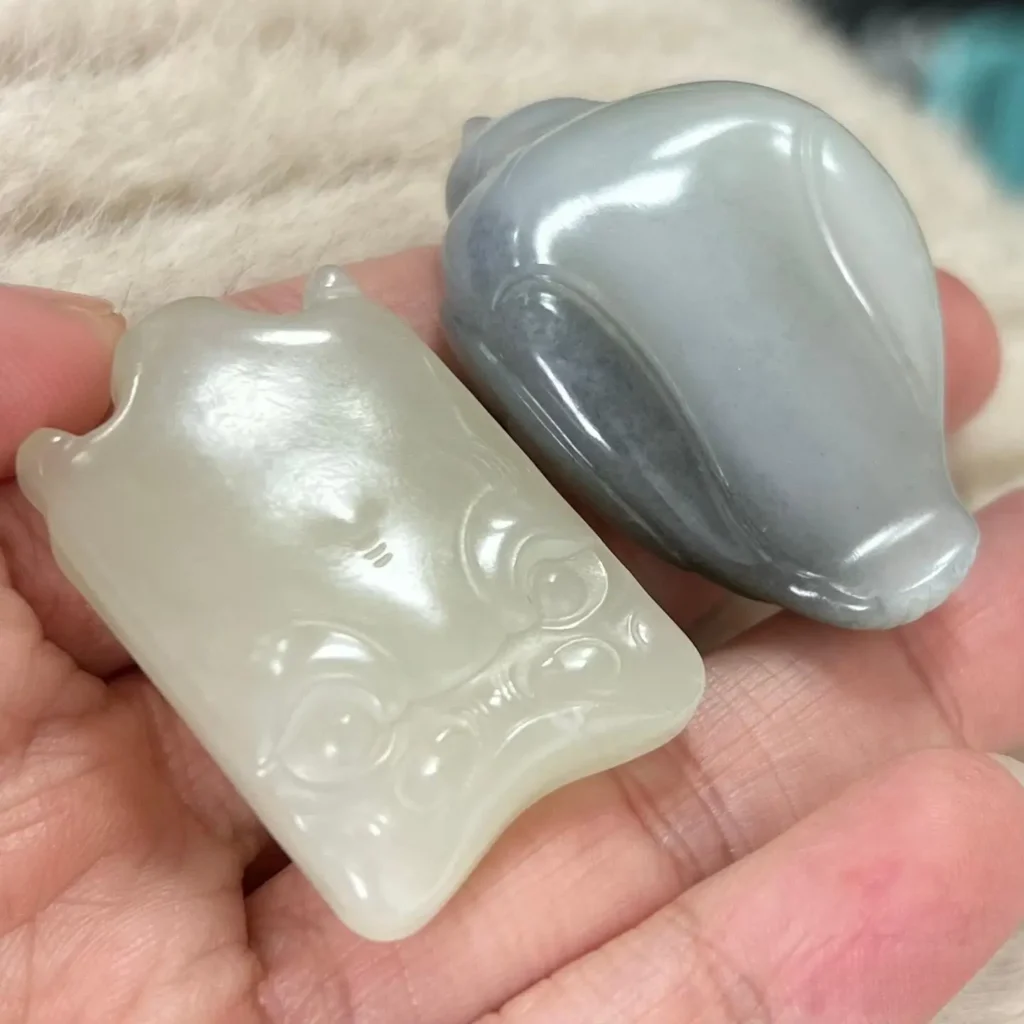
- Professional Hand-Polishing: A flawless, natural look—starting with a perfect primer and foundation to ensure the skin texture is smooth and soft before any color is added.
- Average Polishing: A quick layer of powder and lipstick. It looks decent at a distance, but the uneven skin texture is still visible underneath.
- Machine Polishing: Skipping the base entirely and applying heavy blush and lipstick over rough skin.
These structural differences are rarely visible in a photograph, but they become instantly apparent the moment you handle the stone. This is why evaluating quality through a screen is never a substitute for a direct tactile examination.
The Science of Long-Term Handling and Surface Refinement
A common belief among collectors is that simply handling Hetian Nephrite Jade will naturally enhance its oiliness over time. While this observation is widely reported, it is not a mystical transformation—it is a form of gradual, human-assisted surface refinement.
1. Fingerprints as a Mechanical Polishing Media
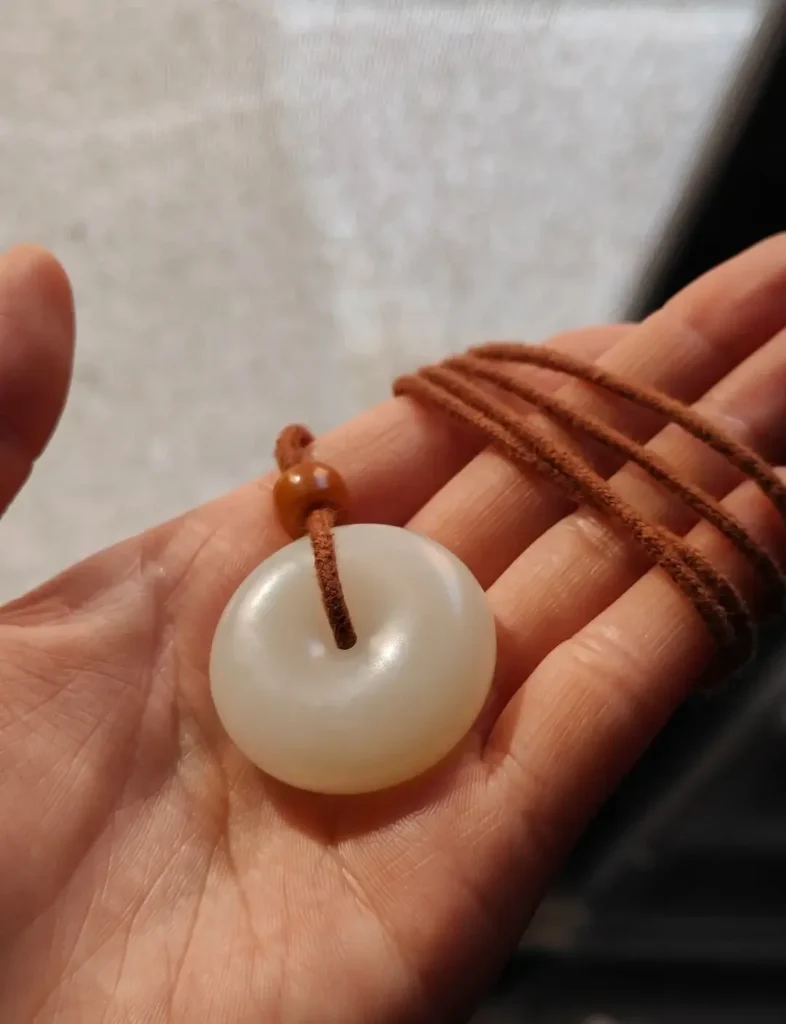
Continuous handling introduces a very fine mechanical interaction between your skin and the jade surface. Although human skin is significantly softer than industrial abrasives, long-term contact acts as a low-pressure polishing agent. In the jade world, we often compare the texture of human fingertips to 5000-grit sandpaper. Over years of constant contact, this “human polishing” gradually smooths microscopic surface irregularities. You can see this same phenomenon on bronze statues in public squares; decades of human contact create a stable, glowing surface patina.
2. The Role of Natural Oils
Beyond mechanical friction, natural skin oils play a secondary role. These organic residues don’t “fill” the stone’s structure, but they do settle into microscopic surface roughness that is invisible to the naked eye. This fills the tiny “valleys” on the surface, causing light to scatter more evenly. In gemological terms, this produces a diffused reflection that mimics the soft glow of solid grease—making the stone appear “oilier.”
3. Why Structural Density Still Reigns Supreme
It is important to emphasize that handling is a surface-level optimization; it cannot change the internal structure of the jade. The visual impact depends entirely on the stone’s intrinsic density:
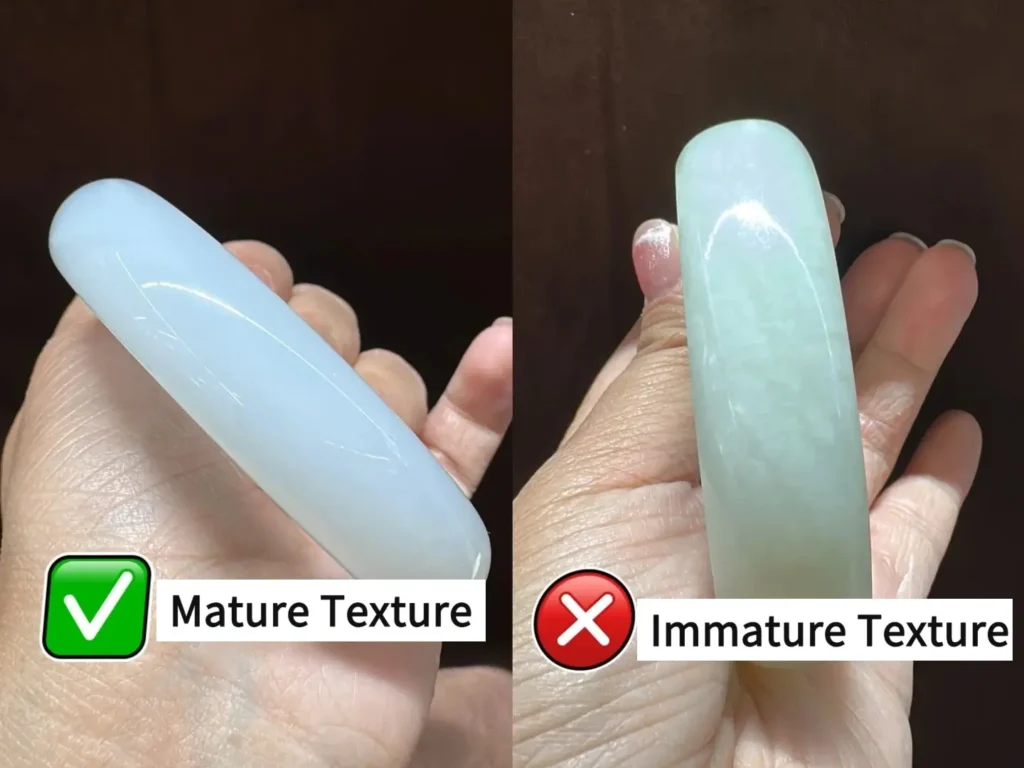
- Low-density or porous material: These stones may show a dramatic short-term change, but because the effect is purely superficial, the stone will return to its original “dry” state if you stop handling it.
- High-density, finely interlocked nephrite: Well-structured jade has stable optical properties. While handling adds a subtle, mellow refinement, its core “oiliness” is determined by its internal fibrous density, not external handling.
The Key Insight: Handling can refine a stone’s appearance, but it cannot replace the fundamental importance of density and fineness. Human interaction simply reveals the quality that was already there.
Jewea’s Perspective: The Enduring Character of Jade
I often meet collectors searching for a single stone to accompany them for a lifetime. In those moments, I always recommend Hetian Jade. It is a material that does not fear the natural oils of your skin or the touch of your fingerprints; in fact, intimacy only enhances its warmth.
While consistent handling will make a high-quality piece feel more “mellow,” a truly superior stone does not require constant attention. Even if you set it aside for decades, you will find it remains as lustrous and warm as the day you first held it. This is the mark of the “Gentleman among Gemstones”—it does not grow arrogant with affection, nor does it grow cold with neglect. It remains humble, enduring, and soft in its strength.
Whether it is a “Ping An Kou” (Safety Buckle) gifted to a newborn, a jade bangle from a lover, or a fine carving you treated yourself to after a major milestone, jade captures the passage of time. Through years of contact, the stone becomes smoother and more integrated into your life, condensing memories into its creamy texture. This transformation is more than just a patina—it is the living record of a life well-lived.