Titanium Jewelry: Lightweight, Durable, and Distinctive Color
At Jewea, we use different metals in our handmade jewelry to support gemstones and design elements, including gold-plated copper, silver-plated copper, 316L stainless steel, and titanium.
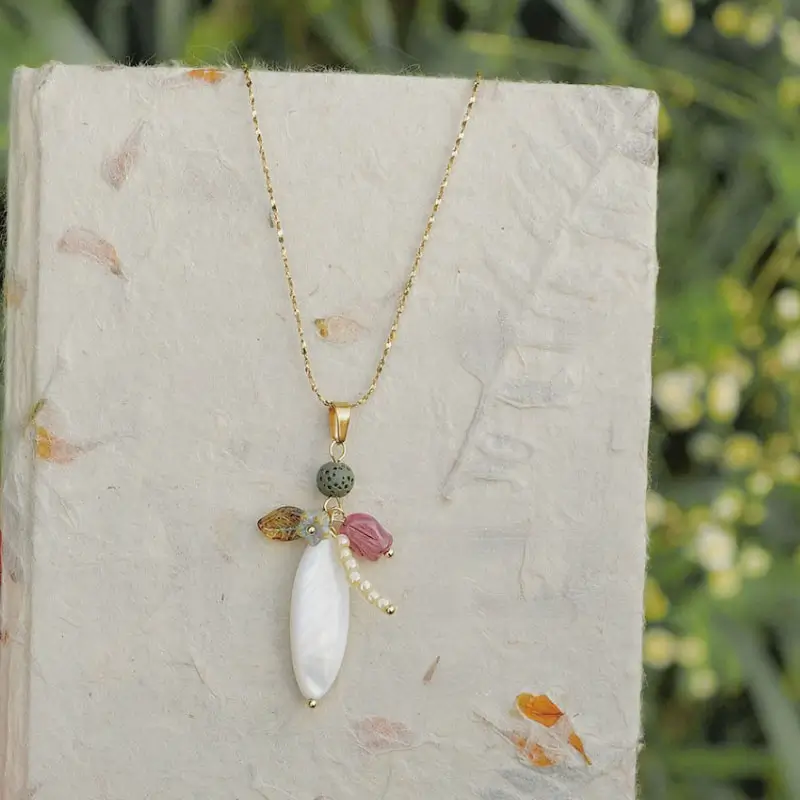
A piece of jewelry is not defined by its gemstone alone. The metal also affects the wearing experience through its weight, durability, surface finish, comfort, and how it works with the overall design.
Compared with traditional jewelry metals such as gold and silver, titanium requires more demanding fabrication and welding. But its lightweight feel, corrosion resistance, good biocompatibility, and distinctive visual effects make it a popular choice among modern jewelry designers.
Following our article Colorful Aluminum and Aluminum Alloy Jewelry: A More Sustainable Approach, we now turn to titanium. What makes it different? Why do jewelry designers choose it? And how does it produce such a wide range of colors?
What Makes Titanium Jewelry Different?
Titanium (Ti) is a silver-gray metal with a low density, high strength-to-weight ratio, and good corrosion resistance. These properties make it useful in aerospace, medical equipment, sporting goods, and some jewelry designs.
As a jewelry material, titanium has several qualities that set it apart from traditional jewelry metals:
- Lightweight: Titanium has a density of about 4.5 g/cm³, much lower than steel and most precious metals. Its low weight reduces the burden of wearing jewelry, making it especially suitable for earrings, necklaces, and larger designs.
- Corrosion resistant: When titanium comes into contact with air or moisture, it naturally forms a very thin, stable oxide layer on its surface. This layer protects the metal underneath.
- Good biocompatibility: Titanium and some titanium alloys offer good corrosion resistance and biocompatibility, which is why the medical field uses them widely. Pure titanium contains no nickel, making pure titanium jewelry worth considering for people who want to limit nickel exposure.
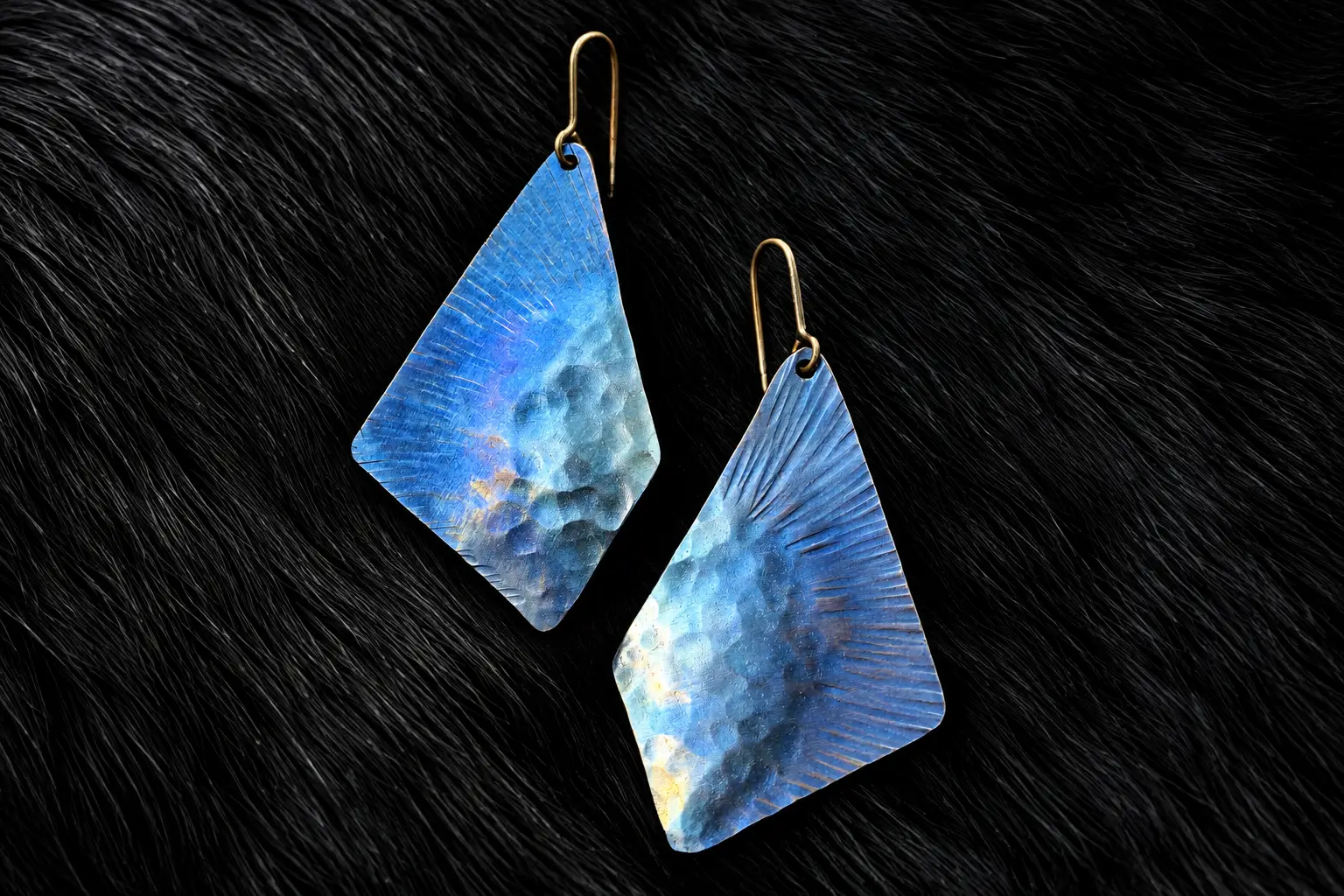
- Rich in color: Anodizing can create different optical interference effects on the surface of titanium without adding pigments. The process can produce vivid shades of blue, purple, gold, black, and rainbow gradients.
What Are the Limitations of Titanium Jewelry?
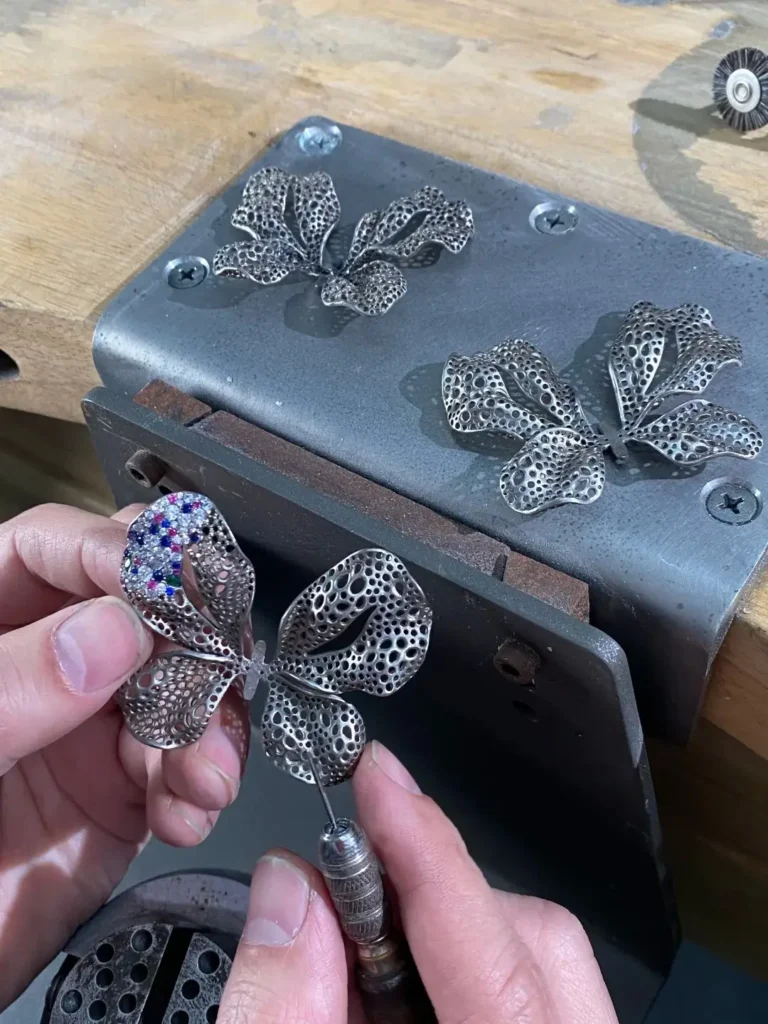
Pure titanium has good ductility, but changes in the levels of interstitial elements such as oxygen, nitrogen, and carbon can significantly affect its strength, hardness, and plasticity. Titanium jewelry also has some limitations:
- More difficult to work with: Titanium has a high melting point. Compared with traditional jewelry metals such as gold and silver, it requires more demanding cutting, welding, and forming processes. Its equipment and processing requirements can also increase production costs. As a result, titanium jewelry designs often place more emphasis on structure, weight, and manufacturing feasibility.
- More difficult to modify or repair: Compared with more ductile precious metals such as gold, titanium jewelry can be harder to resize or repair. It requires suitable equipment, processing methods, and technical expertise. For this reason, designers and makers need to determine the size and structure more precisely during the design and production stages.
- Not valued primarily as a precious metal: Titanium jewelry does not derive its main value from the investment or resale value associated with precious metals. Its value comes more from the design, craftsmanship, material properties, and wearing experience.
Why Does Titanium Jewelry Have Different Colors?
Titanium naturally has a silver-gray appearance. So why do some titanium jewelry pieces appear blue, purple, gold, or even show rainbow gradients?
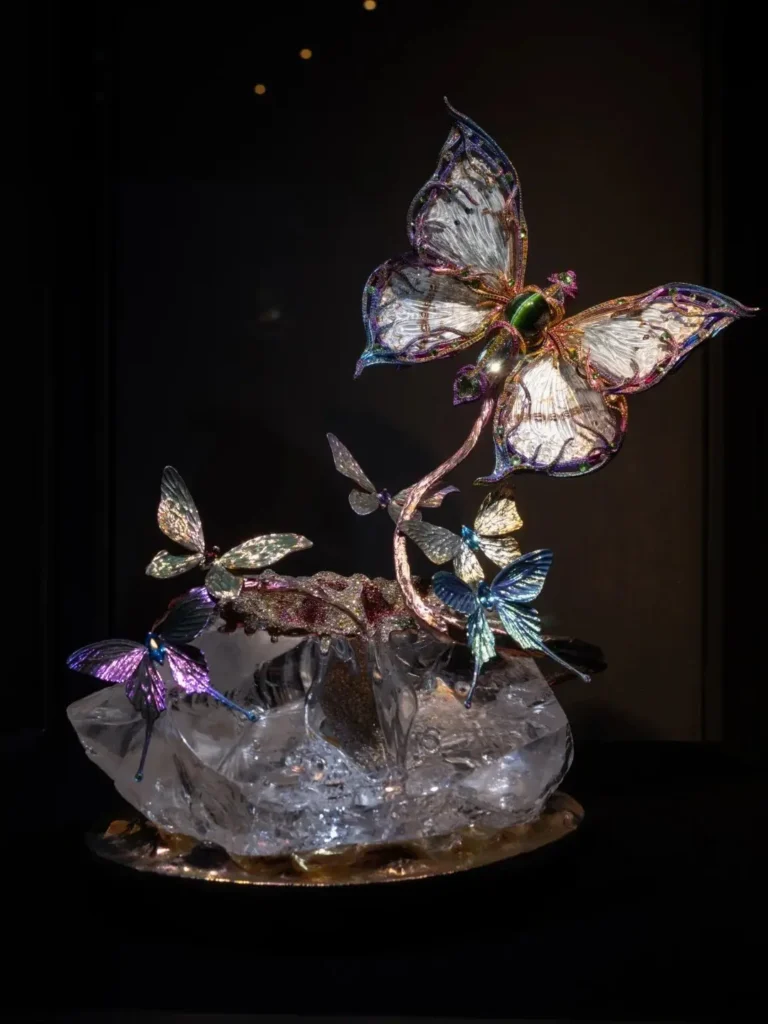
The answer lies in how the titanium surface is treated. Common methods include anodizing and heat treatment. Each method can create different visual effects and levels of durability.
Anodizing
Anodizing plays an important role in creating colored titanium surfaces.
During the electrolytic process, titanium acts as the anode. By controlling the voltage, electrolyte, surface condition, and other process parameters, makers can form a controlled oxide layer on the titanium surface.
As the thickness of the oxide layer changes, so does the way light interacts with it. This optical interference produces different colors.
This is why titanium can produce blue, purple, gold, pink, and gradient effects.
The oxide layer formed through anodizing differs from a conventional coating applied to a metal surface. However, its wear resistance still depends on the oxide layer’s thickness, the surface treatment, and the conditions of use.
It is important to note that color does not depend on one fixed voltage.
The final color also depends on the type of titanium, surface preparation, cleanliness, electrolyte, temperature, equipment, and other processing conditions.
Heat Treatment
Heat treatment uses heat to change the color of the titanium surface.
Makers heat titanium at a set temperature and control its oxidation state to create different colors. This method is commonly used for titanium jewelry and decorative pieces.
Compared with controlled anodizing, however, heat-treated colors depend more heavily on temperature, heating time, surface condition, and the way the process is carried out. This can make color control more difficult.
Will Titanium Jewelry Lose Its Color?
Anodizing creates an oxide layer on the titanium surface rather than a layer of paint or coating that sits on top of the metal. As a result, the color durability of anodized titanium differs from that of traditionally plated jewelry. The color does not peel off in the same way as a conventional coating, but surface wear and the conditions of use can still change its appearance.
- Not resistant to heavy friction: The oxide layer created by anodizing is very thin, so the surface color is sensitive to scratches and friction. Prolonged exposure to heavy friction can wear down the oxide layer and make the color lighter or reveal the natural color of the titanium underneath. What we commonly call “color fading” may actually be a change in color caused by wear to the surface oxide layer.
- Avoid strong acids and alkalis: Strong acids, strong alkalis, and some chlorine-containing chemicals can affect the oxide layer on the titanium surface. For this reason, avoid prolonged contact between colored titanium jewelry and highly corrosive cleaners or chemicals.
- Affected by high temperatures: High temperatures can change the oxidation state of the titanium surface and affect its color. Colored titanium jewelry should therefore be kept away from extreme heat.
Jewea Summary
Titanium is not a precious metal in the traditional sense, but it has a distinct set of material properties.
It is lightweight, corrosion resistant, and offers good biocompatibility. Surface treatments such as anodizing can also create a wide range of colors, including blue, purple, gold, and gradient effects.
For Jewea’s modern jewelry designs, choosing titanium as a setting material is not simply about choosing a “better metal.” It is about choosing a different set of material properties and a different design language.