Kashmir “Cornflower Blue” Sapphire
Unlike diamonds, sapphires can show a strong connection between origin and market value. Sapphires from different regions can vary in color, inclusions, and growth characteristics. Some historic and rare origins have earned a strong reputation among collectors and command significant premiums in the market.
Sapphires come from many parts of the world, including Sri Lanka, Myanmar, Madagascar, Thailand, Australia, the United States, and China. Among these origins, Kashmir in India has long held a special place in the world of fine sapphire collecting.
We briefly introduced Kashmir sapphire in our previous article, Indian Specialty Gemstones. Here, we take a closer look at what makes Kashmir sapphire special, including its characteristic color, inclusions, geographic origin, and market value.
Kashmir Sapphire
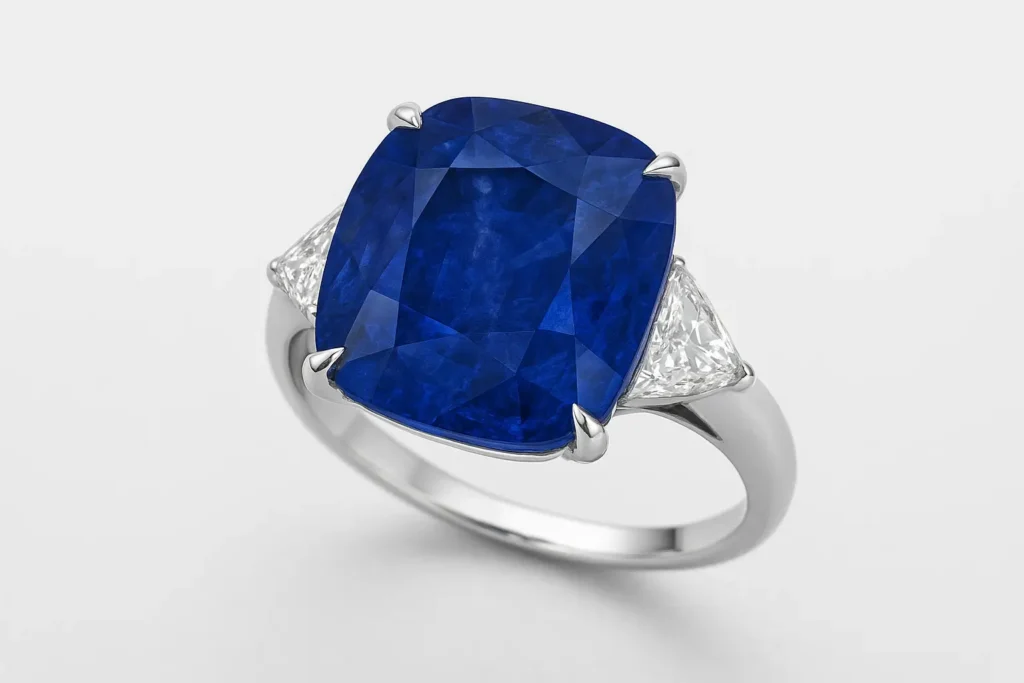
Collectors have long prized Kashmir sapphire for its rarity and distinctive appearance. GIA describes classic Kashmir sapphire as having a rich, saturated blue and a characteristic velvety look.
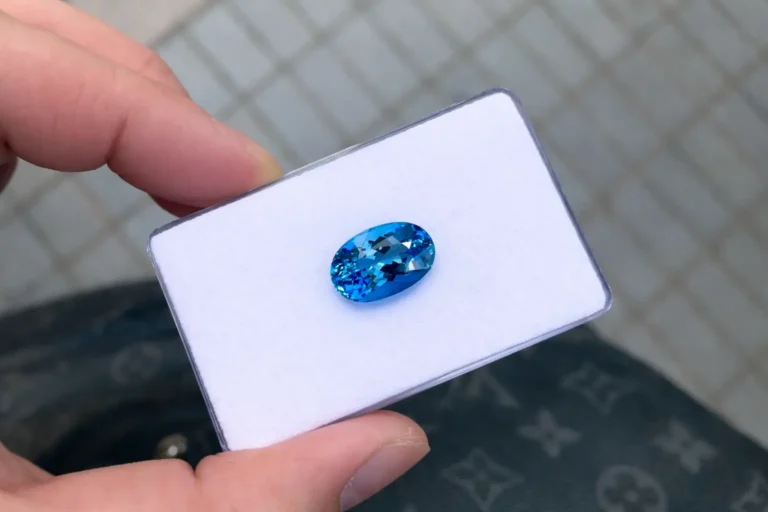
The most iconic color is often called Cornflower Blue. It usually shows a soft, saturated blue, sometimes with a slight violet undertone. The ideal color is not simply about depth. It depends on the balance of saturation, tone, and brightness.
Another defining feature of Kashmir sapphire is its distinctive velvety blue appearance.
Very fine inclusions and tiny mineral particles create this effect. They scatter light within the stone and soften the blue, giving it a more even and silky appearance. GIA notes that these minute inclusions can produce the highly prized velvety effect found in Kashmir sapphires.
Under a microscope, some Kashmir sapphires show fine needle-like inclusions, granular clouds, and cloudy features with snowflake-like, stepped, or wavy patterns. Some stones also display distinct blue and milky-white bands.
These features can help gemologists assess geographic origin, but no single inclusion can prove that a sapphire comes from Kashmir. GIA research shows that inclusion features can overlap among sapphires from different metamorphic environments. Laboratories therefore combine microscopic examination with trace-element analysis and other evidence when determining geographic origin.
That distinction matters. A sapphire may look like a Kashmir sapphire, but that does not mean a laboratory has confirmed Kashmir origin.
Is Cornflower Blue Exclusive to Kashmir Sapphire?
No.
Cornflower Blue has become a widely used color term in the sapphire trade. High-quality sapphires from Sri Lanka and Madagascar can also show a cornflower blue color.
Madagascar deserves particular attention. Some Madagascar sapphires share similar colors and inclusion features with classic Kashmir sapphires. GRS research has also found that some Madagascar Cornflower Blue sapphires can resemble Kashmir material in both appearance and internal features. Gemologists may need to examine finer details to tell them apart.
The distinction is important:
“Cornflower Blue” describes color. “Kashmir” describes geographic origin. They are not the same thing.
For buyers, this distinction matters when a sapphire is marketed as Kashmir origin. A laboratory report confirming Kashmir origin carries much more weight than the name “Cornflower Blue” alone.
How Can You Tell if a Sapphire Comes from Kashmir?
You cannot reliably identify a sapphire’s origin from its color alone or from a photograph, especially when the stone has significant value.
When laboratories determine a sapphire’s geographic origin, gemologists examine a combination of features, including:
Color and color zoning
Inclusion characteristics
Fine needle-like silk
Cloudy and milky inclusions
Diagnostic mineral inclusions
Trace-element composition
More detailed chemical analysis when necessary
GIA notes that some Kashmir sapphires may contain diagnostic mineral inclusions such as tourmaline, magnesian amphibole, and certain types of zircon. However, these inclusions do not appear in every Kashmir sapphire and cannot establish origin on their own.
For a high-value Kashmir sapphire, a geographic origin report from a reputable gemological laboratory carries far more weight than a seller’s verbal claim.
What Should You Look for on a Sapphire Report?
When a sapphire carries the Cornflower Blue designation, first check which laboratory issued the report and what color system it uses.
For example, GRS has long used color terms such as Cornflower Blue and Royal Blue. Its grading system does not define “Cornflower” by blue depth alone. GRS also considers factors such as color, transparency, inclusions, and treatment.
For this reason, you should not treat any one color term as a universal grade for sapphires.
When a sapphire is sold as Kashmir sapphire, pay close attention to two sections of the report:
Origin: Kashmir
and
Treatment: whether the sapphire has been heated or received any other treatment
For fine collector-grade sapphires, treatment status plays an important role in rarity and market value. An untreated sapphire is generally rarer than a comparable heated stone.
Keep one point in mind: “No indications of heating” does not automatically mean top quality, and Kashmir origin does not automatically mean top quality either.
A sapphire’s market value depends on the whole stone. Buyers should consider its color, saturation, transparency, clarity, inclusion characteristics, carat weight, cut, treatment status, and laboratory report together.
Where Do Kashmir Sapphires Come From?
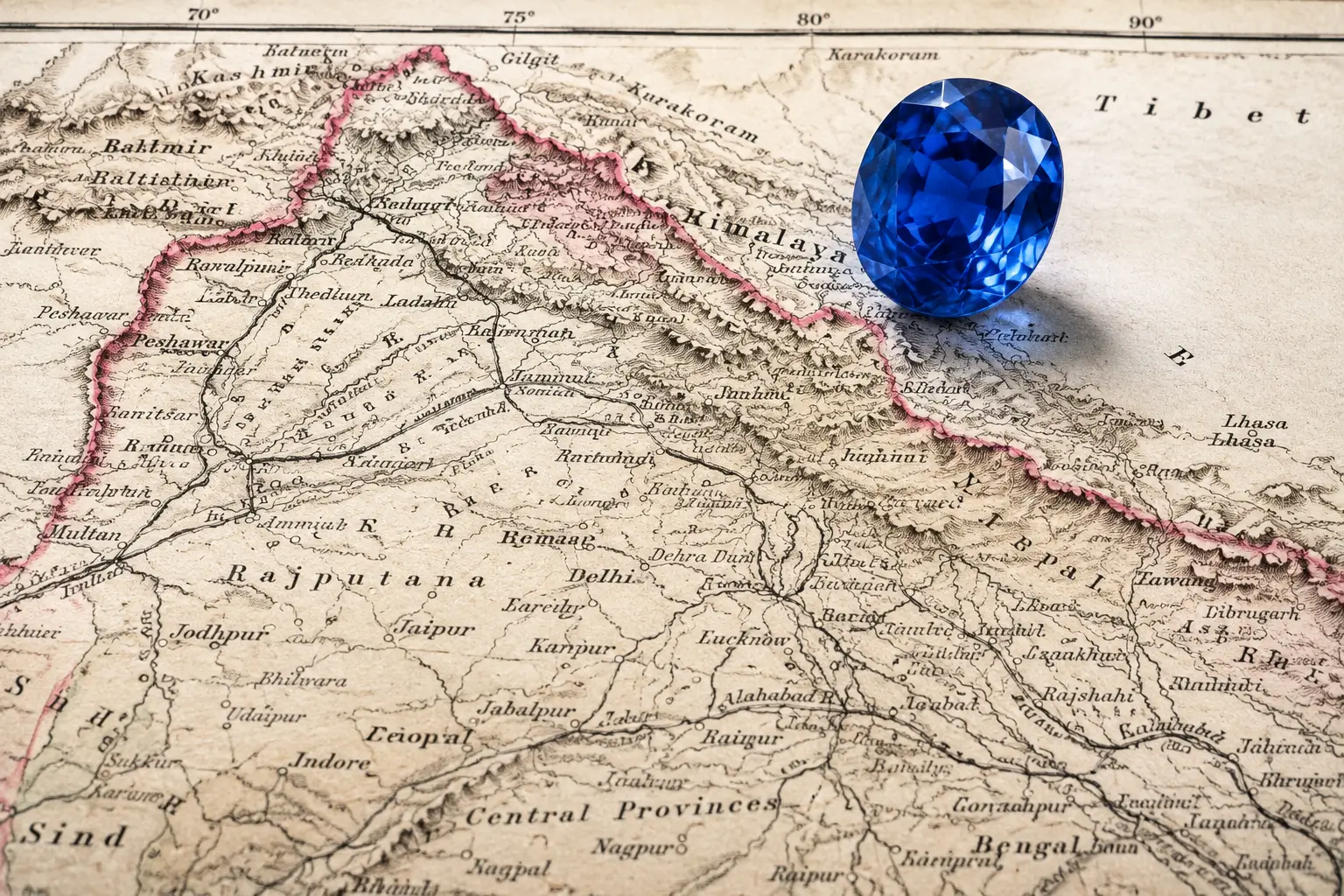
The historic Kashmir sapphire deposits lie in a remote part of the Himalayan mountains in northern India. The mining area sits at an elevation of around 4,600 meters, near the Paddar region of what is now Jammu and Kashmir.
Miners discovered these sapphire deposits around 1881. Historical records and GIA research report that a landslide exposed sapphire-bearing rock, which led to the mining activity that followed.
The area sits high in the Himalayas, where harsh terrain and difficult access have always made mining challenging. The early mining season was also very short. As a result, large-scale mining lasted only for a limited period.
Between about 1882 and 1887, miners recovered a significant amount of fine sapphire material. Production then declined sharply. By the early 20th century, the historic deposits had largely been exhausted.
This brief mining history is one of the main reasons Kashmir sapphire is so rare today.
Most classic Kashmir sapphires on the market now come from stones recovered during the historic mining period rather than from a steady supply of newly mined material. As a result, Kashmir sapphires with a well-documented origin, exceptional color, and no indications of heating remain extremely rare on the international market.
The Market Value of Kashmir Sapphires
Kashmir sapphires have long held a strong position in the high-end jewelry and auction markets. Collectors value them for their rarity, distinctive appearance, and limited historical supply.
Still, you cannot reduce the value of a Kashmir sapphire to a simple price per carat. Stones can differ greatly in color, size, clarity, cut, treatment, and documentation. Even two sapphires from Kashmir can command very different prices.
Recent auction results give us a useful look at the top end of this market.
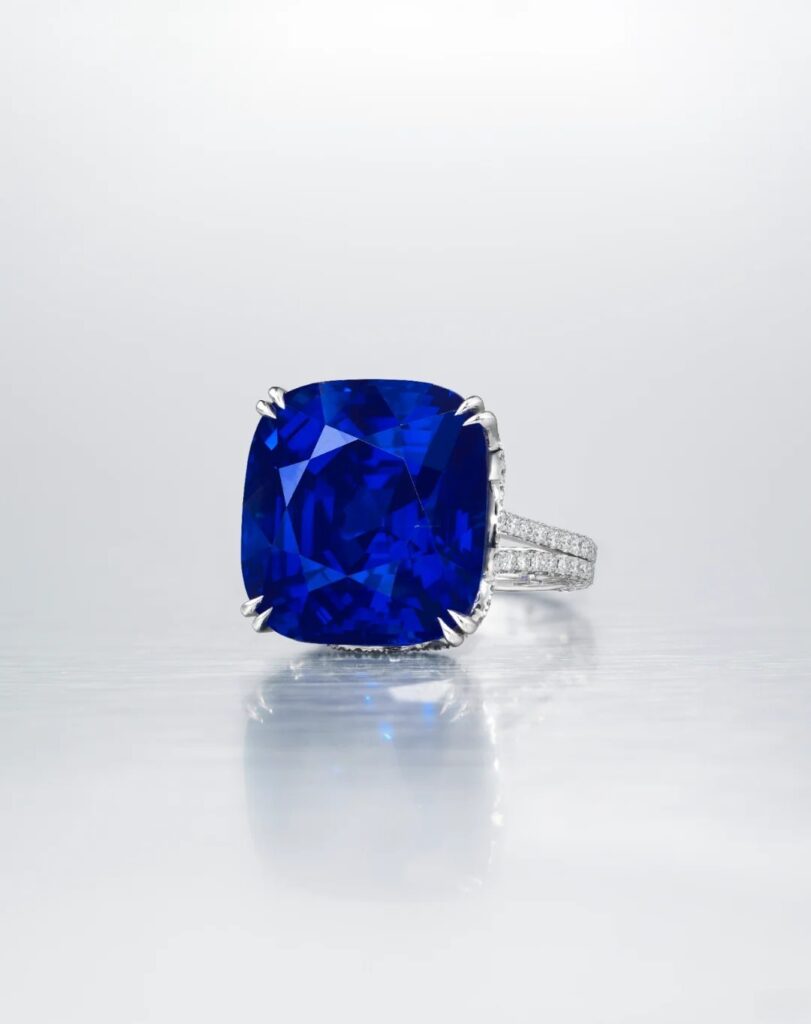
In May 2025, Christie’s Hong Kong sold The Regent Kashmir, a 35.09-carat Kashmir sapphire ring. SSEF and Gübelin both identified the sapphire as Kashmir origin with no indications of heating. The ring sold for HK$74,675,000 (about US$9.58 million), or approximately US$273,000 per carat. The sale set a world record for the price per carat of a sapphire at auction.
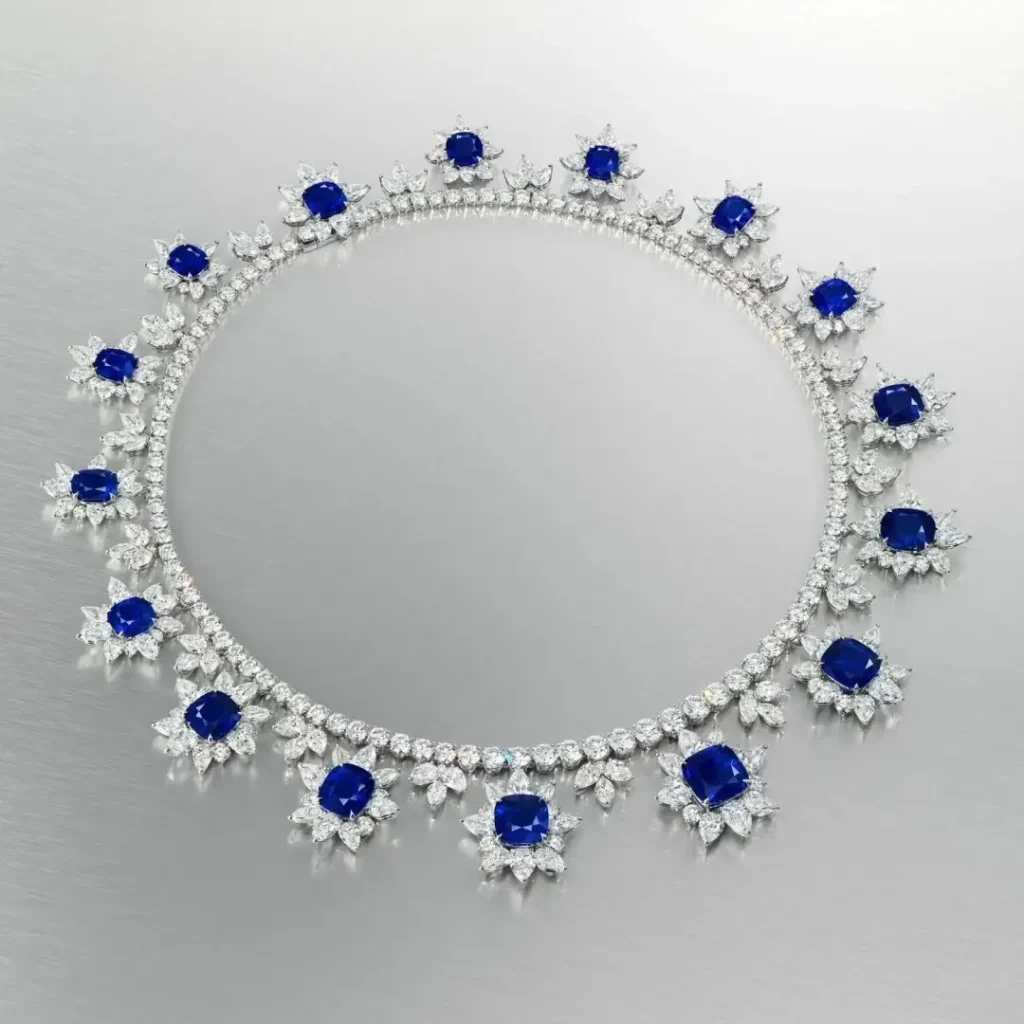
Later that year, Christie’s Hong Kong offered The Royal Blue, a necklace set with 16 Kashmir “Royal Blue” sapphires weighing a combined 104.61 carats. The necklace sold for HK$125,450,000 (about US$16.19 million) in November 2025, setting a world auction record for a Kashmir sapphire necklace.
These results show just how high the market can reach for exceptional Kashmir sapphires.
But one point matters: auction records reflect a very small number of exceptional stones. They should not be used as the market price for ordinary Kashmir sapphires.
What Should You Consider When Buying and Collecting Kashmir Sapphires?
1. Origin Does Not Equal Quality
“Origin: Kashmir” tells you where the sapphire came from. It does not automatically mean the stone has top color or collector-grade quality.
A commercial-quality Kashmir sapphire can have a very different market value from a large Kashmir sapphire with rich color, good transparency, a characteristic velvety appearance, and no indications of heating.
When you buy a Kashmir sapphire, do not focus on the origin label alone.
2. “Cornflower Blue” Does Not Mean Kashmir
Sri Lanka, Madagascar, and other sapphire-producing regions can also produce fine blue sapphires with a classic cornflower blue appearance.
So, when your budget is limited, do not focus solely on the Kashmir origin label. Look first at the stone itself, especially its color, transparency, cut, and treatment.
3. “No Heat” Is Only One Part of the Picture
Untreated Kashmir sapphires are especially rare in the high-end collector market.
But no indications of heating is only one factor in determining a sapphire’s value. It does not, by itself, make a sapphire a desirable collector stone.
An unheated sapphire with average color, transparency, or cut can have a very different market position from an unheated stone with exceptional color and overall quality.
4. Always Check the Laboratory Report for a High-Value Stone
When a sapphire reaches the high-value collector market, choose a stone with a report from a reputable gemological laboratory. For particularly valuable stones, you may also want to compare reports from more than one laboratory.
Pay close attention to:
- Origin: Kashmir
- Treatment: No indications of heating
- Color description
- Weight and dimensions
- Laboratory name and report number
For very high-value Kashmir sapphires, buyers can also consider reports from internationally recognized laboratories that provide more detailed analysis of geographic origin and treatment.
Jewea Summary
Origin can have a significant impact on a sapphire’s market value. But at Jewea, we often emphasize that buyers should not judge a sapphire by origin alone.
For everyday buyers, a fine sapphire from Sri Lanka or Madagascar, with excellent color and a reliable laboratory report, can offer outstanding gemological and wearing value.
For collectors, however, a classic Kashmir sapphire with a well-documented origin, exceptional color, a characteristic velvety appearance, and no indications of heating remains an exceptionally rare and highly collectible gemstone.