Ximu Nephrite Jade: A 5,000-Year Legacy from Hongshan Culture to the “Oscars” of Jade Carving
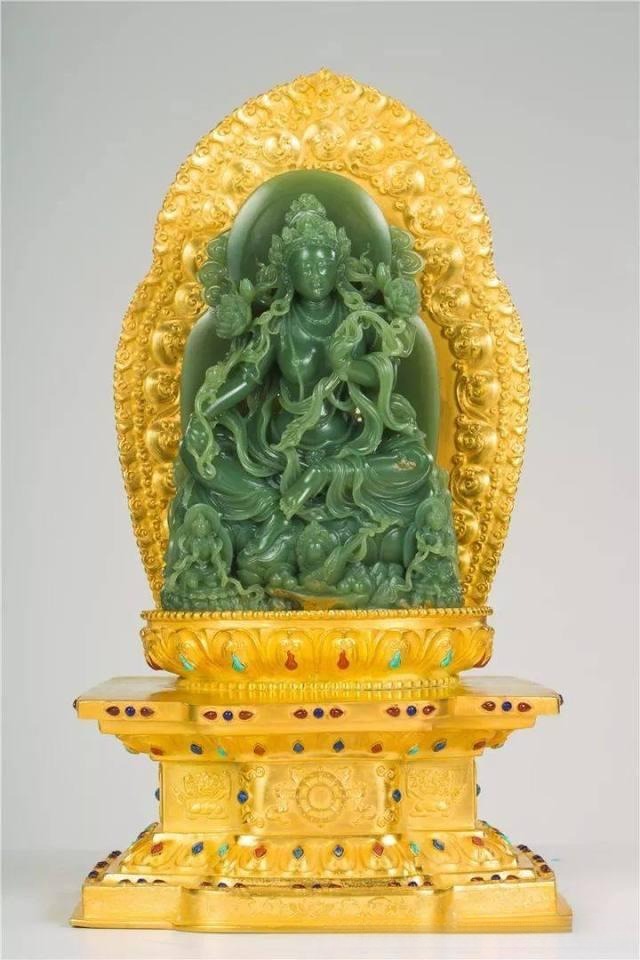
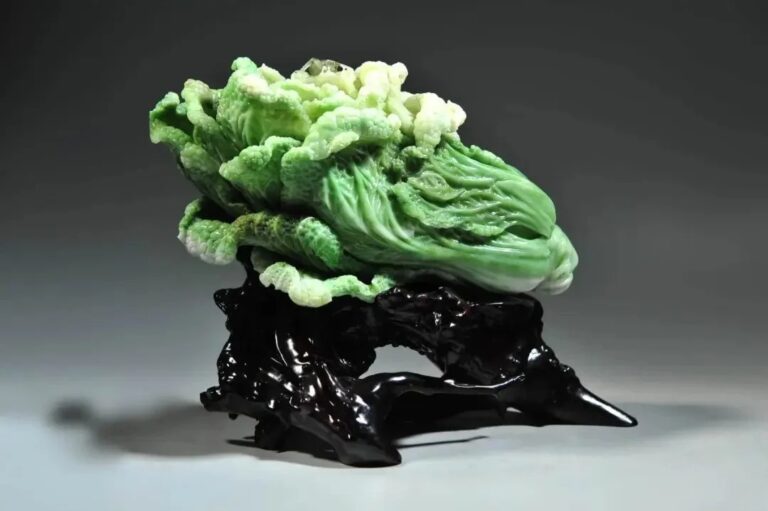
In 2017, the Gold Medal-winning “Green Tara” by Master Zhang Yonglai brought Ximu Nephrite Jade back into the public eye at the Tiangong Awards.
As China’s most authoritative and influential platform for jade carving, the Tiangong Awards represent the highest level of craftsmanship in the industry. For a master carver, winning here is a crowning achievement; moreover, the gold-medal selections serve as market bellwethers, signaling new trends in materials and themes that drive the entire industry forward.
Long before its recognition in modern awards, Ximu Nephrite Jade served as the preferred material of the Hongshan Culture over 5,000 years ago. In this article, we introduce the unique characteristics of this tremolite-rich gemstone—a variety of Hetian Jade sourced from Liaoning Province that continues to define excellence in the world of nephrite.
1. What is Ximu Hetian Jade?
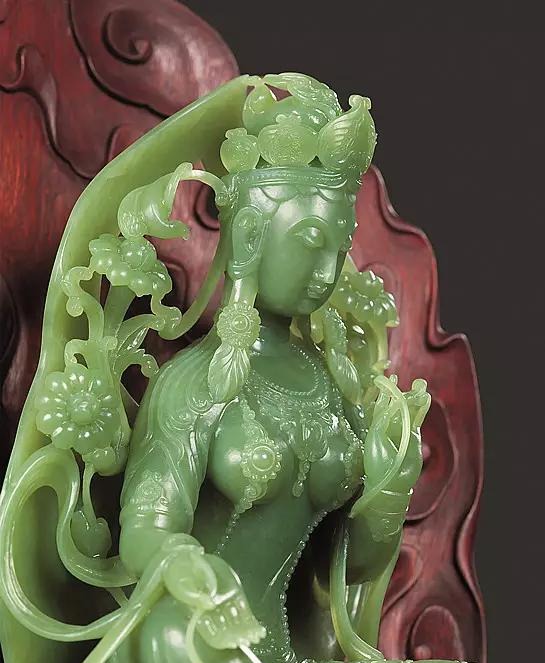
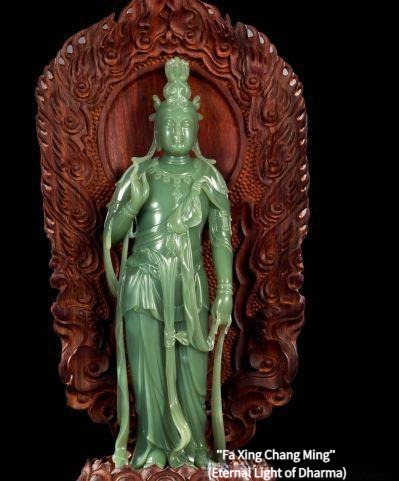
Ximu Hetian Jade is a regional nephrite variety named after Ximu Town in Haicheng, Liaoning Province. Although it first appeared on the commercial market in 2008, it remained a hidden gem within Northeast China and elite collector circles for nearly a decade. Its rise to national prominence began in 2015 when the masterpiece “Fa Xing Chang Ming” (Eternal Light of Dharma) won a Tiangong Gold Medal, followed by a three-year streak of gold-winning Ximu works that finally captured the public’s attention.
To understand Ximu Nephrite Jade, we must look at the broader classification of Ximu Jade from Liaoning. As we discussed in Gemstones of Liaoning, Xiuyan Jade consists of two distinct minerals: serpentine (Xiuyu) and tremolite-rich nephrite, locally known as Hemojade (River-polished Jade).
A Quick Guide: Hemojade belongs to the category of “Broad-Sense Hetian Jade,” defined as any nephrite with over 95% tremolite content, regardless of origin. While “Narrow-Sense Hetian Jade” refers specifically to stones from Xinjiang, Liaoning’s nephrite—known as Lao Yu (Old Jade)—boasts an equally ancient history.
Just as Xinjiang has “mountain material” and “seed material” (pebbles), Liaoning has both. Lao Yu primarily refers to mountain-sourced material, while Hemojade refers to “river-polished” pebbles tumbled and smoothed by river currents over millennia. Hemojade typically comes in yellow-white, green, and rare white varieties. Historically, the yellow-white variety (Yellow-White Lao Yu) dominated the market, primarily sourced from the Xiyugou River.
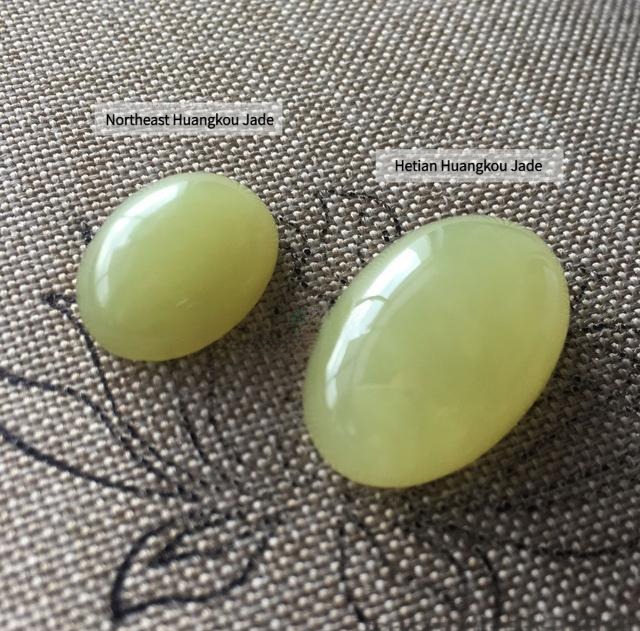
Ximu Jade specifically refers to the high-quality green Hemojade found in the middle reaches of the Haicheng River near Ximu Town. Because the green hue here is exceptionally pure, collectors began distinguishing it from other river-polished stones. Following its 2015 gold medal success, the name “Ximu Jade” became an official brand of its own, serving as the premier representative of Haicheng’s green Hemojade.
2. Why Has Ximu Jade Become a Market Sensation?
Branding is a rigorous test in the jade world. Famous origins like Qiemo or Ruoqiang remain “sub-materials” of Hetian Jade. They rarely achieve independent status. Even in the corundum family, only the rare Padparadscha has successfully stepped out from the shadow of rubies and sapphires. Whether “Ximu Jade” achieves this permanence remains to be seen. However, its rise is no accident. It is rooted in the stone’s intrinsic quality.
Hetian Jade remains the gold standard for enthusiasts. Yet, intensive mining and new environmental protections have made high-quality material scarce. Prices remain high. Consequently, the market now pursues other exceptional tremolite-rich varieties. We see prices skyrocket for “Powder Green,” once a mere byproduct of Manas Jasper. “Emerald-with-Sugar” (Cui Qing) has reached astronomical levels. Even fine-grained “Tashkurgan Black” (Ta Qing) is climbing in value. These trending stones share one defining trait: an ultra-fine structure. In modern collecting, “structureless” quality is the ultimate benchmark.
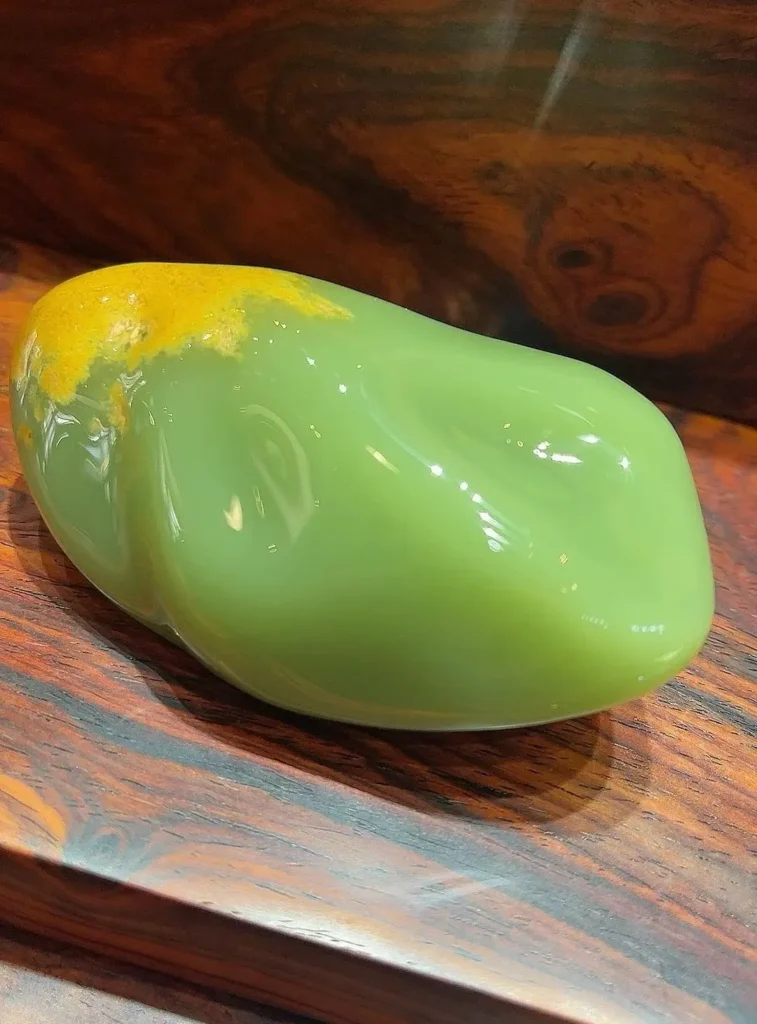
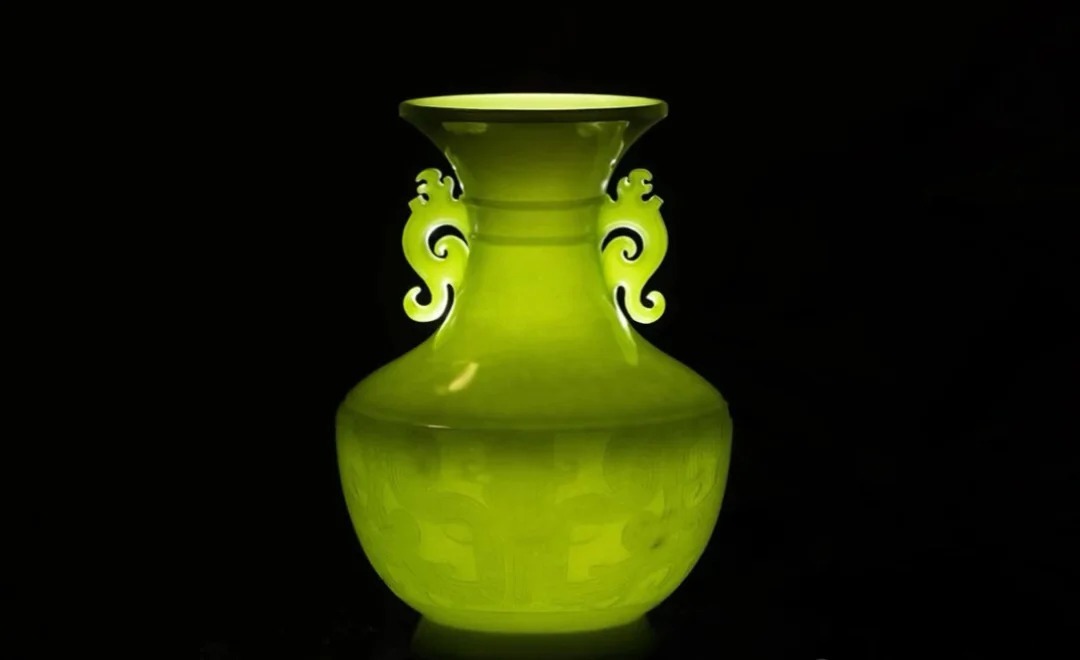
Ximu Jade meets this standard perfectly. It offers a rare combination of qualities. Its body is translucent without appearing “thin,” while the texture remains oily and understated. The colors stay vibrant without ever becoming gaudy. This exceptionally dense texture is a perfect canvas for master carvers. It allows for incredible detail, making Ximu outstanding for high-relief and round sculptures.
3. The Palette of Ximu Jade
Ximu Jade is technically classified as “Qing Yu” (Green-and-Black Jade). Early collectors in Southern China often referred to Hemojade as “Northeast Green-and-Black Seed Material.” While its primary hue is yellow-green, it differs significantly from traditional Hetian Qing Yu. Typical Hetian varieties often carry a distinct blue undertone, especially in the popular fine-grained materials. Ximu Jade, by contrast, leans toward a warmer yellow-green spectrum, ranging from light to deep shades.
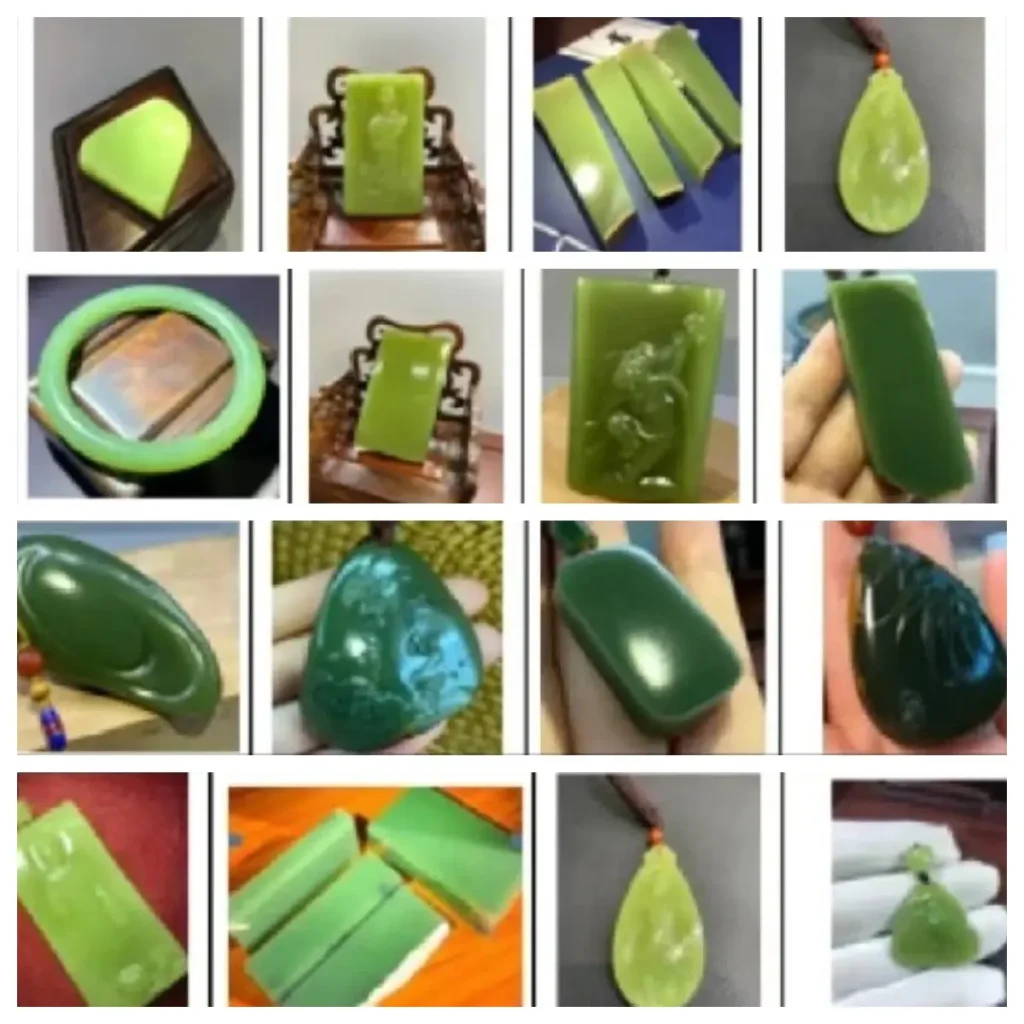
Light-colored Ximu Jade often draws comparisons to “Duck-Egg Green” or “Powder Green” jaspers. However, Ximu possesses a unique yellow-green warmth that those varieties lack. This signature tone remains its most identifying feature.
4. The Unique “Skin” of Ximu Jade
The formation environment of Hemojade (River-polished Jade) is notably calmer than that of Xinjiang’s Hetian seed material. Because the river currents were less aggressive, the stones often remained stationary for long periods. Consequently, Hemojade typically retains sharp, distinct edges and develops a significantly thicker outer “skin” or crust. This differs from Xinjiang seed material, which is known for its rounded shapes and thin, stained “pitted” skins.
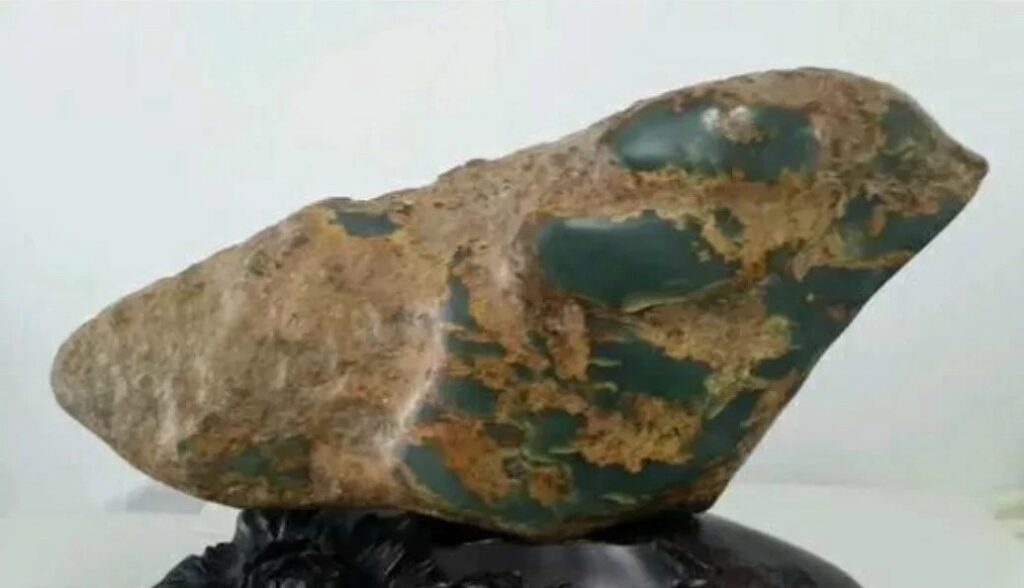
The crust of Ximu Jade is particularly thick and deep in color. These weathered exteriors usually range from reddish-brown to yellowish-brown or even deep chocolate tones. Because this heavy crust lacks the transparency of the inner “flesh,” master carvers rarely use it for “cameo” or “clever” carving (Qiao Xiao). Instead, they typically remove the skin entirely to reveal the pure, vibrant jade hidden beneath.
5. Market Trends and Pricing Evolution
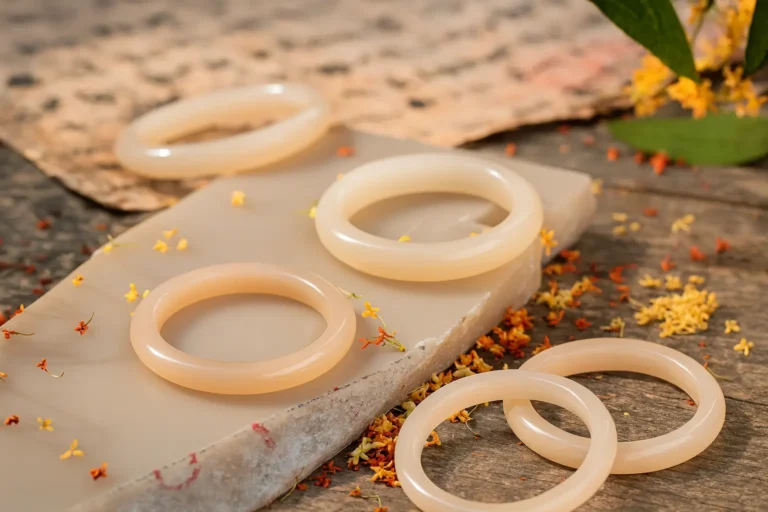
Around 2008, the Hemojade market prioritized “yellow-white” hues. Pale green followed in value, while deep green was considered low-grade material. Similar to the “gambling stones” of the jadeite trade, buyers priced Hemojade by “windowing”—polishing a small section to reveal the interior color. Back then, green specimens were incredibly undervalued. Yellow-white material fetched between $700 and $1,100 per pound, while deep green jade sold for as little as $70 to $280.
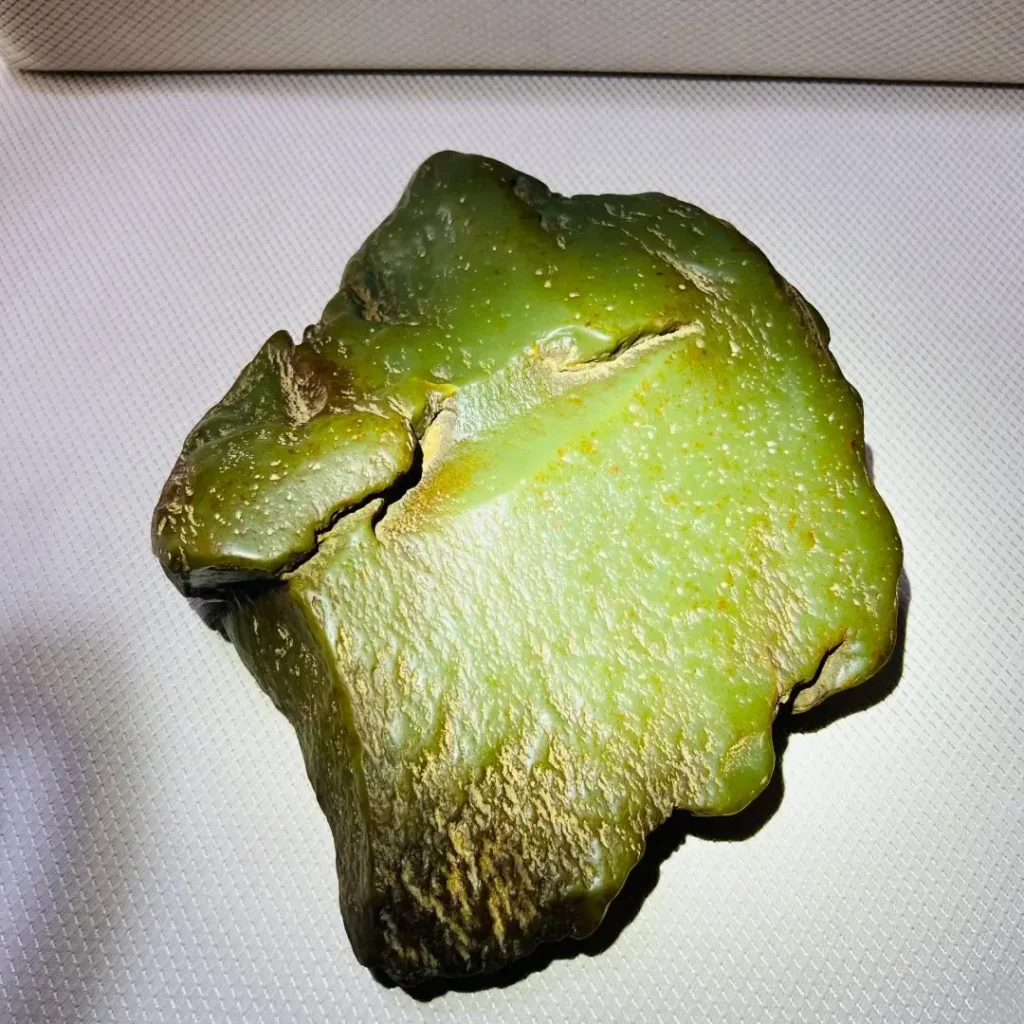
However, market tastes shifted dramatically after 2010. As collectors began chasing vibrant greens, the price gap flipped. While yellow-white jade stabilized, top-tier green material skyrocketed. Today, the finest green specimens command tens of thousands of dollars per pound.
One legendary acquisition perfectly illustrates this meteoric rise. In 2013, Li Jianjun, Chairman of Tianya Yufu, purchased a 23.2-pound irregular Ximu raw stone from a local farmer for tens of thousands of dollars. At the time, the investment was met with widespread skepticism.
A week later, Li enlisted a veteran lapidary to “open” the stone, revealing an interior that left everyone breathless. Beneath the rough crust lay a pure, vibrant green “flesh” of top-tier quality. Even as the stone was further processed in 2014, the color remained perfectly consistent and vivid throughout.
By January 2014, a single slab cut from this stone—weighing 1.8 lbs and measuring 2.6 cm thick—sold for approximately $230,000. Once processed, the individual bangles produced from this material were valued at roughly $90,000 each. By 2016, the total value of this original raw stone had surged to roughly 100 times its initial purchase price. Despite recent market lulls, Ximu Jade has continued to defy the trend, maintaining a steady upward trajectory in raw material value.
6. Why Does Ximu Jade Dominate the Market?
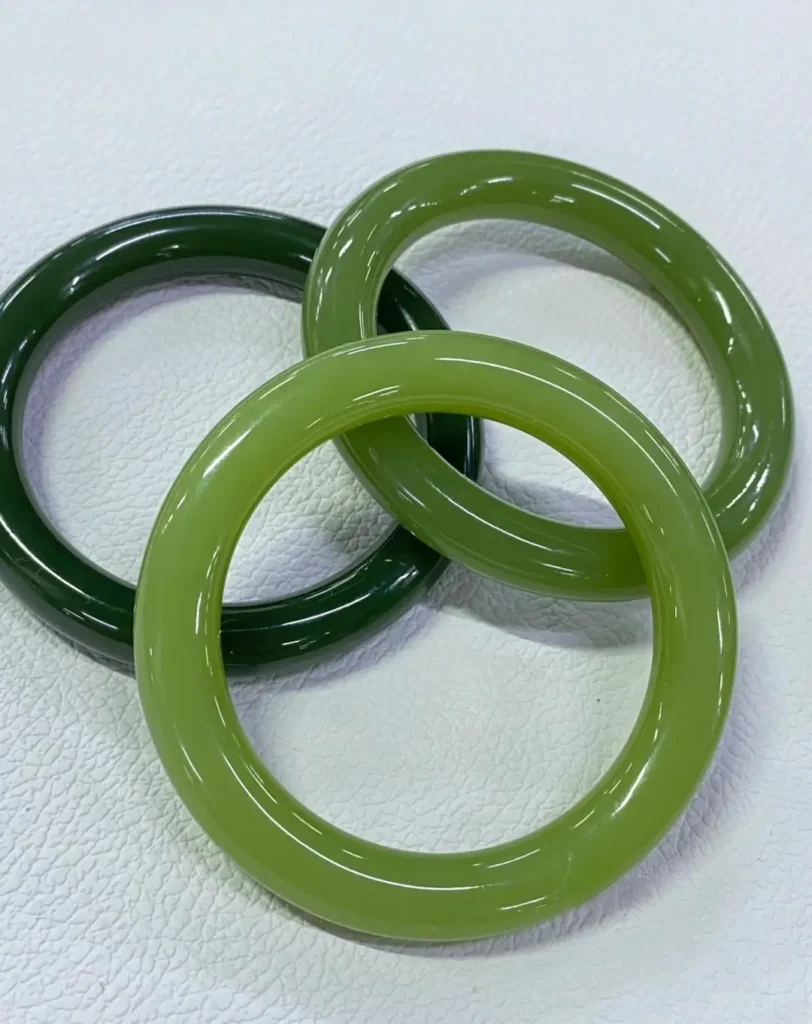
Despite a hundredfold increase in price, Ximu Jade still holds significant market potential compared to traditional Jadeite or Xinjiang Hetian Jade. Several key factors drive this sustained popularity:
- Exceptional Quality: High-end collectors prize Ximu Jade for its ultra-fine texture and composed, sophisticated color palette.
- Extreme Scarcity: Supply remains incredibly tight. While roughly 70% of known resources remain underground along riverbanks, the government has moved to strictly protect these areas. With 24-hour patrols now enforcing a mining ban, new material only enters the market in minuscule quantities.
- The Search for Alternatives: As Xinjiang’s “Seed Material” (Ziliao) becomes nearly impossible to source—with prices frequently reaching thousands of dollars per gram—the market is aggressively seeking premium alternatives. Ximu Jade is the natural successor for those demanding top-tier nephrite.
- Cultural Resurgence: A growing appreciation for traditional heritage has reignited a passion for jade. As a culture that has revered jade for millennia, the modern demand for high-end varieties continues to outpace supply, fueling Ximu’s steady rise.
The Jewea Verdict
The recent surge in Ximu Jade prices is a natural market response to its exceptional intrinsic value. This growth has remained rational and steady, reflecting a maturing market. As a true “growth stock” of the gemstone world, Ximu Jade offers a rare opportunity for discerning collectors. Whether for personal appreciation or as a family legacy, acquiring a masterfully carved piece of Ximu Jade is a meaningful investment in both artistry and heritage.