Natural Tektite: The Natural Glass Formed by Cosmic Impact
In our previous article, we explored obsidian, a natural volcanic glass, and the unique geological process behind its formation.
Beyond obsidian, nature has created another fascinating form of natural glass: tektite. This rare type of impact glass forms during powerful cosmic impact events.
Unlike volcanic glass, natural tektite is not created by volcanic activity. Instead, it forms when extraterrestrial impacts melt and transform Earth’s surface materials. Each piece preserves evidence of an ancient impact event that reshaped Earth’s surface materials.
What Are Tektites? Are They Really From Outer Space?
In the world of mineral collecting and jewelry, you may have come across:
- Moldavite
- Libyan Desert Glass (LDG)
- Leigongmo (Chinese Tektite)
These fascinating materials all belong to a broader category of natural glass known as tektites.
The word “tektite” comes from the Greek word “tektos,” meaning “molten” or “melted.”
Although the Chinese name includes the word “meteorite,” tektites are not meteorites themselves. Instead, they are a type of impact glass formed when a large extraterrestrial object strikes Earth, melting and transforming the surrounding surface materials into natural glass.
Two Main Types of Natural Glass
Natural glass refers to glass-like materials that form naturally through geological processes, without any human involvement.
To better understand tektites, it helps to first look at the two major families of natural glass found on Earth:
1. Volcanic Glass
Examples include:
- Obsidian
- Pitchstone
- Tachylite
These types of natural glass form when volcanic lava cools rapidly at or near Earth’s surface.
When silica-rich magma or lava cools rapidly, mineral crystals do not have enough time to form. Instead, the material solidifies into a glassy rock with an amorphous, non-crystalline structure.
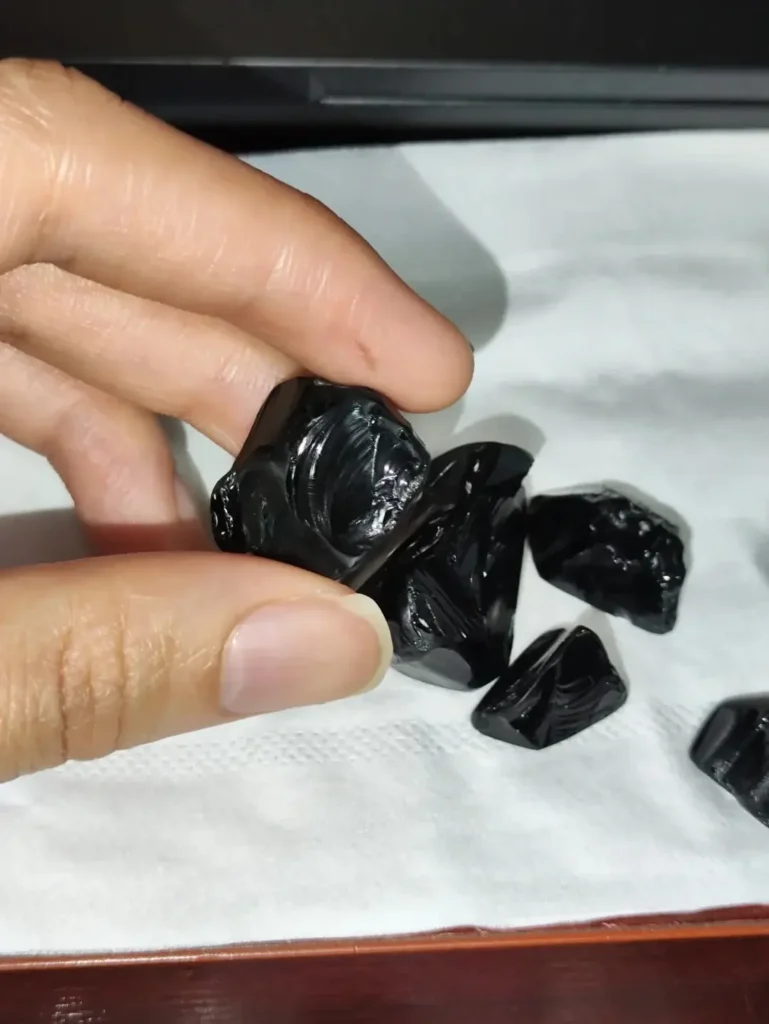
Obsidian is one of the most well-known examples of volcanic glass. Its smooth glassy appearance comes from this rapid cooling process, which prevents crystal growth. Explore the geological story behind this natural volcanic glass in our guide to Obsidian Jewelry.
2. Impact Glass (Tektites)
Tektites belong to this second category of natural glass.
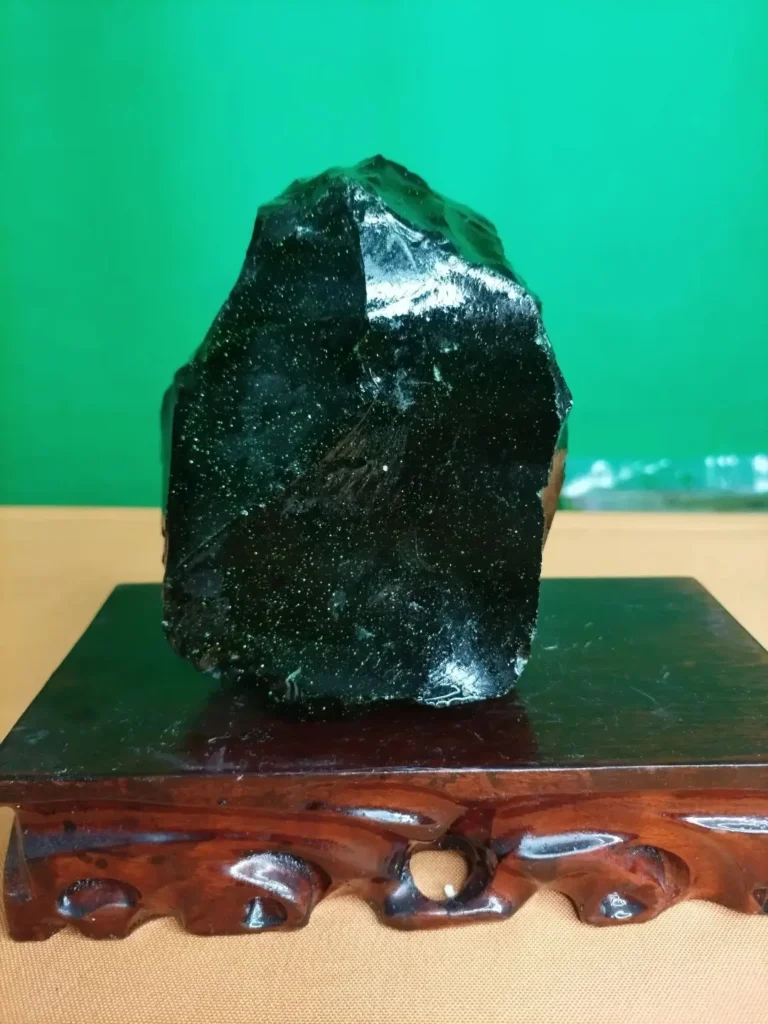
Unlike volcanic glass, they do not originate from magma. Instead, they form when a powerful extraterrestrial impact melts surface rocks and rapidly cools the molten material before crystals can form, creating natural glass.
In simple terms:
Obsidian is shaped by the fire beneath the Earth’s surface, while tektites are created by the extreme heat generated during cosmic impacts.
Tektites Through History
Humans have known about tektites for thousands of years.
Because of their unusual appearance and mysterious origins, ancient cultures often viewed these natural glasses as special materials and used them to create tools, ornaments, and personal charms.
Ancient Chinese records mention a black natural glass known as Leigongmo, which is now commonly associated with tektites.
Because people often discovered these dark glassy stones after thunderstorms, they associated them with lightning and named them “Leigongmo,” meaning “ink of the Thunder God.”
In Europe, the green tektites known as Moldavite have also attracted the attention of mineral collectors and scientists for centuries.
Are Tektites Really From Outer Space?
This is one of the most common misconceptions about tektites.
Although their name includes the word “meteorite,” tektites are not fragments of meteorites that fell directly from space.
Scientists generally agree that tektites formed through a powerful impact event — a dramatic collision between Earth and a large extraterrestrial object.
Here is how the process happened:
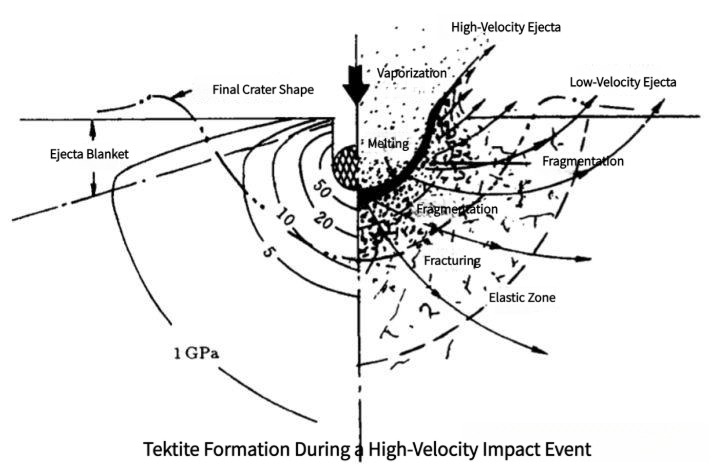
1. A High-Speed Impact Releases Enormous Energy
Millions of years ago, a large asteroid or other extraterrestrial object struck Earth’s surface.
The impact occurred at several kilometers per second, releasing an immense amount of energy within a fraction of a second.
2. Extreme Heat Melts Surface Rocks
The tremendous heat and pressure generated by the impact instantly melted nearby surface rocks.
The molten material mainly came from:
- Quartz-rich sandstone
- Sedimentary rocks
- Silica-rich surface materials
3. Molten Material Is Ejected and Cools Rapidly
Some of the molten material was blasted high into the atmosphere at incredible speeds.
Because it cooled extremely quickly, the atoms inside the material did not have enough time to arrange into a crystal structure.
The result was:
A natural glass with no crystalline structure.
These glass fragments later fell back to Earth and spread across large areas around the impact site, creating what scientists call a strewnfield.
Scientific Evidence: Tektites Come From Earth Materials
Scientific research shows that tektites share chemical compositions and isotopic signatures closely related to the rocks found near their impact sites.
For example, studies have linked the composition of Moldavite to surface rocks near the Ries impact crater in Germany.
At the same time, tektites generally lack the metallic iron-nickel phases commonly associated with many meteorites.
This evidence supports the scientific view that:
Tektites are not rocks that arrived from outer space. Instead, they are Earth materials transformed into natural glass by the immense energy of cosmic impacts.
Famous Tektite Strewnfields Around the World
Tektites do not appear randomly across the Earth. Instead, they occur in large strewnfields created by ancient impact events.
Some of the world’s most well-known tektite strewnfields include:
1. North American Strewnfield
The North American Strewnfield mainly covers areas of:
- Texas
- Georgia
- Other parts of the southern United States
One of its best-known tektites is:
Bediasite
Characteristics:
- Dark brown to black
- Usually opaque
- A relatively subtle appearance compared with brighter tektite varieties
Bediasite represents an important member of the North American tektite strewnfield.
2. Central European Strewnfield
The Central European Strewnfield is mainly associated with:
- Bohemia, Czech Republic
- Moravia
- Surrounding regions of Central Europe
Its most famous variety is:
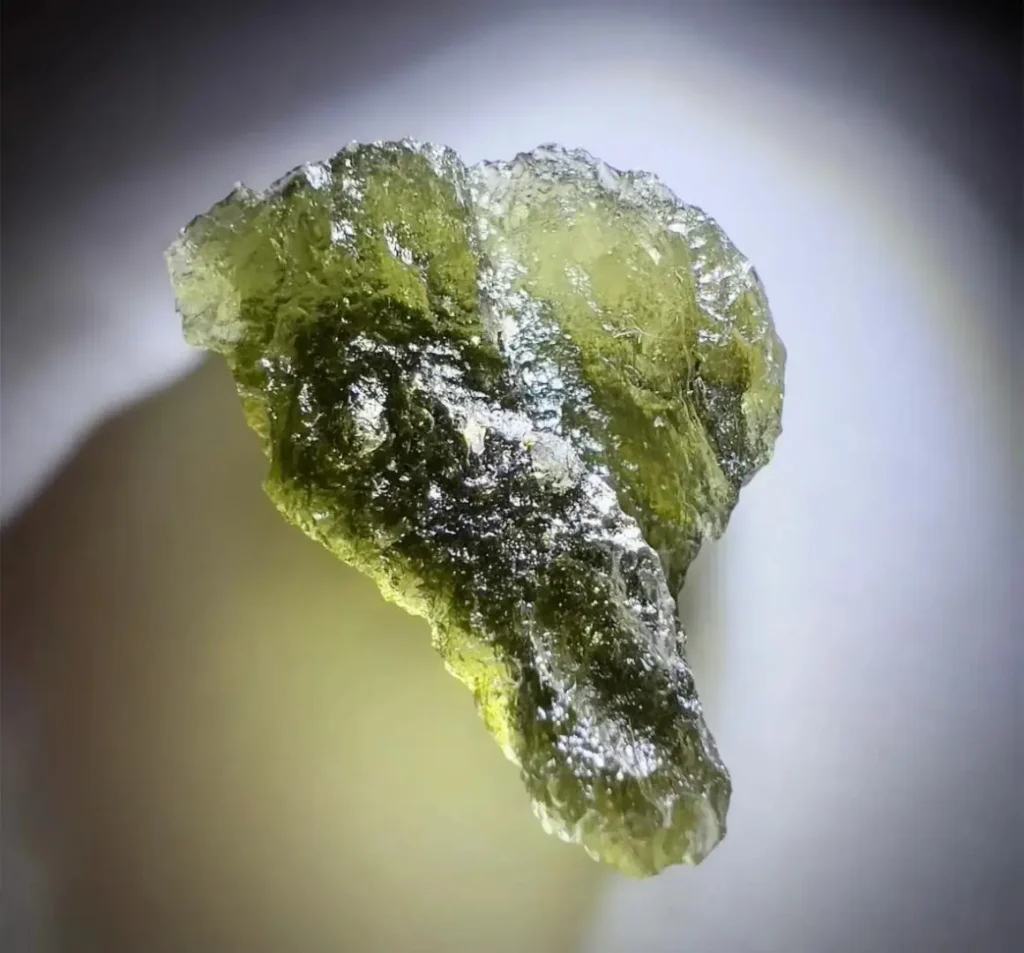
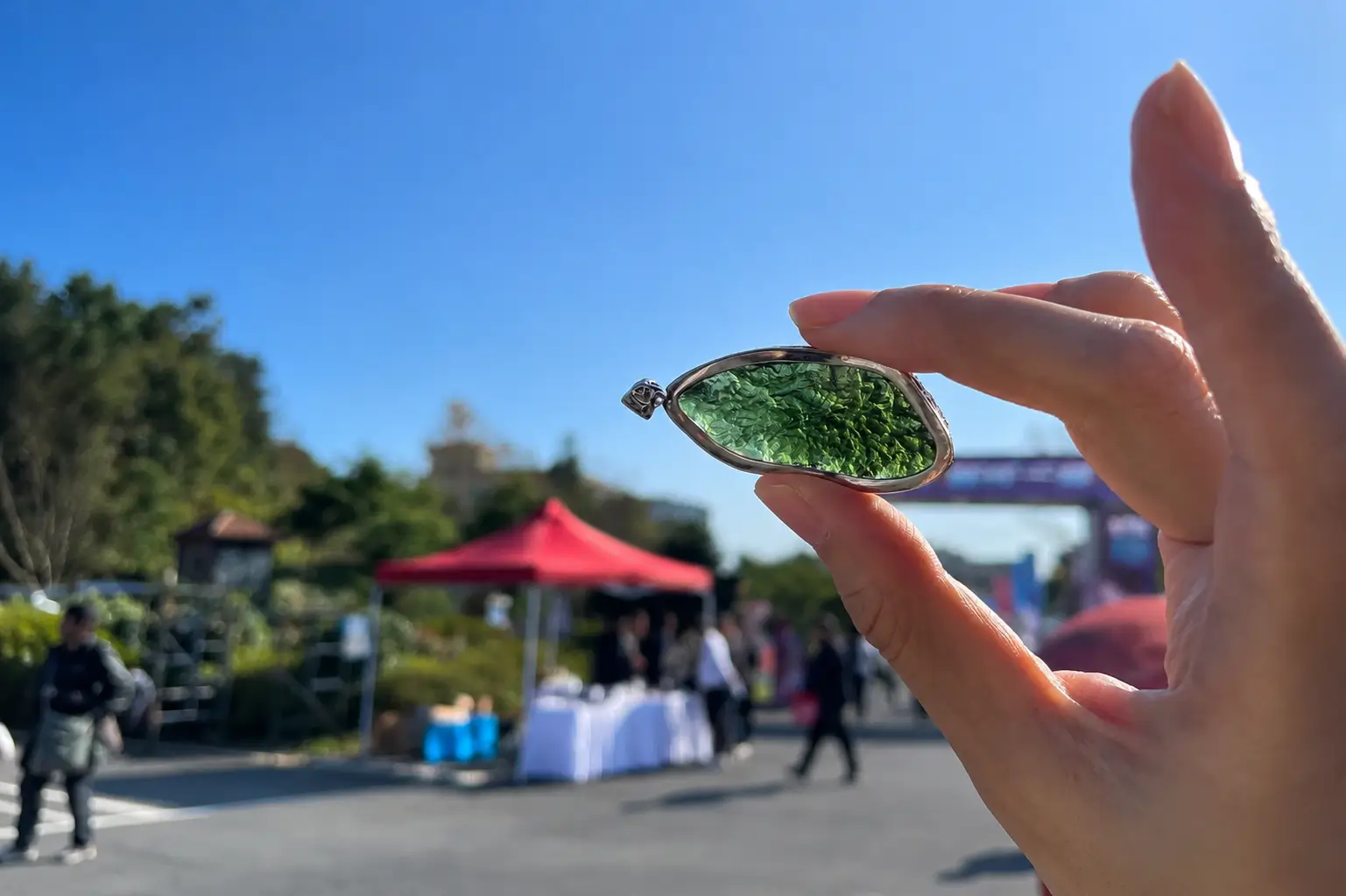
Moldavite
Characteristics:
- Forest green
- Olive green
- Yellow-green
Moldavite often features:
- Translucent to transparent appearance
- Natural etched textures
- Flow-like and honeycomb-like surface patterns
As one of the most recognizable tektites in the world, Moldavite has become one of the most popular tektite materials among jewelry collectors.
3. Ivory Coast Strewnfield
The representative tektite from this region is:
Ivory Coast Tektite
It mainly occurs in:
- Ivory Coast, West Africa
Characteristics:
- Black to dark brown
- Usually opaque
- Natural surface features created by high-temperature melting and cooling processes
4. Australasian Strewnfield
The Australasian Strewnfield is one of the largest known tektite strewnfields on Earth.
It extends across:
- Australia
- Southeast Asia
- Parts of southern China
A well-known tektite from this region is:
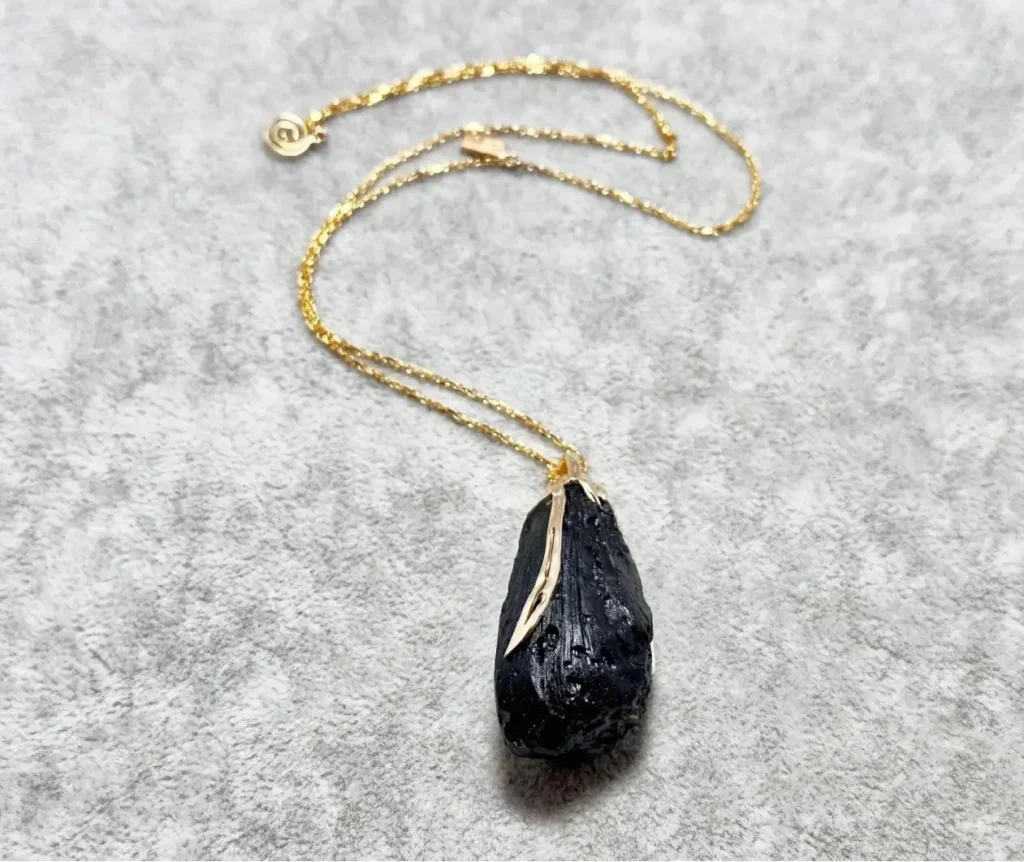
Leigongmo (Chinese Tektite)
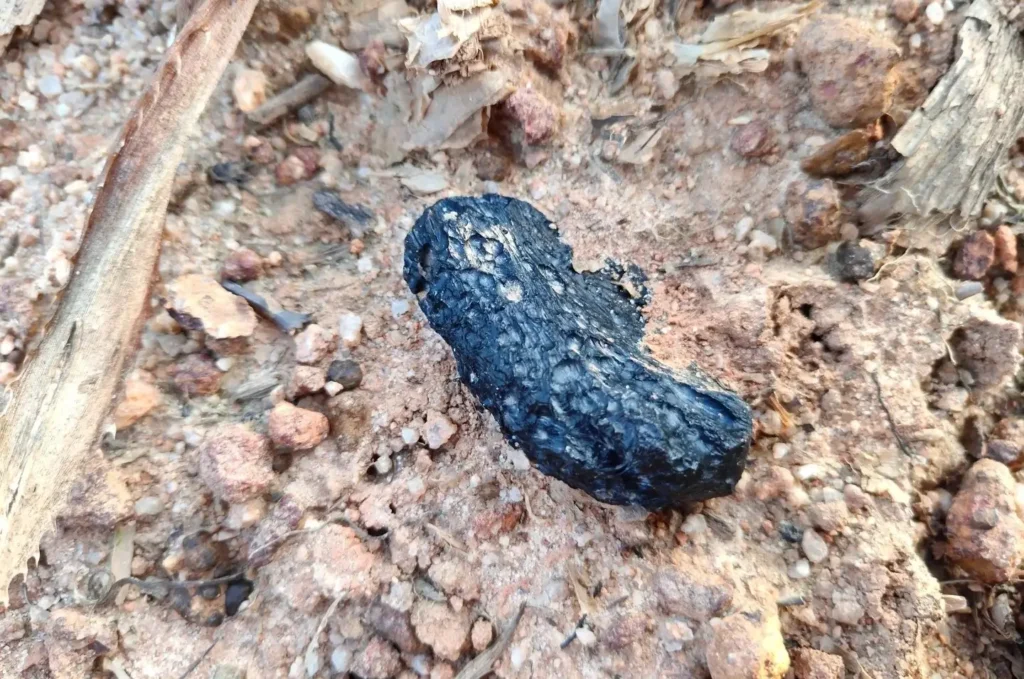
Characteristics:
- Black
- Dark brown
- Deep gray
Common shapes include:
- Teardrop-shaped forms
- Dumbbell-shaped forms
- Button-shaped forms
Their surfaces often show:
- Natural pits and cavities
- Etched textures
- Splash-like marks created during rapid cooling
How to Identify Natural Tektites
As Moldavite and other valuable tektites have gained attention among collectors, the market has also seen an increase in artificial glass imitations.
The following methods can help you make an initial assessment when evaluating a tektite specimen.
1. Examine the Color
Natural tektites display a wide range of colors, including:
- Pale yellow
- Grayish yellow
- Yellow-green
- Green
- Gray-green
- Greenish brown
- Brownish black
- Black
Among these, green, yellow tones, and black varieties are the most common.
Be cautious if a specimen shows:
- Extremely bright and vivid colors
- A perfectly uniform appearance
- Unusual colors rarely found in natural tektites, such as bright blue or red
- A strong “bottle green” appearance
These characteristics may indicate a glass imitation.
2. Examine Size and Shape
Natural tektites are typically found in:
- Centimeter-sized pieces
Large, complete specimens are relatively rare.
Common natural forms include:
- Irregular fragments
- Teardrop-shaped forms
- Dumbbell-shaped forms
- Splash-shaped fragments
3. Look for Surface Etching and Splash Marks
Surface features are among the most important characteristics when identifying natural tektites.
During their formation, tektites undergo:
- Extreme melting
- High-speed ejection
- Rapid cooling
As a result, their surfaces often display:
- High-temperature etched structures
- Irregular pits
- Flow-like textures
- Splash marks
Natural surface features usually show:
- Irregular outlines rather than perfectly smooth shapes
- Irregular edges around surface cavities
- Pits with different sizes and depths
- Directional patterns within the textures
Artificial glass imitations often show:
- Shapes that appear overly smooth and uniform
- Rounded edges around surface pits
- Repetitive, mechanical-looking splash patterns
- Surface textures that lack natural variation
Some imitations may also show:
- Excessively smooth fracture surfaces with internal stress patterns
- Visible stress cracks caused by rapid cooling
These characteristics are commonly associated with artificially produced glass.
Professional Note
Visual inspection can only provide an initial assessment.
For valuable tektite specimens, the most reliable approach is professional testing, including:
- Spectroscopic analysis, such as Fourier-transform infrared spectroscopy (FTIR) and Raman spectroscopy
- Chemical composition analysis
These methods help verify the material’s composition and structural characteristics.
Jewea’s Perspective
Tektites have long fascinated collectors with their unique appearance, cultural associations, and remarkable geological history.
While some market stories focus on their extraterrestrial origins or symbolic meanings, their true beauty lies in the scientific story they preserve — a record of a powerful cosmic impact that transformed Earth’s own materials.
Neither ordinary glass nor traditional meteorites, tektites represent a rare form of natural glass shaped by forces rarely seen in ordinary geological processes.
For jewelry lovers, their distinctive colors, textures, and origins make tektites a fascinating material that connects natural beauty with Earth’s history.
Explore more about natural gemstone materials and handcrafted jewelry inspired by Earth’s geological stories in the Jewea Knowledge Hub.