What Is Xianghua Jade? The Truth About This Emerging Chinese Nephrite
At the 5th China (Hunan) International Mineral and Gem Show in May 2017, a new variety of Chinese emerging nephrite made its official debut: Xianghua Jade.
Almost overnight, the internet exploded with viral articles, exaggerated reports, and wild marketing hype.
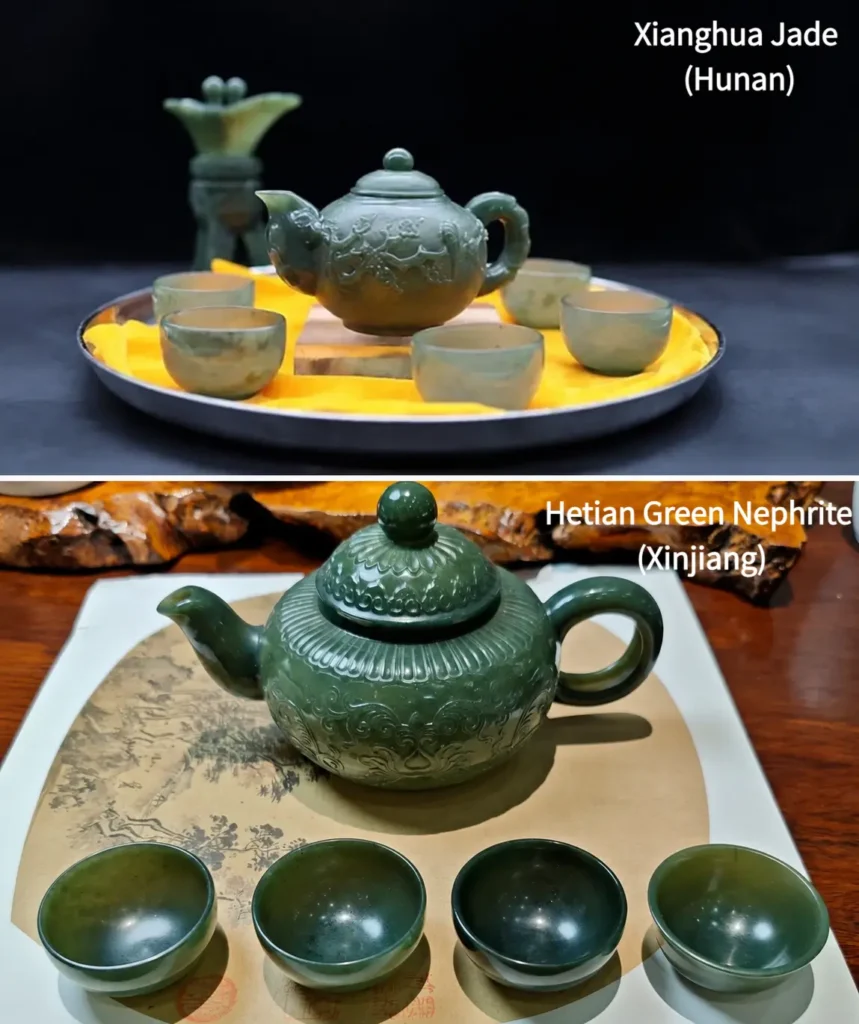
Some claimed Xianghua Jade was rarer and far more valuable than traditional Hetian jade. Others fabricated pseudoscience about its magical health benefits to drive up prices. Looking at the promotional photos of the Xianghua teaware, I couldn’t help but notice they looked identical to classic Hetian green-nephrite (Qingyu) cups.
So, stripping away the overwhelming online noise, what exactly is this newly discovered Chinese nephrite? Let’s look past the hype and look at the facts.
Why the Name “Xianghua”? And Is It True Hetian Jade?
Naturally, the name sparks curiosity. Does “Xianghua” (which literally translates to “fragrant flower”) mean the jade carries a scent or floral pattern?
Not at all. “Xianghua Jade” is simply a trade name based on its locality. The deposit lies in the Xianghua Ridge region of Linwu County, Chenzhou, Hunan Province, where geologists from the Hunan Institute of Geological Sciences first discovered the resource in May 2016.
When identifying any gemstone, market names are secondary to its fundamental mineralogy and chemical composition.
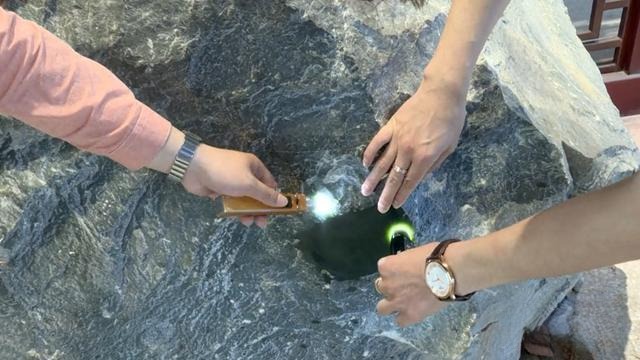
Geologically, Xianghua Jade formed through a contact metasomatic process. A magmatic intrusion interacted with calcium- and magnesium-rich carbonate rocks under high temperatures and pressures, creating a mineralization zone between 0.5 and 2.5 meters wide. This replacement process formed a nephrite jade composed predominantly of tremolite. Under magnification, it exhibits a characteristic interlocking fibrous texture.
Thanks to the specific geological environment of Xianghua Ridge, this jade features a fine texture, a primarily greenish-cyan hue, and distinct translucency. But does this specific mineral profile qualify it as true Hetian jade?
Tracing the Origin: Why Xianghua Jade Is Hetian Nephrite
Search for “Xianghua Jade” online, and you will inevitably find it linked to Hetian jade. Articles constantly compare the two, pitting them against each other or debating their similarities, yet few offer a definitive answer.
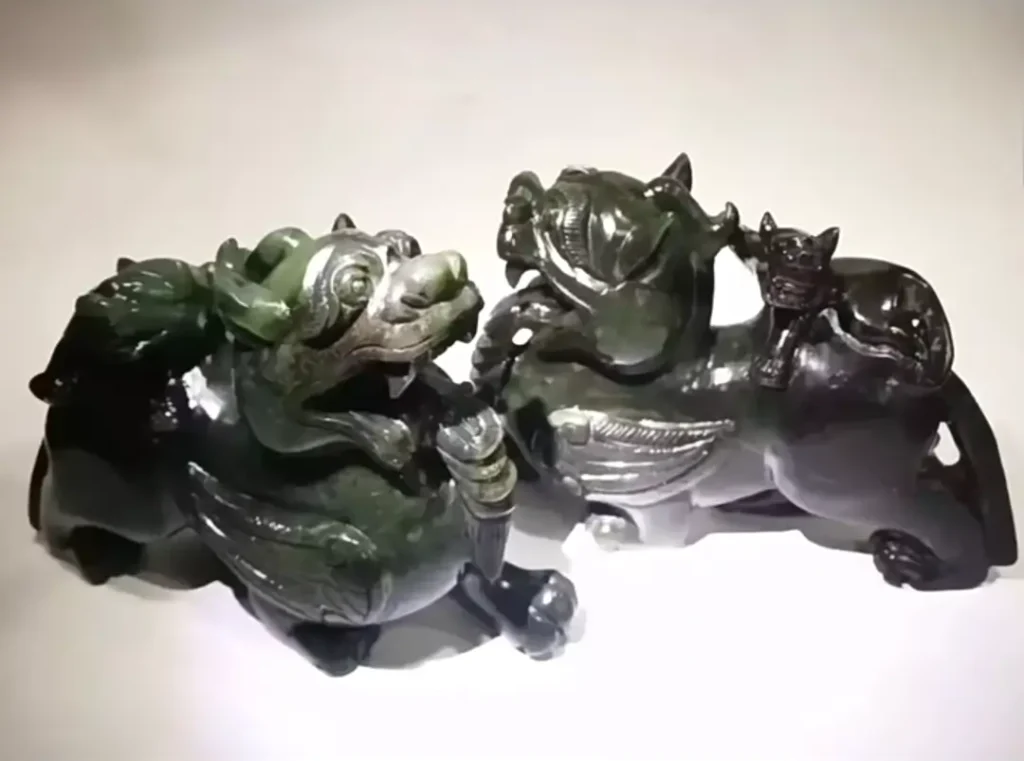
The reality is straightforward: under the current Chinese National Standard, Testing and Classification of Hetian Jade (GB/T 38821—2020), “Xianghua Jade” officially qualifies as Hetian jade under its broad, geographic-independent definition.
Gemological Characteristics of Xianghua Jade
Data published in the Proceedings of China International Jewelry Academic Conference outlines the exact scientific profile of this material:
- Color & Luster: Primarily grayish-green to dark green with a greasy luster; translucent.
- Physical Properties: Refractive index (RI) of 1.61; specific gravity (SG) ranging from 2.99 to 3.17; Mohs hardness of 6.0 to 6.5.
- Mineral Composition: Composed of over 90% tremolite, with trace amounts of secondary minerals including diopside, pyrrhotite, fluorite, and chondrodite.
- Structure: Predominantly interlocking fibrous (nematoblastic) and radiating textures. The fine-grained jade occasionally shows felted and cryptocrystalline structures within a dense, massive aggregate.
- Spectroscopy: Displays the classic infrared absorption spectrum characteristic of tremolite.
- Coloration: Iron (Fe) is the primary trace element responsible for the green hue in this Linwu nephrite.
While minor variations in secondary mineral content cause slight fluctuations in density, the green tremolite-rich jade from Hunan’s Xianghua Ridge falls squarely within the standard parameters of Hetian jade.
From both a mineralogical and gemological standpoint, the national standard defines any jade composed primarily of tremolite-actinolite with an interlocking fibrous texture as Hetian jade in the broad sense. Scientifically, Xianghua jade belongs to the exact same nephrite family as Xinjiang Hetian jade, Qinghai green-banded (Cuiqing) jade, and Russian green nephrite.
Is This Chinese Emerging Nephrite Valuable?
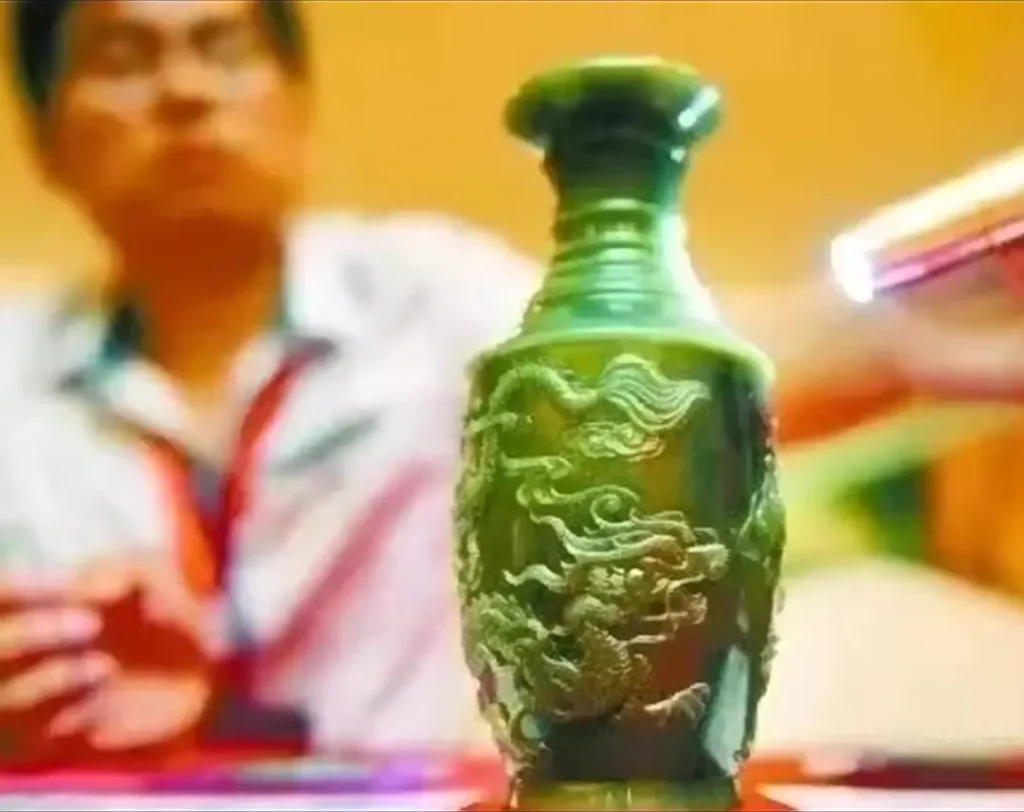
When a new material hits the market, its commercial value is always the biggest question. By evaluating primary deposit (Shanliao) specimens and finished carvings, we can break down the physical reality of Xianghua Jade:
- Color Profile: It primarily yields green-cyan (Qingyu) and dark ink-green hues. The colors lean toward a deep, saturated, and heavy tone, giving it a solemn appearance.
- Texture & Luster: The material feels fine and smooth. Thanks to its tightly interwoven fibrous structure, it displays a desirable greasy luster and a classic “warm” feel.
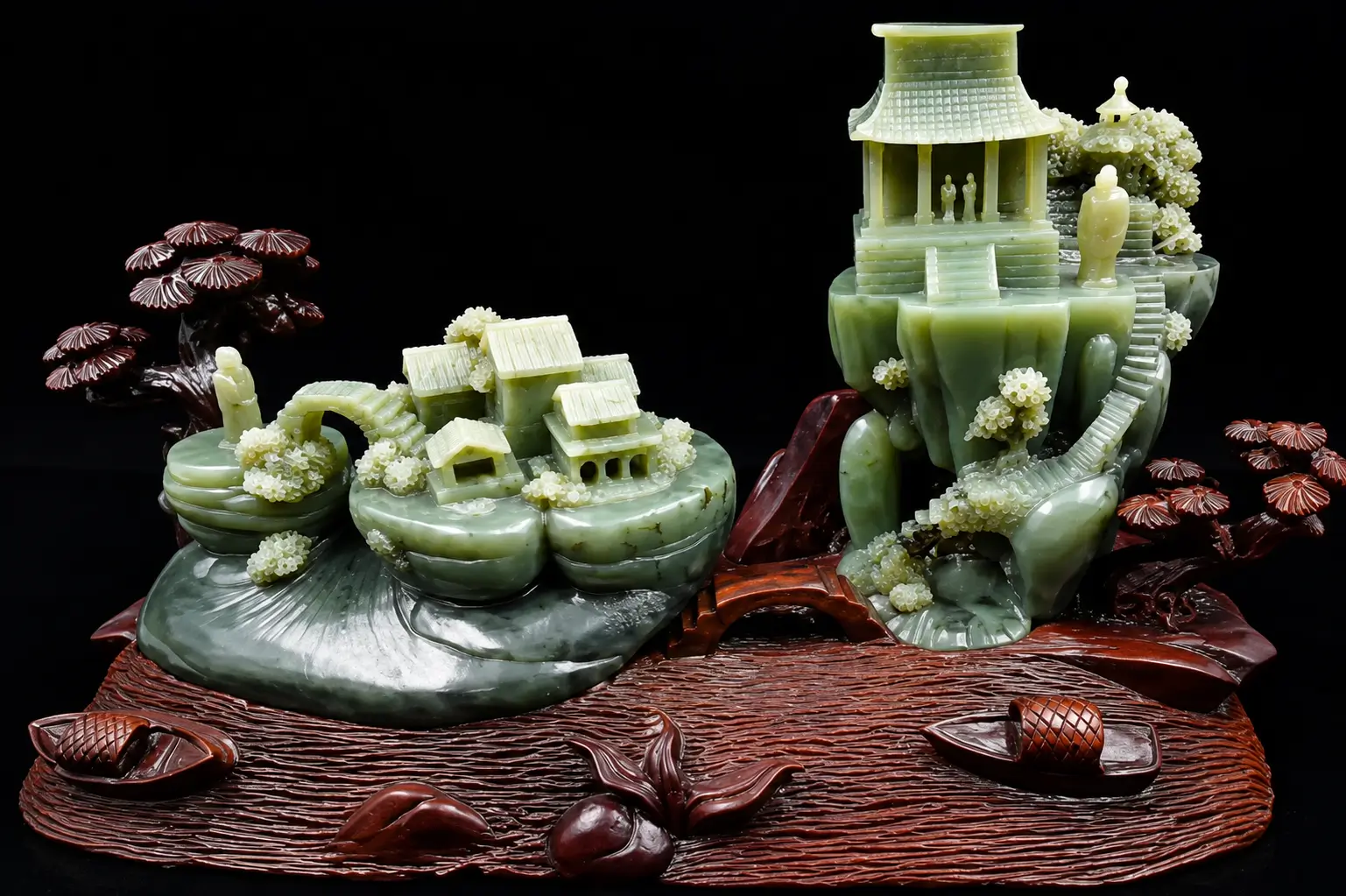
- Volume & Integrity: Most production comes from primary mountain deposits rather than alluvial sources. These rough stones yield large sizes with relatively few internal fractures, making them highly suitable for medium to large-scale jade sculptures.
However, stripping away the marketing, Xianghua Jade is fundamentally just primary-deposit green-cyan nephrite—a material already abundant throughout the Hetian jade market.
To put it into perspective:
- By Volume: Green-cyan nephrite (Qingyu) is the most heavily produced variety in the Hetian jade family.
- By Color: Dark, muddy, or dull green-cyan tones are historically the least desirable shades on the market.
- By Quality: The vast majority of green-cyan nephrite has a coarse texture; only a fraction is fine-grained enough for high-end jewelry carving.
Consequently, the actual market value of Xianghua Jade is nowhere near as high as the online hype suggests. This material arrived late to the market. It is a type of Chinese emerging nephrite, much like Hunan’s Tongtian stone or Guizhou’s Luodian jade. Because it lacks historical prestige and widespread recognition, its rough material cannot command a premium. It simply lacks the cultural reverence reserved for Xinjiang’s white river pebbles (Ziliao) or traditional mutton-fat jade.
The Jewea Perspective
Every time a new gemstone deposit is uncovered, it arrives with sky-high expectations. A poetic, catchy marketing name naturally stirs up desire and fascination. However, no matter how beautifully a stone is marketed, its true commercial value always returns to the physical material itself.
Every jade variety yields high, medium, and low-grade qualities. When evaluating a piece of this Chinese emerging nephrite, we cannot simply buy into the name “Xianghua.” Instead, we must assess it based on the core pillars of jade grading: fineness (checking under a gemological torch to ensure a flawless, structureless texture), oiliness, clarity (the absence of black spots, white cotton-like inclusions, or fractures), and the vibrancy of its color.
Ultimately, Xianghua Jade is a legitimate, tremolite-rich nephrite backed by solid geological data. While it may not replace historical heirlooms, it serves as a highly cost-effective material for artisanal carvings and stands out as a unique regional jade. For savvy collectors and jewelry lovers, the greatest skill is learning to look past the marketing noise and appreciate the true essence of the stone.