Czech Glass Jewelry: Handmade Warmth from the Past
Czech glass jewelry doesn’t have the waxy warmth of Hetian jade bangles. It doesn’t throw fire under a spotlight either. Its beauty lives in vintage tones. It lives in the small imperfections that remind you a human hand was involved somewhere along the way.
Czech glass remains something of a hidden treasure in handmade jewelry circles. It will never appeal to everyone. Instead, it finds its place with people who appreciate texture, history, and the quiet beauty of handmade things.
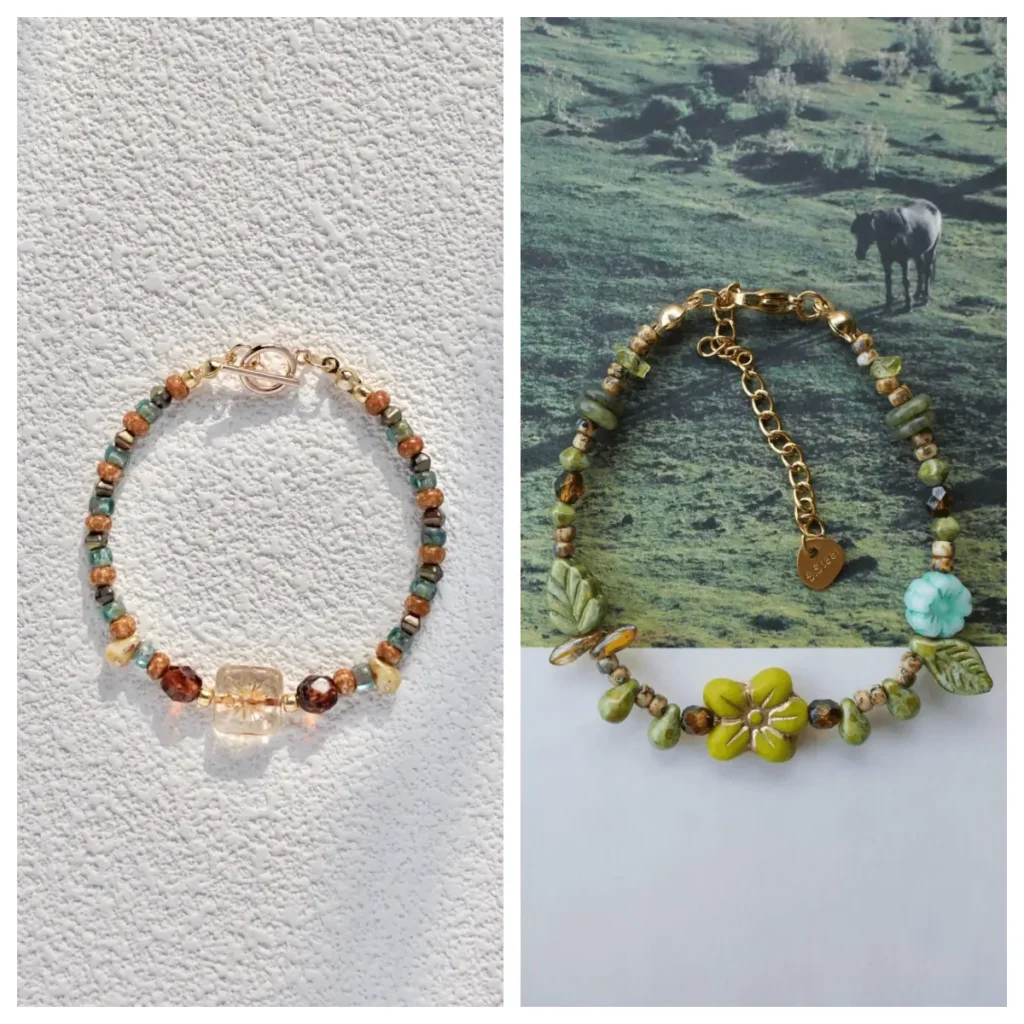
Today, we’ll look at two Jewea designs. Through them, we’ll get to know a material that has captivated jewelry makers for generations.
Two Bracelets, Two Stories
Here are two recent Jewea pieces. Both use Czech glass as the primary material, yet each tells a completely different story through color, shape, and finish.
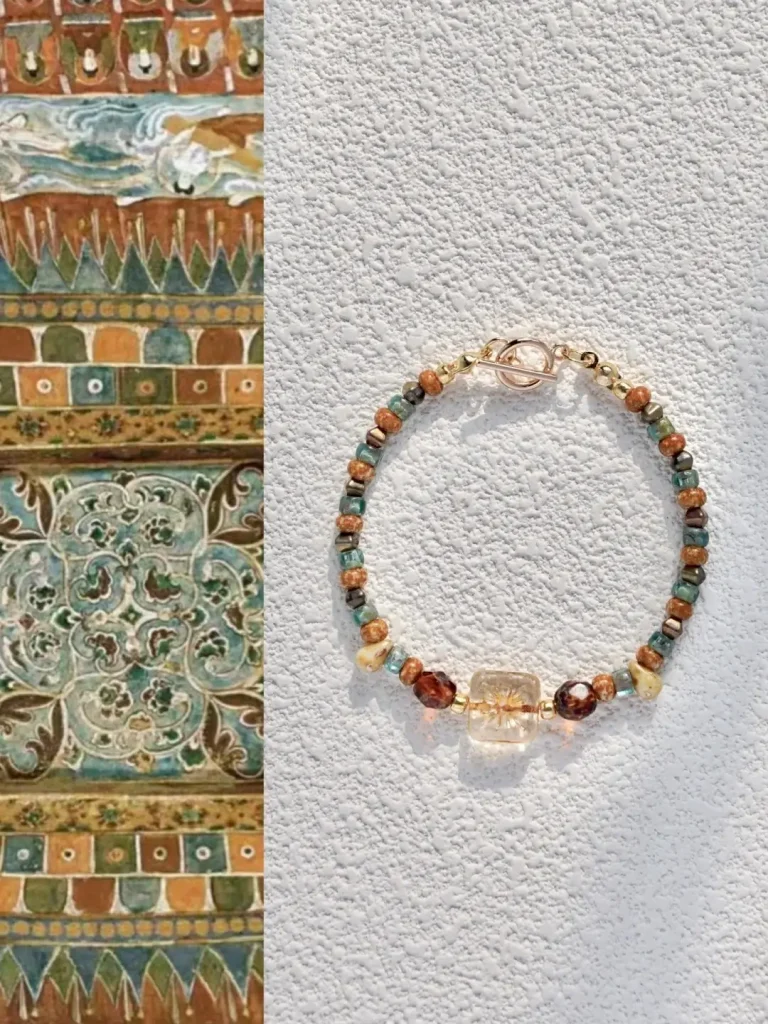
The Dunhuang Vintage beaded bracelet draws inspiration from the colors of ancient desert murals. Terracotta tones, peacock blue, and deep lapis blue weave together, each bead carrying a weathered, timeworn appearance. At its center sits a geometric glass tile featuring recessed floral details highlighted with an antiqued gold wash. Picasso-finish round beads surround it, their chalky, moss-like textures echoing the layered mineral pigments and worn surfaces found on centuries-old wall paintings. Combined with Japanese Miyuki seed beads and 14K gold-filled findings, the bracelet feels like a small artifact rediscovered after years beneath the sand.
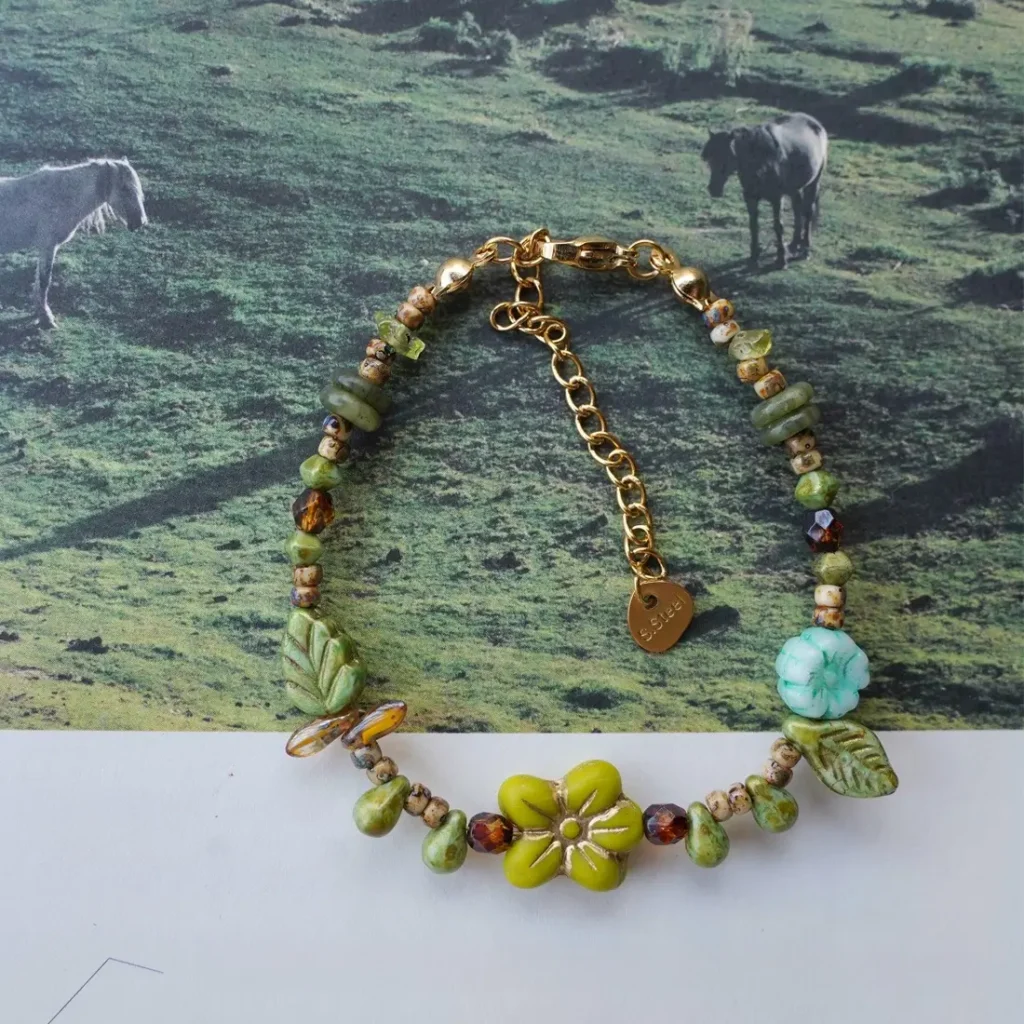
The Greenwild Beaded Bracelet takes its inspiration from the open grassland. A mustard-green five-petal flower becomes the visual anchor, surrounded by leaf beads with visible vein textures and small teardrop-shaped beads that echo fresh shoots pushing through the soil. Accents of green gemstones add subtle shifts of mossy green and earthy tone. A pale sea-green bead breaks the monotony of the green palette, ensuring that no two bracelets look exactly alike.
The contrast between these two designs demonstrates one of the most fascinating aspects of Czech glass: the same material can speak in many different visual languages.
What Is Czech Glass?
The name comes from the modern Czech Republic. For centuries, the Bohemia region has been known for glassmaking, supported by local deposits of silica-rich sand and a long tradition of craftsmanship.
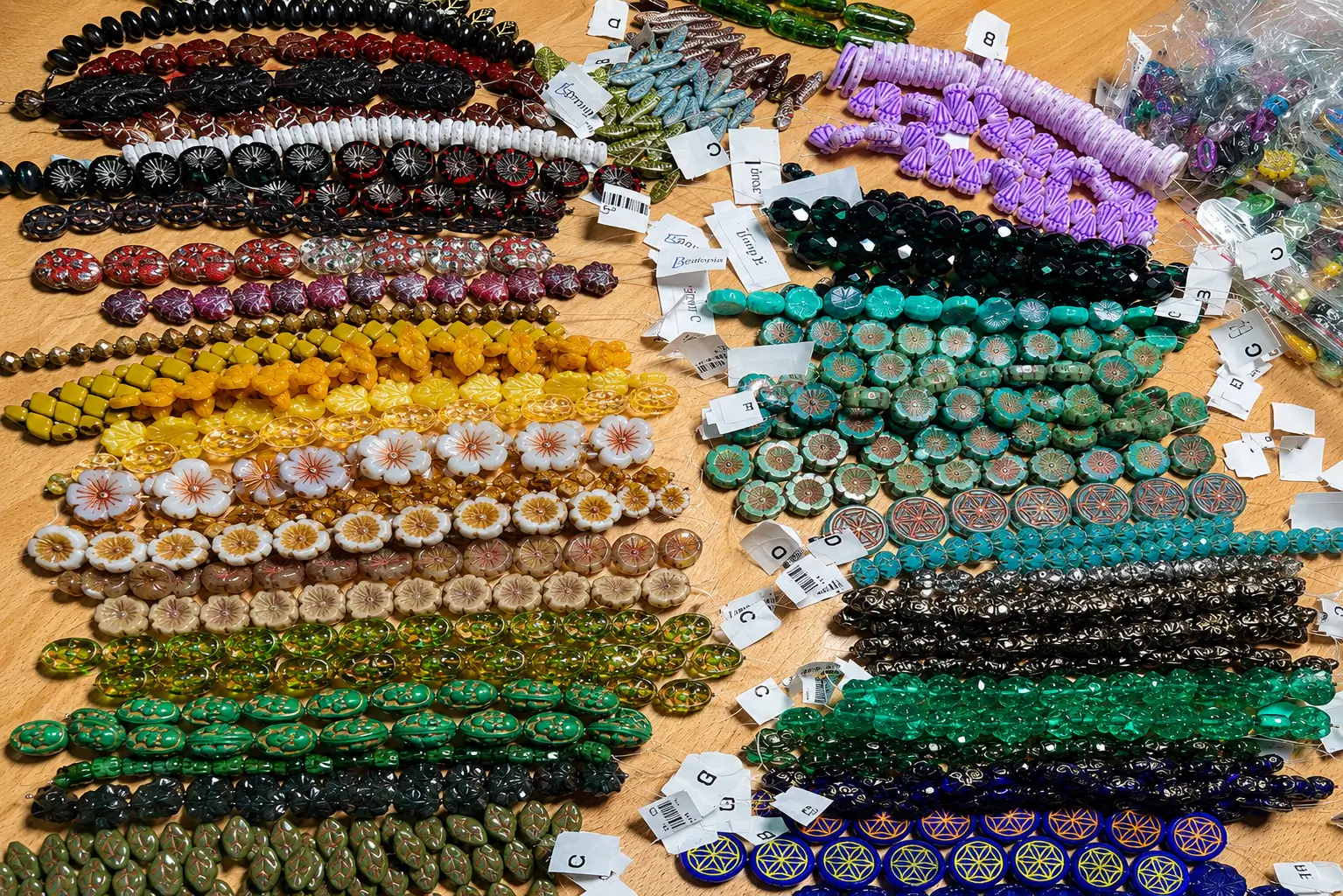
Today, Czech glass beads are valued around the world for their clarity, consistency, and remarkable variety of shapes, colors, and finishes. Their appeal lies not only in the material itself, but also in the techniques that have evolved through generations of beadmaking.
Czech glass beadmaking grew out of the cottage-industry traditions of Northern Bohemia. For centuries, families worked in small workshops, passing molds, techniques, and finishing methods from one generation to the next. While modern production has evolved significantly, that heritage still shapes the character and identity of Czech glass today.
Many classic Czech bead shapes begin as molten glass pressed into molds. This approach makes it possible to create intricate leaves, flowers, and other organic forms that would be difficult to achieve through cutting alone.
Small variations naturally occur during production. Tiny differences in temperature, pigment distribution, or finishing can create subtle irregularities in color and texture. In industrial terms these may be considered process marks. In handmade jewelry circles, they are often part of what makes Czech glass feel distinctive and alive.
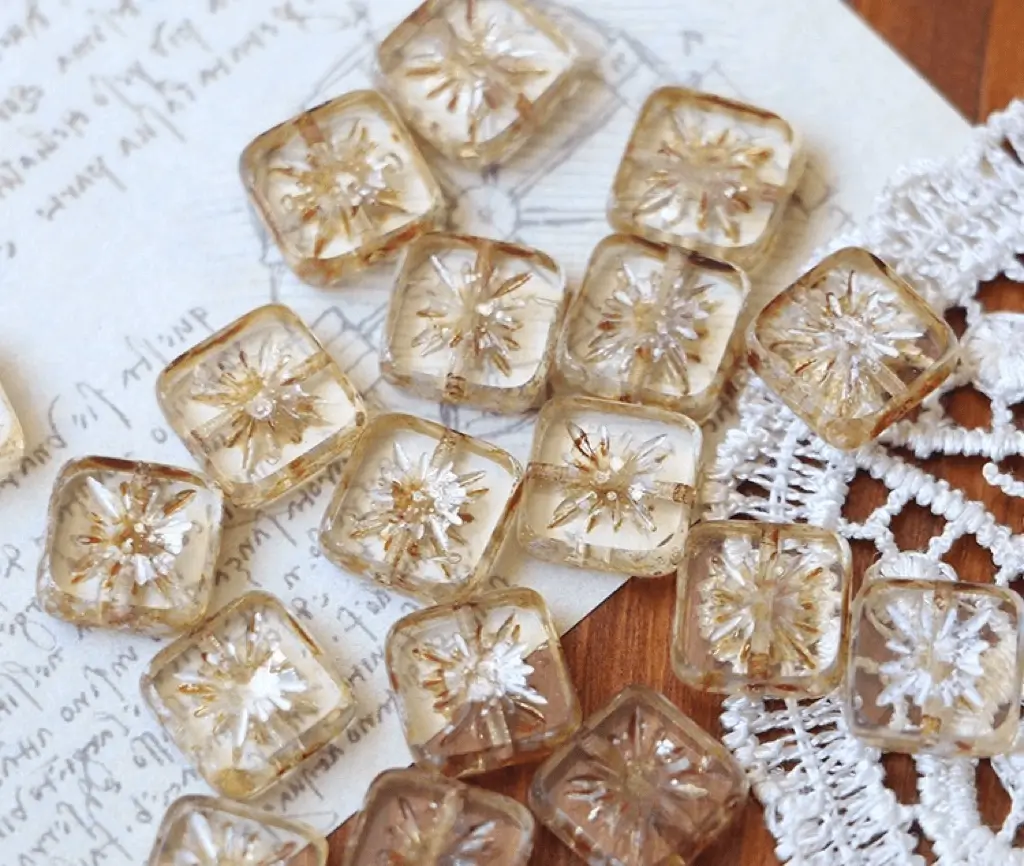
The clear focal bead in the Dunhuang Bracelet features pressed floral details accented with an antique gold wash. No two pieces are exactly alike.
One reason Czech glass is so highly regarded is that color gets mixed directly into the glass, not applied as a surface coating. Metal oxides such as cobalt, copper, manganese, and iron enter the glass during production, creating rich colors that hold their brilliance over time.
Because the color is part of the glass itself, Czech glass generally retains its appearance exceptionally well through years of wear while preserving the depth and variation that collectors and jewelry makers value.
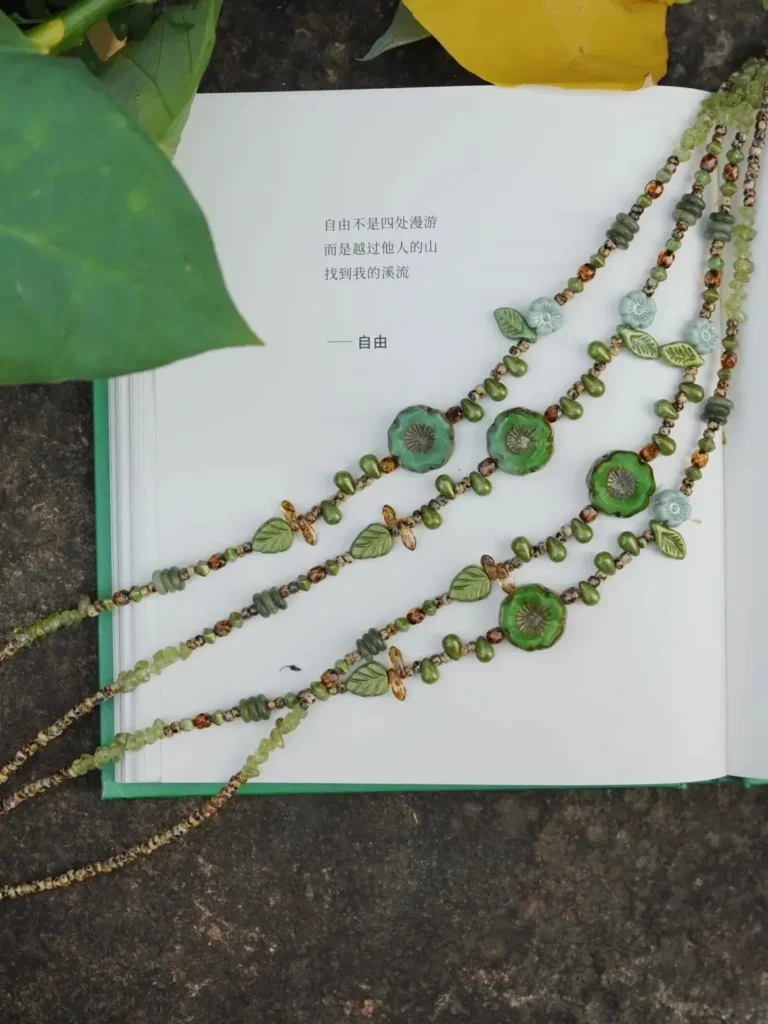
The green flower in the Wilderness Bracelet derives its color from pigments incorporated into the glass itself rather than from surface paint.
Why It Can’t Be Copied
Pressing and Drawing
Czech glass comes in an extraordinary range of shapes. Many are produced through pressing techniques that form molten glass inside detailed molds, while others begin as drawn glass that is later cut and shaped.
As the glass cools, tiny air bubbles, soft edges, and subtle surface variations can appear naturally. These characteristics help give Czech glass its distinctive personality and separate it from fully automated mass-produced beads.
Fire-Polishing
Many pressed beads emerge from the mold with slightly sharp edges. To refine the surface, they are briefly passed through flame, which softens the edges and creates a smooth, rounded finish.
The result is a gentle vintage luster that feels warm rather than flashy. Light moves softly across the surface instead of producing the sharp brilliance associated with machine-cut crystal.
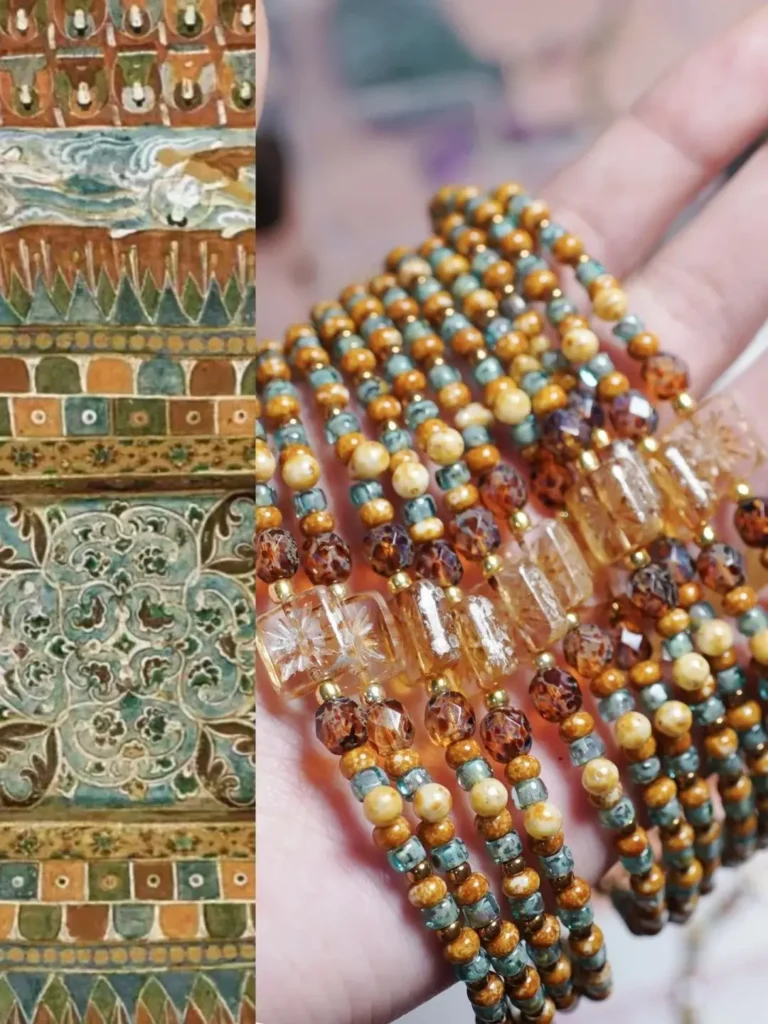
Every Picasso-finish round bead in the Dunhuang Bracelet undergoes fire-polishing. The result is a quiet glow that complements the bracelet’s aged, archaeological character.
Color Magic: Surface Effects
Among jewelry makers, Czech glass is often admired for its extraordinary range of finishes. Beyond standard transparent, matte, and iridescent styles, several traditional surface effects have become especially beloved.
Travertine Finish
Travertine finishes create mottled surfaces that resemble weathered stone, moss, or dry earth. The effect pairs naturally with botanical and nature-inspired jewelry, adding a sense of age and texture.
The Dunhuang Bracelet makes extensive use of this finish. The irregular patches on the beads echo the layered pigments and weathered surfaces often seen in ancient murals. Each bead develops its own visual character.
Copper Wash and Gold Wash
This technique applies antique copper or gold-toned pigment into recessed details such as leaf veins, flower petals, and decorative grooves.
Rather than covering the entire bead, the metallic color settles into the lower areas, emphasizing texture and depth while creating an aged appearance.
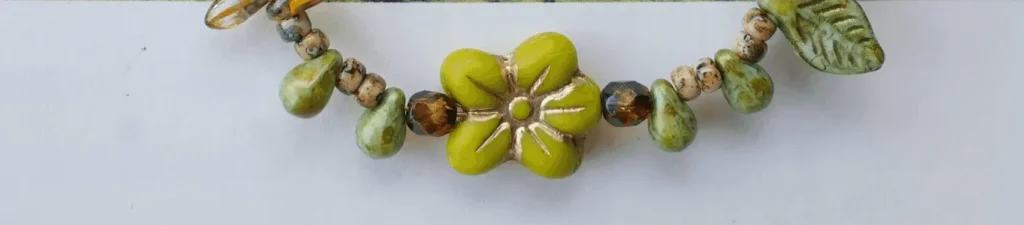
The flower and leaf beads in the Wilderness Bracelet use gold-wash detailing. The effect adds subtle highlights without overwhelming the organic character of the design.
Alabaster Finish
Alabaster glass combines softness and opacity, creating a look reminiscent of antique porcelain or certain natural stones.
Rather than appearing fully transparent, it diffuses light gently and contributes a sense of visual weight and vintage character.
The pale sea-green bead in the Wilderness Bracelet uses an alabaster finish. Its soft appearance helps anchor the asymmetrical composition of the bracelet.
How to Care for Czech Glass Jewelry
Czech glass itself is durable for everyday jewelry wear, but certain finishes and metal components benefit from a little extra care.
- Avoid prolonged exposure to water, perfumes, and cosmetics whenever possible.
- Wipe beads gently with a soft cloth after wearing.
- Store jewelry separately to reduce friction against harder surfaces.
- Keep gold-filled findings and decorative finishes in a dry, sealed pouch when not in use.
With proper care, Czech glass jewelry can retain its beauty for many years.
Final Word
The appeal of Czech glass has never been about perfection.
Its charm comes from subtle variations, historic techniques, and the feeling that every bead carries traces of the hands that shaped it.
Whether expressed through the weathered grandeur of the Dunhuang Vintage Bracelet or the botanical spirit of the Wilderness Bracelet, these designs remind us that handmade beauty doesn’t need to be flawless. It only needs to feel genuine.
It belongs with people who appreciate texture, history, and the quiet beauty of handmade things.
If you’ve ever paused in an antique shop because a worn object caught your eye, or found yourself drawn to details that others might overlook, then you already understand the enduring appeal of Czech glass.