Tiger’s Eye Jewelry: From Mineral Structure to Modern Design
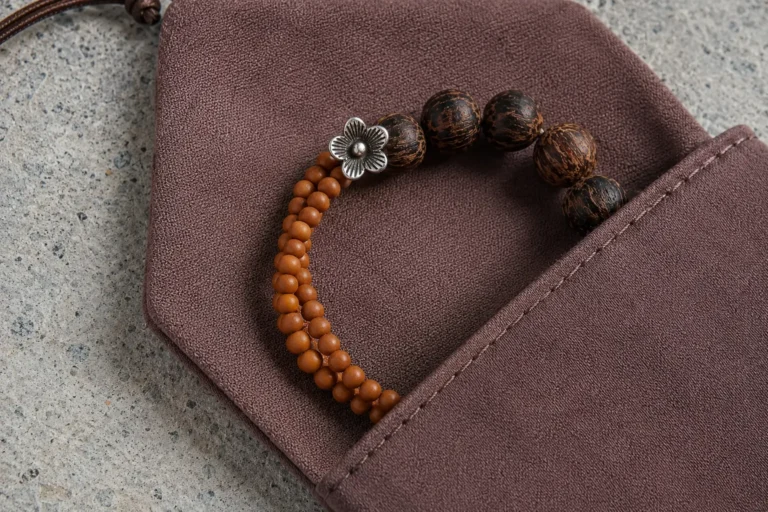
When people think of tiger’s eye jewelry, the first image that often comes to mind is the classic beaded bracelet—such as JEWEA’s tiger’s eye bracelet. However, in contemporary handcrafted jewelry design, the material is no longer confined to traditional round bead forms.
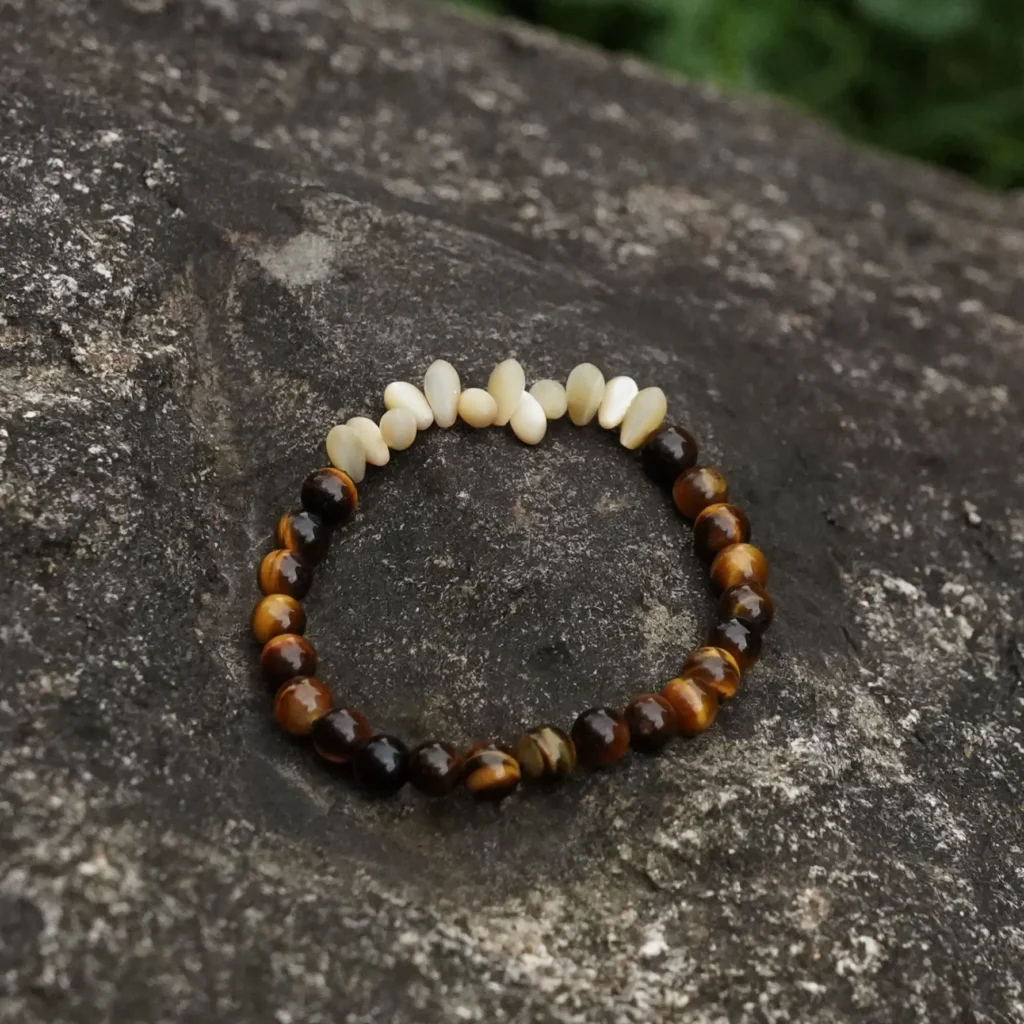
Within JEWEA’s design language, we explore more architectural interpretations of the stone by introducing modern cutting styles such as tube cuts and linear arrangements. These structural approaches allow this optically dynamic mineral to reveal a more rhythmic, sculptural presence in necklaces and earrings—closer to a visual language of form and movement rather than simple ornamentation.
In this article, we focus on JEWEA’s tiger’s eye necklace and earring collections, combining design perspective with a deeper look at the geological formation of tiger’s eye and its defining optical characteristic—the silky luster that gives the stone its signature depth and movement.
What Is Tiger’s Eye?
To understand tiger’s eye properly, we first need to look at its mineral classification.
Tiger’s eye is a variety of Pseudocrocidolite (Tiger’s Eye Quartz) in gemology. It is not a single mineral in the strict sense. Instead, it is a fibrous aggregate mainly composed of quartz (SiO₂) formed through a replacement process.
More precisely, tiger’s eye belongs to the group of pseudomorphic quartz gemstones. It forms when the original mineral, crocidolite (blue asbestos, a sodium iron amphibole), is gradually replaced by silica during long geological processes.
The silica replaces the original material layer by layer. However, it preserves the original fibrous structure. This preserved structure is what gives tiger’s eye its characteristic optical behavior and silky visual movement.
Basic Mineralogical Properties (Pseudocrocidolite System)
- Mohs hardness: 5.5–7
- Specific gravity: approx. 2.60–2.80
- Refractive index: approx. 1.544–1.553
- Crystal system: Cryptocrystalline quartz aggregate
Among quartz-based gemstones, pseudocrocidolite stands out not because of its color range, but because of its distinct optical structure. It shows a unique combination of silky luster and chatoyancy (cat’s-eye effect).
This optical behavior comes from its internal fibrous structure. Light does not simply reflect on the surface. It interacts with aligned micro-fibers inside the stone. As a result, the stone produces a moving, silky light band that shifts with viewing angle.
Unlocking the Silky Luster of Tiger’s Eye
The most distinctive visual feature of tiger’s eye is its moving, silk-like metallic sheen. It shifts with light and viewing angle. Gemologists describe this effect as silky luster, a form of chatoyancy.
This optical behavior develops through a long geological process. It unfolds in three key stages:
1. Original mineral stage
The process starts with crocidolite, a fibrous sodium iron amphibole (blue asbestos). It forms in tightly aligned fibrous bundles inside the host rock.
2. Replacement stage
Over time, silica (SiO₂) slowly penetrates the structure. It replaces the original mineral material. This process happens gradually and under stable geological conditions.
3. Structural preservation stage
The silica fully replaces the crocidolite. However, it does not destroy the original fibrous pattern. Instead, it preserves the directional fiber structure as a pseudomorphic quartz formation.
Under microscopic observation, these fibers appear as extremely fine, parallel bundles. When light enters the stone, it reflects and diffracts along these aligned structures. This creates a concentrated, moving band of light on the surface.
That moving “silk line” is the source of tiger’s eye’s golden, flowing visual depth.
Visual Identification: Tiger’s Eye vs Hawk’s Eye
In the pseudocrocidolite family, confusion most often happens between two closely related varieties: Tiger’s Eye and Hawk’s Eye.
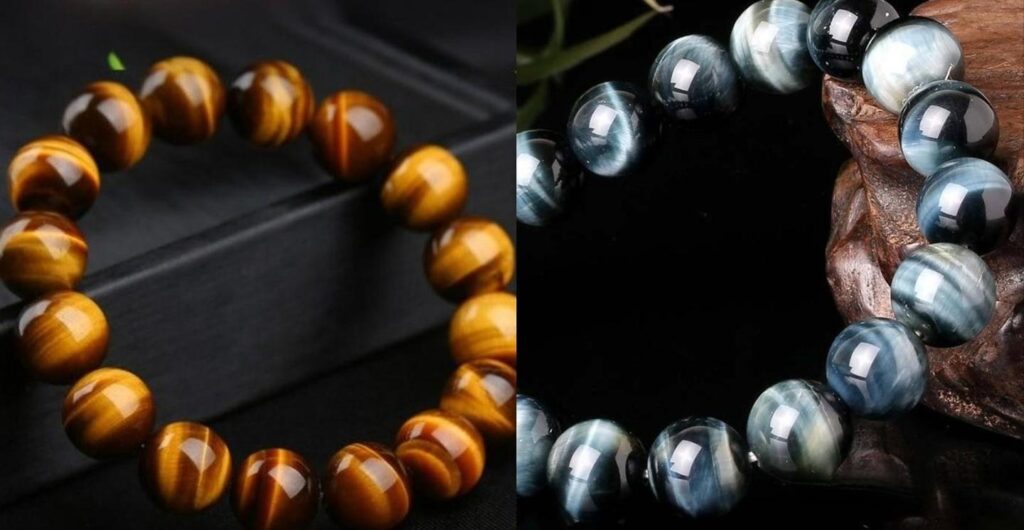
They share the same structural foundation. The difference comes from how far the mineral replacement process has progressed.
1. Tiger’s Eye
- Color: golden yellow, yellow-brown, deep brown
- Formation: iron oxides (mainly limonite) participate in the oxidation process
- Optical effect: golden fibrous shimmer with strong chatoyancy
- Visual impression: warm, dense, with a metallic, flowing light band
When lapidaries cut it into a cabochon shape, the light concentrates into a sharp moving band. This creates the signature “eye” effect that gives tiger’s eye its name.
2. Hawk’s Eye
- Color: blue-grey, blue-green, deep slate blue
- Formation: incomplete replacement, with more of the original crocidolite blue still preserved
- Optical effect: cool silky luster with a softer cat’s-eye effect
- Visual impression: calm, deep, and airy, with a more fluid sense of light movement
You can understand the relationship like this:
Tiger’s Eye = a more fully oxidized, warm-toned version
Hawk’s Eye = a cooler version that preserves more of the original blue mineral structure
In natural light, both stones show distinct optical behavior, a difference we explore further in our tiger’s eye bracelet authenticity.
JEWEA Tiger’s Eye Jewelry Collection
At JEWEA, we intentionally move away from the uniform look of traditional beaded designs. Instead, we build a more structured design language that gives tiger’s eye a new visual rhythm.
We explore forms that feel more architectural and intentional, including:
- Tube-cut shaping
- Irregular, rhythm-based stringing
- Mixed-material compositions using shell, brass, and glass
Each of these approaches serves a clear purpose. We want to shift tiger’s eye away from a purely ornamental role. We let it act as a material with movement and structure.
The goal is simple. We bring out the stone’s natural optical flow and place it inside a more defined design framework. This contrast allows its silky light effect to feel more dynamic, more directional, and more alive within modern handcrafted jewelry.
1. Tiger’s Eye & Trochus Shell Necklace
The tiger’s eye shell necklace brings together warm-toned tube-cut tiger’s eye and natural shell elements in a clean, linear composition.
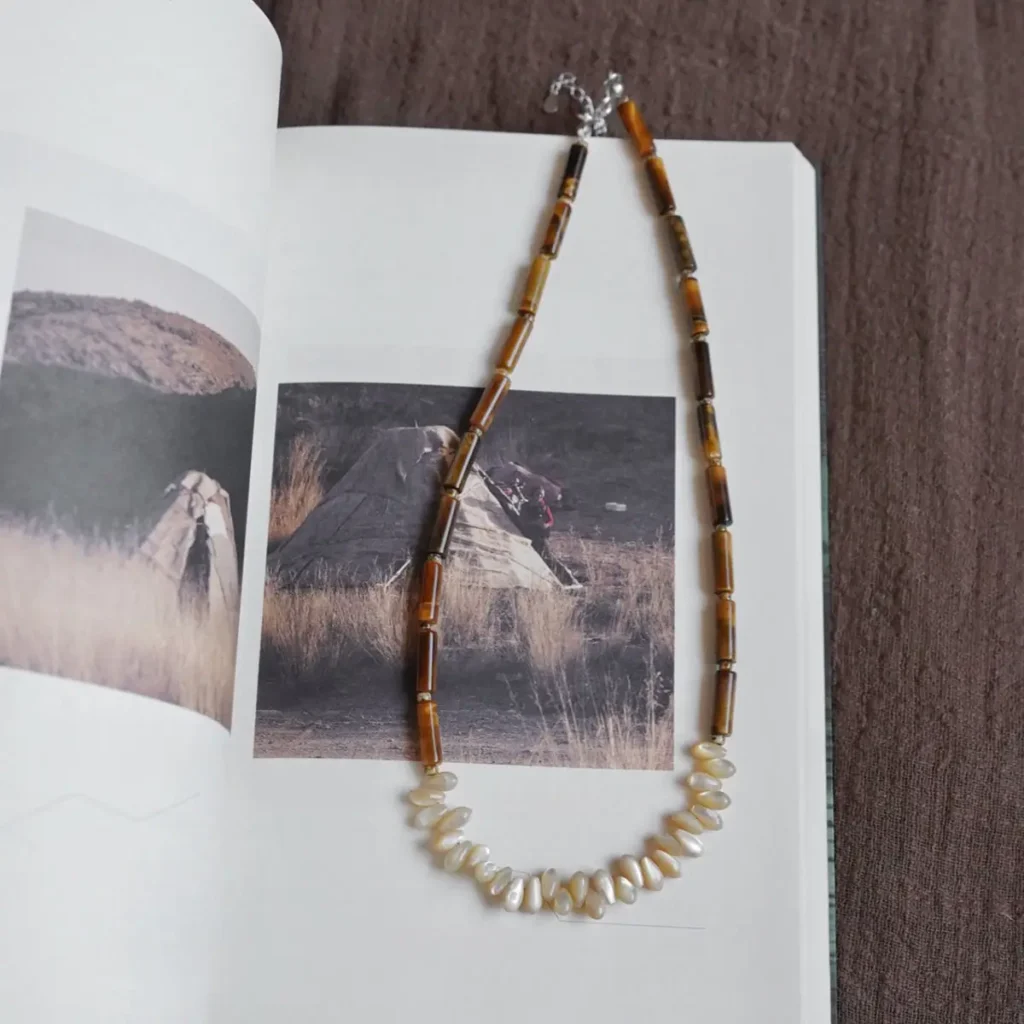
We structure the tiger’s eye beads in a directional layout to emphasize the stone’s natural flow of light. Each bead carries a subtle silky band that shifts as the necklace moves. This creates a continuous sense of motion along the neckline.
At the end of the design, we introduce natural Trochus shell. Its soft ivory and warm orange tones contrast gently with the deeper brown of the tiger’s eye. The transition feels calm and organic rather than abrupt.
From a material perspective, this piece creates a dialogue between mineral and marine elements. The rigid structure of quartz meets the soft calcium-based texture of shell. This contrast brings balance to the design and adds a natural rhythm between density and lightness.
2. Tiger’s Eye & Glass Bead Necklace
The handmade tiger’s eye necklace combines tube-cut tiger’s eye with hand-blown glass beads. This design creates a clear contrast between two different optical systems: opacity and transparency.
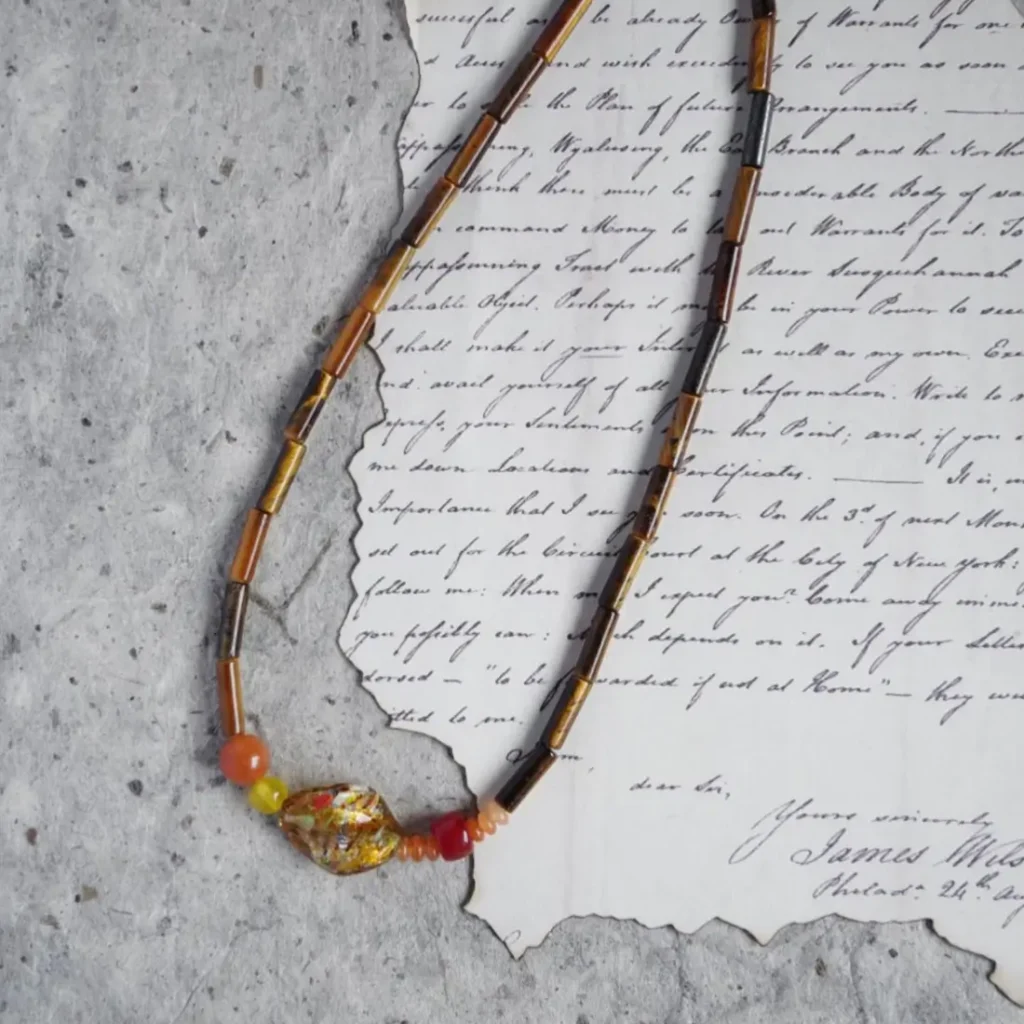
We use this contrast to highlight how each material interacts with light in its own way.
- Tiger’s eye: Semi-opaque quartz structure that emphasizes internal light flow and silky movement
- Glass beads: Highly transparent material that emphasizes surface refraction and color diffusion
In this piece, we cut the tiger’s eye into elongated tube shapes. This approach strengthens its linear mineral structure and enhances its directional visual flow. It also gives the necklace a more structured, architectural rhythm along the neckline.
We then add accents of red agate, yellow agate, and sunstone. These warm-toned stones create a gradual color transition across the design.
- The palette moves from golden brown tones
- It shifts into soft reds
- And finally into orange-based hues
This layered color progression adds depth and variation. At the same time, it keeps the overall composition stable and visually cohesive.
3. Tiger’s Eye Drop Earrings
The handmade tiger’s eye earrings use classic cabochon-cut tiger’s eye beads paired with vintage-style glass beads.
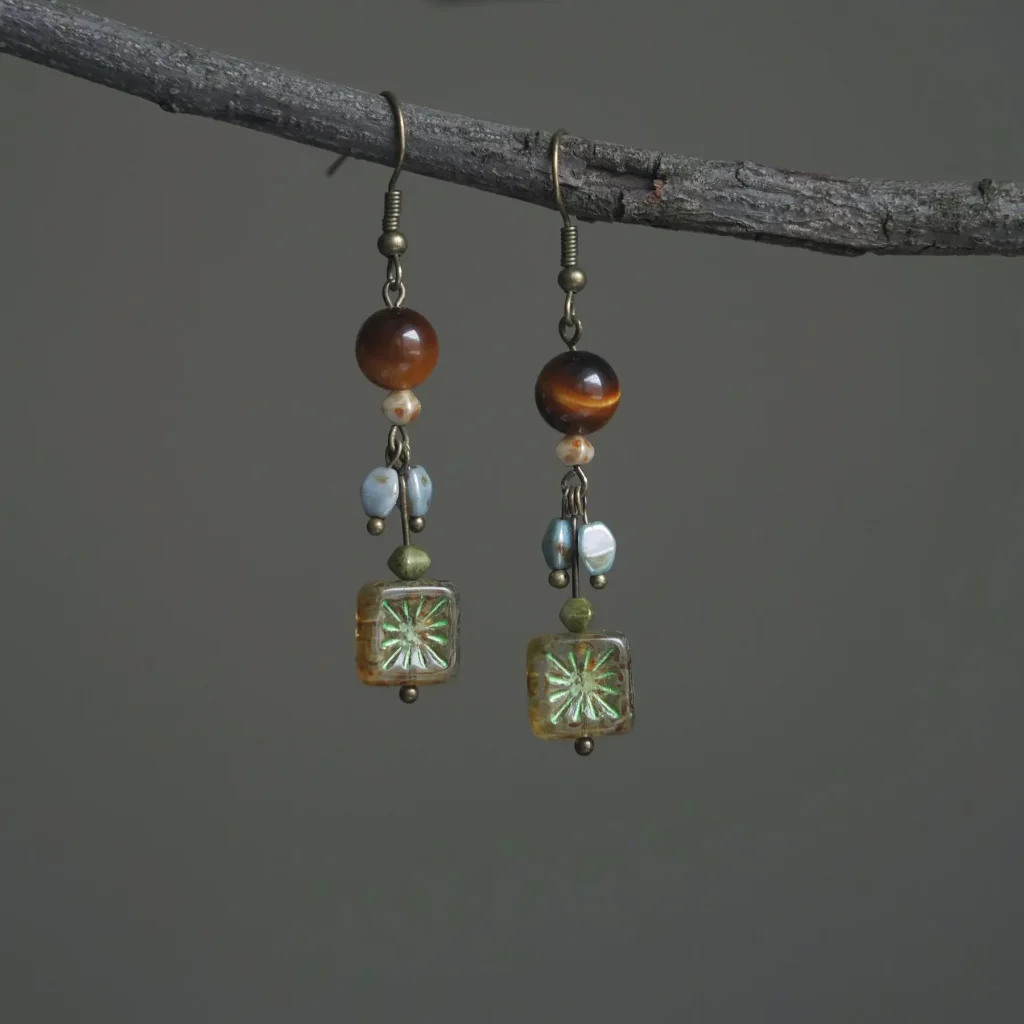
We keep the design light and balanced. Each earring is about 6 cm in length and weighs around 2.8 g per piece. This ensures a strong visual presence while still maintaining a comfortable, lightweight wearing experience.
In this design, tiger’s eye plays a more focused role. We highlight its localized light band effect rather than a full surface shimmer. As the earrings move, the cat’s-eye glow shifts subtly with the wearer’s head motion, creating a quiet but continuous sense of movement.
4. Vintage Brass Tiger’s Eye Earrings
The vintage brass dangle earrings combine tiger’s eye with hand-hammered brass elements and natural organic materials, such as coconut wood or stone accents. The overall design carries a grounded, earthy vintage aesthetic.

We use contrast as a core design principle here. The aged brass surface develops a natural patina over time, while tiger’s eye maintains its silky optical glow.
- Brass expresses a sense of time and wear
- Tiger’s eye reflects geological movement and internal light flow
Together, they create a dialogue between “time-worn surface” and “geological depth.”
This pairing follows JEWEA’s core design philosophy. We do not treat materials as isolated elements. Instead, we let them interact. We build each piece as a conversation between materials, structure, and time.
JEWEA Closing Note
JEWEA’s tiger’s eye jewelry collection turns geological time into wearable form. It translates long natural processes into a clear visual language.
Each stone already carries that story. Crocidolite fibers form first. Silica then replaces the structure and becomes quartz. The original fibrous alignment still remains at a microscopic level. This internal structure shows up again as a silky band of light.
We do not change this system. We keep its optical behavior intact and let it guide the design.
Tube cuts and linear layouts shift the stone away from traditional bead strands. Mixed materials add contrast and balance. The focus moves toward structure, rhythm, and light in motion.