Ebony Wood Jewelry: Hand-Carved Depth and Tibetan-Inspired Design
In contemporary independent jewelry design, natural wood materials are returning to the design language in a more restrained and essential form. From subtly scented natural aromatic woods to the deep, nocturnal presence of ebony wood jewelry, these materials rely not on ornate decoration, but on their own density, grain, and tactile presence to express a natural order that cannot be replicated.
When these time-formed wooden materials interact with metals and natural gemstones in a handcrafted context, they create a contemporary aesthetic that exists between nature and structure.
Guided by our core philosophy of Material Honesty, Jewea extends this material-first approach into our earring designs, creating a series of ebony wood earrings with a subtle Tibetan-inspired character.
Pure Black: The Natural Density of Ebony Wood
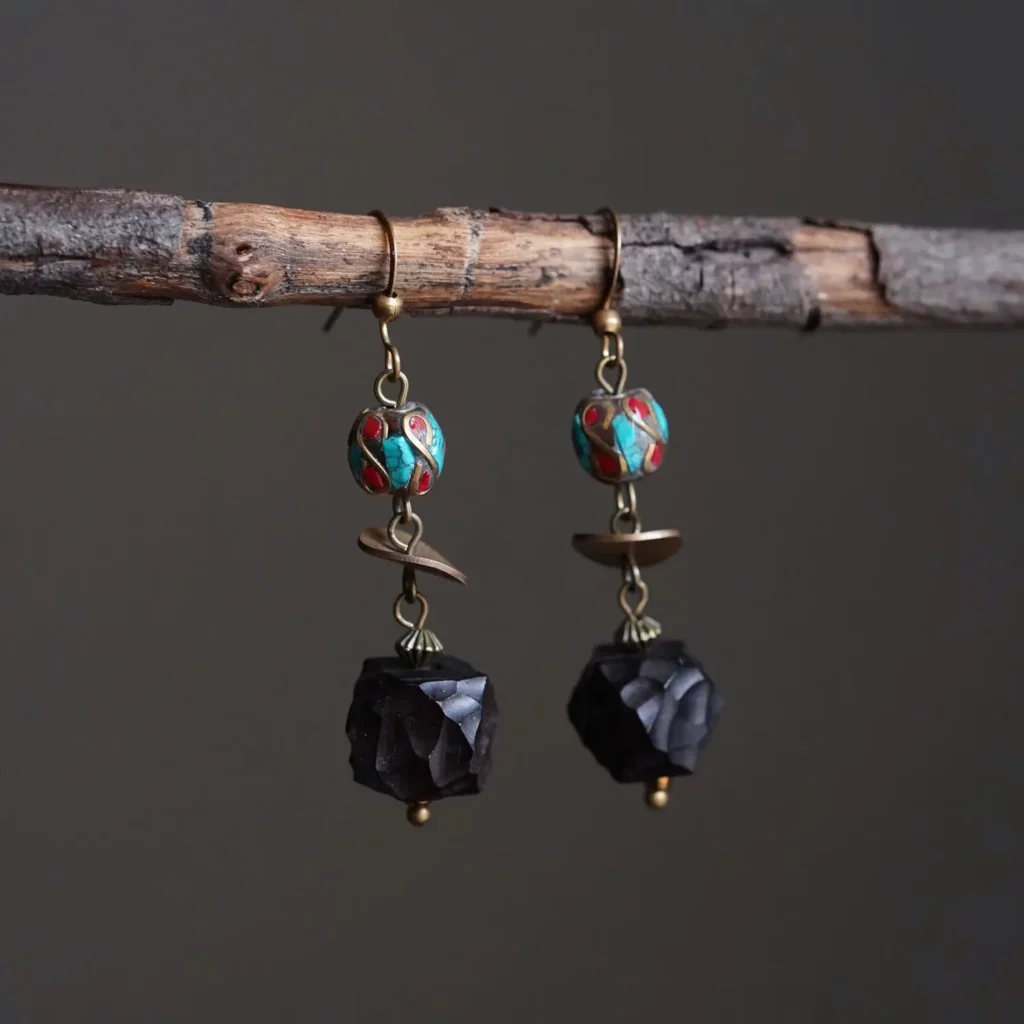
The black carved pendant used in this handcrafted earring is made from natural ebony wood, commonly referred to in international trade as a dense hardwood from the Diospyros genus.
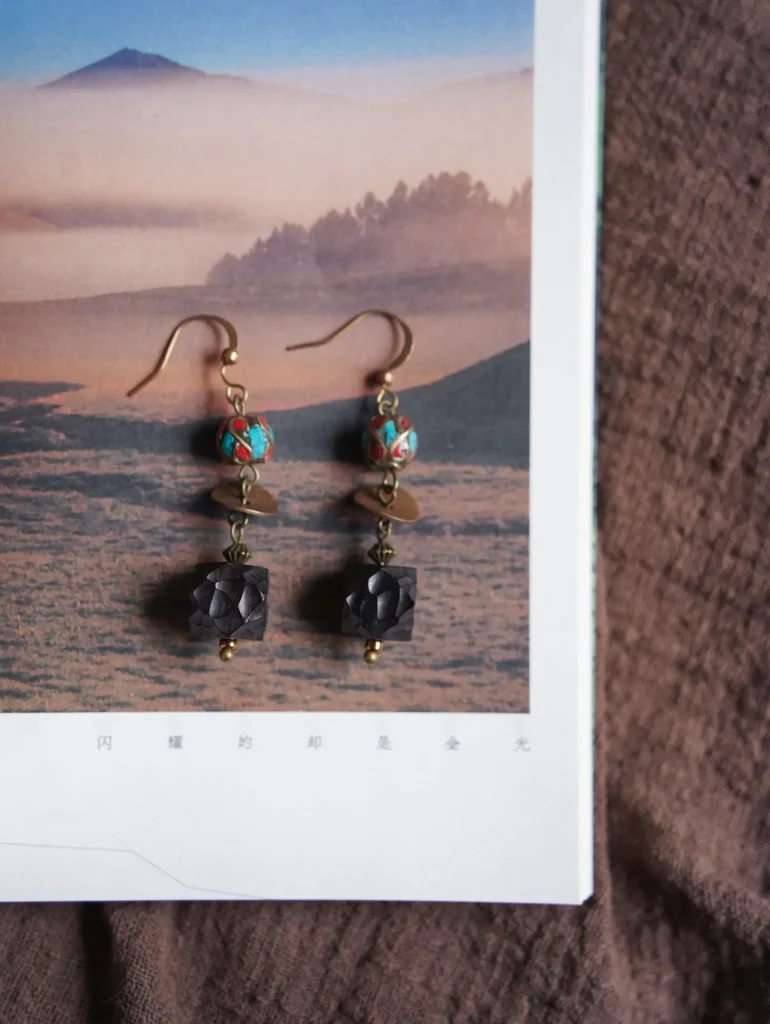
Ebony is one of the densest natural hardwoods. Its air-dried density typically ranges from 1.0 to 1.2 g/cm³. Under magnification, ebony shows an extremely tight and uniform structure, with almost no visible pores or ray patterns. This results in an exceptionally compact internal structure, and the material typically sinks completely in water. Its defining quality is not visible grain, but rather the near absence of it.
Visually, ebony presents a deep, uniform black tone. Growth rings and vessel structures are barely perceptible to the naked eye, giving the surface the appearance of a surface that absorbs light. After hand polishing, it develops a subtle, restrained natural sheen that feels closer to stone or oxidized metal than to conventional wood. This quiet density defines its essential aesthetic character.
Historically, people have valued ebony for its stability and durability. Ancient Egyptians and European aristocratic societies widely used it for ritual objects and fine carvings. It also appeared in structural parts of high-end musical instruments. Across history, people have regarded ebony as a rare material with both functional value and symbolic meaning.
Hand-Carved Ebony Wood Earrings with Tibetan Inlay Details
In this ebony wood earring design, Jewea continues its principle of Material Honesty. We avoid heavy coatings or artificial glossy finishes. Instead, we use repeated hand polishing to reveal the natural depth of the ebony wood itself.
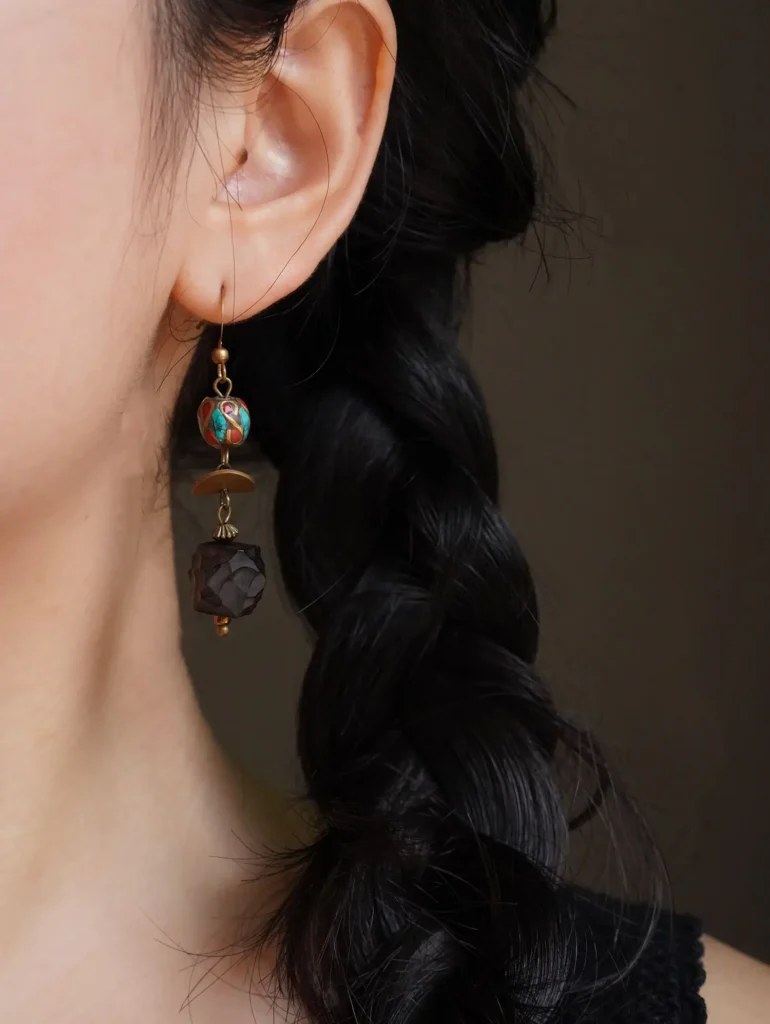
The carved ebony elements are fully hand-shaped. Ebony is extremely dense. It also becomes slightly brittle at a small scale. During carving, the material gives a tight, resistant feedback. This requires steady control and a very restrained hand.
Even a small mistake can cause cracking or breakage. Because of this, every tiny ridge and hollow carved into the surface carries an irreversible hand-made trace. No two marks can ever be the same. This unpredictability is part of what makes hand-carved material feel real.
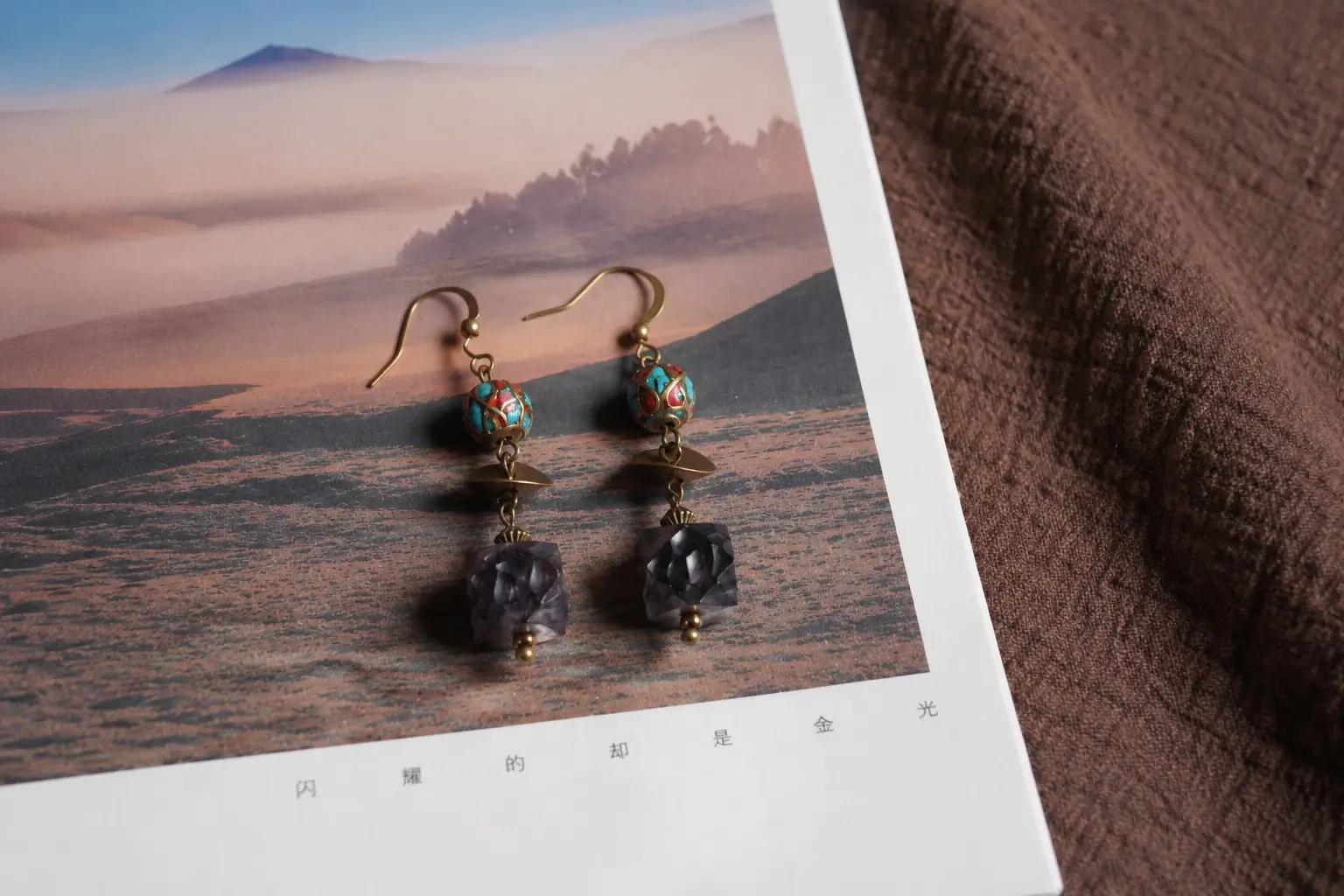
To break the visual heaviness of pure black, we introduce a Tibetan-style inlaid bead at the center of the structure. It is made from natural turquoise and red agate fragments, hand-inlaid piece by piece. The bead sits in an antique brass setting.
The contrast between blue and red is not decorative. It works more like a visual rhythm shaped by culture. It expresses cold and warmth, stillness and movement, restraint and release.
Against the deep black of ebony wood, these colors are further softened. The result is a more subdued, vintage Tibetan-inspired aesthetic.
Material Classification: Ebony Wood vs “Bog Wood”
In the wood jewelry market, the term “ebony” is often used loosely. This leads to confusion in material identification. In fact, two completely different material systems must be clearly distinguished.
1. Ebony Wood (Diospyros Hardwoods)
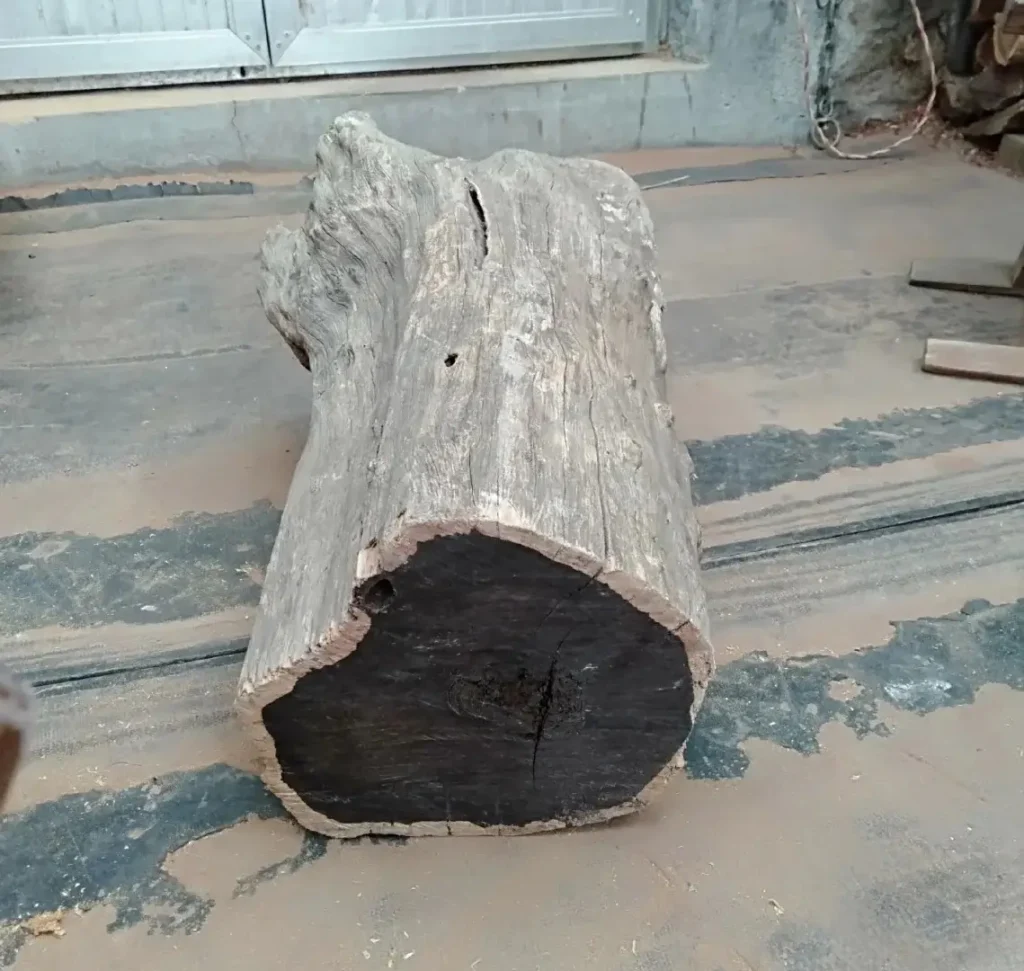
Ebony is a naturally grown, high-density hardwood. It comes from the heartwood of trees in the Diospyros genus.
It forms through extremely slow growth over hundreds of years. This long process creates a highly compact internal structure.
Ebony offers strong stability and a fine texture. It works well for micro-carving and fine jewelry applications.
2. Bog Wood (Fossil Wood)
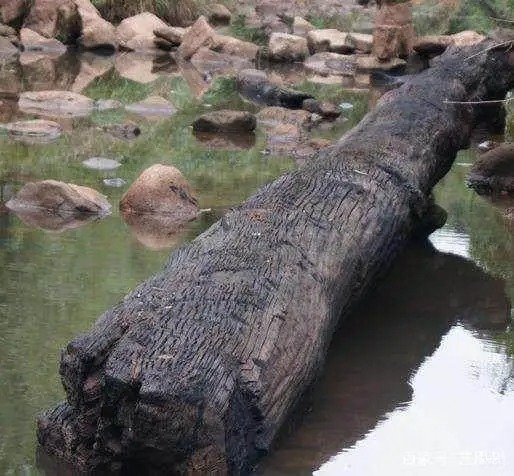
Bog wood, often referred to in some regions of China as “Yinchen wood” or “ancient black wood,” comes from ancient trees such as Phoebe or red cedar that natural disasters buried in riverbeds.
Over thousands of years, these woods undergo oxygen-free burial and mineral infiltration. This process creates a semi-fossilized organic material.
Bog wood behaves differently from fresh hardwood. It is more fragile in detailed carving. Its internal structure varies, and it can become brittle at smaller dimensions. Its physical behavior is less predictable overall. This is why it differs fundamentally from modern hardwoods such as ebony.
Ebony Wood: Core Material Characteristics (Reference Guide)
To ensure material transparency, Jewea uses the natural structural properties of ebony wood as a key reference in its selection process.
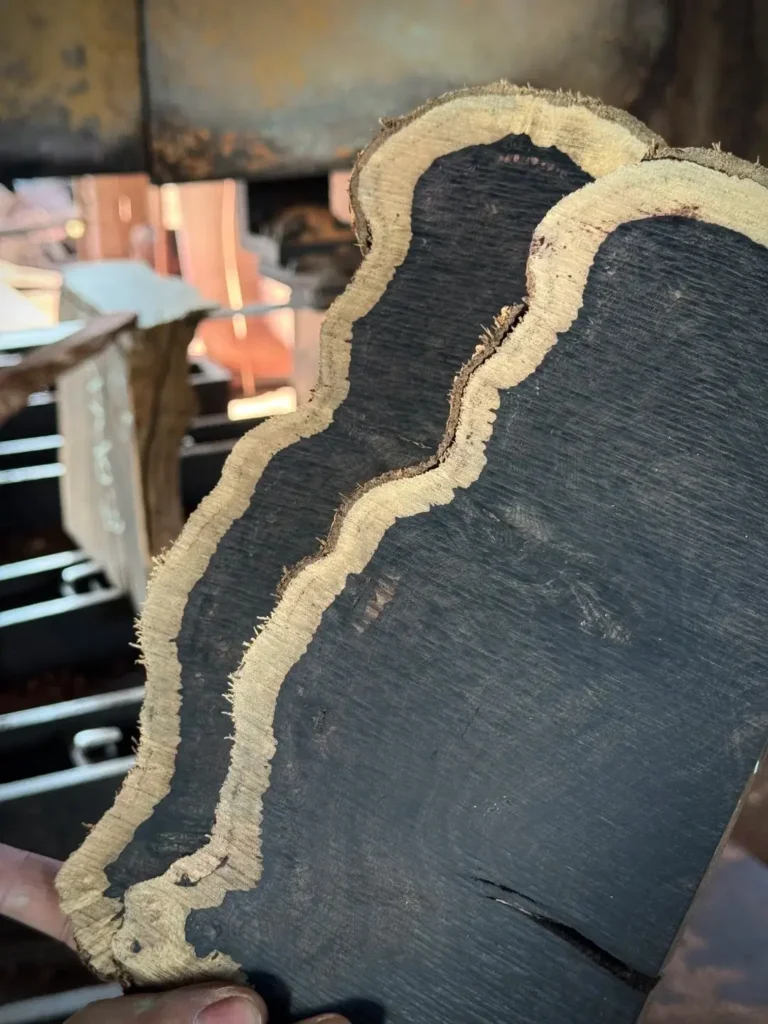
Visually, ebony wood presents a highly uniform deep black or dark brown tone. The grain is barely visible. The surface reads more like a material that absorbs light rather than a traditional textured wood.
With a very high natural density of around 1.0–1.2 g/cm³, ebony feels noticeably heavy in hand. In most cases, it will sink in water. This density also makes it highly suitable for micro-carving and fine jewelry applications.
During handcrafting, ebony responds with a tight, resistant feel. It requires controlled and steady carving pressure. After gradual hand polishing, the surface develops a soft, restrained natural sheen. The finish feels closer to stone or oxidized metal than to typical polished wood.
In terms of scent, ebony carries a very light or near-neutral woody aroma. It has no strong resin or sharp odor. This makes it comfortable for long-term wear in jewelry applications.
These characteristics together form the basic reference framework for working with ebony wood. However, variations may still occur depending on origin and specific species.
The Trace of Time: What Remains at the Ear
A wooden piece of jewelry should never be understood as a simple ornament. It exists as a material vessel shaped by time itself.
This Tibetan-inspired ebony wood earring from Jewea brings together two forces. It combines the extreme density formed through centuries of slow natural growth with the micro-textures created by hand carving. These layers sit together and build a quiet tension in the material.
We do not treat it as something that needs to stand out. Instead, we focus on how it continues to exist over time.
When worn, the material begins to change in subtle ways. It responds to body temperature, movement, and contact. Over time, it develops a surface that belongs to the wearer.
This is not the completion of decoration. It is the continuation of material life.