Ceramic Bead Jewelry: Where Jingdezhen Porcelain Craft Meets Contemporary Design
In JEWEA ceramic bead jewelry, we work with Jingdezhen clay—one of the core materials in traditional Chinese ceramics. Each bead begins as simple earth. We shape it entirely by hand, then fire it at high temperatures until it becomes ceramic.
The value of ceramic bead jewelry does not come from rarity or brilliance like gemstones. It comes from transformation. Under intense heat, the material changes permanently, moving from soil to porcelain, from something soft and changeable to something solid and lasting.
Each bead is small, but it follows the same making principles as full-scale Jingdezhen porcelain. At JEWEA, we bring this ceramic tradition into contemporary jewelry design. We translate clay and fire into wearable pieces—light in form, yet shaped by centuries of craft.
Ceramic Beads: Precision Over Rarity in Handmade Craft
Ceramic beads may look simple at first glance. They are round or cylindrical forms made from fired clay.
But their true quality depends on two essential factors:
hole stability and overall structural precision.
In Jingdezhen ceramic production, artisans shape beads using three main methods:
- clay rolling
- powder mold pressing
- steel mold forming
The finer the mold and the denser the ceramic powder, the stronger the structure becomes after firing.
But this creates a clear technical contradiction:
The finer the powder, the harder it becomes to control glaze adhesion and absorption.
To achieve high-quality ceramic beads, three factors matter most:
- extremely fine and stable ceramic powder
- precise firing temperature control
- experienced structural placement during firing (including ultra-fine tungsten wire positioning)
When these elements are properly balanced, the results are consistent:
- perfectly centered perforations
- uniform bead shapes
- stable and even glaze color
This is not a standardized industrial process.
It is a controlled craft practice shaped by experience, kiln intuition, and years of repetition.
The Six Irreversible Stages of a Ceramic Bead
A ceramic bead is never simply made. It forms through a controlled interaction between clay and fire.
Each piece must pass through six irreversible stages.
1. Clay Preparation | The Foundation
Skilled artisans repeatedly knead and wedge the clay to remove trapped air and ensure even moisture distribution.
This step reduces internal stress and determines whether the bead will remain stable during drying and firing.
↓
2. Forming & Piercing | Shaping the Structure
Artisans roll the clay into long strips, cut it into consistent pieces, and shape each one by hand into a near-uniform sphere.
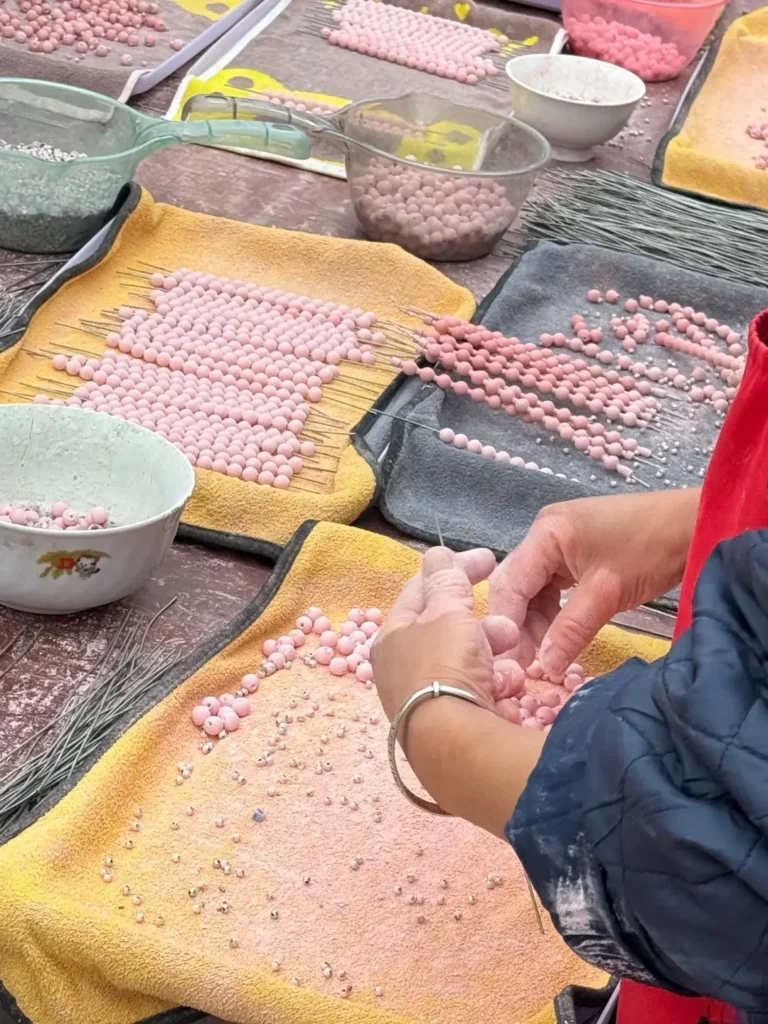
While the clay is still in a semi-dry (leather-hard) state, artisans pierce each bead with a fine needle. They carefully align the hole along the central axis, as even a slight deviation can affect symmetry after firing and shrinkage.
↓
3. Drying & Surface Refining | Stabilization
The beads are left to dry slowly under controlled conditions to prevent cracking or deformation.
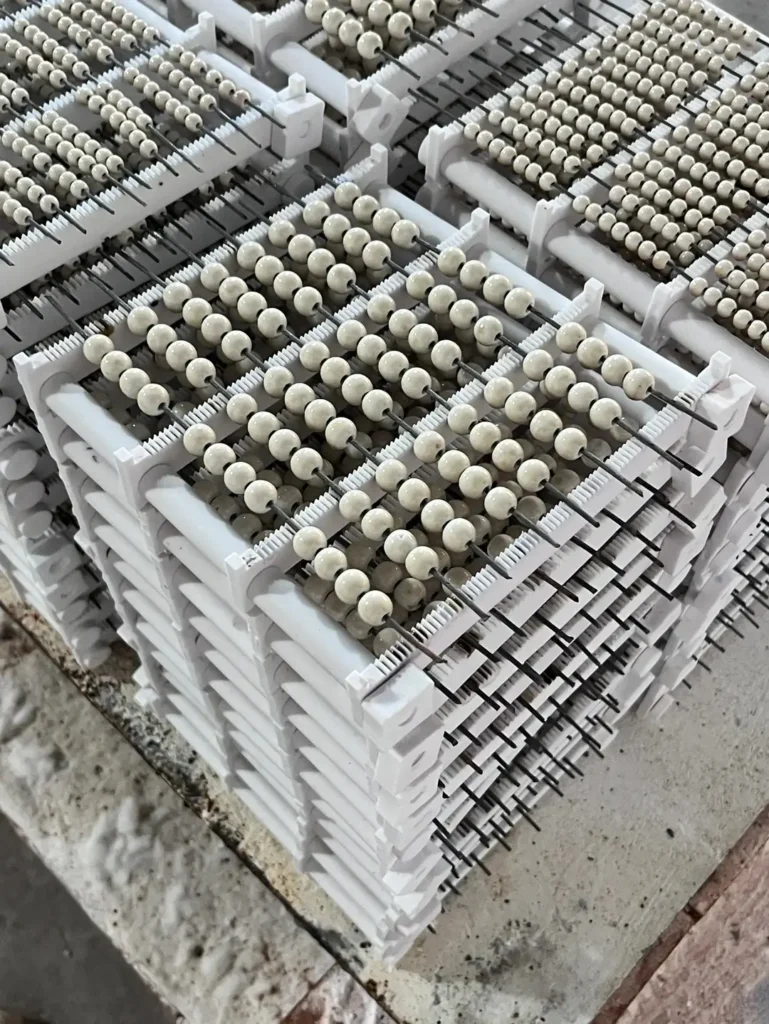
Once leather-hard, artisans refine the surface by hand. They remove fingerprints, smooth edges, and clean the inner channel of each hole.
Depending on the workshop stage, finishing may also involve fine abrasion tools or sponge refinement.
↓
4. Bisque Firing | Structural Fixation
The dried beads are fired at 800°C–900°C.
At this stage, the clay undergoes bisque firing. It is no longer raw clay, but it is not yet fully vitrified ceramic.
The structure becomes stable enough to handle glazing while remaining porous for surface absorption.
↓
5. Decoration & Glazing | Surface Formation
Artisans decorate the beads using traditional ceramic techniques:
- Underglaze painting: mineral pigments are hand-applied onto the bisque-fired surface and later sealed under a transparent glaze
- Glaze application: the surface is coated through dipping, pouring, or spraying to achieve an even layer
Because each bead is perforated, artisans suspend them on fine wires or mount them on needle racks during glazing.
This ensures an even coating without blocking the hole.
↓
6. High-Temperature Firing | Final Vitrification
The beads are fired at 1200°C–1340°C for their final transformation.
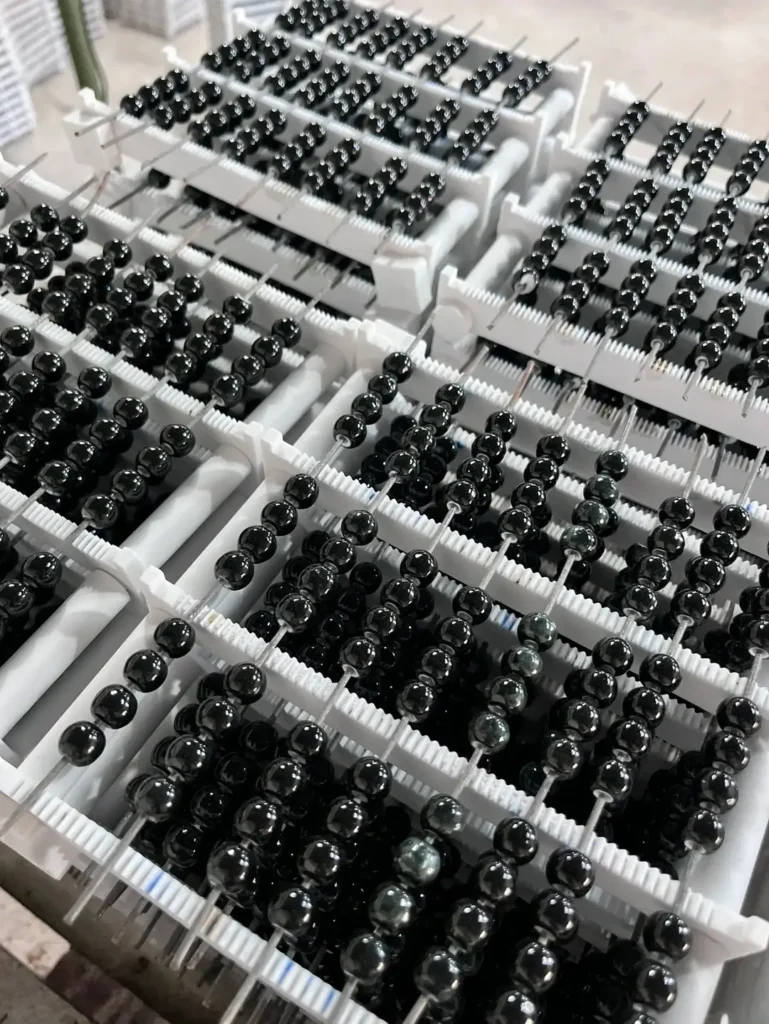
The clay fully vitrifies, becoming dense and non-porous.
The glaze melts, flows, and stabilizes into its final surface texture and color.
During this process, the material naturally shrinks by approximately 10–20%, depending on clay composition and firing conditions.
Each bead undergoes a permanent structural transformation that cannot be reversed.
JEWEA Ceramic Bead Jewelry Design: A Dialogue Between Art and Craft
In JEWEA’s design language, ceramic beads are more than materials. They act as vessels for visual storytelling.
We start each piece from a reference point—an artwork or a natural form—and reinterpret it through color, shape, and proportion to create something wearable.
Jewea “La Musique” Handmade Ceramic Earrings
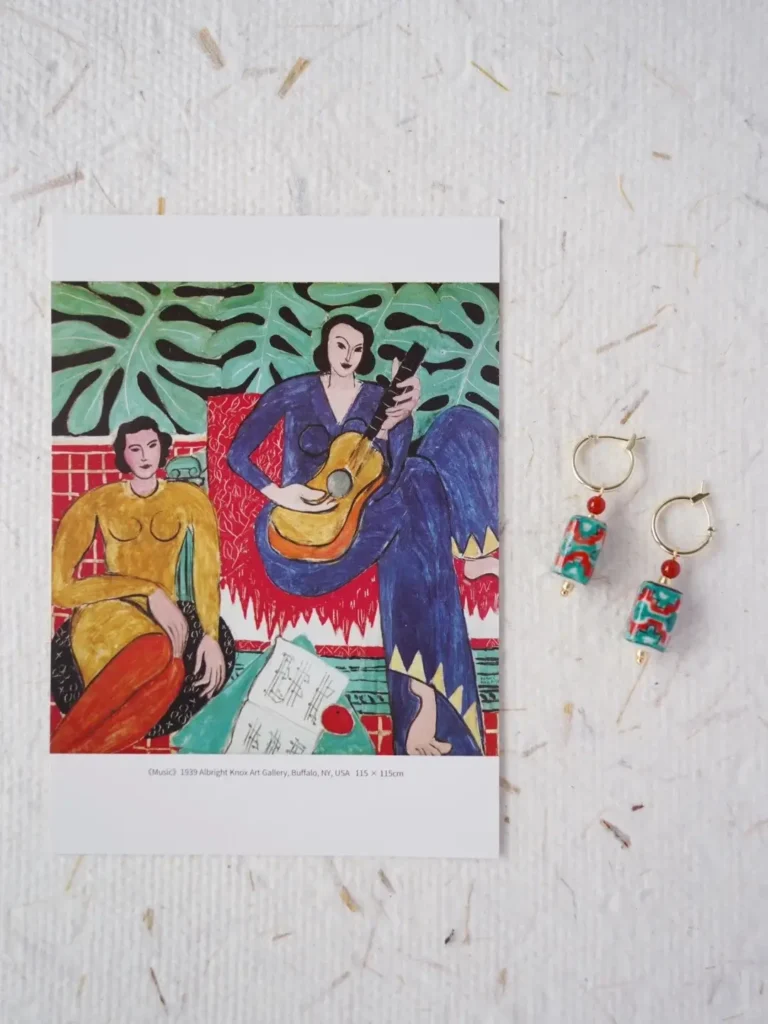
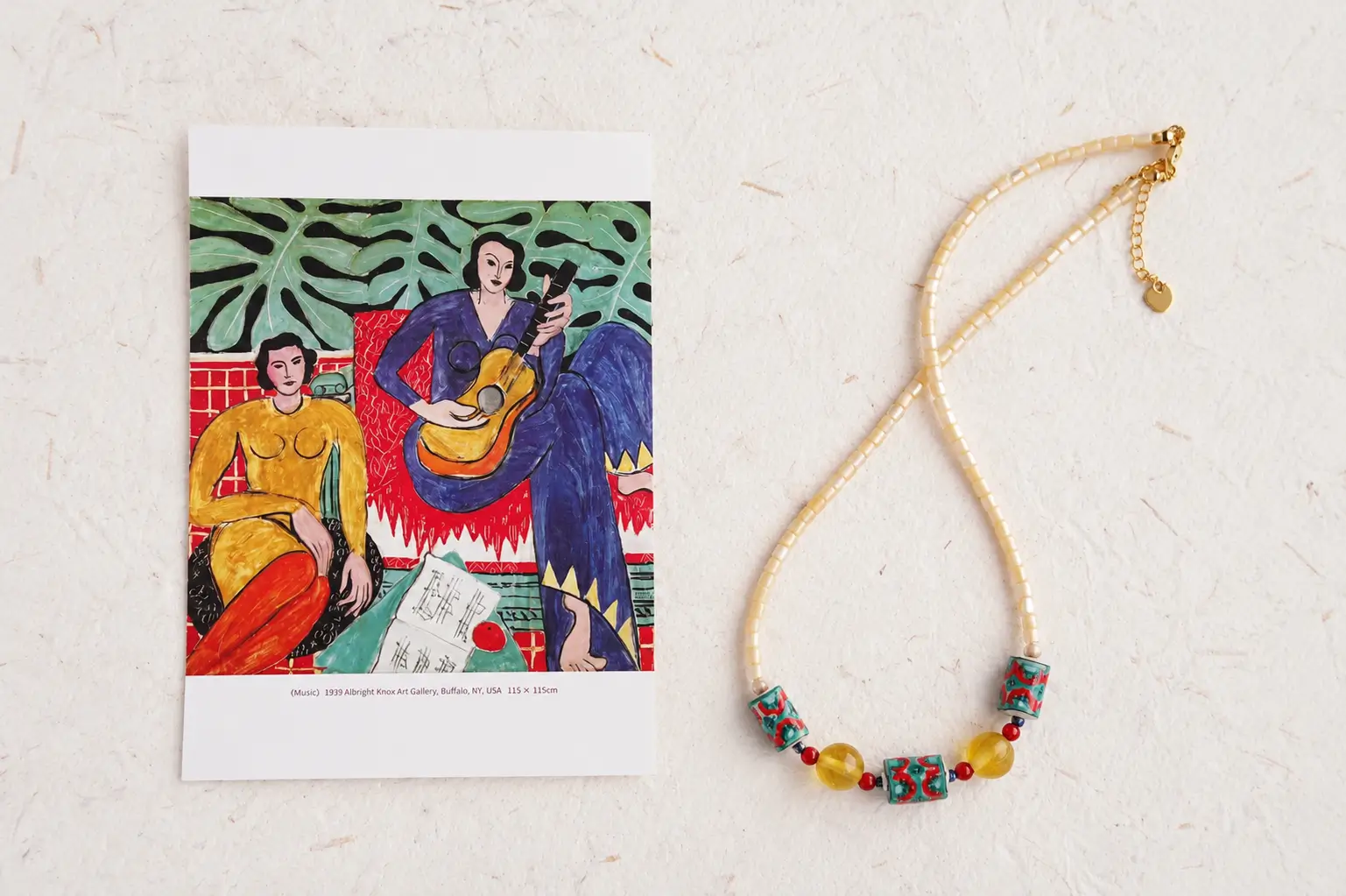
This ceramic bead earring design draws inspiration from Henri Matisse’s La Musique. The painting uses bold fields of green, red, and blue to create a raw sense of rhythm and emotional energy.
- Material & Interpretation: We translate this visual language onto cylindrical hand-painted ceramic beads. A white porcelain base carries underglaze brushwork in green and red, forming abstract, layered compositions that retain the spontaneity of the original work.
- Form & Contrast: A semi-transparent red agate bead sits beside the ceramic form. Its soft internal glow contrasts with the matte surface of the glaze, creating depth and material tension. The 14K gold-plated copper hoop acts as a structural line, echoing the rhythm and movement of musical notation.
- Collection pairing: We designed the earrings to pair with a ceramic bead necklace strung with Trochus shell beads. You can also explore more pieces from the Matisse-inspired collection.
Jewea “Red Interior” Hand-Painted Ceramic Necklace
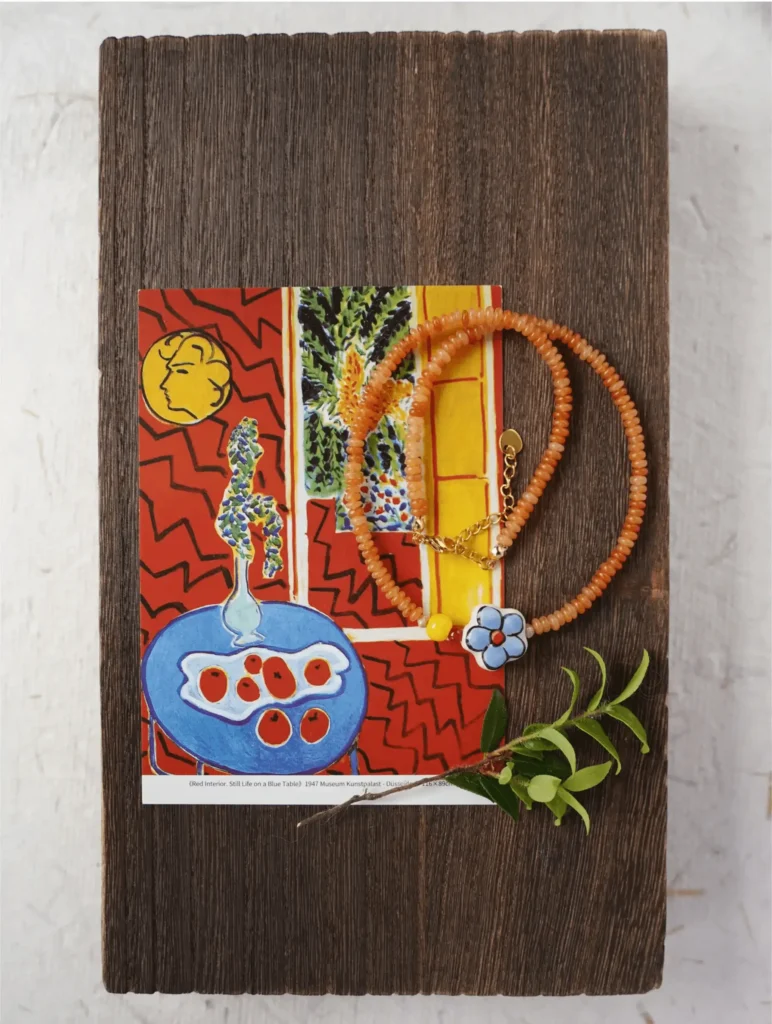
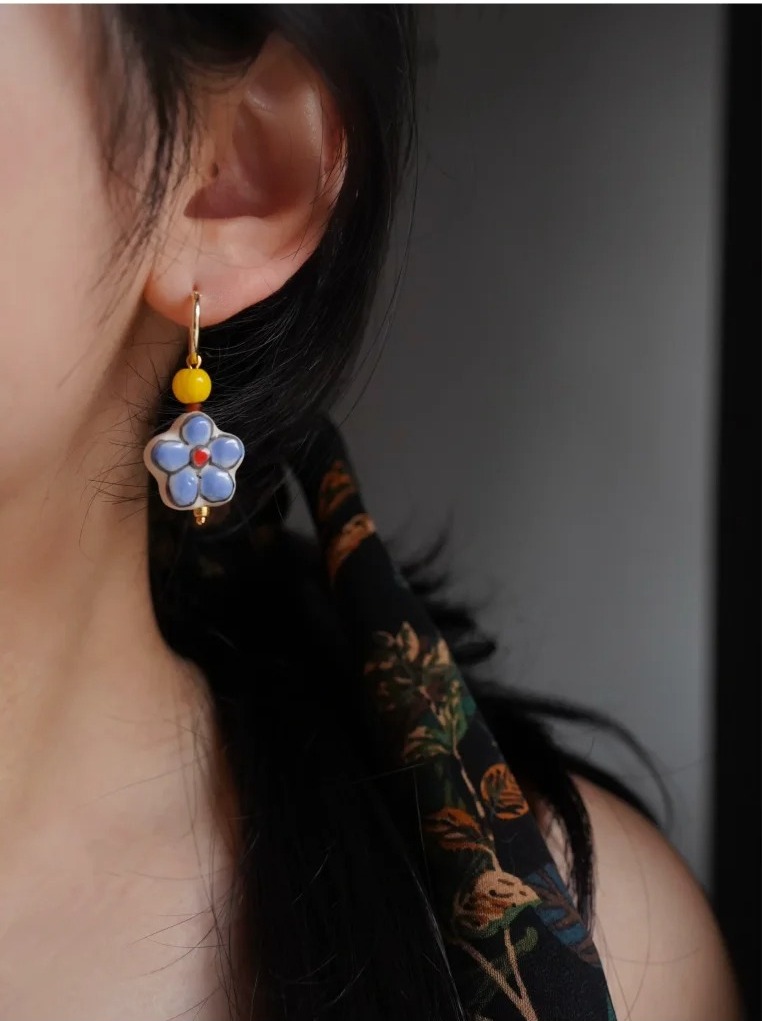
This ceramic bead necklace draws inspiration from Henri Matisse’s late work Red Interior: Still Life on a Blue Table. The painting holds a quiet tension between vivid color and still composition, where warmth and calm coexist within a single space.
- Hand-painted detail: We reinterpret the black-outlined blue flower as a central hand-painted ceramic bead. Each piece is built through delicate brushwork, forming blue petals and an orange-red center, then fixed through kiln firing to preserve its depth and softness.
- Atmospheric contrast: The chain combines red aventurine and red-yellow agate beads. Their warm mineral tones contrast with the cool ceramic surface of the floral bead, echoing the painting’s balance between intensity and stillness.
- Collection pairing: A matching pair of hand-painted ceramic bead earrings is also available within the same series.
Jewea Kiln-Glazed Earth Tone Ceramic Earrings
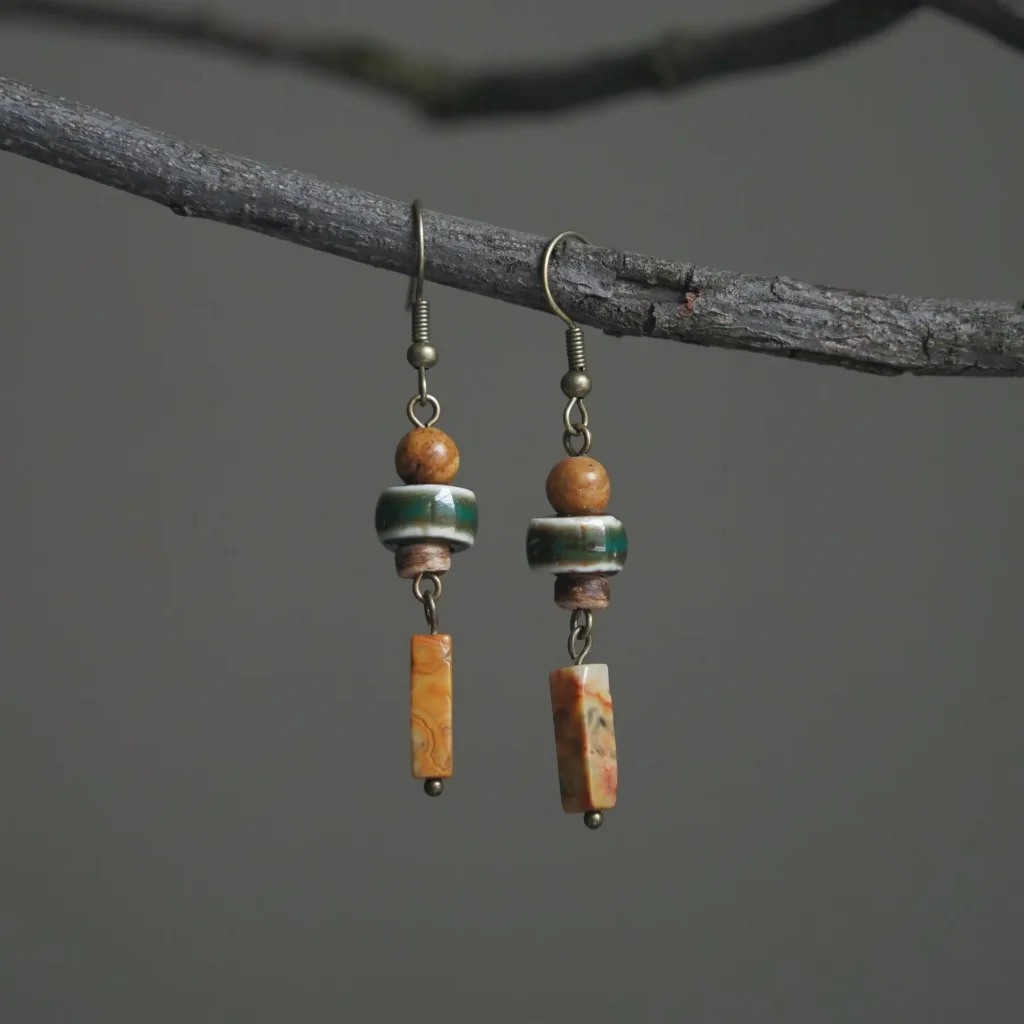
We strip away high-saturation color and return to the original tones of earth and wilderness. This pair of handmade ceramic and natural stone earrings draws inspiration from the quiet, primal strength of nature itself.
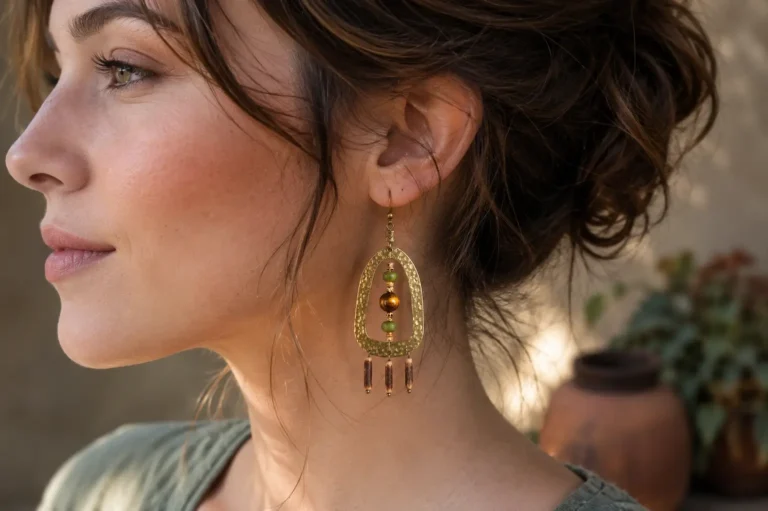
- Kiln-born surface: We craft the central rounded ceramic bead using Jingdezhen’s kiln-transmutation glaze technique. Deep forest green and earthy brown flow and merge during high-temperature firing, creating layered patterns that resemble natural growth rings formed over time.
- Geological texture: We pair the ceramic bead with natural stones on both ends, each kept raw and minimally polished to preserve their mineral texture. A rectangular stone drops at the base, echoing fragments of weathered rock. The contrast between fired ceramic and untouched stone creates a grounded, elemental balance.
JEWEA Closing Note
What makes ceramic bead jewelry so compelling is its irreproducibility.
Every bead goes through intense heat, shrinkage, and material reorganization. Each one is the result of a transformation that cannot be reversed.
When you wear it, you don’t just touch ceramic and stone. You hold traces of something deeper:
- the heat held inside Jingdezhen kilns
- the movement of a craftsman’s hands shaping clay
- the slow passage of earth turning from soft to solid
This is not decoration in the usual sense.
It is time, compressed into form.
We ask you to understand it slowly and wear it with care.