Coconut Wood: The Niche Material Redefining Handmade Jewelry
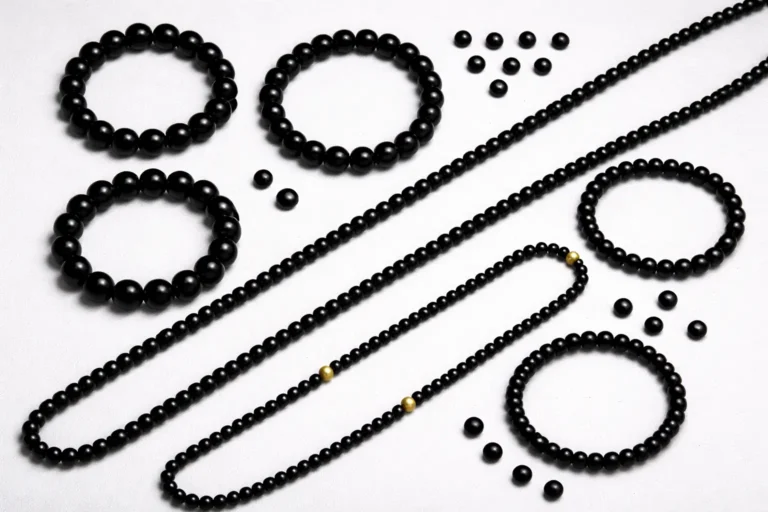
In the world of handmade jewelry, coconut wood jewelry is still rarely seen in mainstream collections. Most people are familiar with coconut shell or coconut seed (often used in prayer beads and traditional bracelets). They are dark, dense, and highly polished after long-term wear.
Coconut wood is different. It comes from the trunk of the coconut palm (Cocos nucifera), not the fruit itself. Because it is less common in jewelry markets, it is often misunderstood as a lower-grade substitute. In reality, it carries a completely different material logic—more raw, more textured, and closer to the natural structure of the plant itself.
This article looks at coconut wood from a material science and design perspective, not from trend or hype. It is about why this overlooked material deserves attention in modern handmade jewelry.
Origin: The Real Difference Between Coconut Shell, Coconut Seed End, and Coconut Wood
Although all three materials come from the coconut palm (Cocos nucifera), they originate from completely different anatomical parts of the plant. As a result, they behave very differently in jewelry making and carving.
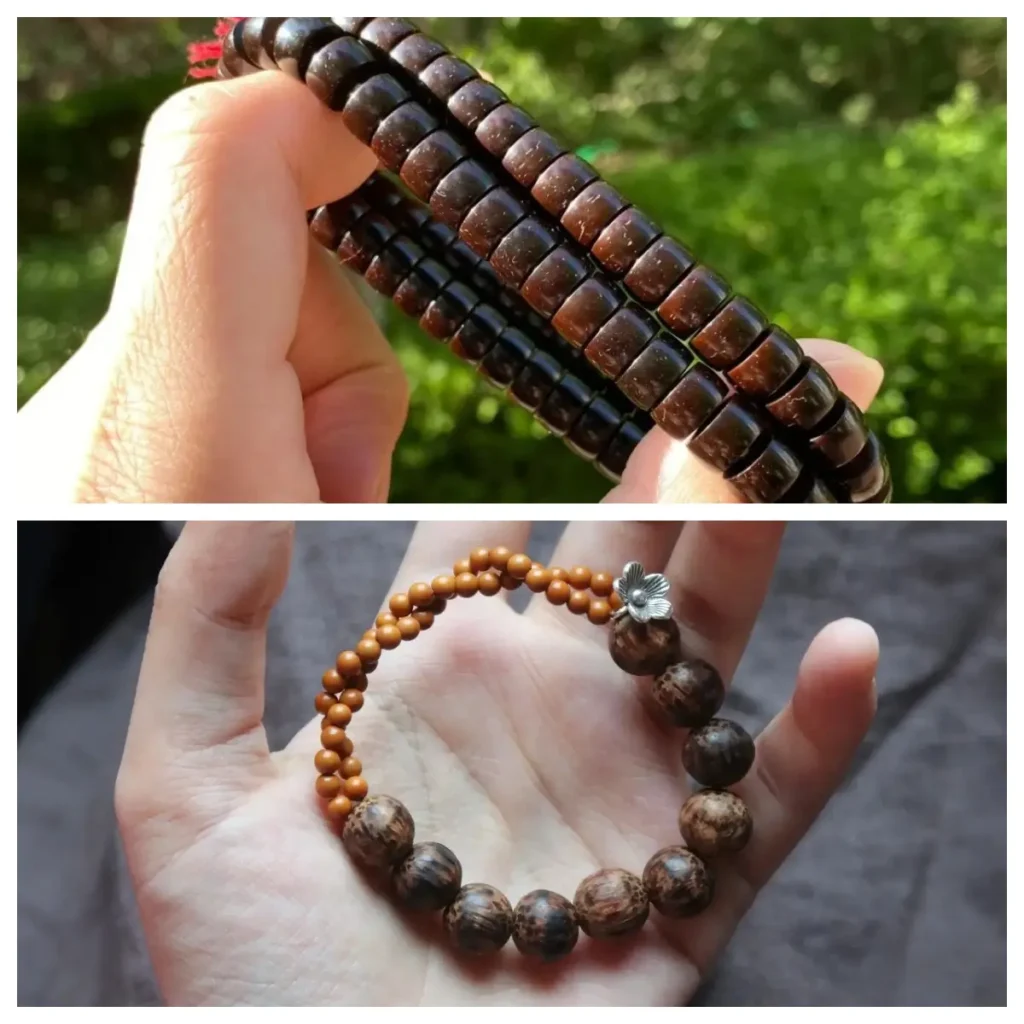
In artisan jewelry, they are best understood not as variations of the same material, but as three structurally independent natural materials.
| Material | Botanical Source | Texture & Visual Character | Common Use & Design Limits |
|---|---|---|---|
| Coconut Shell | Inner layer of the coconut fruit (endocarp) | Extremely dense and compact with minimal visible grain. Polishes into a deep brown to black natural gloss. | Best suited for flat beads, discs, and spacers. Limited thickness prevents large or sculptural forms. |
| Coconut Seed End | The naturally dense inner section at the seed end of the coconut | Very high-density natural material with a near jet-black tone and extremely fine, poreless surface. Solid, heavy visual presence. | Very limited yield per coconut. Traditionally used in artisan bead carving for small, high-density accent beads or compact statement pieces. |
| Coconut Wood | Trunk of the coconut palm | Distinct vascular fiber structure with irregular dark streaks and leopard-like cross-sectional patterns. More organic and variable in tone. | High material volume. Suitable for carving large beads, sculptural forms, and irregular geometric shapes. |
Material Breakdown: The Pros and Cons of Coconut Wood
Coconut wood is a tropical material known for its distinctive grain, warm tones, and impressive durability. Yet despite these qualities, coconut wood jewelry remains surprisingly uncommon. The reason lies in the material’s distinctive physical characteristics and the challenges they present.
Why Handmade Jewelry Makers Rarely Use Coconut Wood
Coarse Fibers Resist a Mirror Finish: The coconut tree’s monocot palm structure defies traditional hardwood finishes. Unlike rosewood or ebony, the trunk lacks fine growth rings and dense medullary rays. Instead, the wood comprises hard, black vascular bundles embedded in a relatively soft matrix tissue. This uneven natural density prevents the wood from achieving the glassy, mirror-like polish that makers easily attain with coconut shells.
Fibrous Density Increases Processing Complexity: Unlike water-resistant coconut shells and seed ends, coconut wood is highly fibrous. Its longitudinal strength is far greater than its lateral strength. This variance makes clean machining difficult and increases the risk of surface chipping during high-speed machine turning, such as shaping large round beads or precision cutting (like slicing small, thin blocks). Achieving a smooth finish and clean contours requires slow, deliberate hand-sanding, which drastically increases production time.
Why We Choose Coconut Wood at Jewea
At Jewea, we forge our own path rather than following mainstream material trends. While others widely use coconut shell and dense seed-end materials, we choose coconut wood for its unique structure, texture, and design potential.
1. Rich, Layered Natural Texture
Coconut shell typically presents a deep, uniform tone—stable and refined, but with relatively limited variation. Coconut wood, in contrast, shows a more dynamic visual character, with brown tones ranging from light to dark and forming natural leopard-like speckled patterns as well as fine, raindrop patterns that create a warm sense of depth.
Its appearance can vary under different lighting conditions, revealing subtle changes in tone and texture that give each piece a distinct natural expression.
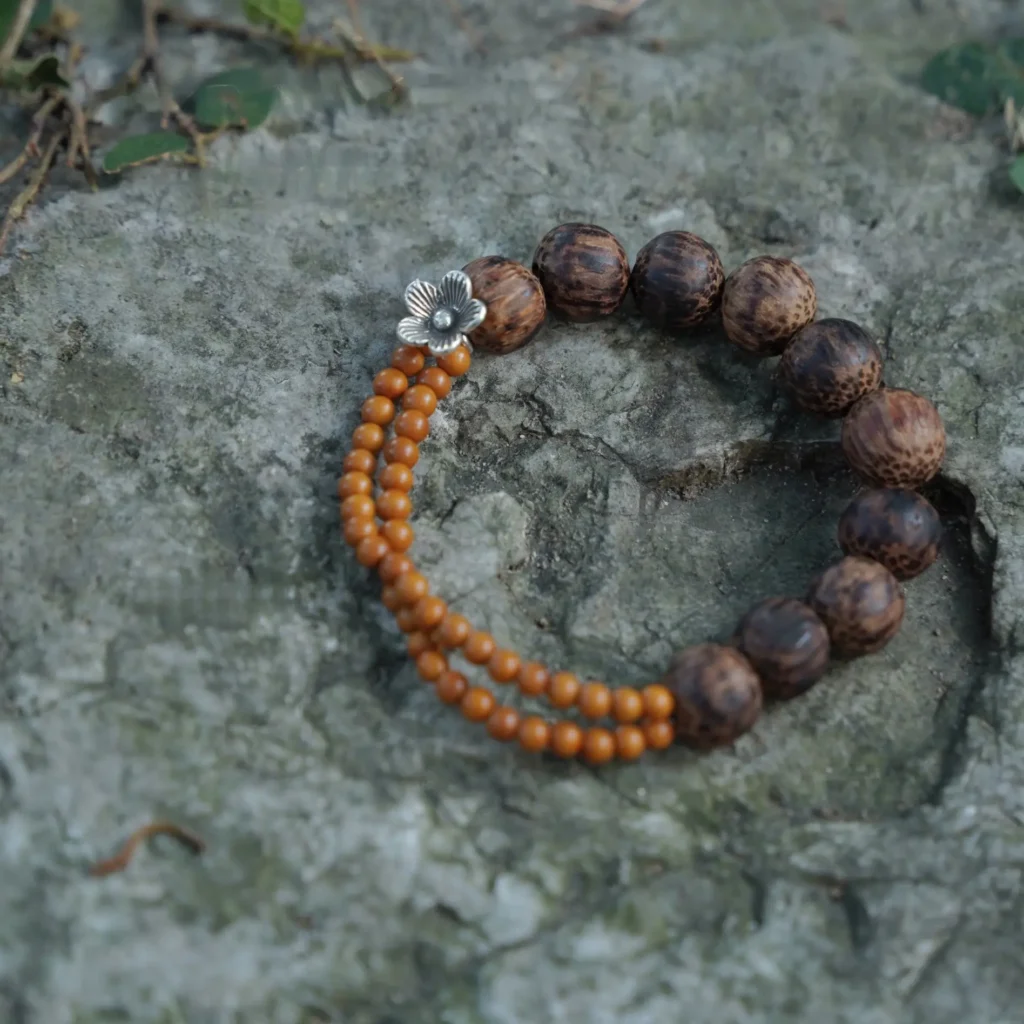
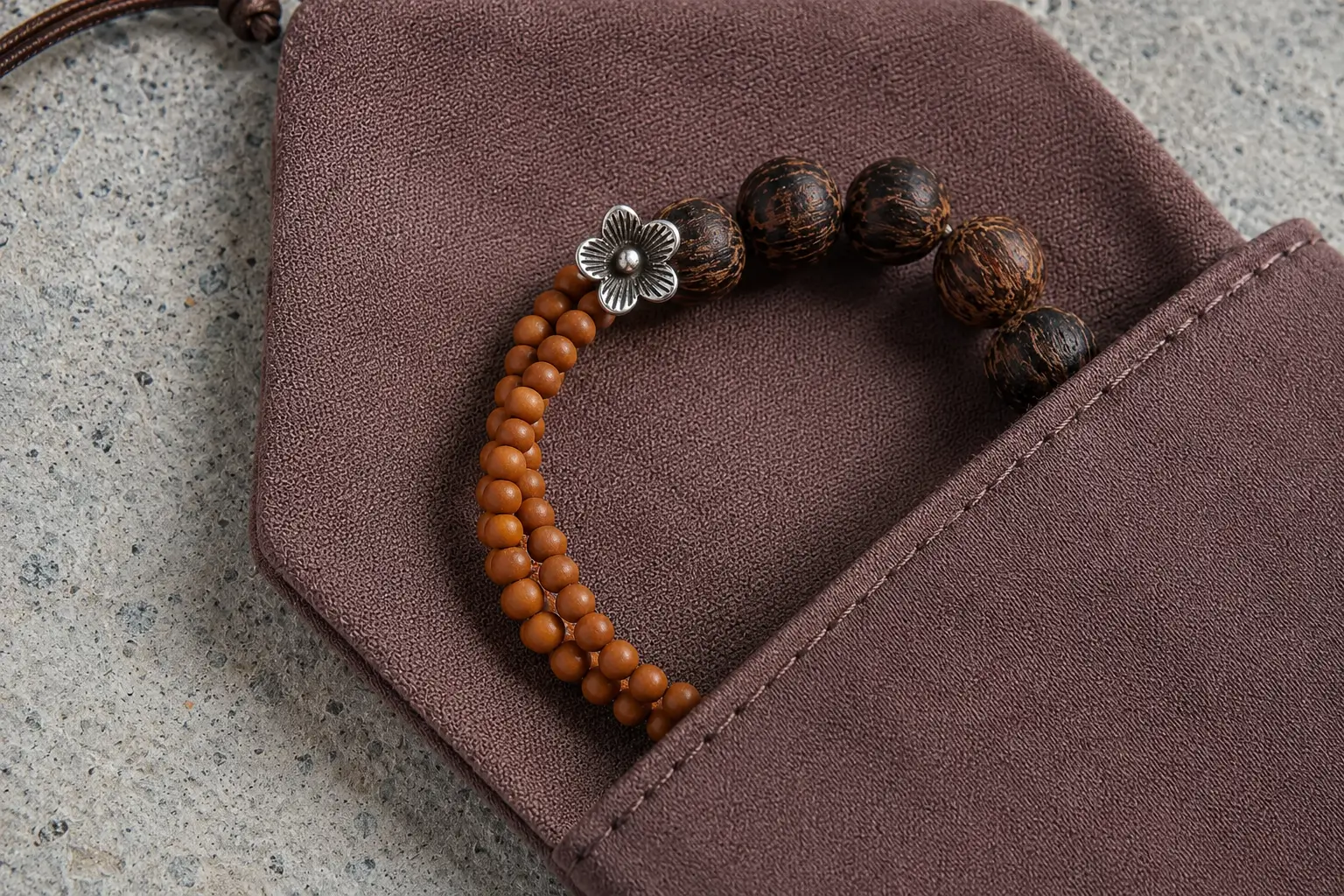
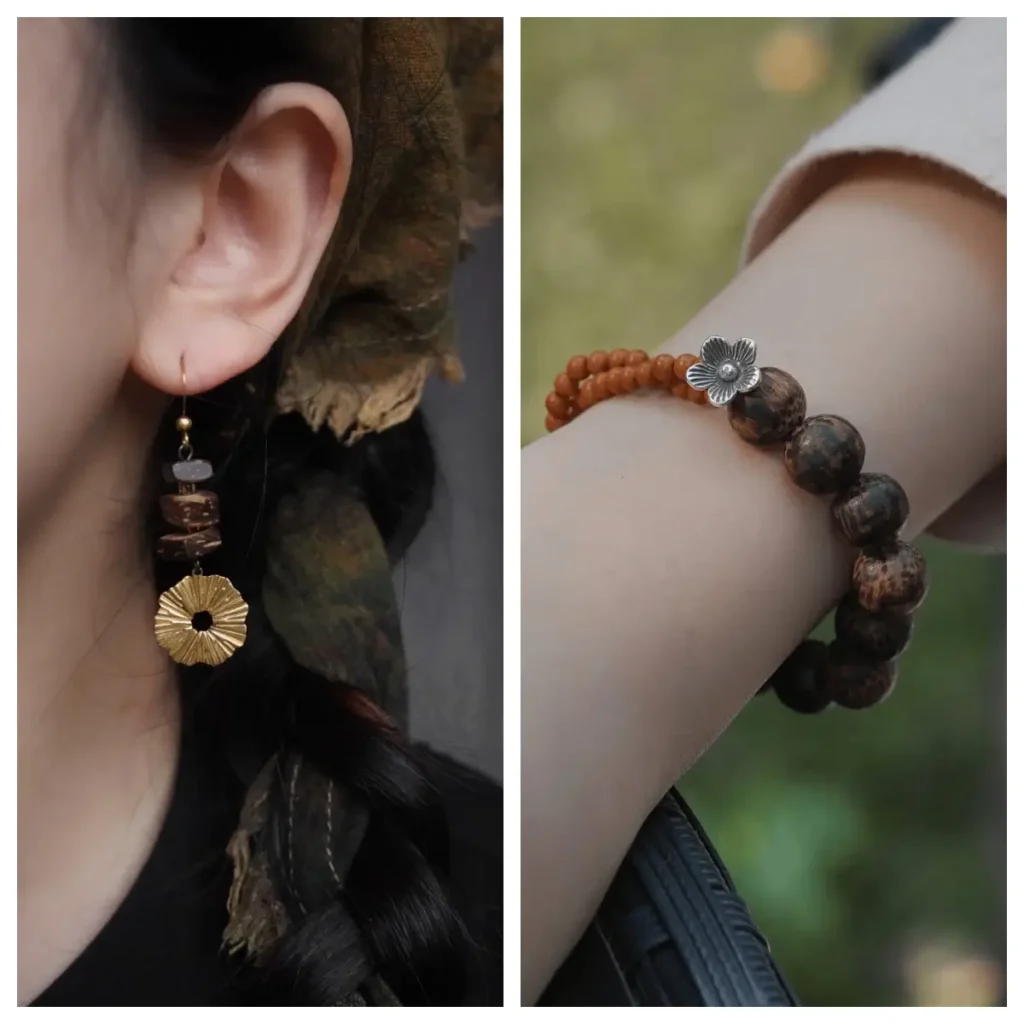
- In the Jewea Coconut Wood Beaded Bracelet, the wood is turned into full, rounded beads. The curved surface enhances the fluidity of its natural grain, allowing each bead to display a unique distribution of patterns.
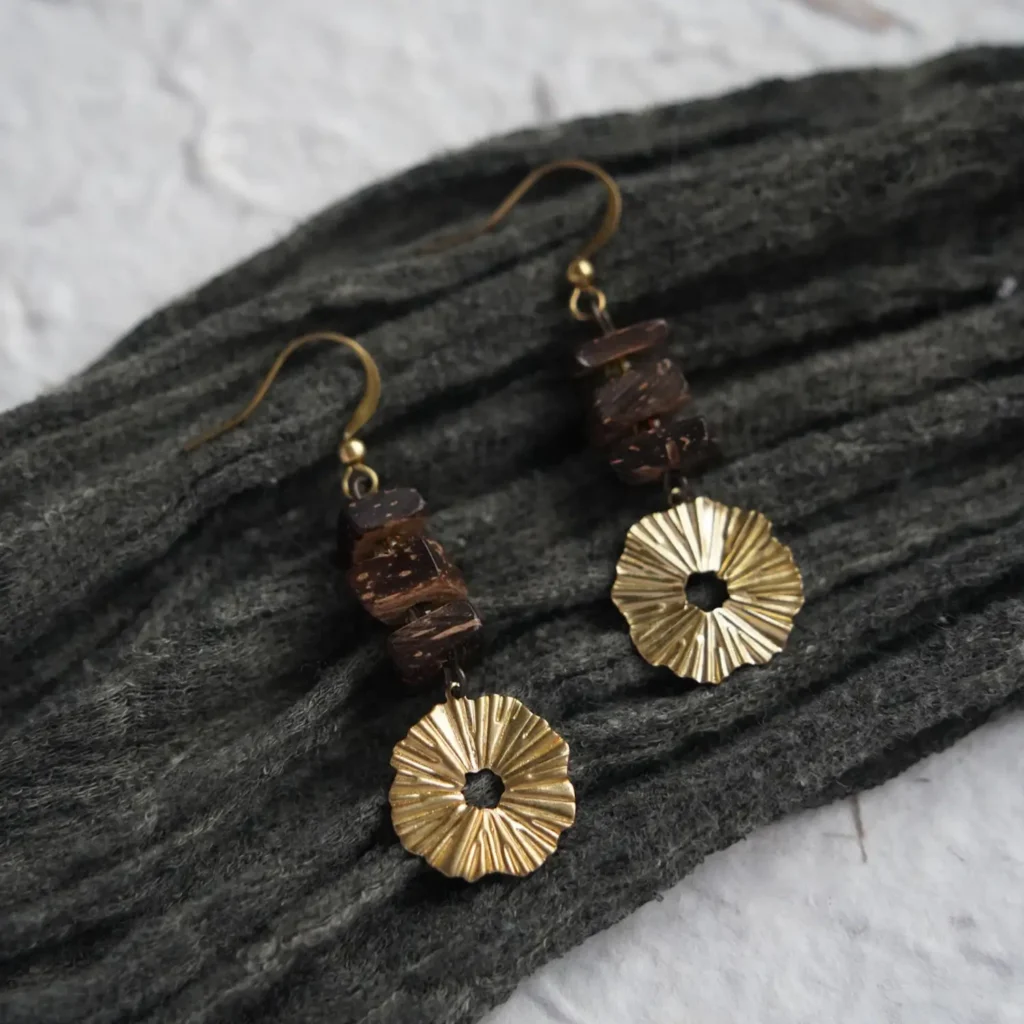
- In the Jewea Coconut Wood Earrings, we preserve a more geometric, raw form. Hand-cut irregular blocks highlight the contrast between longitudinal grain lines and the dotted vascular patterns revealed in cross-sections, resulting in a more organic, sculptural aesthetic.
2. Natural Material Integrity & Color Stability
Coconut wood does not imitate the polished surface of precious hardwoods or gemstones. Instead, it retains its dry fibrous texture and clearly visible organic structure.
This directness is part of its character. Rather than refining the material into a uniform finish, we choose to preserve it in its natural state. Each piece is kept as close to the raw material as possible, with only minimal visual refinement during the crafting process.
Over time, coconut wood jewelry is also resistant to fading. Its tone does not weaken with wear—instead, it gradually develops a deeper, more grounded appearance, developing a richer patina over time.
3. Sustainability and Material Sourcing
Coconut palms are widely cultivated across tropical regions and have long, productive life cycles. Coconut wood is typically a byproduct of this agricultural system, making it a resource-efficient material with high overall utilization. With responsible harvesting and plantation management, it offers a way to reduce dependence on slower-growing hardwood species.
We source our material primarily from naturally aged coconut palms or trees that have completed their fruiting cycles and are removed during plantation renewal. This approach supports a more circular economy, contrasting sharply with the extraction of non-renewable minerals or the harvesting of rare old-growth forests.
At Jewea, we approach coconut wood as a material that naturally fits within a more considered design philosophy—one that values responsible sourcing and thoughtful craftsmanship.
Designing with Coconut Wood: Texture and Contrast
We design with coconut wood as a material that carries visible natural variation in tone and grain. Unlike uniform surfaces, it retains a fibrous texture that brings depth and irregularity to each piece.
In the bracelet, we introduce warm accent beads to balance the darker wood base and create a subtle visual rhythm. A small oxidized silver element adds contrast and acts as a quiet focal point within the composition.
In the earrings, we work with hand-cut geometric wood blocks to build vertical structure and layered texture. The addition of a brass element introduces movement, reflecting light as the piece shifts with wear.
As the design moves, the contrast between matte wood and reflective metal becomes more pronounced, bringing a sense of quiet motion to the overall form.
Conclusion: Embodying Material Individuality
Natural materials hold no hierarchy. While coconut shell and dense seed ends often appeal to buyers for their smooth, uniform appearance, coconut wood delivers a rawer, unrefined texture that preserves its natural structure.
Jewelry often becomes a personal expression rather than a response to mass trends. For those drawn to pieces that reflect individuality—crafted with patience, where the original grain and growth patterns remain visible—coconut wood offers a quieter, more distinctive alternative.