Black Magnetic Stone Jewelry: What Is “Heidan” Stone Really Made Of?
The jewelry trade uses many names for stones and materials that sound natural, rare, or even therapeutic. One example is “Heidan stone,” a Chinese commercial name used for certain black magnetic jewelry.
You may see claims that this material contains minerals beneficial to the human body or that wearing it can improve circulation, digestion, the nervous system, or even treat disease.
But what is this material actually made of? And does its strong magnetism really provide health benefits?
The answers require a closer look at its material properties.
Is Heidan Stone Hematite or Goethite?
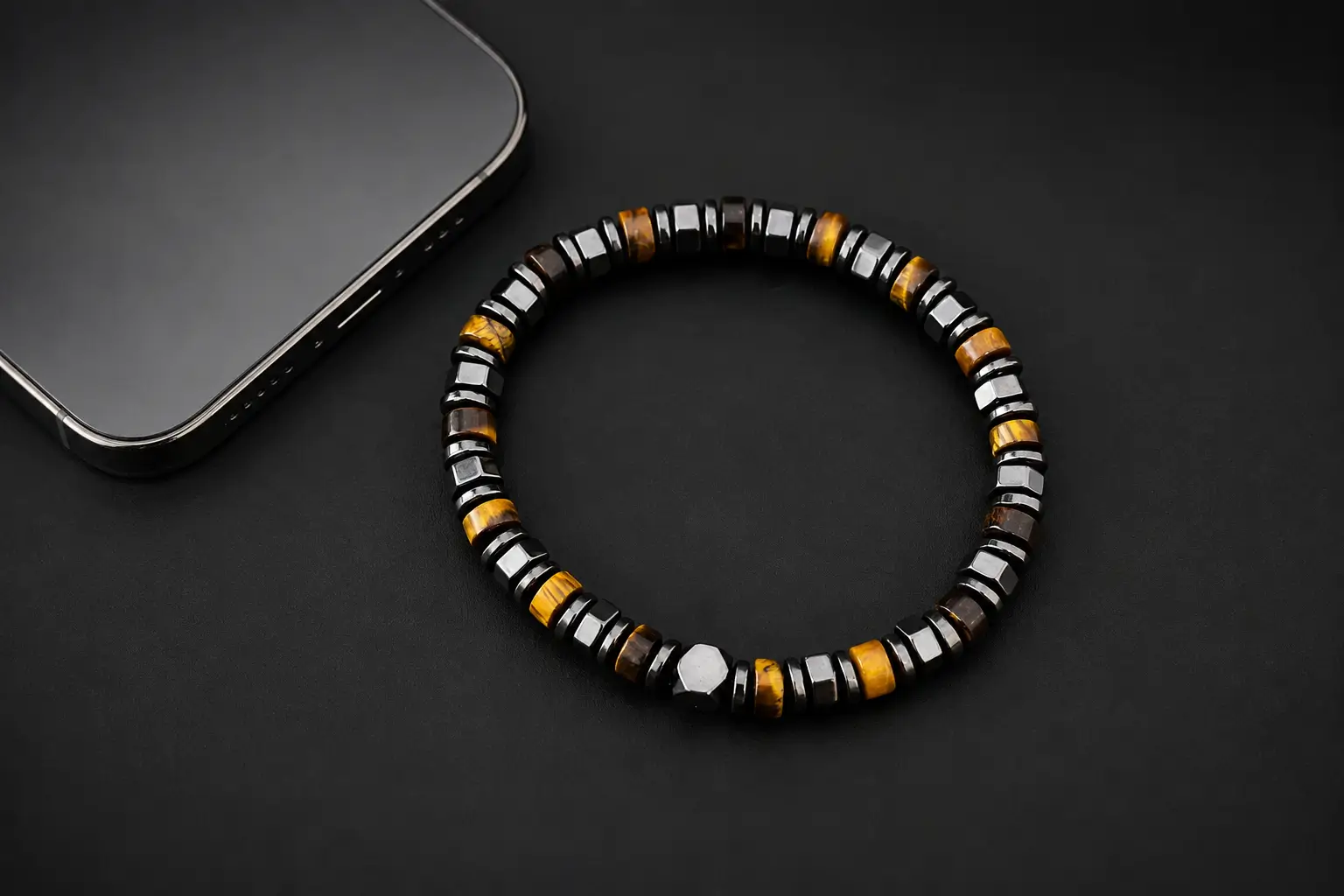
Black magnetic jewelry sold as Heidan stone often has a dark metallic appearance and a strong attraction to a magnet. Some sellers identify it as hematite or Wugang stone, a gemological material associated mainly with goethite.
These materials, however, have very different properties.
Goethite and Wugang Stone
Goethite is an iron oxyhydroxide with the chemical formula FeO(OH). It commonly occurs in brown, yellowish-brown, reddish-brown, or black forms. Wugang stone is a gemological material associated mainly with goethite and may occur as a dense, fine-grained aggregate.
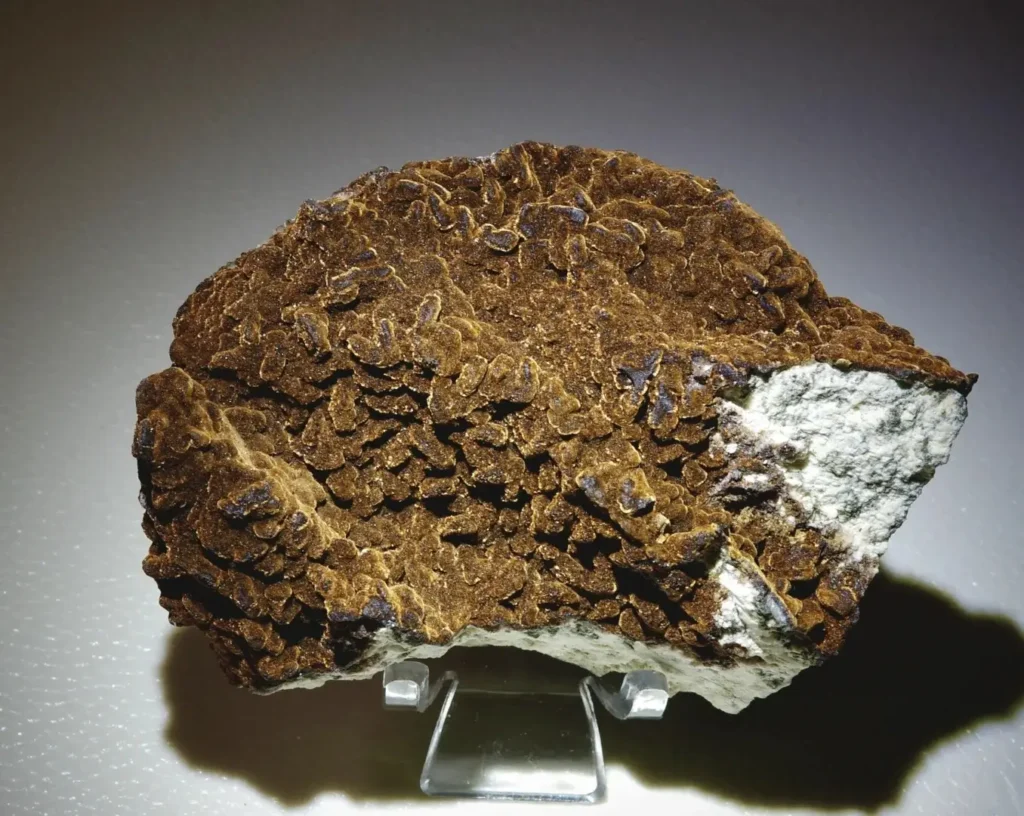
Goethite is not strongly magnetic under ordinary conditions.
Hematite
Hematite is an iron oxide with the chemical formula Fe₂O₃. It belongs to the oxide mineral group and commonly appears steel-gray to black with a metallic or submetallic luster.
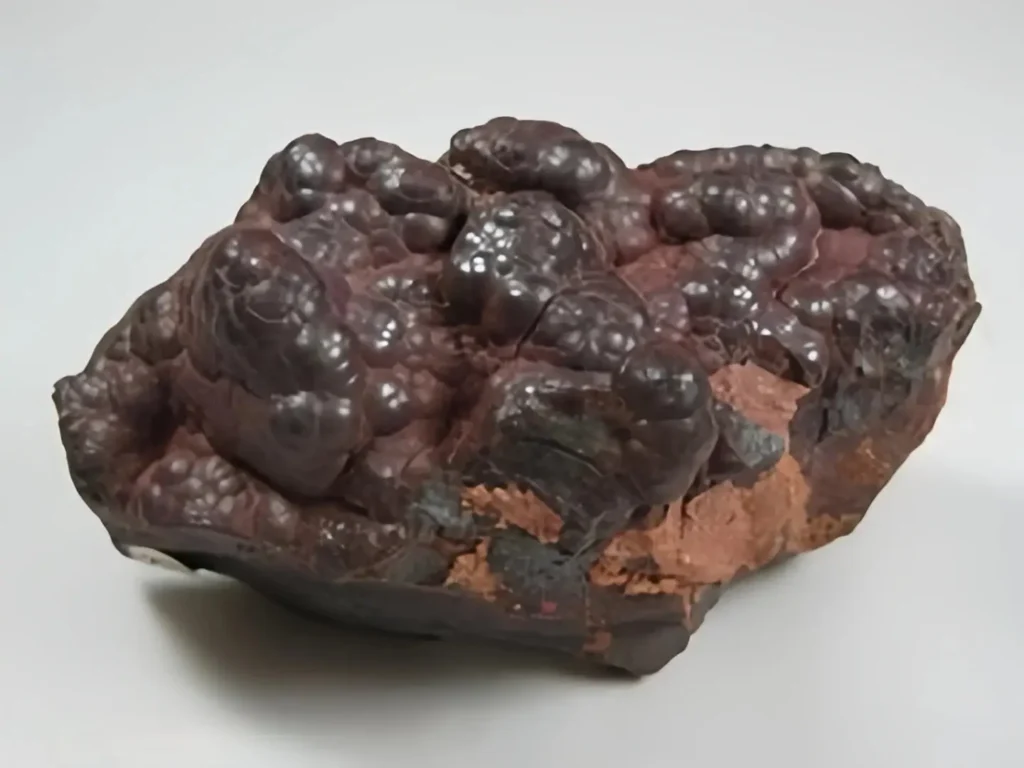
Its reddish-brown streak is one of its most useful diagnostic features. Hematite is not strongly magnetic under ordinary conditions, although its magnetic behavior can vary depending on its structure, impurities, and particle size.
The Material Sold as Heidan Stone
Published gemological research on samples sold as “Heidan stone” found a very different composition.
The tested samples contained mainly iron and strontium and had a composition corresponding to SrO·6Fe₂O₃, or SrFe₁₂O₁₉. Their strong magnetism and other physical properties were consistent with synthetic strontium ferrite, rather than natural hematite or goethite.
This distinction matters.
A black, metallic appearance does not make a material hematite. Strong attraction to a magnet does not prove that a stone is a natural iron mineral.
What Is Heidan Stone Actually Made Of?
The Heidan stone samples examined in the published study were identified as synthetic strontium ferrite, a type of permanent-magnet material.
Strontium ferrite belongs to the ferrite family of magnetic ceramics. Manufacturers use it in applications such as permanent magnets, motors, loudspeakers, and other magnetic components.
This material has a strong and stable magnetic response. That property also explains why jewelry made from it can feel very different from ordinary hematite or goethite when tested with a magnet.
However, an important qualification is necessary: not every product sold under the name “Heidan stone” has necessarily been made from exactly the same material. The identification above applies to the samples examined in the published study. Laboratory testing is the proper way to determine the composition of a particular piece.
Can Magnetic Jewelry Improve Your Health?
Strong magnetism can make this type of jewelry seem unusual, but magnetism itself does not make a material therapeutic.
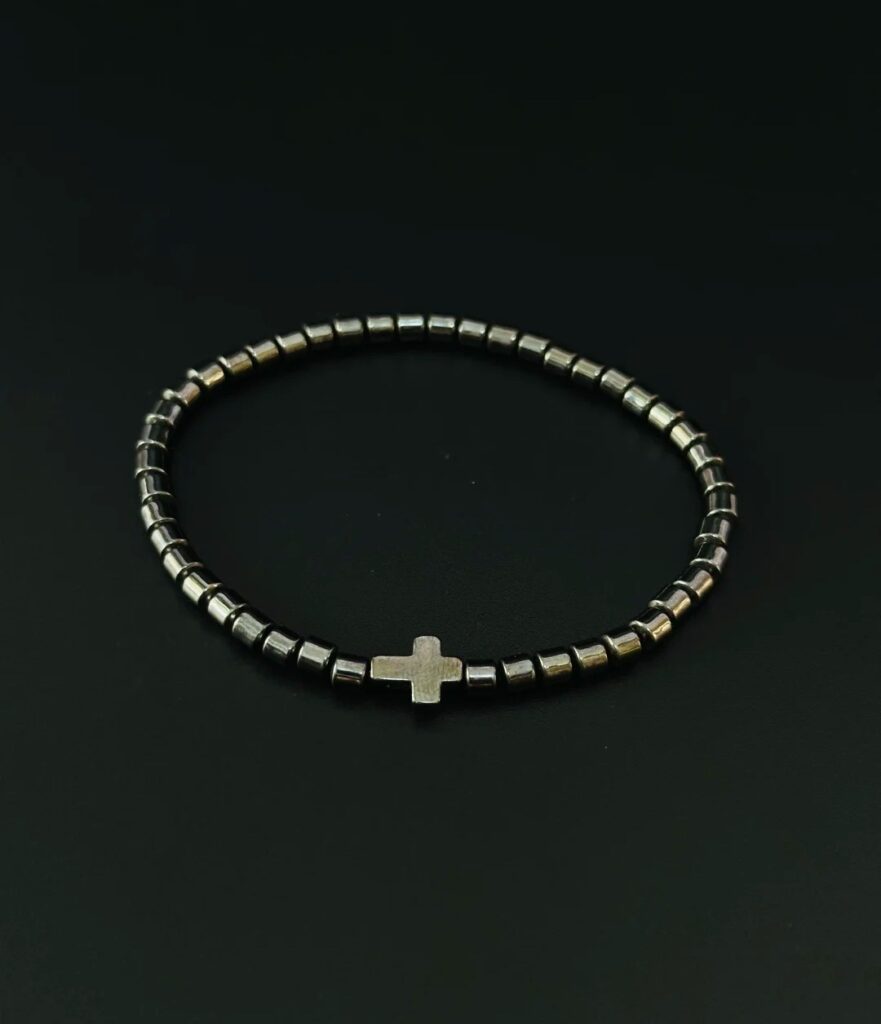
Static magnets are widely incorporated into bracelets, necklaces, rings, and other consumer products marketed for pain relief or general wellness. However, current clinical evidence does not provide convincing support for claims that wearing static magnetic jewelry can treat disease.
This distinction is important.
Some medical devices use electromagnetic fields as part of specific treatments. These regulated medical technologies are not equivalent to wearing a permanent magnet as jewelry.
A magnetic bracelet is not a medical treatment simply because it produces a strong magnetic field.
Claims that magnetic jewelry can treat conditions such as hypertension, arthritis, poor circulation, or nervous-system disorders therefore require clinical evidence. At present, such claims should not be accepted simply because the jewelry feels magnetic or because a seller describes it as an “energy stone.”
How Can You Identify Magnetic Black Stone Jewelry?
Magnetism can provide a useful first clue, but it cannot identify a material by itself.
If a black stone or bead shows an unusually strong attraction to a magnet, you can investigate further by checking:
- Magnetic response: Is the attraction unusually strong?
- Appearance: Does the material have a uniform black, metallic surface?
- Density: Does its measured density match the claimed material?
- Hardness: Does its hardness agree with the seller’s identification?
- Chemical composition: Does elemental analysis support the claimed mineral?
- Crystal structure: Can X-ray diffraction identify the material?
For a reliable identification, laboratory methods such as X-ray fluorescence (XRF) and X-ray diffraction (XRD) provide far more information than appearance or magnetism alone.
This is especially important when a commercial name suggests a natural gemstone but the material may actually be synthetic.
Is It Safe to Wear Magnetic Jewelry?
For most people, the main issue is not the fact that the material is synthetic. Synthetic materials can be perfectly suitable for jewelry.
The more important consideration is the strength of the magnet.
People who have pacemakers, implantable cardioverter-defibrillators (ICDs), or other magnet-sensitive medical devices should keep strong magnets away from their implants and follow the safety instructions provided by their device manufacturer.
Strong magnets can also interfere with certain magnetic cards and other magnet-sensitive devices.
If you wear magnetic jewelry, treat it as jewelry rather than as a medical device.
The Bottom Line
“Heidan stone” is a Chinese commercial name, not a standard mineral species.
Published testing of representative Heidan stone samples found a synthetic magnetic material corresponding to strontium ferrite, rather than natural hematite or goethite.
Its strong magnetism is a real physical property. Its supposed healing powers are a different matter.
There is no good reason to confuse the two.
If you like the dark metallic appearance of magnetic stone jewelry, there is nothing wrong with appreciating it as a decorative material. But claims about treating disease should always be judged by clinical evidence, not by a stone’s name, appearance, or magnetic strength.