What Is Silicified Wood and How Does It Form?
At the outdoor exhibit area of the Chengdu Natural History Museum, the silicified wood on display, with specimens from Luxian as a highlight, is hard to miss.
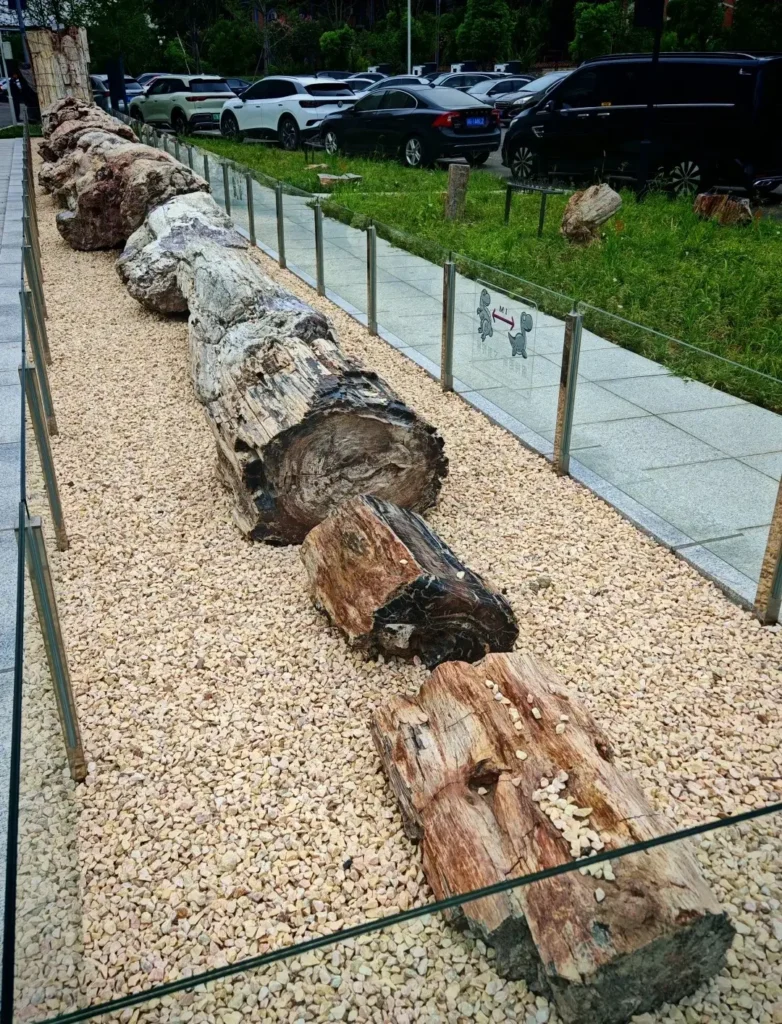
Touch one, and its surface feels cool and remarkably hard. Have you ever wondered how wood can become stone-like over millions of years?
In our previous article, Coral Jade: Understanding Fossil Coral and Silicified Coral, we explored fossilized coral. Now, let’s explore another type of fossil that preserves a record of ancient plant life: silicified wood.
What Is Silicified Wood?
Silicified wood is a type of fossil wood in which silica minerals preserve and mineralize the original wood structure.
In the Chinese market and collecting community, some silicified wood with a dense structure, fine texture, and jade-like appearance and feel is also known as “tree jade” (树化玉). This is a commercial term rather than a formal mineralogical classification.
Silicified wood usually forms after ancient trees become buried. Under suitable geochemical conditions, silica-bearing fluids enter the wood. Silica can then precipitate within cell walls, cell cavities, pores, and fractures. In some cases, minerals also replace parts of the original wood structure. The exact mineralization process varies from one deposit to another, and some specimens record several stages of mineral precipitation.
So, silicified wood is not a single mineral, nor does it form through one simple replacement process.
From a mineralogical perspective, this fossil material is composed mainly of silica phases. Common silica phases include chalcedony, microcrystalline quartz, and different forms of opal, such as opal-A and opal-CT. Some specimens also contain visible quartz crystals. Minor components may include calcite, pyrite, and other minerals.
The mineral composition can vary considerably from one specimen to another. Different areas within the same piece of silicified wood can also contain different minerals. Research shows that silicification can involve multiple stages of diagenesis rather than follow one universal process.
Physical Characteristics
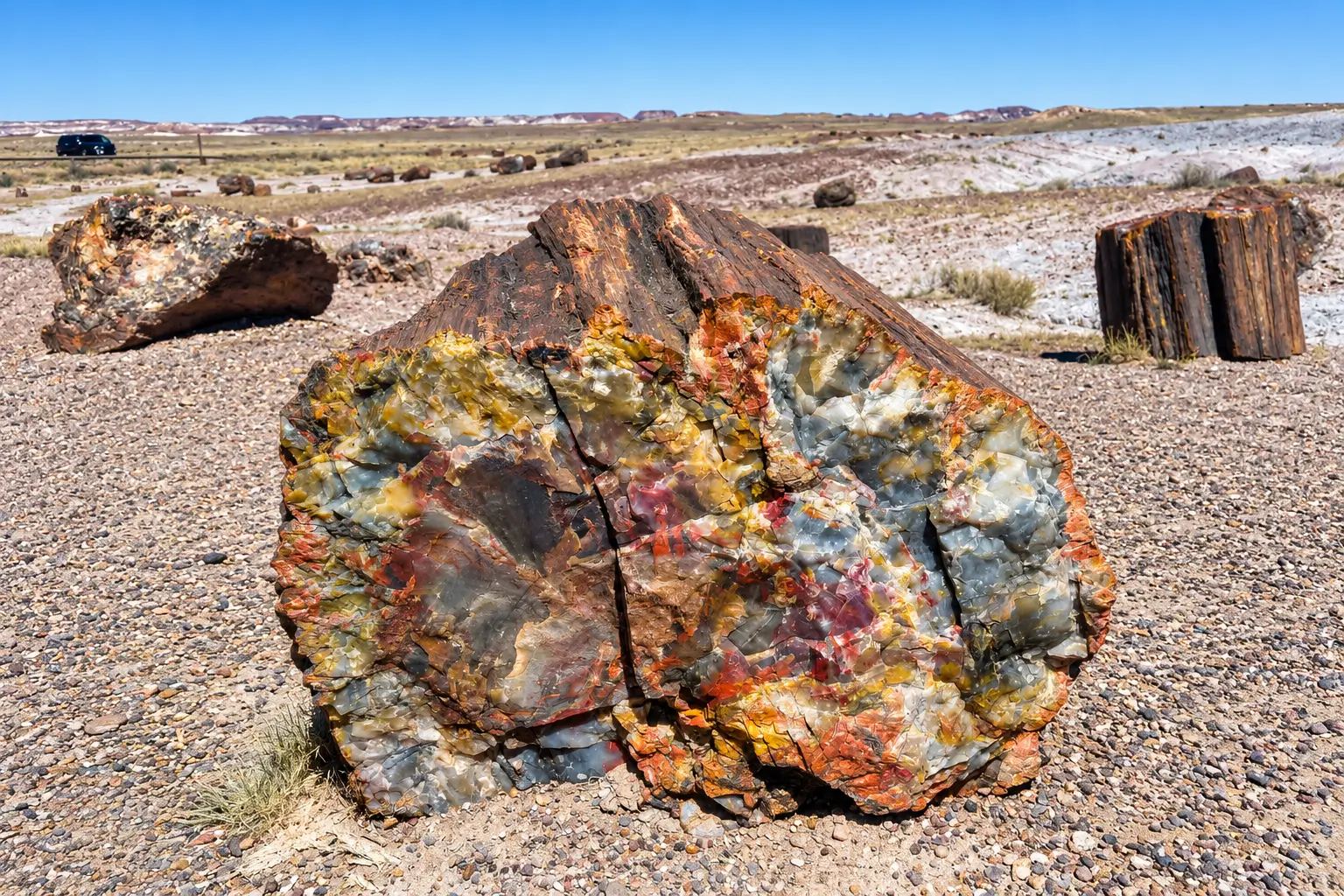
These fossil materials often retain part of the original tree’s form. A cross-section may reveal growth rings and other wood structures. A longitudinal section can show wood grain, fiber orientation, and other anatomical features.
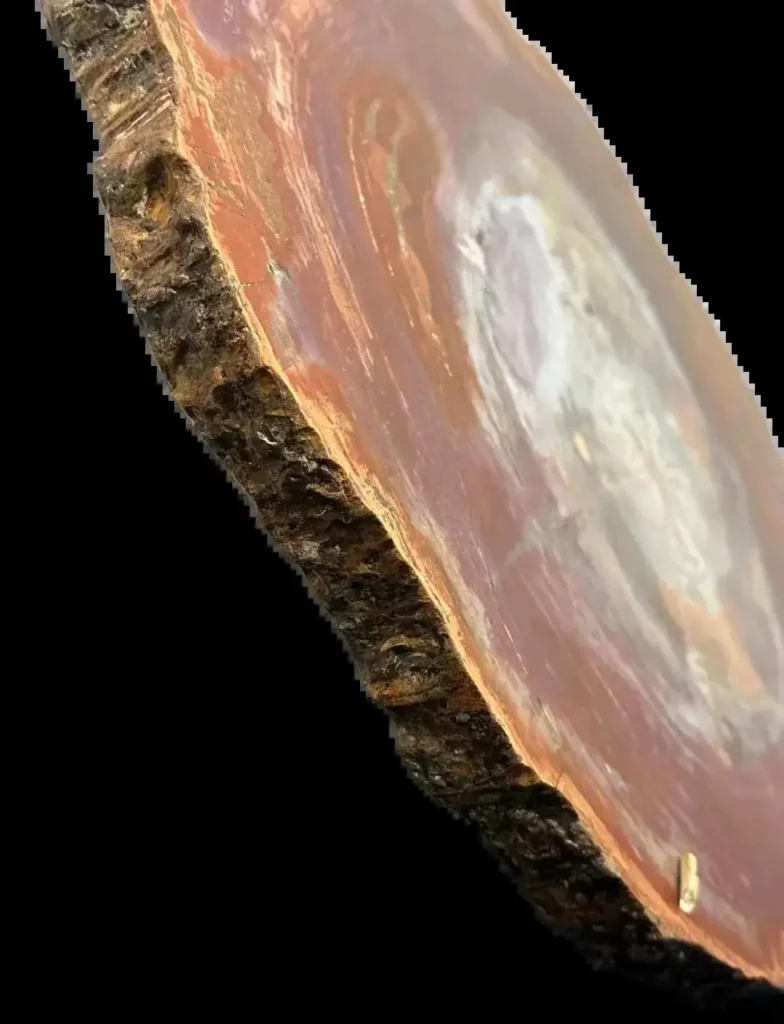
Neither hardness nor specific gravity is fixed across all specimens. Both properties vary with its mineral composition, degree of mineralization, and porosity.
When quartz is the dominant silica phase, the material generally has a Mohs hardness close to 7, although its measured hardness may vary with mineral composition, porosity, and degree of weathering. Silicified wood containing a higher proportion of opal or other minerals with lower hardness may have a lower overall hardness.
Specific gravity also varies with mineral composition and internal porosity. The name “silicified wood” alone therefore cannot define a single specific-gravity range.
After polishing, the material can show a vitreous, waxy, or greasy luster, depending on the silica phases present, their structure, and the condition of the polished surface. Its transparency can range from opaque to locally translucent.
These physical and visual characteristics give some silicified wood considerable value as an ornamental and craft material.
Why Does It Come in Different Colors?
The color does not necessarily reflect that of the original wood. Instead, it may be influenced by trace elements carried into the wood, minerals formed during mineralization, and remnants of the original organic matter.
These fossils can display a wide range of colors, including brown, yellowish brown, gray, grayish white, reddish brown, black, and white.
For example, iron and iron-bearing minerals are often associated with red, yellow, and brown tones. Manganese and manganese-bearing minerals can contribute to dark gray or black colors. Some copper-bearing minerals can produce green or blue-green tones.
However, color does not correspond to any single element in a simple one-to-one relationship. The mineral species present, the oxidation state of the elements, the precipitation process, and the conditions under which the silicified wood formed can all influence its final color.
Where Is It Found?
Silicified wood occurs in many parts of the world and in many geological settings where terrestrial plant remains were buried and preserved, including sedimentary deposits and some volcanic or volcaniclastic settings.
It formed over a wide range of geological ages rather than during any single geological period. Specimens from different localities can vary significantly in age, plant type, mineral composition, color, and state of preservation.
In China, well-known localities include:
- Qitai, Xinjiang: Large concentrations of Jurassic silicified wood occur around the General Gobi area. The specimens occur in sandstone, mudstone, and other rocks of the Shishu Gou Group. Qitai is one of China’s representative silicified wood localities.
- Yanqing, Beijing: The Yanqing Silicified Wood National Geopark preserves silicified wood in Upper Jurassic strata. Some specimens still retain clearly visible growth rings and wood textures.
- Luxian, Sichuan: Silicified wood occurs in Luxian and other parts of Sichuan. These specimens are also commonly featured in geological education and fossil exhibitions in southwestern China.
- Yunnan and Shandong: These provinces also produce fossil wood and silicified wood formed in different geological ages and environments.
Outside China, well-known silicified wood localities include Petrified Forest National Park in Arizona, Washington State in the United States, Argentina, Brazil, Indonesia, and parts of Europe.
Specimens from different regions can vary in mineral composition and preservation. The geological environment and mineralization history of each locality can strongly influence how the original wood was preserved.
What Types of Silicified Wood Occur?
Strictly speaking, silicified wood does not have a unified commercial classification system. Nor does a recognized mineralogical standard divide it into a fixed number of types.
Instead, specimens can be described according to their dominant silica phases and structural features. These descriptions are not mutually exclusive. A single piece of silicified wood may contain more than one silica phase.
Chalcedony-Rich Silicified Wood
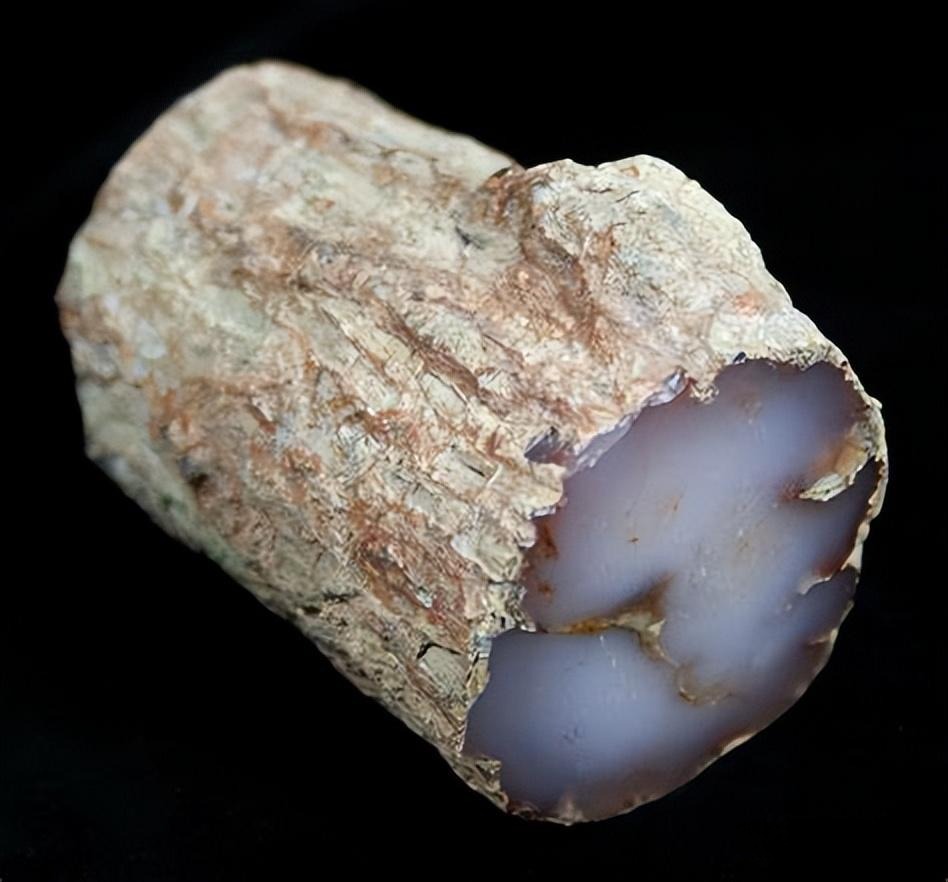
In some specimens, much of the silica occurs as chalcedony-rich aggregates. Chalcedony is a cryptocrystalline silica aggregate with a fine fibrous structure. It consists mainly of quartz.
This type of silicified wood often has a fine texture. After polishing, it can develop a soft luster while showing the original wood grain clearly. Some specimens also display agate-like bands or patterns.
Agate and chalcedony have closely related mineral compositions. Agate typically shows more distinct banding. Therefore, the term “agate-like silicified wood” describes the banded appearance and structural features within the silicified wood. It does not mean that the material belongs to a completely different fossil category.
Opal-Rich Silicified Wood
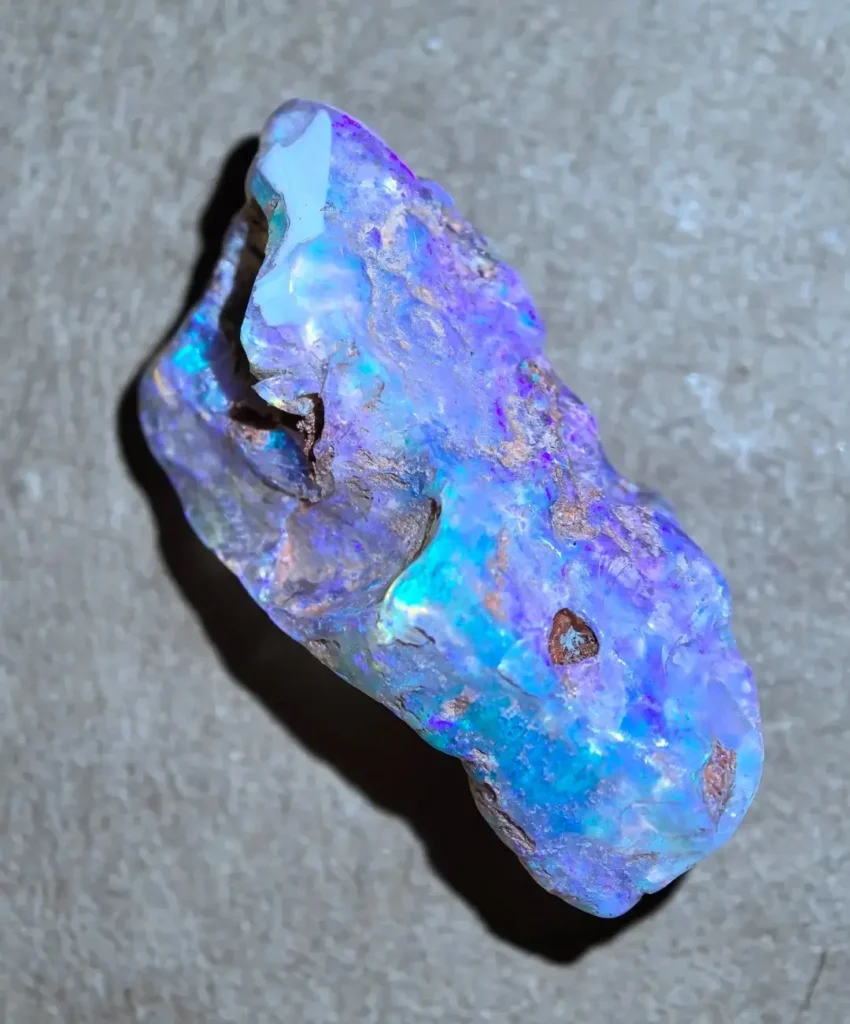
In some specimens, the silica occurs as opal phases. Unlike crystalline quartz, opal is a hydrated silica material that ranges from noncrystalline to short-range ordered. Its structure and degree of crystallinity differ from those of quartz.
The luster, transparency, hardness, and stability of these specimens can vary with the specific opal type, water content, and other minerals present.
Studies of silicified wood have identified different silica phases, including opal-A and opal-CT. These phases may occur separately or coexist with chalcedony or quartz, depending on the specimen’s mineralization history.
Silicified Wood with Crystalline Quartz
Some silicified wood contains clearly visible quartz crystals. These crystals may occur in the original cell cavities and pores of the wood, or in fractures that formed later.
In some specimens, quartz crystals formed after the wood had already undergone partial mineralization. The crystals then precipitated in open spaces that remained within the material. As a result, a single specimen may preserve evidence of different stages of mineralization.
However, crystalline quartz does not necessarily form only at a later stage. To determine when and where the crystals formed, researchers need to examine their relationships with the surrounding minerals and the original wood structure, together with other mineralogical evidence. Crystal appearance alone cannot establish the timing of formation.
It is also important to note that crystalline quartz describes a mineralogical and structural feature rather than an independent, mutually exclusive type of silicified wood. Quartz crystals can occur in the same specimen alongside other silica phases, including chalcedony and opal.
Jewea Summary
Silicified wood is a distinctive fossil material whose appearance and physical properties vary with its mineral composition, internal structure, and state of preservation.
Some specimens have an earthy appearance, with clearly preserved growth rings and wood grain. Others display finer textures, distinctive patterns, or partial translucency, depending on the silica phases present and how the wood was mineralized.
Beyond its ornamental appeal, this material preserves evidence of ancient plant life and the geological processes that transformed it.
Perhaps that is what makes it so special: it looks like stone, yet it still preserves traces of a tree that once grew.