Reverse Intaglio: How Gemstones Create Multiple Images
Gemstone and jade carving share many techniques, including relief carving, intaglio, and sculpture in the round. Artisans also develop specialized techniques to bring out the unique qualities of different materials. In previous articles, we explored techniques such as chain carving and thin-walled jade carving.
Today, we turn to reverse intaglio, a distinctive gemstone carving technique, and the innovative Wallace Cut, developed by jewelry artist Wallace Chan.
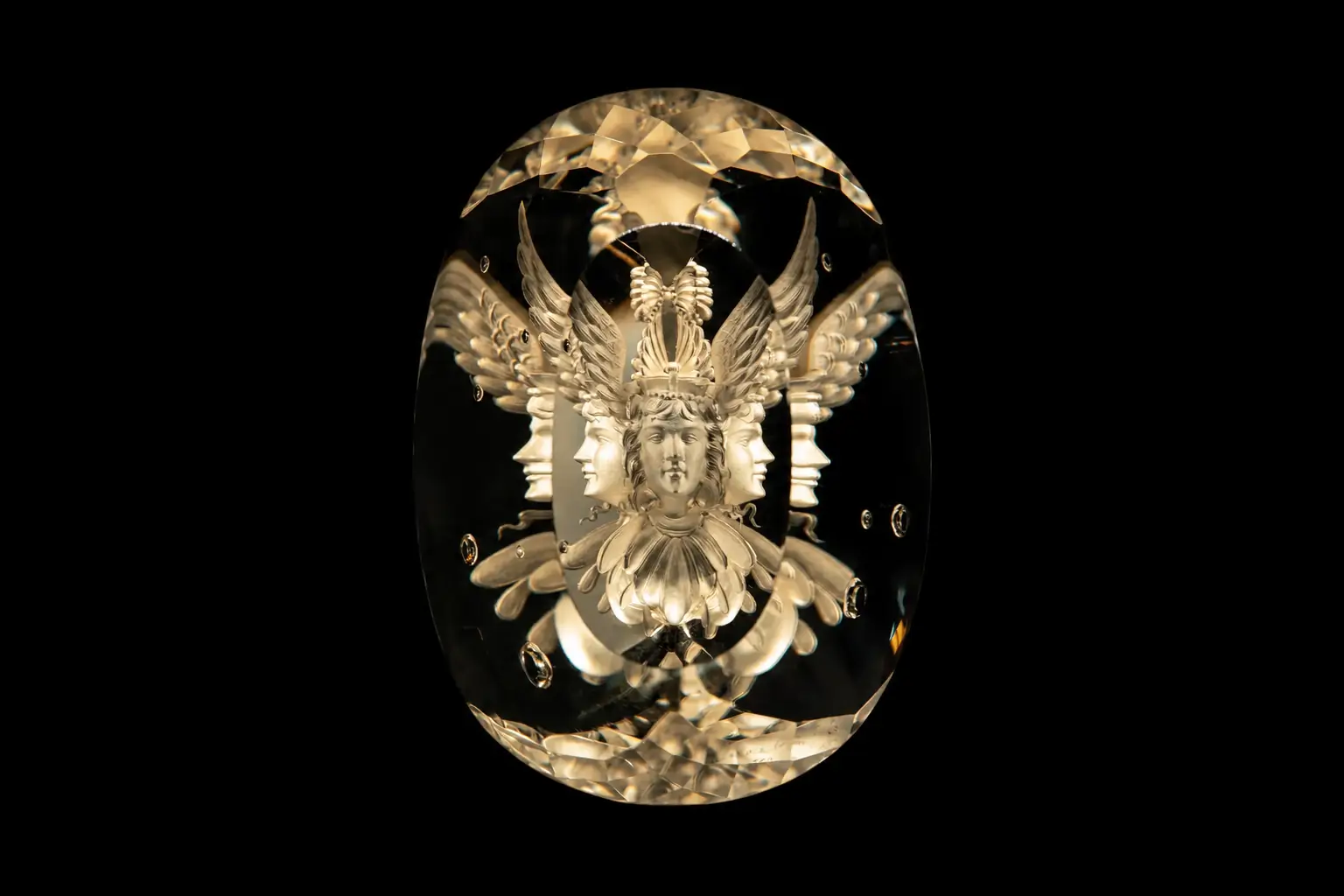
Traditional carving shapes a design on the front surface of a material. Reverse intaglio takes a different approach. The artisan carves the design into the back of a transparent gemstone. Viewed from the front, the lines and contours appear to float within the stone.
By combining carving with the optical properties of gemstones, artisans can create more than a surface design. They can give a piece greater depth, dimension, and visual complexity.
Reverse Intaglio: Creating Three-Dimensional Images from the Back
Reverse intaglio involves carving a design into the back of a transparent gemstone and viewing it from the front.
Traditional intaglio cuts a design into a material’s surface, leaving the lines and details below the surrounding surface. Reverse intaglio places this carved surface on the back of a transparent stone, allowing viewers to see the design through the front.
Reverse intaglio was used in European jewelry by the 19th century, particularly in pieces made from rock crystal. Some artisans added pigment or a backing to the carved surface to enhance the design’s color and contrast.
The challenge lies not only in carving the design but also in anticipating how it will look from the front at different viewing angles.
First, carvers must account for the gemstone’s shape, thickness, and optical properties. These factors affect how light travels through the stone and how the carved design appears from the front. The proportions and placement of the carving must therefore be planned with the finished viewing effect in mind.
Second, carvers must account for the difference between the carving and viewing angles. When working from the back, they need to anticipate how the design will look from the front. This matters especially when carving figures, lettering, or other designs with a clear sense of direction.
Finally, the material itself affects the carving process. A gemstone’s transparency, inclusions, fractures, and durability all influence the clarity of the design and the risks involved in carving. Carvers must choose the right carving location and design based on the stone’s individual characteristics.
Reverse intaglio works well with clear quartz and can also be used on certain other gemstones, depending on their transparency, internal structure, and suitability for carving. Each material presents different challenges and produces different results.
Wallace Cut: Creating Multiple Images in a Gemstone
Reverse intaglio can produce striking visual effects. Wallace Chan developed the Wallace Cut in 1987 by combining reverse carving, precisely calculated gemstone facets, and three-dimensional sculptural techniques. According to Chan’s official description, the technique uses 360-degree intaglio to create multiple reflections from a single carved face on the back of a transparent stone.
Unlike conventional reverse intaglio, the Wallace Cut integrates the carved figure with a carefully calculated arrangement of facets. The interplay between the carved form, the facets, and light allows a single figure to appear as multiple reflections within the gemstone. As the viewing angle changes, the apparent positions and clarity of these reflections may also change.
These images are not separate carvings but different optical reflections of a single carved form. This interplay of carving and light gives the technique its distinctive visual complexity.
Qiankun Riye Fu: One Figure, Multiple Reflections
In Qiankun Riye Fu (also known as Now and Always), Wallace Chan uses aquamarine to portray a goddess from Greek mythology. The piece combines figurative carving with multiple images created through the interplay of carved forms and gemstone facets.
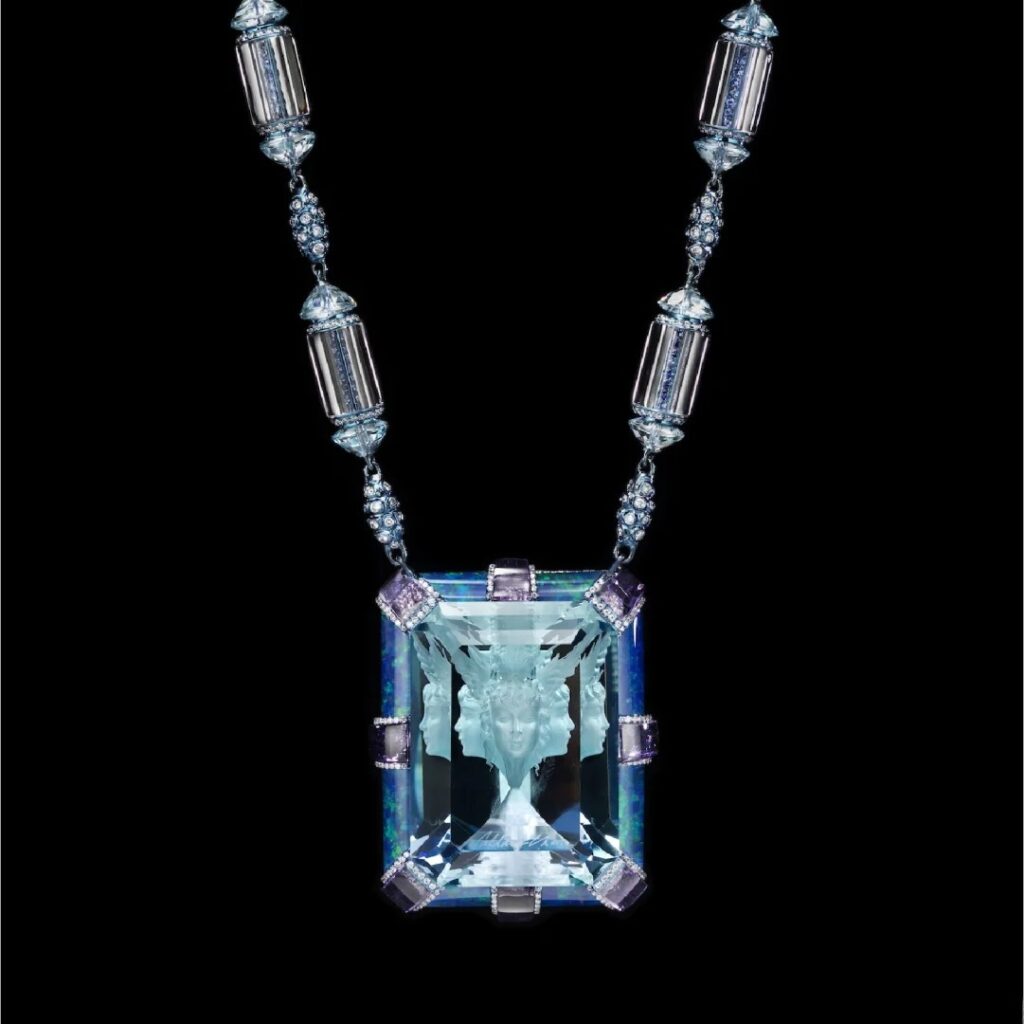
Its appeal lies not only in the goddess’s facial features and intricate adornments but also in the changing images that emerge within the stone. The carving and facets work together, making the figure appear to have several faces that echo one another.
This effect raises an intriguing question: Are we seeing a single, fixed image, or different versions of the same figure revealed from different angles?
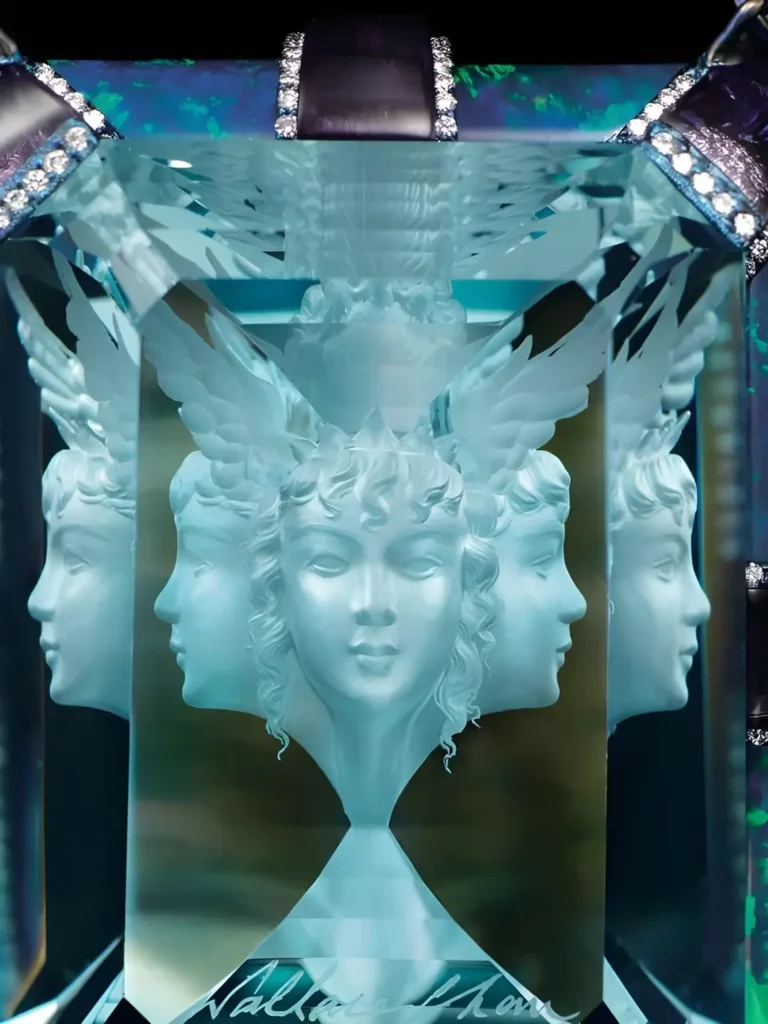
To me, the piece also invites reflection on the nature of the self and the illusions we perceive.
Each of us may have a relatively stable sense of identity, yet we show different sides of ourselves in different settings, moods, and relationships. The person we recognize as ourselves may be just one of many facets. The person others see may be only a reflection of who we are at a particular moment.
As we move around the gemstone, its images shift and may even disappear. The carving itself remains unchanged. What changes is the light and the angle from which we view it.
This brings to mind the Qingjing Jing (Classic of Purity and Tranquility) and its reflections on deluded thought and the world around us. We often mistake what we see for something permanent and unchanging. We may also cling to a fixed idea of who we are, overlooking how things continually change.
Light and shadow shift with each viewing angle, and the images change with them. Through this piece, we might ask ourselves: Are we attached to things as they truly are, or merely to the images we see?
Jewea’s Perspective
From traditional intaglio to reverse intaglio and the Wallace Cut, gemstone carving continues to expand the ways we can work with and appreciate gemstones.
Reverse intaglio changes the relationship between the carved design and the viewer. The Wallace Cut takes this further by combining carving, faceting, and light to create multiple images from a single figure.
The value of these techniques lies not only in the striking pieces they produce but also in how they change the way we see familiar materials.
Innovation does not always require a new material. Sometimes, a different carving technique, a new arrangement of facets, or a change in viewing angle is all it takes to reveal an entirely different side of a gemstone.