Persimmon Calyx Pattern: The Ancient Chinese Motif Behind Modern Design
Recently, a trademark dispute over a small black four-petal flower has drawn widespread attention online.
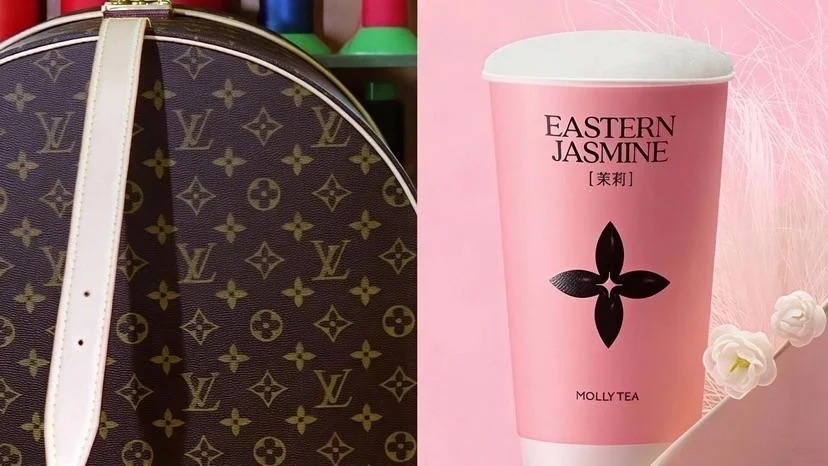
French luxury house Louis Vuitton (LV) became involved in a trademark dispute with Chinese modern tea beverage brand MOLLY TEA (Moli Naibai) over a black four-petal floral motif. The dispute eventually led to a ruling that required Moli Naibai to pay 10.3 million RMB in compensation.
To understand this modern controversy, we first need to discover the story behind this seemingly simple pattern — a design that carries thousands of years of Chinese cultural memory.
Four petals arranged in perfect symmetry create a sense of balance, simplicity, and geometric harmony.
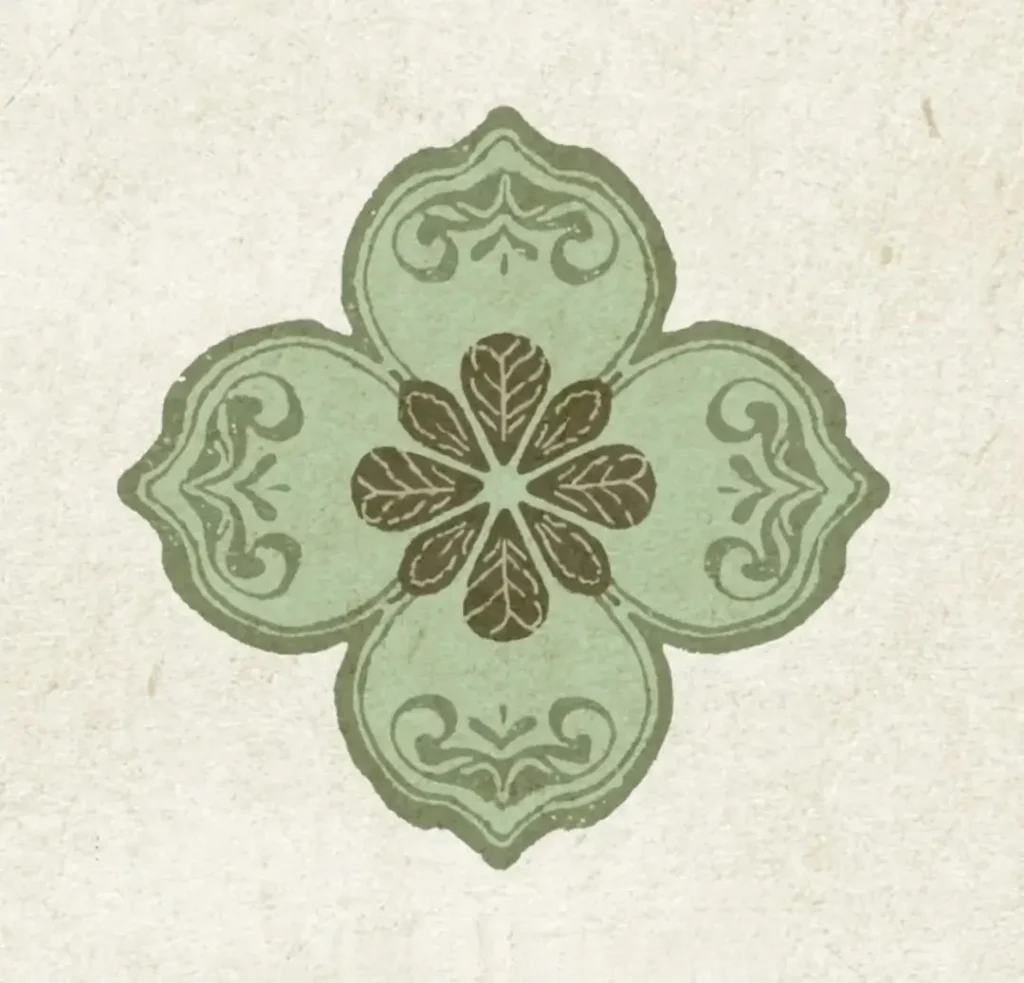
Within the traditional Chinese decorative system, this ancient motif has a name that has been passed down for centuries:
the Persimmon Calyx Pattern (柿蒂纹, shìdìwén).
Chinese Traditional Pattern: The Persimmon Calyx Pattern
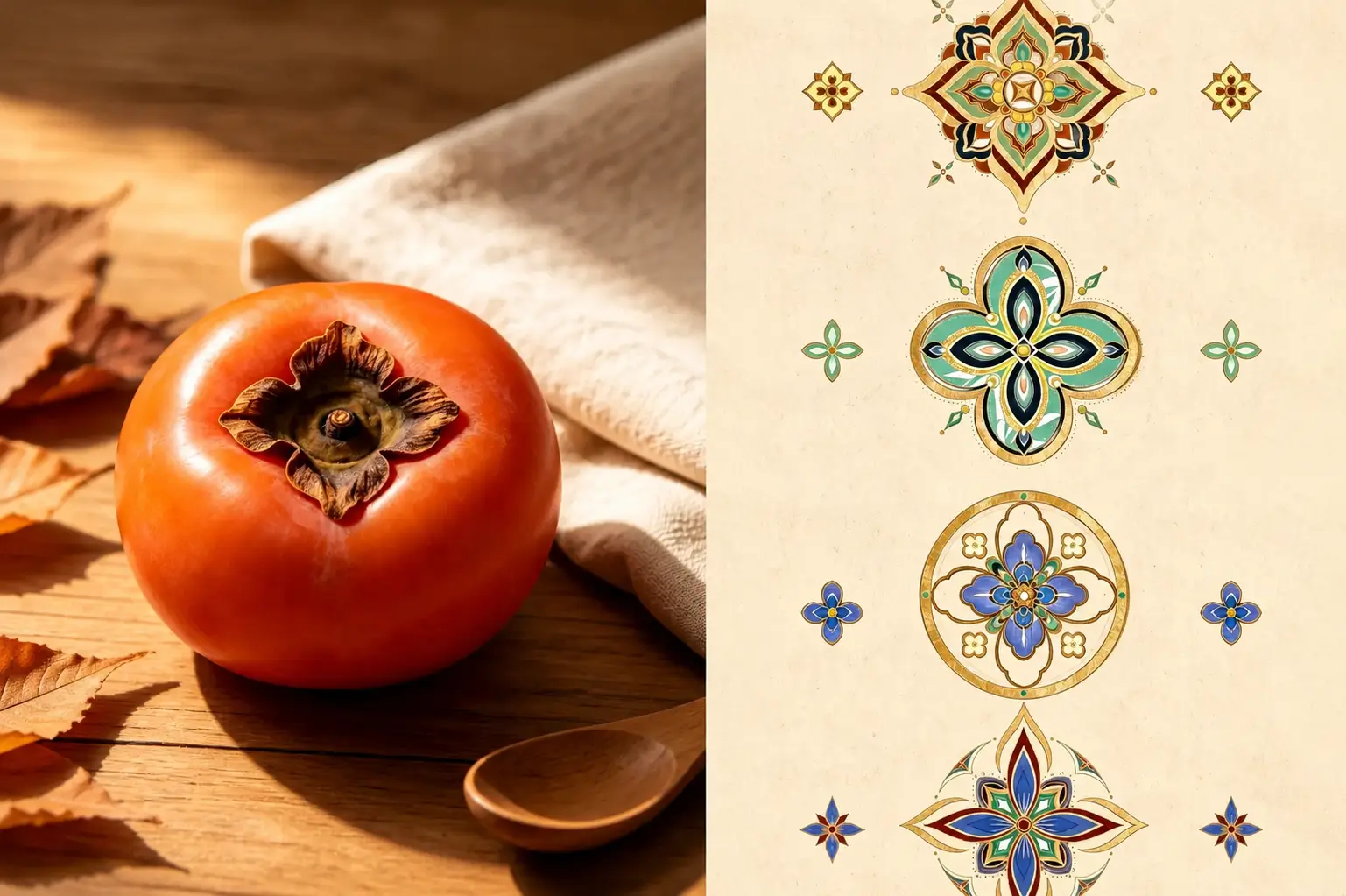
The Persimmon Calyx Pattern (柿蒂纹, shìdìwén) is one of the most recognizable traditional Chinese decorative motifs. Inspired by the shape of a persimmon calyx — the small leaf-like structure at the bottom of the fruit — the pattern features four rounded petals with slightly pointed tips. Each petal follows a traditional form known as “one pointed tip with two curved sides,” creating the motif’s distinctive silhouette and balanced geometric beauty.
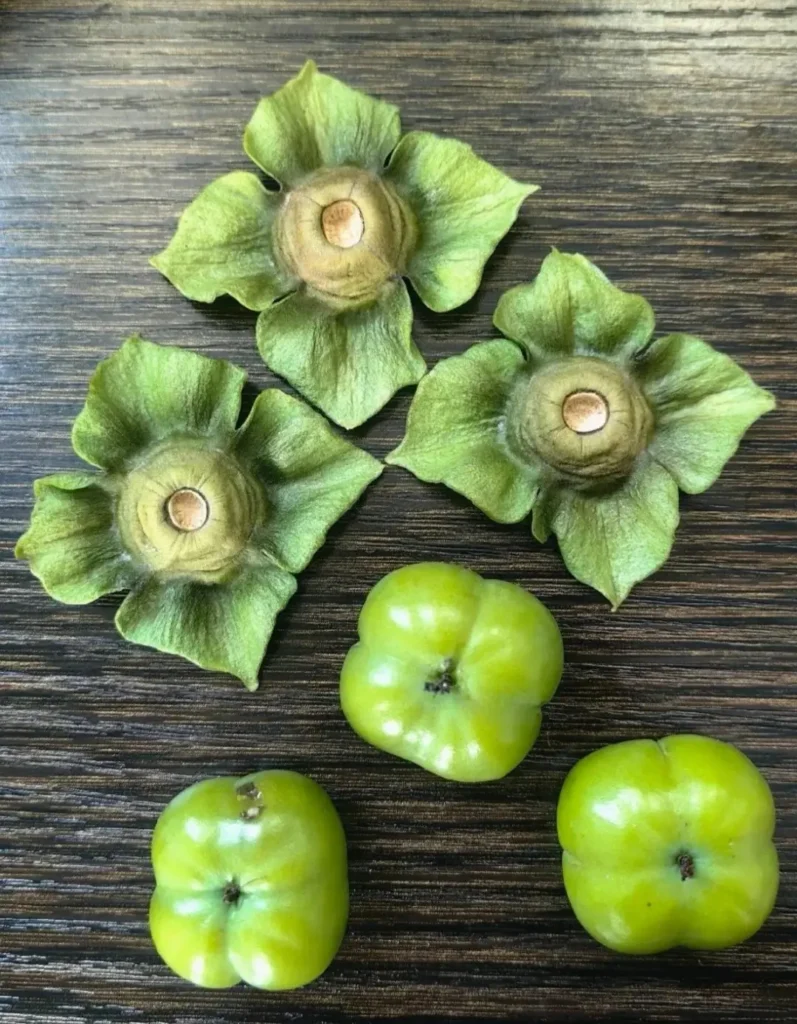
Its signature four-petal structure extends toward the four directions, forming a balanced cross-like design with a strong sense of symmetry and harmony.
In Chinese culture, the persimmon symbolizes abundance and prosperity. Because the Chinese word for persimmon (柿, shì) shares the same pronunciation as “matter” or “affair” (事, shì), the motif carries wishes for everything to go well in life, along with hopes for family prosperity, future generations, and lasting fortune.
Although widely known today as the Persimmon Calyx Pattern, this motif has evolved over thousands of years. It developed from early plant-inspired designs, appeared as the Fanghua Pattern (方花纹) during the Warring States period, and later became an important symbol in traditional Chinese decorative art.
Neolithic Period: The Early Forms of the Persimmon Calyx Pattern
As early as the Neolithic period, a four-petal plant motif resembling the later Persimmon Calyx Pattern had already begun to appear in Chinese decorative art.
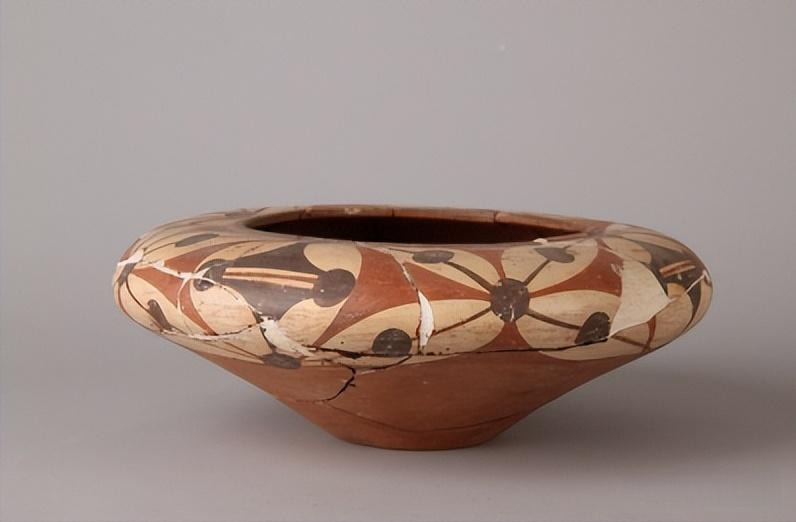
A Neolithic painted pottery bowl, now housed at the Nanjing Museum, features an early plant motif known as the “Large Four-Petal Flower.” Although it had not yet developed into the mature Persimmon Calyx Pattern, its symmetrical structure and leaf-like forms show clear similarities to the motif that would emerge in later Chinese art.
Warring States Period: The Fanghua Pattern, the Predecessor of the Persimmon Calyx Pattern
During the Spring and Autumn and Warring States periods, this four-petal floral motif began to develop into a more recognizable form.
Chinese scholar Li Ling studied an inscription found on a Warring States bronze mirror: “Fanghua man chang, ming ci yue chang” (方华蔓长,名此曰昌). The phrase describes fragrant flowers and vines spreading in all directions, symbolizing prosperity and good fortune.
Based on this inscription, Li Ling suggested naming this four-petal motif the Fanghua Pattern (方花纹), meaning “a flower representing the four directions.” The Fanghua Pattern is considered the early form of what later became known as the Persimmon Calyx Pattern.
Ancient Chinese people believed that the four petals of the Fanghua Pattern represented the four directions — east, south, west, and north. The central circle symbolized the center of the universe.
Together, the four petals and central point created a miniature representation of the traditional Five Elements cosmology. People believed that decorating objects with this motif could connect them with the harmony of heaven and earth and bring protection from all directions.
This belief reflected an ancient desire for balance, stability, and harmony between humans and the natural world.
Although plant motifs had not yet become a dominant decorative style during this period, the Fanghua Pattern gained special importance because of its symbolic meaning.
As one of the few widely used plant-inspired motifs at the time, it appeared on many valuable objects, including bronze mirrors, lacquerware, roof tiles, gold and silver ornaments, and jade artifacts.
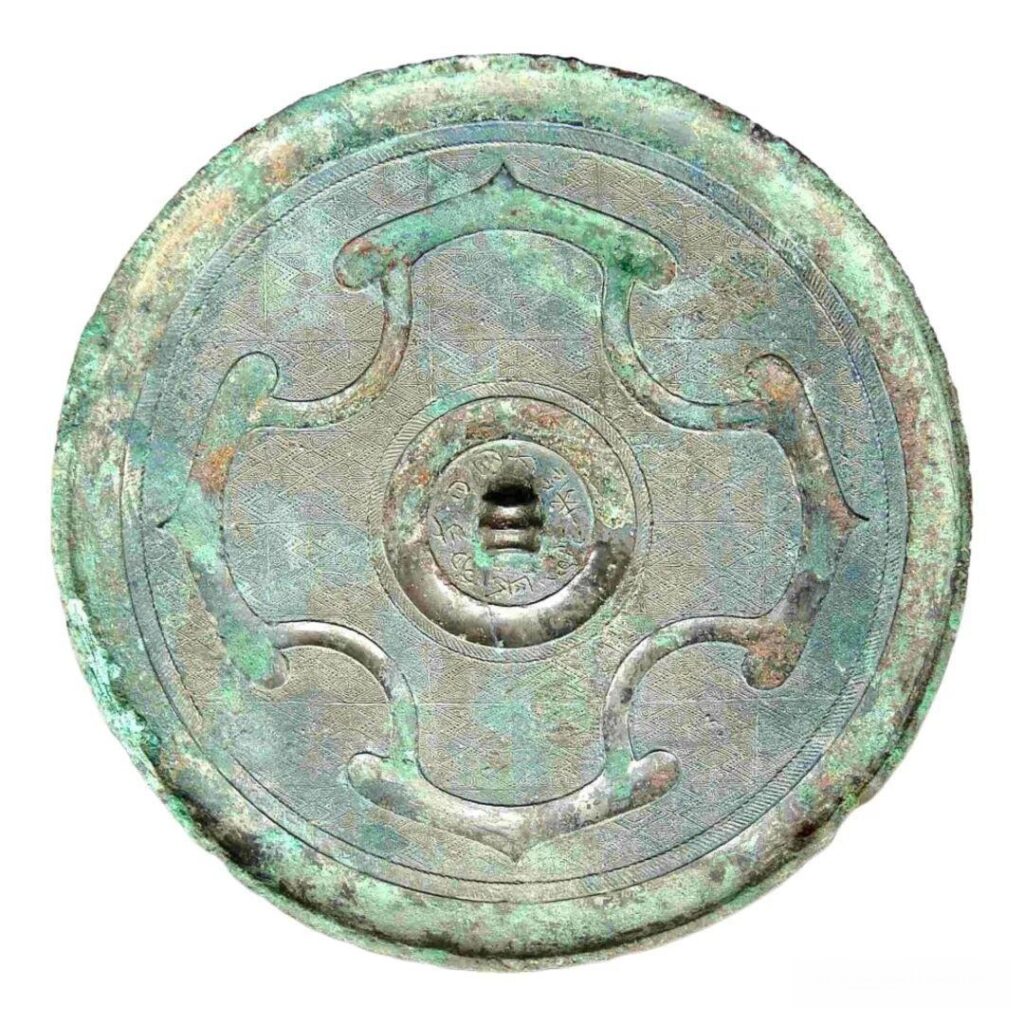
Among these objects, bronze mirrors and roof tiles featured the pattern most frequently.
Fanghua Pattern on Bronze Mirrors
On Warring States bronze mirrors, craftsmen used the Fanghua Pattern in several ways.
They sometimes placed it around the central knob as a decorative element. In other examples, they expanded the pattern outward from the knob and used it as the main design of the mirror surface.
Craftsmen also arranged multiple Fanghua motifs across different areas of the mirror using radial symmetry or axial symmetry, creating a balanced and orderly composition.
In some cases, artisans combined the Fanghua Pattern with other traditional motifs, such as:
- diamond patterns;
- raised-dot patterns;
- animal motifs;
- coiled dragon patterns.
These combinations created a rich and sophisticated visual effect within a limited space.
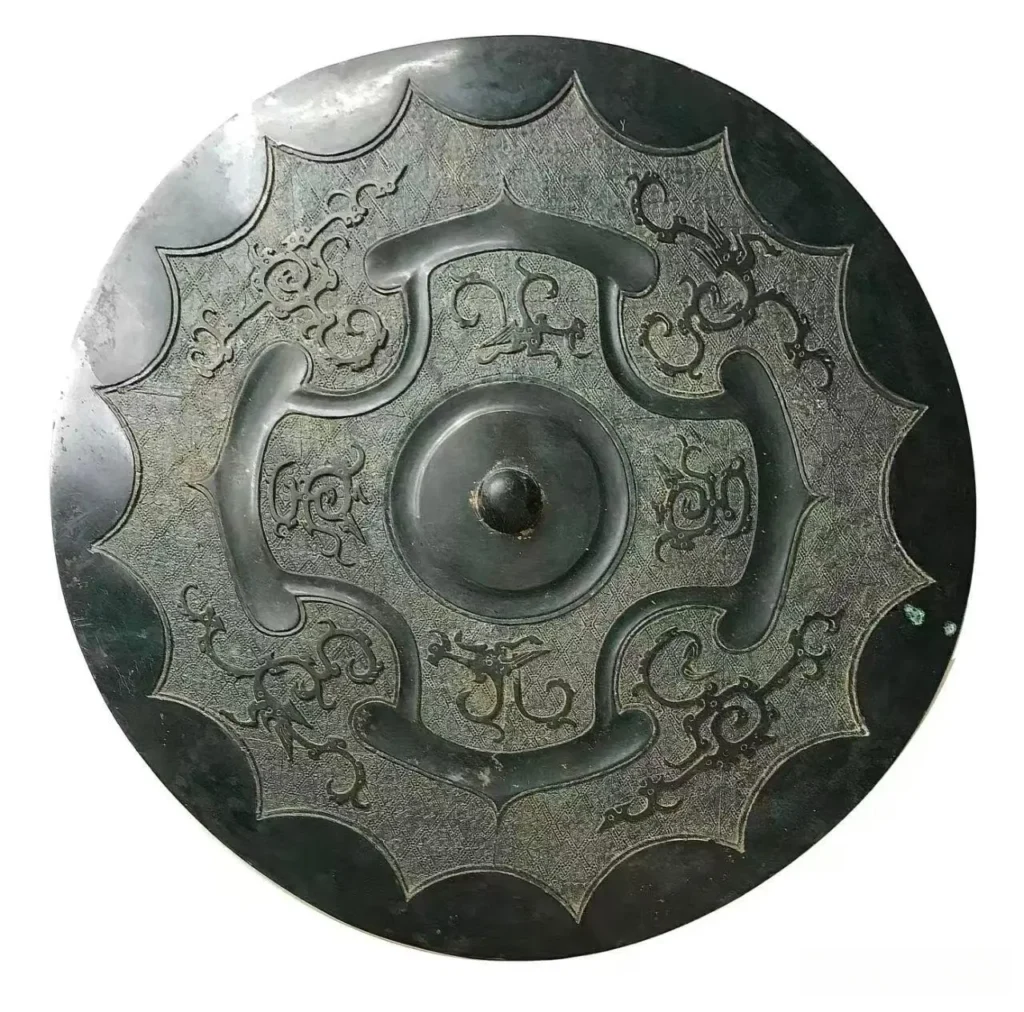
For example, the Persimmon Calyx Pattern Dragon and Phoenix Mirror, now housed at the Guangdong Grand View Museum, divides the mirror surface with a Fanghua Pattern structure. Two dragons and two phoenixes surround the floral design, while their flowing bodies create a vivid sense of movement and vitality.
The Many Forms of the Fanghua Pattern
Through the creativity of Warring States craftsmen, the Fanghua Pattern developed into many different variations.
The most common form featured four petals, although a few examples used three petals. The center was usually circular, but some bronze mirrors featured a square center.
The petals also developed into many distinctive forms, including:
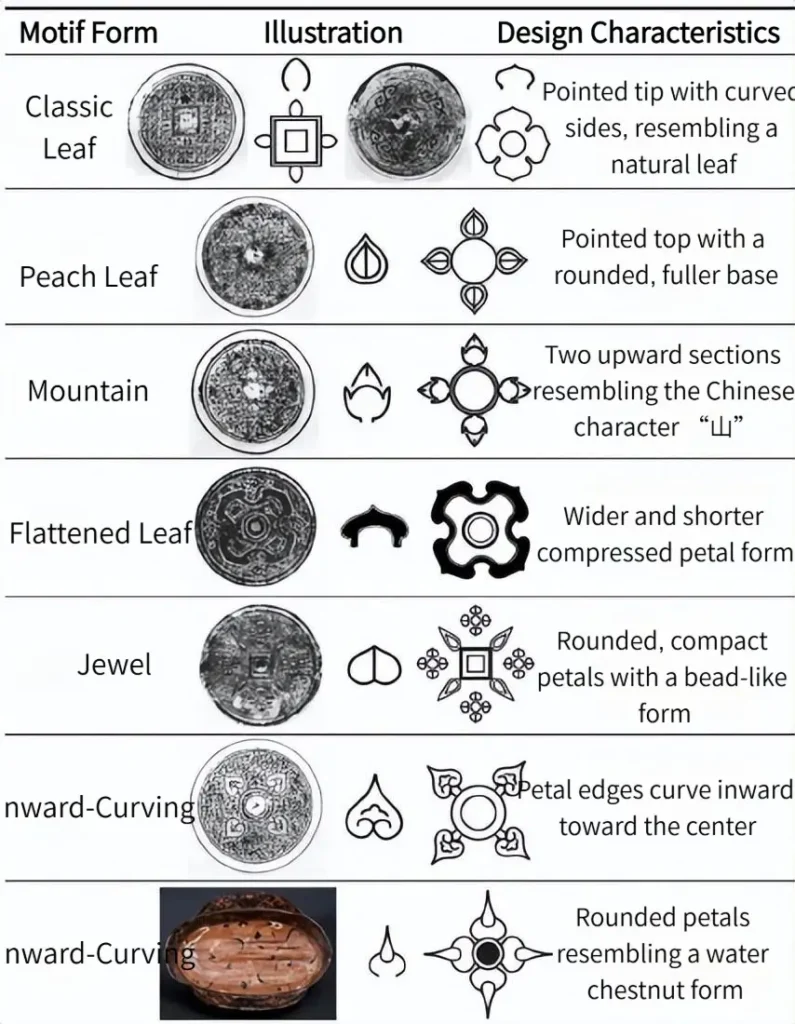
- Classic leaf shapes
- Peach leaf shapes
- Mountain shapes
- Flattened leaf shapes
- Jewel shapes
- Inward-curving shapes
- Water chestnut shapes
Over time, the same four-petal flower transformed into hundreds of different expressions in the hands of different artisans.
Han Dynasty: The Fanghua Pattern as a Rare Plant Motif
During the Han Dynasty, animal motifs and cloud patterns dominated Chinese decorative art, while plant motifs gradually became less common in everyday objects.
However, the Fanghua Pattern (方花纹) remained an exception. Ancient Chinese people connected this four-petal plant motif with ideas of cosmic order, the center of the universe, and the cycle of life. Its structure closely matched their belief in the harmony of the four directions and the balance between heaven and earth.
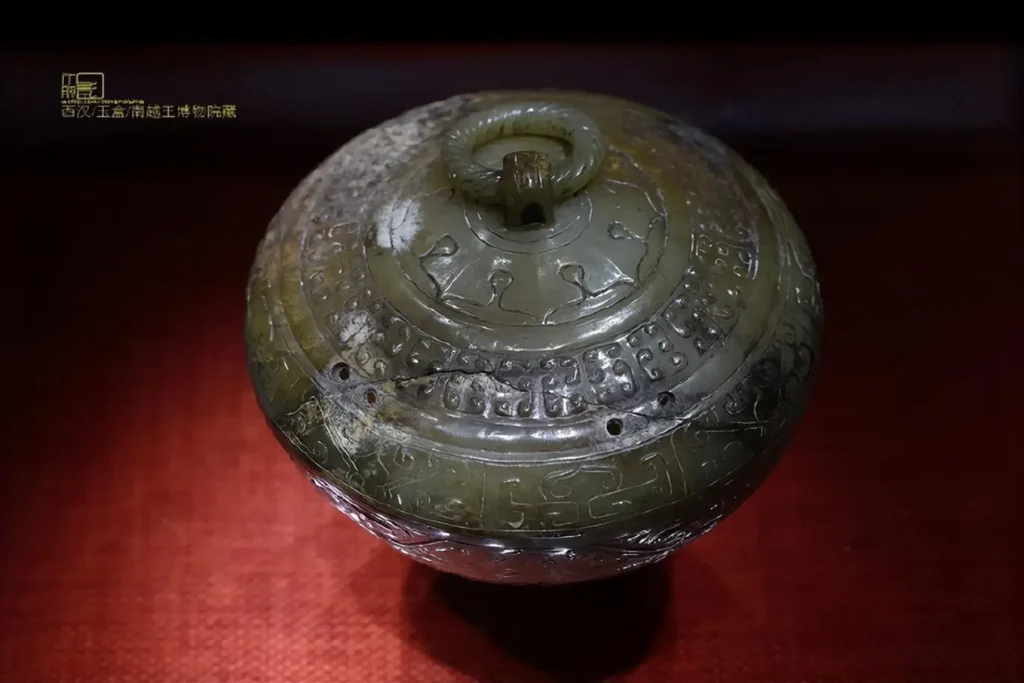
As a result, the Fanghua Pattern became one of the few plant motifs that continued to flourish during the Han Dynasty. Craftsmen widely used it on various objects, including bronze mirrors, coffin covers, tomb ceilings, silk textiles, carved stone reliefs, and lacquerware.
Fanghua Pattern on Han Dynasty Bronze Mirrors
Han Dynasty bronze mirrors featured a wide variety of designs, and craftsmen incorporated the Fanghua Pattern into many types of mirrors, including Four Guardian Animals Mirrors, TLV-patterned bronze mirrors, and Figural Mirrors.
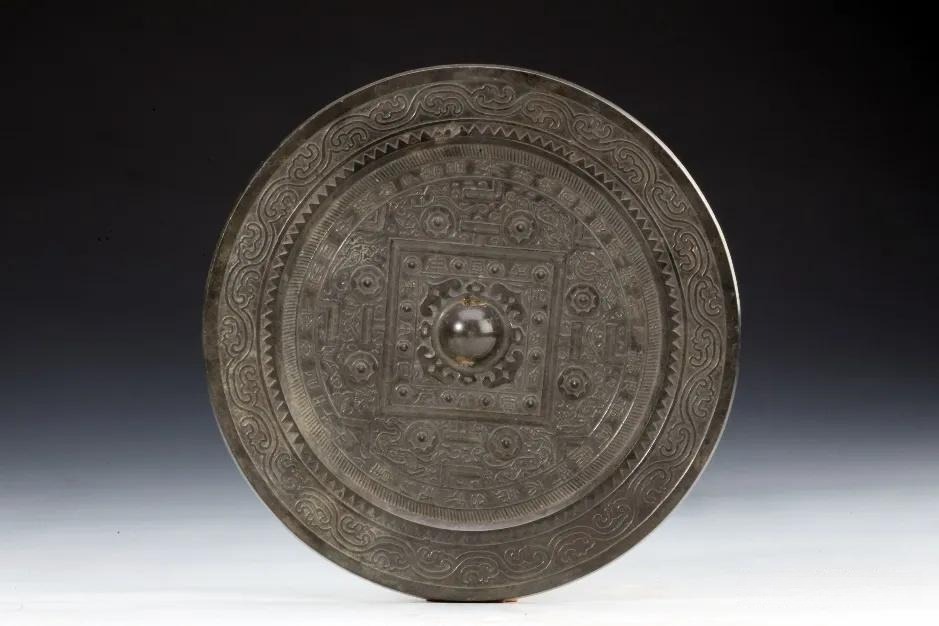
When used around the central knob, craftsmen often created the motif in classic leaf shapes, flat leaf forms, or paired floral designs.
On the inner areas of mirrors, the Fanghua Pattern commonly appeared in peach-leaf shapes, classic leaf forms, and flat leaf designs. Craftsmen arranged these patterns in symmetrical bands or placed them around the four raised bosses on the mirror surface.
By the Eastern Han period, the Fanghua Pattern gradually evolved into the Persimmon Calyx Window Pattern. Craftsmen began filling the central framed areas with auspicious inscriptions, while decorating the surrounding spaces with phoenixes, animals, and other symbolic motifs. This transformation created richer compositions with deeper cultural meanings.
Fanghua Pattern in Han Dynasty Silk Textiles
Beyond bronze mirrors, the Fanghua Pattern also found a new expression in Han Dynasty silk textiles.
One of the earliest known examples comes from Han silk discovered at Palmyra in present-day Syria.
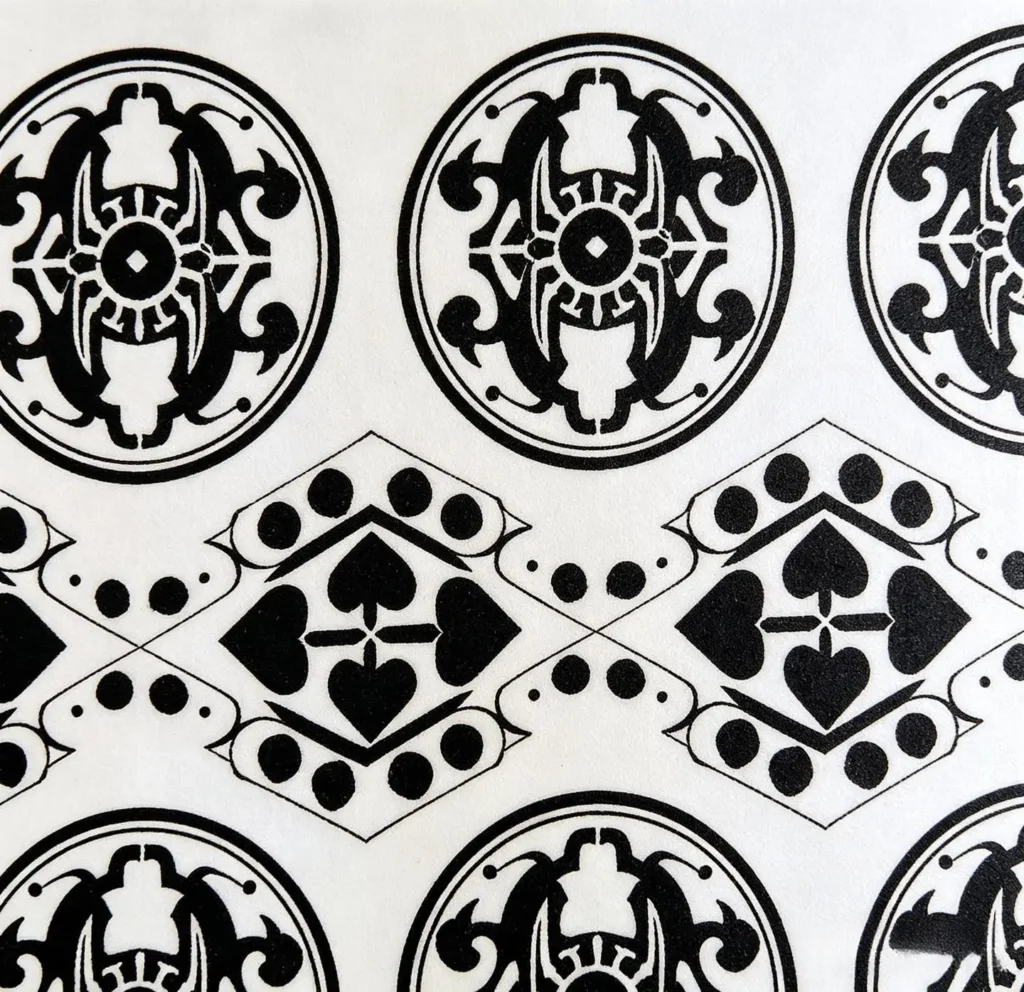
The textile features a double-diamond and four-animal design. Craftsmen separated the central sections with disconnected diamond shapes and arranged animal motifs symmetrically around the composition. At the heart of the pattern, they placed the Fanghua Pattern, while smaller diamond motifs decorated both sides.
This carefully balanced arrangement created a highly decorative and sophisticated visual effect, reflecting the advanced craftsmanship of Han Dynasty textile production.
Fanghua Pattern in Han Dynasty Burial Art
Han Dynasty people pursued ideas of immortality and hoped to become celestial beings after death. Because of these beliefs, the Fanghua Pattern also became an important decorative element in Han burial culture.
Craftsmen carved the motif on stone coffins and lacquer coffins in various forms, including classic leaf shapes, inward-curving designs, and flat cross-shaped patterns.
Among these variations, the classic leaf-shaped Fanghua Pattern appeared most frequently. Some examples stood alone as individual motifs, while others followed carefully arranged patterns to create stronger rhythm and visual order on coffin surfaces.
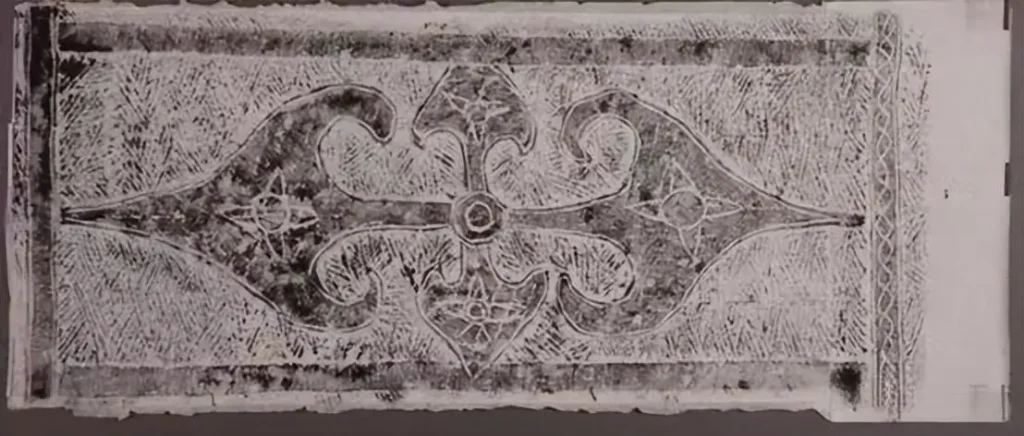
For example, many Fanghua motifs appear on Eastern Han carved stone coffins discovered in Sichuan, China.
Tang Dynasty: The Rise of the Persimmon Calyx Pattern in Silk Textiles
The Tang Dynasty (618–907) stands among the most prosperous periods in Chinese history. During this era, China reached remarkable achievements in politics, economy, and culture, and became one of the most influential civilizations in the world.
The Tang Dynasty embraced diverse cultures and artistic influences. This open and inclusive atmosphere encouraged the development of new decorative styles. While traditional animal motifs remained popular, floral and bird designs gradually became the dominant themes in Tang decorative art.
The Persimmon Calyx Pattern in Tang Dynasty Silk Textiles
During the Tang Dynasty, the Fanghua Pattern (方花纹) gained a new and more familiar name — the Persimmon Calyx Pattern (柿蒂纹).
Its four symmetrical petals resembled the small calyx attached to the bottom of a persimmon fruit, giving rise to this name. From this period onward, the motif became widely used in silk textiles.
An ancient Chinese text, Youyang Zazu (酉阳杂俎), recorded: “Among trees, the persimmon has the strongest roots. People commonly call it the persimmon disk.”
Because persimmon trees were valued for their deep roots and the calyx remained firmly attached to the fruit, the Persimmon Calyx Pattern came to represent a strong foundation, lasting prosperity, and an enduring legacy.
It expressed wishes for a stable family, a prosperous nation, and a future built on unshakable roots.
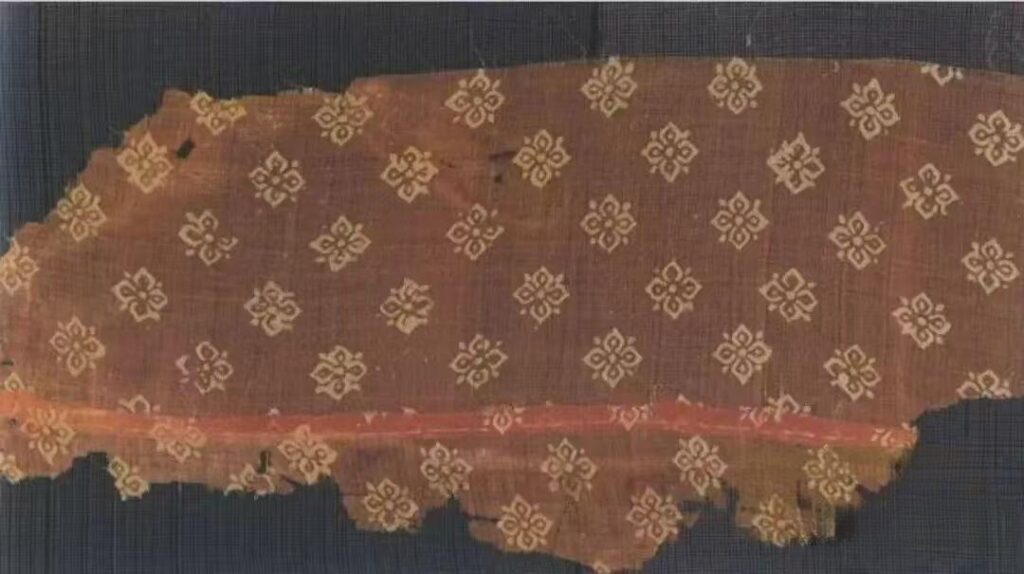
During the Tang Dynasty, advances in weaving, printing, and dyeing techniques allowed artisans to create more refined interpretations of the motif.
Weavers gave the four petals new forms, including peach-leaf shapes, flattened leaves, mountain-shaped designs, and rounded tips. These variations preserved the traditional four-petal structure while adding greater delicacy and artistic richness.
These designs preserved the traditional four-petal symmetry while introducing more delicate and sophisticated details.
The famous Tang poet Bai Juyi mentioned this motif in his poem Spring View of Hangzhou:
“Red sleeves weave silk and praise the persimmon pattern; green banners sell wine as pear blossoms bloom.”
The “persimmon” in the poem refers to Persimmon Calyx Silk (柿蒂绫), a silk fabric named after the repeated Persimmon Calyx Patterns woven across its surface.
A Tang Dynasty example can be found in a tri-colored glazed pottery figurine of a seated woman applying makeup, now preserved at the Shaanxi History Museum.
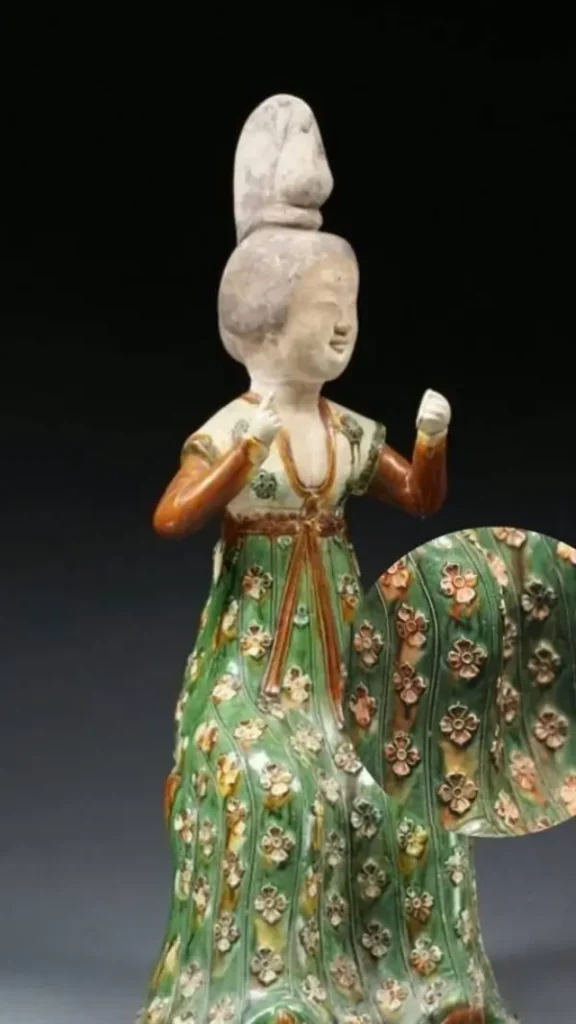
Excavated from Tomb No. 90 at Wangjiafen in eastern Xi’an, the figurine wears a pleated skirt decorated with repeating Persimmon Calyx Patterns. The motifs are arranged in an orderly yet natural composition, reflecting the refined craftsmanship of Tang textile design.
From the Persimmon Calyx Pattern to the Baoxiang Flower Motif
One of the most fascinating developments of the Tang period was the rise of the Baoxiang Flower Pattern (宝相花纹), which can be viewed as a more elaborate evolution of the Persimmon Calyx Pattern.
Building upon the traditional four-petal structure, artisans incorporated elements from lotus, peony, and other flowers. They layered different floral forms together, creating fuller outlines and richer compositions.
The result was the magnificent Baoxiang Flower — a motif that conveyed elegance, perfection, and prosperity.
From Dunhuang murals to luxurious silk textiles, the Baoxiang Flower appeared throughout Tang artistic expression.
A similar motif also appears on a Tang Dynasty pipa (Chinese lute) decorated with carved purple sandalwood, now treasured in Japan’s Shosoin Treasure House.
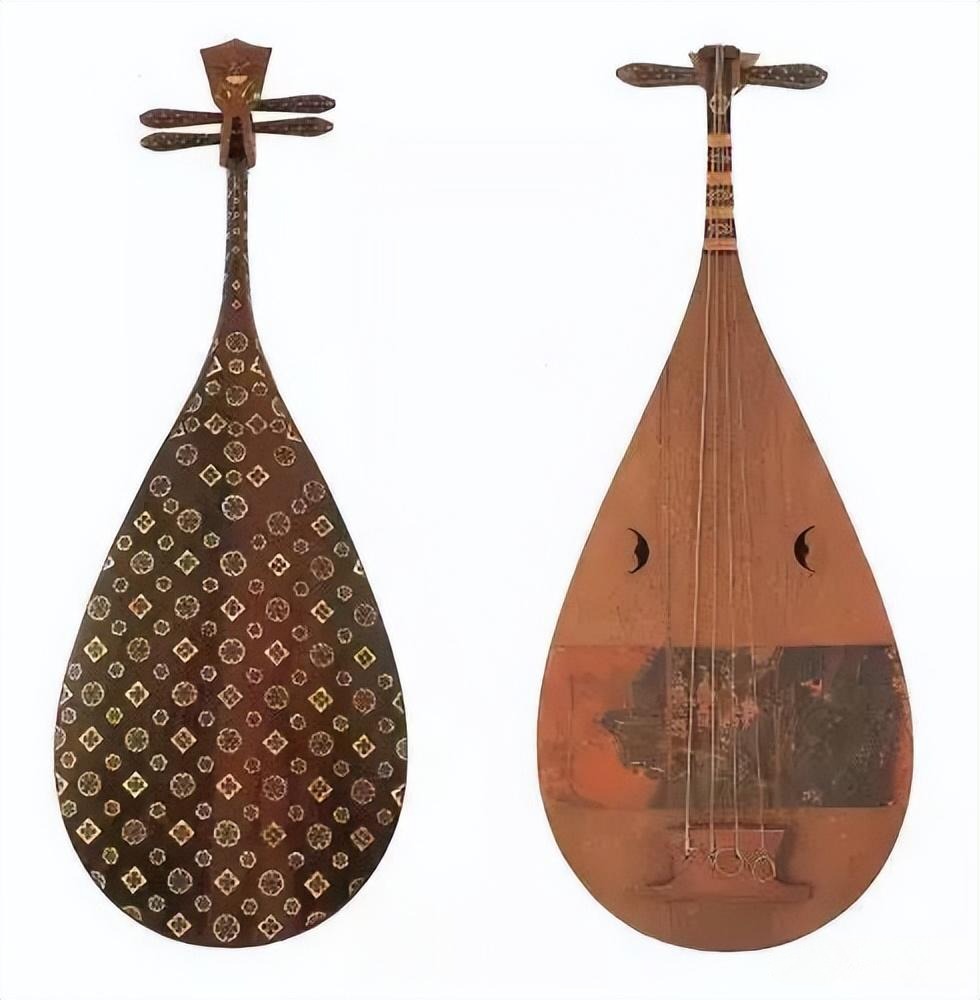
More than a thousand years later, the instrument has fallen silent, but the carved Baoxiang Flower on its body remains vivid and graceful.
Its layered petals unfold with intricate beauty while maintaining perfect order and balance. Through this delicate carving, Tang craftsmen seemed to preserve the confidence, refinement, and artistic brilliance of the prosperous Tang era itself.
However, the popularity of the Persimmon Calyx Pattern on silk textiles also marked a shift in its use across other materials.
Compared with the Han Dynasty, when the motif appeared widely across many forms of art, the Tang Dynasty saw fewer examples on bronze mirrors, decorative bricks, ceramics, jade objects, roof tiles, and architecture.
During this period, the Persimmon Calyx Pattern reached its greatest influence in textile art, while its presence in other decorative fields gradually became more limited.
Song Dynasty: The Rise of the Persimmon Calyx Window Pattern
During the Song Dynasty (960–1279), cultural and social changes reshaped Chinese artistic expression.
The government placed greater emphasis on civil administration over military power, expanded the imperial examination system, and promoted education. These policies helped the scholar-official class rise as an important force in society and politics.
As the composition of the ruling class changed, a more refined yet accessible aesthetic gradually replaced the earlier aristocratic style. Decorative motifs inspired by everyday life became increasingly popular, and craftsmen continued to experiment with new pattern structures.
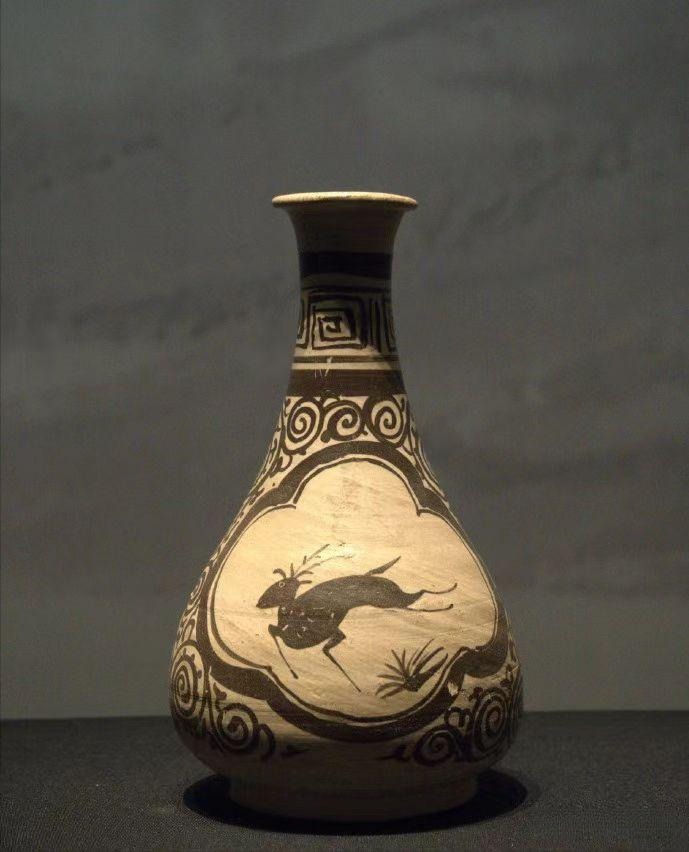
Among these innovations, the “framed design” (开光) gradually became popular during the Song and Liao periods.
The Development of the Persimmon Calyx Window Pattern
In traditional Chinese decoration, kaiguang (framed design) refers to a design technique that uses a geometric frame to create an independent decorative space. Artisans then fill this framed area with images or patterns, while surrounding areas often feature dense ornamental designs.
When the frame takes the shape of the Persimmon Calyx Pattern, it becomes known as the Persimmon Calyx Window Pattern (柿蒂窠).
During the Song Dynasty, the Persimmon Calyx Window Pattern appeared mainly on ceramics, textiles, and architectural decoration.
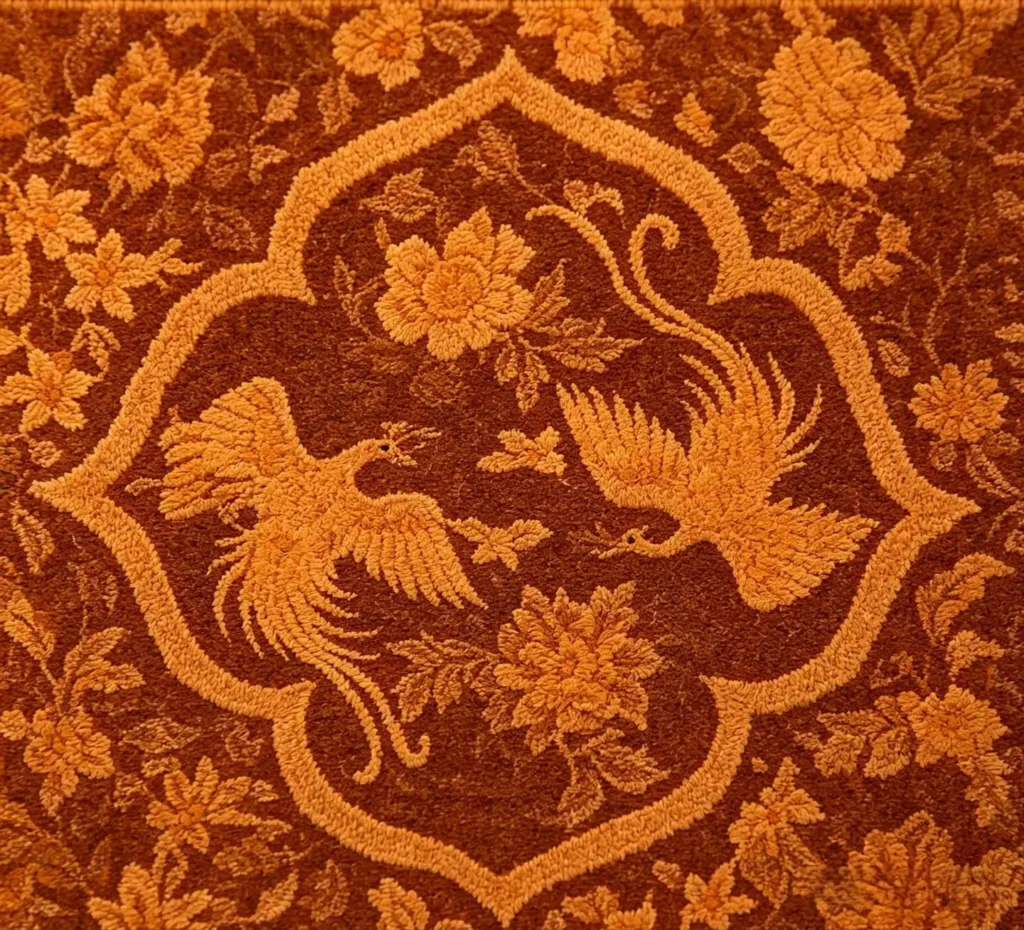
Artisans used the motif’s distinctive four-petal outline to create a framed space, then filled the interior with various scenes, including flowers and birds, insects and fish, human stories, and auspicious animals.
The images inside the Persimmon Calyx Window carried the storytelling function, while the surrounding Persimmon Calyx frame provided decorative structure.
This combination created a balanced relationship between narrative and ornament, giving the overall design greater depth and visual rhythm.
Ming and Qing Dynasties: The Peak of the Persimmon Calyx Window Pattern
During the Ming and Qing dynasties, Chinese decorative art followed the belief that “every design carries meaning, and every meaning brings good fortune.”
With its balanced four-petal structure and auspicious symbolism, the Persimmon Calyx Pattern remained deeply loved by both the imperial court and ordinary people.
During this period, the independent Persimmon Calyx Pattern became less common. Instead, the Persimmon Calyx Window Pattern (柿蒂窠) reached its peak, becoming an important decorative framework in textiles, clothing, architecture, ceramics, murals, and paintings.
Inside these four-petal frames, artisans filled various auspicious motifs, including dragons, phoenixes, flowers, and precious objects. Among them, the pattern became especially significant in imperial robes, appearing on the chest, back, and shoulders.
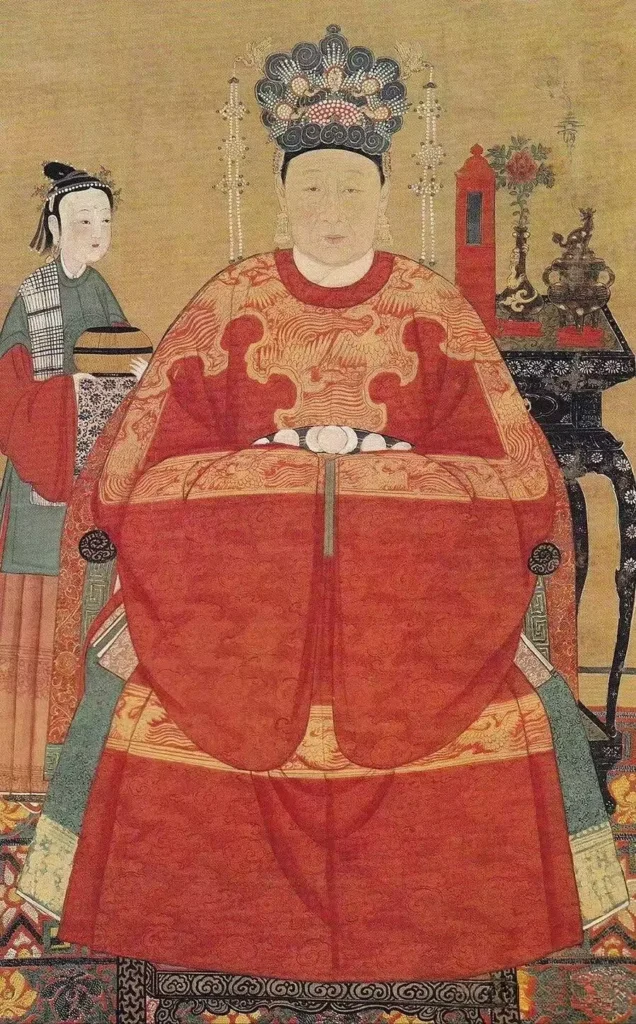
The four petals pointed toward the four directions. On the shoulders of official garments, the enclosed Persimmon Calyx frame symbolized the responsibility of “carrying the state on one’s shoulders.”
Inside these Persimmon Calyx-shaped frames, craftsmen often placed prestigious motifs such as dragons, mang (蟒) patterns, and dou niu (斗牛), each representing a specific rank within the imperial hierarchy.
Each motif followed a strict hierarchy:
- Dragons belonged exclusively to the emperor.
- Mang motifs represented high-ranking nobles.
- Dou niu motifs were granted to distinguished officials with outstanding achievements.
The Persimmon Calyx Window Pattern became a visual symbol of authority in the imperial court. Without a word, it revealed a person’s rank and position.
The Persimmon Calyx Pattern in Everyday Life
Over thousands of years, the Persimmon Calyx Pattern never faded from daily life. Instead, it quietly found its way into countless corners of the world around us.
In the Lingering Garden, one of China’s most famous classical private gardens, craftsmen carved the four-petal motif into brick and stone lattice windows, expressing wishes for family stability and good fortune.
The design of the Medal of the Republic also incorporates symmetrical and full-bodied floral elements that bear a striking resemblance to the traditional Persimmon Calyx Pattern.
The background designs of China’s 1980 one-jiao and two-jiao banknotes from the fourth series of renminbi also feature a simple four-petal motif. Although officially described as “flower symbols,” their form follows the same visual tradition as the Persimmon Calyx Pattern passed down for centuries.
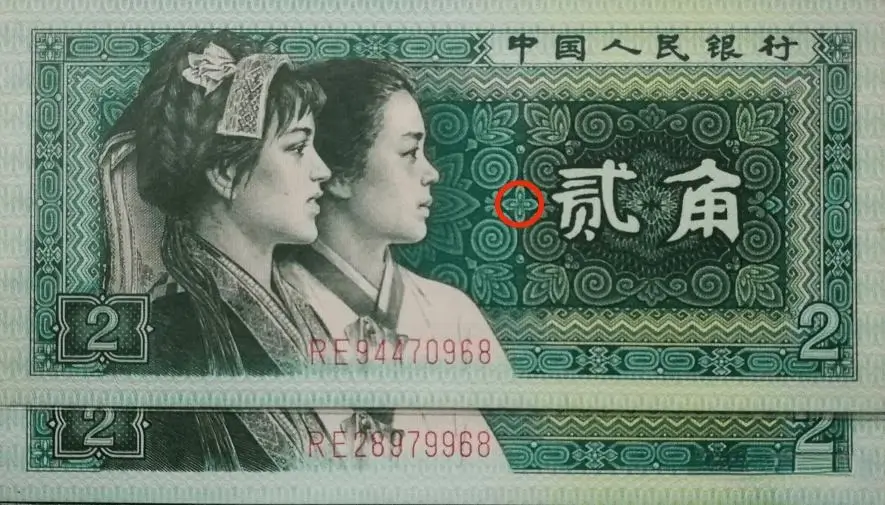
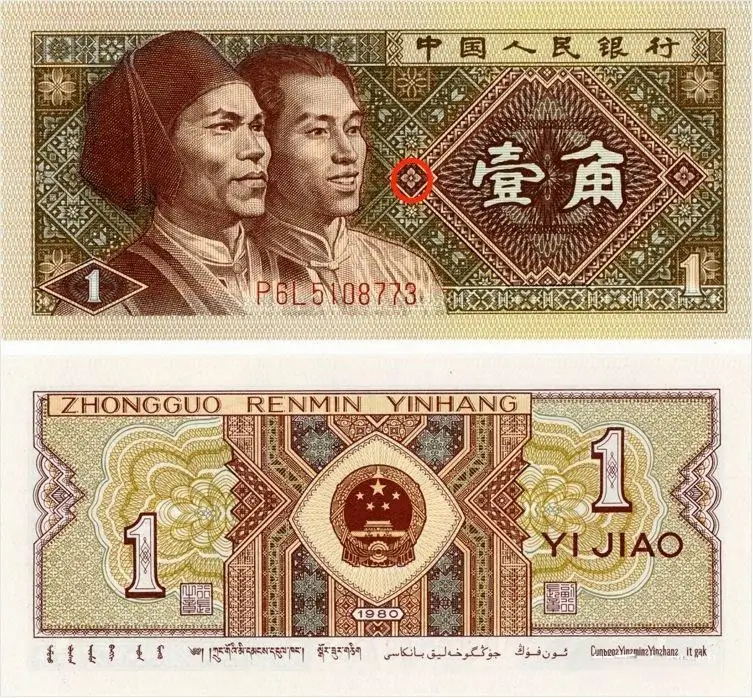
Today, people still encounter this ancient motif in everyday objects, from draining baskets and pillowcases to paper cups and drain covers.
A pattern created thousands of years ago continues to live quietly in modern life.
Jewea’s Modern Interpretation of the Four-Petal Motif
Inspired by the timeless beauty of four-petal patterns, Jewea reinterprets this balanced geometric form through modern vintage jewelry design.
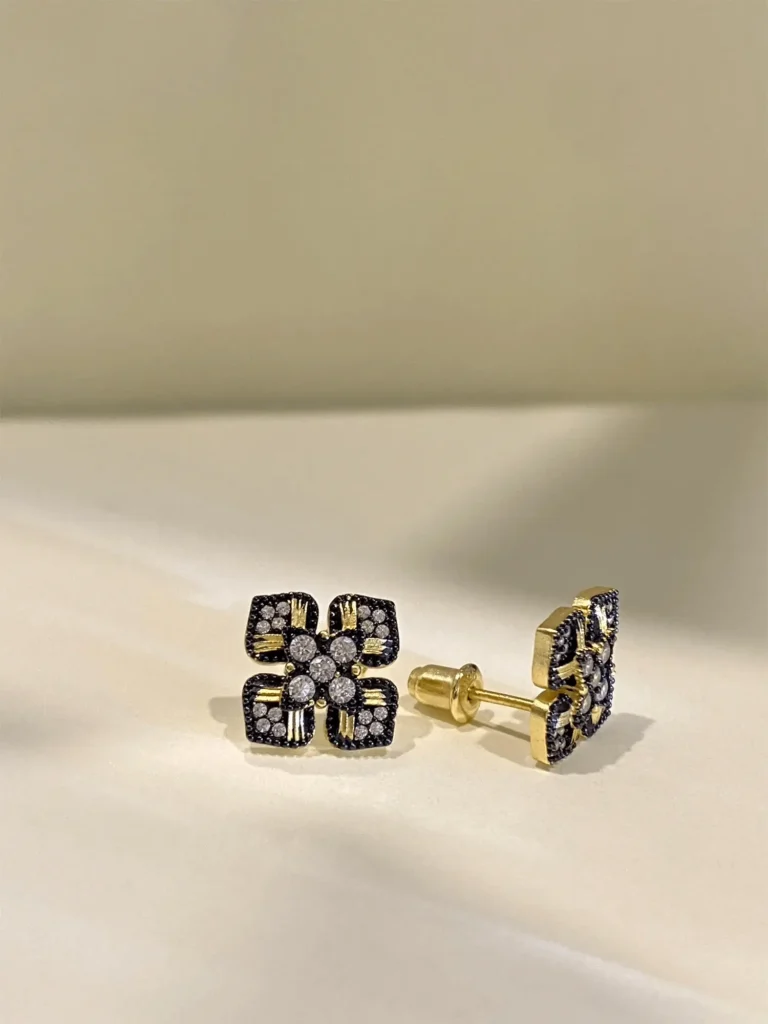
These 925 sterling silver stud earrings feature a distinctive four-petal flower design with smooth, flowing lines. The dual-tone gold and black-gold finish adds depth, while cubic zirconia brings a refined sparkle.
Blending traditional pattern inspiration with contemporary craftsmanship, this piece reflects Jewea’s approach to transforming cultural motifs into wearable art.
Jewea’s Perspective
Traditional patterns are part of shared cultural heritage. They belong to the public domain, and people can draw inspiration from them in a reasonable way.
Brands have the right to protect their trademarks and take action against intentional imitation. However, when a trademark comes from a basic traditional motif with limited uniqueness, its protection should remain appropriately limited. Public aesthetic symbols should not become private assets through overly broad trademark claims.
Cultural confidence comes from understanding and respecting history, not from blind pride. Across different civilizations, similar patterns often appear because humans respond to common natural forms and universal ideas of beauty.
For example, the Chinese Begonia Pattern and the European quatrefoil, the Chinese Yunlei Pattern and the Greek Meander Pattern, and the Chinese scroll motif and the Celtic triskele all share visual similarities.
These connections do not always represent imitation. They reflect the shared creativity of humanity and the similar ways different cultures interpret the world around them.
Protecting cultural heritage is important, but meaningful cultural identity should encourage exploration, research, and preservation rather than unnecessary conflict.
True appreciation of tradition comes from understanding its origins and allowing cultural beauty to continue through respectful exchange.