Cherry Blossom Agate: A Naturally Patterned Gemstone from the Quartz Family
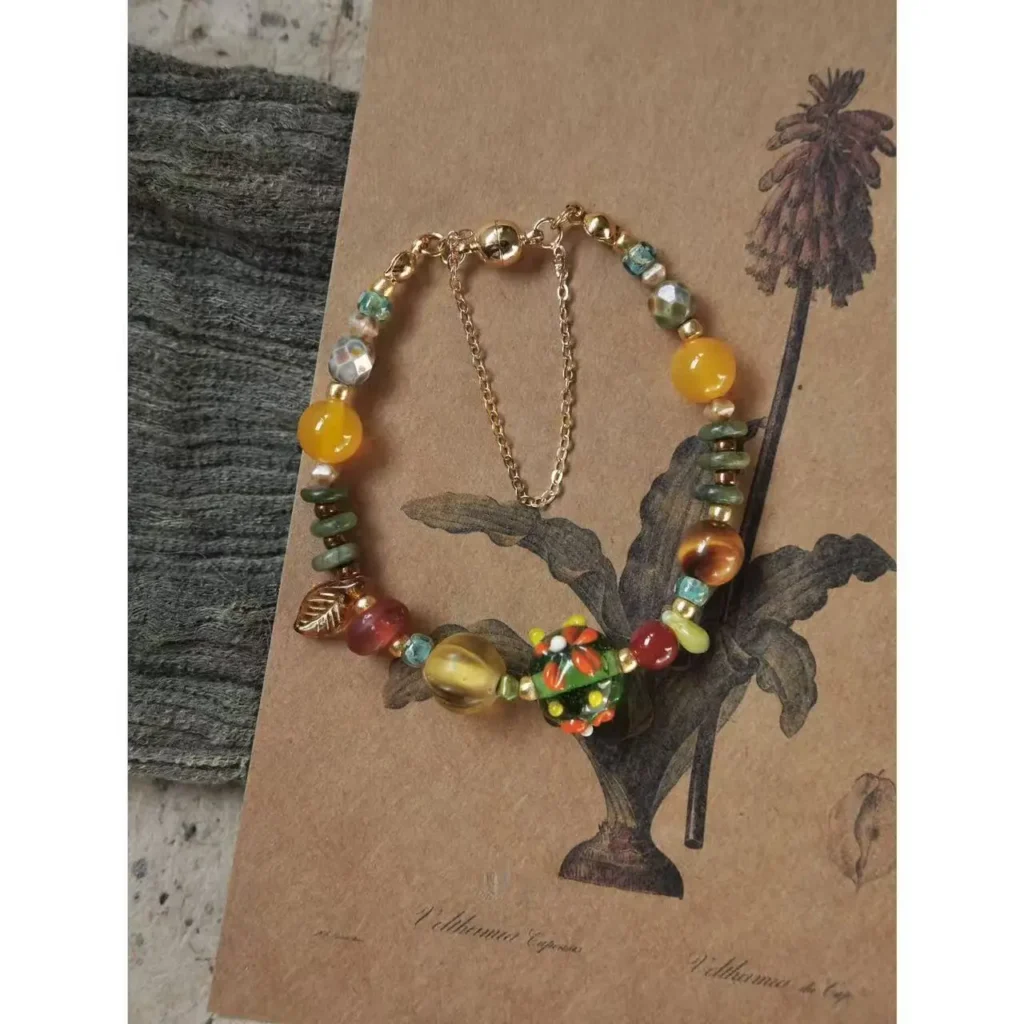
At JEWEA, we often incorporate agate into our jewelry designs because of its natural colors and unique structures. Red agate and yellow agate have long been appreciated for their vivid colors and stable structure. As shown in the gemstone bracelet below, we combine red and yellow agate with other natural gemstones to create a rich interplay of colors and textures from different minerals.
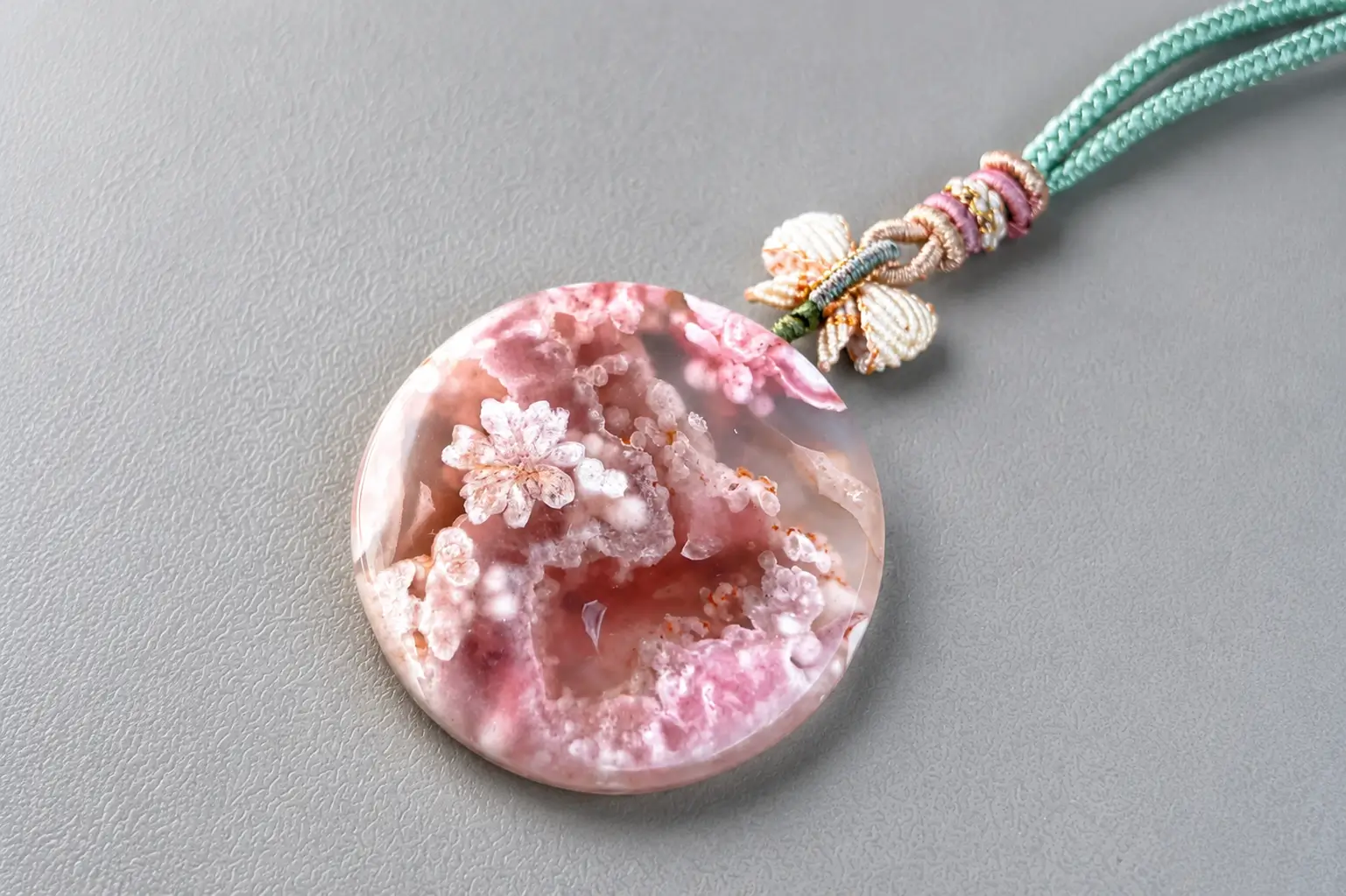
Unlike traditional agates known for their bold and deep tones, Cherry Blossom Agate (also known as Blossom Agate) reveals a softer side of the agate family. It features a translucent body, gentle pink hues, and naturally formed flower-like inclusions created through geological processes.
Rather than relying on strong colors alone, Cherry Blossom Agate is valued for its natural patterns, internal structures, and unique visual character. Each piece carries its own mineral formations, making every gemstone different from the next.
What Is Cherry Blossom Agate?
Cherry Blossom Agate is a type of agate, and agate belongs to the quartz family.
From a mineralogical perspective, agate consists mainly of silicon dioxide (SiO₂). It shares the same mineral group as quartz and chalcedony. Unlike transparent crystals, agate contains a microcrystalline quartz structure, which often creates layered patterns, color variations, and natural inclusions inside the stone.
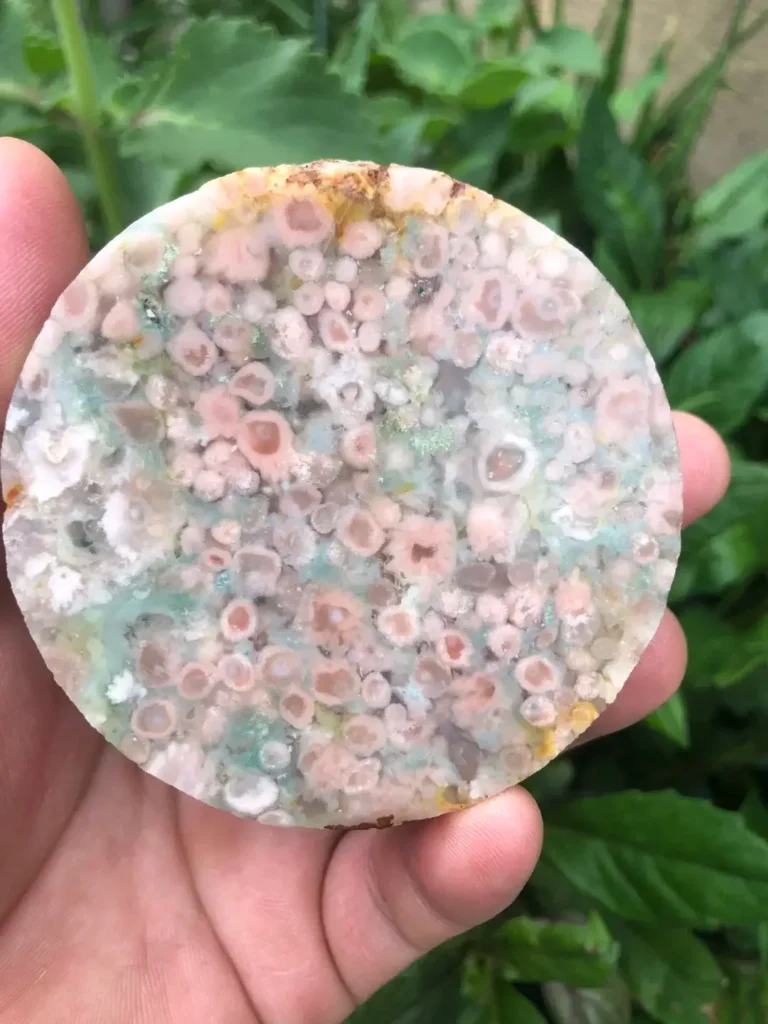
Cherry Blossom Agate is commonly associated with Madagascar and Brazil, where materials with distinctive natural patterns are found. As interest in natural gemstones and handmade jewelry continues to grow, designers and gemstone enthusiasts have increasingly explored its unique patterns and textures.
The most distinctive feature is its translucent agate base with pink, white, or pale mineral inclusions. After cutting and polishing, these inclusions can reveal flower-like shapes, clusters, or floating patterns within the stone. These flower-like patterns inspired the name “Cherry Blossom Agate,” reflecting the appearance of blooming cherry blossoms.
Related reading:
Agate comes in many varieties, each shaped by different geological conditions and mineral compositions. Discover more unique Chinese agate varieties, including Yanyuan Agate, Purple-Green Agate, Alashan Agate, Water Agate, and Banded Agate in Types of Agate: Exploring Rare and Unique Varieties from China.
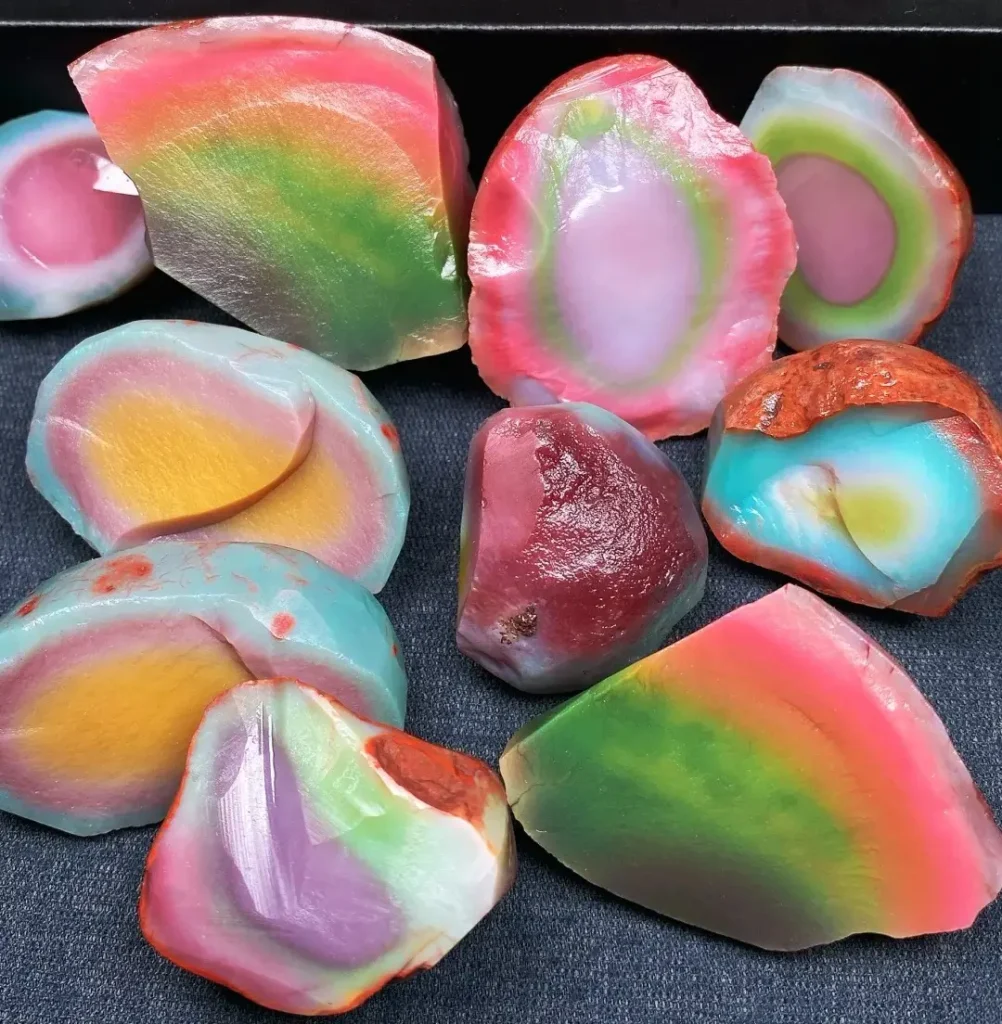
How Do the Flower-Like Patterns Form in Cherry Blossom Agate?
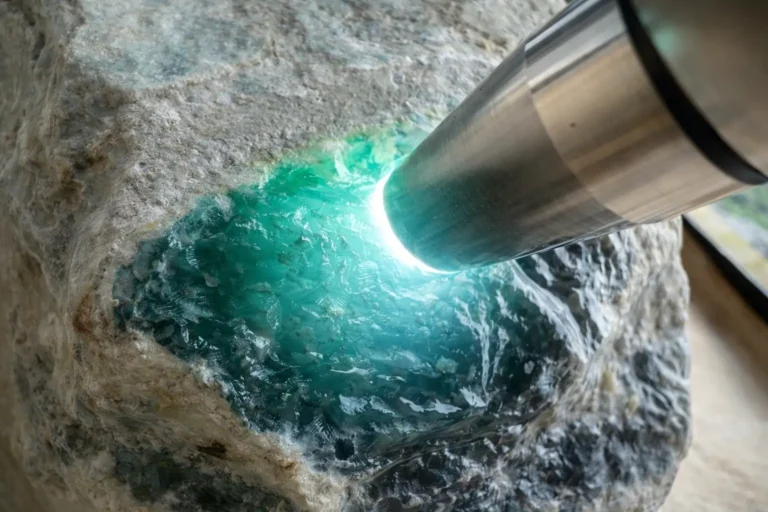
The flower-like patterns inside Cherry Blossom Agate are not plant fossils or carved designs. They formed naturally through long geological processes.
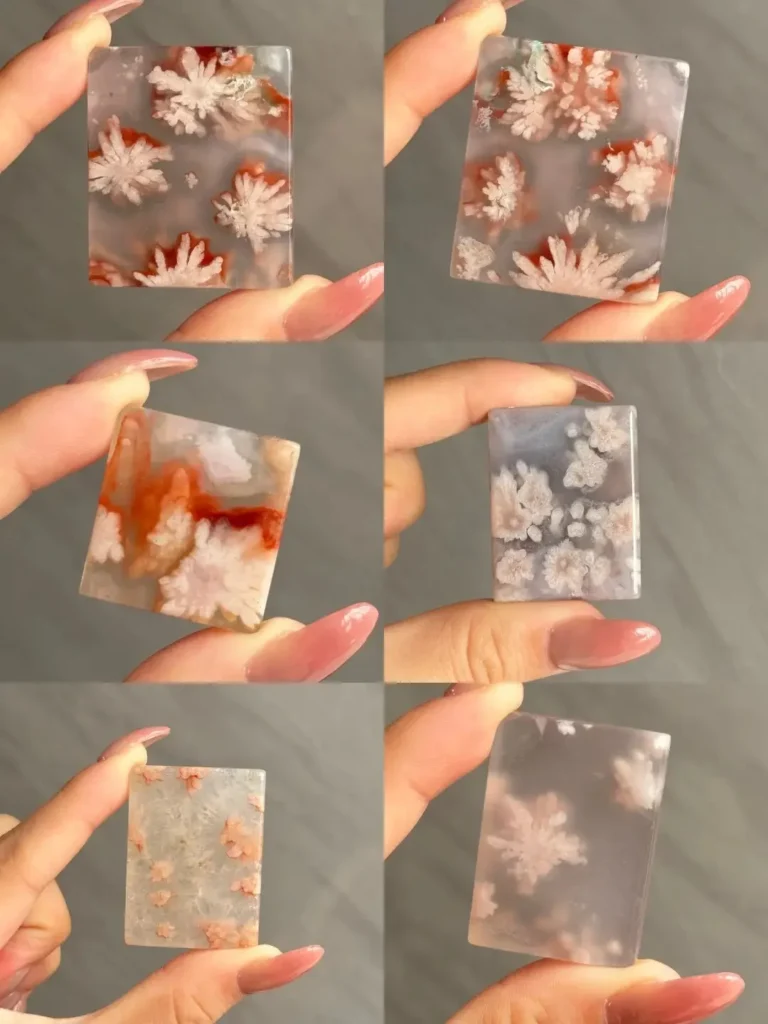
These unique patterns come from mineral inclusions trapped inside the agate.
1. Early Formation of Mineral Inclusions
In volcanic rocks or other rocks with hollow cavities, mineral-rich hydrothermal fluids enter these open spaces.
As temperature, pressure, and chemical conditions change, different minerals begin to crystallize. They form plate-like, granular, or radial mineral structures.
These mineral inclusions may include:
- Barite
- Gypsum
- Calcite
- Other calcium- or barium-bearing minerals
The exact mineral composition can vary depending on the geological origin.
2. Silica Deposition Forms the Agate Base
Later, silica-rich fluids enter the cavities and gradually deposit layers of chalcedony and microcrystalline quartz.
Over millions of years, the translucent agate base preserves these earlier mineral formations. After cutting and polishing, these internal structures can appear as petal-like shapes, floral clusters, or floating patterns within the gemstone.
Because each rough stone contains different mineral distributions, colors, and levels of transparency, no two pieces will display exactly the same patterns.
How to Choose Cherry Blossom Agate Jewelry?
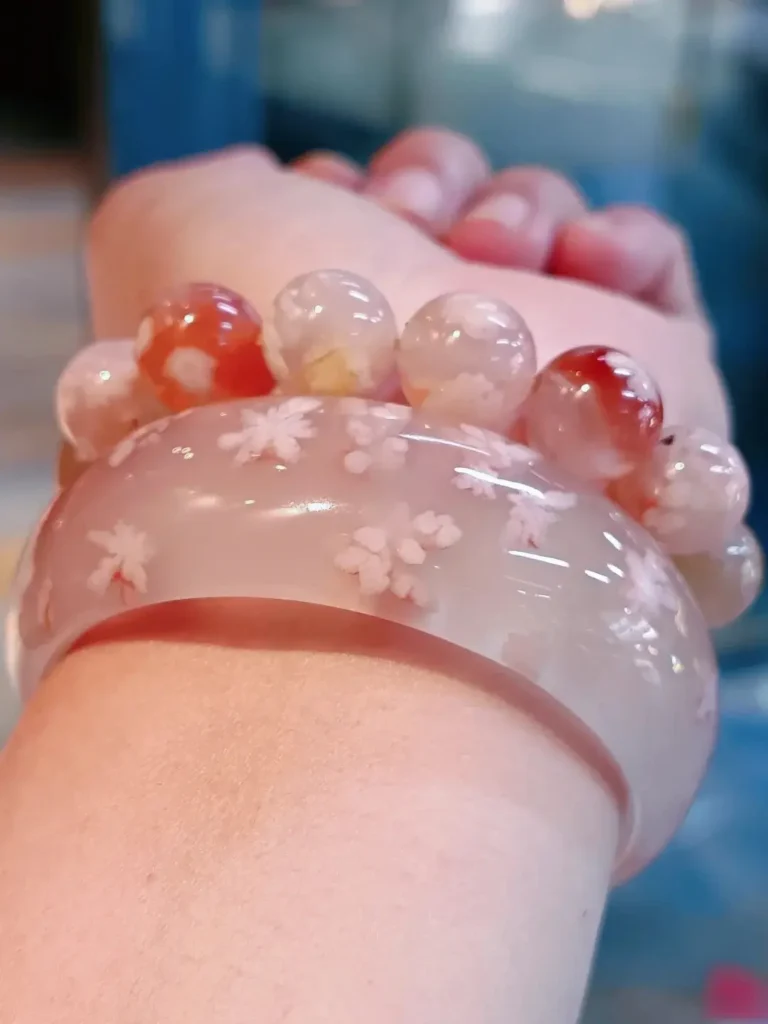
When choosing Cherry Blossom Agate jewelry, look beyond a single feature. The overall appeal comes from a combination of natural structure, transparency, color, patterns, and craftsmanship.
| Evaluation Factor | What to Look For |
|---|---|
| Texture | Look for a fine structure and a smooth, well-polished surface. Areas with dense mineral inclusions may have different internal structures, so check for visible cracks or fractures. |
| Transparency | Translucent to transparent materials with a soft, jelly-like appearance are often preferred because they reveal more depth and detail in the internal patterns. |
| Pattern | Natural patterns vary from stone to stone. Patterns with balanced distribution, clear details, and natural variations often create stronger visual appeal. |
| Color | Cherry Blossom Agate commonly appears in pink, white, orange-pink, and yellow tones. Natural color transitions and harmonious shades usually create a more organic look than overly intense colors. |
| Integrity | Pay attention to major fractures, visible chips, or signs of repair. Natural mineral inclusions are part of Cherry Blossom Agate’s unique character, but structural cracks may affect durability. |
| Craftsmanship | Cutting proportions, cabochon shaping, polishing quality, and overall design all influence the final appearance of the jewelry piece. |
Frequently Asked Questions About Cherry Blossom Agate
Natural agate usually shows color variations and internal patterns formed during geological processes.
You may want to look more closely if you notice:
Colors that appear unusually uniform or overly saturated;
Color concentrated along cracks or porous areas;
A lack of natural variations in tone and internal structure.
Agate dyeing techniques are widely used in the gemstone market. Since visual inspection alone cannot always confirm treatments, professional gemstone testing can provide more reliable information.
Some natural agate materials may contain internal fractures. To improve stability during cutting and processing, some stones on the market may receive resin treatment.
When purchasing, pay attention to:
Unusual surface luster or texture;
Visible filling marks around cracks or fractures;
Whether the seller can provide reliable gemstone testing information.
Natural inclusions, mineral patterns, and slight internal variations are normal features of Cherry Blossom Agate. They do not necessarily indicate poor quality.
Cherry Blossom Agate is a type of agate and belongs to the quartz family.
Some market names, such as “Cherry Blossom Jade” or “Ice Jade,” may appear in commercial descriptions. However, these names do not always represent the actual mineral classification.
Understanding a gemstone’s mineral properties and formation process is more valuable than following unverified marketing terms.
JEWEA’s Perspective
The beauty of natural agate comes from the geological processes that shape each stone.
Cherry Blossom Agate does not follow a fixed color palette or a standard pattern. Each rough stone develops its own visual character through differences in mineral distribution, transparency, and internal structure.
For jewelry design, these natural variations create the unique appeal of each piece.
The patterns are not copied or manufactured. They are natural textures shaped by geological time.