Obsidian Jewelry: The Natural Glass Formed by Volcanic Fire
At JEWEA, we are inspired by the stories behind natural materials and the journeys that bring them into handmade jewelry.
From Czech glass beads shaped through centuries of craftsmanship to natural minerals formed over millions of years of geological change, every material carries its own history, texture, and character.
Among these natural materials, obsidian reveals a remarkable story — a form of natural glass shaped by volcanic processes.
Unlike traditional gemstones with an ordered crystal structure, obsidian forms when molten lava cools rapidly after a volcanic eruption. This process prevents minerals from developing into crystals, leaving behind a glass-like material that preserves the dynamic forces of the Earth.
This natural origin is also why JEWEA chooses obsidian for our jewelry designs. Its subtle variations and organic imperfections are not flaws, but authentic marks of its geological journey.
What Is Natural Glass?
In gemology, not every gemstone material with a glassy appearance is a crystal.
Natural glass refers to glass-like materials formed through natural geological processes, with an internal structure that lacks the ordered arrangement found in crystals.
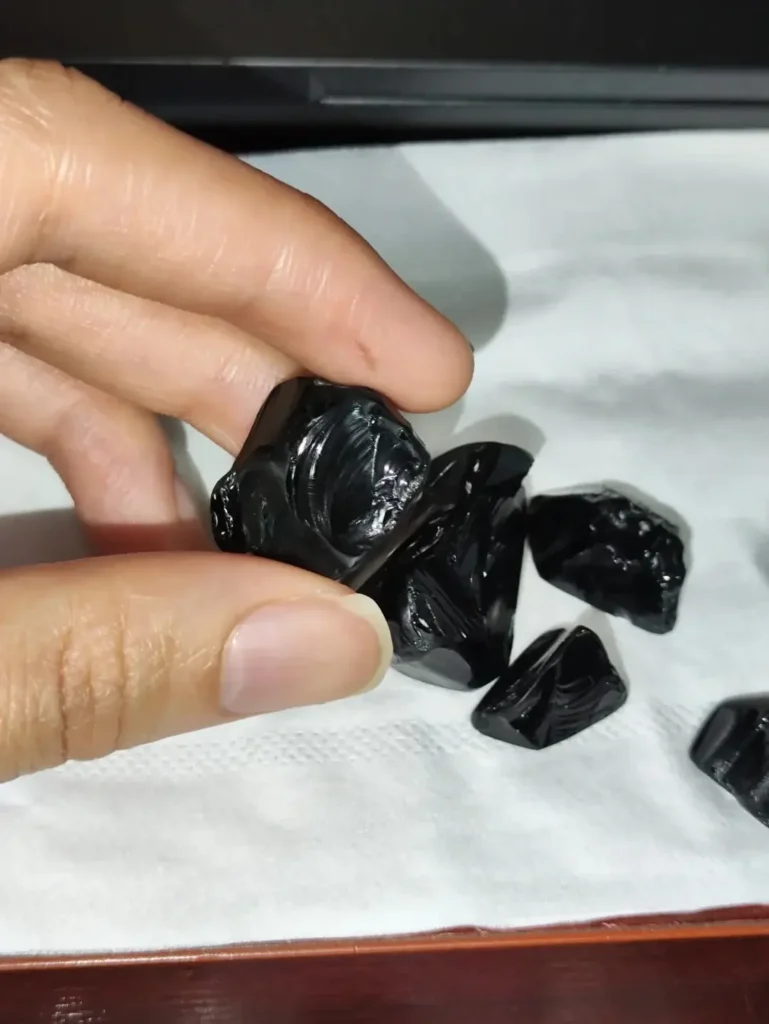
Unlike crystalline gemstones such as diamonds and quartz, natural glass does not develop a long-range atomic structure. This structure gives it a distinctive appearance, with a smooth luster and characteristic texture.
Natural glass mainly includes two major types:
- Tektites: Formed when extraterrestrial impacts generate extreme heat, melting terrestrial materials that later cool and solidify into natural glass.
- Volcanic glass: Formed when volcanic lava cools rapidly, with obsidian being the most well-known example.
Obsidian belongs to the latter category — leaving behind a glass-like material that preserves evidence of volcanic activity.
Obsidian: The Natural Glass Formed from Volcanic Lava
Also known as volcanic glass or obsidian rock, this unique material is sometimes referred to as “dragon glass” in commercial markets.
It forms during volcanic eruptions when silica-rich acidic lava cools rapidly. Because the cooling process happens so quickly, minerals do not have enough time to develop a complete crystal structure, causing the lava to solidify into a glass-like rock.
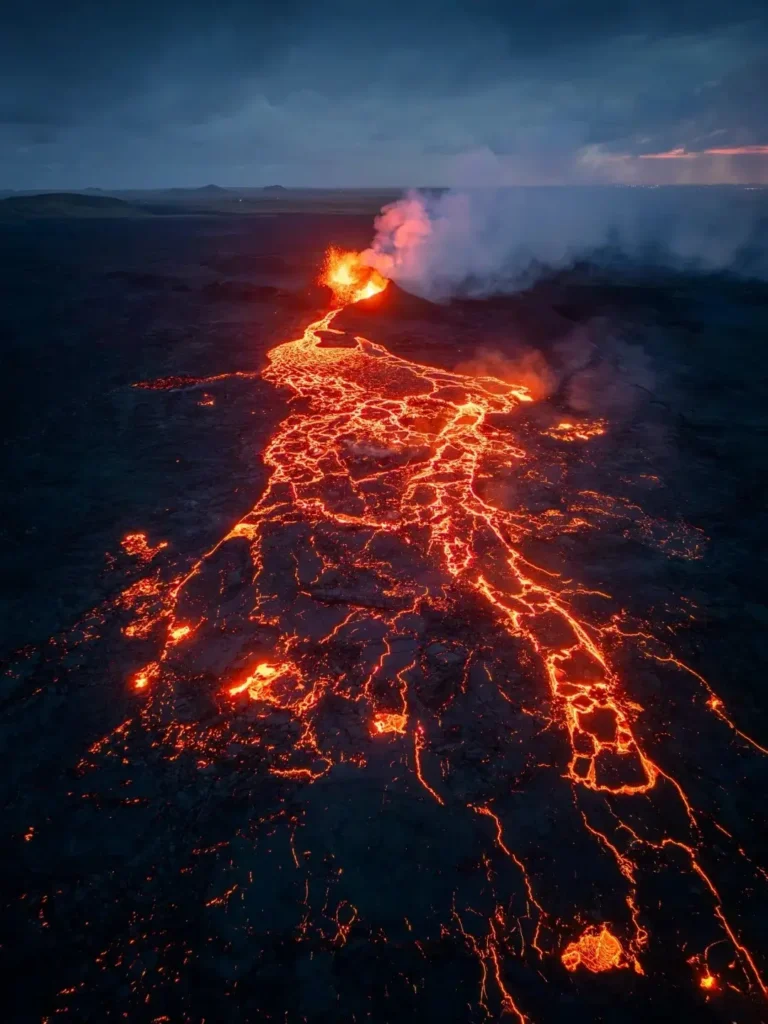
From a gemological perspective, obsidian has the following characteristics:
- Mohs hardness: 5–6
- Refractive index: approximately 1.48–1.51
- Specific gravity: approximately 2.36–2.40
Because of the complex conditions under which it forms, natural obsidian often contains subtle internal features, including small amounts of mineral inclusions such as quartz and feldspar, as well as microscopic bubble structures.
These natural variations are not imperfections. They are unique traces of each piece’s geological formation and the story of how it came into being.
This reflects JEWEA’s commitment to Material Honesty:
We respect the natural textures, colors, and variations of each material rather than pursuing the uniformity of standardized production.
Different Types of Obsidian
Many people associate obsidian only with a deep black color. However, variations in formation conditions, mineral inclusions, and optical structures allow obsidian to display a wide range of appearances.
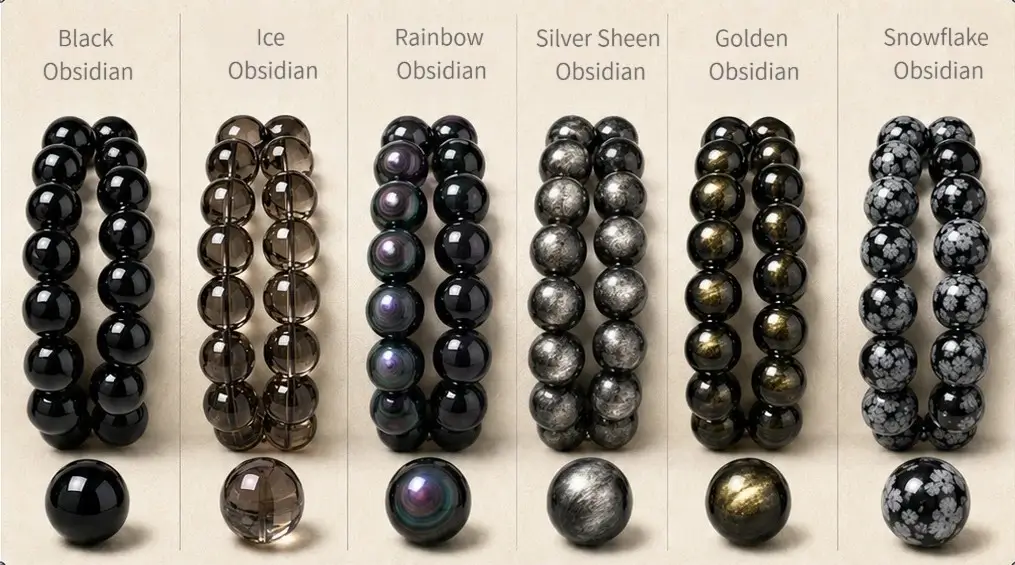
Black Obsidian
The most common variety of obsidian, black obsidian typically features a deep black color with a glass-like surface. Some pieces may show a slight translucency when viewed under light.
Ice Obsidian
Ice obsidian is known for its translucent appearance and cool gray-black or smoky brown tones. When light passes through the material, it reveals a softer sense of depth.
Compared with the heavier visual presence of traditional black obsidian, ice obsidian has a lighter and more contemporary character, making it especially suitable for delicate jewelry designs.
Rainbow Obsidian
Rainbow obsidian appears black at first glance, but under specific lighting angles, it can reveal subtle flashes of green, purple, or rainbow-like colors.
This optical effect comes from the interaction of light with microscopic structures within the material.
Silver Sheen Obsidian
Silver sheen obsidian displays a subtle silver glow that appears across its dark volcanic glass surface when viewed under reflected light.
This effect comes from microscopic structures within the obsidian that reflect light, creating a soft, silky sheen rather than a bright metallic shine.
Golden Obsidian
Golden obsidian features golden sheen or thread-like reflections floating against a dark background, creating an effect reminiscent of starlight captured within volcanic glass.
Snowflake Obsidian
Snowflake obsidian features white snowflake-like patterns created by cristobalite inclusions within the volcanic glass. These distinctive markings make it one of the most recognizable varieties of obsidian.
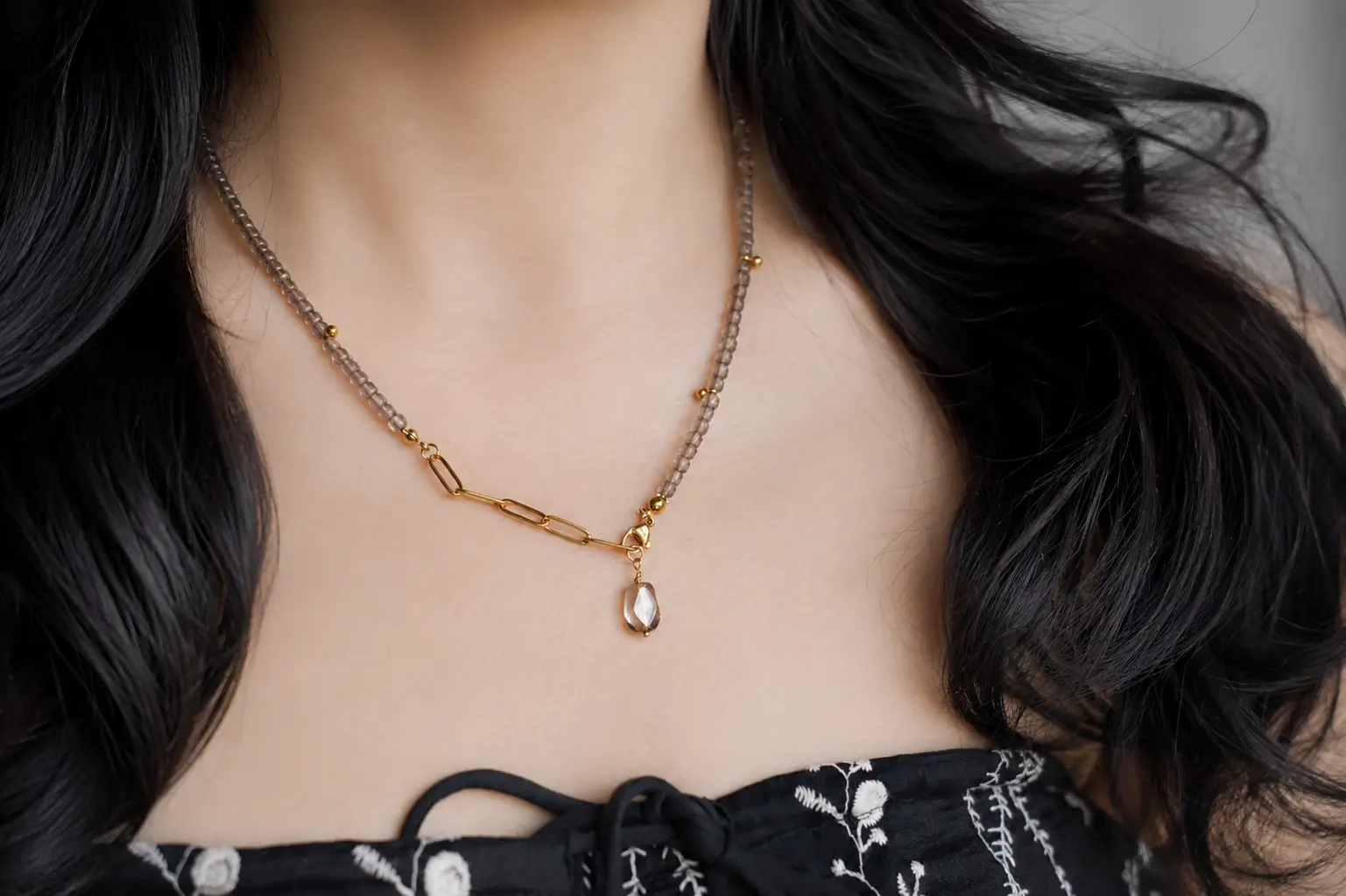
JEWEA Ice Obsidian Necklace: Volcanic Glass in Modern Design
Traditional obsidian jewelry often has a bold and mysterious appearance. JEWEA presents another side of obsidian — a lighter, more refined style designed for everyday wear.
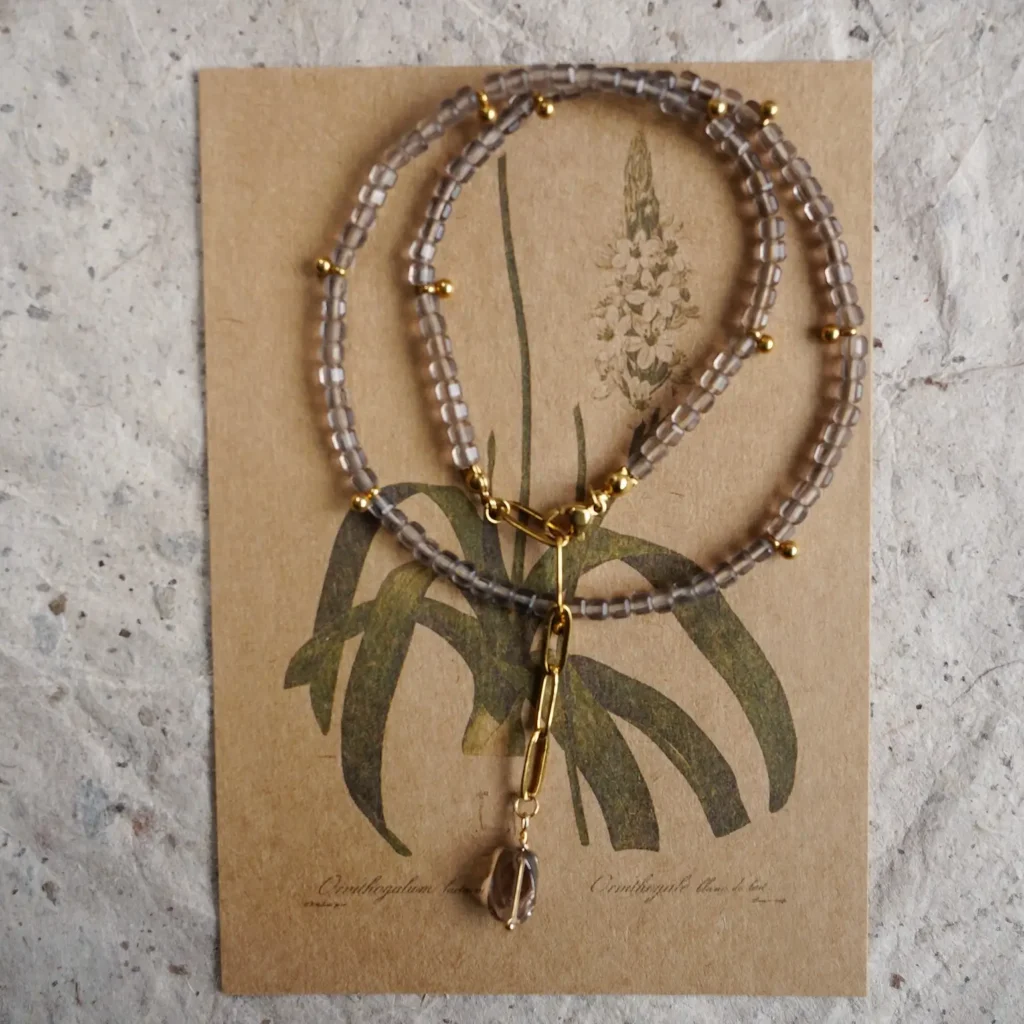
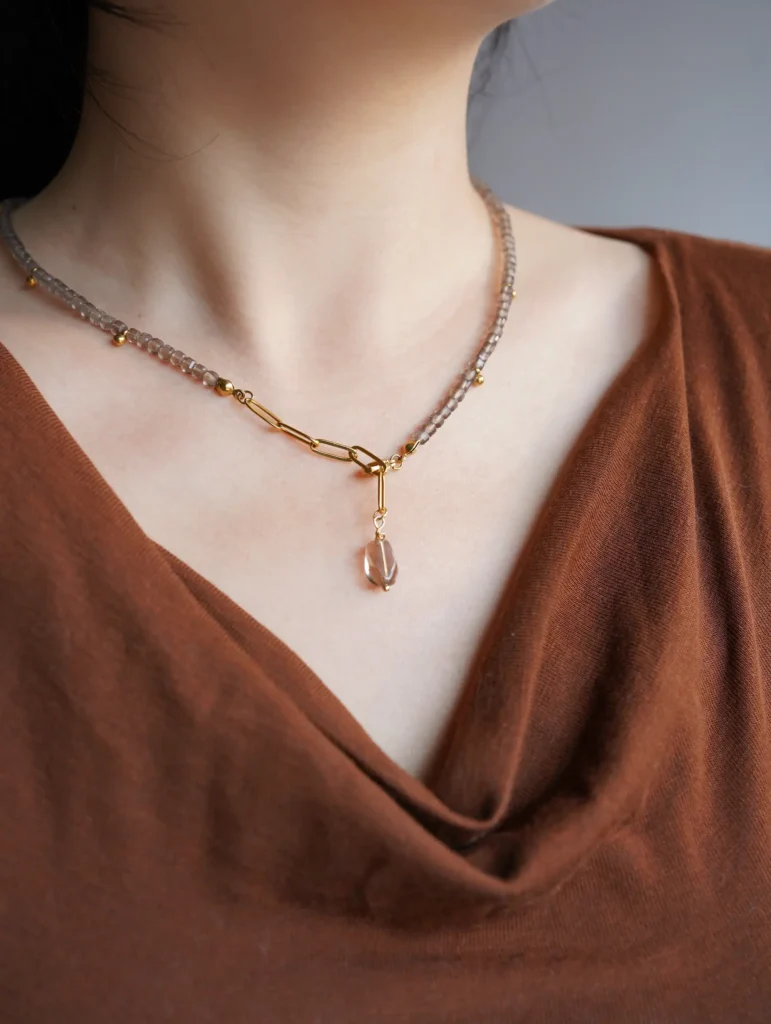
For this obsidian necklace, we selected translucent gray-brown ice obsidian and crafted it into delicate faceted tube beads. The small facets reflect natural light with subtle shimmer, highlighting the material’s quiet beauty.
To balance the cool tones of ice obsidian, we paired the beads with a gold vacuum-plated titanium steel chain. The Y-shaped design elongates the neckline, while an irregular natural smoky quartz pendant adds warmth and contrast.
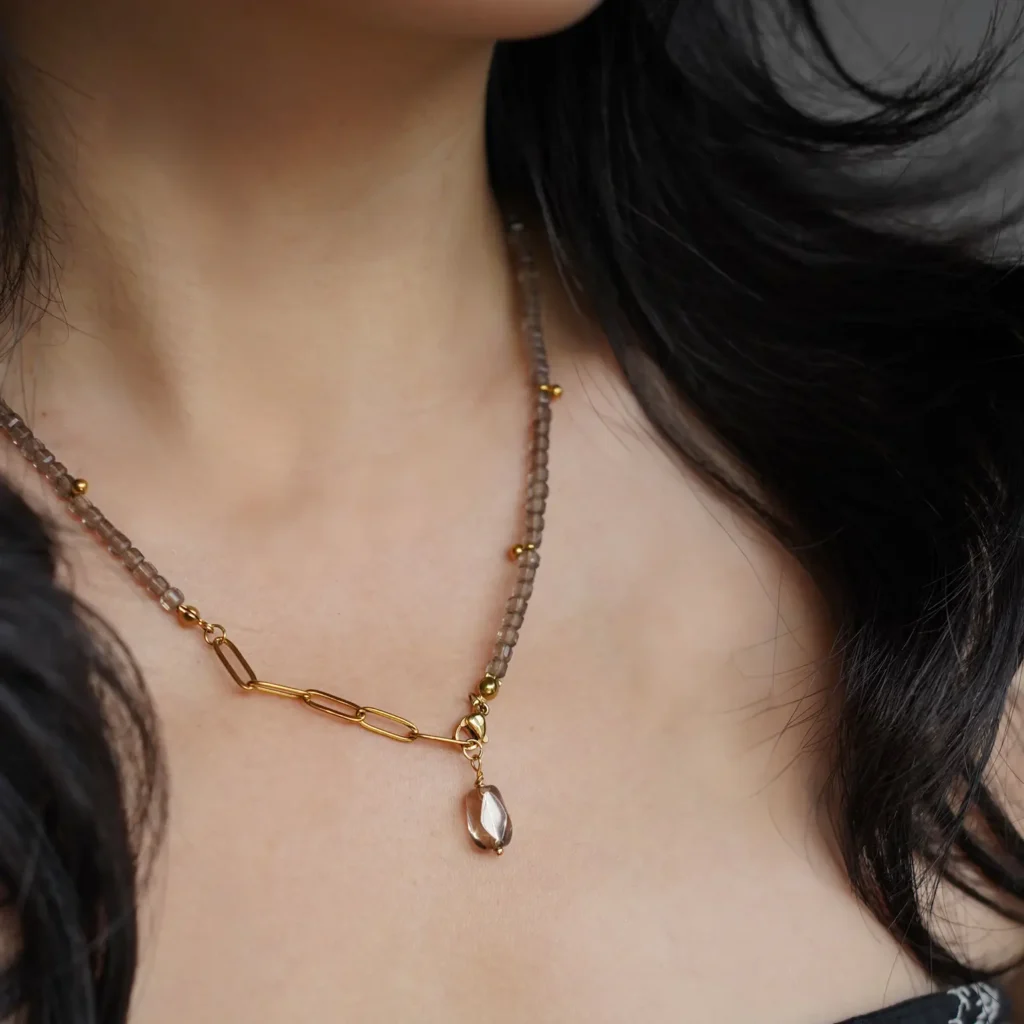
The result is a modern piece of jewelry that combines natural volcanic glass with thoughtful craftsmanship.
Where Does Obsidian Come From?
Obsidian occurs in volcanic regions around the world.
Major sources include:
- Mexico
- The United States
- Italy
- New Zealand
- Iceland and other volcanic areas
Mexico has a long history of using obsidian and holds an important place in the cultural history of this natural glass.
Natural obsidian has also been found in volcanic regions of China, including Tibet.
How to Distinguish Natural Obsidian from Glass Imitations
Because obsidian is itself a type of natural glass, distinguishing it from other glass materials can sometimes be challenging based on physical properties alone.
For this reason, visual inspection alone cannot always provide a completely accurate identification.
Professional identification typically relies on two main methods:
1. Examining Internal Features (Inclusions)
Under magnification, natural obsidian may reveal:
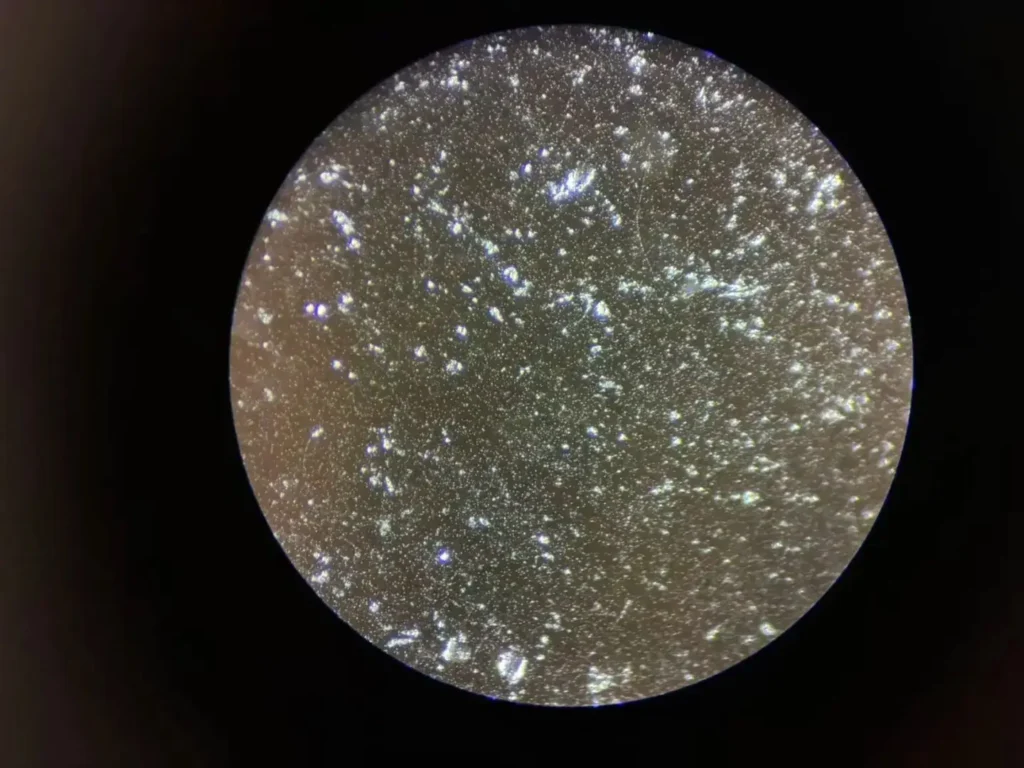
- Irregular mineral inclusions
- Natural bubble structures
- Flow patterns
- Microscopic crystalline features
In comparison, artificial glass usually appears more uniform internally.
2. Chemical Composition Analysis
Professional laboratories can analyze elemental composition using specialized instruments to further determine the material’s natural origin.
When choosing natural obsidian jewelry, selecting a brand that provides clear material information and reliable sourcing is often more important than relying only on visual judgment.
JEWEA’s Perspective
From volcanic lava formed under extreme heat to a strand of ice obsidian beads worn around the neck, obsidian completes a remarkable journey shaped by nature and time.
At JEWEA, we believe every natural material carries its own story.
We preserve the natural color variations and subtle differences of ice obsidian, allowing each piece of jewelry to retain its own unique character.
When you wear this ice obsidian necklace, you experience more than its cool, smooth texture. You also connect with a material shaped deep within the Earth — quiet, enduring, and connected to the passage of time.